23 de setembro de 2026
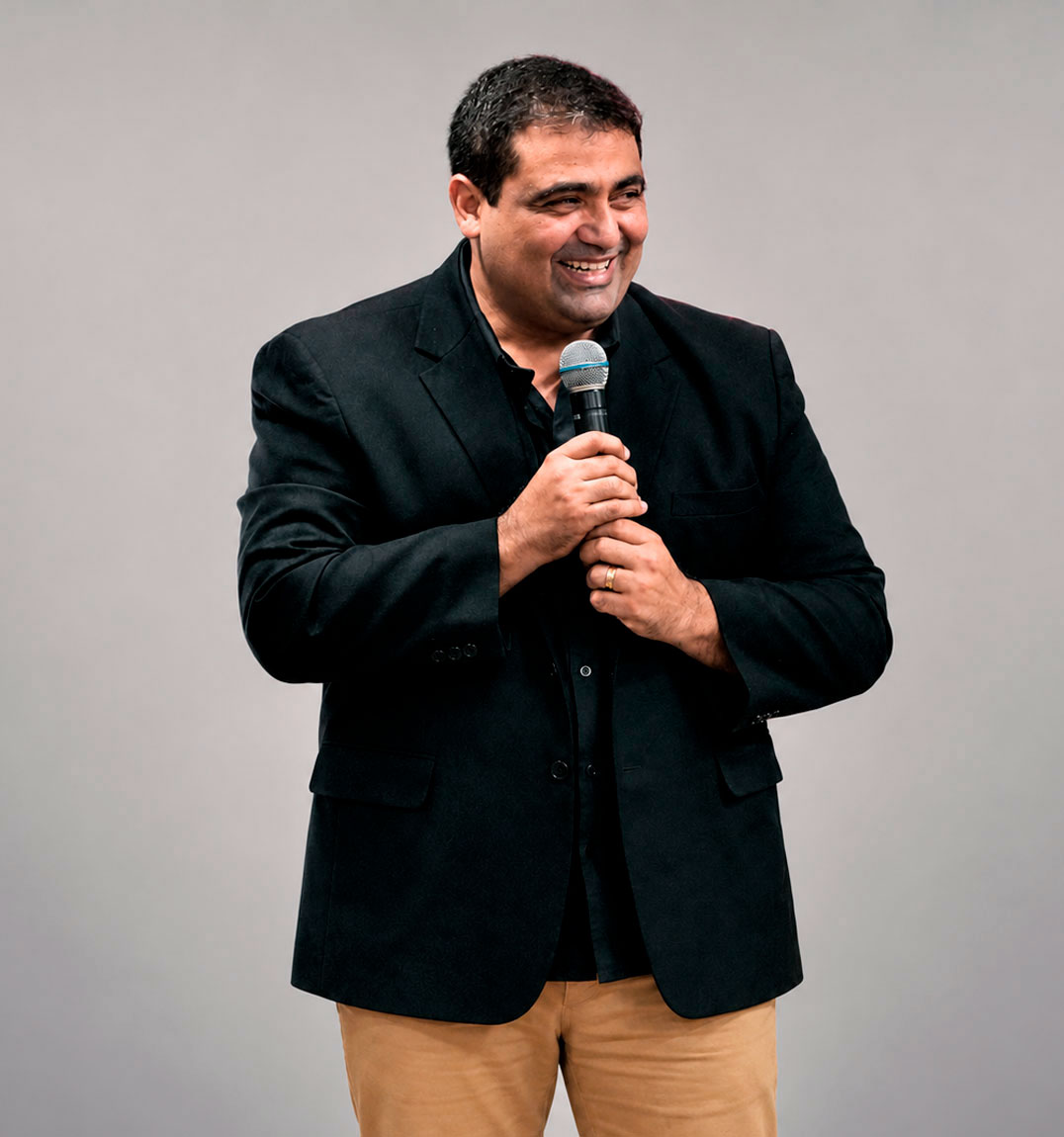



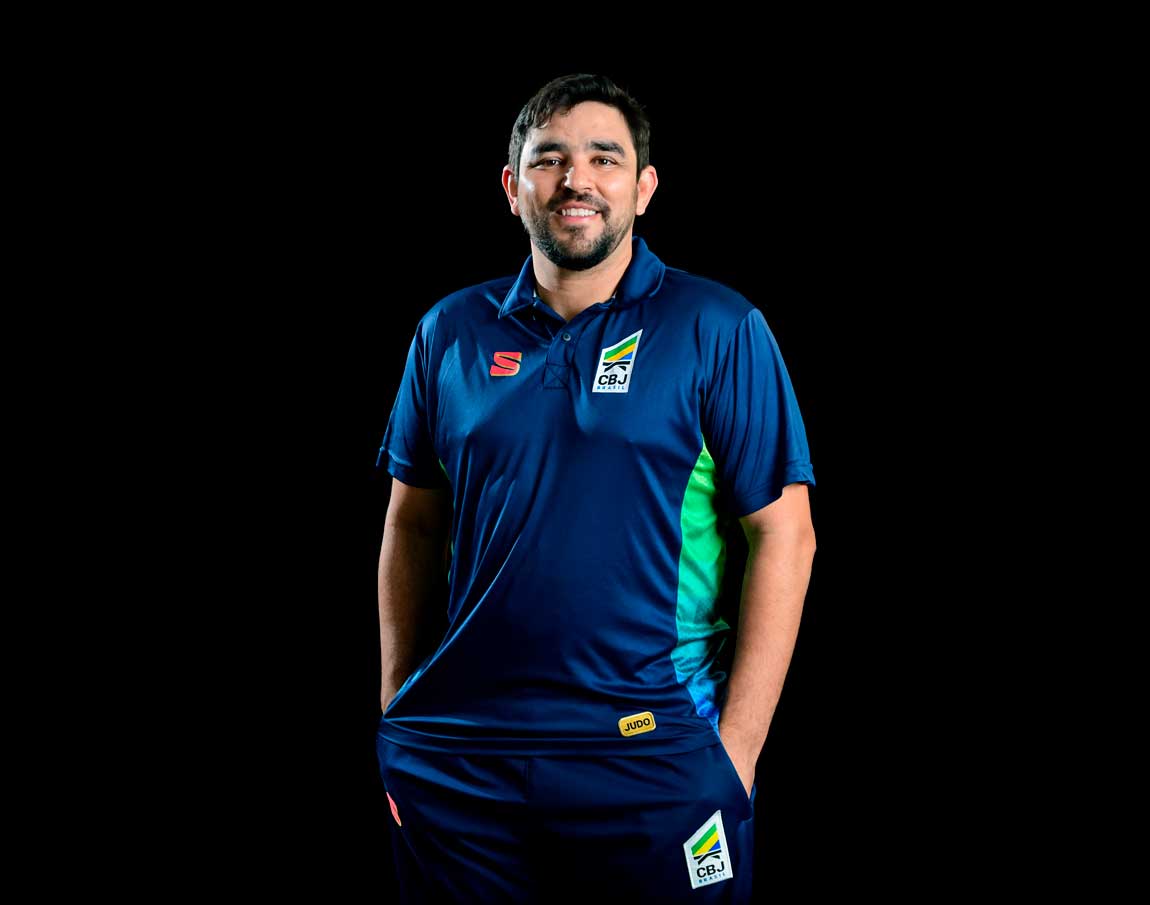 Professor Marcelo Theotonio da Silva, High Performance Manager of the Brazilian Judo Confederation © CBJ
While part of the Brazilian sports media continues to focus primarily on medal counts and podium finishes throughout the International Judo Federation (IJF) World Tour, a far more sophisticated strategy has quietly been taking shape behind the scenes of Brazilian high-performance judo.
The recent performances of Brazilian athletes at major international events — including the Astana Grand Slam in Kazakhstan — reveal far more than rankings, medals or sporting prestige. They expose a highly intelligent competitive management model developed by the Brazilian Judo Confederation (CBJ) under the coordination of High Performance manager Professor Marcelo Theotonio da Silva, supported by strategic concepts previously implemented during earlier Olympic cycles by CBJ president Paulo Wanderley Teixeira.

What may have gone unnoticed by many analysts is, in reality, one of the most refined motivational and performance structures currently operating in international judo.
“The psychological and competitive impact of this strategy is enormous.”
The criterion established by the CBJ for automatic qualification to the 2026 Senior World Championships determined that athletes winning three medals on the IJF World Tour would secure a direct place at the World Championships, scheduled for October in Azerbaijan.
At first glance, the measure may appear simple. In practice, however, it has generated an extraordinarily powerful effect within Brazil’s senior national team.
More than merely securing competitive participation at the World Championships, the strategy is also part of a broader long-term project designed to maximize Brazil’s Olympic qualification opportunities across all weight divisions on the road to the Los Angeles 2028 Olympic Games — a scenario that was not fully achieved during the Paris 2024 cycle.
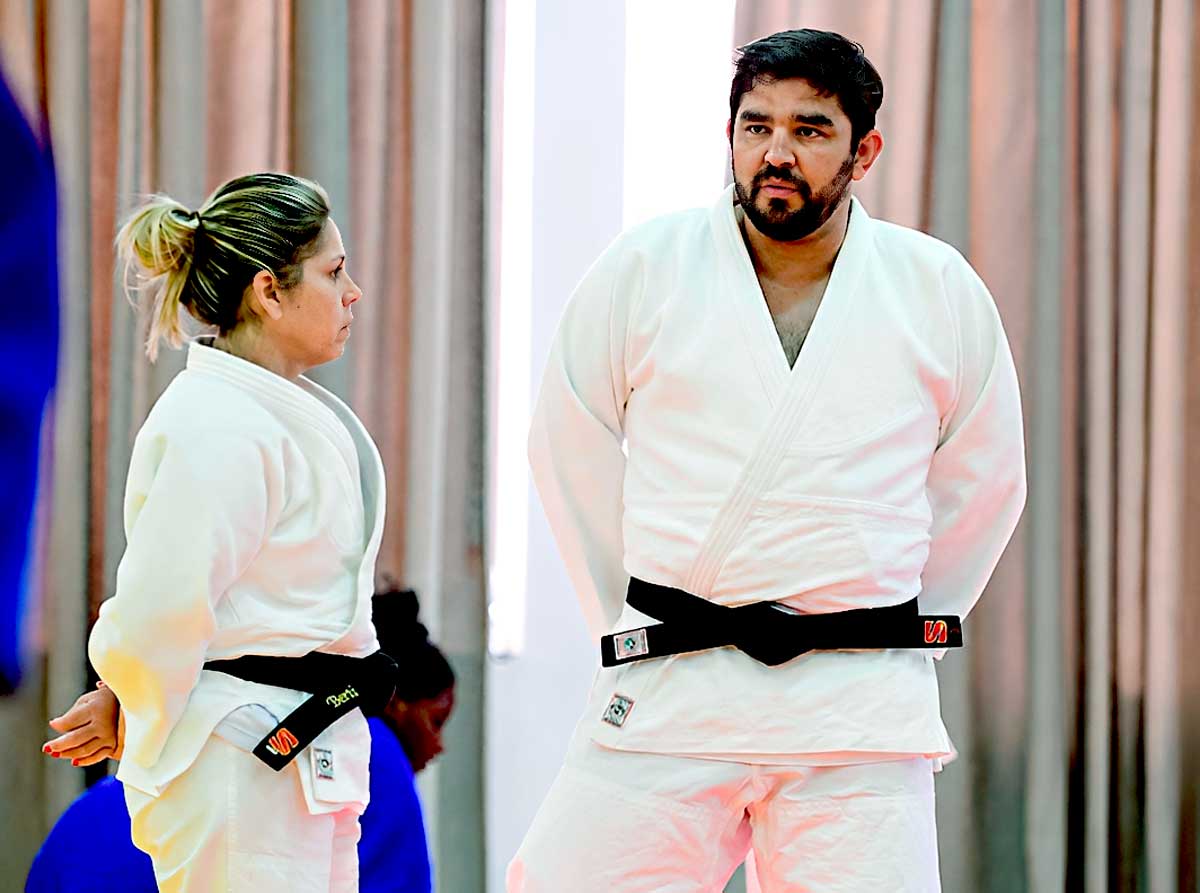
Marcelo Theotonio alongside Professor Andrea Berti Rodrigues Guedes, coach of Brazil’s women’s national team © CBJ
In practical terms, the CBJ transformed every stage of the international circuit into a permanent high-level qualification process. Athletes are no longer competing solely for medals, but also for roster stability, long-term sporting security and early consolidation of their place within the national team structure. The psychological and competitive impact of this approach is enormous.
Every Grand Slam, Grand Prix or international event now represents:
More importantly, the model drastically reduces the possibility of competitive complacency.
In elite sport, one of the greatest challenges faced by modern coaching staffs is not merely developing athletes, but sustaining competitive hunger throughout long and exhausting Olympic cycles — while simultaneously strengthening the mental resilience required to maintain performance, confidence and ambition under constant pressure.
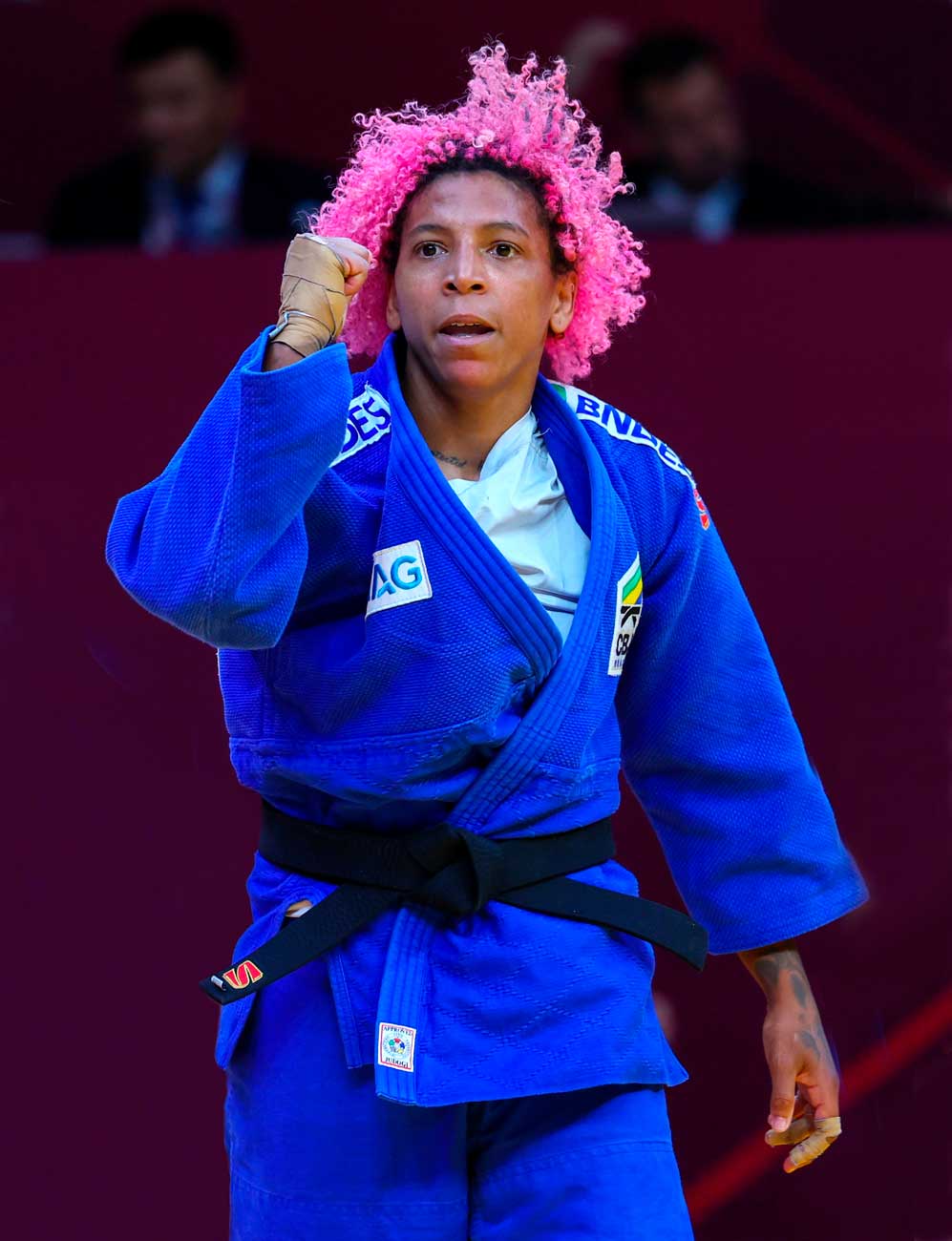
The bronze medal won at the Astana Grand Slam secured Rafaela Silva’s early qualification for the World Championships, scheduled for October in Azerbaijan © Gabriela Sabau / FIJ
And this is precisely where the Brazilian coaching staff found an exceptionally intelligent solution. By linking automatic qualification directly to consistent performances on the international circuit, the CBJ created a permanent environment of sporting meritocracy in which places within the national team are effectively earned on the tatami.
The practical consequence is clear: Brazilian athletes arrive at the World Championships more experienced, more confident, psychologically stronger and significantly better prepared for the demands of elite international competition.
Traditional judo powers have adopted similar strategies throughout Olympic cycles. France, for example, carefully manages the schedule, physical workload and ranking exposure of its leading athletes, including multiple Olympic champion Teddy Riner, who was largely absent from the international circuit following the Paris Olympic Games. After winning Olympic gold on home soil, the French star returns only now to the World Championships, supported by the ranking points previously accumulated.

Likewise, the gradual return of Olympic heavyweight champion Beatriz Souza to the international circuit reinforces how modern high-performance sport increasingly requires individualized planning, physical management and progressive performance development throughout the Olympic cycle.
There is yet another strategic element that makes the Brazilian model even more sophisticated.
The strategic importance of the Senior World Championships within the IJF ranking system further explains the intelligence behind the approach adopted by Brazil’s technical staff. The tournament will award 2,000 ranking points to the world champion, 1,400 to the runner-up and 1,000 to bronze medalists, making it one of the most valuable events of the entire international circuit in the race toward Los Angeles 2028.
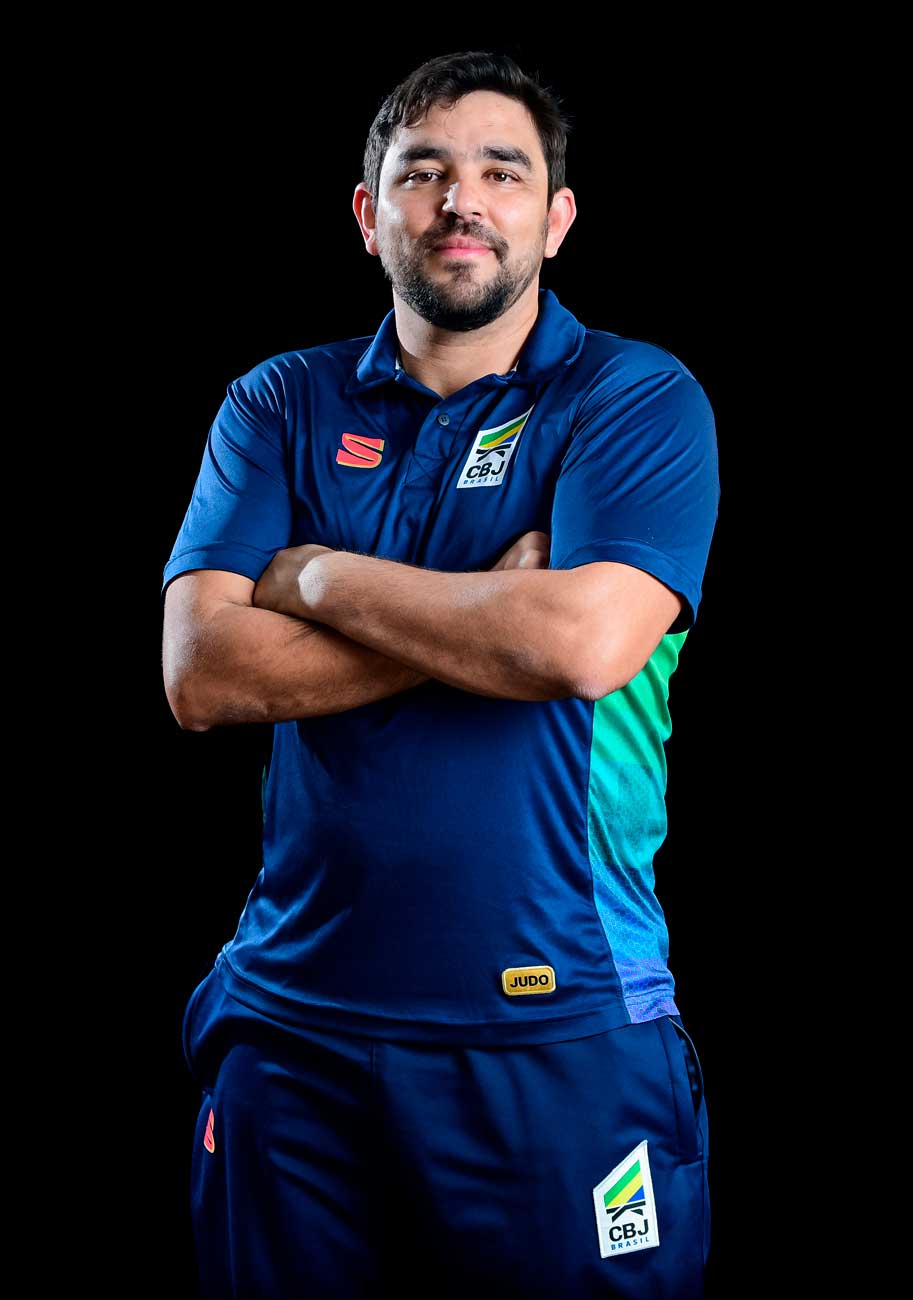
Born in Pindamonhangaba, Sao Paulo, Marcelo Theotonio has always demonstrated a systemic vision of Brazilian judo, closely following athlete development from grassroots categories to elite performance while understanding sporting growth as an integrated and continuous process © Archive
In other words, the Brazilian team is not simply building results for a single season. It is constructing strategic positioning for virtually the entire Olympic cycle ahead.
The stronger the ranking position:
Within this framework, the World Tour ceases to function merely as a competitive calendar and instead becomes an integrated platform for continuous sporting evolution.
Perhaps this is precisely one of the greatest strengths of Brazil’s current High Performance model: transforming every competition into a simultaneous tool for preparation, motivation, selection and international consolidation.
Brazil’s national team does not appear to be merely participating in the World Tour. It is using the circuit as a sophisticated platform for Olympic construction, competitive development and long-term international consolidation.
The Brazilian Judo Confederation receives sponsorship support from BNDES, whose investment has played a structural role in the federation’s current Olympic cycle.