
14 de outubro de 2026



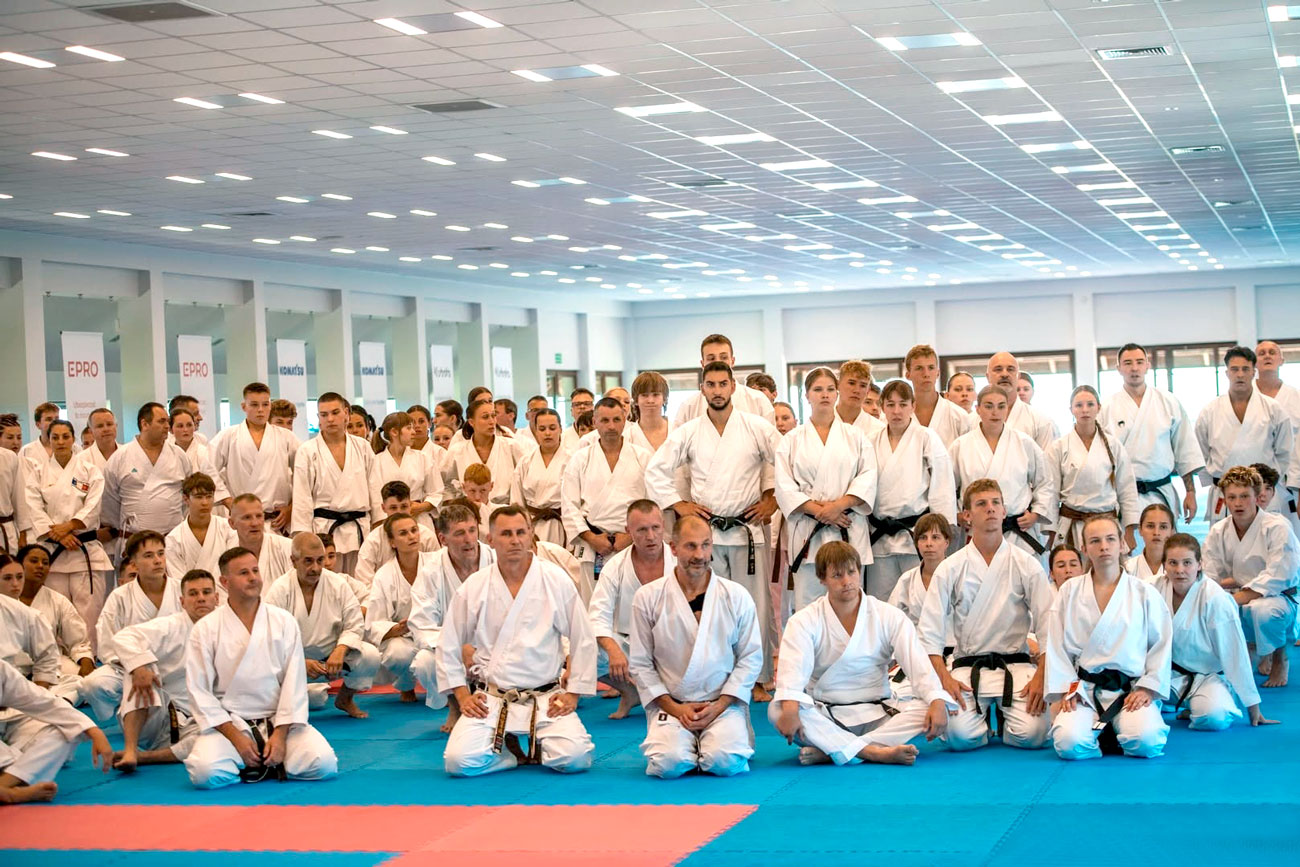
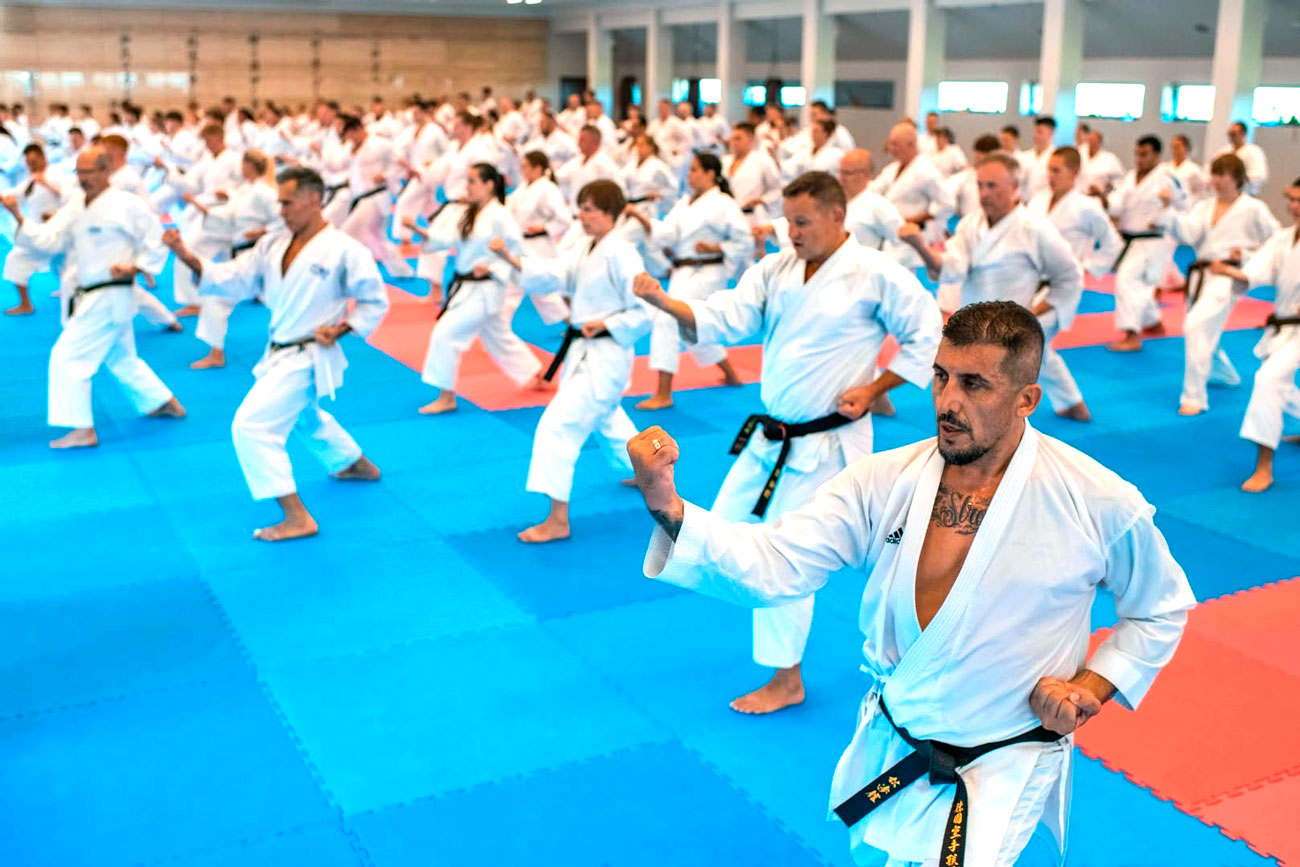
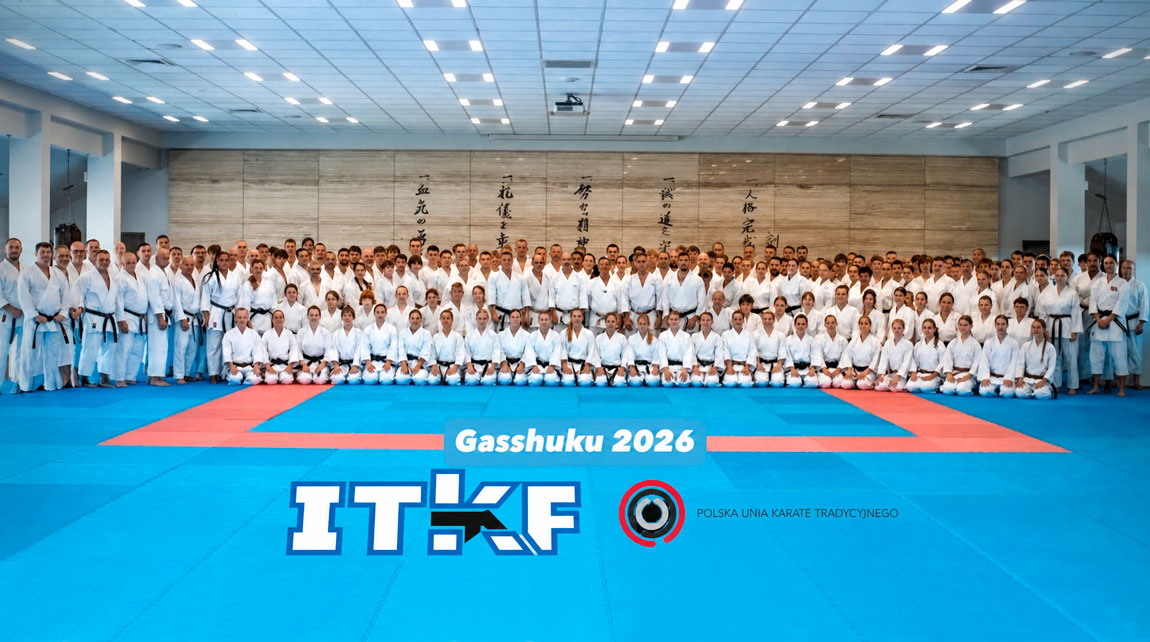 Historic photograph brings together the 250 participants from 12 countries at Gasshuku 2026 at the European Budo Centre – Dojo Stara Wieś in Poland © Joanna Musial / PUTK
More than bringing together some of the world’s leading figures in traditional karate for four days of training, Gasshuku 2026 established itself as a strategic forum for closer institutional relations, international expansion and the development of new avenues of cooperation for ITKF Global.
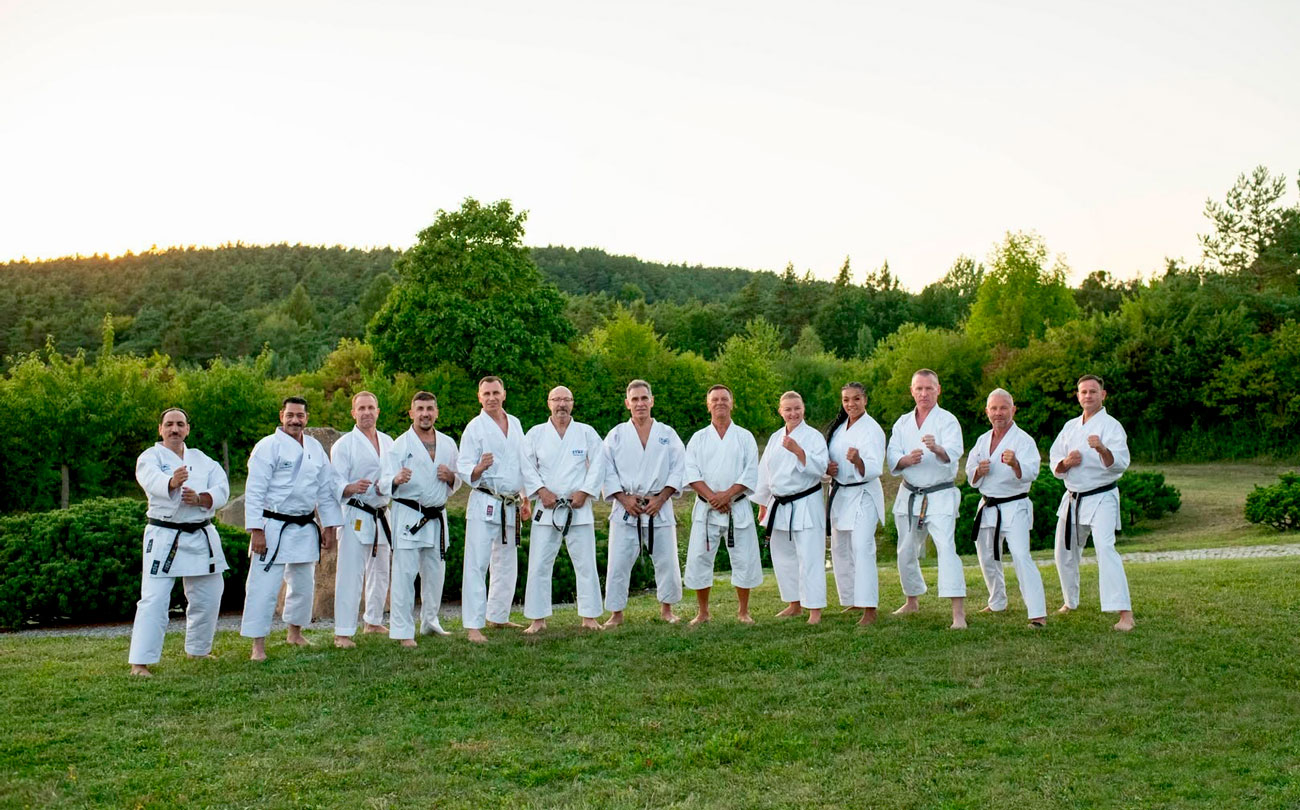
Masters, instructors and officials who were among the leading figures at Gasshuku 2026 © Joanna Musial / PUTK
Held from 13 to 16 August at the European Budo Centre – Dojo Stara Wieś in Poland, the gathering brought together 250 participants from 12 countries. Organised by the Polish Traditional Karate Union (PTKU) under the auspices of ITKF Global, the event combined more than 16 hours of dojo practice with meetings and discussions that extended beyond the technical programme.
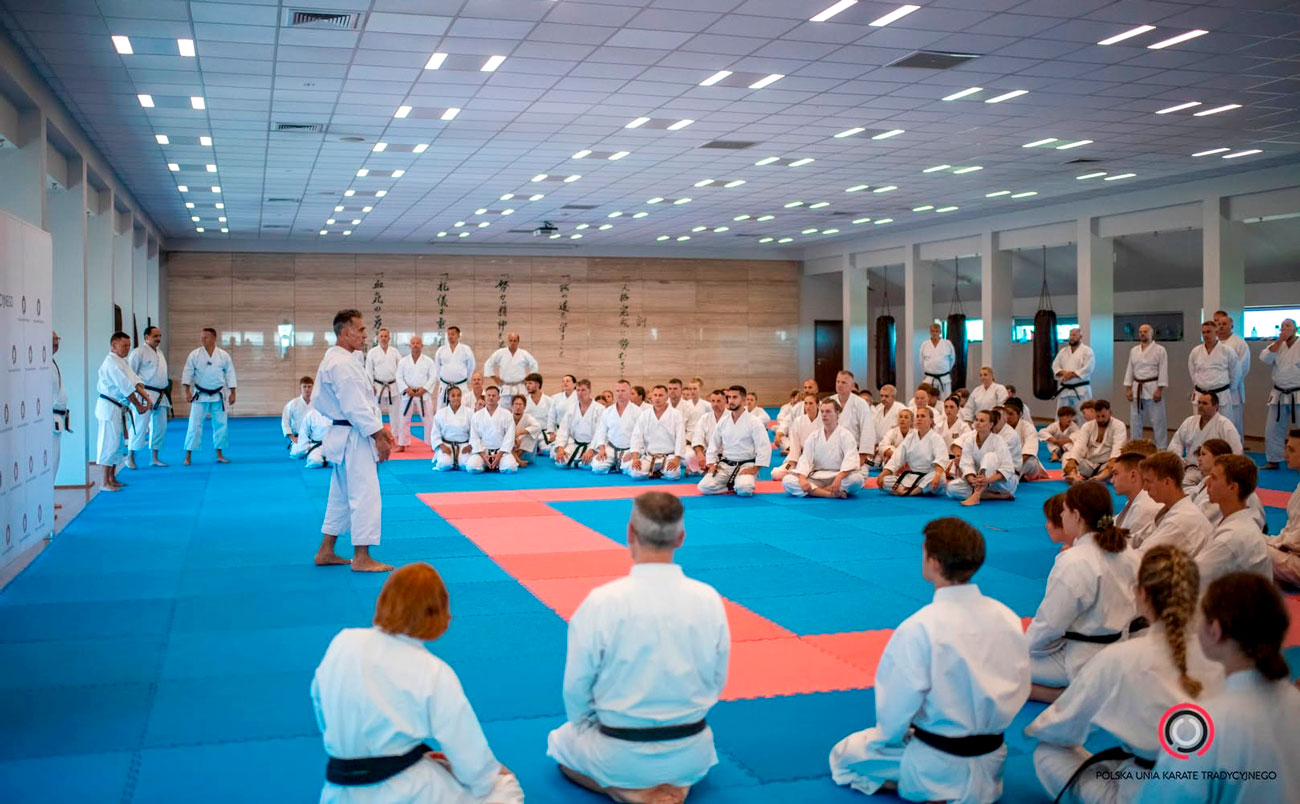
Sensei Justo Gomez, shichi-dan (7th dan), leads a training session at Gasshuku 2026 © Joanna Musial / PUTK
The activities were led by a highly distinguished group of instructors: shihans Włodzimierz Kwieciński, kyuu-dan (9th dan), and Gilberto Gaertner, hachi-dan (8th dan); and senseis Justo Gomez, shichi-dan (7th dan); Cornel Mușat, shichi-dan (7th dan); Mohamed Fawzy, roku-dan (6th dan); Paweł Janusz, roku-dan (6th dan); and Rytis Bublevičius, roku-dan (6th dan).
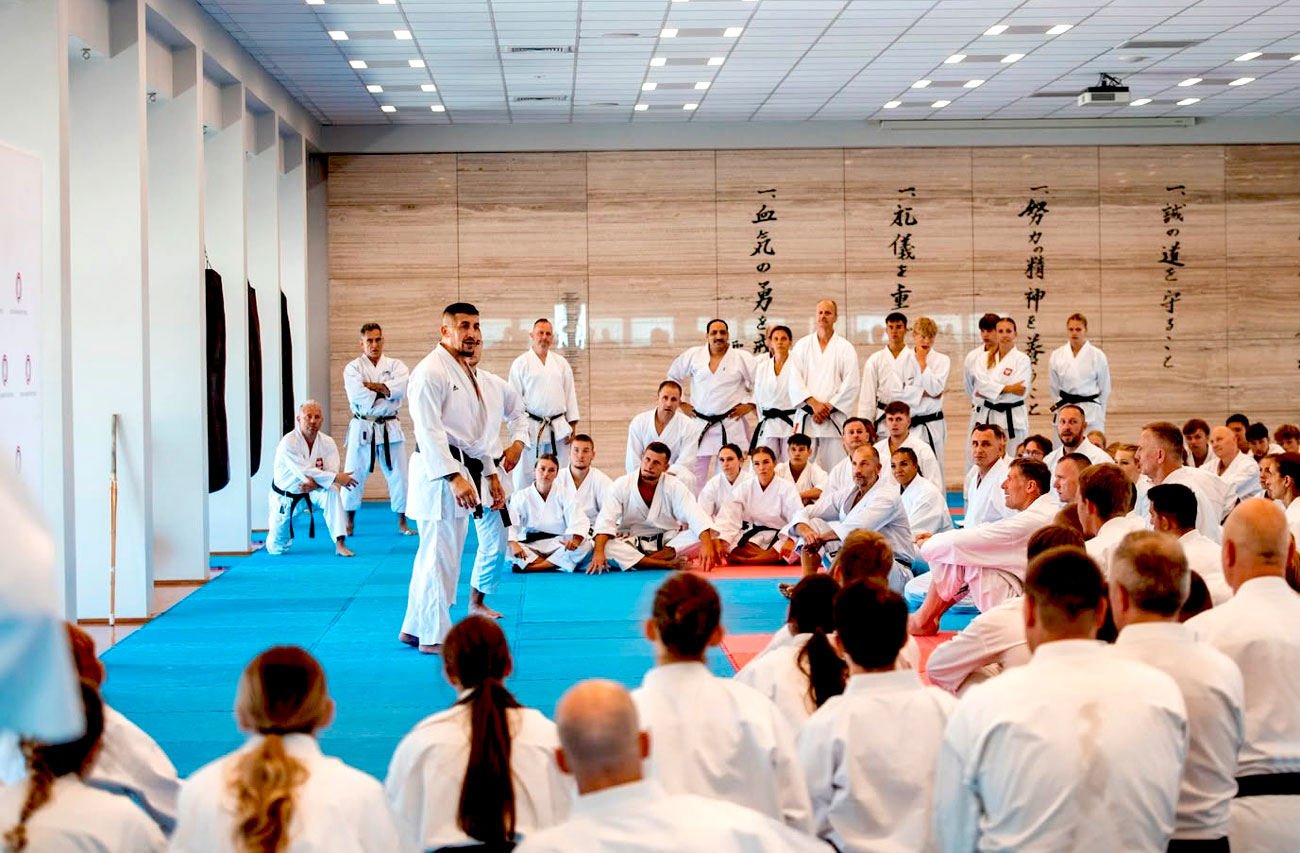
Sensei Cornel Mușat, shichi-dan (7th dan), leads a training session at Gasshuku 2026 © Joanna Musial / PUTK
The joint presence of teachers from different countries and backgrounds enabled the training sessions to be conducted in an integrated manner, encouraging the exchange of experience and a deeper understanding of the technical, methodological and philosophical foundations of traditional karate.
Gilberto Gaertner, chairman of ITKF Global, said that the excellence of the organisation and the facilities provided by Dojo Stara Wieś were decisive factors in the quality of the gathering.
“It was an impeccably organised event in every detail. Dojo Stara Wieś is not only beautiful, with strictly Japanese architecture, but also offers excellent infrastructure. The training sessions proceeded in an integrated and harmonious manner, reinforcing the methodological principles of traditional karate.”
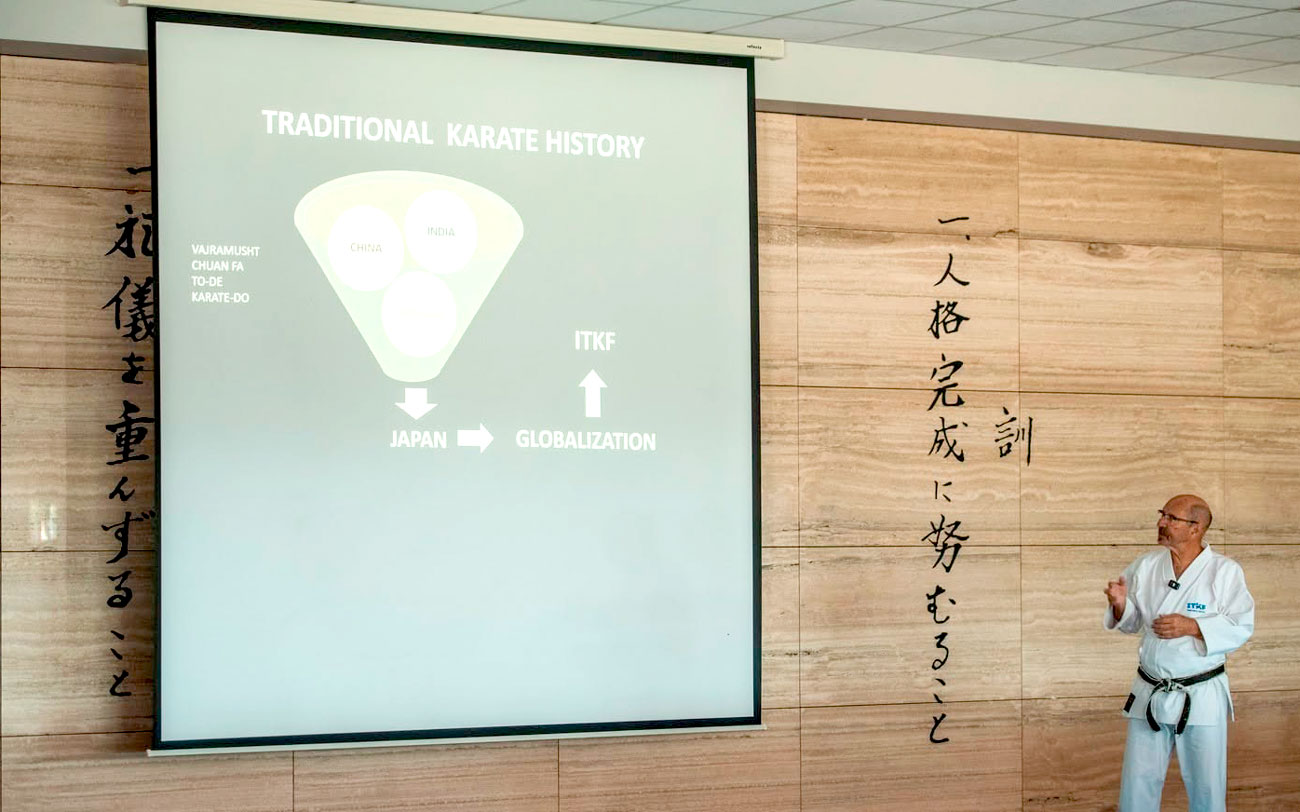
In one of his presentations, ITKF Global chairman shihan Gilberto Gaertner, hachi-dan (8th dan), discusses traditional karate’s Japanese origins, its worldwide expansion and the creation of the organisation © Joanna Musial / PUTK
Designed to provide an immersive experience in the philosophy of Budo, the European Budo Centre combines training, accommodation, dining and social areas in a natural setting. This configuration allows teachers and practitioners to share not only activities in the dojo, but also different moments of daily life throughout the Gasshuku.
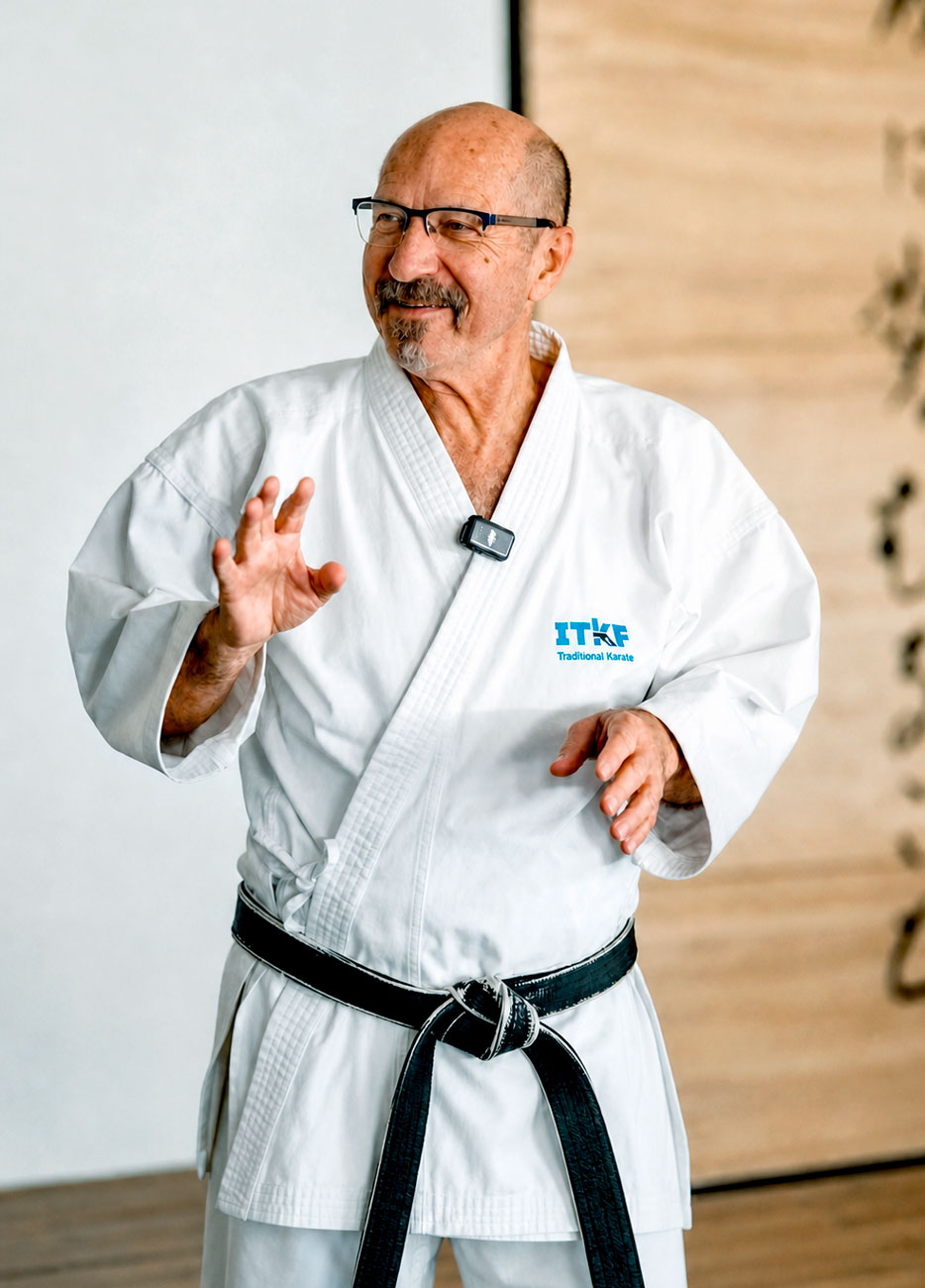
Shihan Gilberto Gaertner teaches a technical class during Gasshuku 2026 © Joanna Musial / PUTK
Gaertner paid particular tribute to the work carried out by Paweł Janusz, president of the Polish Traditional Karate Union, and the team responsible for staging the gathering.
“I thank and congratulate sensei Paweł Janusz and his team for their organisation and for the respect and care with which they welcomed us. I also extend my congratulations and thanks to all the instructors for the high standard of their classes, as well as to every Gasshuku participant for their commitment, discipline and exemplary respect.”
Karate practitioners follow Gilberto Gaertner’s presentation on the history of traditional karate © Joanna Musial / PUTK
For Paweł Janusz, the presence of representatives from 12 countries demonstrated the strength of the international community and confirmed Dojo Stara Wieś’s capacity to bring different generations and schools together around the values of traditional karate.
“It was truly a very successful event. It is extremely encouraging that 12 countries took part, as this shows just how strong and united our international traditional karate family is. We had announced that Dojo Stara Wieś would once again become the heart of the global traditional karate community, and that is exactly what happened.”
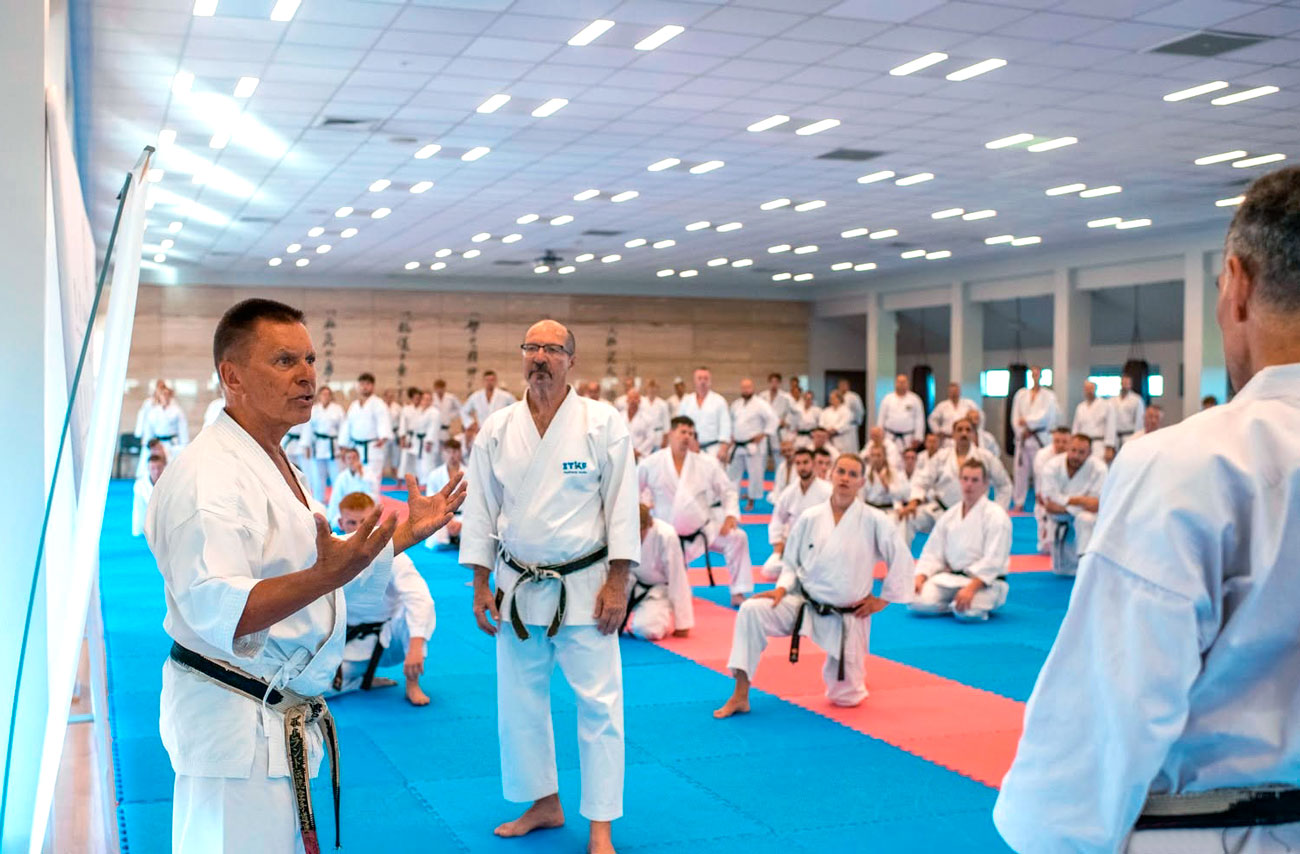
Włodzimierz Kwieciński, Gilberto Gaertner and Justo Gomez exchange views on the foundations of traditional karate before the participants © Joanna Musial / PUTK
According to the Polish official, the shared experience provided by the Gasshuku creates opportunities for integration that are difficult to achieve at a competition, where attention is naturally focused on the pursuit of results.
“Gatherings like this have a special value for me because they provide much greater integration than competitions, where the focus is primarily on performance and winning medals. At the Gasshuku, we all learn together, exchange experiences and build bonds, regardless of where we come from.”
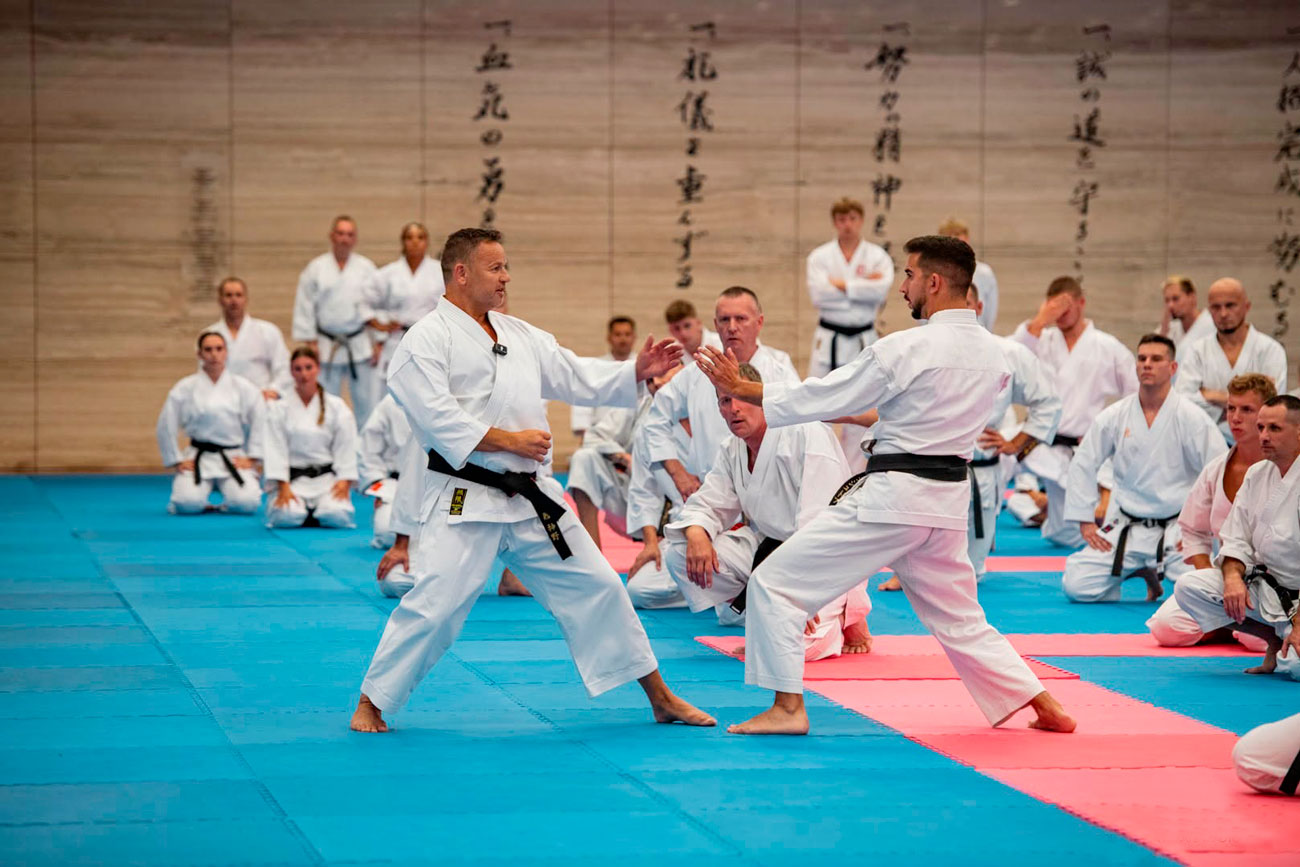
Sensei Paweł Janusz, roku-dan (6th dan), president of the Polish Traditional Karate Union, leads a training session at Gasshuku 2026 © Joanna Musial / PUTK
Janusz also emphasised the importance of holding the gathering in a venue conceived in accordance with Hidetaka Nishiyama’s vision.
“It is in places like this that inspirations, friendships and memories are born and remain with us for a lifetime. I am happy to have taken part in this event and am already looking forward to the next Gasshuku.”
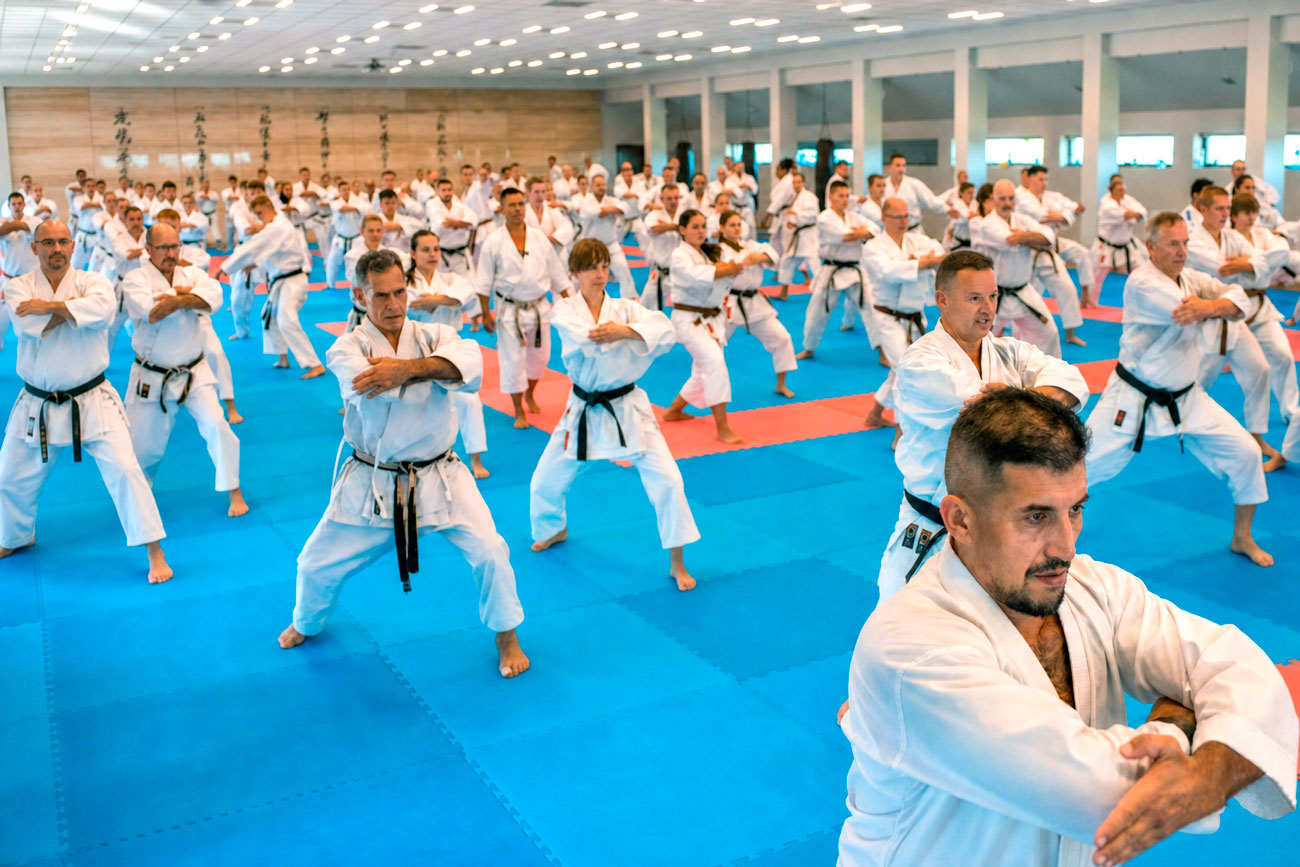
Hundreds of karate practitioners perform kata during a group training session at Gasshuku 2026 © Joanna Musial / PUTK
For Mohamed Fawzy, roku-dan (6th dan), technical director of the Egyptian national team and a member of the ITKF Global Technical Committee, discipline created the environment required for participants to focus fully on training and the exchange of knowledge.
“Discipline was truly the heart of this event. It created an atmosphere of concentration and respect that helped everyone set distractions aside and immerse themselves completely in the training.”
Fawzy also highlighted the atmosphere provided by Dojo Stara Wieś, whose Japanese architecture and integration with nature created suitable conditions for both intensive practice and interaction among participants.
“Dojo Stara Wieś is incomparable. Surrounded by nature and featuring authentic Japanese architecture, it offers the ideal atmosphere not only for intensive training, but also for genuine connection and the sharing of knowledge among practitioners.”
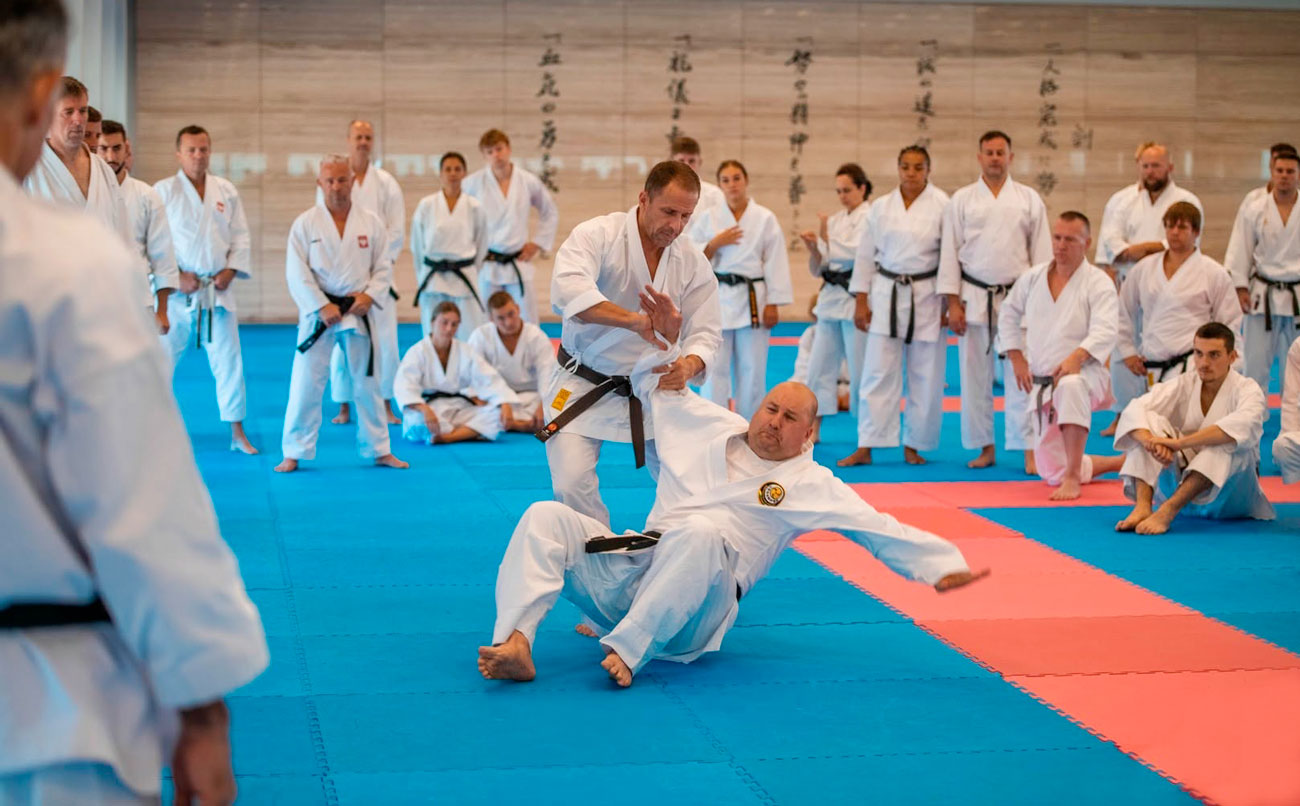
Sensei Rytis Bublevičius, roku-dan (6th dan), leads a training session at Gasshuku 2026 © Joanna Musial / PUTK
In the Egyptian technical director’s assessment, the teachers went beyond the transmission of techniques and shared experiences built over the course of their karate journeys.
“The instructors offered far more than techniques. They shared their journeys and experiences sincerely. The passion and humility they demonstrated were extremely inspiring to everyone on the tatami.”
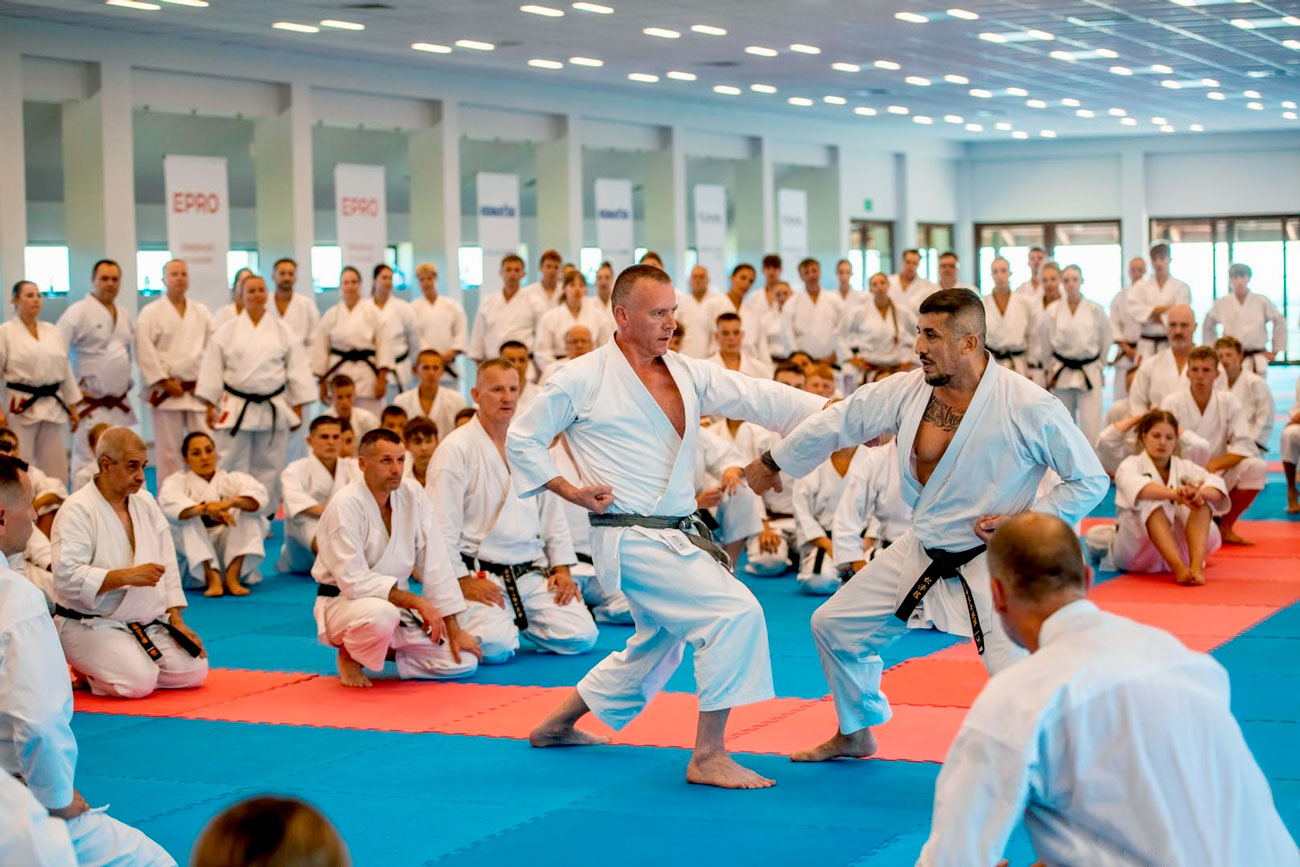
Cornel Mușat leads a training session at Gasshuku 2026 © Joanna Musial / PUTK
Fawzy also linked the quality seen at the gathering to the principles and guidelines established by the ITKF.
“The ITKF guidelines ensured that the entire seminar was grounded in mutual respect, a high technical standard and the preservation of traditional etiquette, elements that remind us of the true meaning of martial arts.”
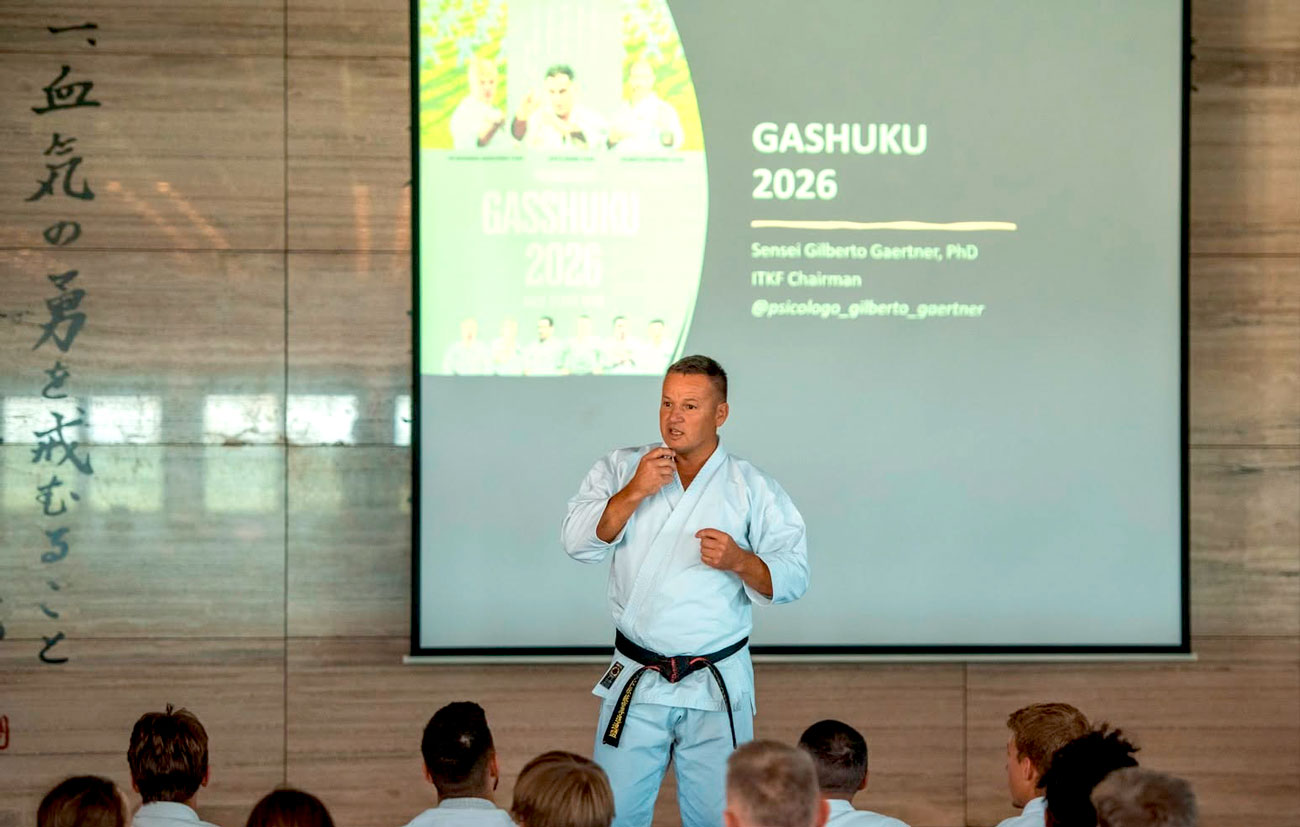
Paweł Janusz gives instructions to participants at Gasshuku 2026 © Joanna Musial / PUTK
A regular participant in the Polish gathering, sensei Justo Gomez, shichi-dan (7th dan), a member of the ITKF Technical Committee and the organisation’s technical director in Argentina, highlighted the tradition the event has built over more than three decades.
“For more than 35 years, those responsible for traditional karate in Poland have organised the Gasshuku, an intensive summer training event. The 2026 edition took place at Dojo Stara Wieś, whose construction was inspired and inaugurated by sensei Hidetaka Nishiyama, founder of the ITKF.”
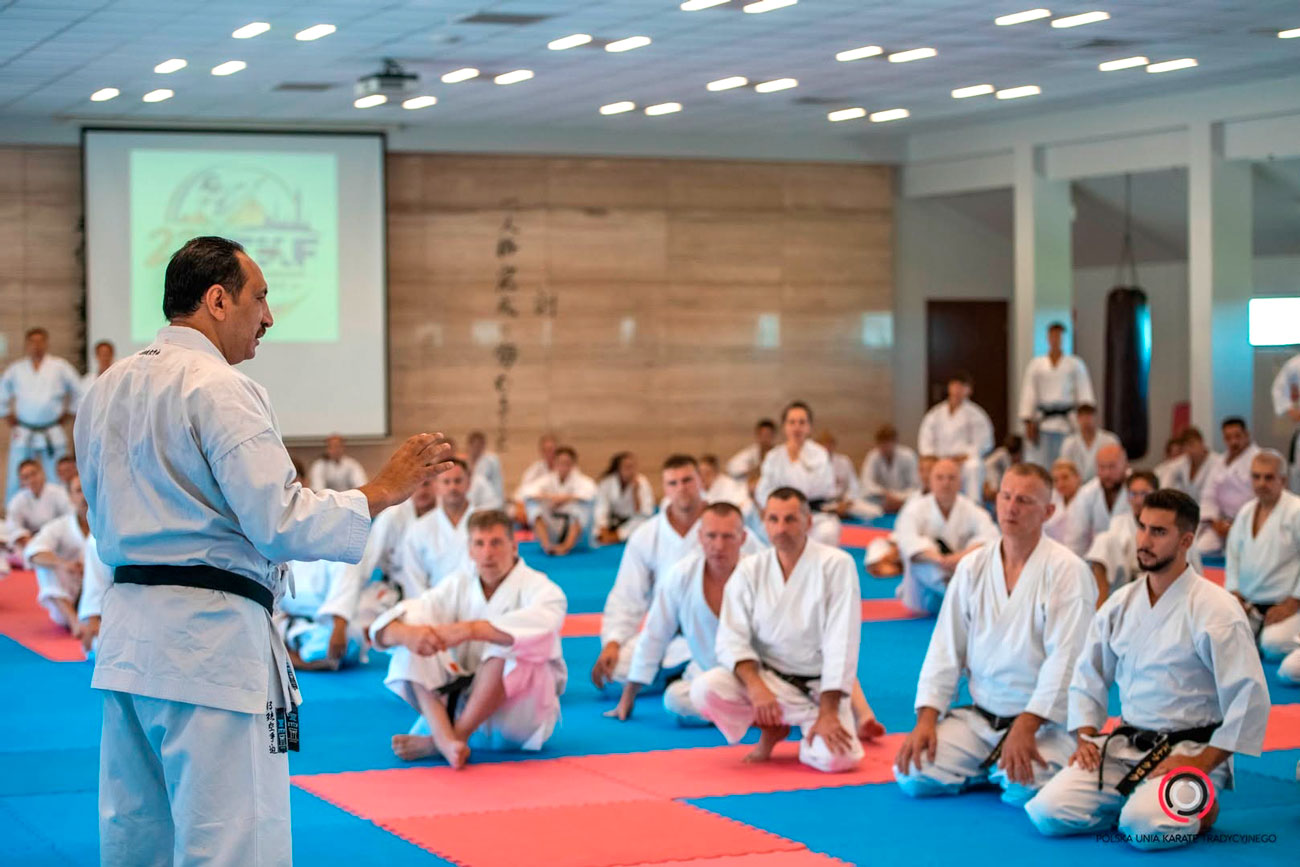
Sensei Mohamed Fawzy, roku-dan (6th dan), leads a training session at Gasshuku 2026 © Joanna Musial / PUTK
For the Argentine teacher, his participation in the gathering is directly related to his commitment to preserving and transmitting the technical and philosophical principles systematised by Nishiyama.
“It is an honour and a pleasure to have attended this important international event for so many years. My main objective is to preserve the legacy of master Hidetaka Nishiyama. I therefore dedicated my classes to the biomechanical details that underpin traditional karate techniques and to the philosophical aspects that encompass the essence of Budo.”
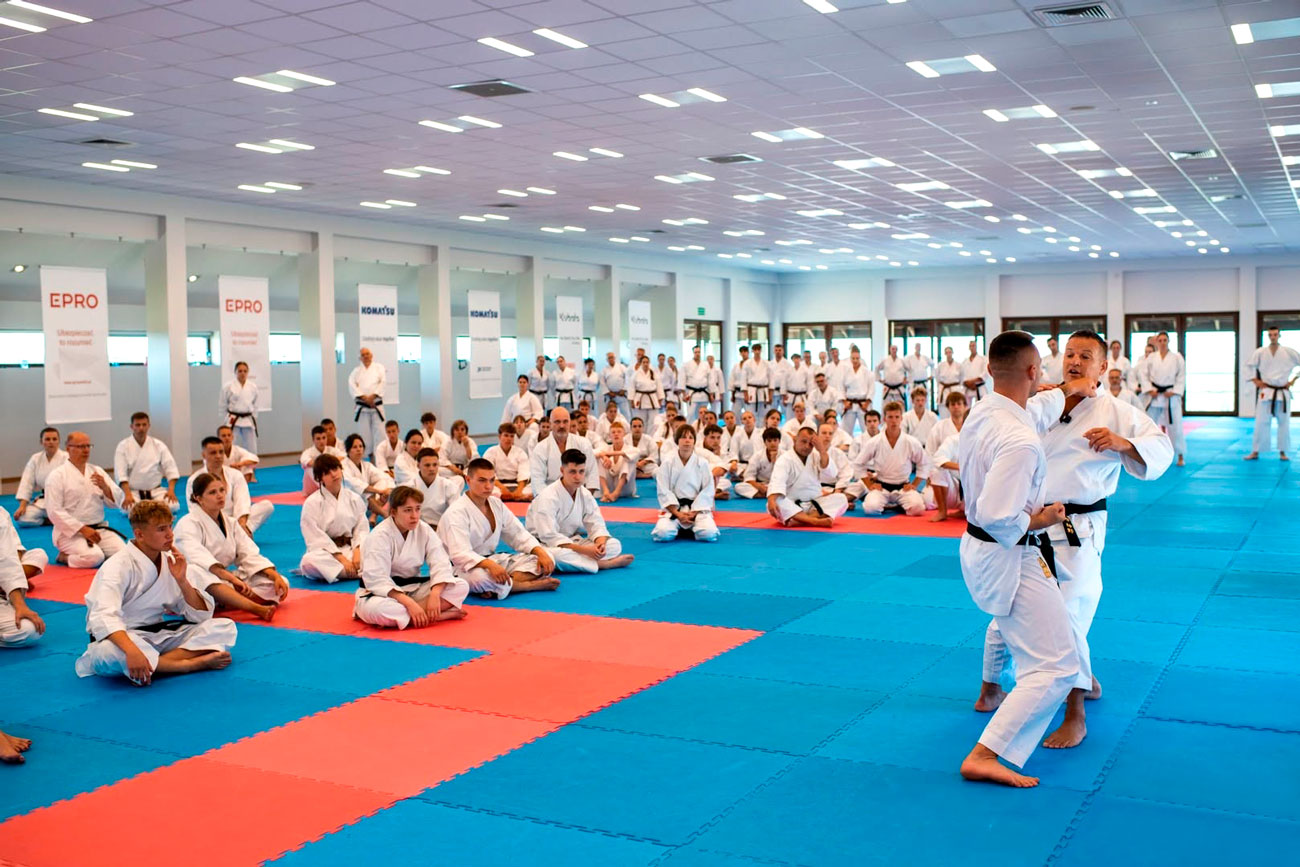
Paweł Janusz leads a training session at Gasshuku 2026 © Joanna Musial / PUTK
Gomez also recognised the work carried out by the Polish Traditional Karate Union in staging the gathering.
“I would like to thank and congratulate the entire Polish Traditional Karate Union team, led by sensei Paweł Janusz, for their excellent work.”
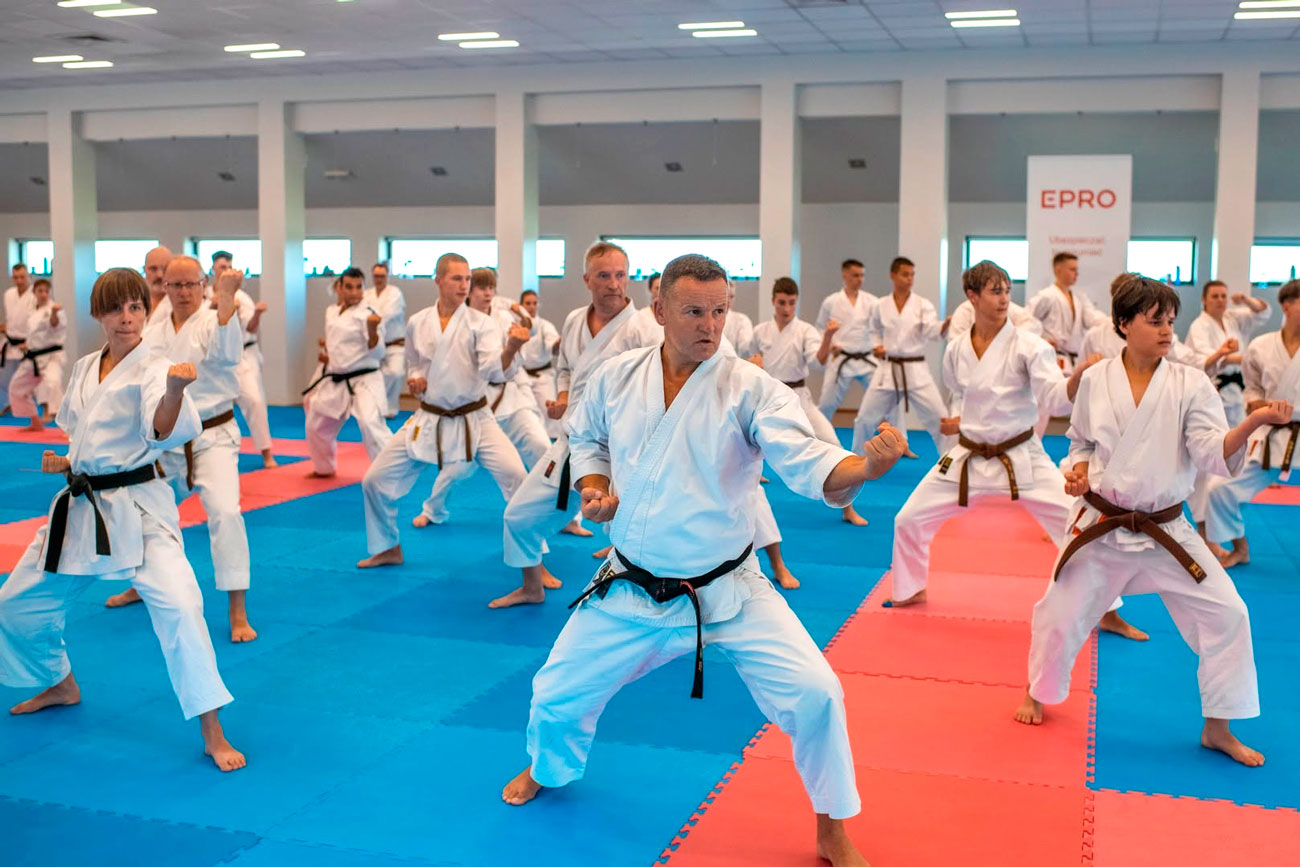
Paweł Janusz leads a training session at Gasshuku 2026 © Joanna Musial / PUTK
One of the leading technical authorities in attendance, Cornel Mușat, shichi-dan (7th dan), said that the importance of the Gasshuku could not be measured solely by the hours of training, the techniques practised or the participants’ grades.
“There are moments in karate that are not measured only by hours of training, repeated techniques or grades. They are measured by the people we meet, by the energy we feel on the tatami and, above all, by the sense of belonging to a community united by the same values. Gasshuku 2026 in Poland was one of those moments.”
The multiple world champion emphasised the high technical standard of the activities, but considered the willingness of masters, instructors and practitioners to learn from one another to be one of the gathering’s most important aspects.
“Each teacher brought their experience, their vision and their own way of conveying and deepening the authentic values of traditional karate. The technical standard was extraordinary, but beyond that, perhaps the most important element was everyone’s willingness to learn from one another.”
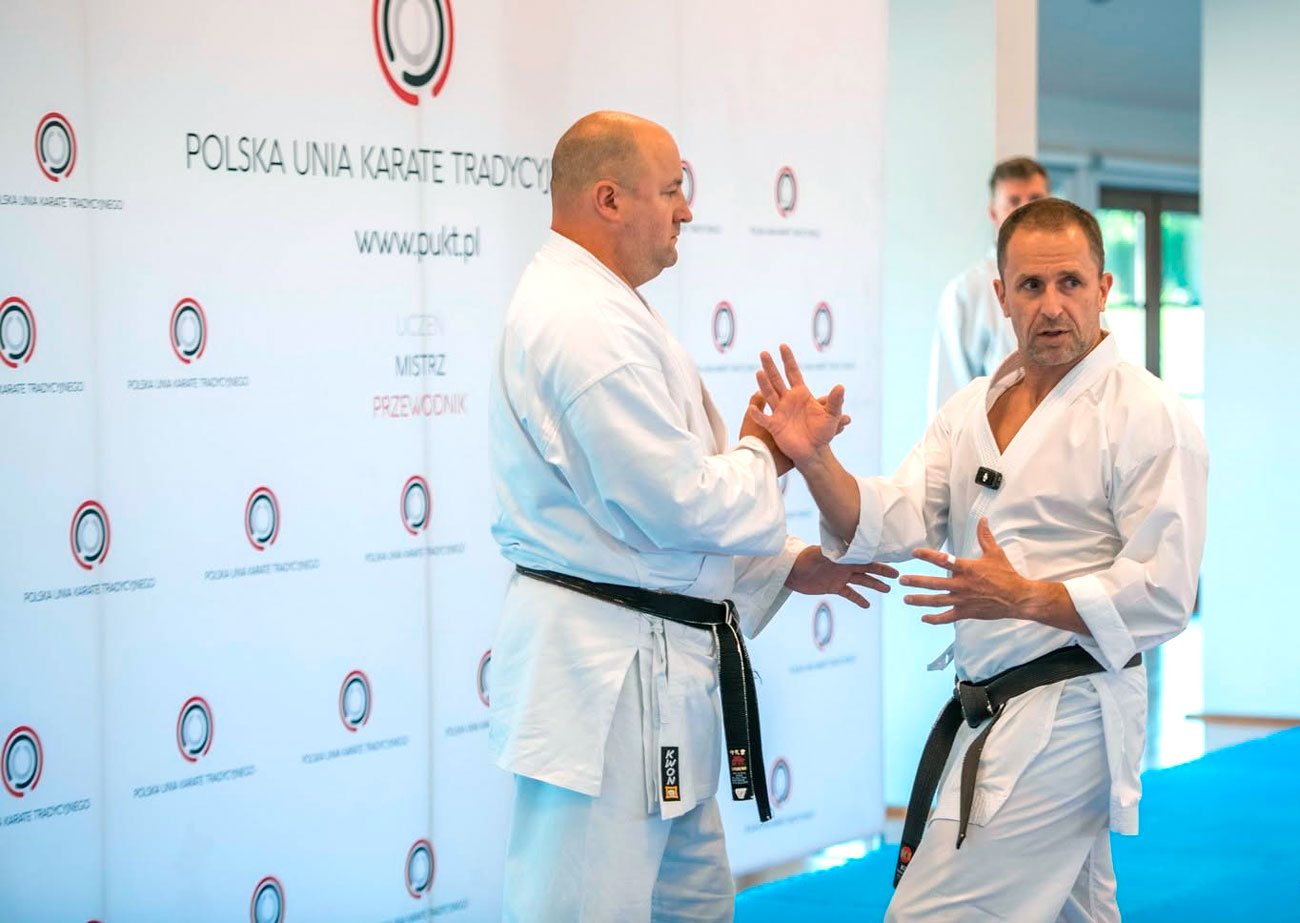
Rytis Bublevičius leads a training session at Gasshuku 2026 © Joanna Musial / PUTK
Mușat stressed that teachers and practitioners from different countries and generations worked together without barriers, united by respect, seriousness and a shared desire to improve.
“For me, this is the true strength of the ITKF.”
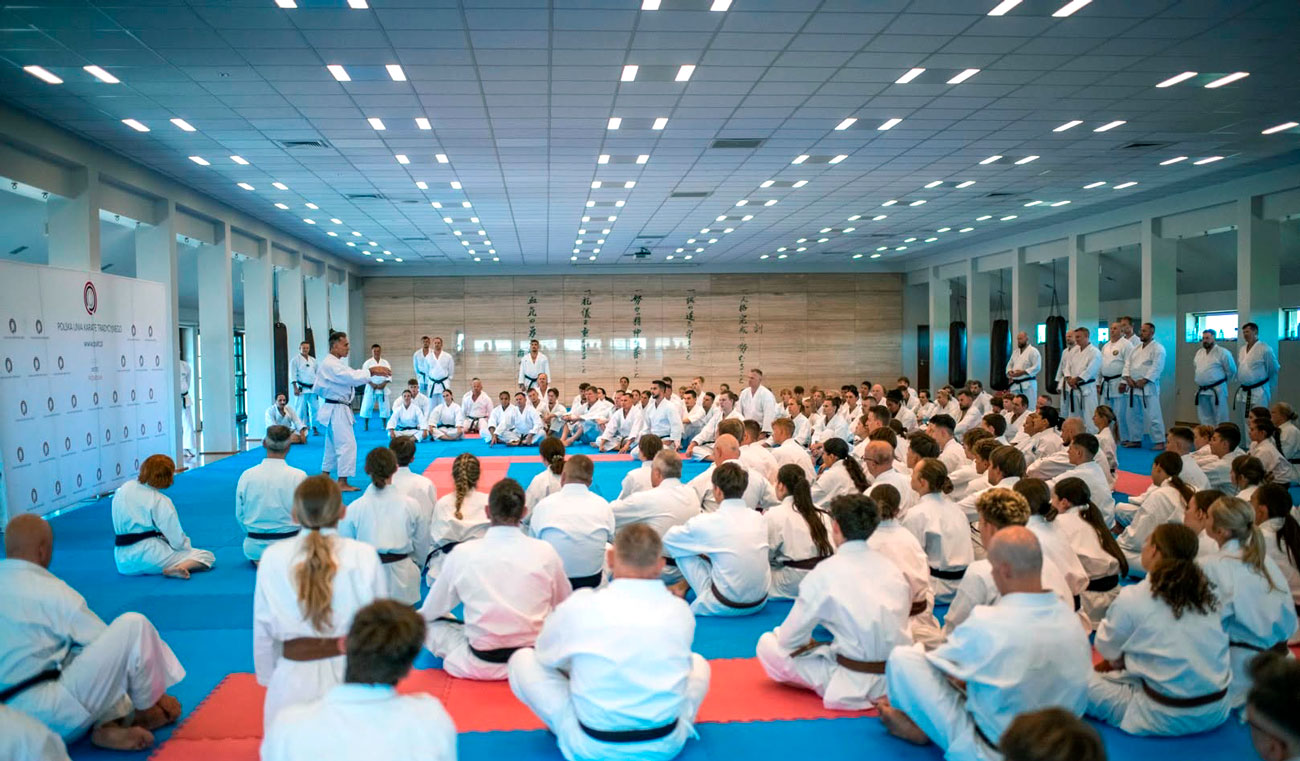
Justo Gomez leads a training session at Gasshuku 2026 © Joanna Musial / PUTK
The Romanian teacher also congratulated the Polish Traditional Karate Union on its work in preparing and staging the gathering.
“I congratulate the Polish Traditional Karate Union on its exceptional organisation, the attention devoted to every detail and the extraordinary atmosphere created during the event. An international gathering of this scale requires an enormous amount of work, and the quality of that work could be seen at every moment.”
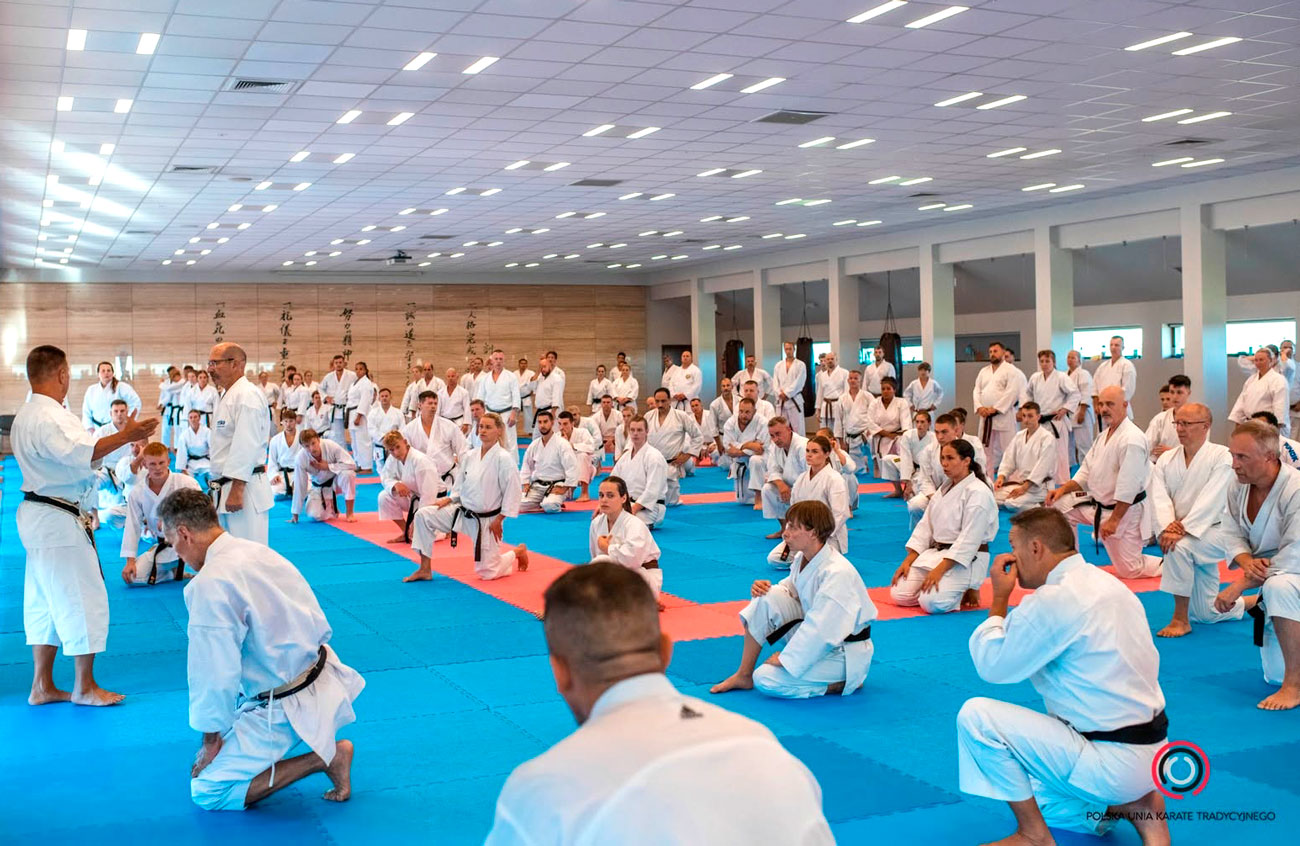
Włodzimierz Kwieciński leads a training session at Gasshuku 2026 © Joanna Musial / PUTK
The interaction provided by the event created space for deeper dialogue among different leaders in traditional karate. One of the most significant meetings brought together Gilberto Gaertner and Włodzimierz Kwieciński, the driving force behind the European Budo Centre and one of the discipline’s leading figures in Europe.
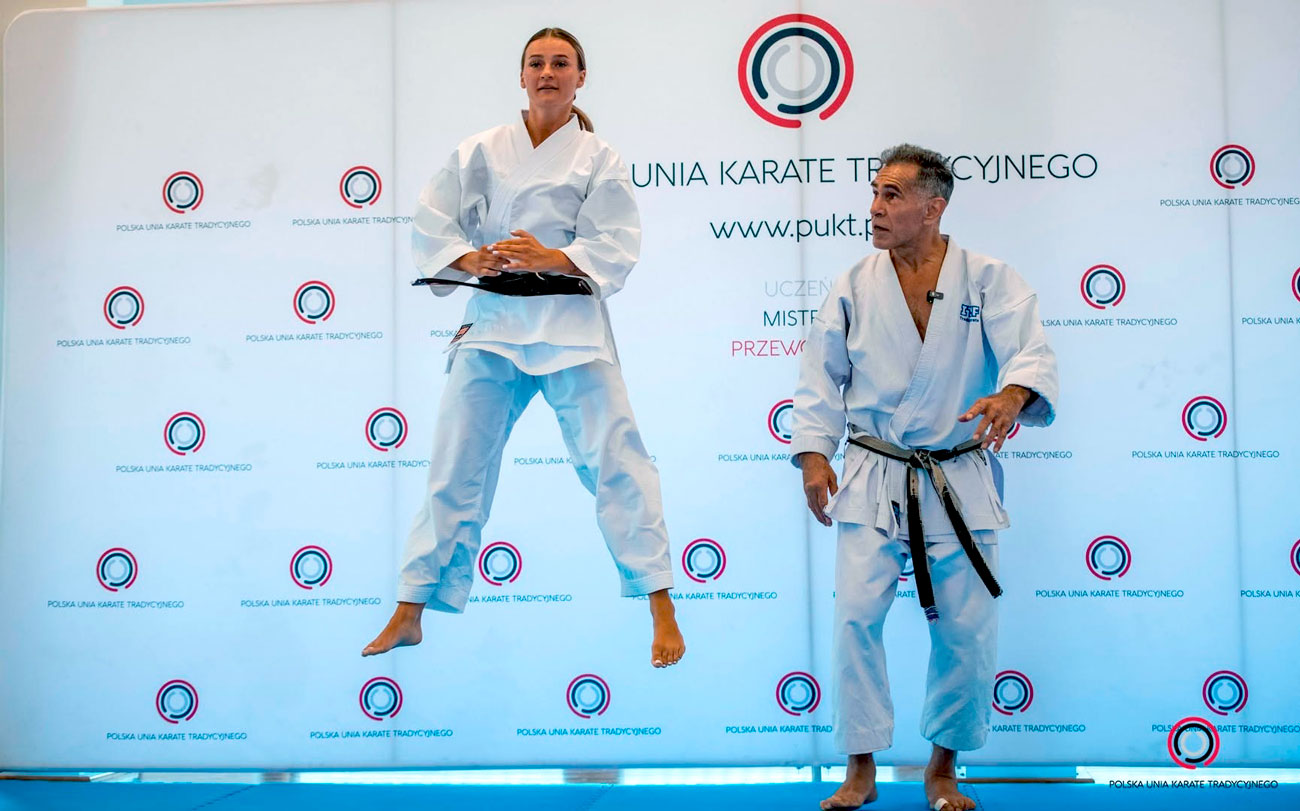
Sensei Justo Gomes leads breathing and pressure training © Joanna Musial / PUTK
According to Gaertner, the conversation made it possible to strengthen the ties already re-established between the leaders and broaden the prospects for cooperation and joint initiatives in support of traditional karate.
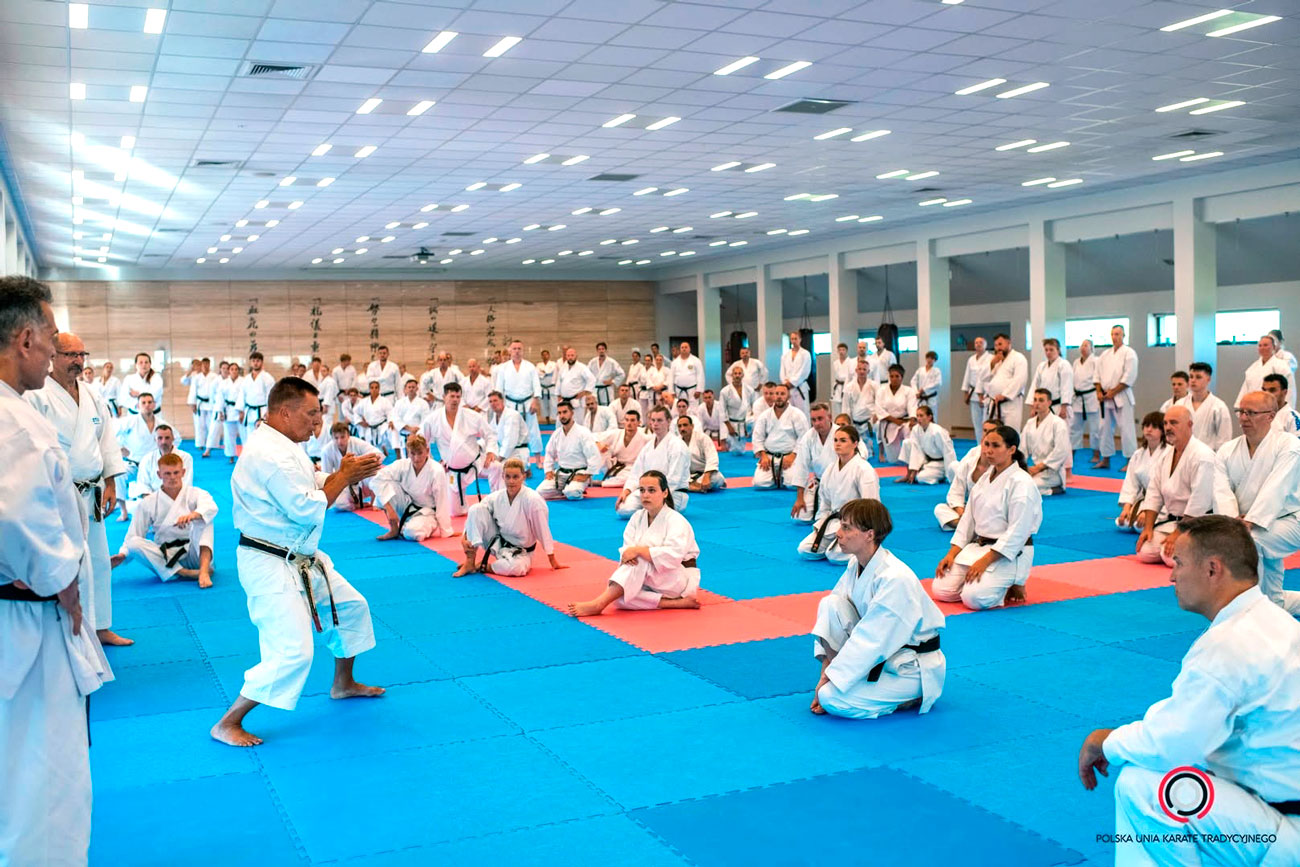
Włodzimierz Kwieciński leads a training session © Joanna Musial / PUTK
The meeting continued the process of rapprochement begun at the 2025 Gasshuku. One year later, the presence of instructors, officials and representatives from different countries in the same dojo demonstrated that the movement had begun to produce tangible developments in both the technical and institutional spheres.
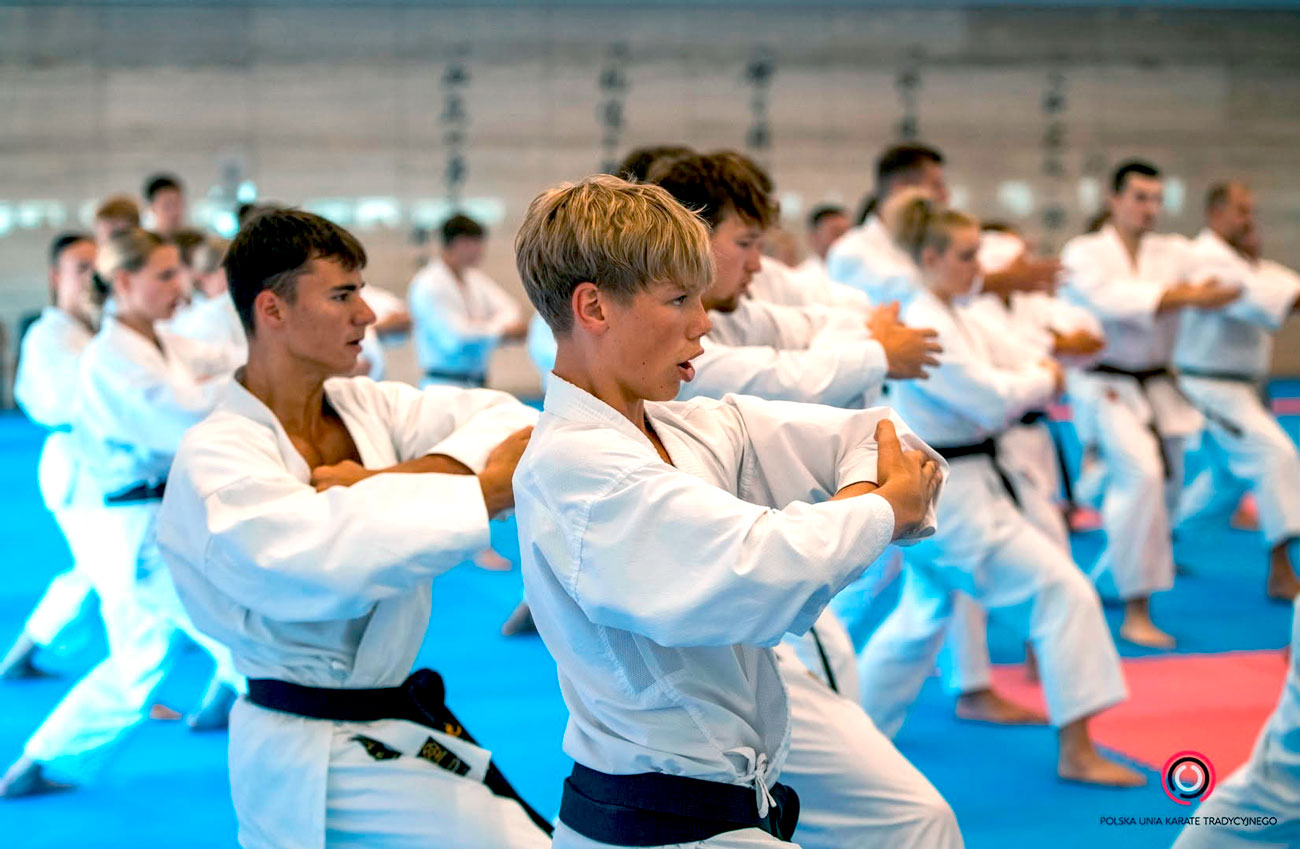
Karate practitioners perform kata © Joanna Musial / PUTK
Within this environment of dialogue, figures such as Justo Gomez, Cornel Mușat, Rytis Bublevičius, Marta Stuparu and Vadim Akimov also helped broaden the gathering’s international representation and strengthen ties among the different national communities.
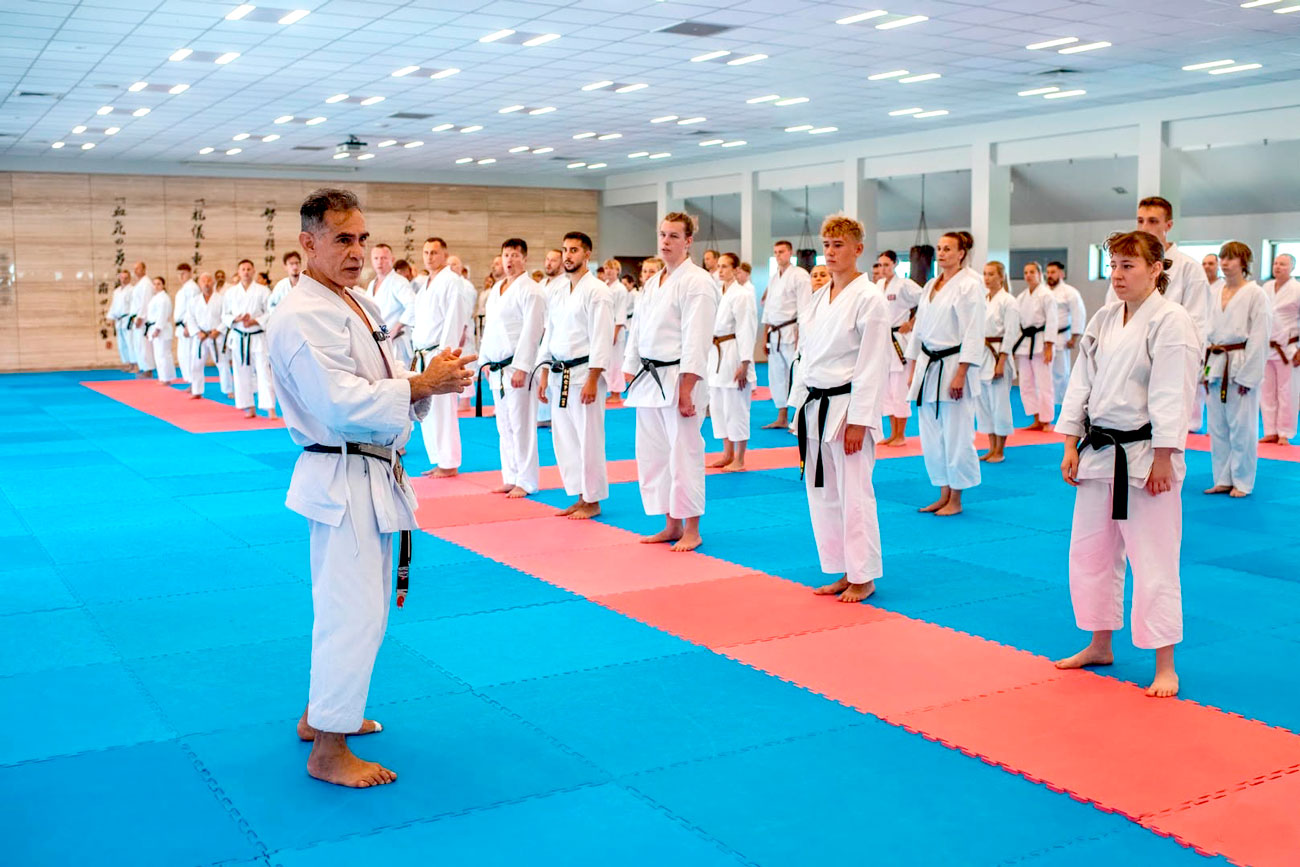
Justo Gomez leads a training session © Joanna Musial / PUTK
One of the institutional developments at the Gasshuku was the affiliation of the newly founded Lithuanian Traditional Karate-do Federation with ITKF Global. Vadim Akimov travelled especially to Poland to take part in the meeting at which the details of the organisation’s integration were defined.
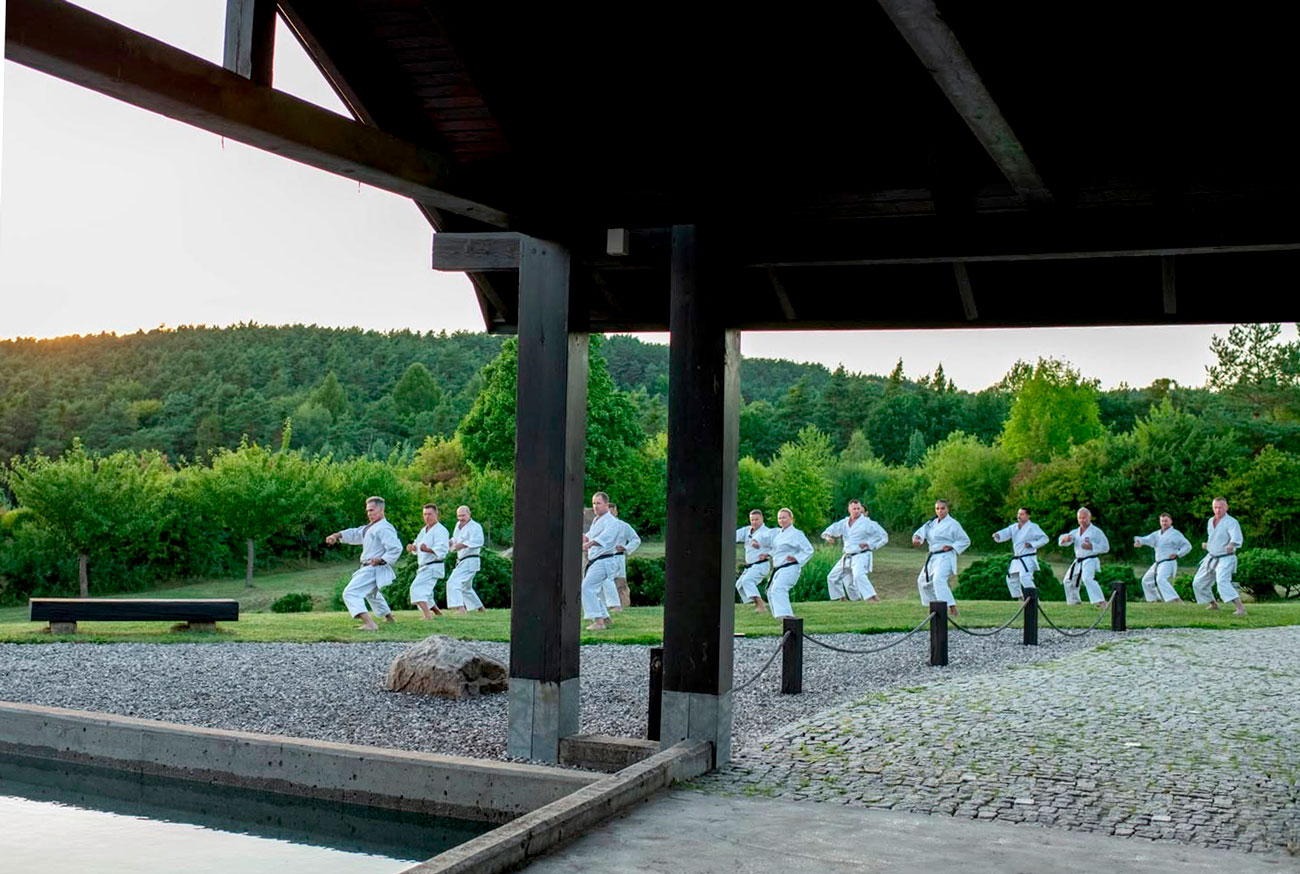
As day began to break, the leading figures were already active © Joanna Musial / PUTK
A sensei and san-dan (3rd dan), Akimov is the founder of Lithuania’s Sanrei Karate Club and has a long career as an athlete, teacher and trainer of practitioners. His arrival represents another step in expanding the ITKF’s presence on the European continent.
“On behalf of the newly founded Lithuanian Traditional Karate-do Federation, it is with immense honour and gratitude that we become part of the ITKF family,” Akimov said.
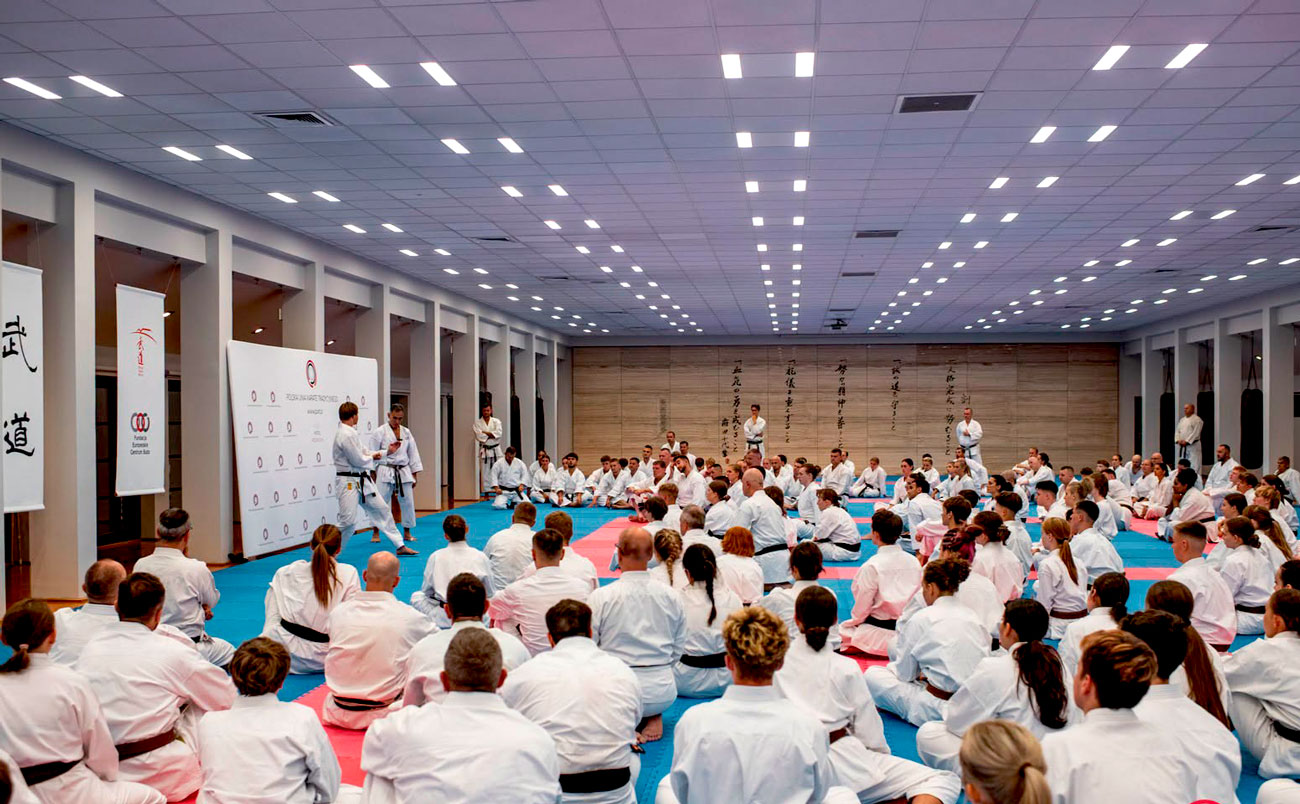
Karate practitioners closely follow sensei Justo Gomes’s presentation © Joanna Musial / PUTK
For the Lithuanian official, affiliation represents an opportunity to return to the discipline’s fundamental principles and preserve the legacy of sensei Hidetaka Nishiyama.
“We believe that our inspiration, dedication, energy and strong desire to learn and evolve will enable us not only to further develop Traditional Karate-do in Lithuania, but also to become an active and valuable part of the international ITKF community.”
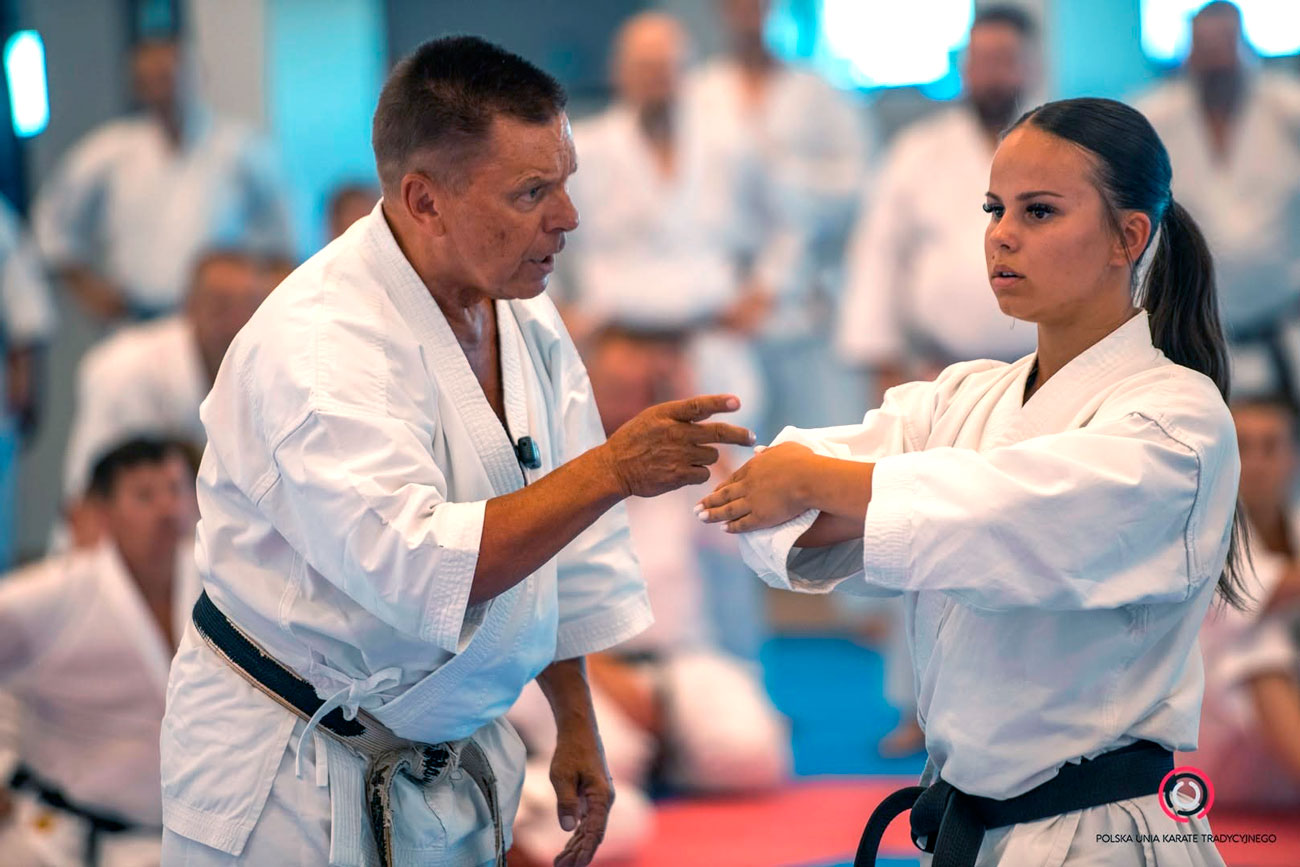
Włodzimierz Kwieciński guides a black belt © Joanna Musial / PUTK
Akimov also underlined the new federation’s desire to learn, share experiences and grow in close integration with the other affiliated organisations.
“We look forward to learning, growing, sharing our experiences and moving forward together as one Traditional Karate-do family.”
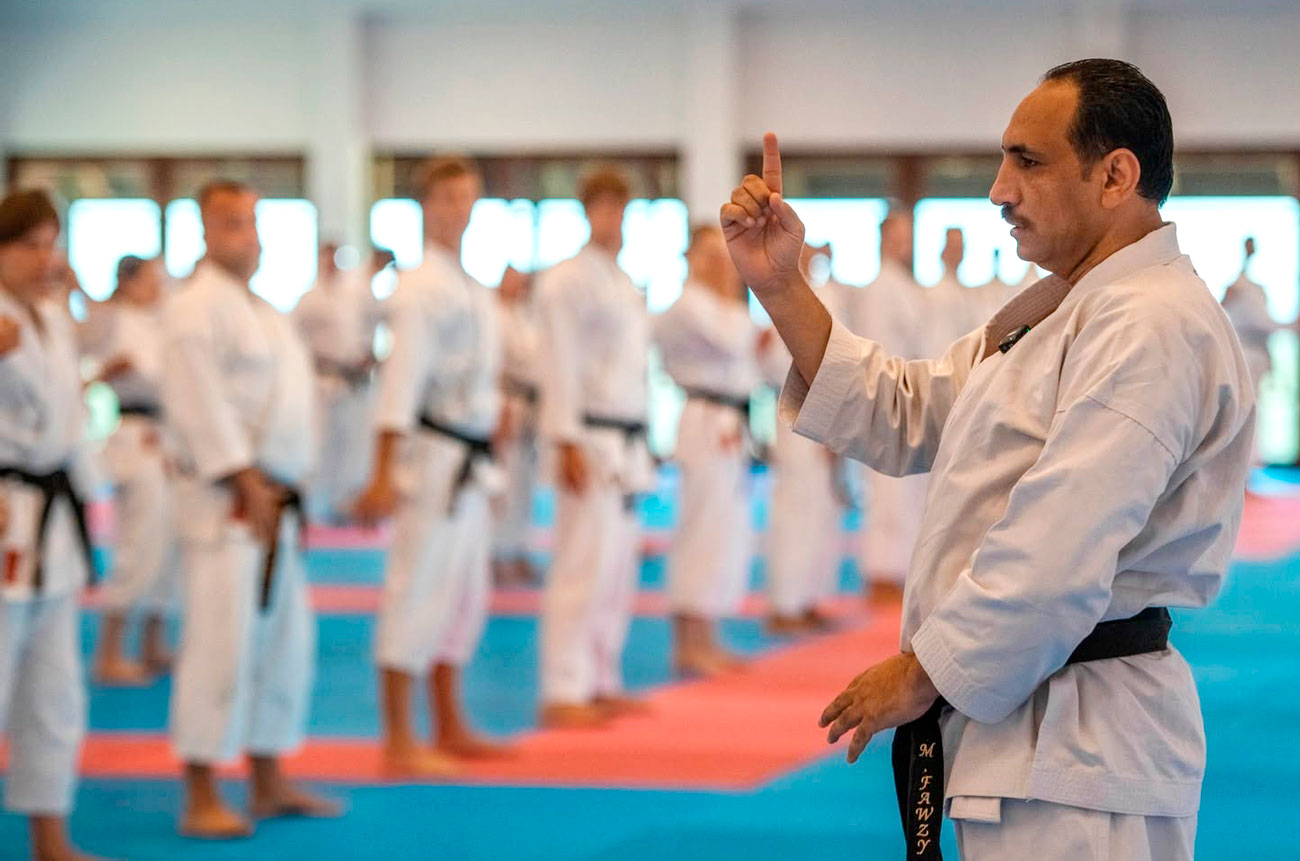
Mohamed Fawzy leads a training session at Gasshuku 2026 © Joanna Musial / PUTK
As the ITKF’s last major international event before the Cairo World Championships, the Gasshuku also provided a decisive opportunity to align information, bring officials closer together and address matters related to the delegations’ participation in the competition.
At the front, Gaertner, Gomes, Janusz and Mușat: leaders of four distinct schools, four countries and two continents, united by a single purpose – to preserve, transmit and carry master Hidetaka Nishiyama’s legacy forward to new generations © Joanna Musial / PUTK
The World Championships organising committee was represented by Ramy El-Mekkawy, chairman of ITKF Africa and president of the Egyptian Traditional Karate Federation, and Mohamed Fawzy, technical director of the Egyptian national team. Both presented participants with information about the competition’s structure, programme and preparations.
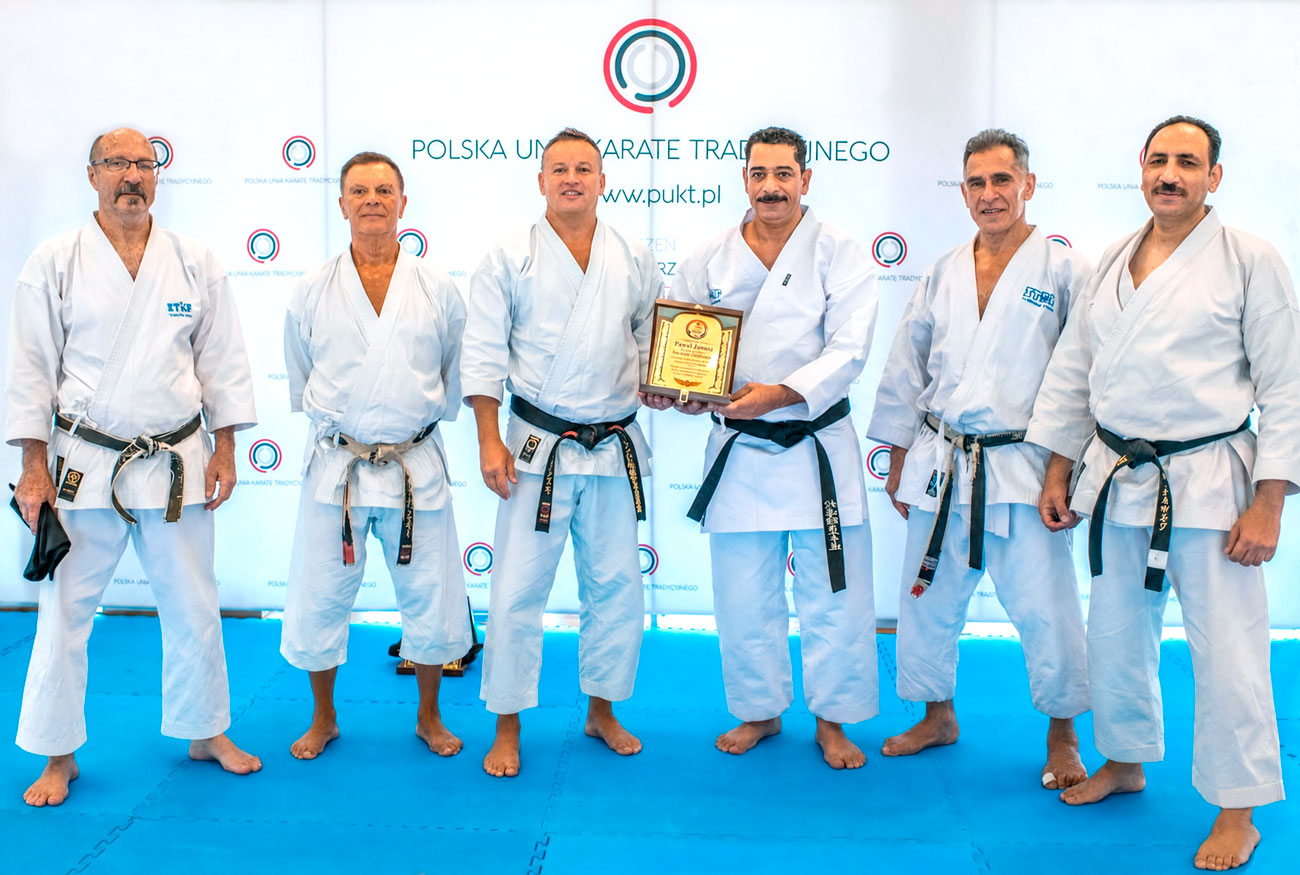
Ramy El-Mekkawy, chairman of ITKF Africa, pays tribute to Paweł Janusz © Joanna Musial / PUTK
The presence of Egypt’s ambassador to Poland, Fady Mahdy, added a diplomatic dimension to the meeting. The discussions opened the possibility of facilitating visa procedures for the Polish delegation, which is expected to travel to Egypt with more than 100 members.
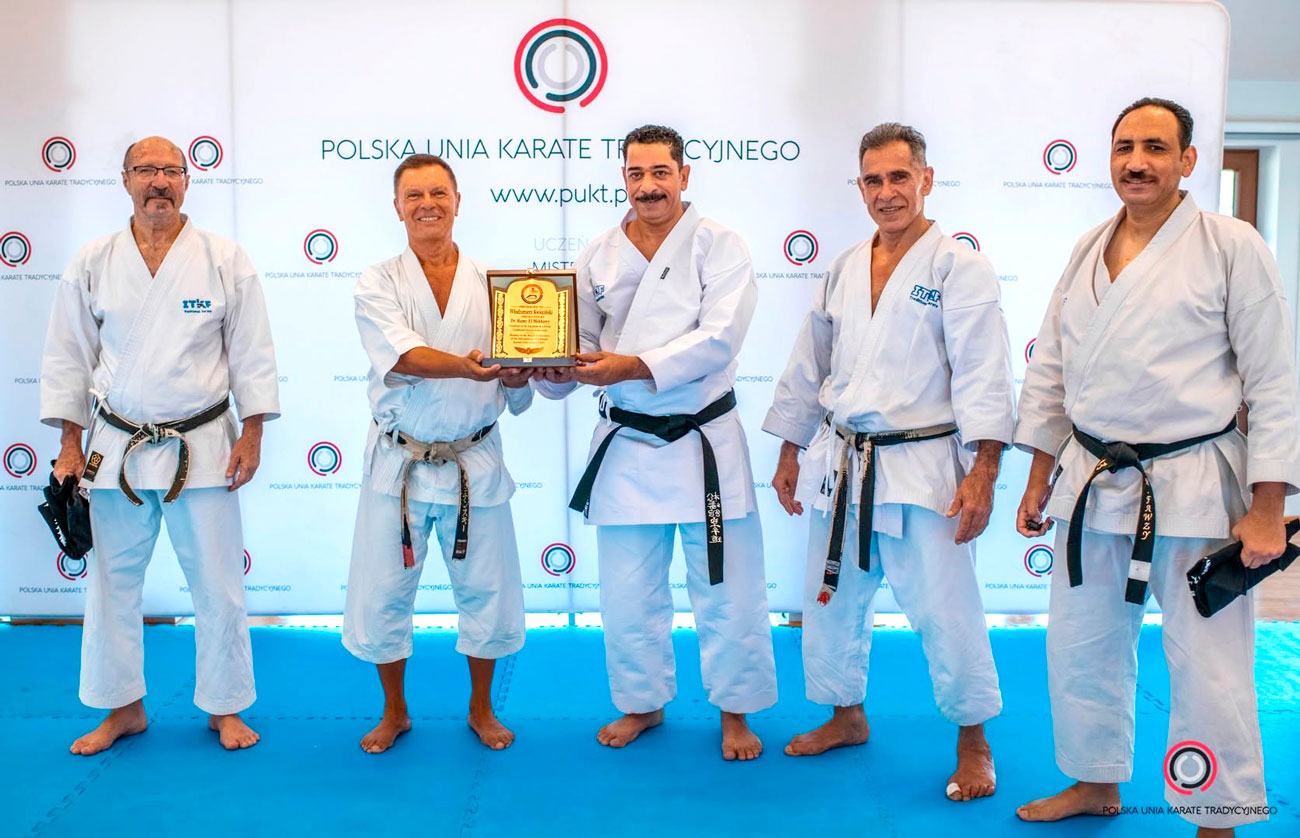
Ramy El-Mekkawy, chairman of ITKF Africa, pays tribute to Włodzimierz Kwieciński © Joanna Musial / PUTK
The initiative demonstrated that preparations for the World Championships are not confined to sporting matters. Diplomatic, logistical and institutional issues also became part of the work aimed at ensuring the delegations’ presence and providing suitable conditions for one of the leading events on the discipline’s international calendar.
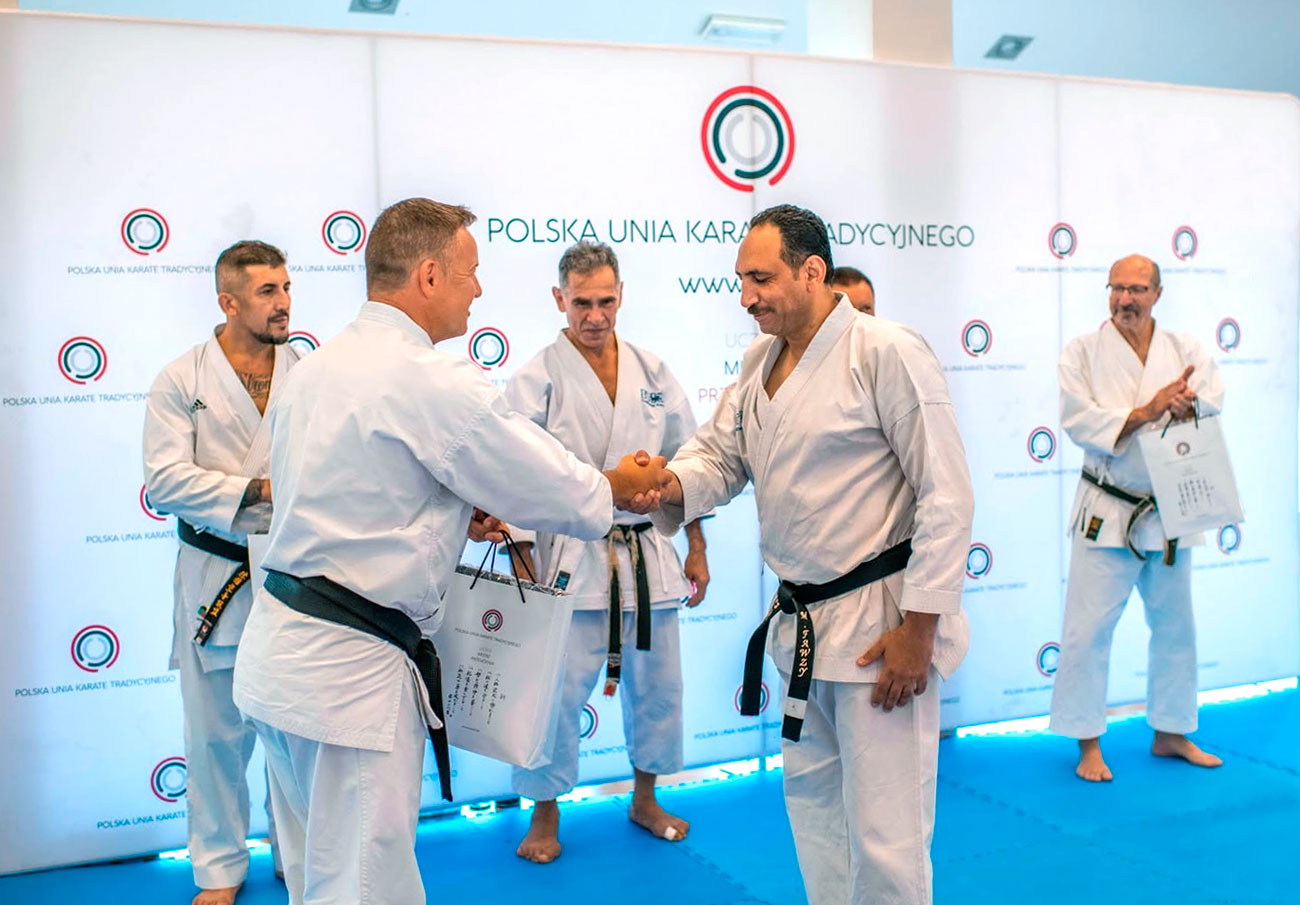
Professor Paweł Janusz honours sensei Mohamed Fawzy © Joanna Musial / PUTK
By bringing together great masters, officials, teachers, diplomatic representatives and members of the organising committee for the next World Championships, Gasshuku 2026 extended the scope traditionally associated with the training sessions held at Dojo Stara Wieś.
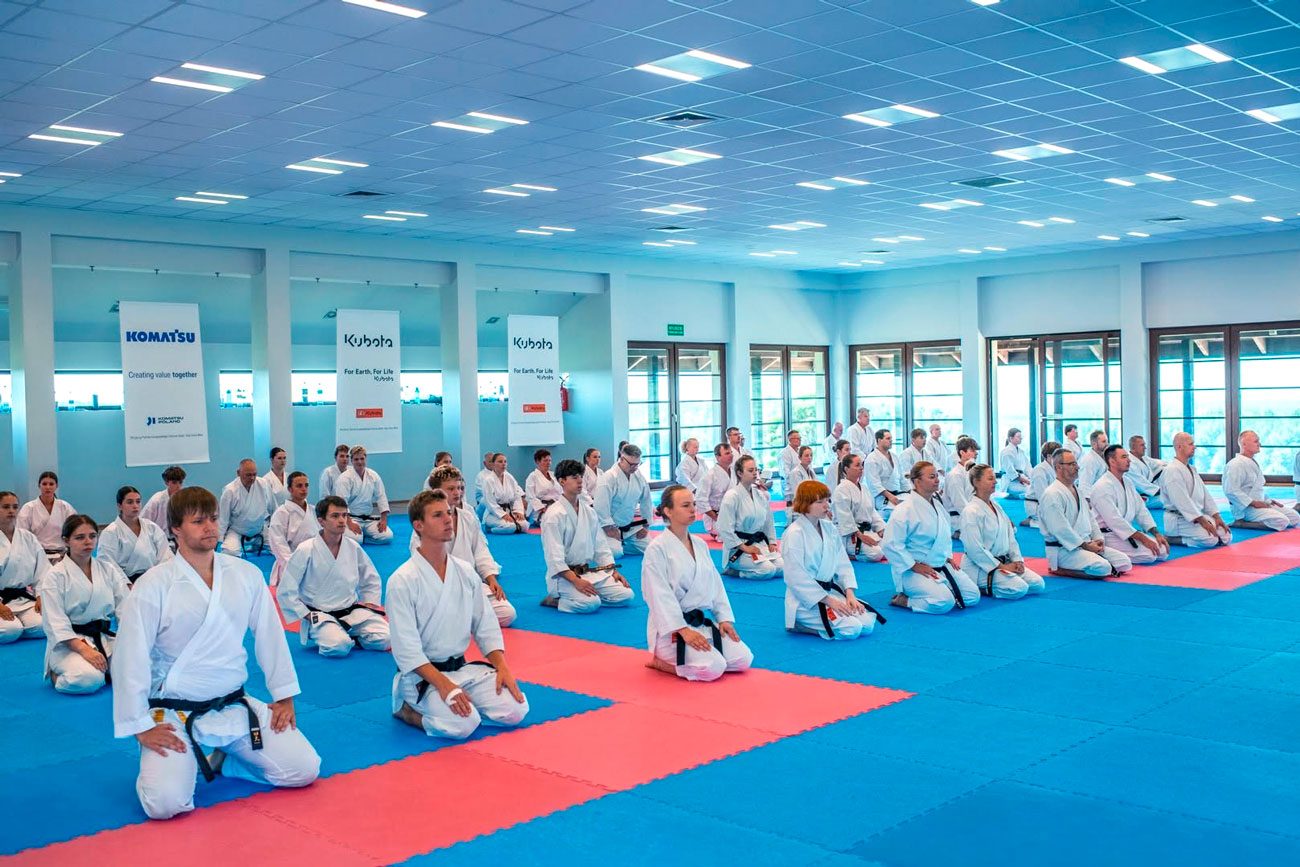
In seiza, karate practitioners perform the final salute, bringing Gasshuku 2026 to a close with respect, unity and reverence for tradition © Joanna Musial / PUTK
For Cornel Mușat, gatherings of this nature demonstrate that the ITKF’s strength is based not only on its formal structure, but above all on the relationships built among the people who comprise the organisation.
“The ITKF is not built only by federations, committees, regulations or competitions. It is built by people, by respect, trust, friendships born on the tatami, experiences shared together and the responsibility to continue a path that began long before us.”
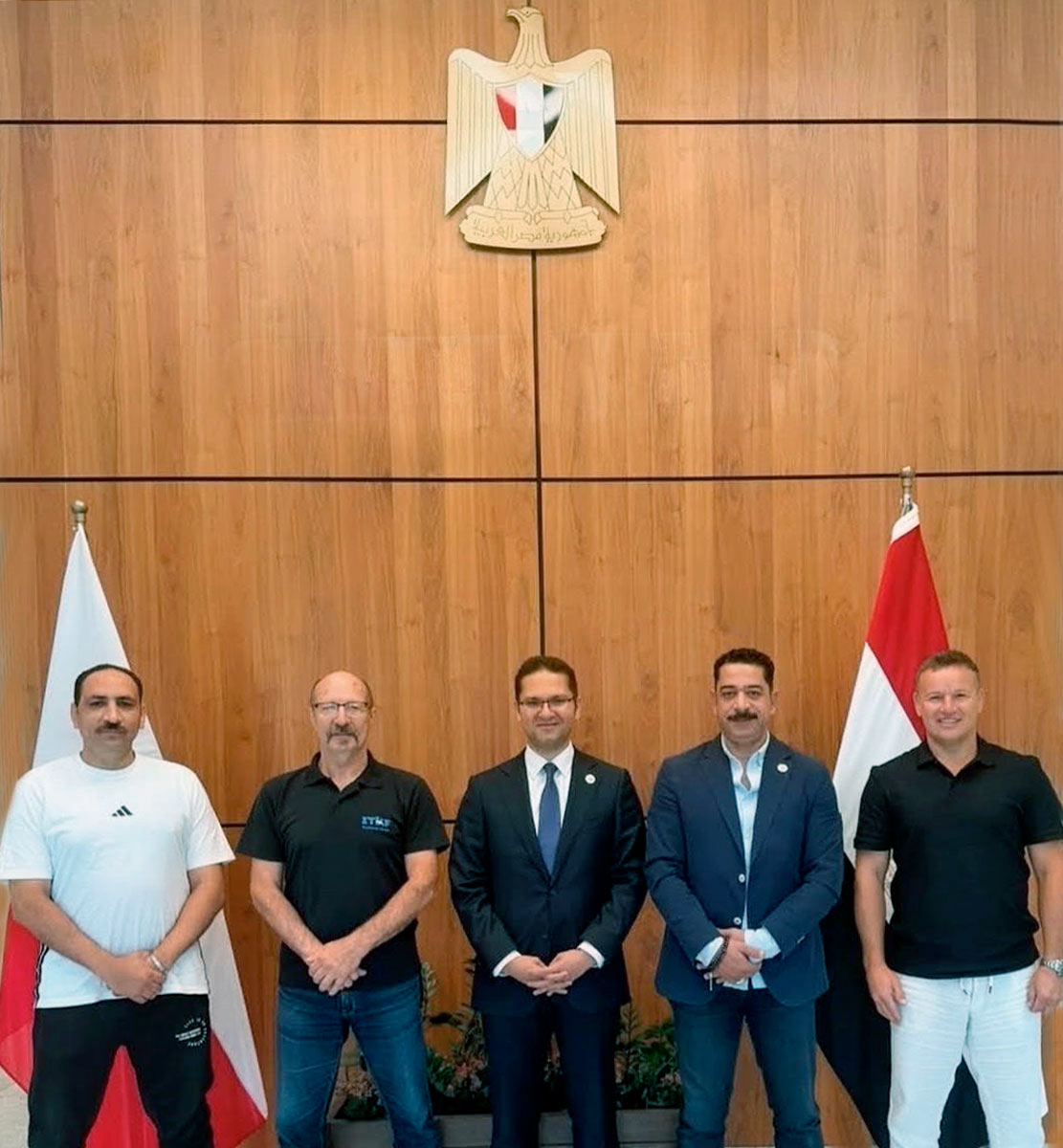
Professor Mohamed Fawzy, Shihan Gilberto Gaertner, Fady Mahdy, Egypt’s ambassador to Poland, Ramy El-Mekkawy and sensei Paweł Janusz © Joanna Musial / PUTK
The Romanian teacher left Poland convinced that the discipline’s development depends on the ability of its members to work together.
“The future of traditional karate is built together. We will meet again on the tatami. Oss!”
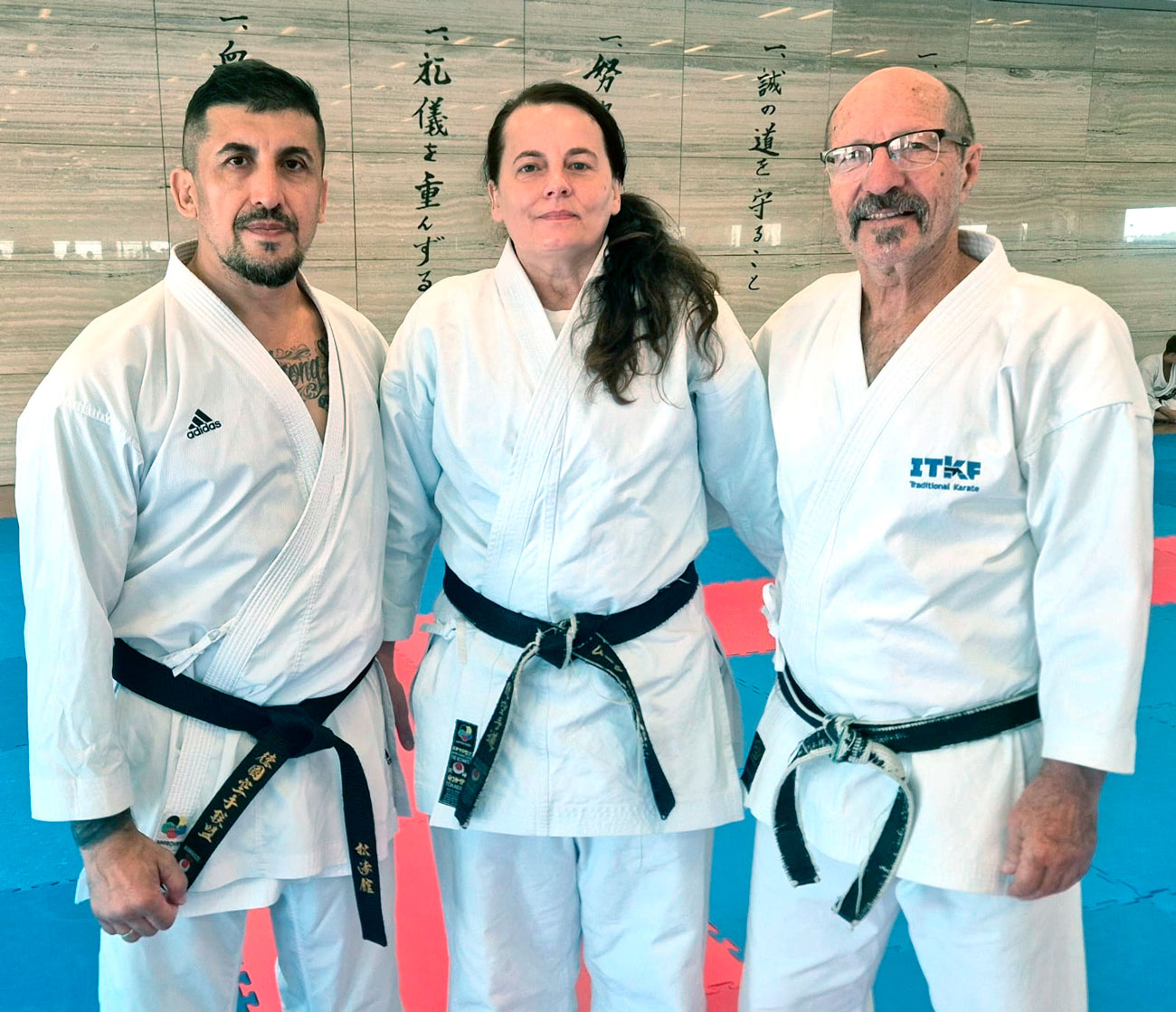
Shihan Gilberto Gaertner with Romanian teachers Cornel Mușat and Martha Stuparo © Joanna Musial / PUTK
In Gilberto Gaertner’s assessment, at a time of institutional renewal, the initiatives developed in Poland established tangible foundations for the continuation of the international work. Rather than concentrating decisions in a single leader, the gathering highlighted the formation of a network of officials and teachers capable of sharing responsibilities, preserving Hidetaka Nishiyama’s legacy and opening new paths for the development of traditional karate.
“The high technical quality of the classes remained the central focus of the gathering. At the same time, we made progress on important matters for the future of the discipline: consolidating cooperation among international leaders, bringing different communities closer together, preparing for the Cairo World Championships and welcoming a new federation to ITKF Global,” concluded the president of ITKF Global.

14 de outubro de 2026
14 de outubro de 2026
13 de outubro de 2026