
26 de setembro de 2026
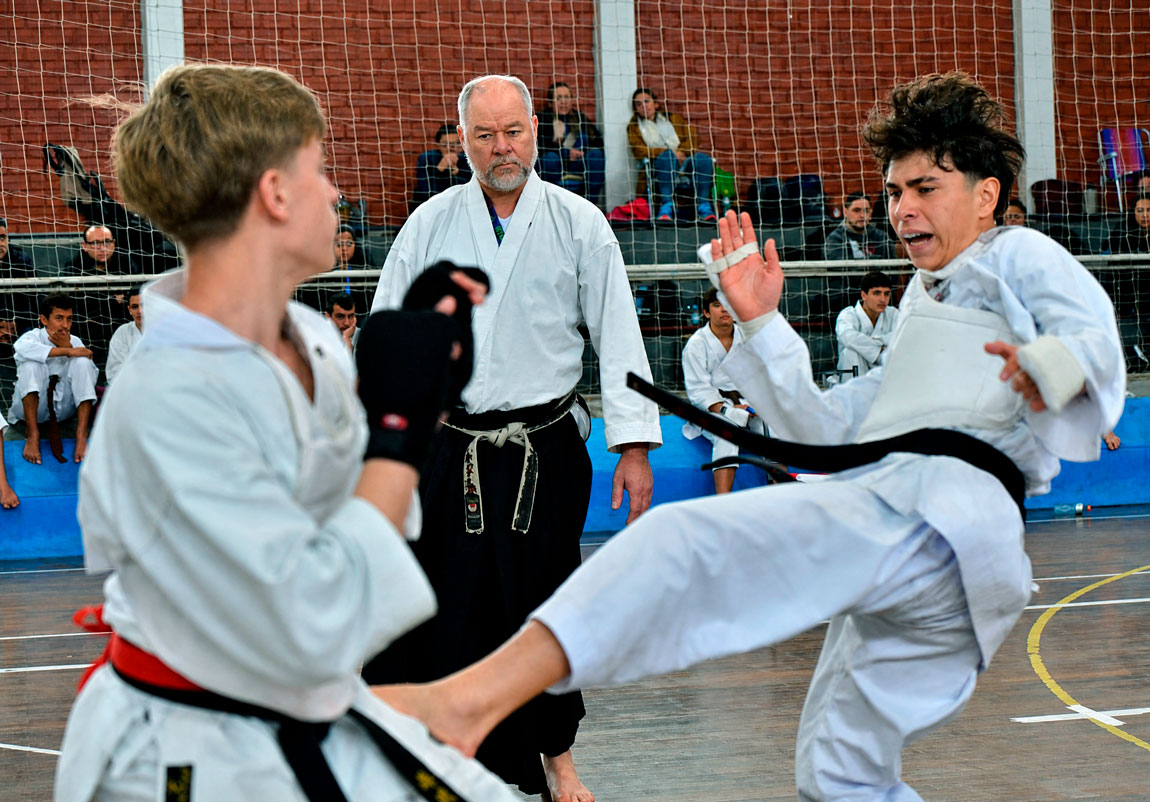


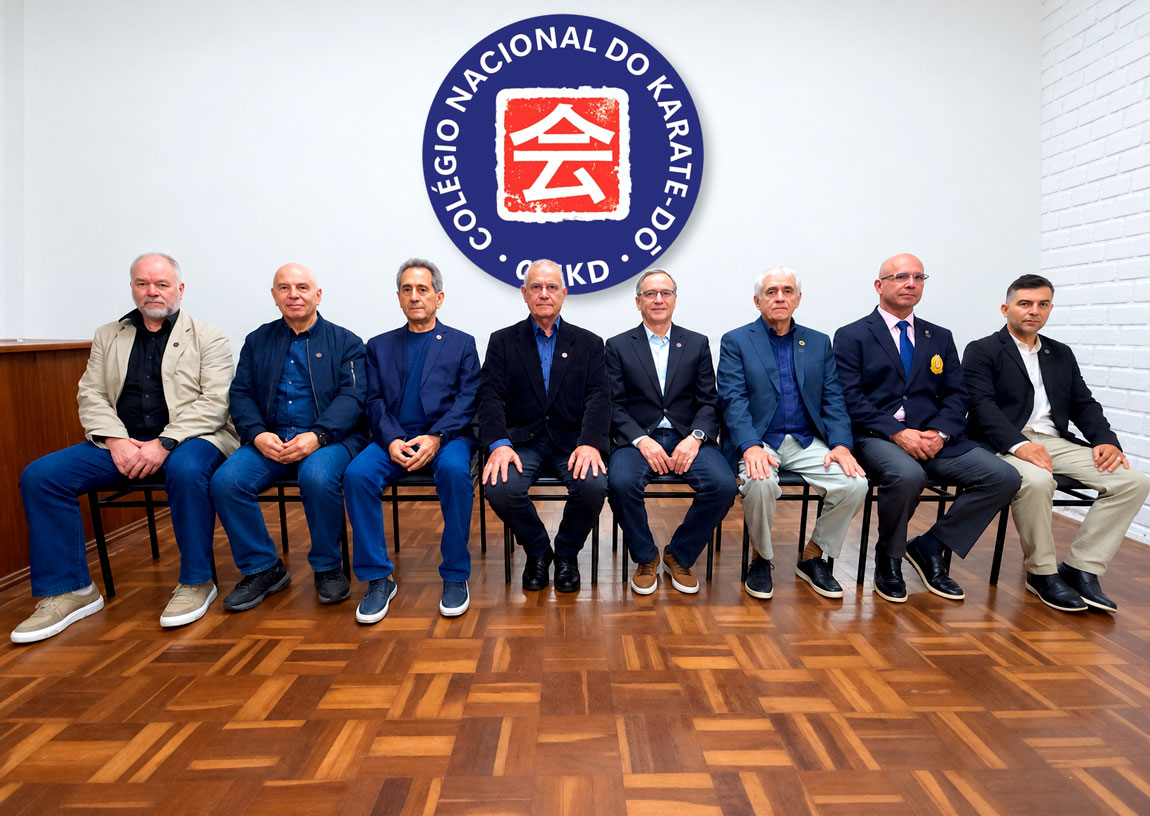 Board members and speakers at CNKD’s First National Seminar © Global Sports
The study of karate as a path of education for life set the tone for the First National Seminar of the Colégio Nacional do Karatê-dô (CNKD), held from 11 to 13 September at Lindóia Tênis Clube in Porto Alegre, in the Brazilian state of Rio Grande do Sul. The organisation’s first in-person event brought together masters, instructors and practitioners for a programme devoted to technical knowledge, scientific research, and the educational and cultural dimensions of the martial art.
Led by president Arthur Rêgo and vice-president Iko Trindade, the College was founded to bring different experiences and styles together around the study, preservation and comprehensive development of karate-do. Recognition of instructors and continuing education are central to the project, which seeks to give philosophy, history and human development a greater place in everyday practice.
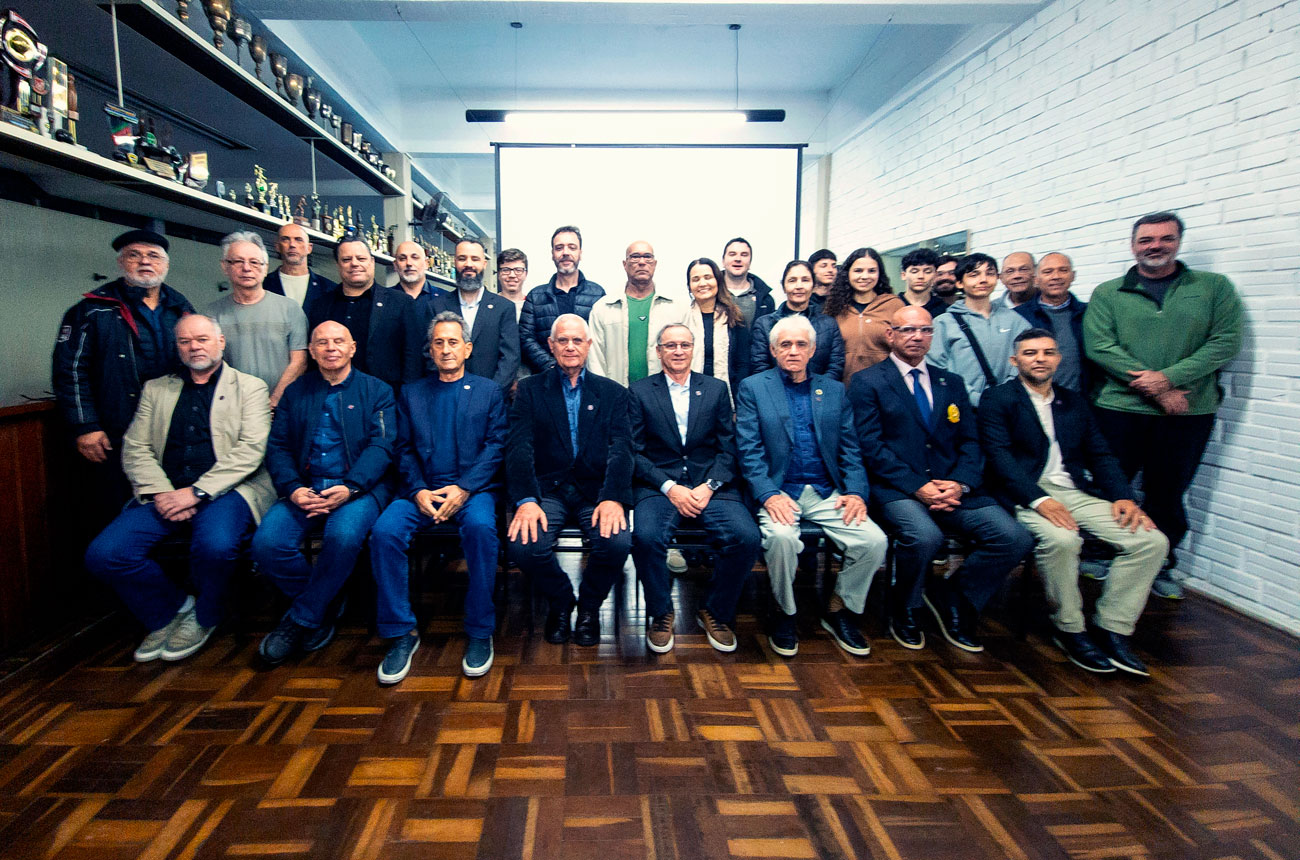
Participants in the opening ceremony © Global Sports
Welcoming the participants and delivering the opening greeting was instructor Juan Pedro Osório, the gathering’s host, CNKD’s director of events and technical director of Instituto Shibumikan de Karatê-Dô. A trained psychologist, Juan teaches at Lindóia Tênis Clube, one of the venues where he works with the discipline. Together with the Institute’s team, he welcomed guests to the College’s first in-person gathering.
Friday’s opening ceremony launched a programme combining practical classes, lectures and research presentations. Technique, teaching methods, inclusion, science and Japanese culture all featured on the agenda, expressing the breadth of the organisation’s vision through different approaches.
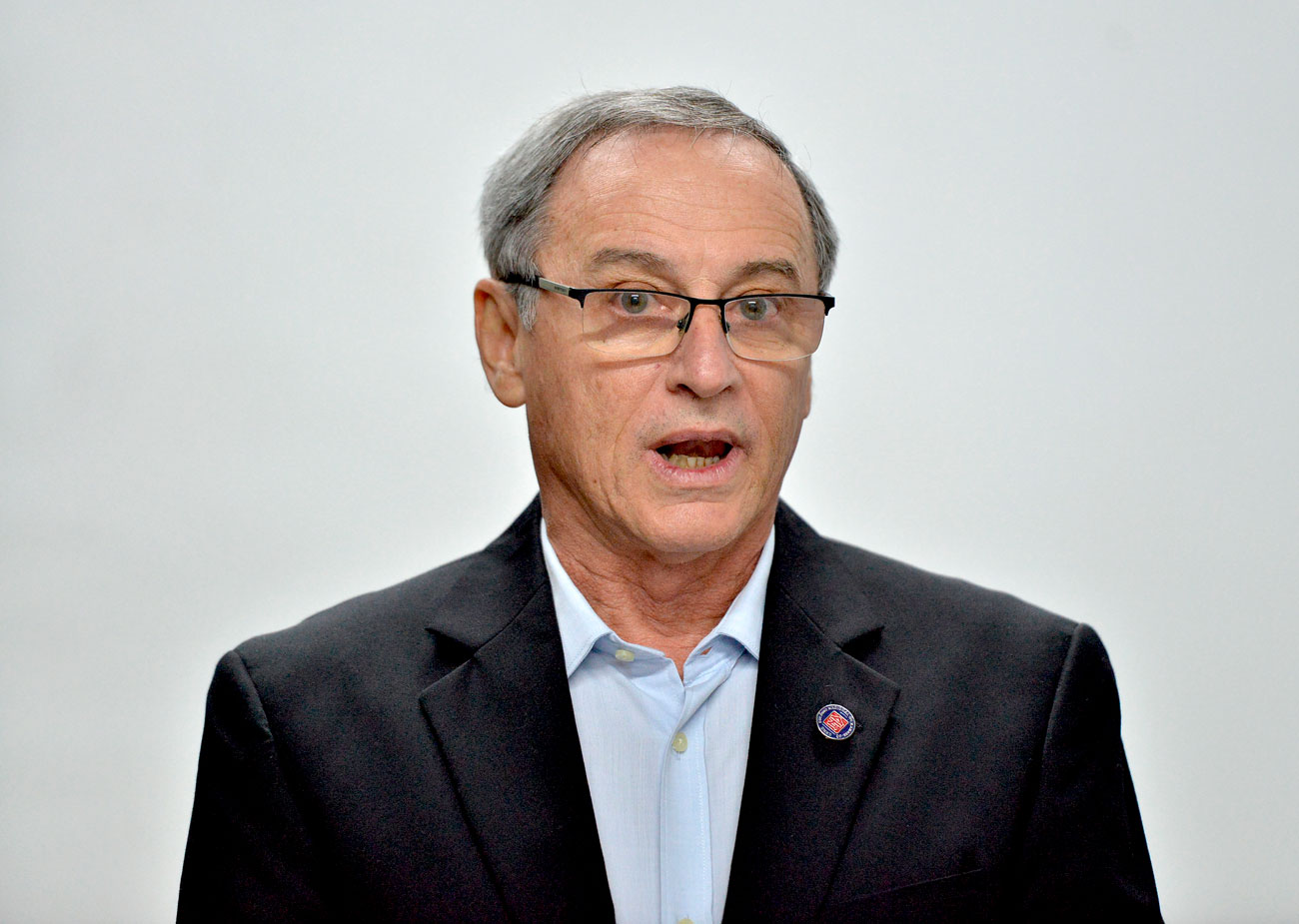
Arthur Prisco Paraíso Rêgo, president of CNKD © Global Sports
In officially opening the seminar, CNKD president Arthur Rêgo outlined the commitments behind the College’s creation and the next steps in establishing its structure. His address linked the preservation of karate-do as a path of human development to concrete initiatives, including content production, instructor education, the creation of a new teaching model and the establishment of ethical guidelines for the organisation.
“Distinguished masters, instructors, practitioners, guests and all who are passionate about karate-do, good evening!
It is with a profound sense of honour, responsibility and a duty fulfilled that I stand before you today, as president of the Colégio Nacional do Karatê-dô, to declare our First National Seminar open.
This moment would not have been possible without the dedication of those who embraced this cause from the very beginning. I want to express my sincere and heartfelt thanks to our directors, who have worked tirelessly, both behind the scenes and on the front line, to establish and build CNKD with such excellence and rigour. Your commitment is the foundation on which we are building this future. A special greeting goes to sensei Juan Pedro Osório, our host in Porto Alegre, who has been tireless in his efforts to make this event a great success.
For a long time, we have seen our art divided. We have seen Do, the Way, gradually pushed into the background by the urgency of winning medals, scoring a quick point in shiai and navigating organisational bureaucracy. We do not diminish the value of sport, but we reject the idea that karate can be reduced to sport alone. A movement aimed solely at the podium cannot replace the perfected movement that builds character for life.
The Colégio Nacional do Karatê-dô was born to heal that fracture. We are not another federation competing for space on the calendar. We are not a breakaway group. We are a College: a sovereign community of thinkers, educators and practitioners dedicated to the study, research, preservation and comprehensive development of karate-do in Brazil.
This First National Seminar marks the formal beginning of our in-person activities. It is living proof that CNKD exists not merely on paper, but through the practice of our Five Pillars: bringing together technique and philosophy, teaching methodology, historical research, human development and health.
To ensure that the knowledge shared here endures and reaches an ever wider audience, all the content presented at this seminar will be documented and compiled into an exclusive e-book, accessible to all our members.
Furthermore, reaffirming our commitment to transparency, ethics and institutional excellence, I am pleased to announce that we will soon publish our Compliance Regulations. This document will serve as a fundamental guide to the conduct of all our members, ensuring that our ethical values are reflected both inside and outside the dojo.
We are also pleased to report that our board is already working on a framework for our CNKD National Festivals, as well as plans for a Karate Instructor Education Course that we are confident will represent a paradigm shift in the preparation of the sensei who pass on our martial art.
To those here today: you are not mere spectators. You are companions on this journey. To be a black belt, or a practitioner of do, is to commit to being a lifelong learner.
May this seminar be a place for thoughtful debate, purposeful effort on the tatami, intellectual exchange and a renewed connection with our roots.
The path is made by walking. Today, together, we take another firm step towards that purpose.
You are all most welcome. Have an excellent seminar!”
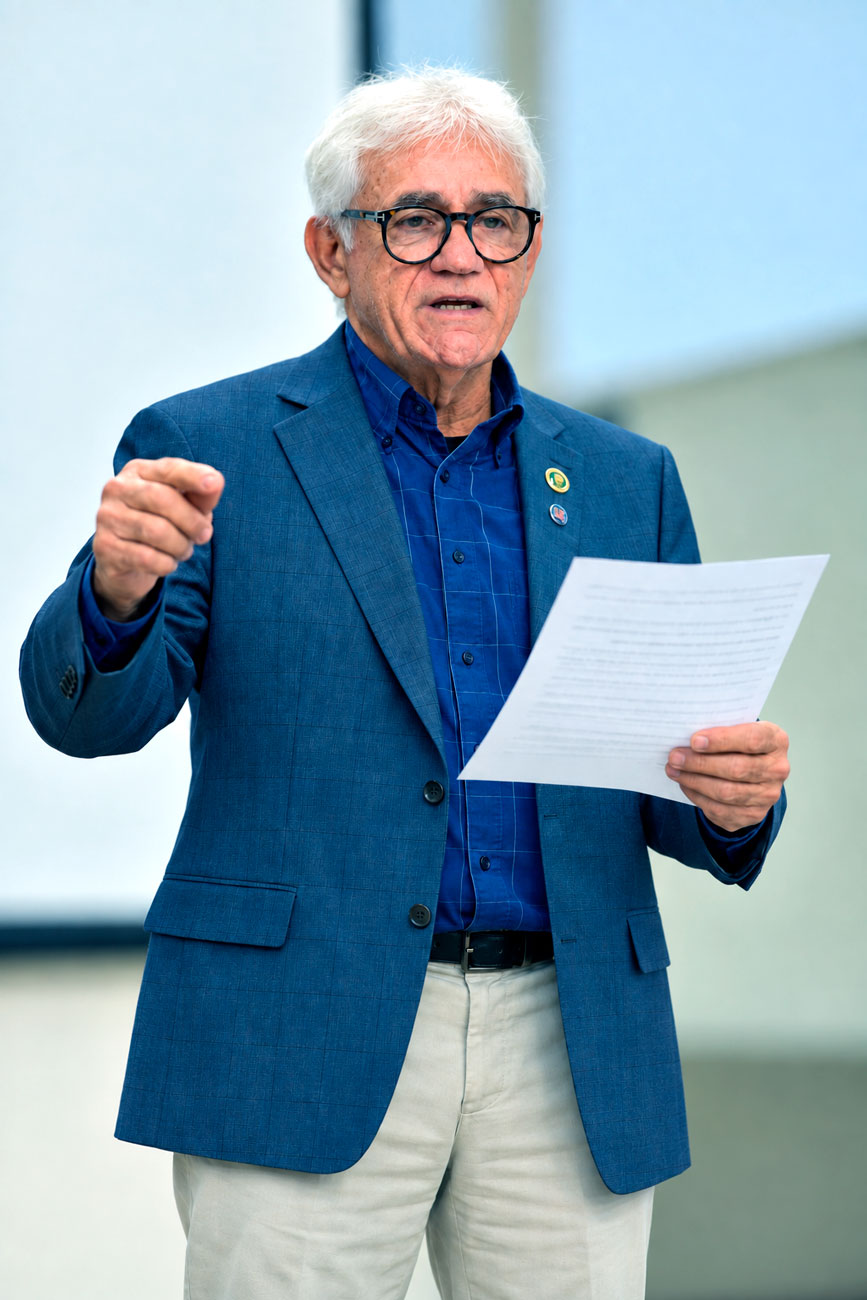
Iko Trindade, vice-president of CNKD © Global Sports
Vice-president Iko Trindade’s reflections began with the concerns that gave rise to CNKD and the determination to turn them into collective work. Recalling conversations among the College’s founders, he emphasised recognition of instructors, the study of the masters’ legacy and the creation of a structure capable of sustaining that purpose.
“This First Seminar of the Colégio Nacional do Karatê-dô marks CNKD’s starting point in Brazil. It all began with a conversation among friends, driven by a concern that many had carried for decades: the feeling that karate-do in our country had been reduced to a sport.
The founding concepts of the early masters, who migrated from Okinawa to mainland Japan and from Japan to Brazil, lost ground to the demand for podium finishes, medals and competition calendars. Bushi no Michi, the Way of the Warrior, was relegated to a footnote, and the history of the lineages became an ornament. Training competitors took precedence over human development, and an athlete came to matter more than a great teacher, a sensei.
“Our aim is to offer a place where do can be lived in all its dimensions.”
In that conversation, we were not talking about creating a federation or a breakaway group. We were talking about recovering the concepts of the early masters across the different styles, and the integrity of what Gichin Funakoshi and so many others left us. From that shared concern came a conviction: it is not enough to lament what has been lost; we must rebuild.
That is how CNKD was born. We recognise the importance of sport, but we wanted to broaden that horizon: to establish a College as a body of masters, instructors and researchers dedicated to the study, preservation and comprehensive development of karate-do. We are neither a federation nor a league. Our aim is to offer a place where do can be lived in all its dimensions.
Our organisation reflects the principle that karate-do, as a martial art, is indivisible. The Executive Board gives the project institutional viability, while the Council of Masters, the Shihankai, which is still being formed, is responsible for technical guidance.
“Do is not a decorative suffix: it is the essence of the journey.”
The six Permanent Committees form the intellectual heart of the College. The Technical Committee establishes standards and grading criteria; the Ethics, Education and Certification Committee structures educational pathways and safeguards the Code of Ethics; and the Science and Art Committee promotes research into history and philosophy. The Social Development and Inclusion Committee uses karate-do as a means of social transformation; the Events Committee organises activities as educational opportunities; and the Communications Committee seeks to ensure consistency between what we say and what we practise. Regional delegates, whose network is also being established, will represent this approach in the states, while the Fiscal Council will oversee the transparency required by the Statutes.
CNKD is not a destination. It is a starting point. What brings us together is the conviction that karate has more to offer than trophies. We believe that a black belt must, above all, be a perpetual student, a Gakusei. Do is not a decorative suffix: it is the essence of the journey.
This first seminar, in Rio Grande do Sul, puts that conviction into practice. We are here to study, debate, plan and build. The Committees will define priorities, the delegates will devise strategies, and the Shihankai will discuss technical directions. Above all, we will listen to one another as peers, students of the art and karate practitioners who want to think about this martial art more broadly.
The Dojo-kun teaches us to develop character, remain faithful to the path of reason, cultivate a spirit of effort, show respect and restrain aggression. These principles must also guide every decision the College makes.
What was once lament has become work. A longing for the original concepts has become a project of systematic, institutional and scientific recovery. If do is our path, we must follow it with the seriousness of a scholar, the heart of a warrior and the spirit of a builder.
Let us, then, rebuild the Way together. May this first seminar represent, for each of us, another step in the pursuit of victory over ourselves.”
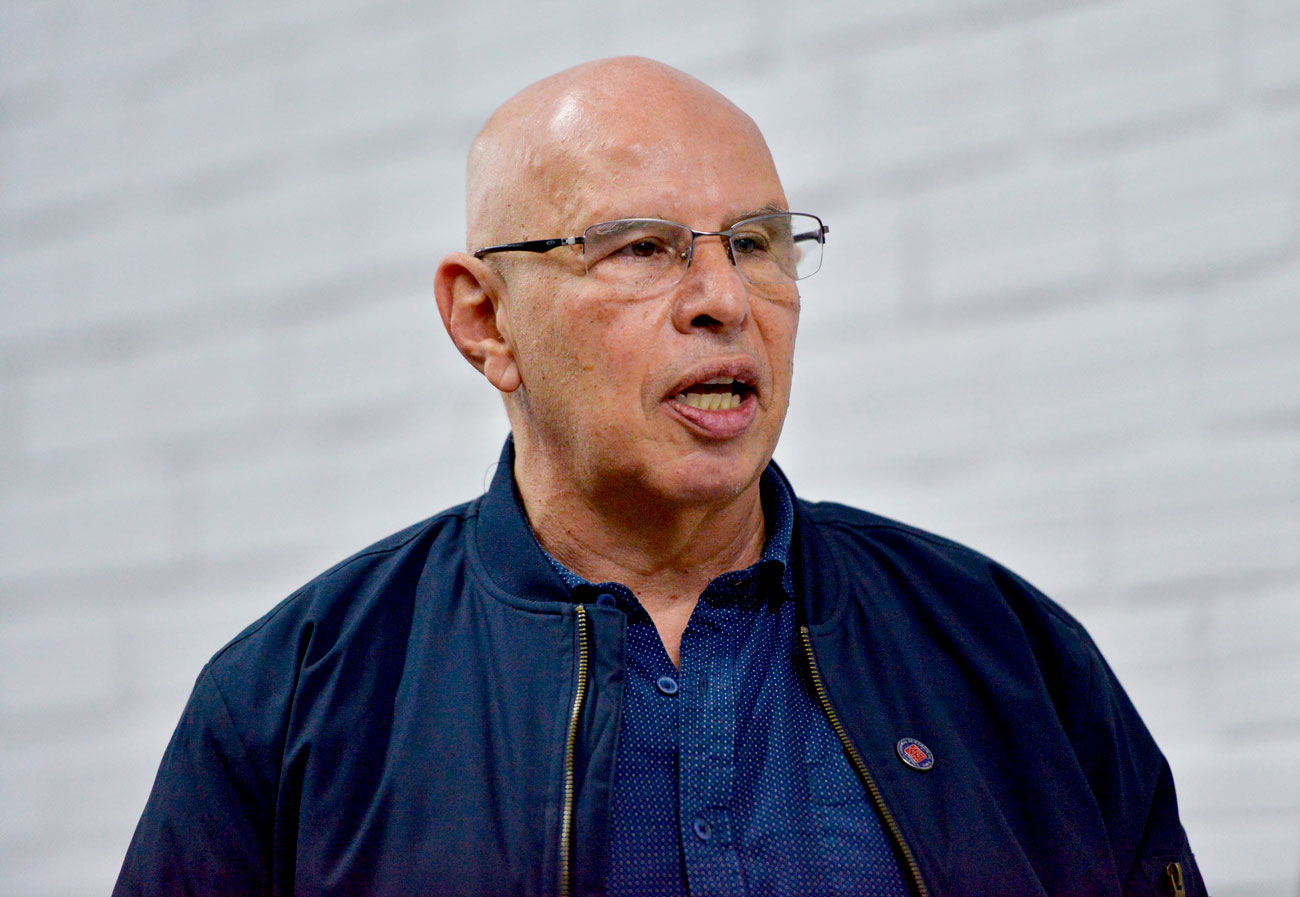
Daniel Neaime, president of the São Paulo Traditional Karate-do Federation, CNKD’s director of institutional relations and a seminar speaker © Global Sports
The lecture ‘Karate-do as a Path of Continuous Self-Improvement’ was delivered by sensei Daniel Neaime, a lawyer who graduated from the University of São Paulo (USP), president of the São Paulo Traditional Karate-do Federation (FPKT), legal director of JKA Brasil, director of institutional relations at CNKD and a traditional karate practitioner since 1974. Much of his training took place under sensei Yasuyuki Sasaki, hachi-dan (8th dan), with whom he continued to study until the master’s death in 2017.
“What do we really improve when we train: our technique, body, mind or spirit?” That question guided Neaime’s presentation, which portrayed karate-do as a practice whose meaning deepens throughout life. While movement and physical ability may first capture our attention in youth, sustained training makes it possible to recognise a deeper purpose: transforming ourselves.
Memories of Sasaki gave the reflections a personal dimension. Neaime recalled that the master referred to morning training as a religion, an expression he came to understand through its connection with self-knowledge and dedication to practice. He also described occasions when Sasaki could assess his concentration simply by observing his movement in a guard position, without any exchange of blows. In that learning process, technique was inseparable from presence and the quality of attention.
Discussing the transition from jutsu to do, Neaime highlighted the shift in perspective from effectiveness in combat to human development, emphasising Gichin Funakoshi’s educational contribution. In this interpretation, learning how to perform a movement must be accompanied by another question: who are we becoming as we practise it?
Confronting fear, pride, vanity and anxiety was central to the lecture. For Neaime, recognising these responses during training is part of the work of self-improvement that instructors must also pass on to their students.
His reflections incorporated four Zen concepts: shoshin, the willingness to keep learning; mushin, a mind free from attachment; zanshin, sustained awareness; and fudoshin, steadiness in the face of difficulty. In his approach, these principles help cultivate respect, self-control and the integration of body, mind and spirit, making karate-do a lifelong process of learning.
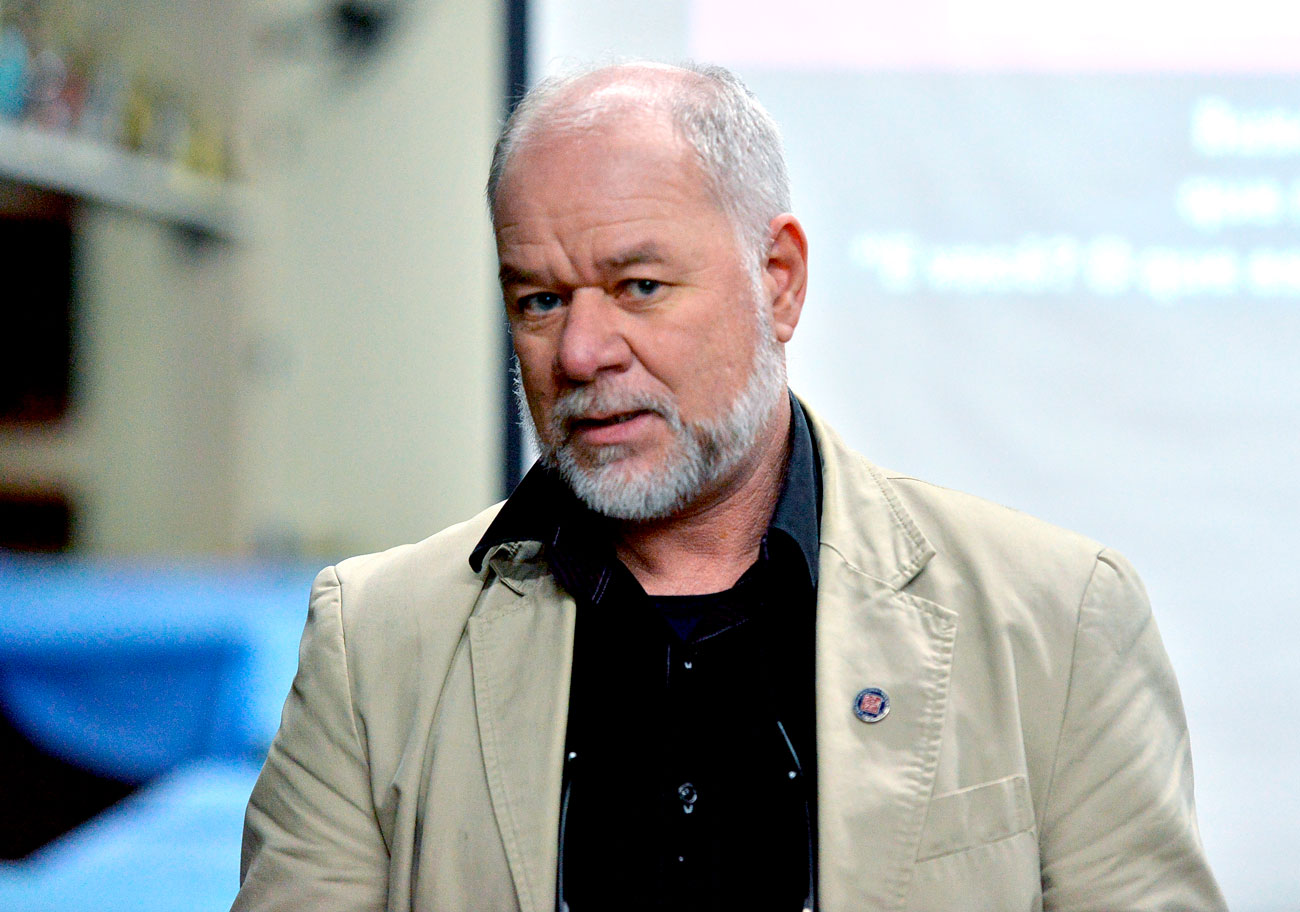
Instructor Juan Pedro Osório and his team made thoughtful organisation and hospitality a hallmark of CNKD’s First National Seminar, with attention to every detail and a welcome that made everyone feel truly at home © Global Sports
Holding the first seminar in Porto Alegre had particular significance for the man who welcomed its participants. The gathering’s host, instructor Juan Pedro Osório, go-dan (5th dan), technical director of Instituto Shibumikan de Karatê-Dô and CNKD’s director of events, spoke of his satisfaction at bringing different experiences together around a vision of karate as a practice that supports health, learning and social connection.
“For me, hosting the first seminar of the Colégio Nacional do Karatê-Dô in Porto Alegre is a source of pride and great happiness,” he said. Juan highlighted the presence of masters from Bahia, Ceará, Mato Grosso, São Paulo and Paraná, alongside representatives from Rio Grande do Sul, at a gathering he considers a milestone in the development of the College’s vision.
“Around 5% of practitioners focus on competition, while the remaining 95% turn to karate for other reasons.”
“It is about practising karate for its own sake, in its essence, without distorting it, and understanding why we train and why we learn,” he explained. For the director, that understanding requires recognising the martial art as a way of life whose benefits accompany practitioners through different stages and needs.
Although he recognises the importance of competition and the emotional experiences it offers, Juan advocates greater attention to practitioners as a whole. He estimates that around 5% focus on competition, while the remaining 95% turn to karate for other reasons. “We cannot neglect those who train for health, quality of life, self-defence, to belong to a group and to be part of this family that is karate,” he observed.
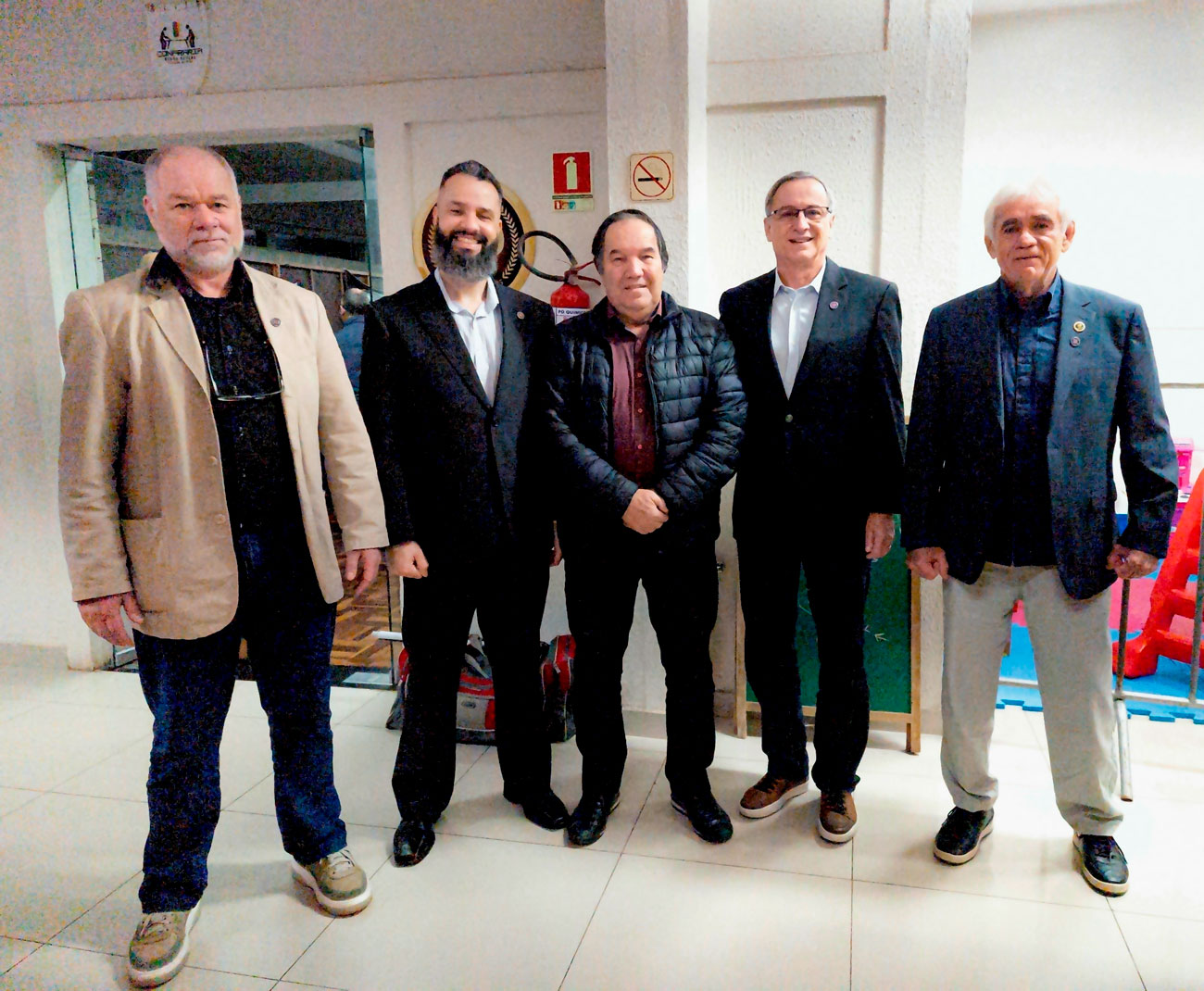
Juan Pedro Osório, technical director of Instituto Shibumikan; Paulo Vinícius Vargas, the Institute’s president; João Alberto Monteiro da Silva, president of Lindóia Tênis Clube; and Arthur Prisco Paraíso Rêgo and Iko Trindade, CNKD’s president and vice-president © Global Sports
That perspective also shaped the care taken in welcoming participants. Juan emphasised the effort to create a welcoming environment in which time spent together would encourage learning and the exchange of experiences. In his view, the combination of scientific paper presentations, lectures, research and training reflects the project’s breadth. “We cannot stop training. Practical work is also part of this whole world of karate,” he stressed.
Pleased with the experience, the host thanked everyone for taking part and expressed his wish to continue the initiative. “I am very happy. Let us grow and move on to the next gathering.”
The first evening ended in a spirit of celebration. At a cocktail reception, instructors, speakers, family members and guests marked the start of in-person activities at the Colégio Nacional do Karatê-dô. Following the welcome and reflections of the opening session, it was a moment to share the joy of seeing the newly founded organisation take its first steps.
Amid conversation and toasts to CNKD’s success, the reception offered an opportunity to strengthen ties and bring together those helping to build the organisation. The presence of family members added warmth to the celebration, closing the seminar’s first day with the sense of a project coming to life through gatherings and relationships among its members.
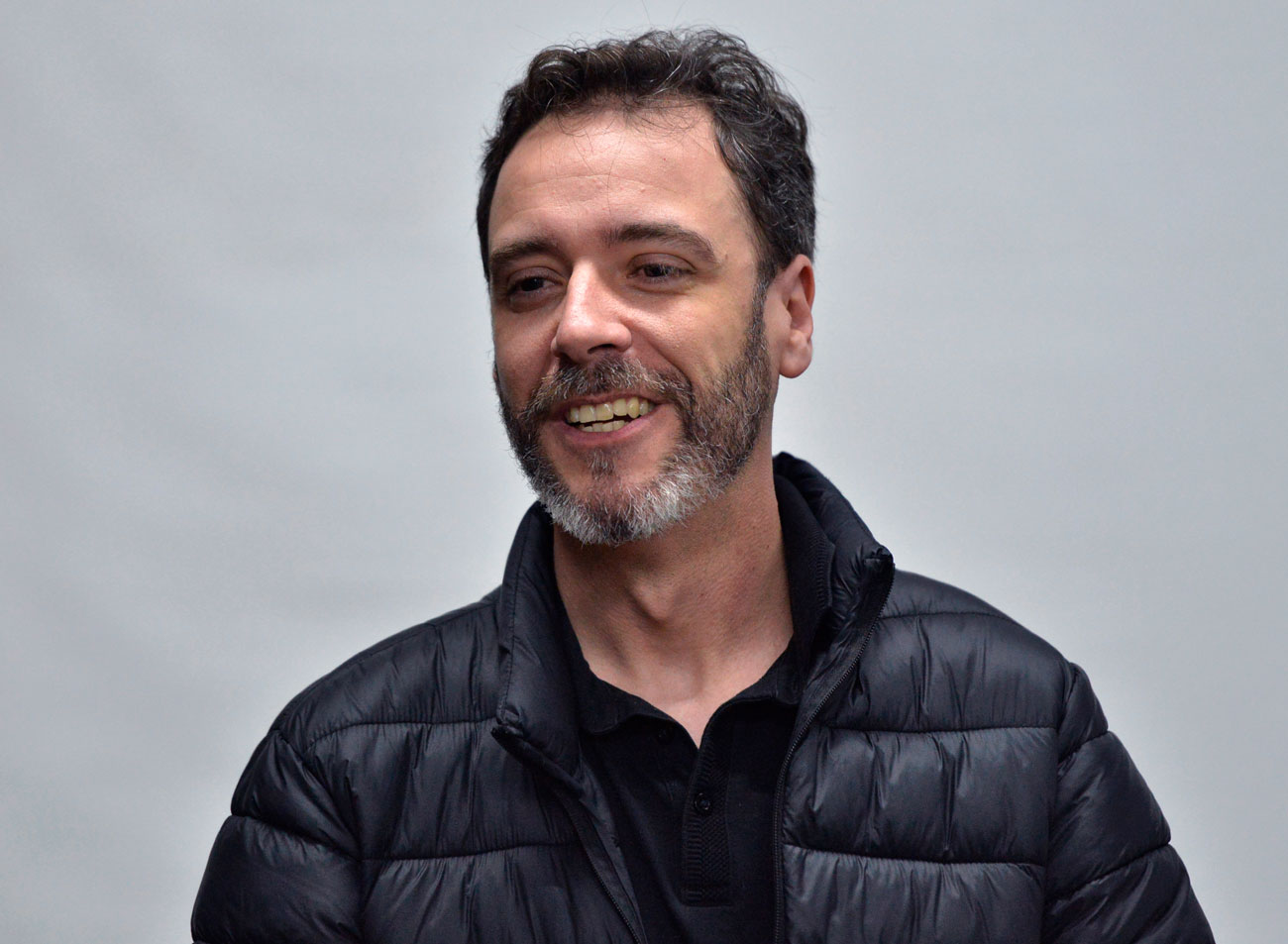
Instructor Leonardo Delabary led the opening ceremony of CNKD’s First National Seminar © Global Sports
The second day of CNKD’s First National Seminar, Saturday 12 September, brought together lectures and practical classes linking scientific research, technical fundamentals and Japanese culture. Opening the programme, Victor Lage joined online to speak on ‘Karate and Science’, presenting research conducted at Waseda University in Japan. Eduardo De Mattei then explored the harmony between timing, evasion and efficiency in Wado-kai; Nelson Santi addressed the kinetic chain in karate through renzoku-waza; and Eros José Sanches delivered the lecture ‘Ikken Hissatsu’.
In the afternoon, Tomoko Kimura Gaudioso took part with the scheduled theme of poetry, origami and immigration, also sharing experiences of karate and its cultural dimension. Practical activities continued with Eckener Cardoso, who led a class on the kata Meikyo, and Antônio Carlos Walger, who worked on footwork in kumite. The day’s programme also included a book exhibition and sale, with associations and organisations taking part.
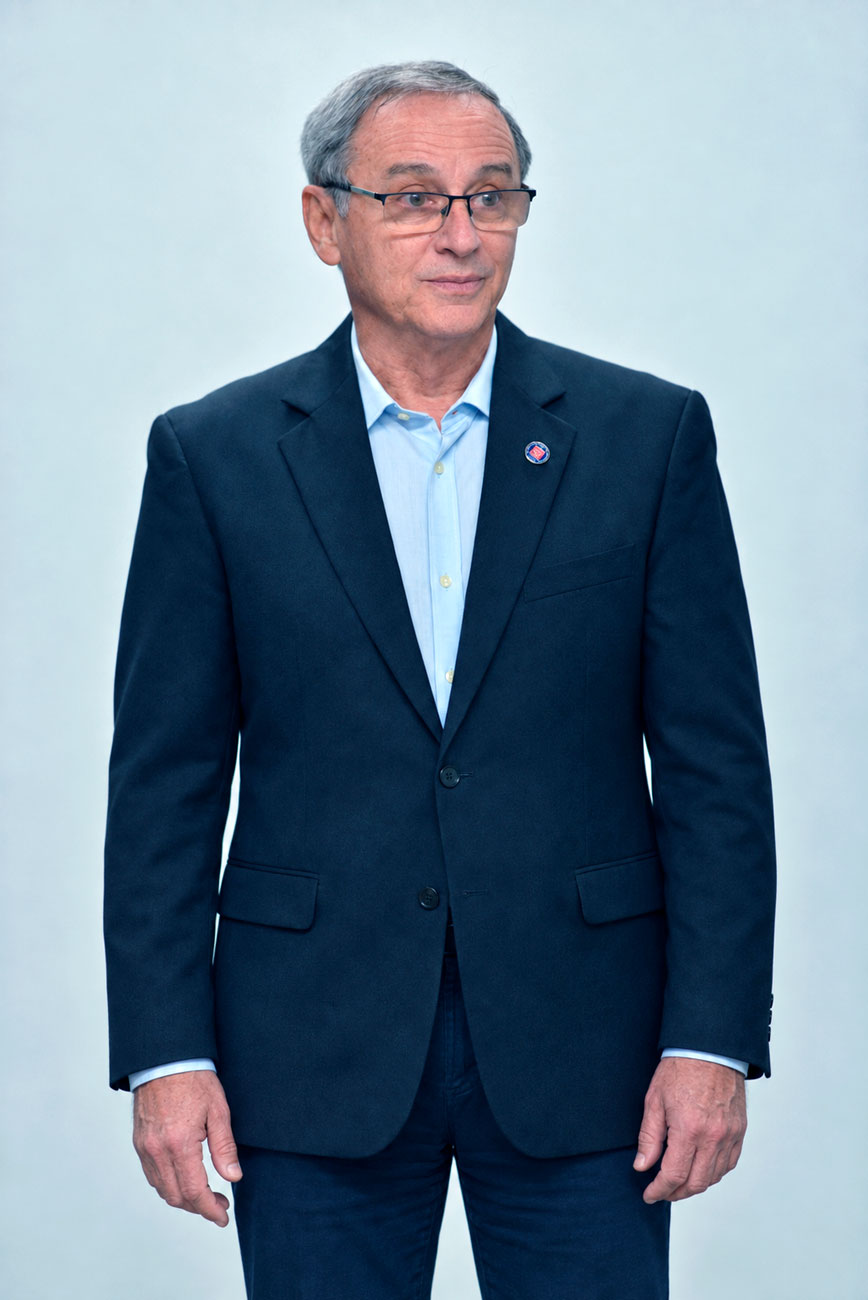
Arthur Prisco Paraíso Rêgo highlighted CNKD’s commitment to instructor education and the preservation of karate-do as a path of human development © Global Sports
One of Brazil’s leading authorities on Wado-kai karate, renowned sensei Eduardo De Mattei brought a class devoted to teaching movement step by step to the seminar’s second day.
A member of CNKD’s Shihankai and one of its technical authorities, the physical education professional holds shichi-dan (7th dan) from the Japan Karate Federation Wado-kai and hachi-dan (8th dan) from the International Karate Union (IKU). His approach broke the execution of strikes into stages, combining attention, body organisation and an understanding of fighting distances.
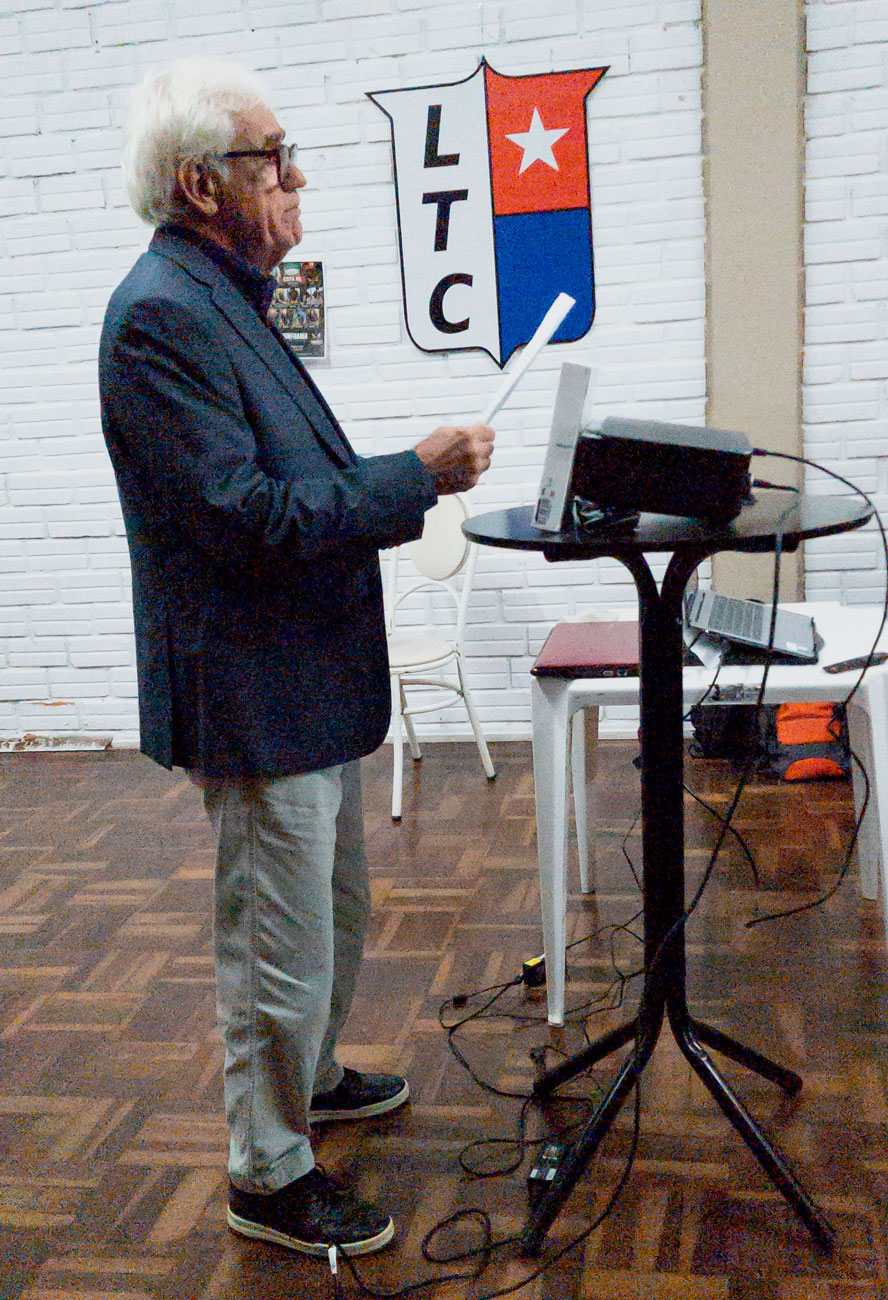
Iko Trindade highlighted recognition of instructors and the study of the masters’ legacy as foundations for CNKD’s collective work © Global Sports
The class began with two basic movements: jun-zuki, which De Mattei related to Shotokan’s oi-zuki, and gyaku-zuki. He divided the work into four teaching modules, progressing cumulatively from the basics—the simplest elements—to full execution. Each stage allowed participants to focus on one part of the movement, preparing them to integrate the elements at the end of the sequence.
Beyond presenting familiar techniques, the aim was to focus attention on details that require care even among experienced practitioners. De Mattei highlighted keeping the elbow close to the body during the punch, hip positioning, quadriceps activation and concentration during execution. Zanshin received particular attention: awareness should accompany the strike and, above all, remain after it.
“I broke these movements down for teaching, progressing cumulatively from the easy elements to the complete movement, so that participants could perform one part in each module and, by bringing them together, arrive at the finished work,” he explained.
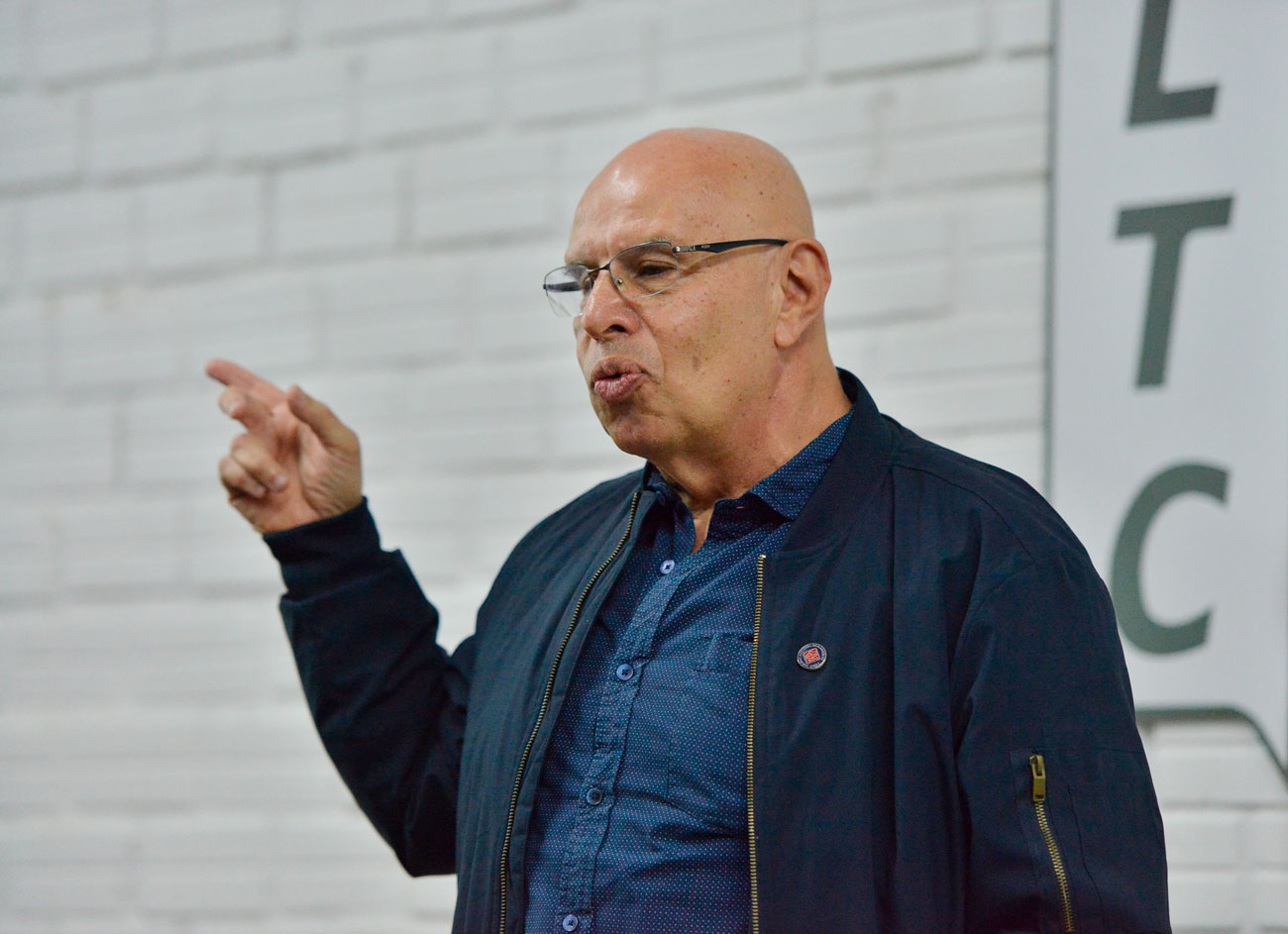
Daniel Neaime presented karate-do as a lifelong path of learning and self-improvement © Global Sports
The class then moved on to kizami-zuki and gyaku-zuki, performed with the lead and rear hands respectively. To make the explanation more accessible, De Mattei drew a comparison with boxing: while acknowledging the differences between the disciplines, he likened kizami-zuki to the jab and gyaku-zuki to the cross.
Using these strikes, he explored the three basic fighting distances. The work established a foundation from which practitioners could develop combinations within each distance in a later module. The class thus combined close attention to fundamentals with preparation for more complex applications, showing how teaching in stages can support both understanding and execution in karate-do.
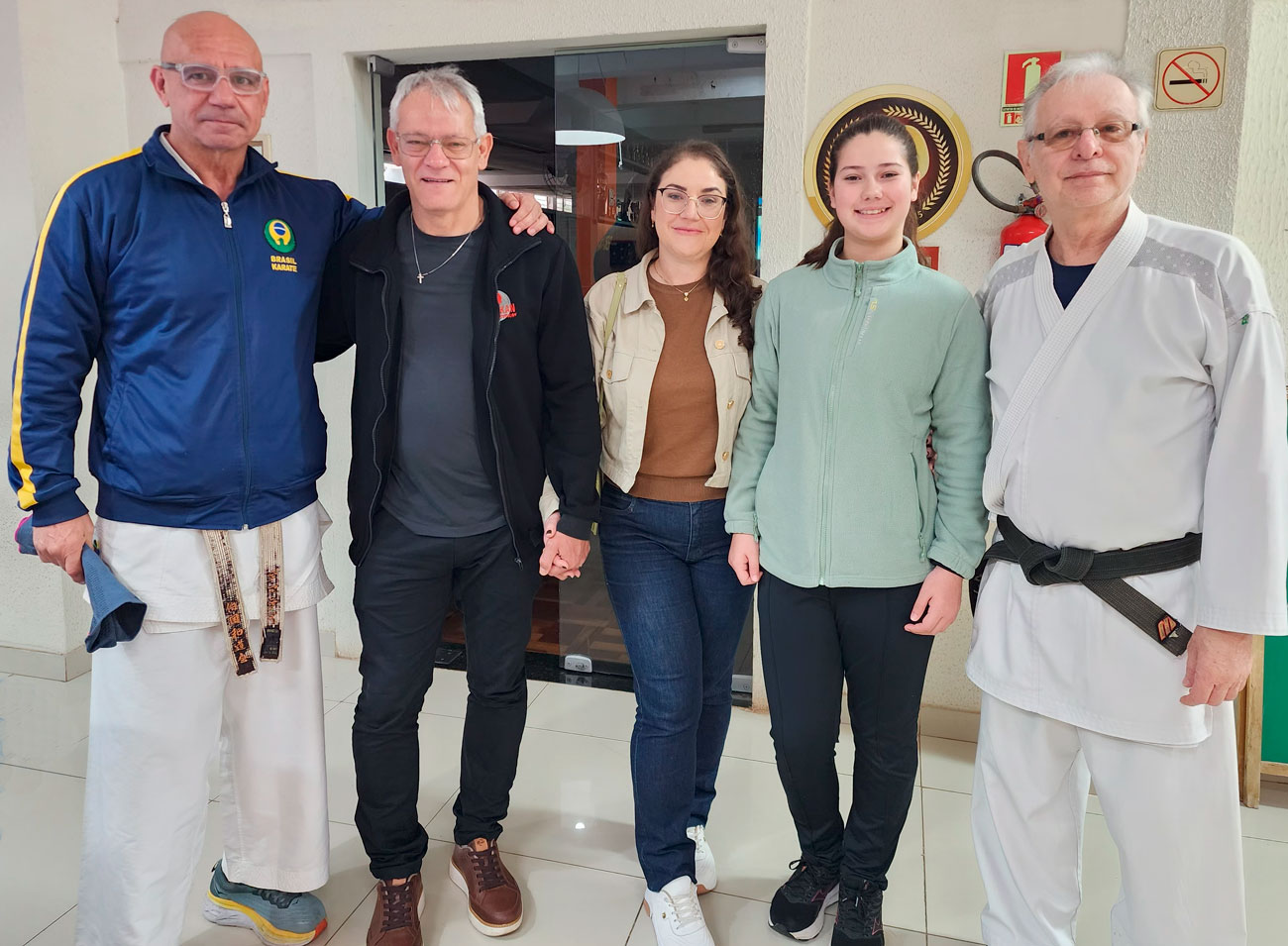
Instructors Eduardo De Mattei, Nélson Santi and João Cruz with Fernanda Capelo and Bianca Capelo © Global Sports
The relationship between contact with the floor, bodily action and the execution of a strike guided Nelson Santi’s class on the kinetic chain in karate-do. A physical education professional and coach of the Brazilian national team that will compete at the ITKF World Championship in Cairo in October, the renowned instructor worked on renzoku-waza, exploring the linking of movements, depth and fluidity of techniques.
The aim was to help participants perceive how different bodily actions connect during execution. From support against the ground to the moment a strike is delivered, Santi drew attention to the transmission of force through the body and the importance of understanding movement as an integrated whole.
“The idea was to work on the energy of the kinetic chain as applied to karate,” he explained. According to Santi, the subject is part of a field of study to which he has devoted particular attention, bringing research on movement together with his experience in teaching and training.
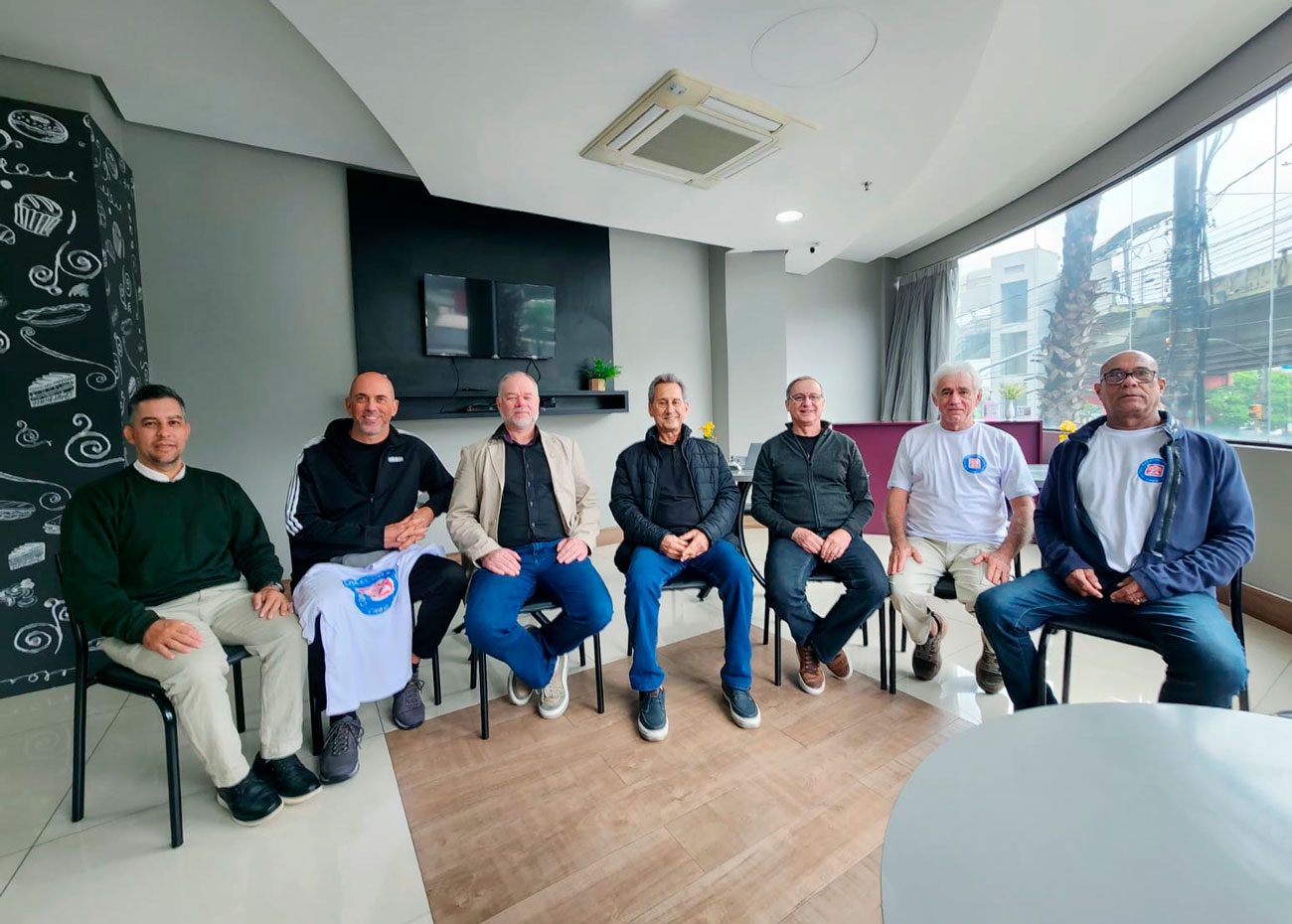
Instructors Márcio Martins, Eros José Sanches, Juan Pedro Osório, Eckener Cardoso, Arthur Prisco Paraíso Rêgo, Iko Trindade and Álvaro Antônio Macedo de Paula © Global Sports
In the final part of the renzoku-waza sequence, Santi introduced a nage-waza, a throwing technique, working on the continuity of the action in response to a partner’s defence. The exercise added the need to respond to the other person’s reaction while maintaining the depth and fluidity that guided the class.
With one hour available, Santi focused on the proposed movements, while acknowledging that refining these techniques would require more time. He was positive about the participants’ understanding and the opportunity to share the material at the seminar.
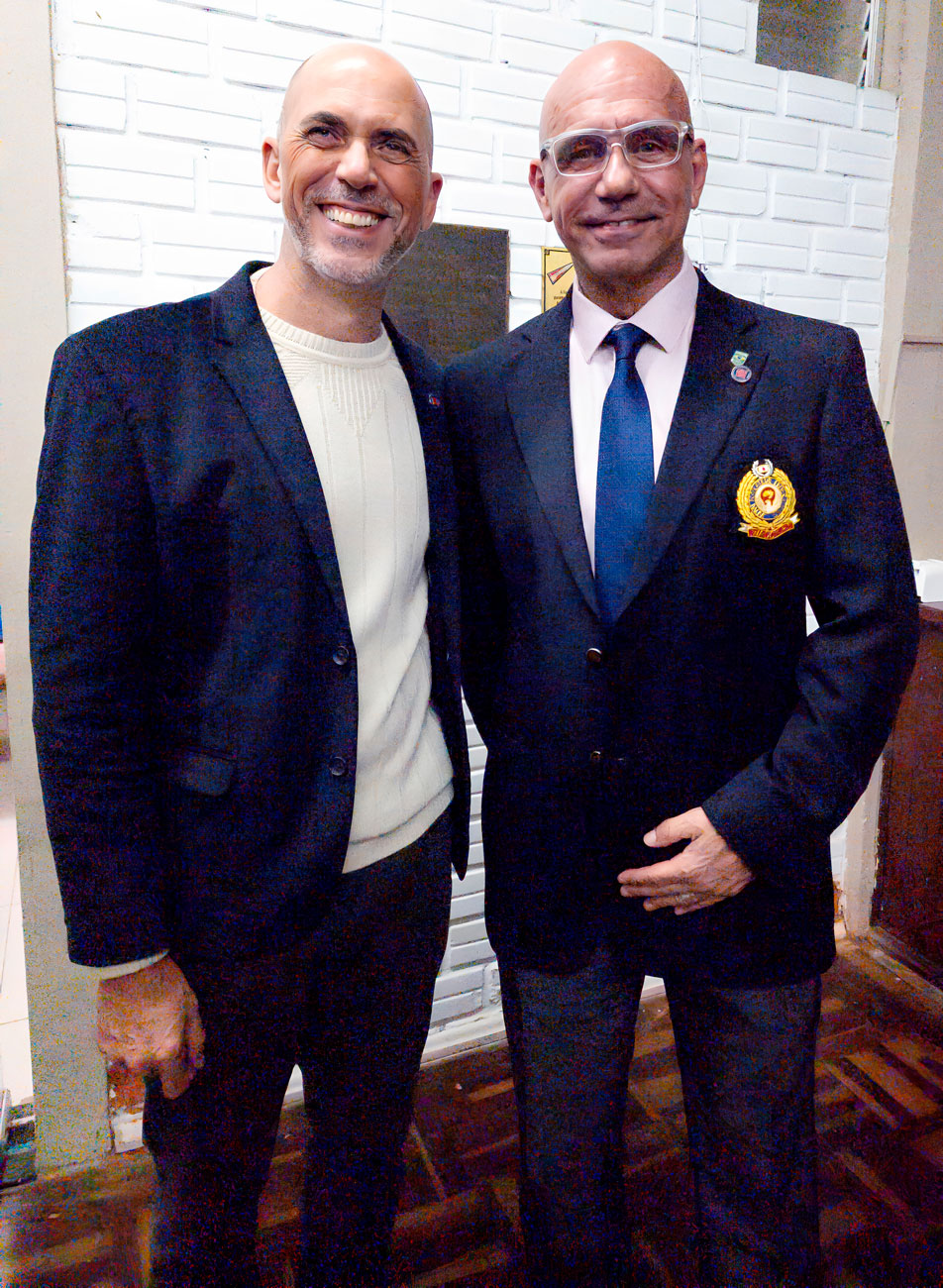
Instructors Eros José Sanches and Eduardo De Mattei © Global Sports
For Santi, the gathering was also a valuable opportunity to reconnect with experienced masters and instructors. Beyond his own class, he highlighted the lectures, exchange of ideas and welcome in Porto Alegre as important parts of the experience. Thanking the hosts, he expressed confidence in CNKD’s growth and the continuation of collective work dedicated to the development of karate-do.
History also played a central role on the seminar’s second day. A military professional, karate instructor and writer, Eros José Sanches, author of Ikken Hissatsu — As Origens do Karatê-Dô, explored the possible roots of one of the martial art’s best-known concepts. His presentation brought the Japanese sword tradition into dialogue with Okinawa’s early fighting practices, tracing figures and routes through which this knowledge may have been transmitted.
His starting point was the relationship between the expressions ichigeki-hissatsu and ikken-hissatsu. In the translations he presented, the former conveys the idea that ‘one attack certainly kills’, while the latter means ‘one fist certainly kills’. Sanches proposed examining whether the shift from one formulation to the other might have occurred through the encounter between kenjutsu, the art of the sword, and tode, an earlier name for karate.
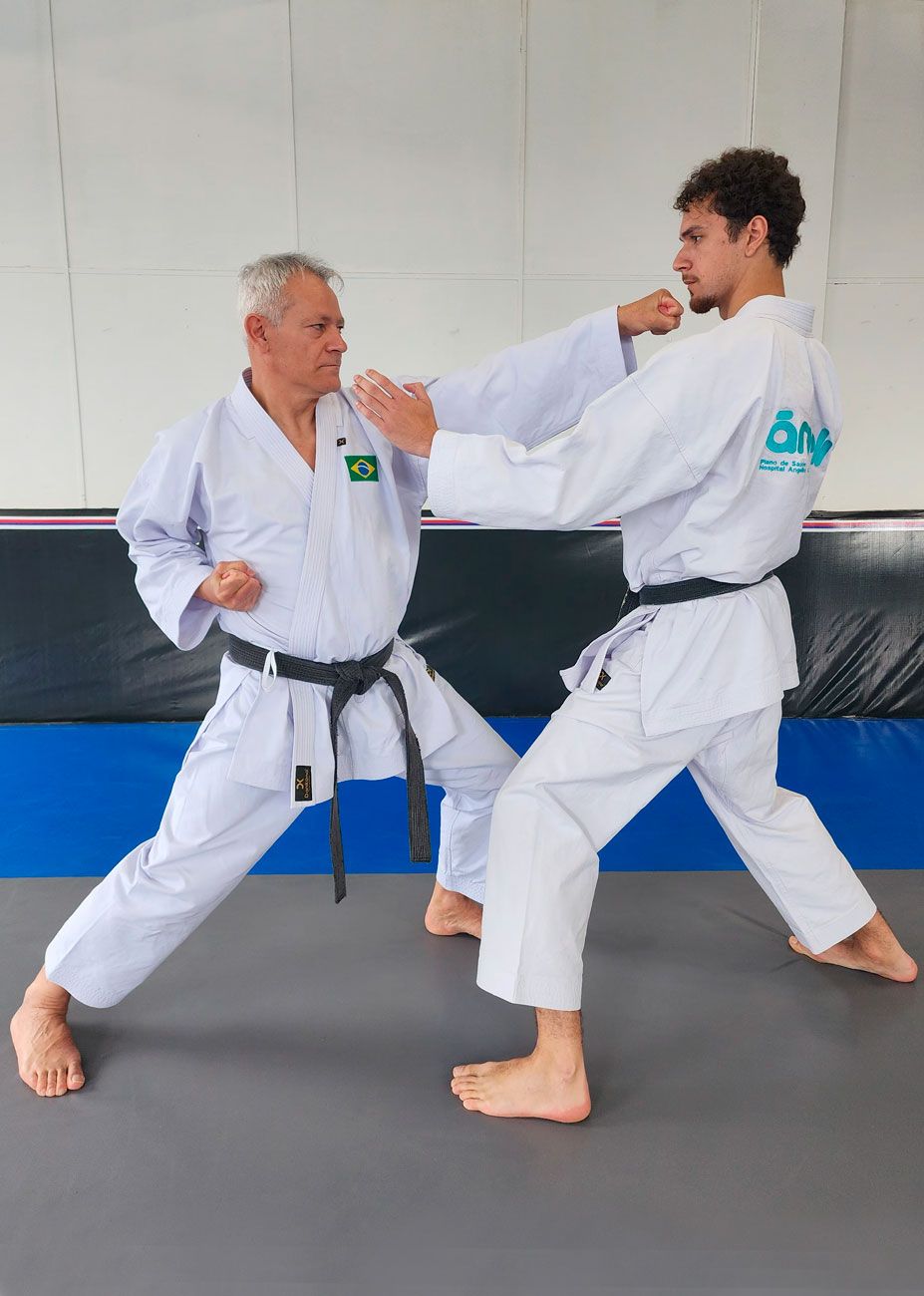
Instructor Nelson Santi, coach of the Brazilian Traditional Karate Team, presented an approach based on renzoku-waza © Global Sports
To develop this hypothesis, he turned to the history of Jigen-ryu, a school of kenjutsu associated with the Satsuma domain, in the area of present-day Kagoshima, on Kyushu, Japan. The invasion of the Ryukyu Kingdom by Satsuma forces in 1609 formed part of the context he presented for understanding the relationship between Japan’s martial tradition and Okinawa, which also maintained important cultural ties with China.
Sokon Matsumura occupied a central place in this account. Presented by Sanches as one of the great figures in the history of tode, the master is thought to have gained experience in both empty-hand practice and Jigen-ryu. In the researcher’s interpretation, this background provides a possible link between the sword’s decisive-strike principle and its expression in unarmed combat.
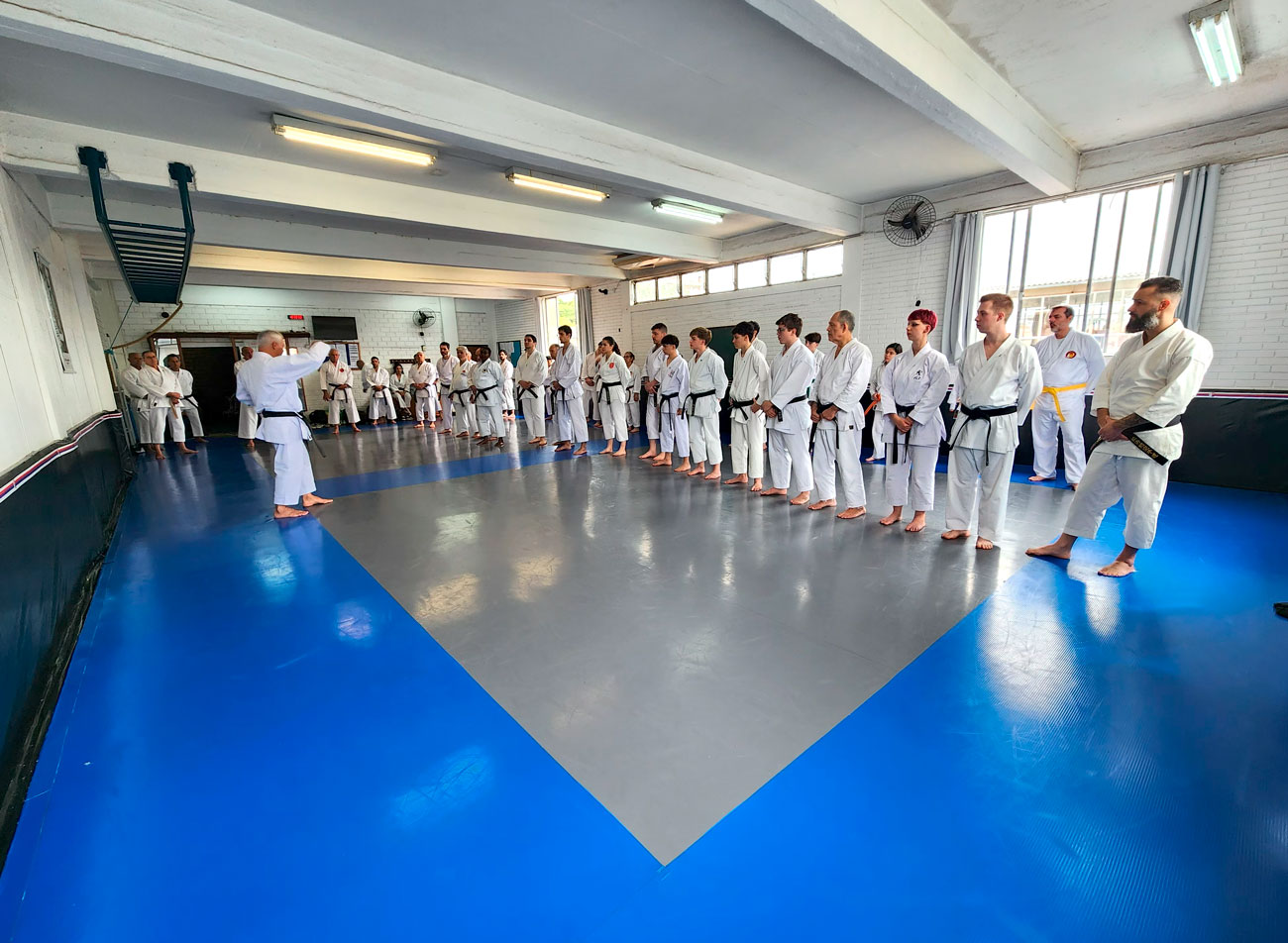
Sensei Nelson Santi’s class at the Lindóia Tênis Clube dojo © Global Sports
The hypothesis was that Matsumura may have adapted the concept of ichigeki-hissatsu to tode, associating the idea of a decisive attack with the action of the fist. Sanches treated this connection as a historical possibility for the origin of ikken-hissatsu in karate, rather than presenting it as a definitive conclusion.
Transmission across generations was another focus of the lecture. Discussing Matsumura’s teachings and his influence on Anko Itosu and Anko Asato, Sanches showed how a principle could circulate among teachers and students even when not all practised swordsmanship. The account also reached Gichin Funakoshi, a student of Itosu and Asato and a pivotal figure in the spread of karate in Japan.
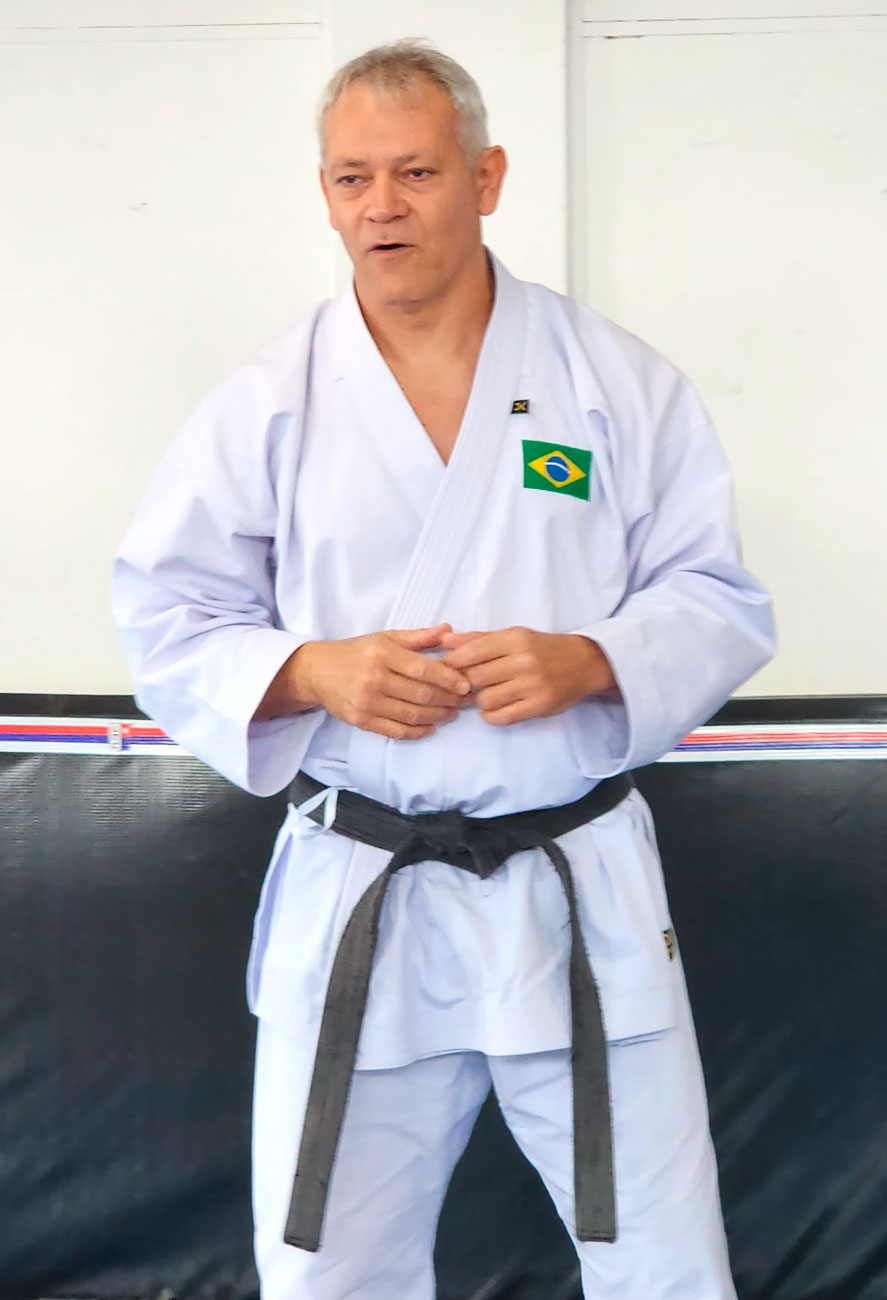
Nelson Santi’s presentation drew keen interest from the participating black belts © Global Sports
Sanches then examined Itosu’s contribution to the organisation of tode teaching, highlighting the five Pinan kata and their relationship with the introduction of the practice into Okinawa’s schools. The presentation thus moved from transmission within small circles to a period of wider teaching and transformation of the martial art.
In discussing the Tode Kenkyukai, Sanches emphasised the importance of bringing together masters who had previously developed and transmitted their knowledge more independently. In his interpretation, these forums for exchange may also have encouraged the circulation of concepts such as ikken-hissatsu.
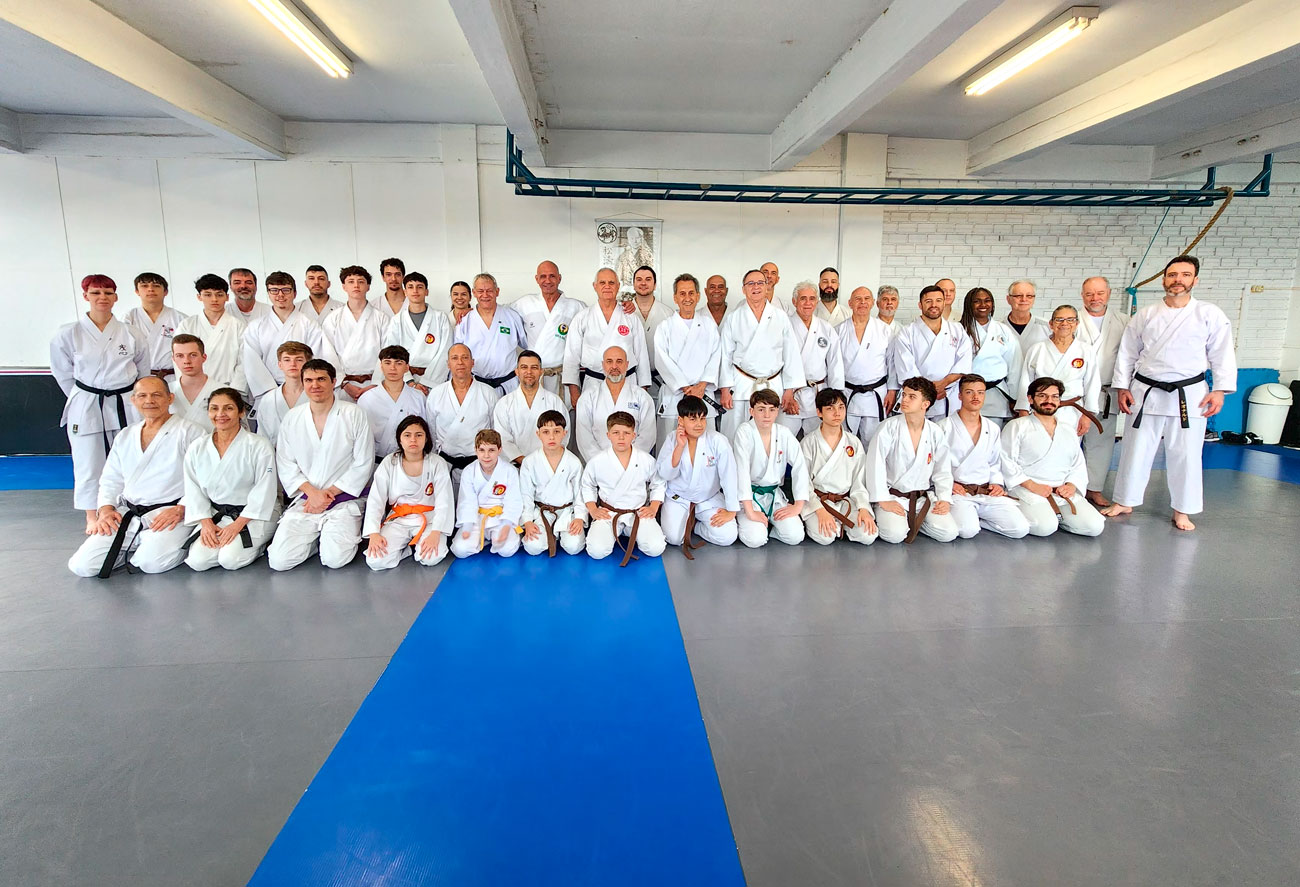
Instructors, black belts and practitioners who took part in practical classes at CNKD’s First National Seminar © Global Sports
The lecture invited reflection on the need to study the expressions that are part of everyday karate-do practice. By investigating their possible origins, Eros José Sanches connected technical vocabulary with the historical experiences, lineages and changes that helped shape the art practised today.
Shihan Eckener de Pereira Cardoso Sobrinho’s class combined technical precision, knowledge of the body and reflection on the meaning of practice. A hachi-dan (8th dan), finance director and member of CNKD’s Shihankai, he dissected the kata Meikyo, relating its movements to the serenity and emotional balance needed in combat. With a degree in Physical Education and postgraduate qualifications in Sports Training and Exercise Physiology, he guided participants through details connecting the execution of movements with an understanding of their foundations.
His presence also brought to the gathering a figure whose standing extends beyond technical expertise. In Budô Magazine’s view, Eckener Cardoso is Brazilian traditional karate-do’s foremost moral authority. That recognition gave special significance to his participation in a seminar devoted to human development and the preservation of martial art and Budo values.
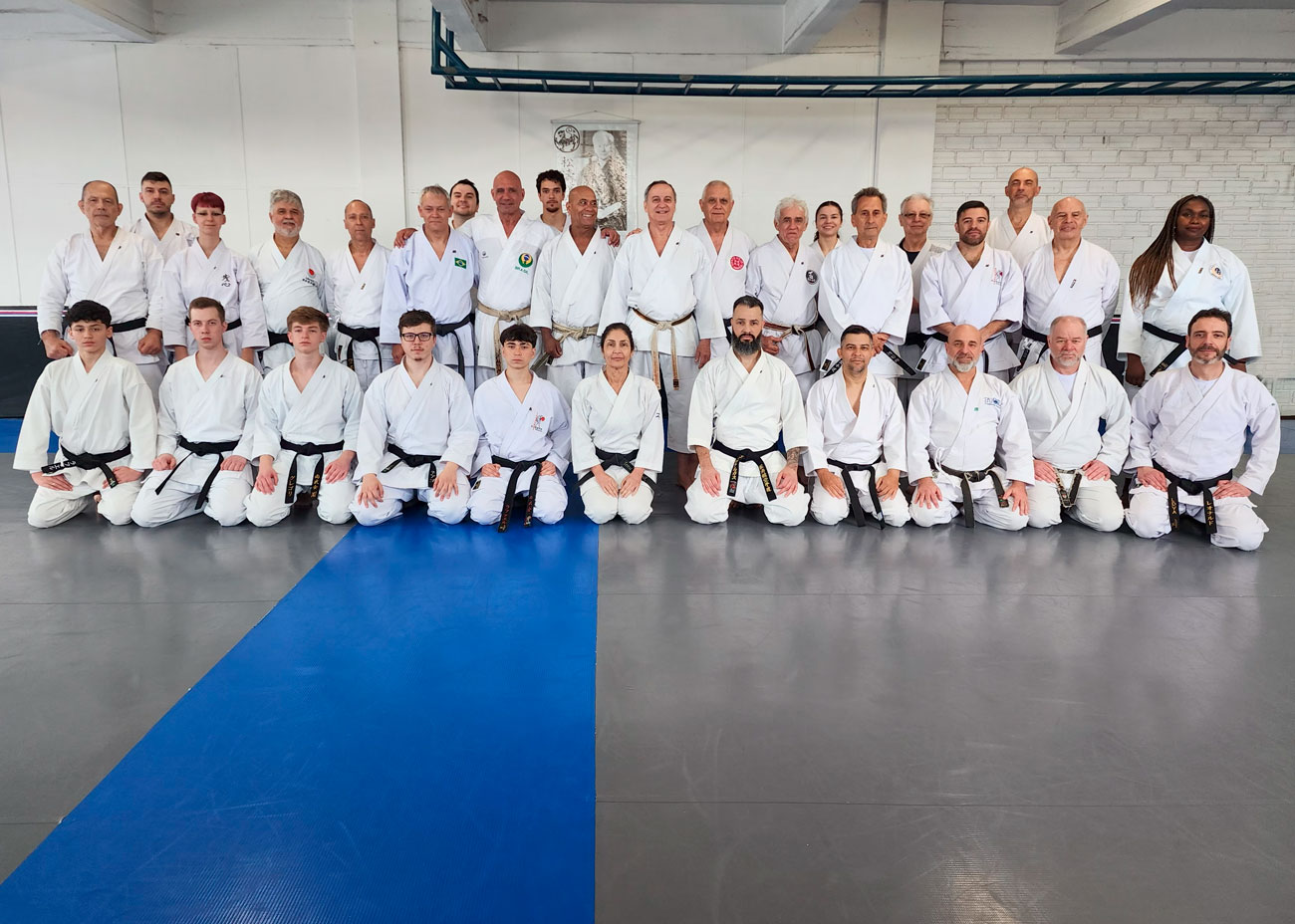
Black belts who took part in the group class led by Nélson Santi © Global Sports
In presenting Meikyo’s philosophical meaning, the shihan drew on the images of a clean mirror, a shining mirror and a mirror of the soul. In his approach, these references express the pursuit of serenity and emotional balance, connecting the study of kata with an inner disposition that accompanies the practitioner’s actions.
Among the technical points highlighted were defences against the bo, a wooden staff approximately 1.80 metres long, and the triangular jump known as sankaku-tobi. Studying these elements deepened participants’ understanding of Meikyo, with attention to the particular details of execution and the applications presented by the instructor.
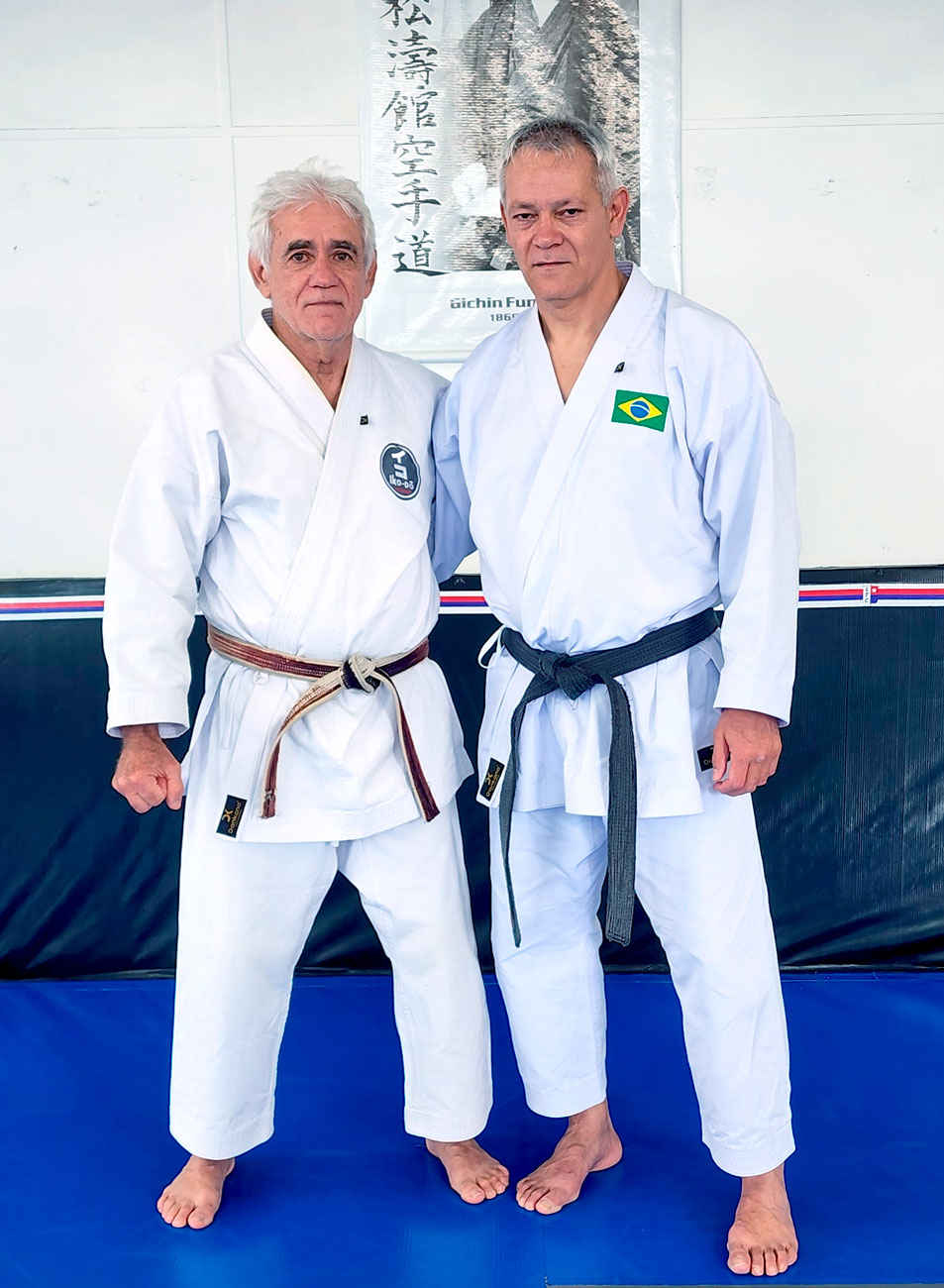
Instructors Iko Trindade and Nelson Santi © Global Sports
His explanation of the coordination of forces added a detailed account of the body’s role in a strike. Beginning in shizentai and performing kara-zuki, Eckener drew attention to actions that must be coordinated: support through the feet against the ground, vibration at the body’s centre, muscular contraction, closing the fist and releasing part of the air during exhalation.
He showed that punching power involves far more than moving the arm. The toes contribute to support, the centre of the body helps generate movement, and muscle groups contract in synchrony with breathing. In the approach presented, these actions should converge at the completion of the technique.
“This coordination of force, of energy, will make the technique more powerful,” he explained.
By connecting Meikyo’s meaning with the bodily foundations of its execution, Eckener offered participants a study in which technique and personal development complement one another. Attention to movement detail was accompanied by an invitation to cultivate serenity, concentration and balance—dimensions that give depth to the study of karate-do.
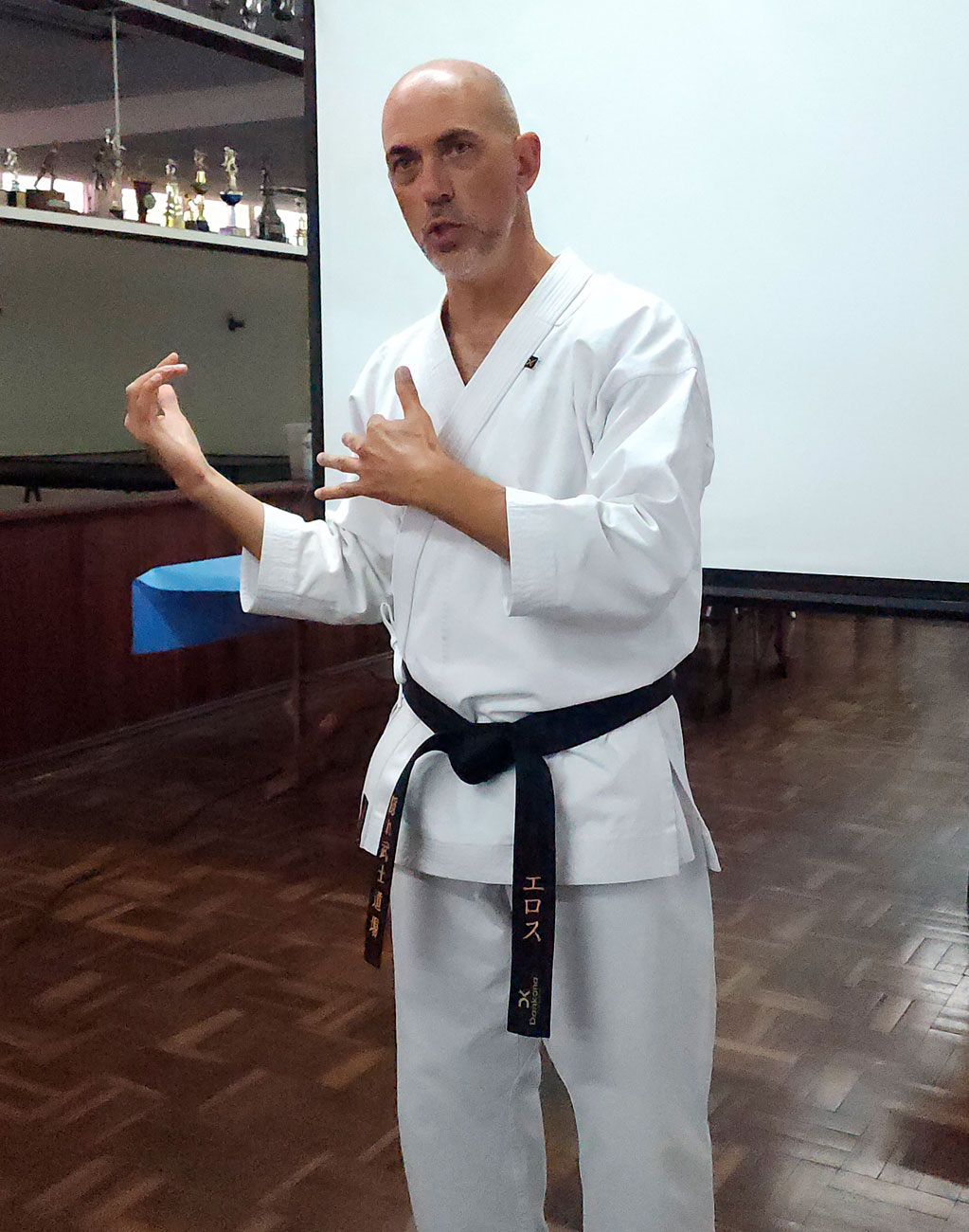
Instructors Iko Trindade and Eros José Sanches © Global Sports
The cultural dimension of learning came to the fore in the contribution of Tomoko Kimura Gaudioso, a lecturer at the Federal University of Rio Grande do Sul (UFRGS), who holds a doctorate in History from the Federal University of Santa Maria (UFSM). Her work encompasses Japanese language, poetry, origami and studies of Japanese immigration to Rio Grande do Sul. She shared personal experiences of karate and reflections on the values passed on in everyday dojo life.
Her account began with her participation in a university outreach project that brought together students, lecturers and administrative staff, welcoming practitioners from different styles. Recalling the training, she highlighted both physical preparation and the care taken over the arrangement of the space, greetings and respect for predecessors who developed and transmitted the martial art’s knowledge.
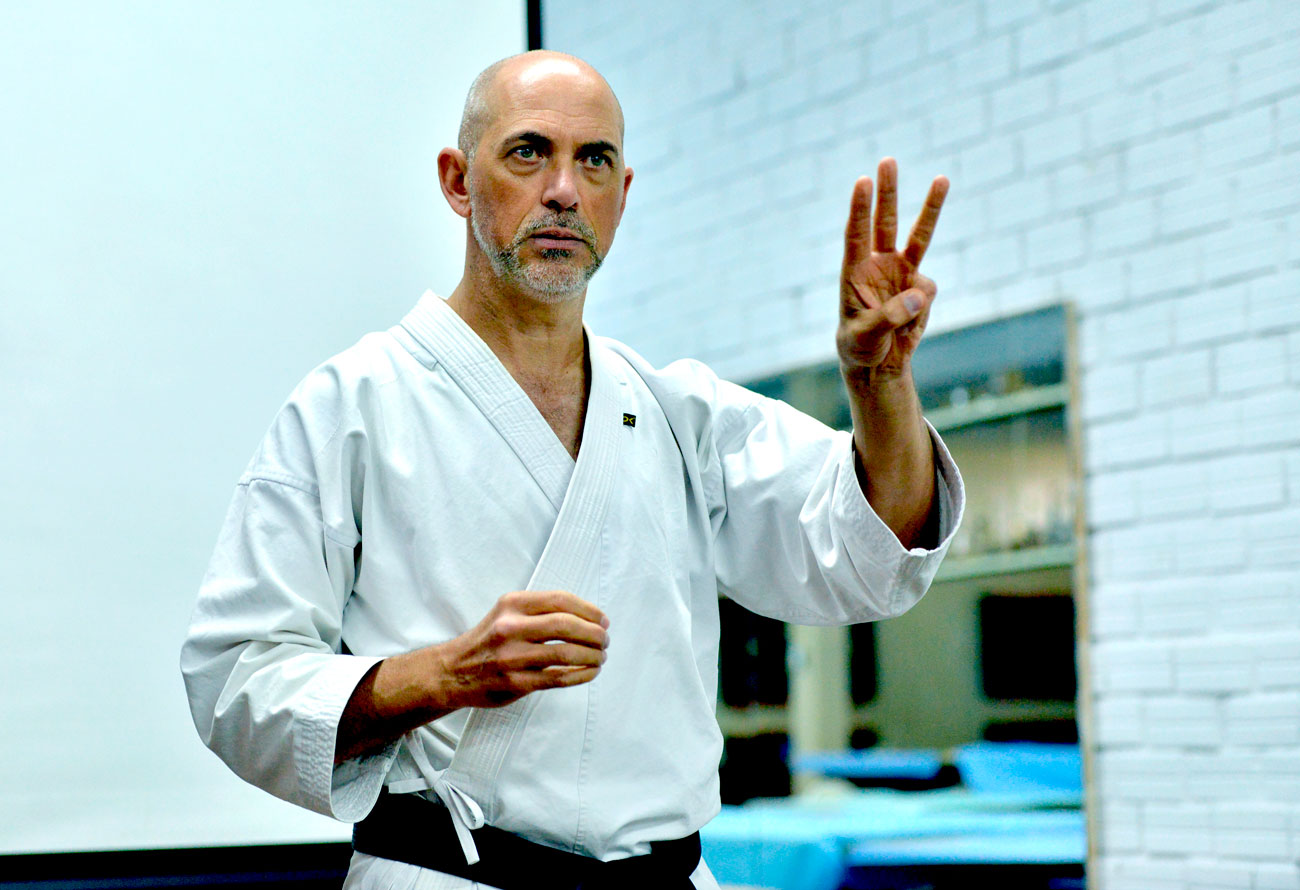
Eros José Sanches presented the possible origins of ikken-hissatsu and its transmission among the masters who shaped karate-do’s history © Global Sports
One of her central memories was the attention devoted to explaining principles of conduct. According to Tomoko, the instructor revisited their meaning in every class, making that reflection a continuous part of learning. Just as movements need practice, values were repeatedly revisited so that their place in training would extend beyond the repetition of words.
Her experience as a beginner also informed her observations on kata. She recalled the initial difficulty of understanding the meaning of the movements and the presence of an imaginary opponent. In her view, the exercise demanded more than memorising a sequence: it required recognising the intention behind each action and giving meaning to what the body was doing.
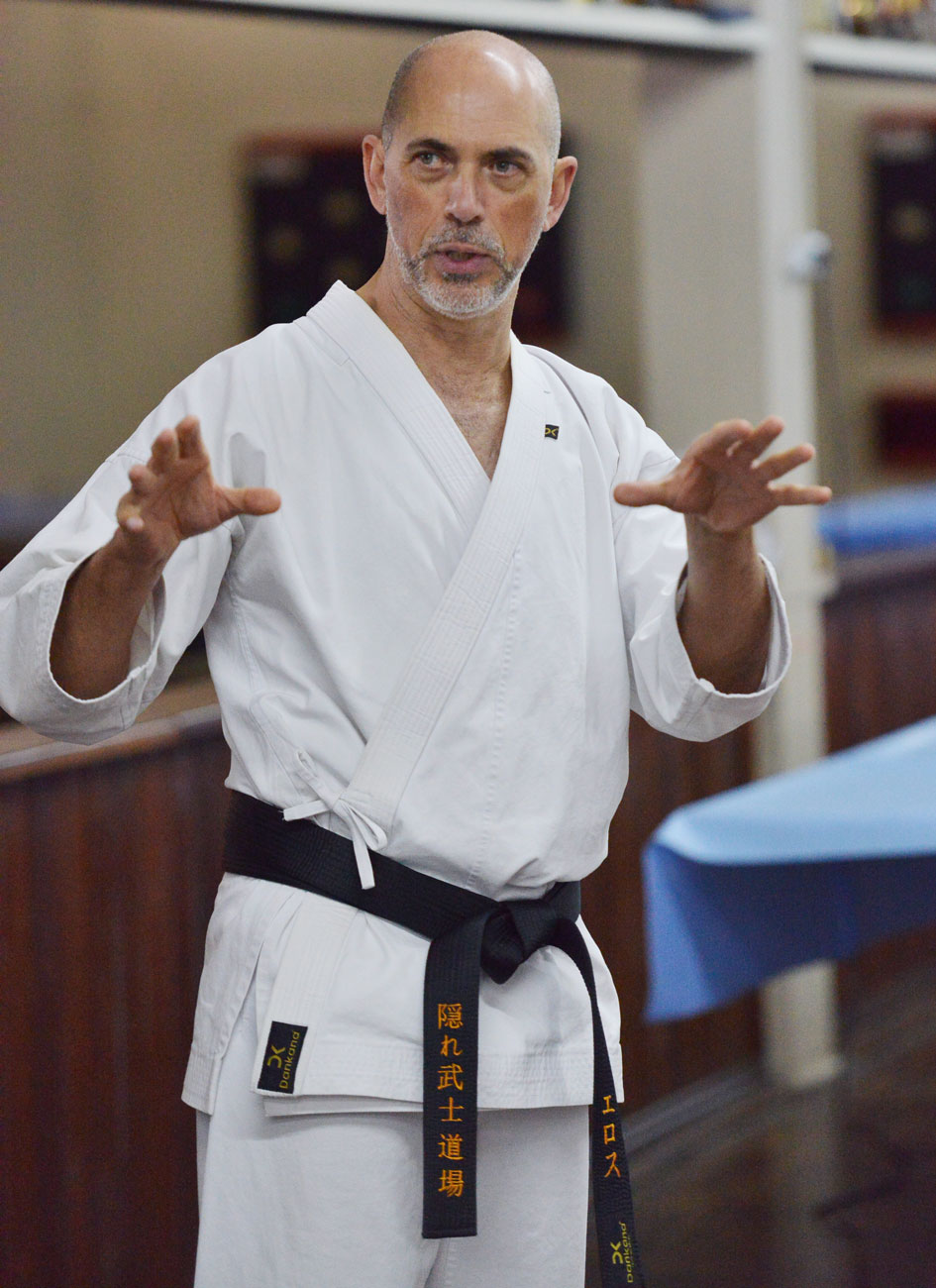
The author of ‘Ikken Hissatsu, As origens do karatê’, instructor Eros José Sanches produced one of the most comprehensive and in-depth works on the history of the art of the empty hand © Global Sports
Mentioning her participation in a keiko-hajime, the training session that marks the start of the year’s activities, Tomoko returned to the importance of attitude and respect for shared rules of conduct. Her account connected Japanese customs with concrete learning situations, showing how the dojo experience also involves relationships, responsibilities and ways of behaving.
Her contribution brought the perspective of someone who found in practice an opportunity to learn about aspects of Japanese culture through the body and social interaction. Between memories of training and reflections on etiquette, she highlighted the transmission of values as part of the practitioner’s development.
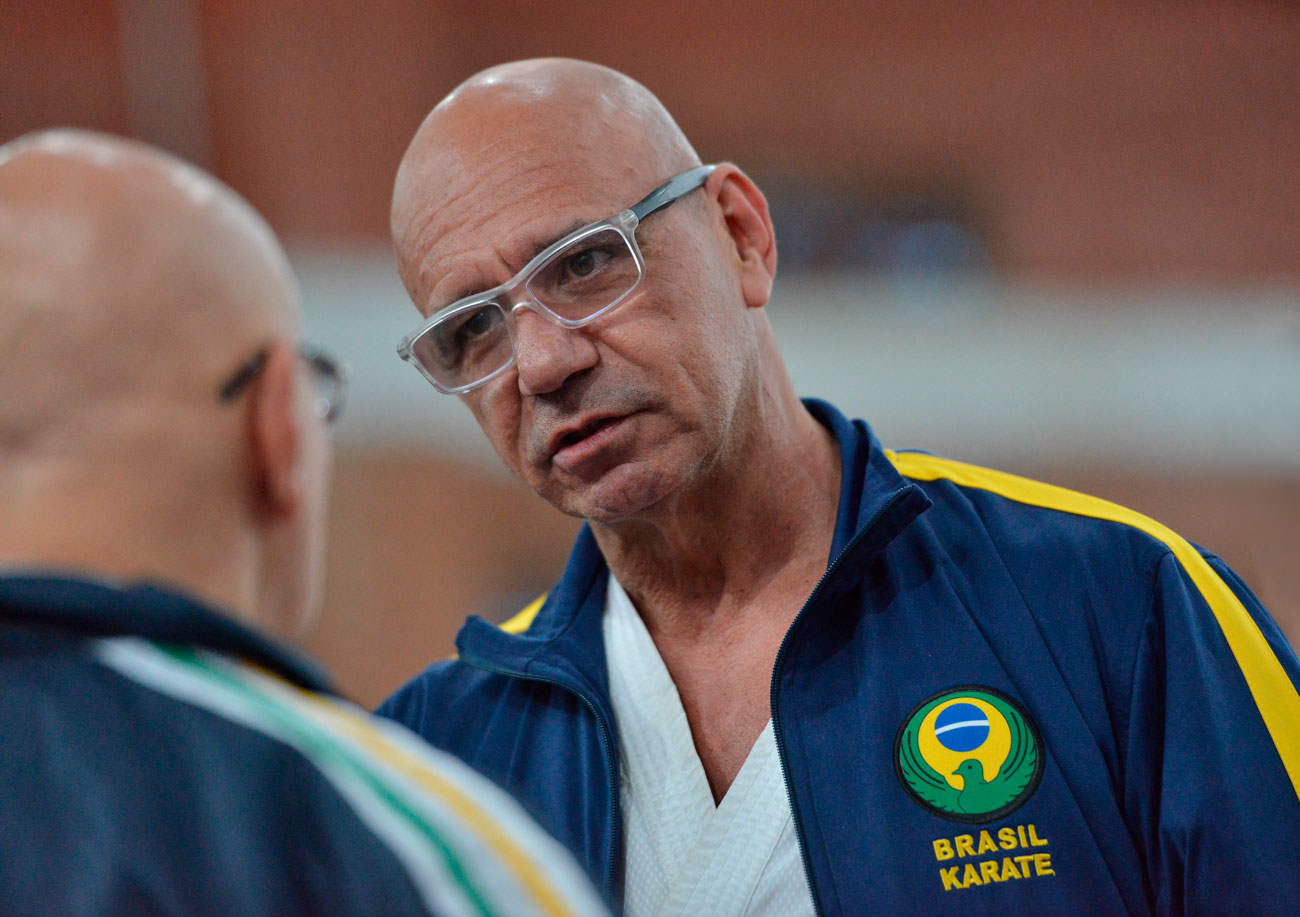
Instructor Eduardo De Mattei, shichi-dan (7th dan) under JKF Wado-kai and hachi-dan (8th dan) under the International Karate Union (IKU) © Global Sports
Overcoming rigidity and developing lighter movement guided Antônio Carlos Walger’s class on footwork in kumite. A business administrator and physical education professional, a hachi-dan (8th dan) black belt under CBKT/ITKF and a Class A international referee, Walger is president of the Pan-American Traditional Karate-do Federation – ITKF, technical director of CNKD and chief instructor at Academia Dento Dojô in Curitiba, Paraná.
His training approach combined exercises in physical preparation, breathing, evasion and movement, seeking to reconcile freedom of movement with the pressure needed when applying a technique. Explaining the foundations and progression of the class, he said:
“It all began with an observation about the rigidity karate practitioners display in their movement, both in kata and in fighting. That rigidity is often caused by the teaching methodology used. I therefore sought to develop a training method with exercises designed to correct this shortcoming.
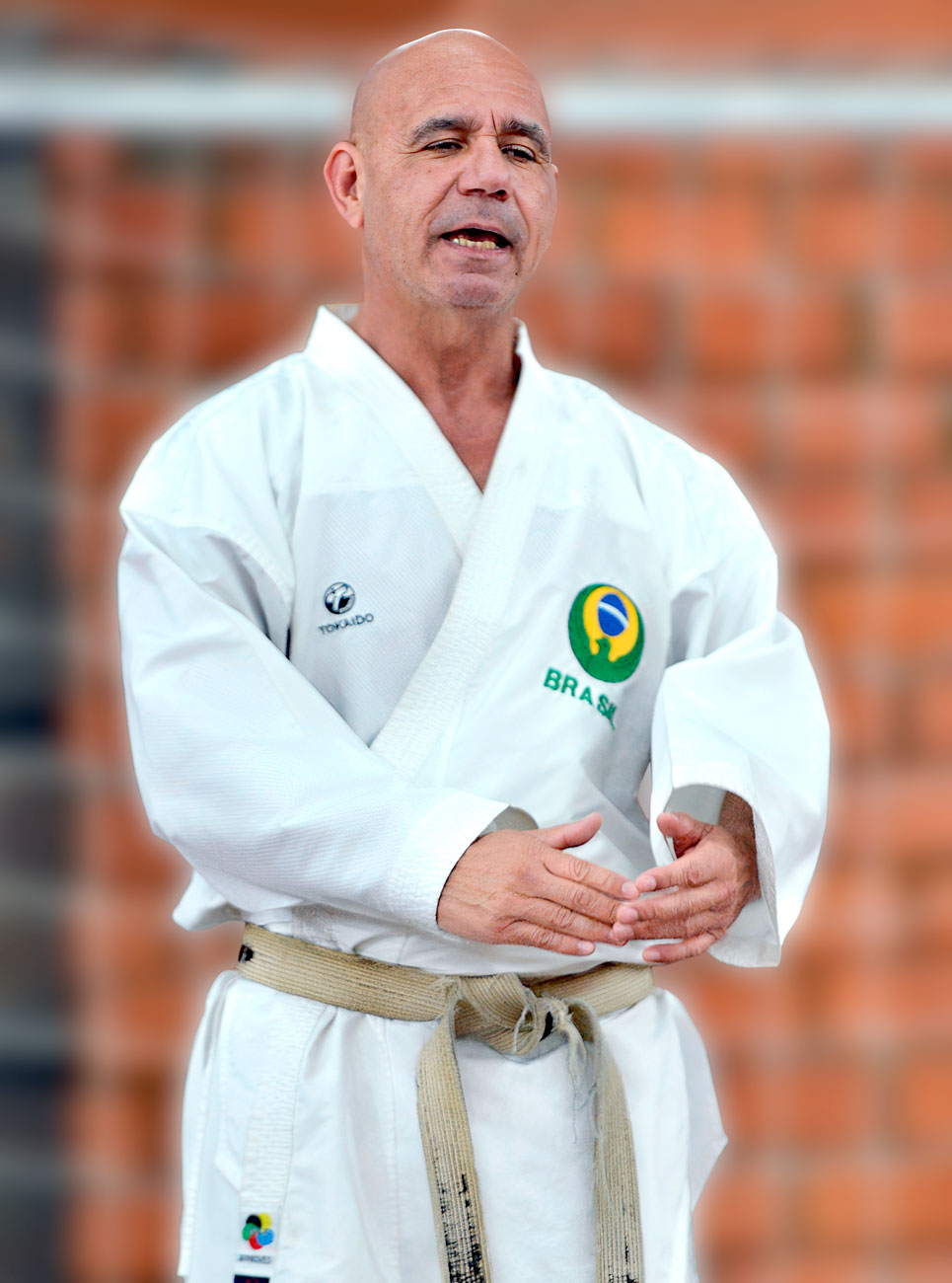
Eduardo De Mattei worked on the execution of strikes in four teaching modules, progressing from basic movement to complete technique © Global Sports
My first observation concerned the relationship between energy generation, body weight and the ground. Excessive pressure when at rest creates rigidity and makes movement difficult. The initial question was how to overcome this barrier by reducing excessive pressure against the floor, both at rest and when beginning to move.
The first aspect I worked on was activating three energy centres, used in this approach both to exert pressure against the ground and to move.

The first, called kami-tanden, is located at the front of the head and is associated with thought, intentions, decisions and the direction of our actions.
The second, naka-tanden, is in the chest area and is linked to emotions, emotional stability and feelings. It is a centre we work on through breathing: inhalation and exhalation contribute to its activation. We thus seek to establish a connection between intention and breathing to generate a flow of energy.
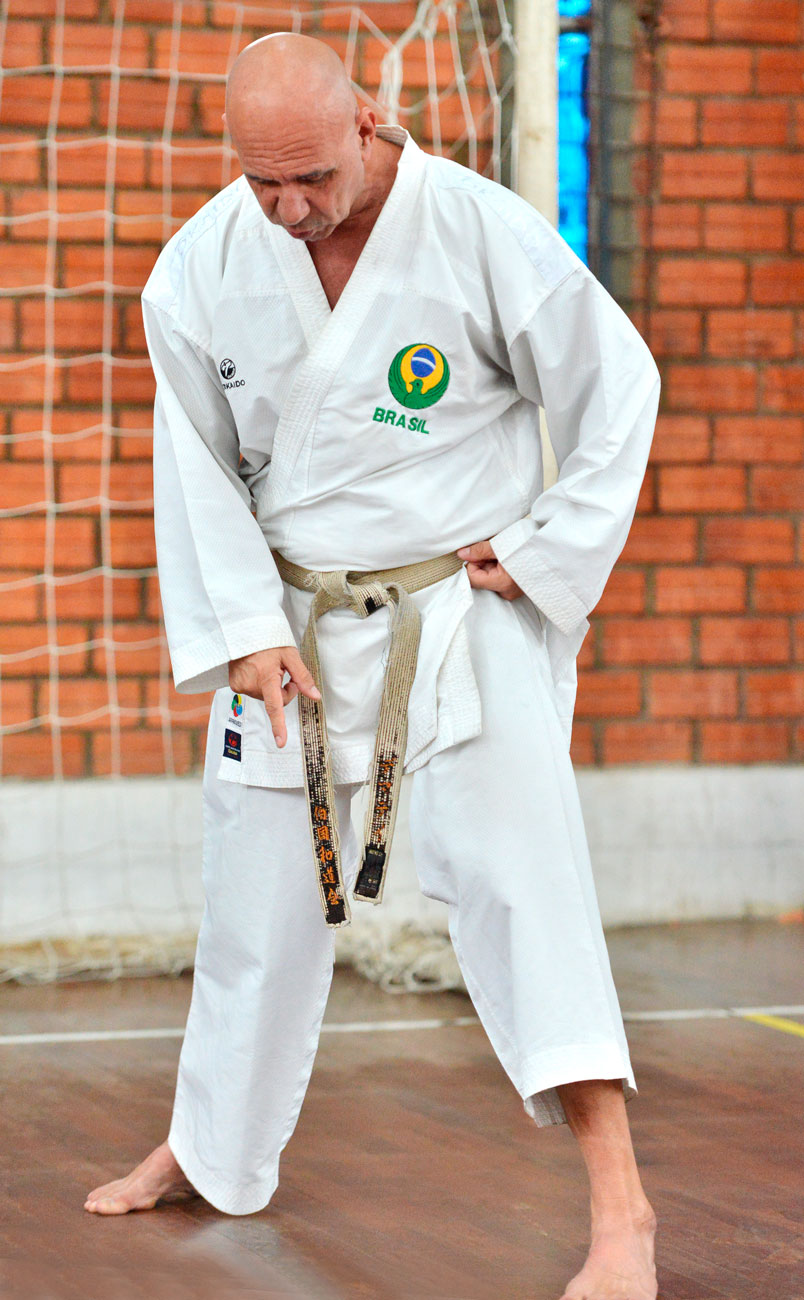
Using kizami-zuki and gyaku-zuki, Eduardo De Mattei explored the three basic fighting distances © Global Sports
The third is shimo-tanden, located below the navel. In this approach, its role is to guide action and movement, making it possible to exert pressure against the ground when necessary or to initiate movement forwards and backwards. These principles guided the exercises used at the start of training.
Another focus was how to maintain lightness in the body while moving and preparing for tai-sabaki, including forward, backward and lateral movement.
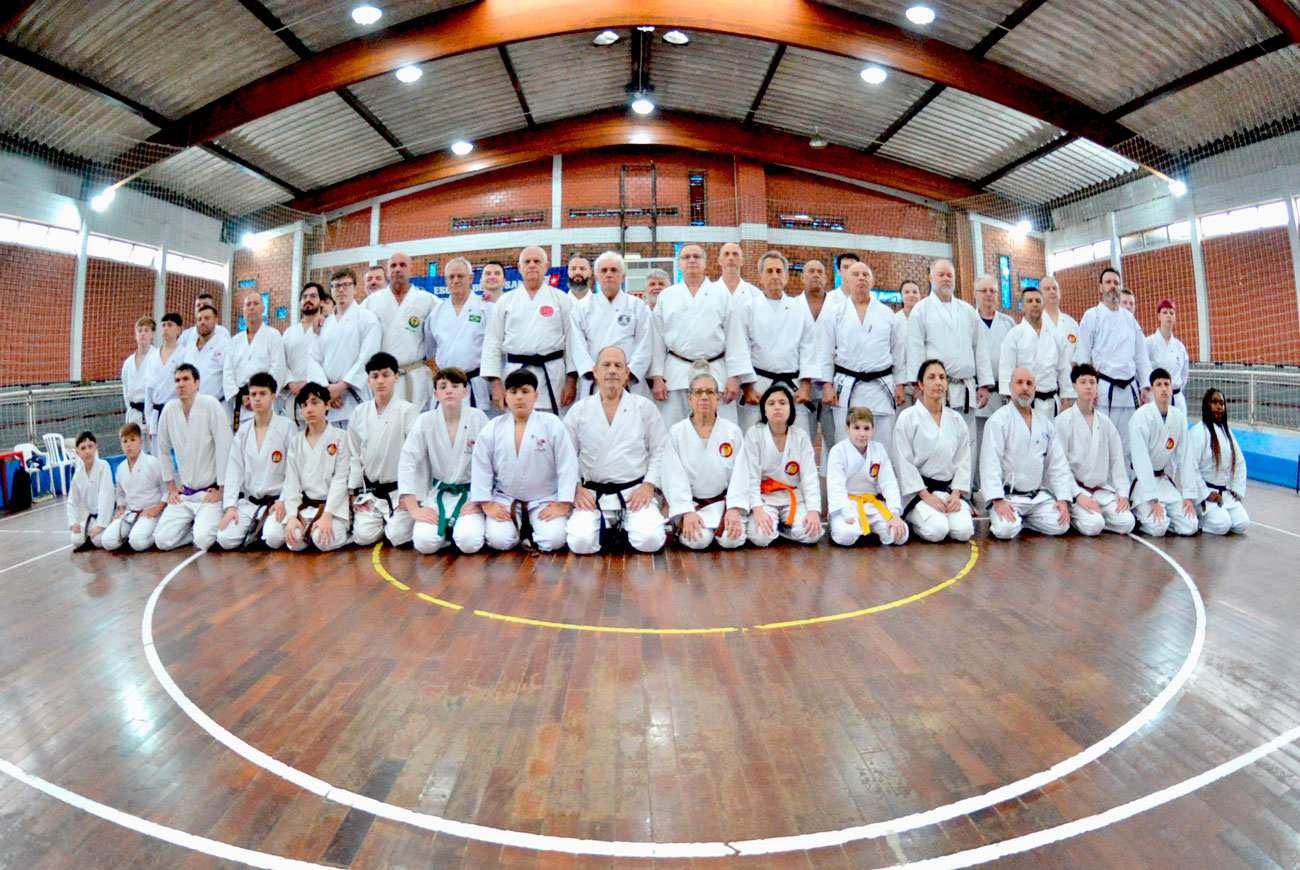
Instructors and practitioners who took part in sensei Eduardo De Mattei’s class © Global Sports
For this, I drew on irimi, used in kenjutsu and aikido. In the proposed exercise, practitioners move their bodies forwards, seeking to lift and direct their centre, the hara, towards the opponent’s centre.
The second movement was tenkan, which I introduced as a turn of approximately 180 degrees, beginning from the rear foot. In the exercises, this rotation could be broader or take smaller angles of 90, 45 or 30 degrees, depending on the evasion required during a fight.
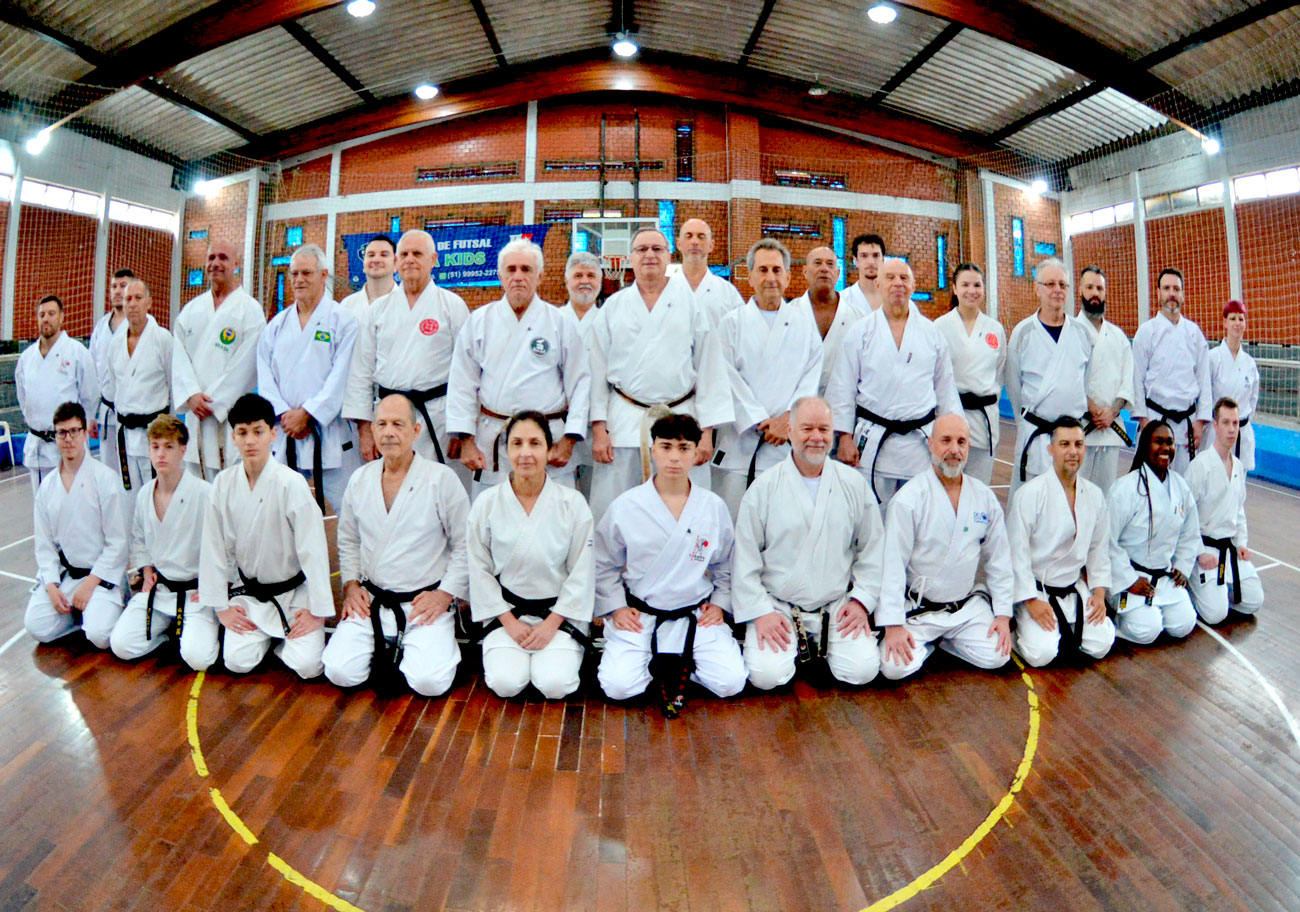
Black belts with sensei Eduardo De Mattei after the class devoted to karate-do’s technical fundamentals © Global Sports
Often, what prevents effective evasion is precisely keeping the foot too firmly planted on the ground. Combining irimi and tenkan aims to give practitioners greater lightness, speed and agility.
We performed a variety of evasion exercises using tai-sabaki, which was the ultimate objective, as well as exercises in quick, smooth movement. The instruction was to let the lower body lead the movement without creating rigidity in the upper body.
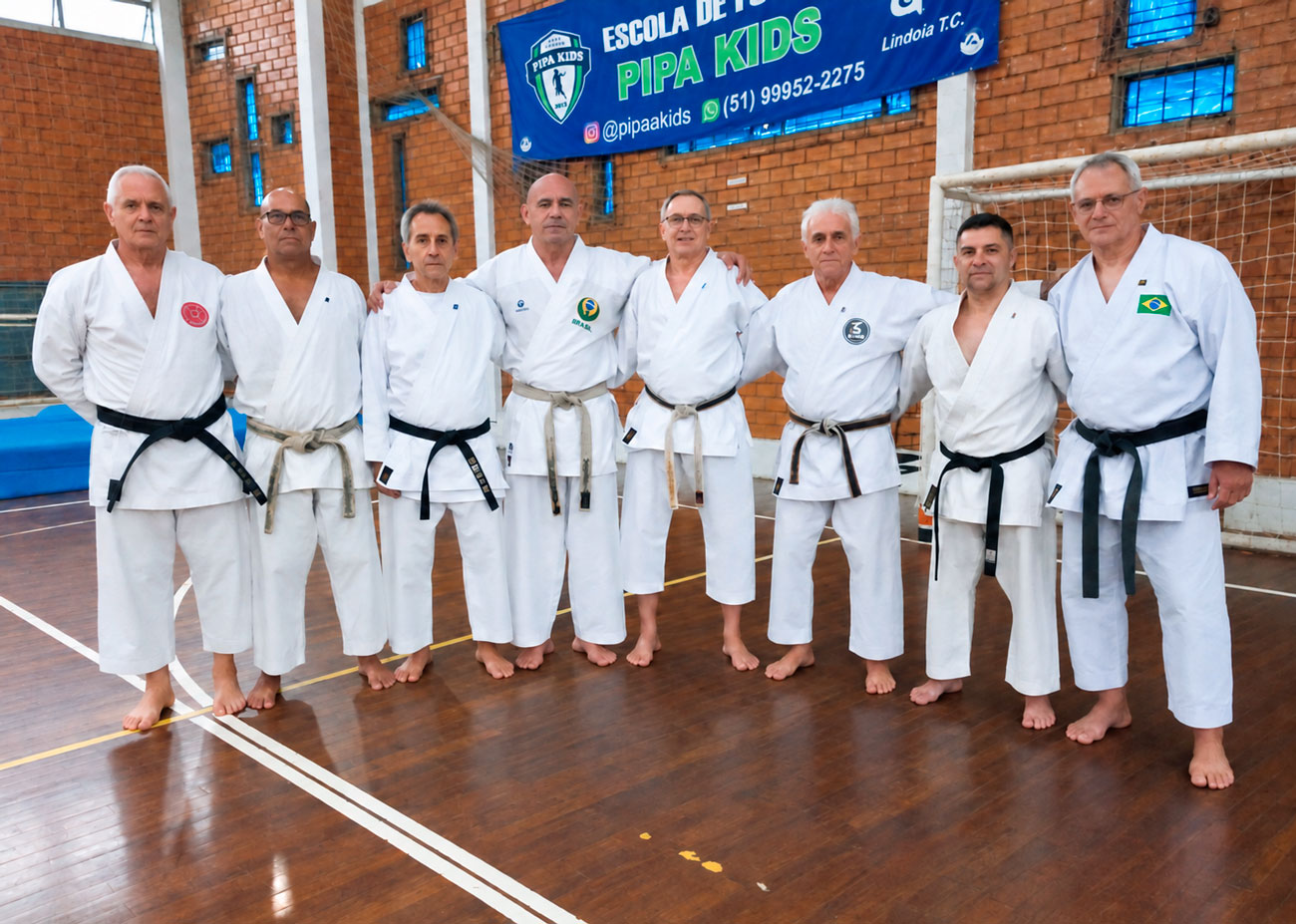
Instructors Antônio Carlos Walger, Álvaro Antônio Macedo de Paula, Eckener Cardoso, Eduardo De Mattei, Arthur Prisco Paraíso Rêgo, Iko Trindade, Márcio Martins and Nelson Santi © Global Sports
I observed very positive results both in the exercises with my students at the academy and in the work with seminar participants, within the time available. I was pleased to see, including during the festival held at the end of the gathering, that some practitioners tried to apply in their bouts the methodology we had worked on the previous day, and some succeeded.
That is the objective: for the method to be understood, practised and to help distinguish the movement of the athletes who use it.
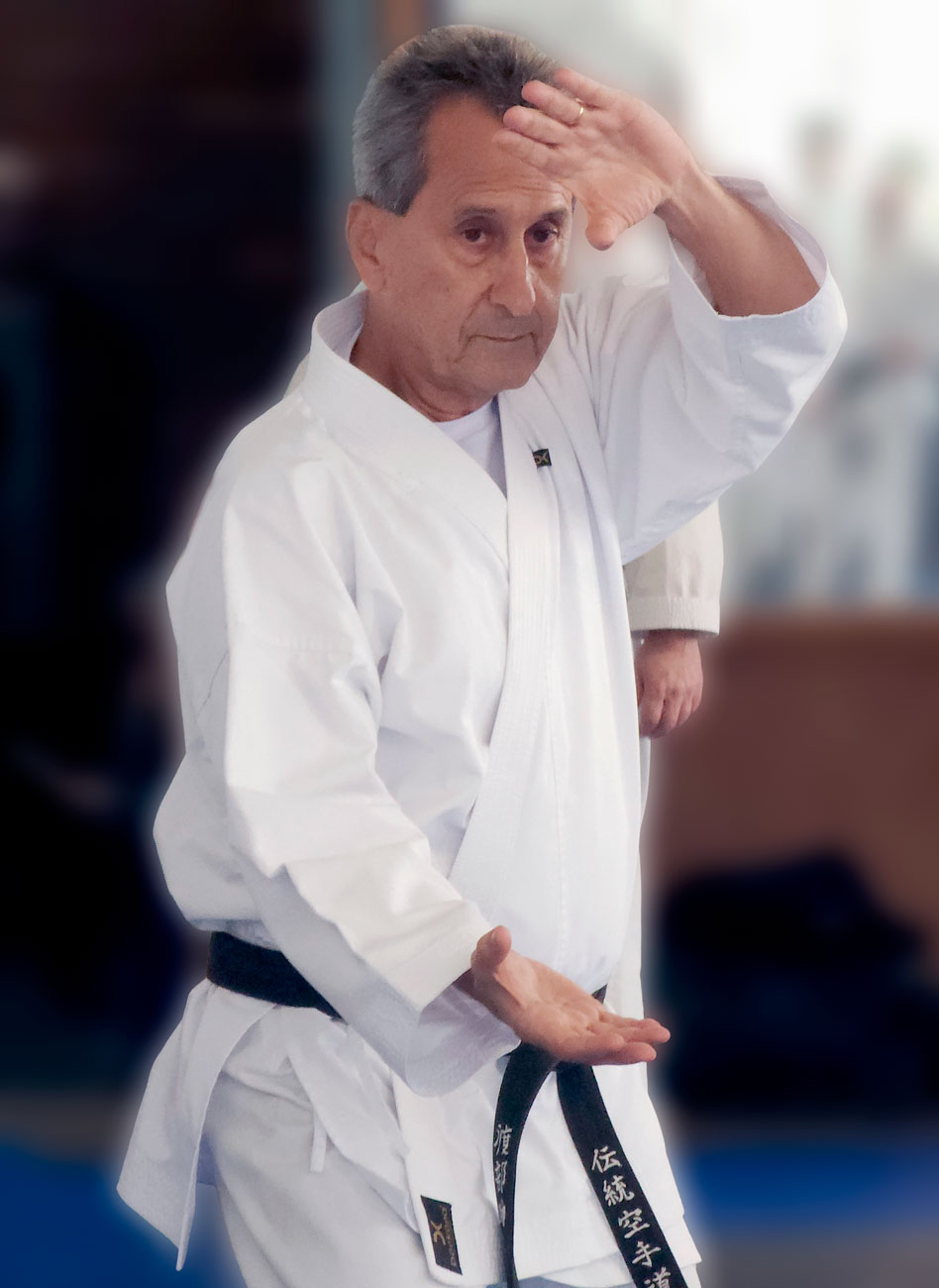
Shihan Eckener de Pereira Cardoso Sobrinho, hachi-dan (8th dan) © Global Sports
My advice to instructors and practitioners is to seek to develop lighter movement without abandoning kihon, a classical karate practice. We need to allow the body to move and its muscles to participate smoothly, without rigidity or excessive force.
Alternating between kihon, practised in a more rigid manner, and these subtler exercises can support significant progress. In this approach, the use of energy centres is related both to lightness during movement and to the ability to apply the necessary pressure at precisely the right moment.
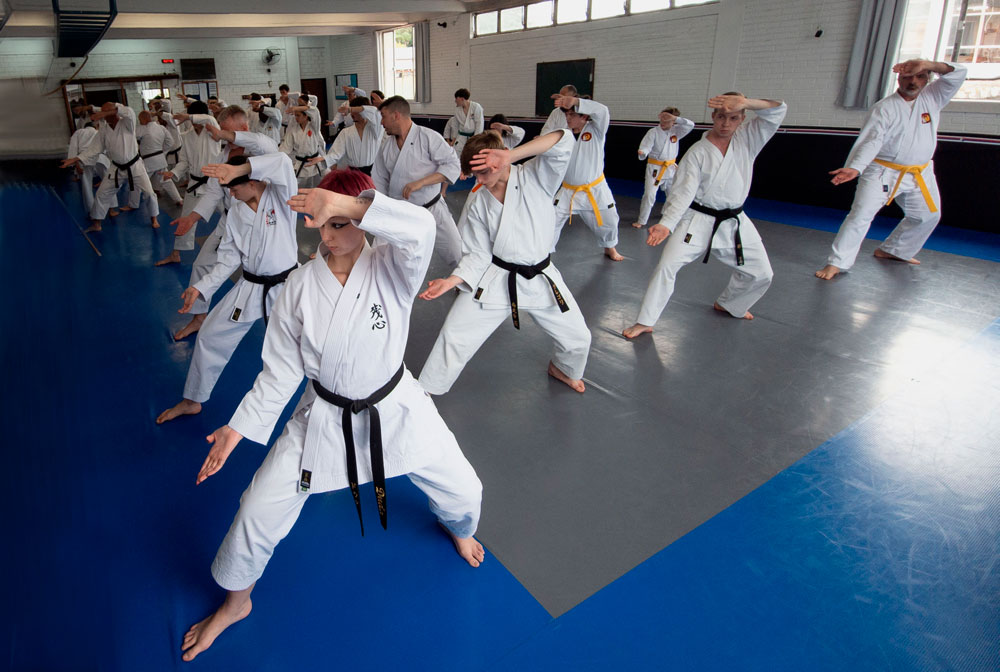
Black belts perform the kata Meikyo under the guidance of shihan Eckener Cardoso © Global Sports
Many of the principles and exercises drew on kendo and aikido practices, as well as observations by sensei Shigeru Egami, who worked with Yoshitaka Funakoshi. Egami also began to change the dynamics of his practice, seeking smoother movement instead of rigidity, and became a distinctive karate practitioner of his time.
These changes are not simple, but once practitioners begin to study and develop these possibilities, they can significantly transform the way they practise karate.”
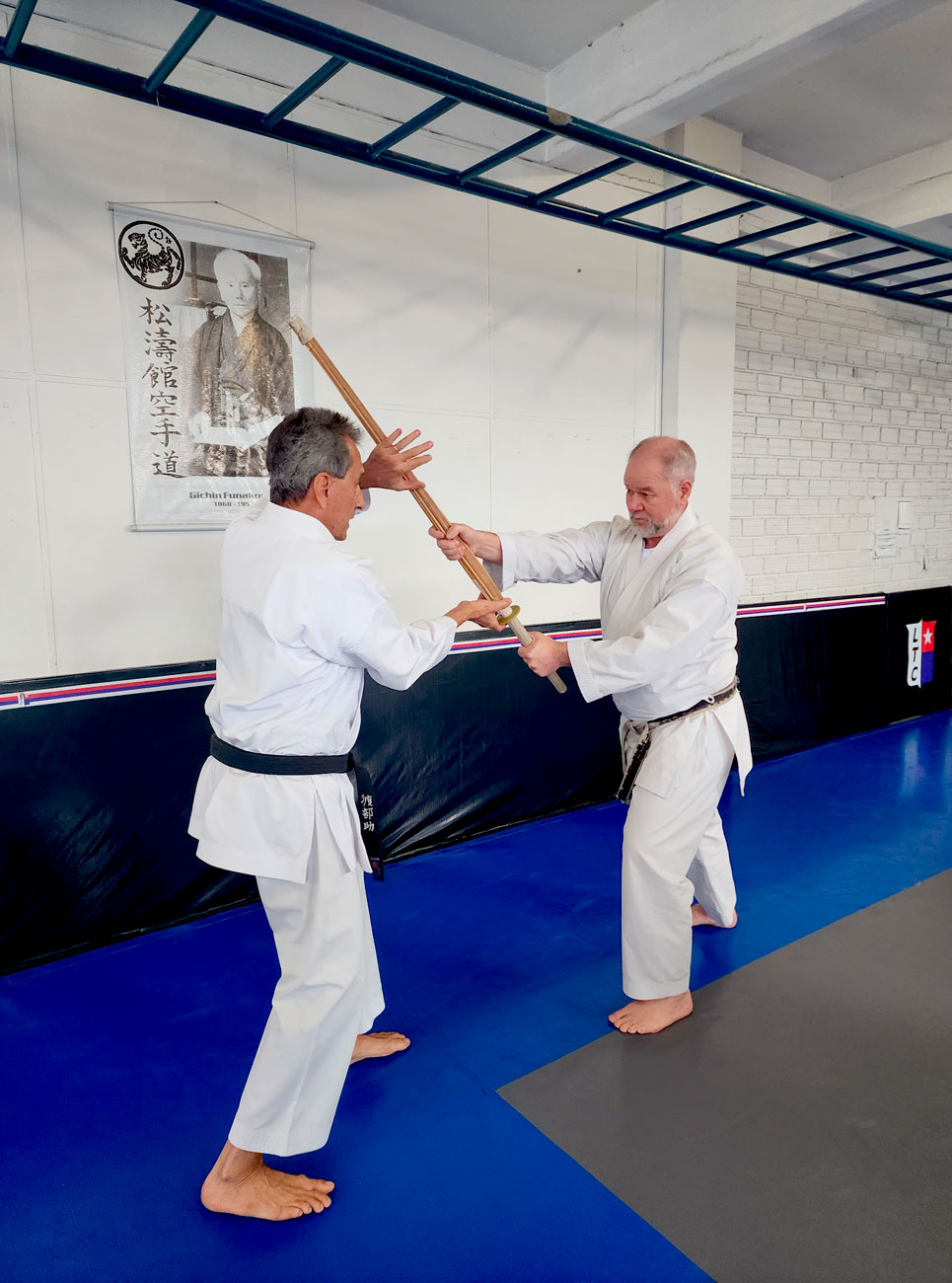
Shihan Eckener Cardoso demonstrates a technique for defending against a bo © Global Sports
Saturday’s programme began with an online contribution from Victor Lage, a lecturer at the University of Brasília’s Faculty of Physical Education (FEF/UnB), who delivered the lecture ‘Karate and Science: Current Research at Waseda University’. His participation brought the relationship between academic study and karate practice to the seminar, in keeping with CNKD’s commitment to continuing education.
Lage holds a degree in Physical Education and a master’s in Education from the Federal University of São Carlos (UFSCar), as well as a doctorate in Health Sciences from the São José do Rio Preto Medical School (FAMERP). A member of the Research Laboratory for Performance Analysis and Sports Teaching (LabEsporte), he works with martial arts, fighting disciplines and combat sports, bringing together teaching, research and practical experience.
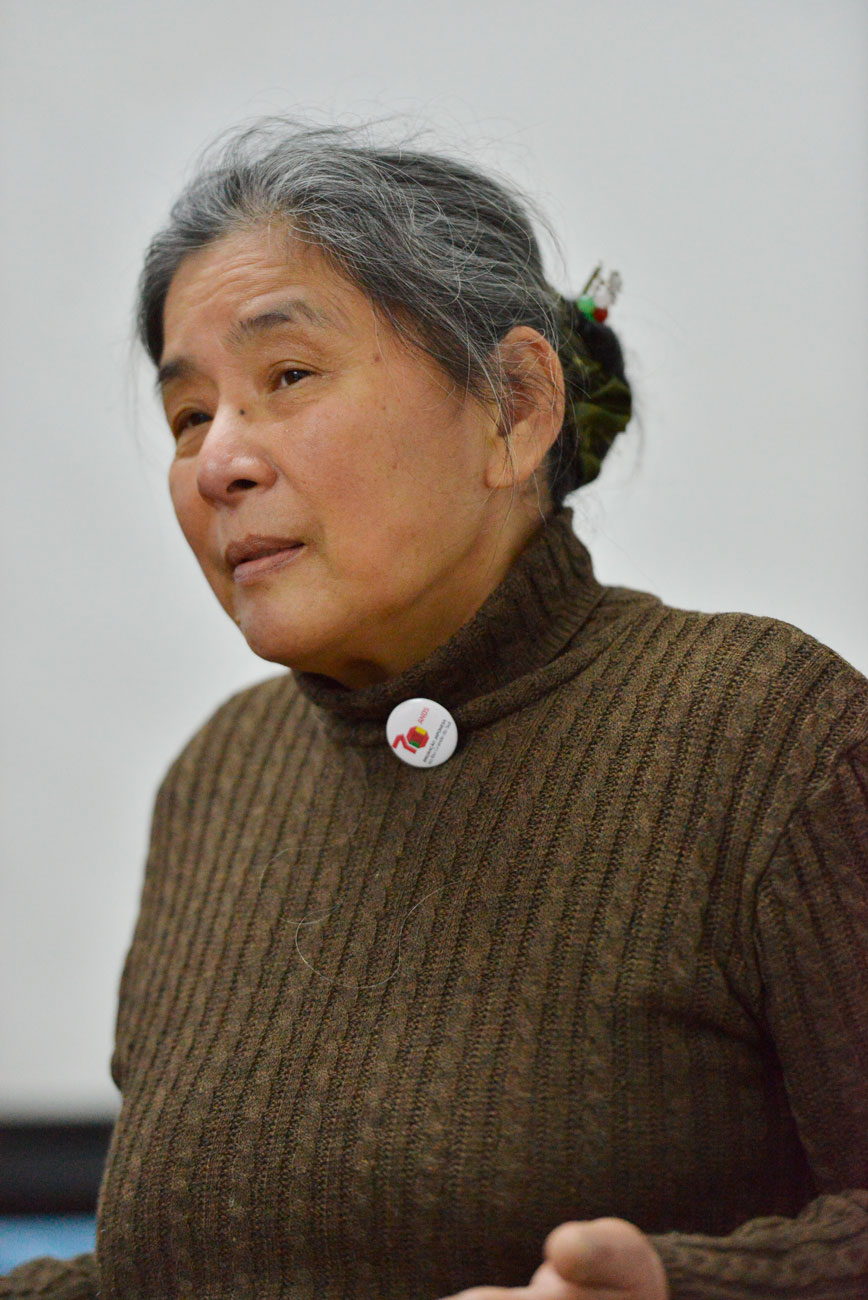
Tomoko Kimura Gaudioso shared experiences of Japanese culture and the values found in everyday dojo life © Global Sports
On Sunday 13 September, sensei Márcio Martins, CNKD’s scientific director, chaired presentations connecting karate-do with different fields of knowledge. The programme brought together reflections on Budo pedagogy, the inclusion of people with disabilities, the relationship between martial practice and law, and the perception of space and time.
This session featured:
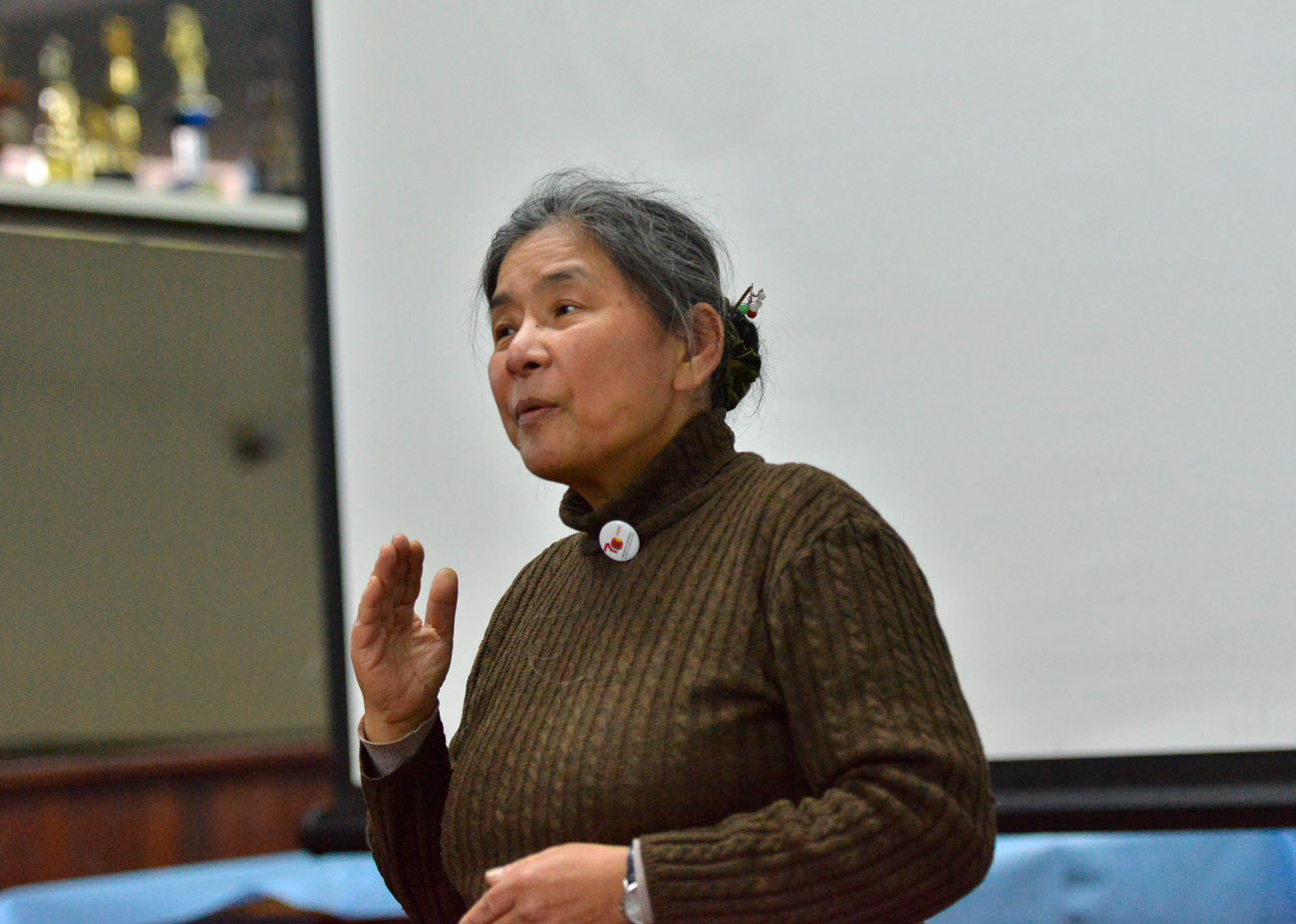
Tomoko Kimura Gaudioso highlighted etiquette and respect as part of learning karate-do © Global Sports
Understanding what happens between perceiving a situation and acting on it guided the presentation by instructor Carlos Berger Castillo, yon-dan (4th dan). In his paper ‘Spatiotemporal Perception in Karate-do: Mokuso as a Foundation for Understanding Maai’, he addressed the relationship between preparing attention, bodily experience and the opportunity to apply a technique in combat.
Berger, who is studying for a teaching degree in Philosophy at the Federal University of Rio Grande do Sul (UFRGS), conducted bibliographic research and a qualitative narrative literature review. His work brought contributions from Edmund Husserl, Maurice Merleau-Ponty and Takahashi Satomi into dialogue with the martial reflections of Kenji Tokitsu and Gichin Funakoshi, seeking to understand how practitioners perceive a kumite situation.
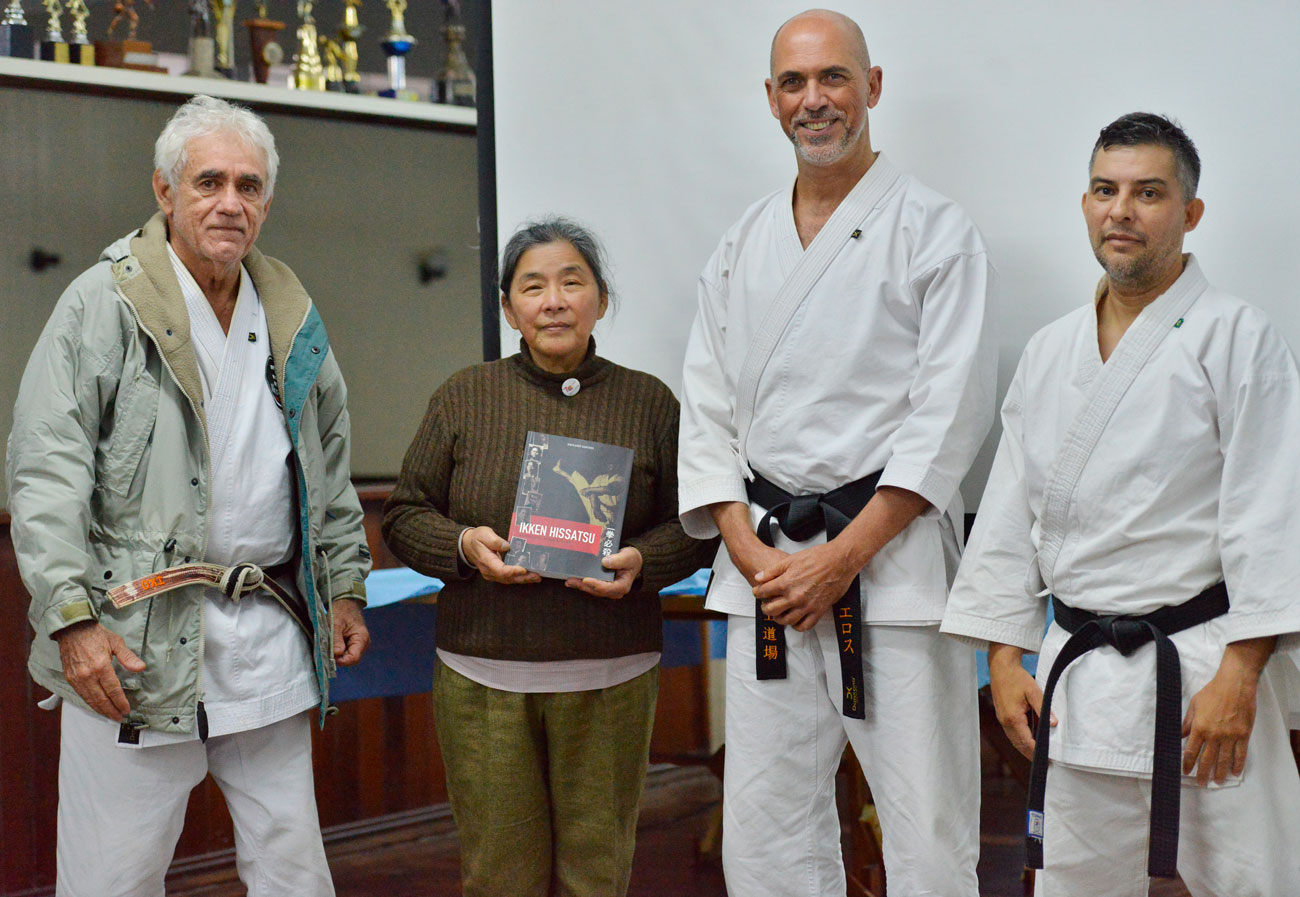
CNKD directors present Tomoko Kimura Gaudioso with Eros José Sanches’s book ‘Ikken Hissatsu, As origens do karatê’ © Global Sports
The starting point was the recognition that distance, speed, reaction time, movement and technical execution are important in training but do not encompass the whole experience of fighting. Facing an opponent, a karate practitioner must deal simultaneously with their own body, the other person’s posture, the available space, rhythm and the possibility of action. Perceiving that situation involves more than adding together isolated measurements.
That distinction led to the paper’s central question: how can mokuso support an understanding of maai? To develop his answer, Berger first examined the preparation of attention, then the transition from fragmented to integrated perception and, finally, the relationship between space, time and action.
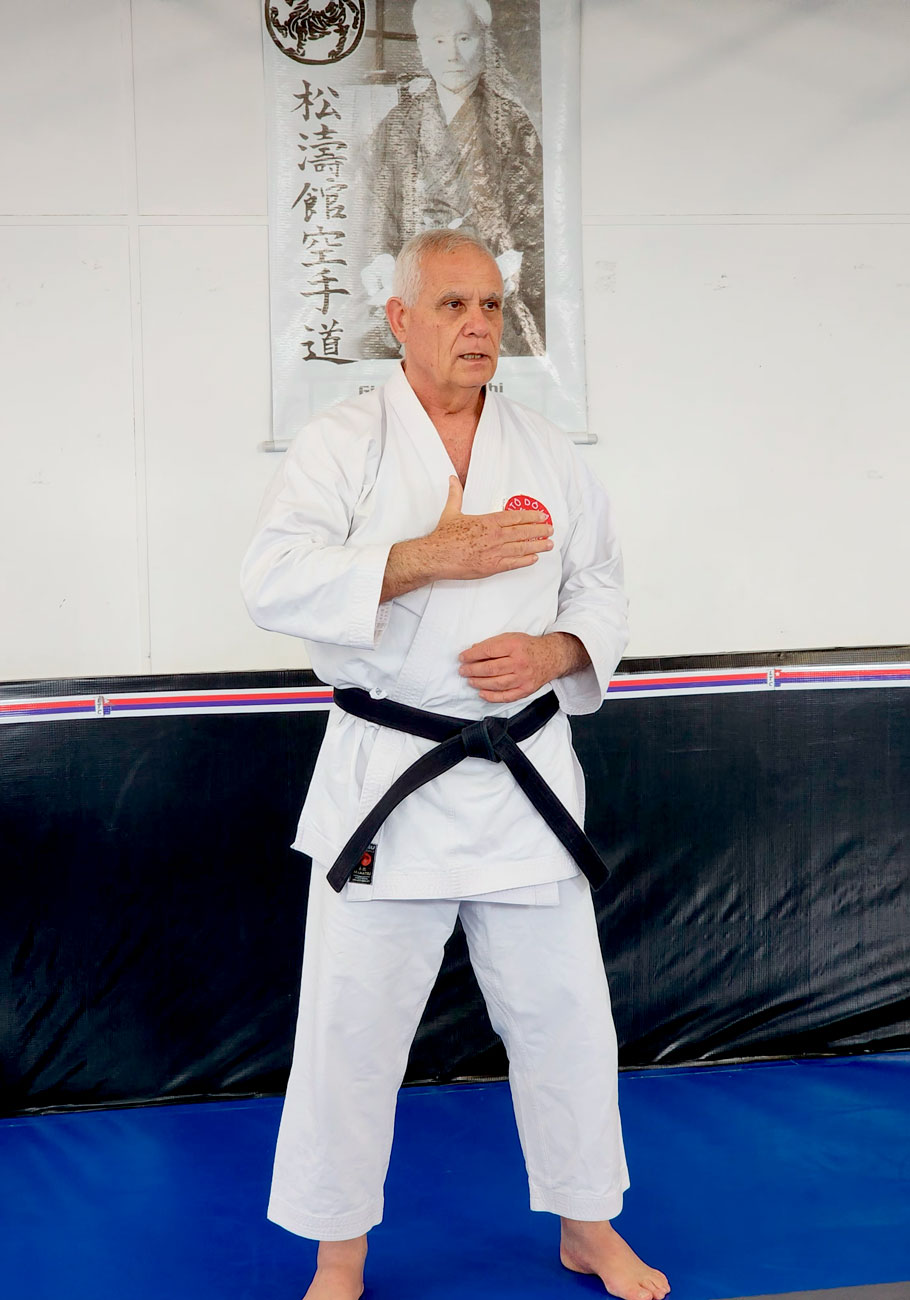
Instructor Antônio Carlos Walger, hachi-dan (8th dan), president of the Pan-American Traditional Karate-do Federation – ITKF © Global Sports
Mokuso was presented as a practice of concentration and bodily readiness whose purpose goes beyond simply ‘emptying the mind’. In the author’s interpretation, it allows external concerns and immediate expectations to recede from the foreground, creating space for attention that is more receptive to training. Regular breathing, a stable posture and the organisation of the body’s centre, the tanden, are part of this preparation.
To explain the process, the paper drew a connection with Husserl’s epoché, understood as the temporary suspension of judgements and assumptions in order to observe experience as it presents itself. Berger made an important distinction: mokuso is not a literal application of the philosophical method, but may share an affinity with this attitude of suspension by reducing distraction and supporting the practitioner’s presence.
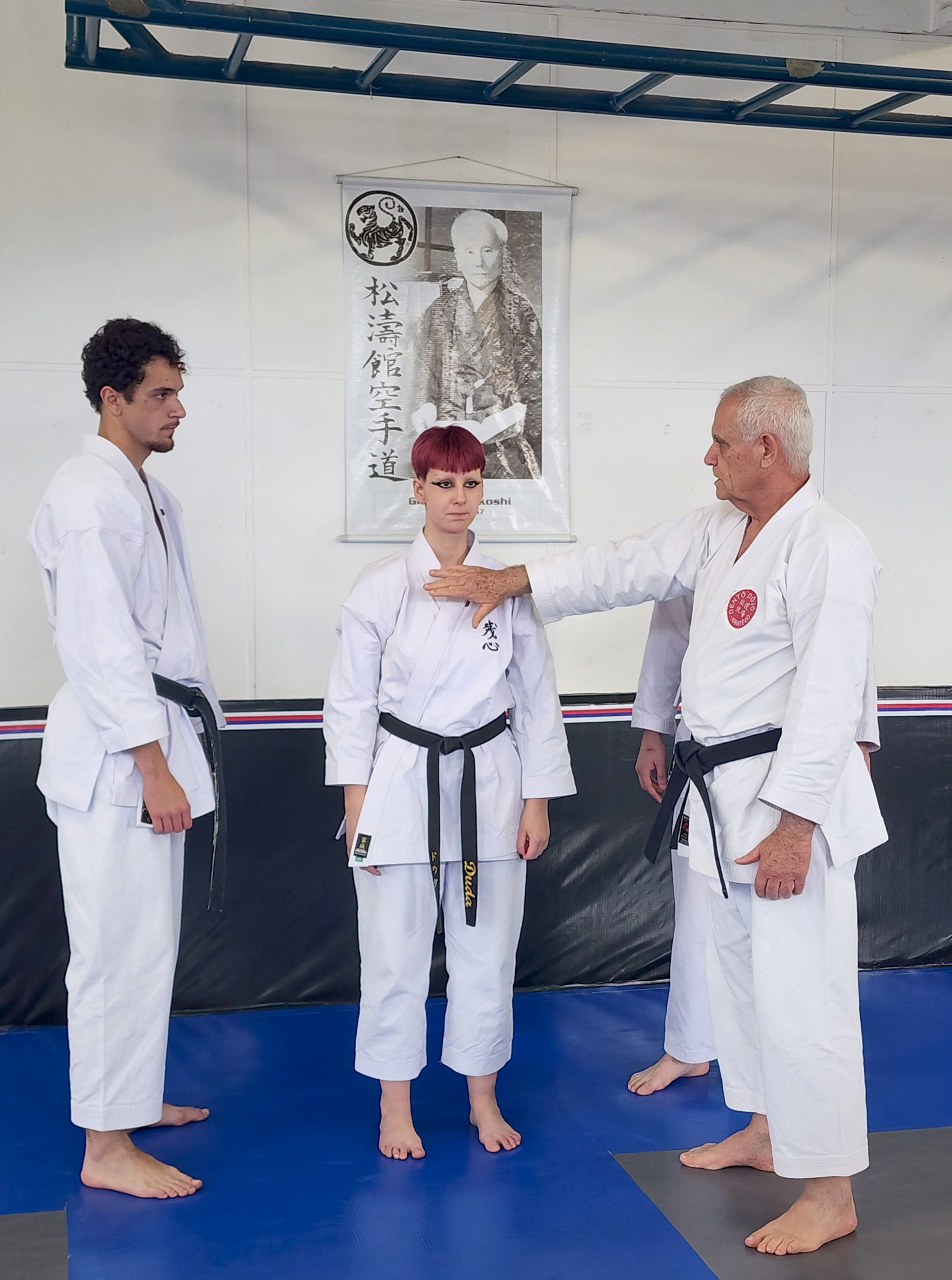
Antônio Carlos Walger guides practitioners in a class devoted to overcoming rigidity and developing fluid movement in kumite © Global Sports
Takahashi Satomi’s contribution informed the effort to understand experience as a totality of relationships. Merleau-Ponty’s phenomenology, in turn, offered a way of thinking about the body as an active participant in perception. In this reading, karate practitioners perceive and respond bodily to a situation without having to turn every stimulus into a conscious calculation before acting.
The presentation’s second focus was the transition from analytical to synthetic perception. The former separates elements in order to examine them; the latter seeks to grasp them together. In kumite, this integration makes it possible to perceive distance, intention, rhythm and opportunity as dimensions of the same changing situation.
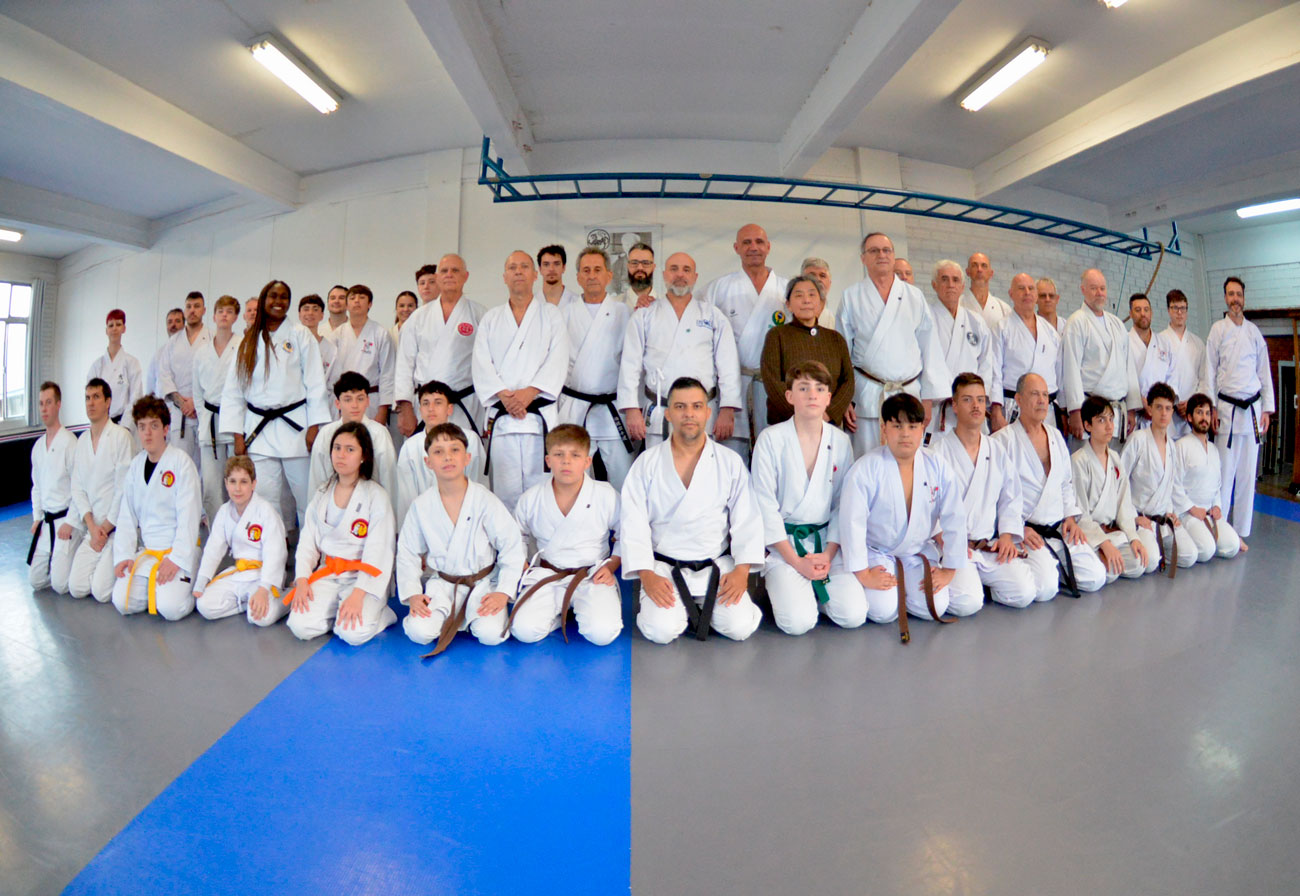
Instructors, black belts and practitioners who took part in training led by sensei Eckener Cardoso and Antônio Carlos Walger © Global Sports
In discussing these forms of perception, Berger referred to tendencies in Western analytical thought and more contextual approaches within Japanese tradition, while stressing that this is not an absolute opposition between East and West. As an interpretative device, he drew on the ideogram ma, found in maai, and the image of an opening crossed by light to explore the interval in which space and opportunity meet.
It is here that maai assumes its central place in the paper. Often translated simply as distance, the concept was presented as a dynamic relationship, continually altered by the practitioners’ presence, movement and intention. Two karate practitioners can be the same physical distance apart yet face different tactical situations, depending on posture, initiative, rhythm and readiness.
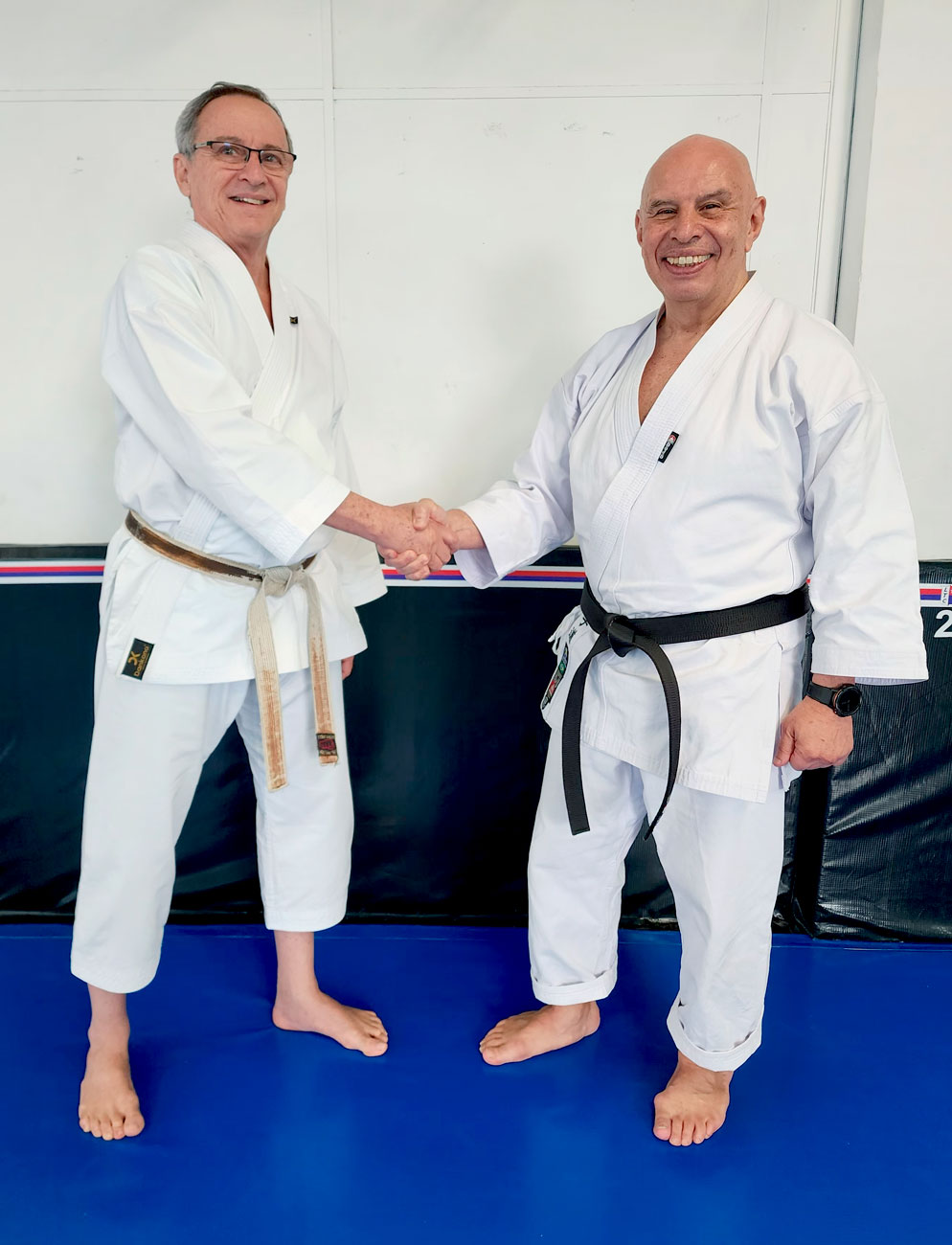
Friends for decades, Arthur Prisco Paraíso Rêgo and Daniel Neaime strengthen their ties through the work they now share on CNKD’s board © Global Sports
Merleau-Ponty’s distinction between the spatiality of position and the spatiality of situation helped develop this idea. The former concerns observable measurements, such as metres and angles. The latter considers how the body experiences and organises these relationships during action. In Berger’s approach, maai is particularly close to this experience: what matters is understanding what distance allows or demands at that moment.
The paper linked this perception to concepts such as sen-no-sen, go-no-sen, deai and kime. In the interpretation presented, the effectiveness of these actions involves the quality of bodily perception and the choice of the right moment, beyond the isolated speed of a strike.
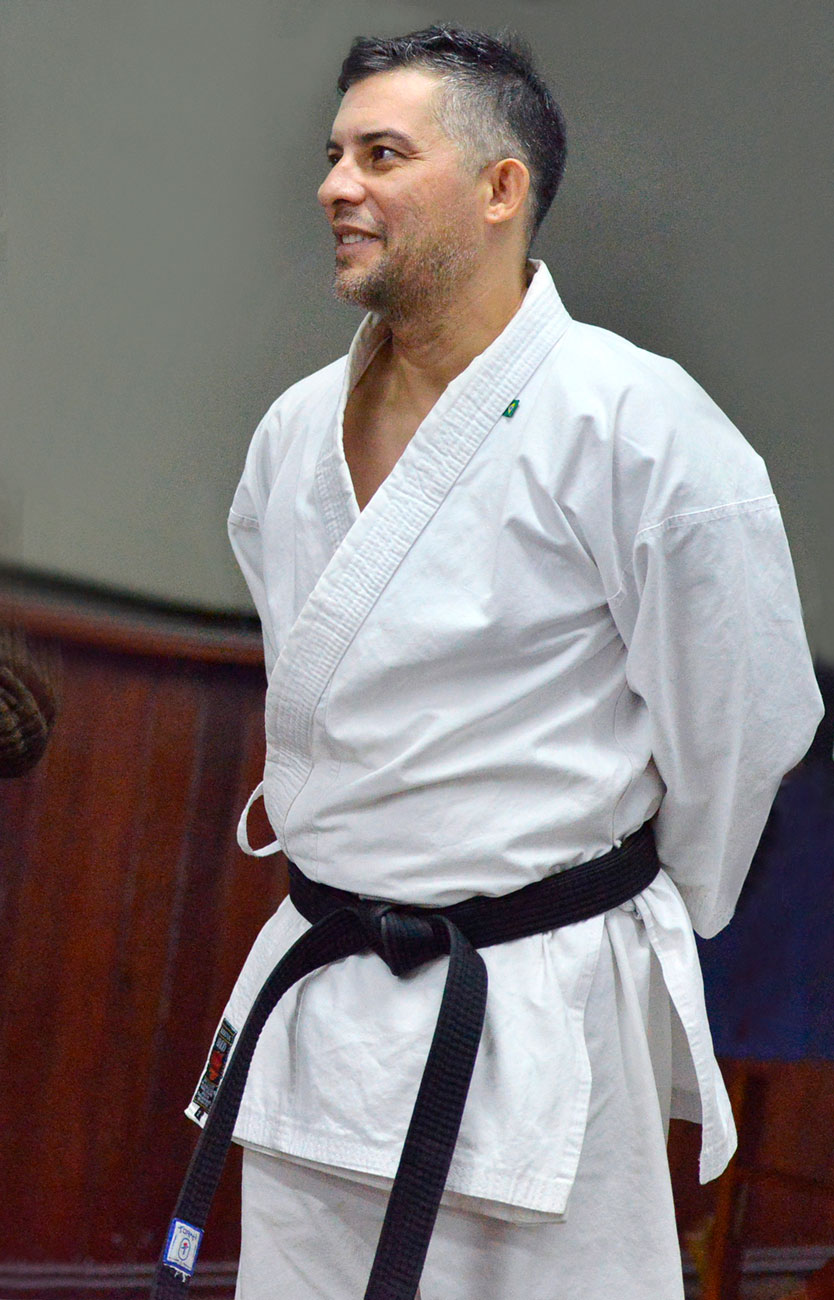
Instructor Márcio Martins, scientific director of the Colégio Nacional do Karatê-dô (CNKD) © Global Sports
References to Funakoshi and Tokitsu brought the discussion back to practice. In kamae, apparent stillness can contain dynamic readiness, sustained by reading the opponent. A defence prepares a counterattack, while a movement simultaneously changes balance, distance and the timing of the action. Kumite is thus understood as a flow of adjustments in which technique takes shape in relation to what is happening.
In conclusion, Berger argued that mokuso can support an understanding of maai by preparing attention and reducing the tendency to perceive a fight as a succession of disconnected elements. His paper’s contribution lies in that connection between philosophy and martial experience: understanding how the quality of presence enables practitioners to recognise opportunities and respond in an integrated way to changes in kumite.
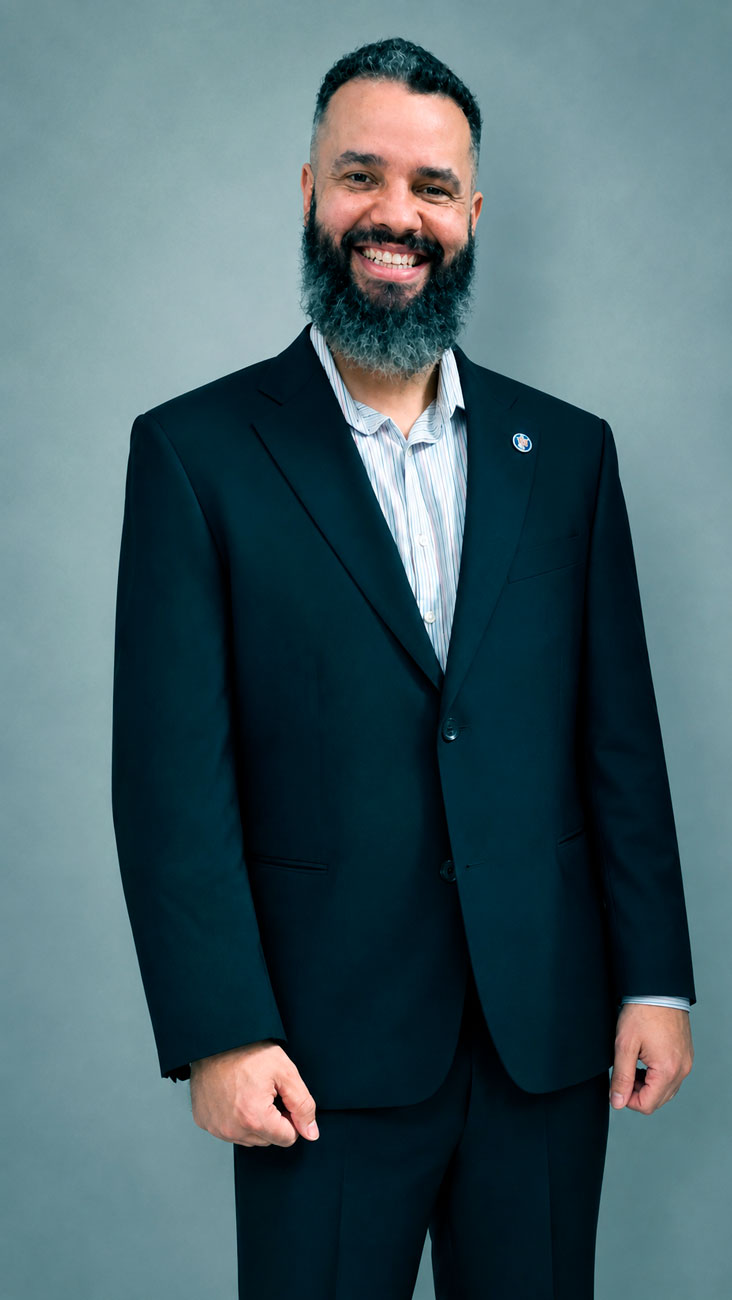
Instructor Paulo Vinícius Vargas, president of Instituto Shibumikan © Global Sports
The relationship between martial education and the legal limits on the use of force guided the presentation by instructor Leonardo Delabary Vieira Alves. His paper began with the principle ‘karate ni sente nashi’, translated as ‘there is no first attack in karate’ and enshrined in Gichin Funakoshi’s Niju-kun, to establish a dialogue between karate-do philosophy and self-defence under Brazilian criminal law.
The central focus was the possibility of connecting the ethic of restraint in a karate practitioner’s education with the criteria used to assess a defensive response in law. Article 25 of the Brazilian Criminal Code requires an unlawful attack that is ongoing or imminent, and a response involving the moderate use of the means necessary to protect one’s own rights or those of another person.
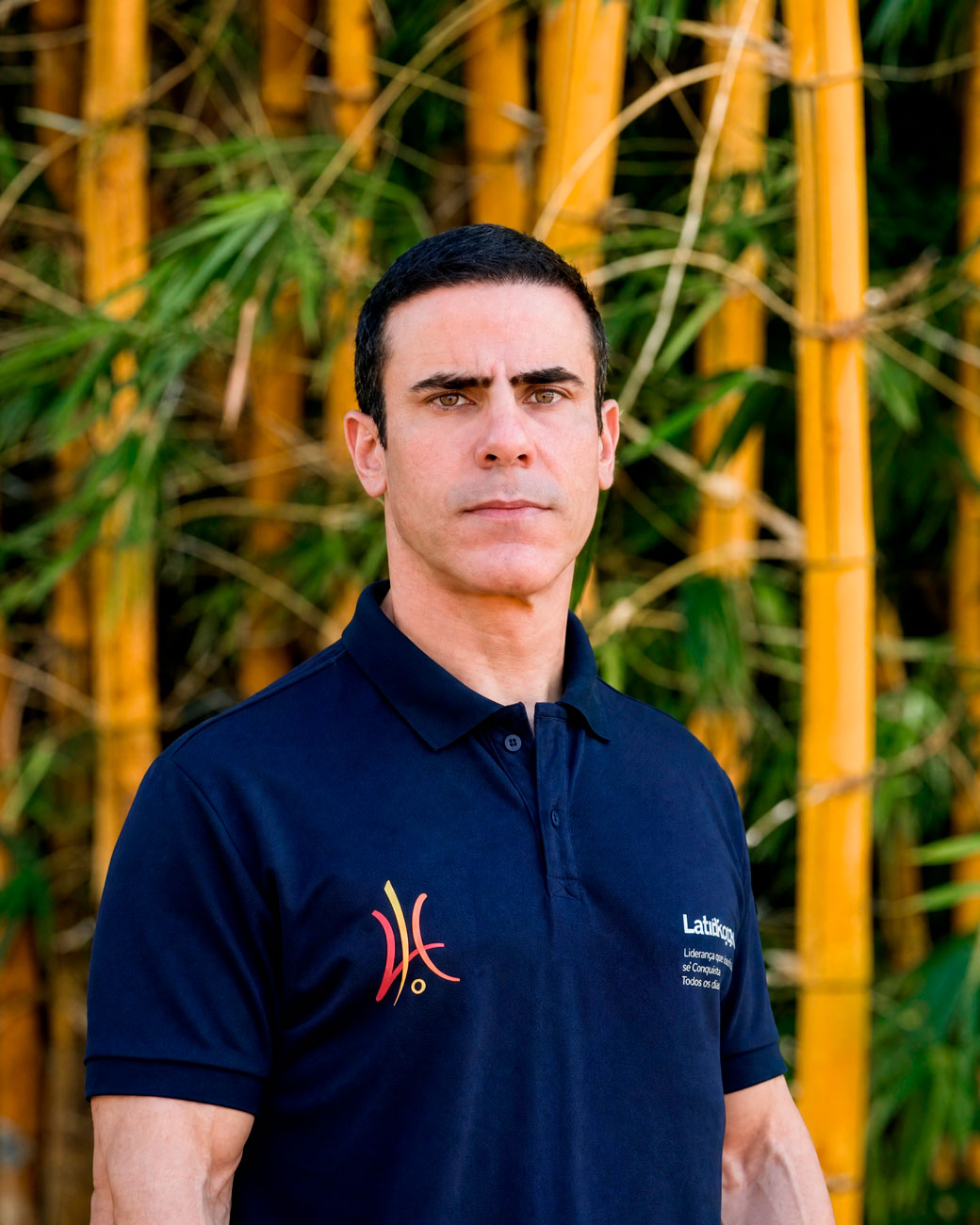
Victor Lage delivered the online lecture ‘Karate and Science: Current Research at Waseda University’ © Global Sports
In this context, Delabary proposed examining tai-no-sen, go-no-sen, sen-no-sen and sen-sen-no-sen in relation to the timing of action, the necessity of the response and moderation. The paper presents this correspondence as a hypothesis for connecting the martial and legal fields, acknowledging that the alignment is incomplete. Technical concepts help develop the discussion but do not replace legal requirements or an examination of the specific circumstances.
Long-term training has an important place in this approach. According to the author’s conclusion, internalising an ethic of restraint and proportionality may constitute a relevant technical consideration in a court’s assessment of moderation. This does not, however, determine whether self-defence is legally established: martial experience informs the discussion without automatically deciding its outcome.
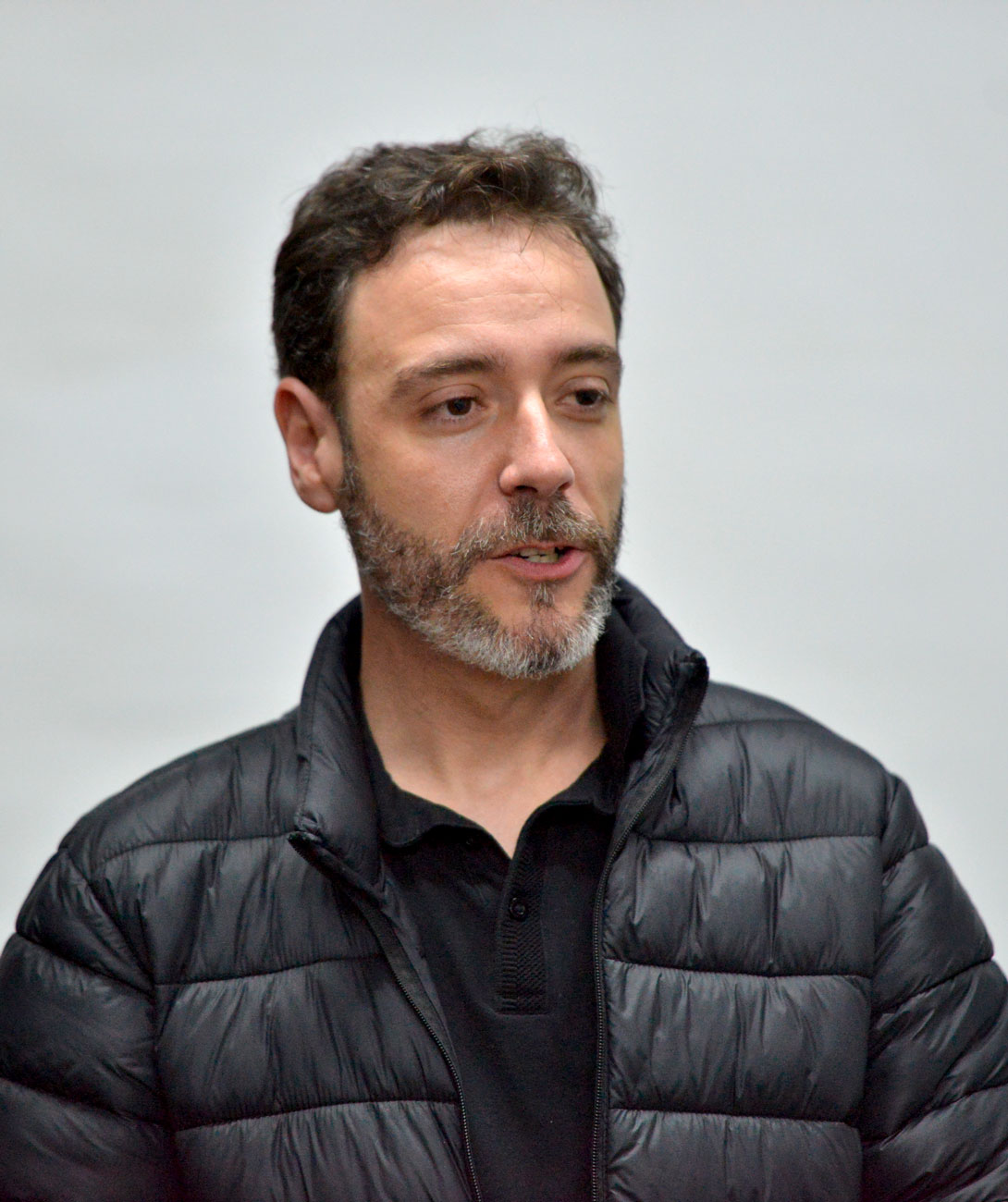
Leonardo Delabary discussed the principle of karate-ni-sente-nashi and its relationship with self-defence and civil and criminal liability in martial arts practice © Global Sports
The paper’s second focus was the civil and criminal liability of instructors and academies for injuries sustained by students during practice. Delabary cited the doctrine of the injured party’s consent, the lawful exercise of a right and the case law of Brazil’s Superior Court of Justice, placing the issue at the intersection of the activity’s risks and the responsibilities of those who teach it.
Regarding instructors, the paper argues that fault must be examined, rather than liability being inferred solely from the occurrence of an injury. The discussion highlights the importance of assessing conduct and the circumstances of training, without treating the harmful outcome alone as a conclusion about the instructor’s actions.
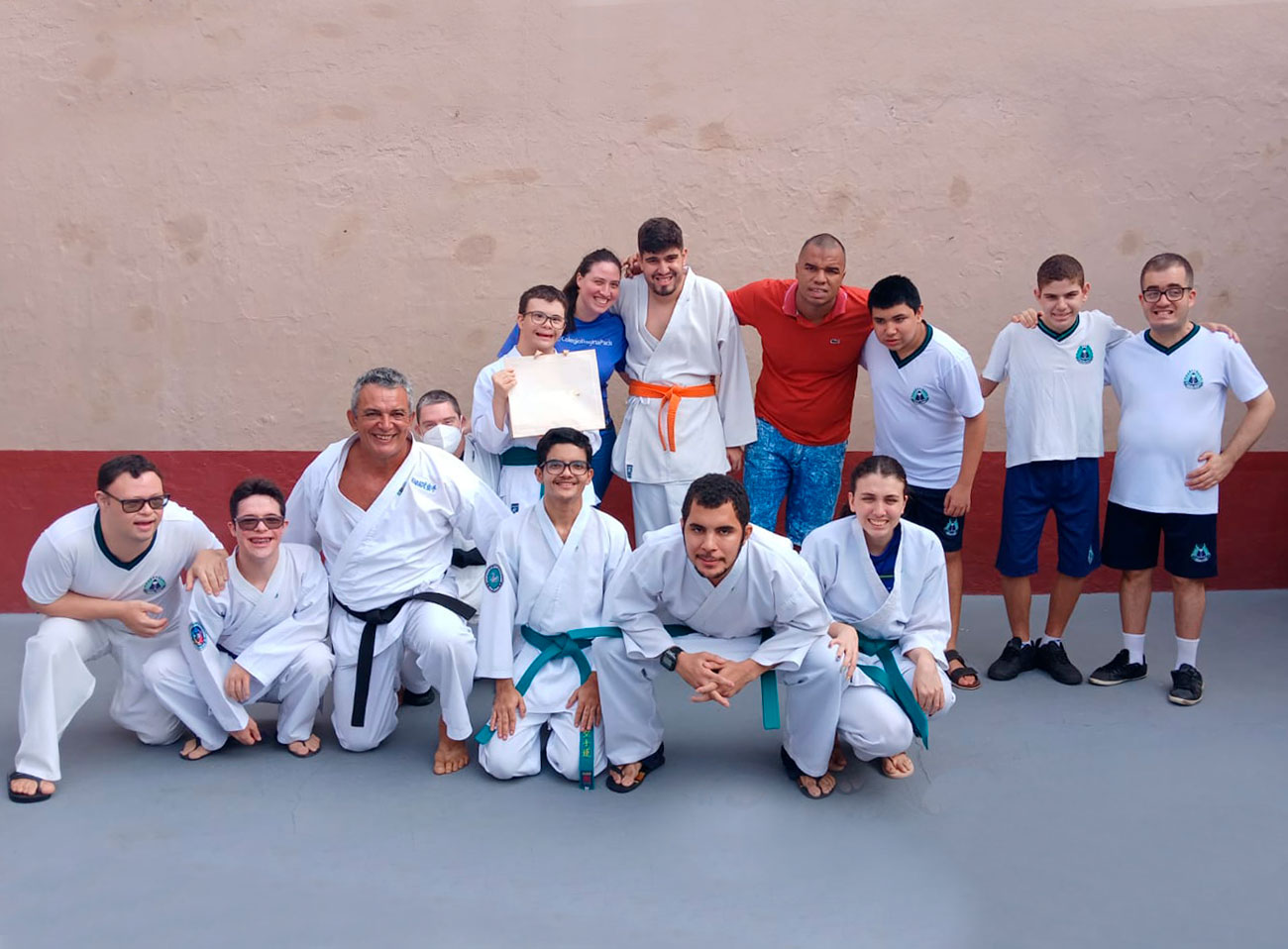
Erivam Maciel expands opportunities and promotes inclusion through karate with Projeto AKM INCLUSIVO © Global Sports
By bringing these two themes together, the presentation invited reflection on the responsibilities that accompany martial knowledge. The principle of non-initiation was considered alongside restraint in the use of force, while teaching was presented as an activity that also requires awareness of its legal limits and implications.
Delabary’s interdisciplinary approach is supported by his legal and sporting background. A university lecturer and criminal defence lawyer, he holds a master’s degree in Law from Universidad Martin Lutero (2023), specialist postgraduate qualifications in Criminal Sciences from UCM (2009), Contemporary Criminal Law and Criminal Procedure from Uniderp (2025), and Civil Procedural Law from Anhanguera (2026). He also holds a bachelor’s degree in Physical Education and a postgraduate qualification in Sports Training and Personal Training from Anhanguera (2023). A san-dan (3rd dan) under CBKT/ITKF and a CNKD member, he serves on the Human Rights Commission of the Rio Grande do Sul section of the Brazilian Bar Association (OAB/RS) and belongs to the Brazilian Association of Criminal Defence Lawyers (ABRACRIM), bringing together experience in martial practice, teaching and reflection on rights and responsibilities.
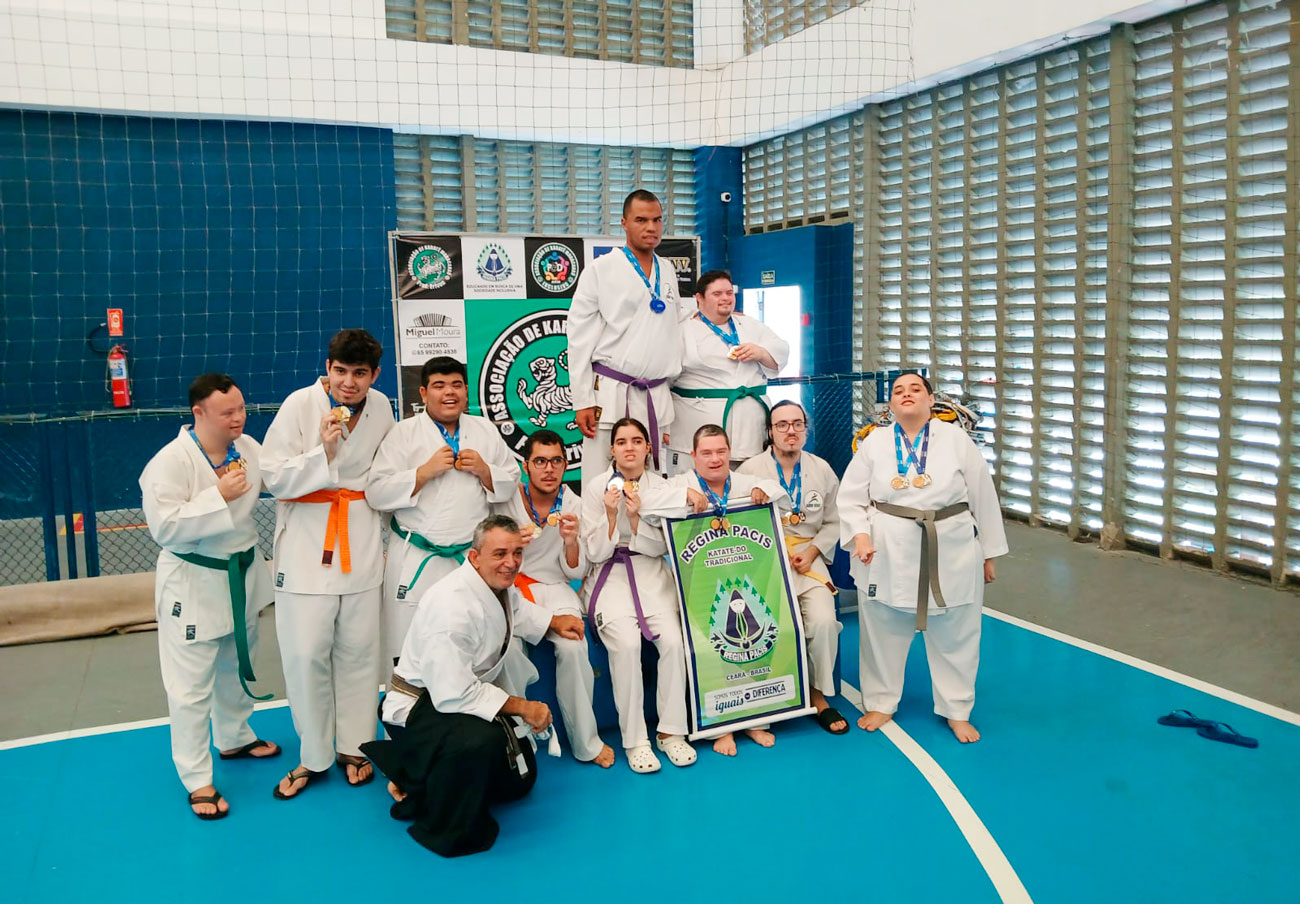
Instructor Erivam Maciel carries out pioneering work on inclusion through ITKF Karate in Brazil © Global Sports
Thirty-four years of teaching ‘Karate for Life’ in public and private schools informed Francisco Maciel Lima’s online presentation. An educator with a specialist qualification in School Administration and a go-dan (5th dan) under ITKF/CBKT, he addressed the incorporation of Budo’s pedagogical principles into contemporary karate-do teaching, with a focus on the development of children and adolescents.
His reflections began with the possibility of integrating socialisation and play into cognitive development. In the approach presented, karate teaching combines bodily experiences, social interaction and the learning of values, seeking to contribute to the practitioner’s development beyond technical execution.
Discussing the possible psychosocial and cognitive outcomes of these interventions, Maciel emphasised the need for further research. According to his presentation, findings remain heterogeneous and do not support definitive conclusions about their effectiveness. The effects depend on educational objectives, the teaching approach and the context in which training takes place.
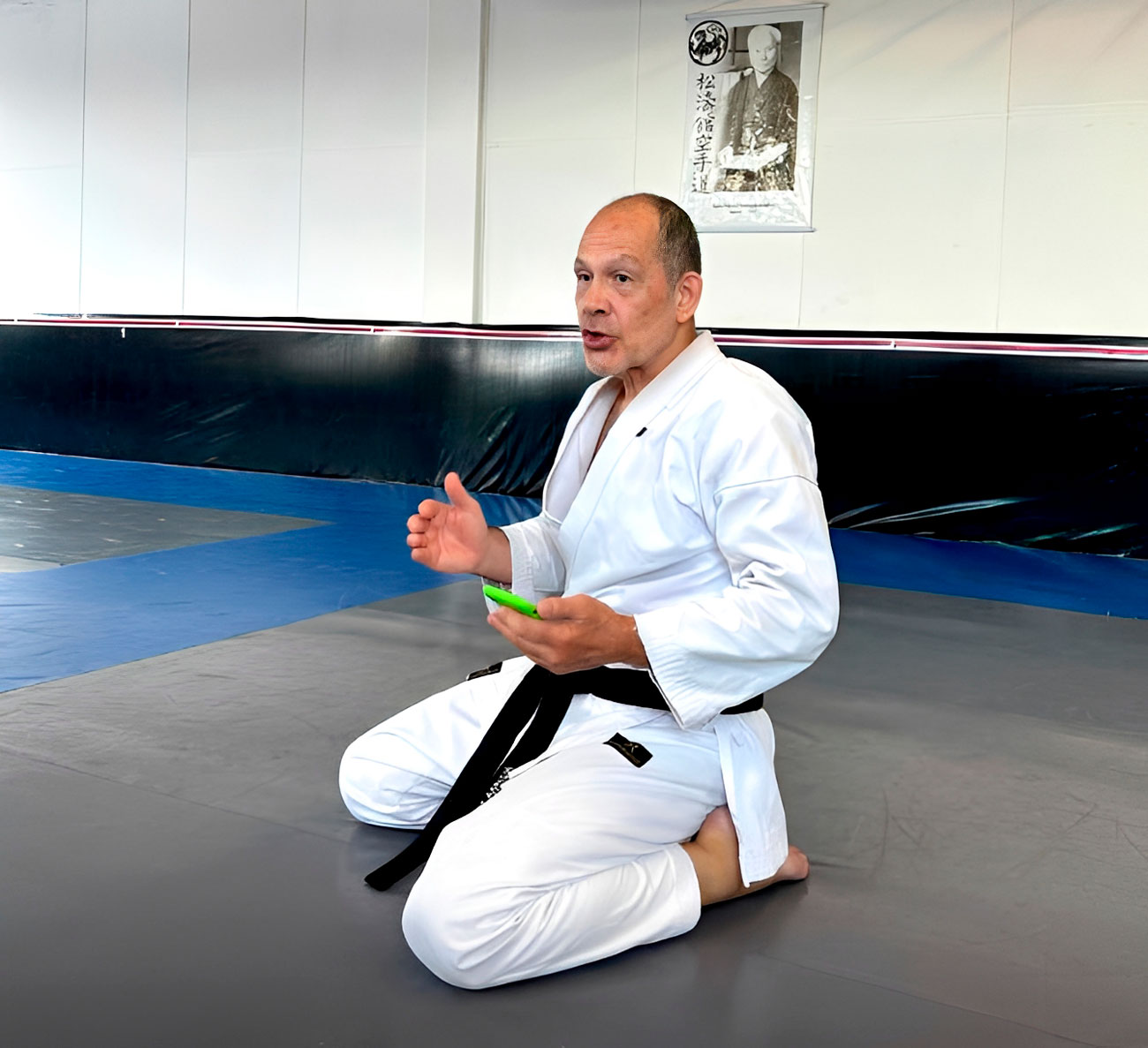
Instructor Carlos Berger Castillo, yon-dan (4th dan), presented ‘The Perception of Space and Time in Karate-do’ © Global Sports
That caveat accompanies a central question in his work: how can Budo’s pedagogical principles be incorporated into karate-do teaching to support education for life? For Maciel, understanding the discipline as a path of personal improvement requires studying both what is taught and how that learning is guided.
The dojo-kun has an important place in this approach. Its principles guide a practice that integrates physical and mental aspects, valuing discipline, courtesy and character development. Maciel presented a sequence that encapsulates his educational thinking: awareness, regular attendance, responsibility, self-control, discipline and technique.
By placing awareness at the beginning of this process, his approach situates technical learning within a broader educational journey. The presentation thus connected experience accumulated in schools with the need to investigate how karate-do can contribute to the development of children and adolescents.
The opportunity to make karate-do accessible to people with disabilities guided Erivam Maciel’s presentation, ‘My Life with People with Disabilities: Karate and Effective Inclusion’. He introduced Projeto AKM INCLUSIVO, developed by Associação de Karatê Maracanaú in Ceará to offer accessible, safe and guided practice.
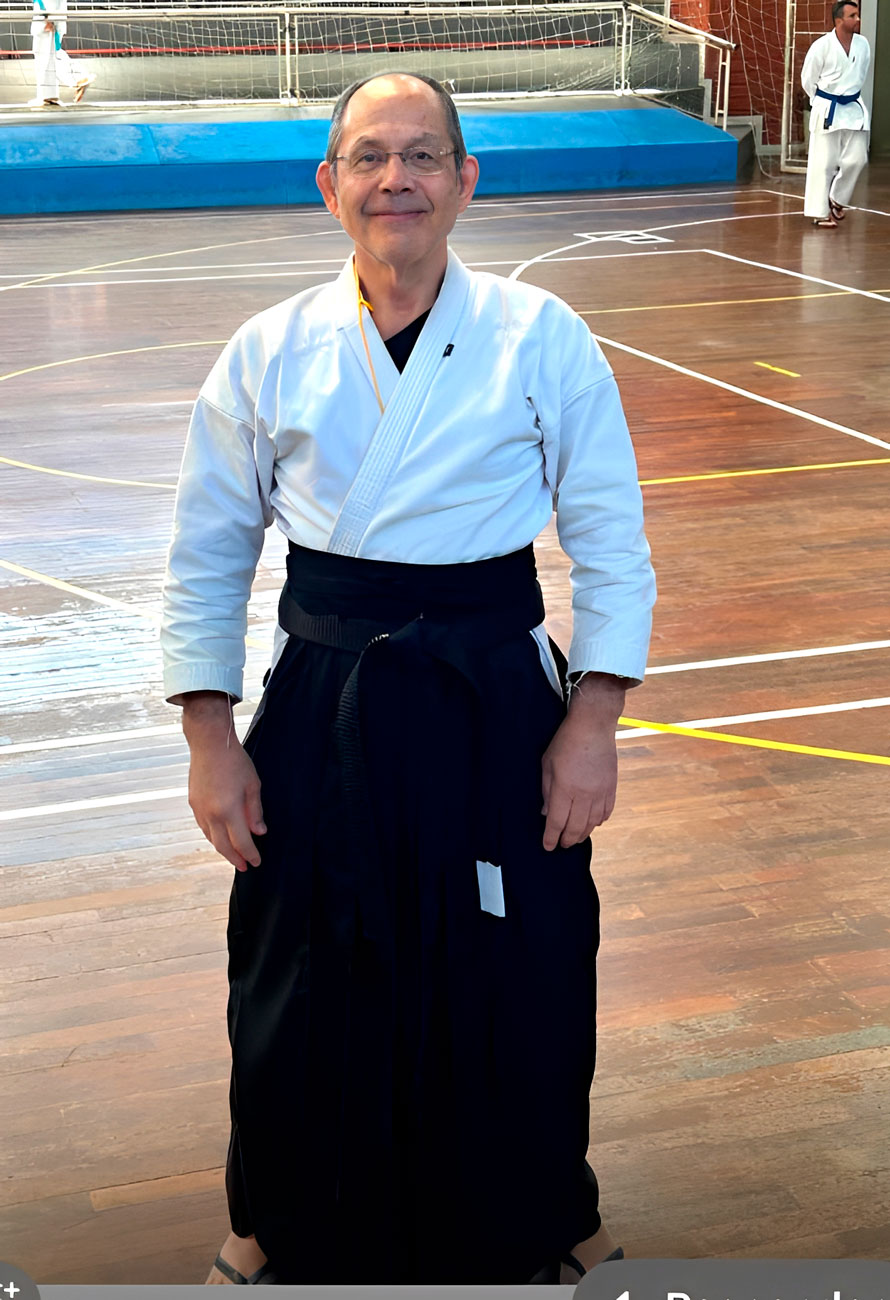
Carlos Berger Castillo discussed mokuso as a foundation for perceiving the body, space and time in karate-do practice © Global Sports
The initiative seeks to increase the participation of people with disabilities in the discipline and, with CNKD’s support, to strengthen the scientific foundations of the experience built through everyday work. The aim is to systematise and improve the project’s inclusive practices, bringing work in the dojo closer to research and knowledge production.
This process also seeks to create the conditions for sharing Ceará’s experience nationally. In presenting AKM INCLUSIVO, Erivam highlighted the prospect of expanding training opportunities and helping turn inclusion into actual access to karate-do practice.
“For three days in Porto Alegre, we immersed ourselves in the karate-do we want to strengthen: an art in which technical knowledge goes hand in hand with reflection, the responsibility of teaching and a commitment to human development. At the opening, we set out CNKD’s aims. Throughout the seminar, we could recognise those aims in the classes, papers and conversations among participants.
When we advocate recognition of instructors, we must provide conditions that allow them to keep learning. That is what we sought to do by bringing together approaches to teaching movement, the kinetic chain, mobility in kumite and the technical and philosophical depth of kata. Each contribution offered a way to observe practice, understand its foundations and think about how to pass them on. The masters’ experience became even more valuable when shared among people from different backgrounds.
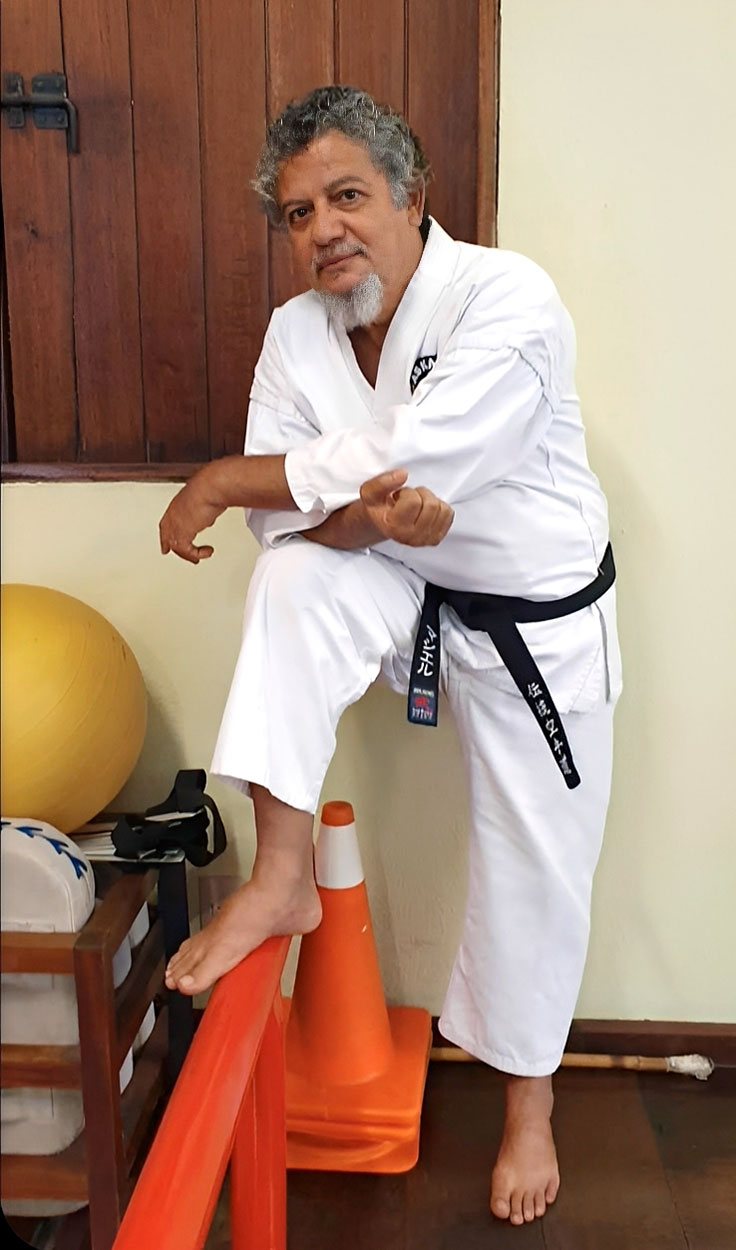
Instructor Francisco Maciel Lima, an educator and go-dan (5th dan), delivered the online presentation ‘Budo Pedagogy Applied to Karate-do’ © Global Sports
We also maintain that karate-do needs to know its history and understand the cultural environment in which it developed. Reflections on lifelong self-improvement, the origins of ikken-hissatsu and Japanese etiquette helped give meaning to what we do in the dojo. Preserving a tradition requires studying it, asking questions and understanding the values that underpin its gestures.
Scientific research ran through this gathering as part of our responsibility towards teaching. There was room to discuss perception, attention and education, but also to acknowledge the limits of what we know. That is an important commitment for the College: to connect the experience accumulated by instructors with rigorous investigation that can underpin practice and open new possibilities for learning.
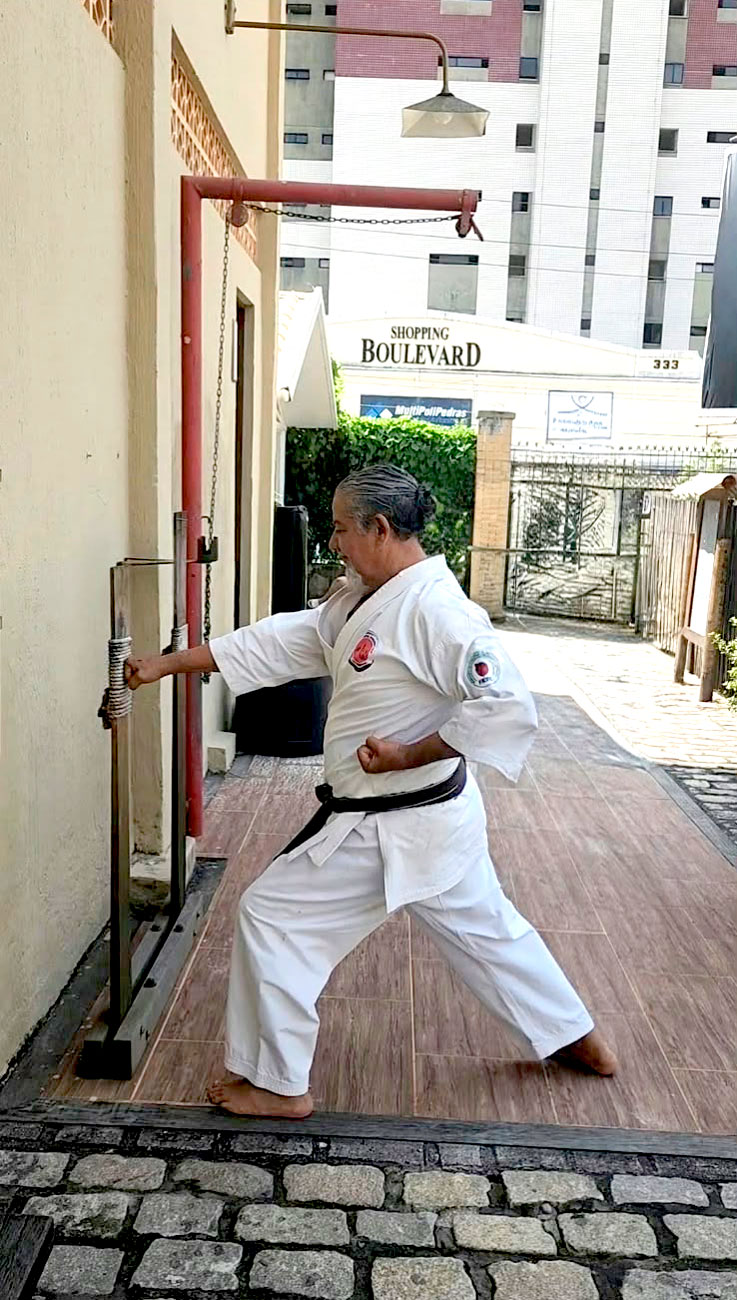
Francisco Maciel highlighted karate-do teaching as a path to learning values and supporting the development of children and adolescents © Global Sports
Inclusion gave that commitment a concrete dimension. If we speak of karate for life, we need to consider the differing circumstances of those who wish to practise it. Experiences involving children, adolescents and people with disabilities invited us to think about access, teaching approaches and participation. The legal discussion added another responsibility: understanding the limits on the use of force and the duties that accompany teaching.
What connects all these themes is the practitioner’s development. Technique, philosophy, science, culture and ethics meet in the class an instructor prepares, in the way they welcome a student and in the decisions they make in response to that student’s needs. It is in this everyday practice that CNKD’s vision must take shape.
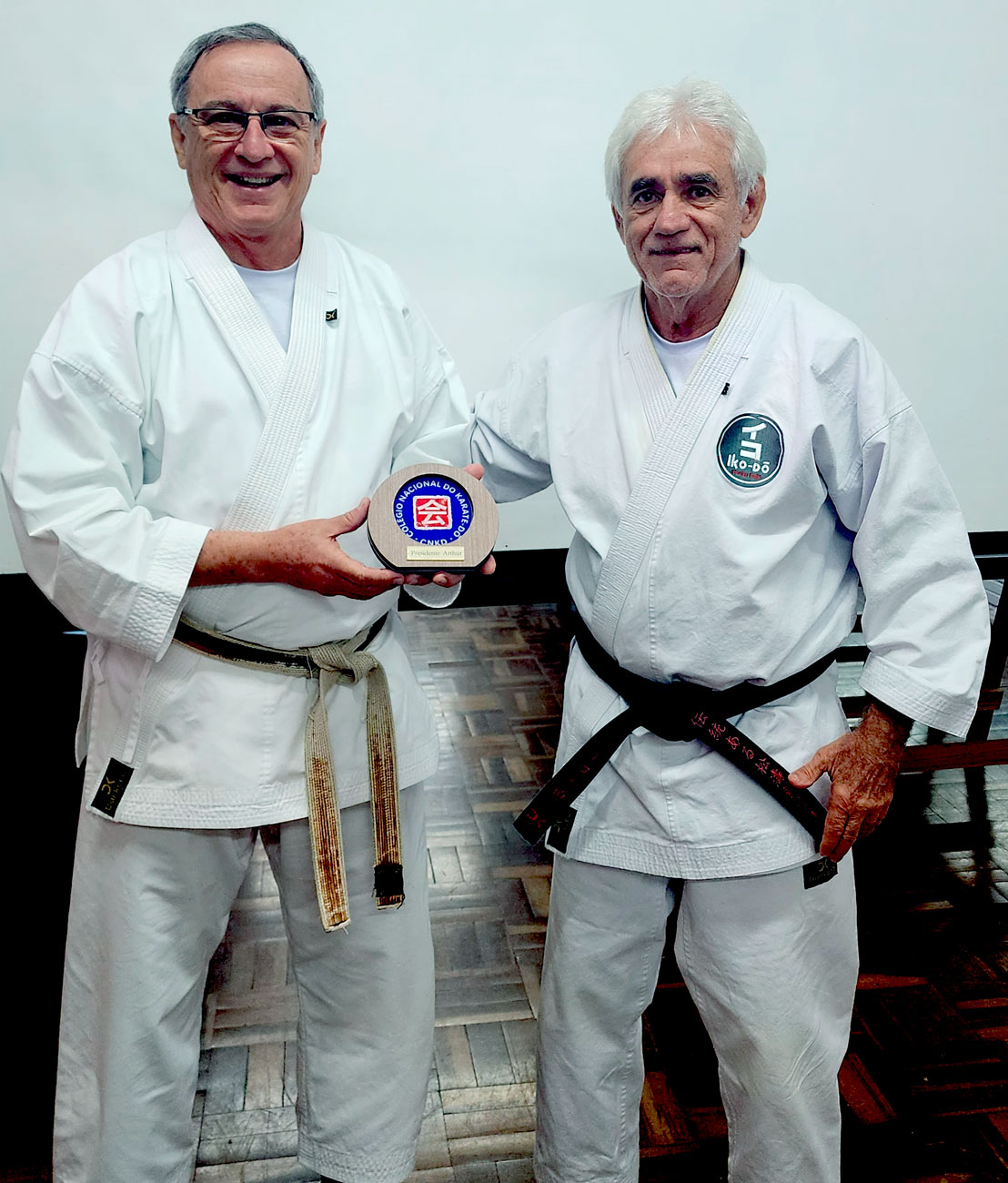
Iko Trindade presents Arthur Prisco Paraíso Rêgo with a plaque recognising his courage in taking on the challenge and driving CNKD’s creation © Global Sports
We leave Porto Alegre with shared points of reference and work to carry forward. It is now up to our Committees and the College’s members to continue the discussions, organise the knowledge and turn it into initiatives that reach instructors and dojos. The seminar continues when what we have learned together improves each person’s work.
In March, we will hold CNKD’s Second National Seminar in Fortaleza. It will be an opportunity to meet again, review our progress and welcome new contributions. We extend an invitation to masters, instructors, researchers and practitioners who wish to help build this endeavour. We want to arrive at the next gathering with new questions, experiences to share and the same willingness to learn that brought us together in Porto Alegre.”
26 de setembro de 2026
24 de setembro de 2026
23 de setembro de 2026