10 de outubro de 2026


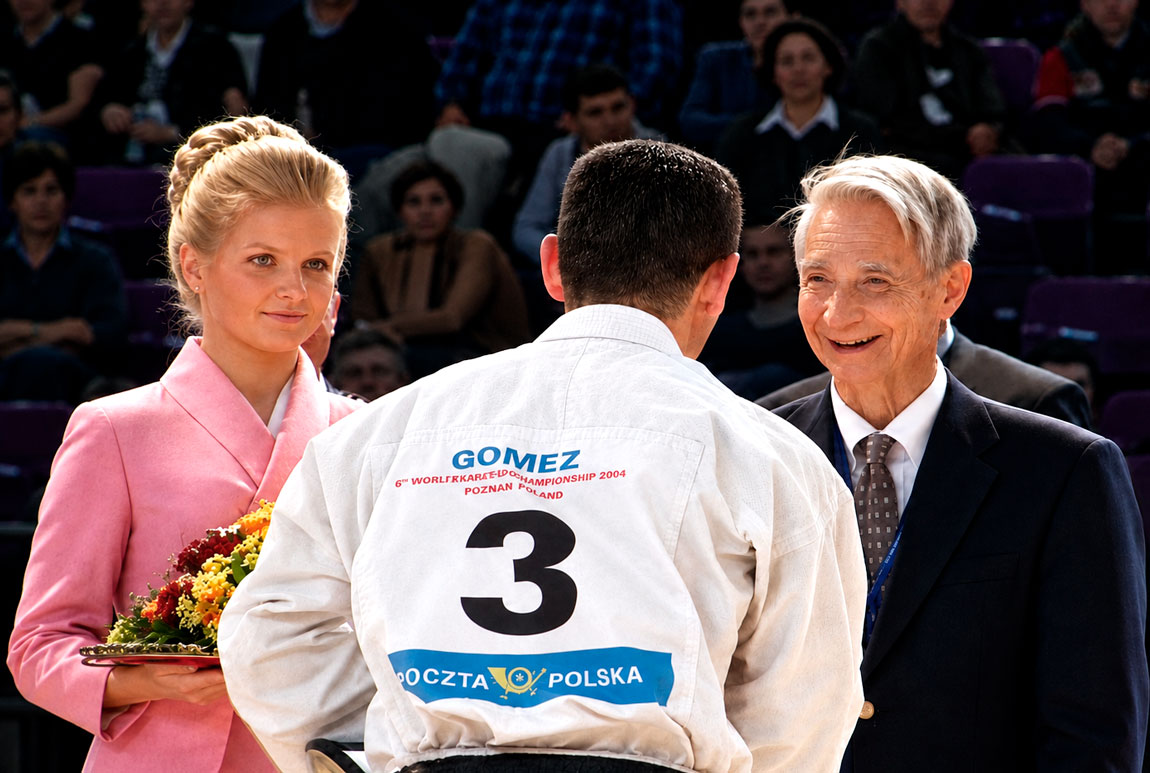 Sensei Nishiyama expresses his joy as he presents gold to Justo Gómez at the 2007 ITKF World Cup in Warsaw, Poland, which brought together the organisation’s eight highest-ranked athletes © Archive
A question about breathing in the kata Gojushiho Dai found its setting in a doctor’s waiting room. Instructor Justo Gómez had accompanied sensei Hidetaka Nishiyama there because of knee pain. In the interval between their arrival and the appointment, the conversation followed a path that had so often brought them together: the study of karate.
“I remember an occasion when he took me to his doctor because of knee pain. While we were waiting, I asked about breathing in the kata Gojushiho Dai. During the roughly 45-minute wait, he gave me an extraordinarily detailed explanation. That is how I remember him: willing to teach and share his knowledge with enthusiasm and depth, even in an everyday situation. For me, those moments were immensely valuable, both for what I learned and for the closeness and attention he offered me.”
This memory reveals a dimension of Gómez’s development that sporting results and ranks alone cannot convey. Looking back on his journey, he recalls the circumstances in which knowledge was shared, the time needed to understand it and the bonds formed in the process.
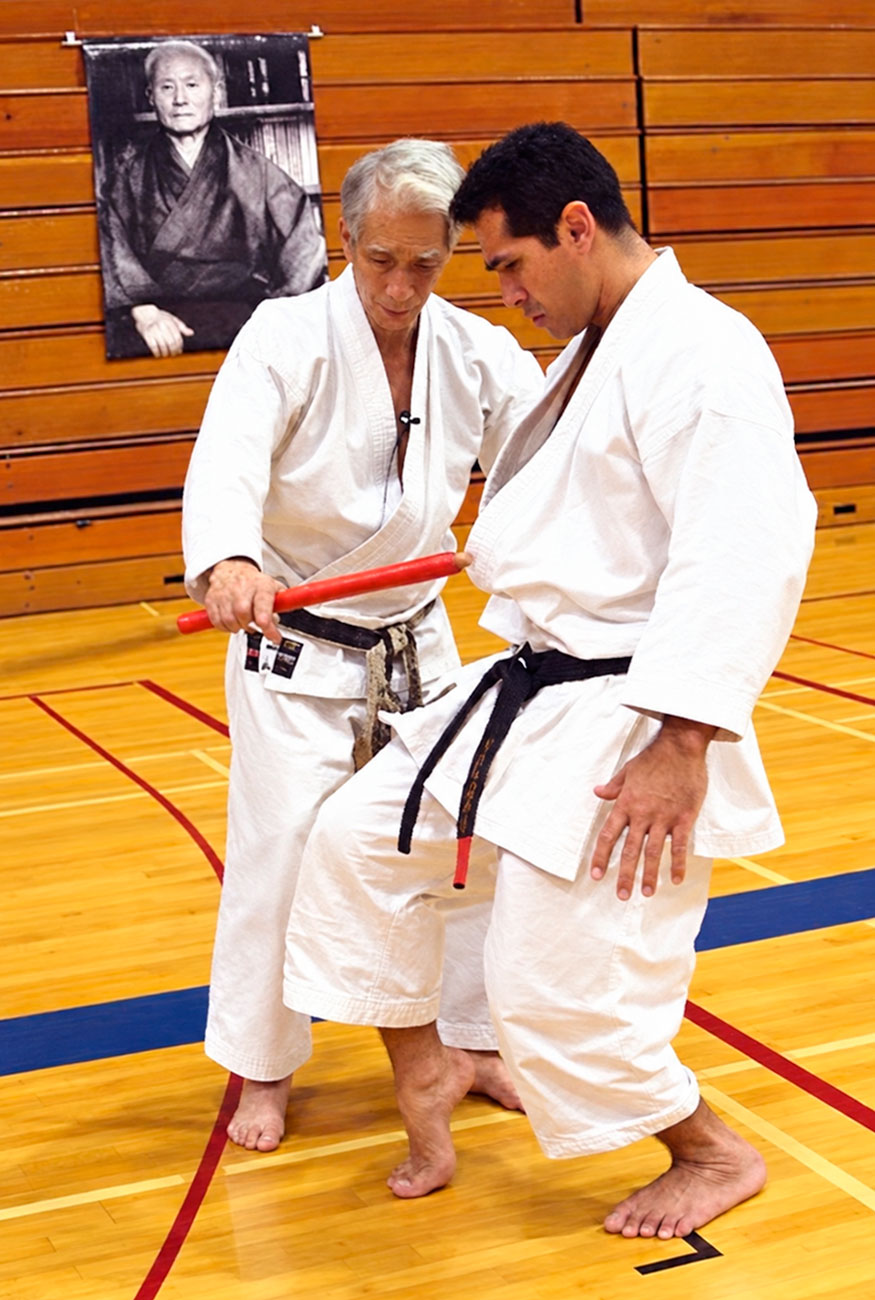
In Los Angeles, sensei Hidetaka Nishiyama guides Justo Gómez during training, in a record of the corrections that shaped his learning in the dojo © Archive
That experience underpins his reflections on the ITKF Global World Championship in Cairo. A competitor, instructor and member of the organisation’s Senior Technical Committee, the Argentine sensei considers the current state of the discipline through a question that runs throughout the interview: how to pass on, in depth, the teachings he received to practitioners who never had the opportunity to spend time with Hidetaka Nishiyama.
Justo Rodolfo Gómez was born on 8 April 1966 in Estanislao del Campo, in the Argentine province of Formosa, and lives in Buenos Aires. His connection with Nishiyama began at an international course and deepened through the journeys he made to study and learn with him.
“My relationship with sensei Hidetaka Nishiyama as his student developed over years of searching, dedication and direct exposure to his teaching. I met him at an international course and, from that very first encounter, I was struck by the depth of his knowledge and the precision with which he explained every aspect of karate. That admiration led me to follow him to courses and seminars around the world.”
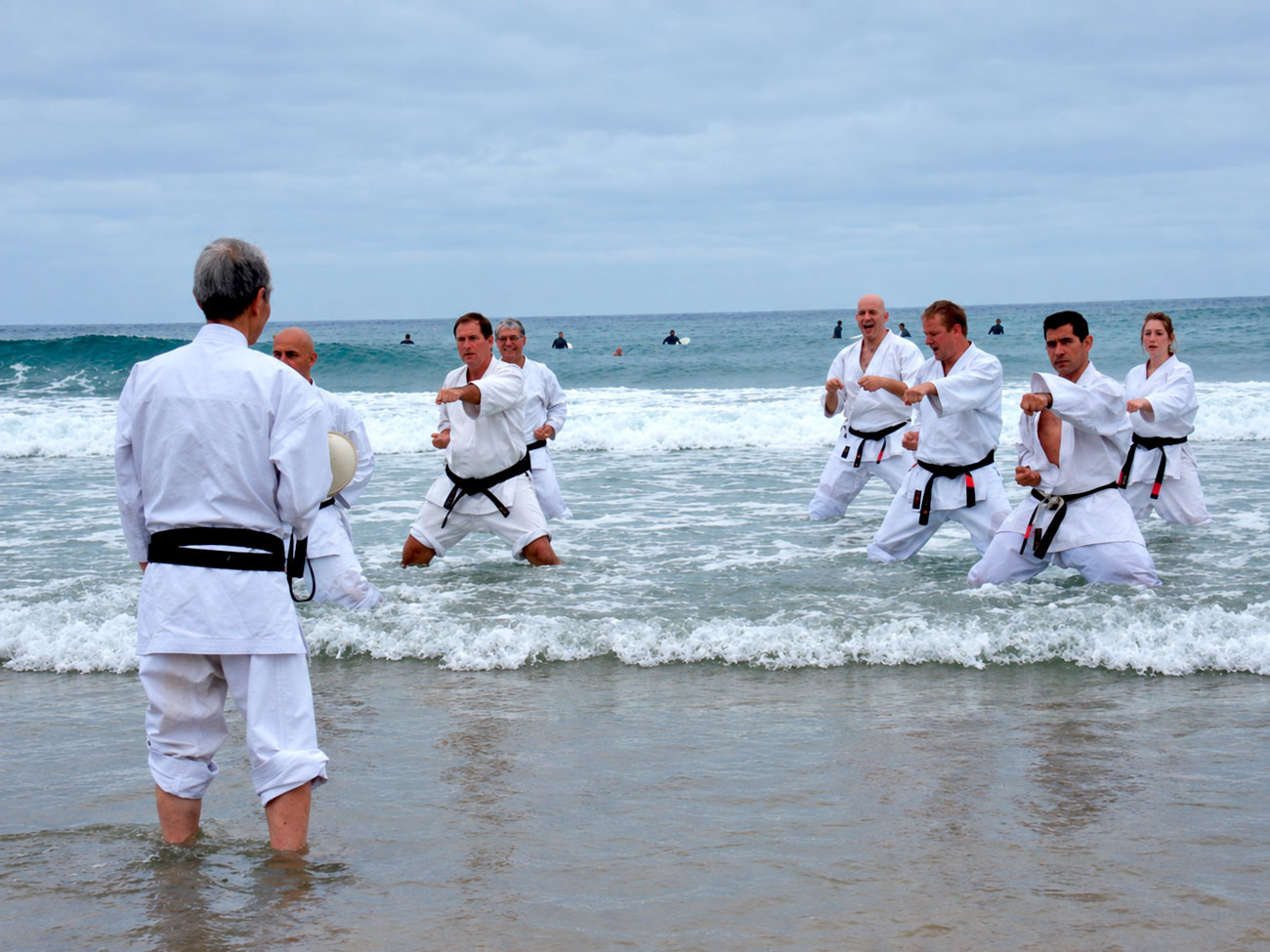
Early morning training on the beaches of La Jolla in San Diego, California, during the 2006 Master Course, another record of Justo Gómez’s training in the United States © Archive
International gatherings offered an initial opportunity to get to know him. Time spent together in the dojo made it possible to extend that study, revisit difficulties and follow his work beyond the duration of an event.
“I travelled to the United States to attend the Master Courses, which lasted seven days, and then stayed for two or three months to train at his dojo in Los Angeles. Those extended stays allowed me to receive his corrections on an ongoing basis, ask questions and explore aspects that required time and practice to understand. Our relationship also grew through conversations and the moments we shared outside the dojo.”
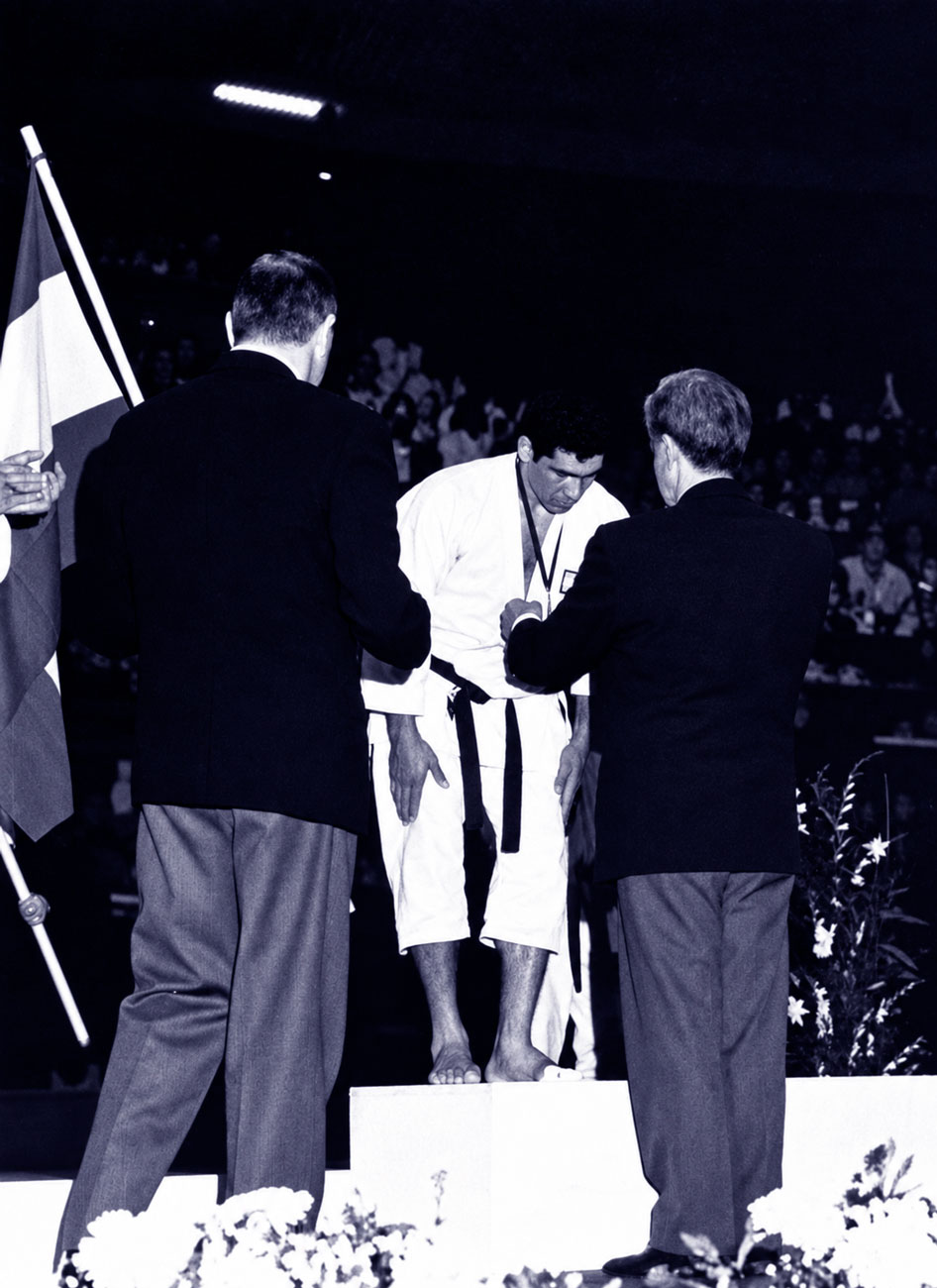
Hidetaka Nishiyama presents the gold medal to Justo Gómez, fukugo champion at the 1994 ITKF World Championship in Treviso, Italy © Archive
Another memory belongs to that setting of shared daily life, this time concerning his competitive career. The news came through Mrs Aiko, then Secretary General of the ITKF, and remained associated with a reaction Gómez still describes with emotion.
“Within that relationship, there was an episode that stayed with me forever. Mrs Aiko approached me one day and, with a smile, said: ‘Sensei Nishiyama has chosen you.’ Surprised, barely able to believe what I was hearing, I asked: ‘What do you mean, Mrs Aiko?’”
The meaning of that choice lay in a rule governing participation in the World Cup, as the instructor explains.
“She then explained that each member of the ITKF Technical Committee had the right to choose a single elite athlete, from among those with the strongest competitive records, to take part in the World Cup. The other members had selected their respective athletes, and sensei Nishiyama had chosen me.”
“Having had the opportunity to learn alongside him is one of the greatest privileges of my life and a responsibility that accompanies my work: to keep deepening my understanding of what he taught me and pass it on faithfully and with dedication to future generations.”
Up to this point in his account, Gómez describes events, journeys and opportunities to learn. When he speaks about receiving the news, the memory takes on a deeply personal tone.
“I had a lump in my throat and was lost for words. After spending so much time learning from him and striving to absorb and understand his teachings, I experienced it as an expression of trust from a teacher I deeply admired and respected. Even today, remembering it moves me. I cherish that experience with enormous affection and gratitude.”
The passage of time also allows him to examine the place that relationship held in the professional choices he later made.
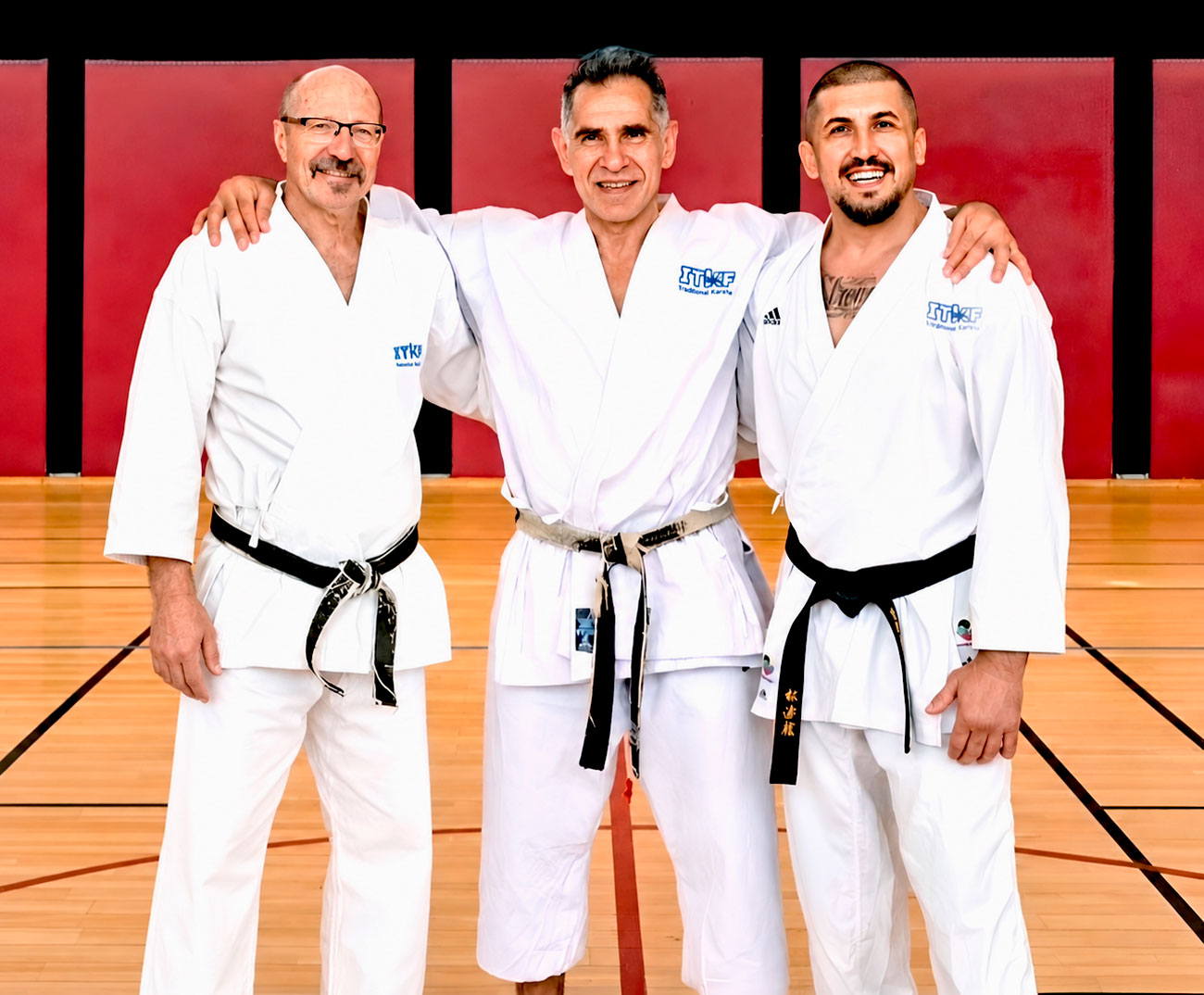
Gilberto Gaertner, Justo Gómez and Cornel Musat, three leading technical figures within ITKF Global © Angélique Lambert / FKT Budo France
“Having had the opportunity to learn alongside him is one of the greatest privileges of my life and a responsibility that accompanies my work: to keep deepening my understanding of what he taught me and pass it on faithfully and with dedication to future generations.”
Gómez’s competitive career includes seven titles across World Championships and World Cups. Four came at World Championships and three at World Cups, in kumite and fukugo.
The first title listed by the instructor is kumite gold at the 1990 World Cup in Milan, Italy. This was followed by kumite gold at the 1992 World Championship in Montreal, Canada, and the fukugo title at the 1994 World Championship in Treviso, Italy.
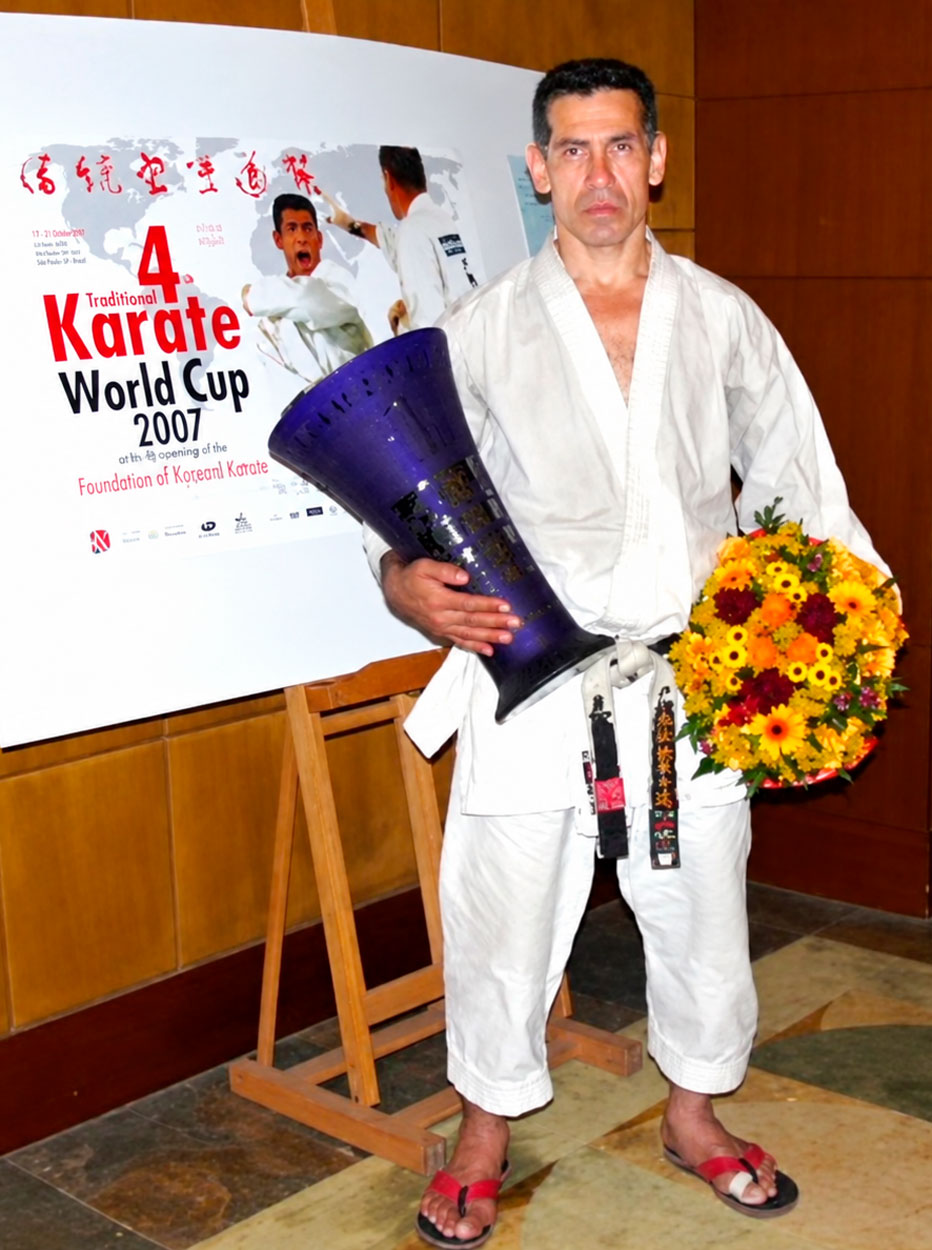
Justo Gómez with the fukugo champion’s trophy from the 2007 ITKF World Cup in Warsaw, Poland © Archive
In 2000, he won the fukugo event at the World Cup in Moscow, Russia. He became kumite champion at the World Championship in Ferrara, Italy, in 2001, and at the World Championship held in Saskatchewan, Canada, in 2006. In 2007, he won fukugo gold at the World Cup in Warsaw, Poland.
His qualifications include certification in physical conditioning for high-performance combat sports from Instituto Aula 21, obtained in 2012. He was awarded shichi-dan (7th dan) by the International Traditional Karate Federation, the ITKF, in 2019.
Founder of the International Traditional Karate School, or ITKS, Gómez is Technical Director of the ITKF Argentina Section within FAKKO, the Argentine Federation of Karate and Okinawan Kobudo. He serves on the ITKF Global Senior Technical Committee and is a Class A examiner and a Class A referee, holding the latter qualification since 2014.
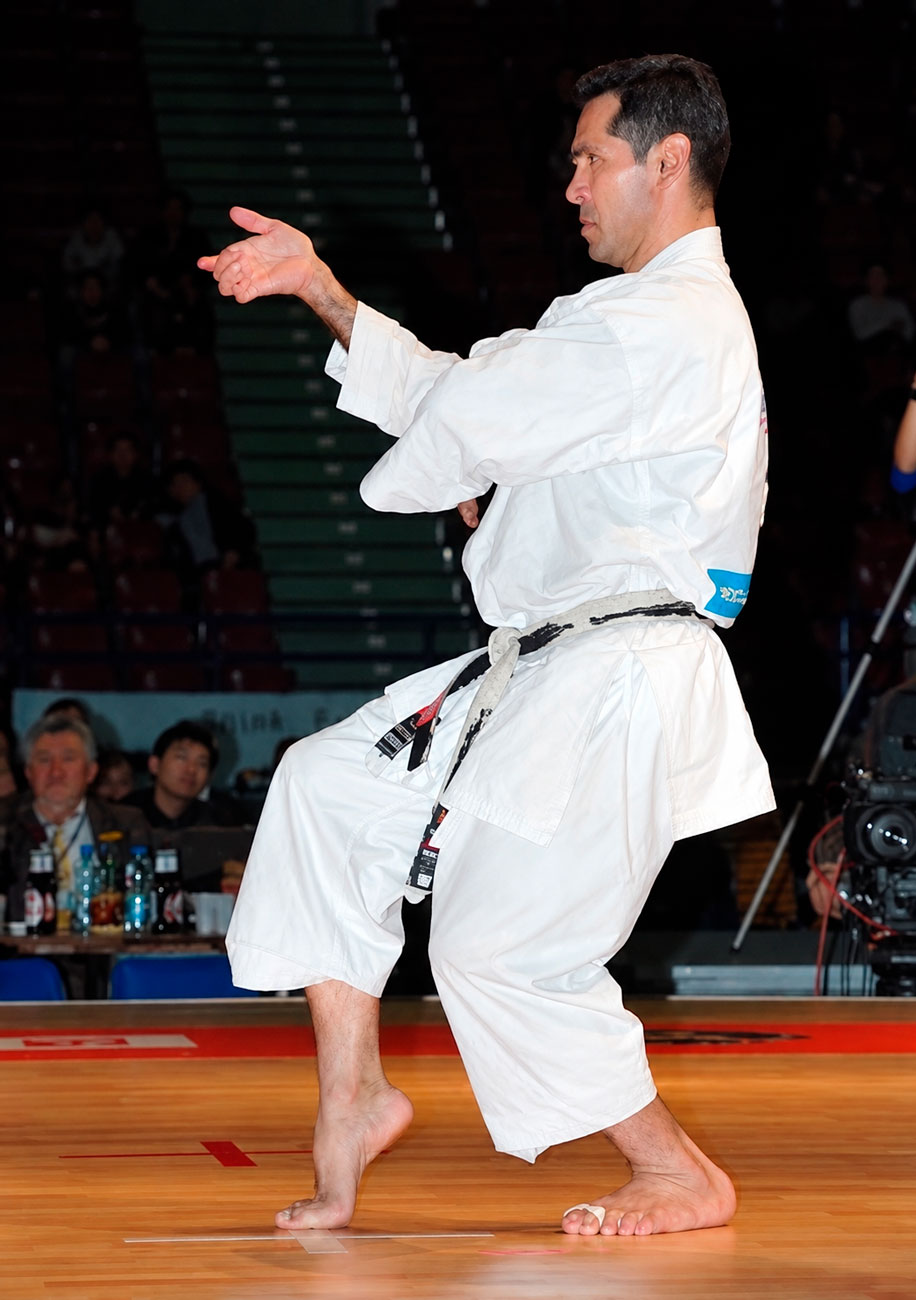
Justo Gómez gives a demonstration during the 2007 ITKF World Cup in Warsaw, Poland, where he won the fukugo title © Archive
These roles bring him into contact with different teaching and organisational environments. To convey the scope of that work, he distinguishes his personal activities as an instructor and adviser from the formal structure of his school.
“My international work encompasses teaching, technical advice and ongoing support for instructors and organisations working to develop traditional karate. This collaboration does not necessarily imply the existence of a branch of my school, nor does it take the same form in every country.”
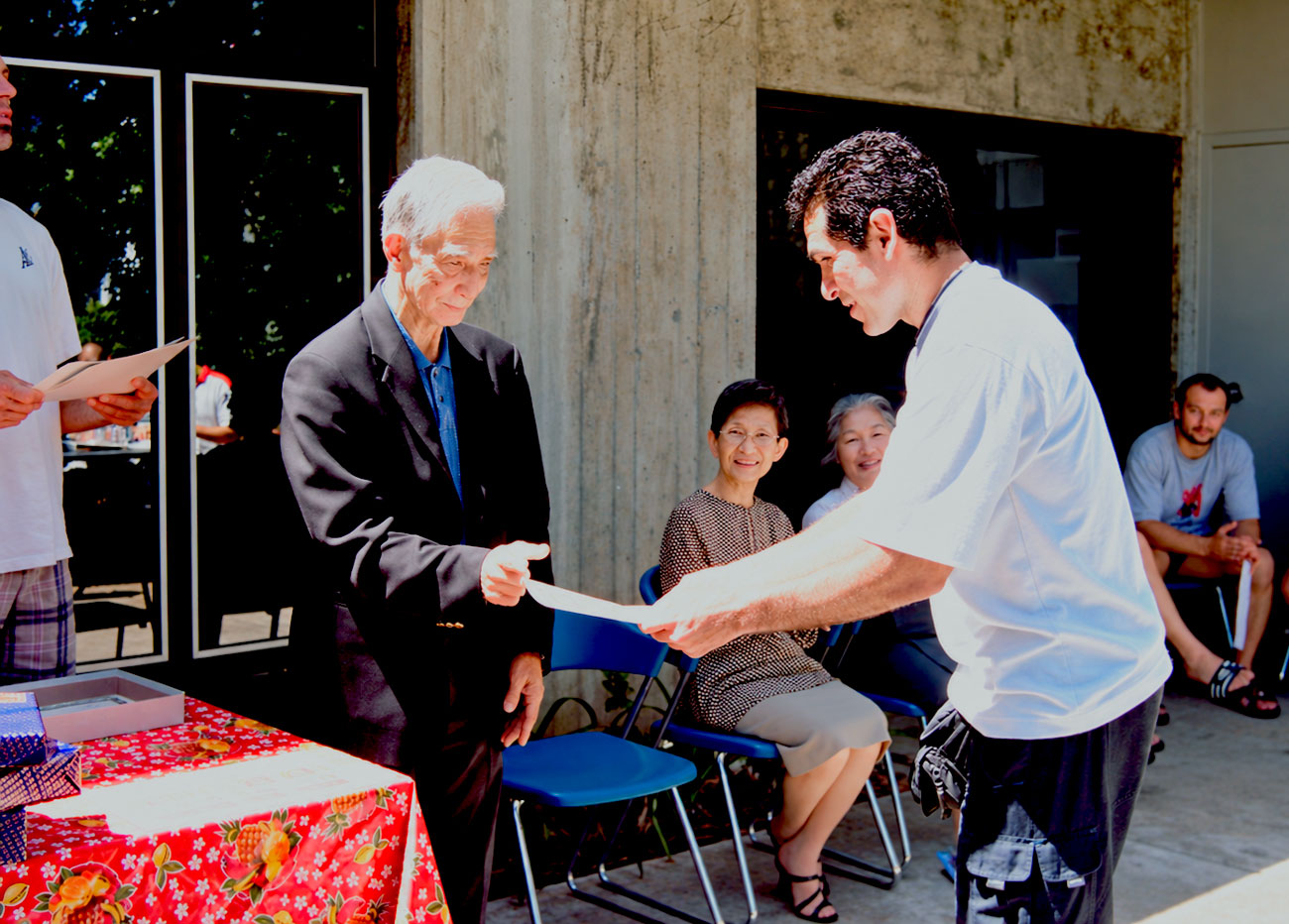
Justo Gómez receives his diploma from sensei Hidetaka Nishiyama after the Master Course at UCSDC in the United States in July 2005 © Archive
In this context, Gómez reports supporting initiatives connected with Germany, England, Poland, France, Armenia, Uzbekistan, India, Bangladesh, Pakistan, Iran, the United States, Venezuela, Uruguay, Chile, Brazil, Spain, Congo, Egypt, Russia, Lithuania, Canada and Tunisia.
ITKS holds a particular place in this journey, as an institution founded on the experience he seeks to share with his students.
“ITKS was founded to preserve and pass on sensei Hidetaka Nishiyama’s technical and educational legacy. Its priority is to support the development of practitioners and instructors, remaining faithful to the principles we received from him.”
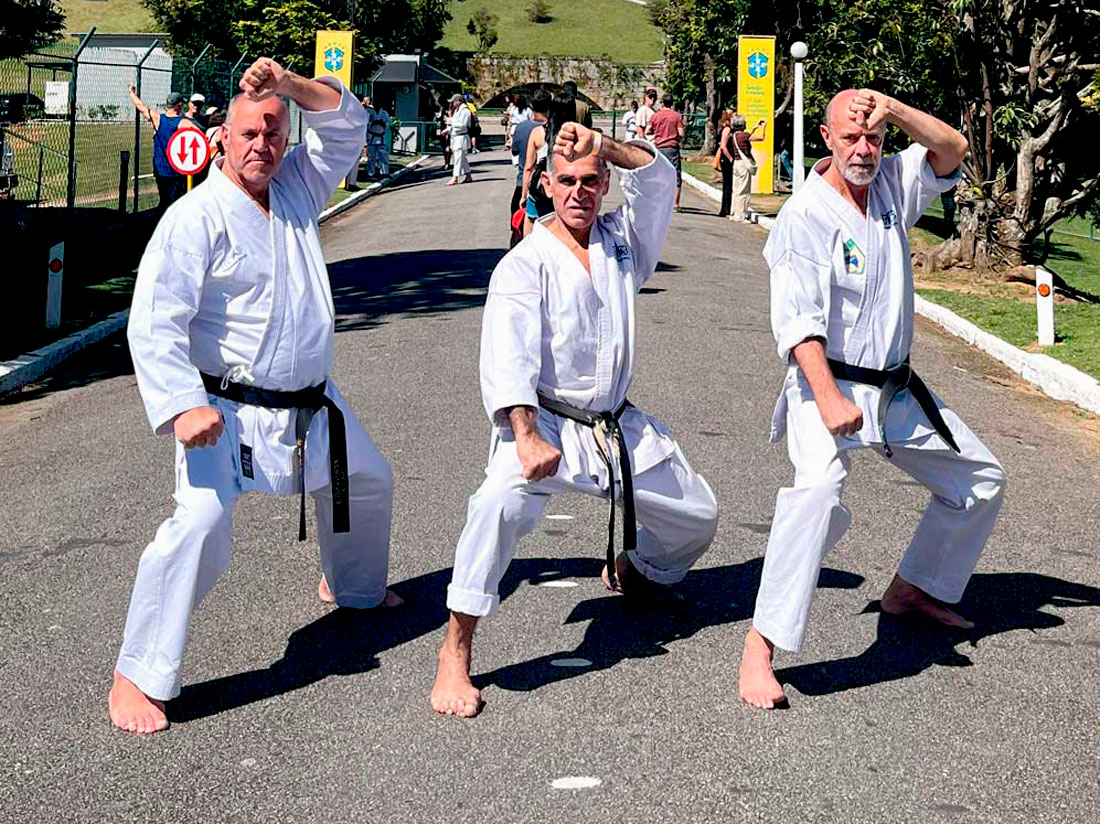
Instructors Fernando Silva, Justo Gómez and Luiz Küster during the Master Course held in Brazil in April 2025 © Archive
In describing the relationships maintained through the school, the instructor names countries and territories: England, Poland, Uzbekistan, India, Bangladesh, Pakistan, Iran, the United States, Venezuela, Uruguay, Chile, Paraguay, Brazil, Cuba, Spain, Congo, Egypt, Russia, Lithuania, French Guiana, Mexico, Peru, Costa Rica, Bolivia, Ecuador, Donetsk, Croatia, Greece, Ukraine and Sri Lanka. The list identifies places where support and collaboration take place, rather than establishing a number of branches.
“Through the school, I maintain teaching and collaborative relationships with practitioners and organisations in different countries and territories. To define our international presence accurately, we need to distinguish formally established branches from places where I provide ongoing technical support.”
The experience gained through training, competition and teaching is also reflected in the way Gómez observes an athlete. His analysis considers an action in relation to the opponent and the demands of the situation, providing a basis for discussing what should be recognised in a championship.
“An understanding of the principles can be recognised in the coherence of a practitioner’s performance: how they organise their body, manage distance, recognise the opportunity and maintain control. Someone who has internalised the principles can produce an effective action with economy of movement and without unnecessary tension. Their physical preparation, intention and technical response work together as a whole.”
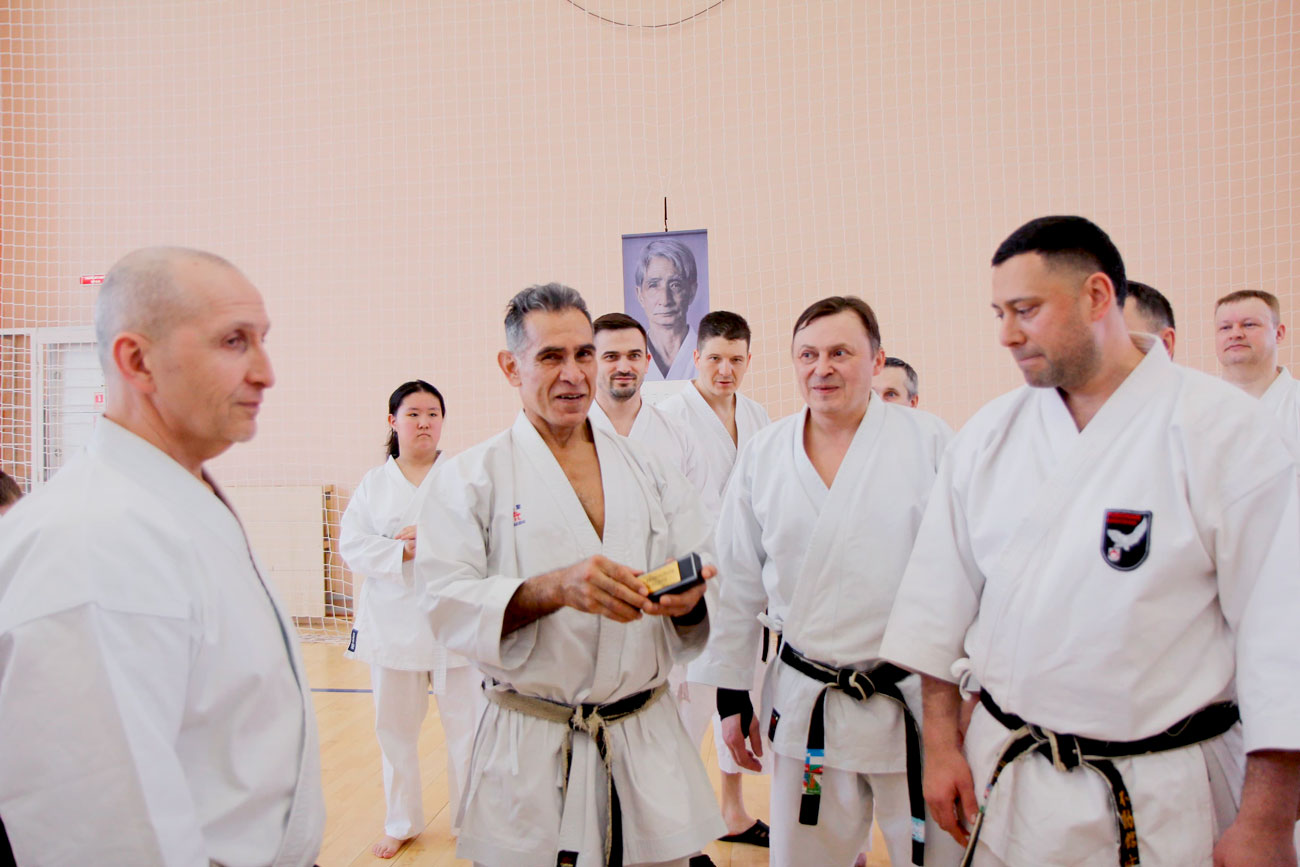
International Technical Course 2026 in Lithuania © Archive
An encounter with an opponent introduces a variable that prevents a technique from being treated as an isolated movement. The presence of another competitor requires decisions and adjustments during the action itself.
“That understanding is also expressed in the ability to adapt. The practitioner can retain clarity and balance in response to the opponent’s actions, without losing the respect or control that our practice demands.”
Moving from his description of the athlete to the responsibility of those who assess them, Gómez offers specific points of reference for observation.
“I observe the coordinated use of the body, stability, distance, the timing of the technique and sustained awareness before, during and after it. To recognise these aspects, a referee needs training that combines knowledge of the rules, practice and technical understanding. Experience helps distinguish a visually impressive movement from an action that embodies the principles of traditional karate.”
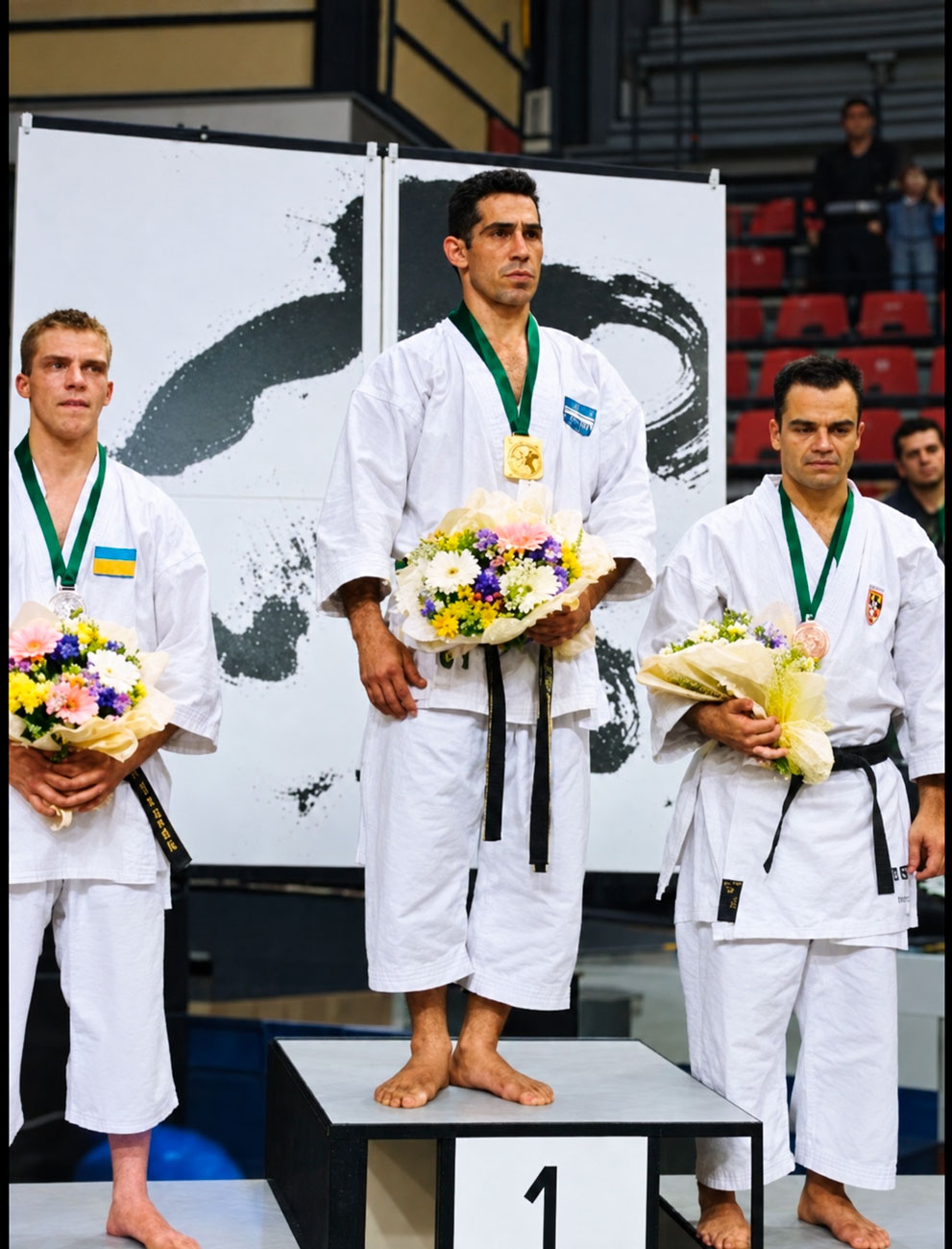
Justo Gómez on the podium after winning the kumite title at the ITKF World Championship in Ferrara, Italy © Archive
Refereeing thus forms part of a broader discussion about the education of professionals in the discipline. In this area, he identifies another lesson learned during his time with Nishiyama.
“With Nishiyama, I learned the importance of developing that ability to observe. I believe competitive experience can greatly enrich it and should be complemented by specific, ongoing referee training.”
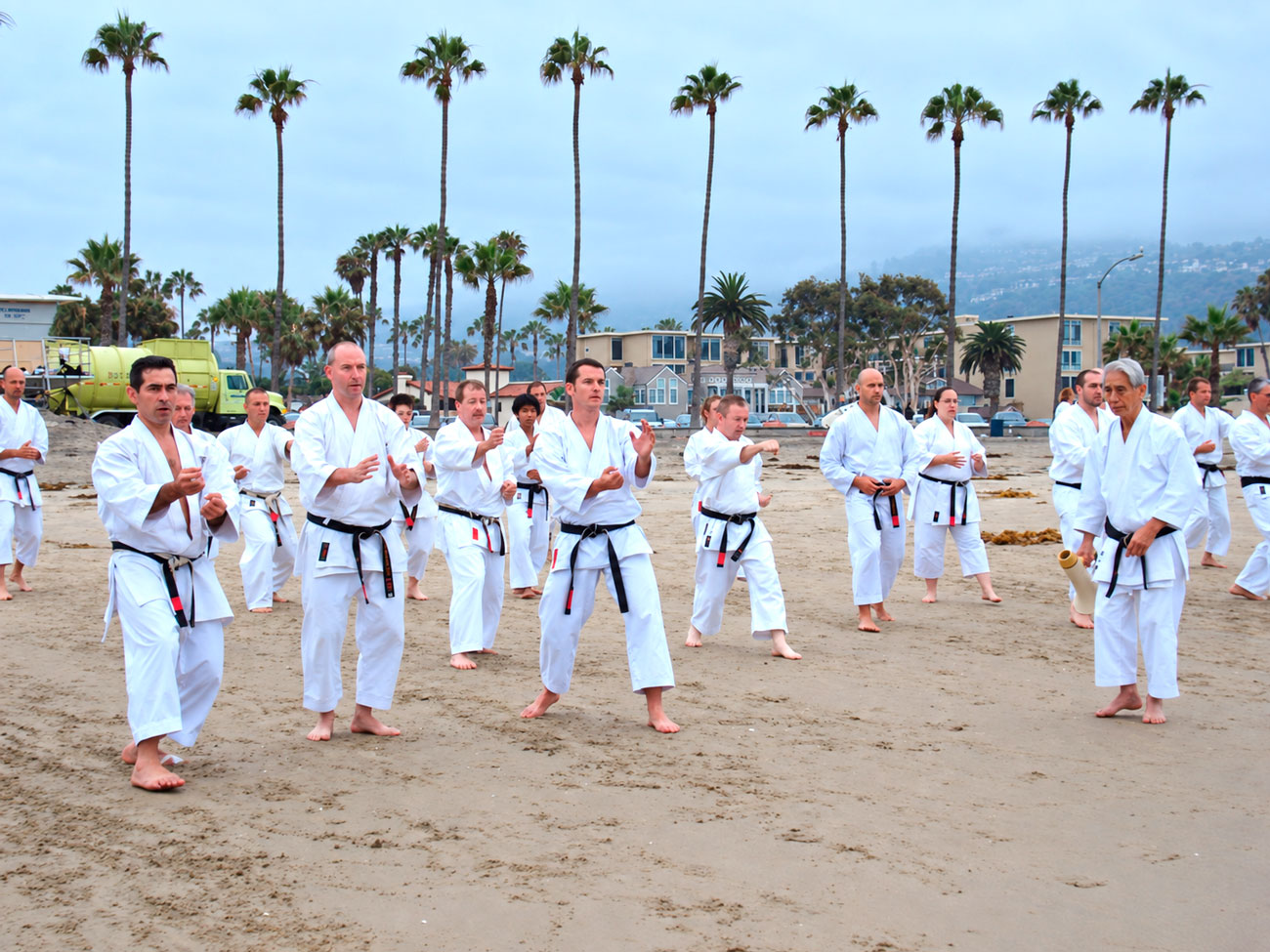
Early morning training on the beaches of La Jolla in San Diego, California, during the 2005 Master Course in the United States. Sessions began at 6 a.m. and continued until 7.30 a.m. © Archive
The relationship between the dojo and the championship deserves attention because the criteria used to reward performance also shape the connection between teaching and competition. Gómez examines this point when discussing the consequences of preparation focused exclusively on sporting success.
“There is a risk of pushing an understanding of the principles, the meaning of technique and the development of character into the background when all preparation is reduced to achieving a result. We can also lose the continuity between what we teach in the dojo and what we reward in competition. That is why it is so important for instructors, coaches and referees to share consistent criteria.”
His work in courses seeks to bring these responsibilities closer together, directing the discussion towards the work carried out throughout a practitioner’s development.
“Well-trained referees help protect those values, but the responsibility begins long before the championship, in everyday work. In my courses, I seek to connect technique, teaching and refereeing with the principles of Budo. Competition should be an opportunity to put one’s training to the test and continue learning.”
As a member of the ITKF Global Senior Technical Committee, Gómez also has to work with professionals from different countries. In this setting, his starting point is an understanding of the fundamentals that guide practice.
“I believe it is essential to deepen our shared understanding of the principles. In my understanding of karate, the pursuit of todome-waza, a decisive technique, helps give meaning to our work in kata, kumite and the other disciplines. In competition, that pursuit must be expressed within the conditions of control and safety established by the rules.”
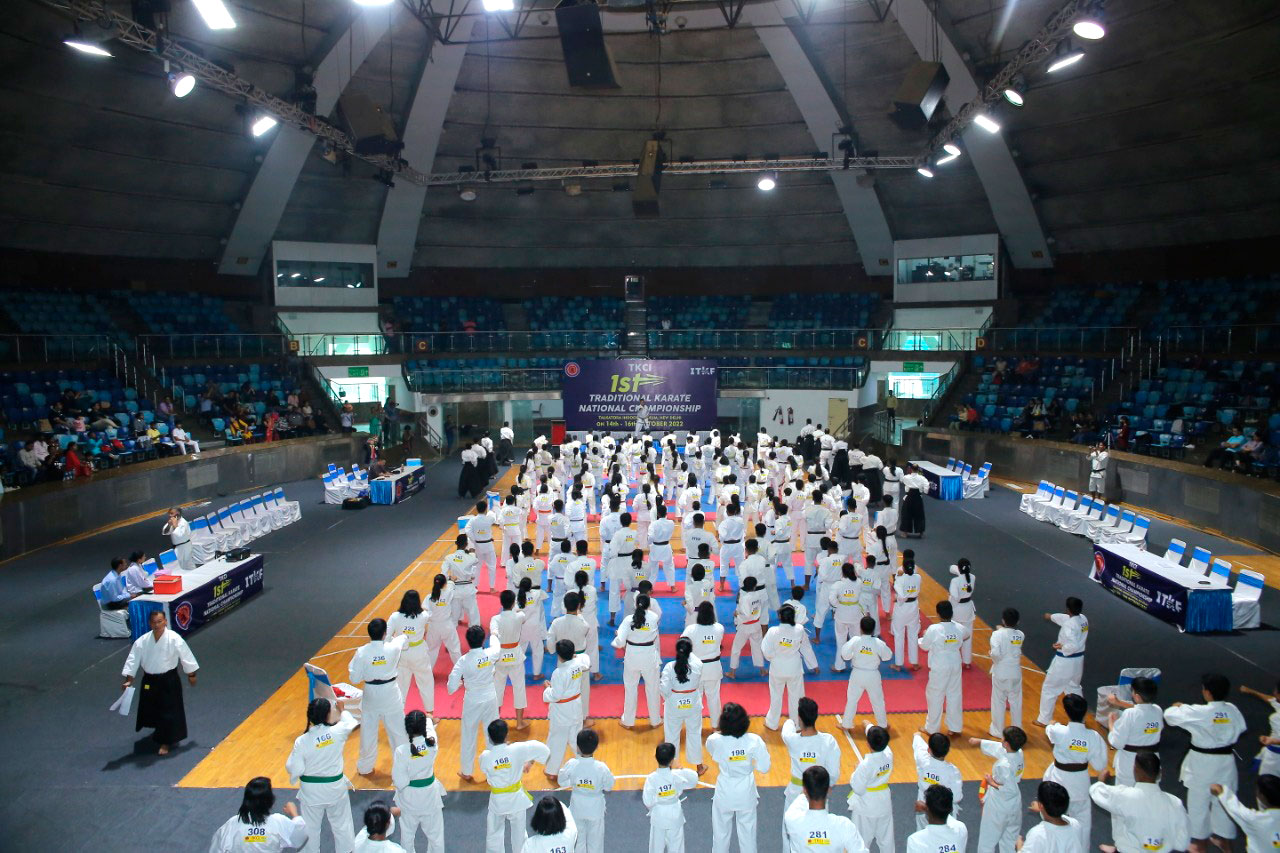
Technical course held in India in May 2024 © Archive
The principle has different implications depending on each person’s role. Gómez describes how instructors contribute at each stage of the practitioner’s journey from learning to assessment in competition.
“Instructors must pass on the fundamentals; coaches must help practitioners apply them under pressure; and referees must recognise them through consistent criteria. My priority is to connect these roles so that competition reflects the teaching we want to preserve.”
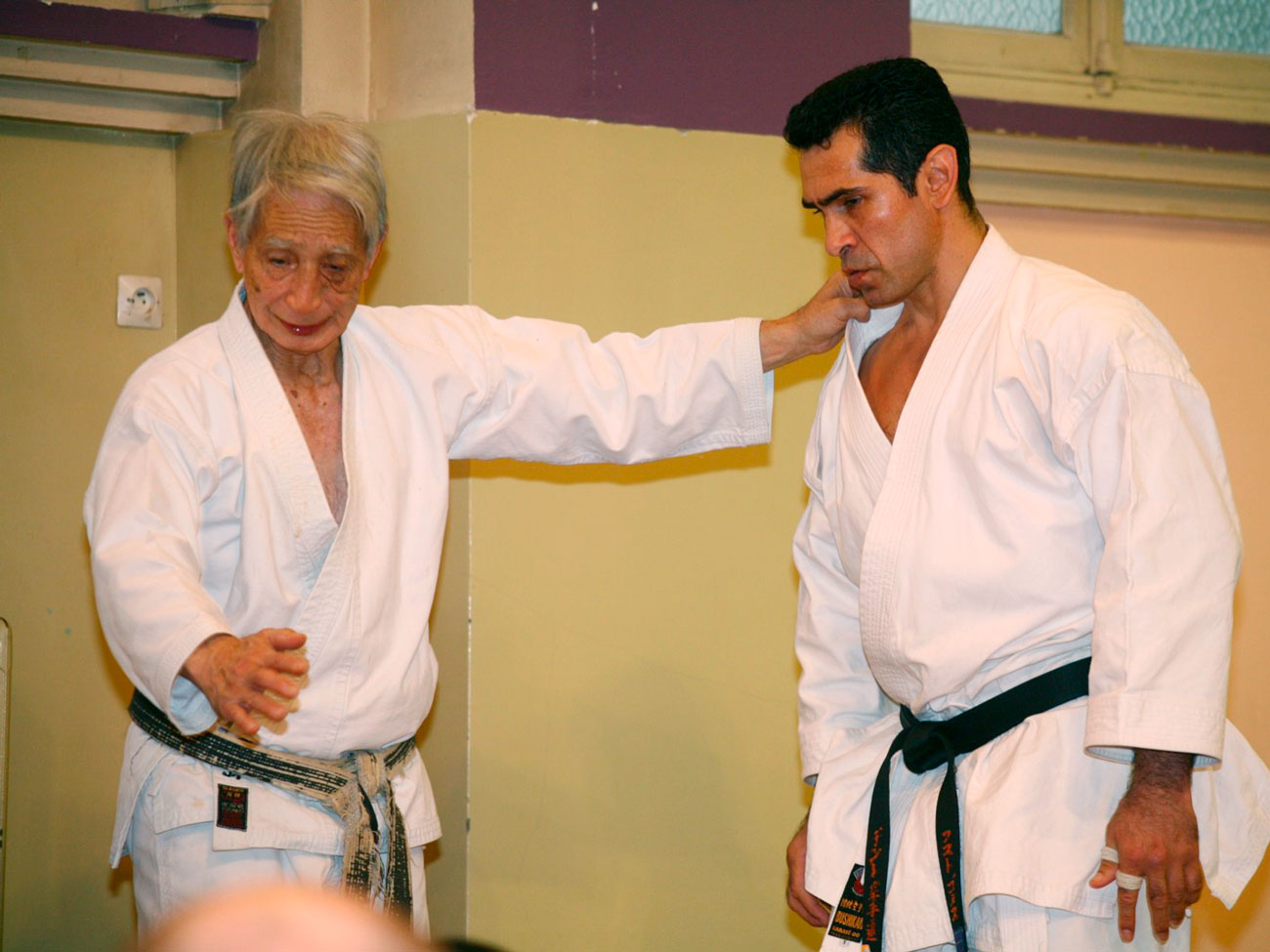
Sensei Hidetaka Nishiyama breaks down the fundamentals of traditional karate for Justo Gómez © Archive
International work provides opportunities to examine interpretations that, in their original environments, may not have been tested against other perspectives. In his view, professional development settings need to enable that examination in practical situations.
“Technical seminars and Master Courses are essential settings for harmonising criteria. This training needs to include practice, analysis of specific situations and opportunities to clarify differences in interpretation.”
Among the approaches he considers relevant to this process, Justo Gómez proposes a method of joint study.
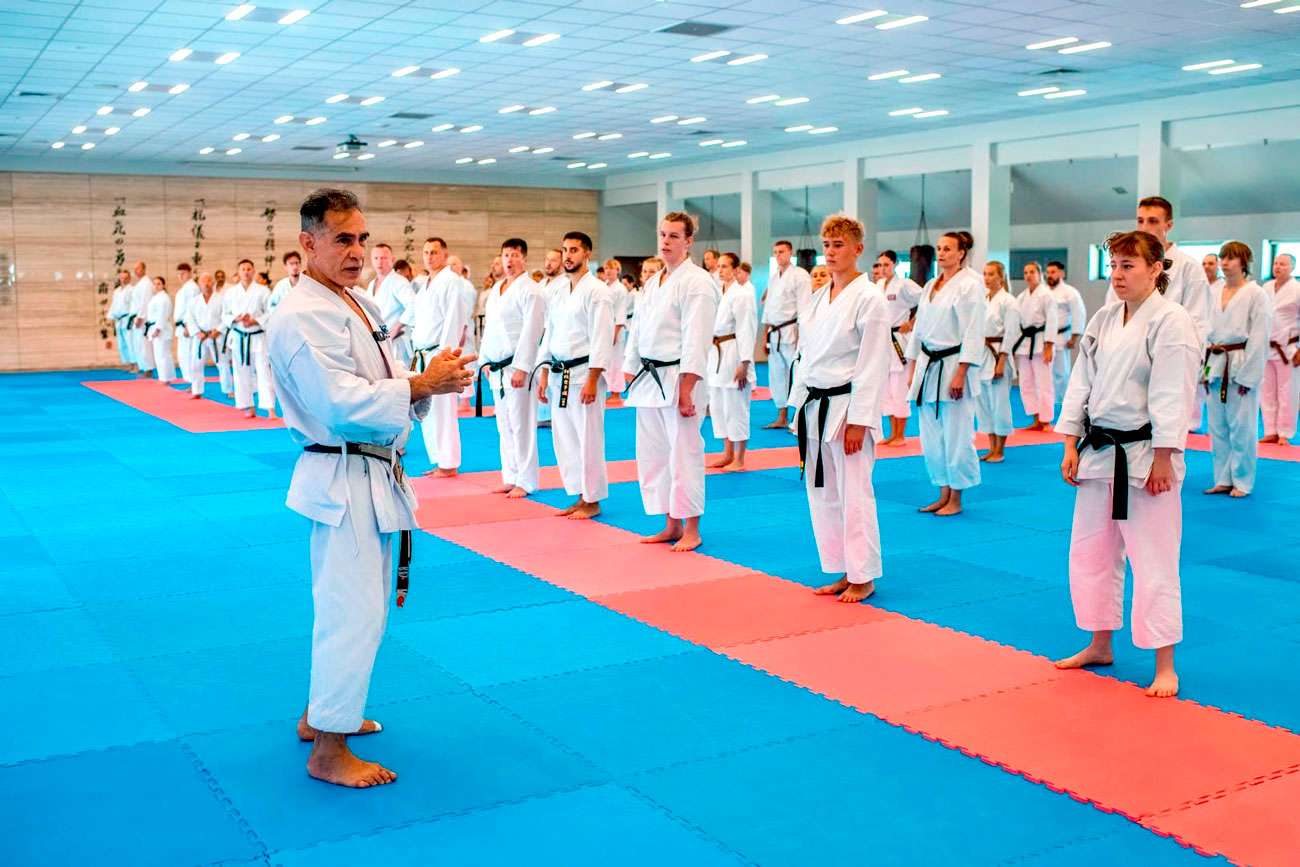
Justo Gómez leads a training session at the European Budo Centre – Dojo Stara Wieś, Poland, in August 2026 © Joanna Musial / PUTK
“As an approach to our work, I believe there is value in developing activities in which referees and coaches observe the same performance, explain their assessments and review their differences in light of the technical principles and the rules. Consistency is built through ongoing education and a willingness to review one’s own judgement. This work should continue throughout the year and be firmly established by the time of the championship.”
Travel and courses enable Gómez to follow the development of schools and national teams at different stages of preparation. His expectations for Cairo are grounded in this contact with the work carried out between championships.
“I expect to see a high technical standard and increasingly demanding competition. In recent years, I have observed considerable progress in countries that participate consistently in seminars and development activities. That work has also been reflected in their sporting results.”
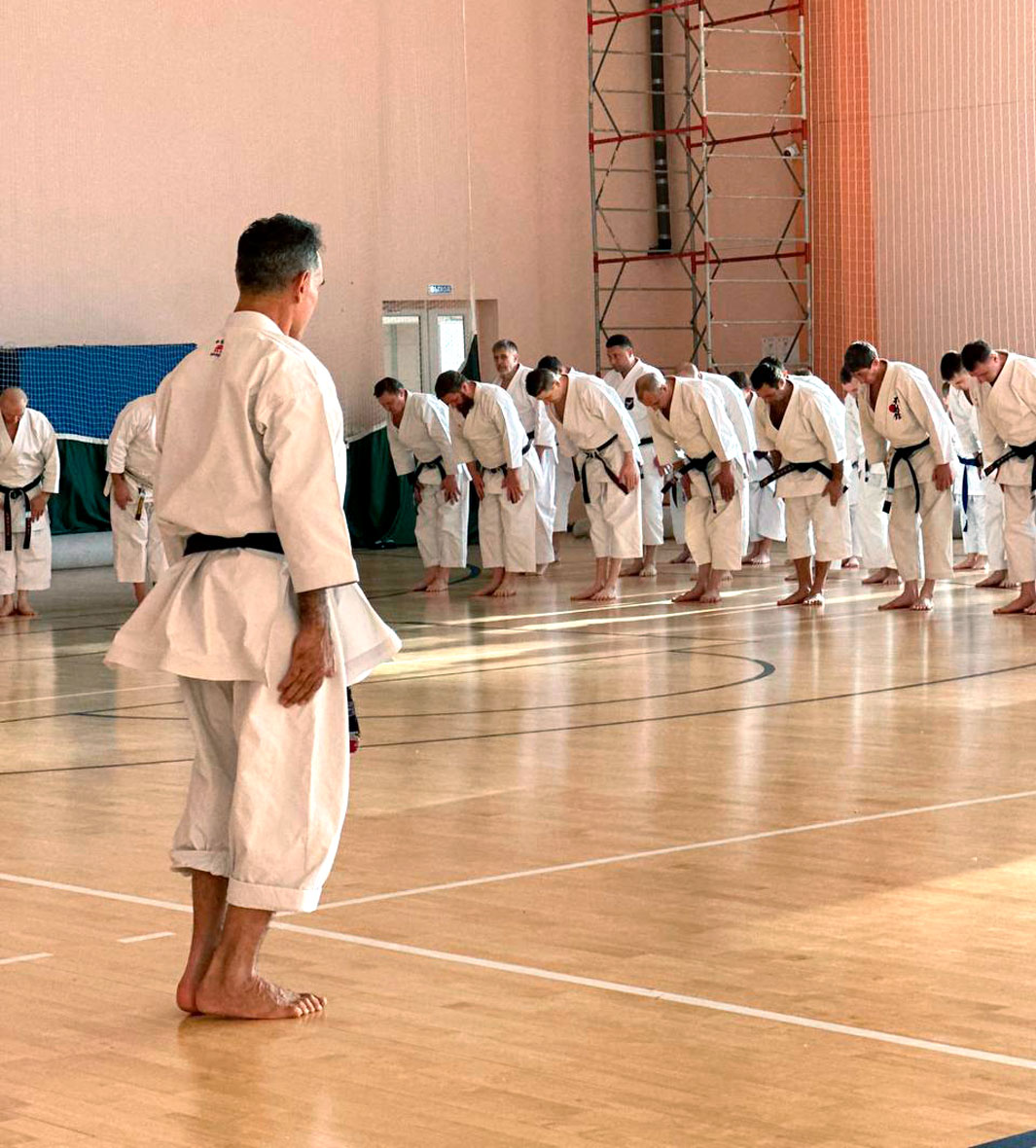
Justo Gómez’s technical knowledge and experience make him one of ITKF Global’s most sought-after instructors for courses and seminars around the world © Archive
His observations include the cumulative effect of education on the way instructors conduct training.
“Continuity in education allows us to deepen our knowledge, correct mistaken interpretations and provide better guidance for preparation. That is why I believe the delegations that have worked in this way will arrive better equipped.”
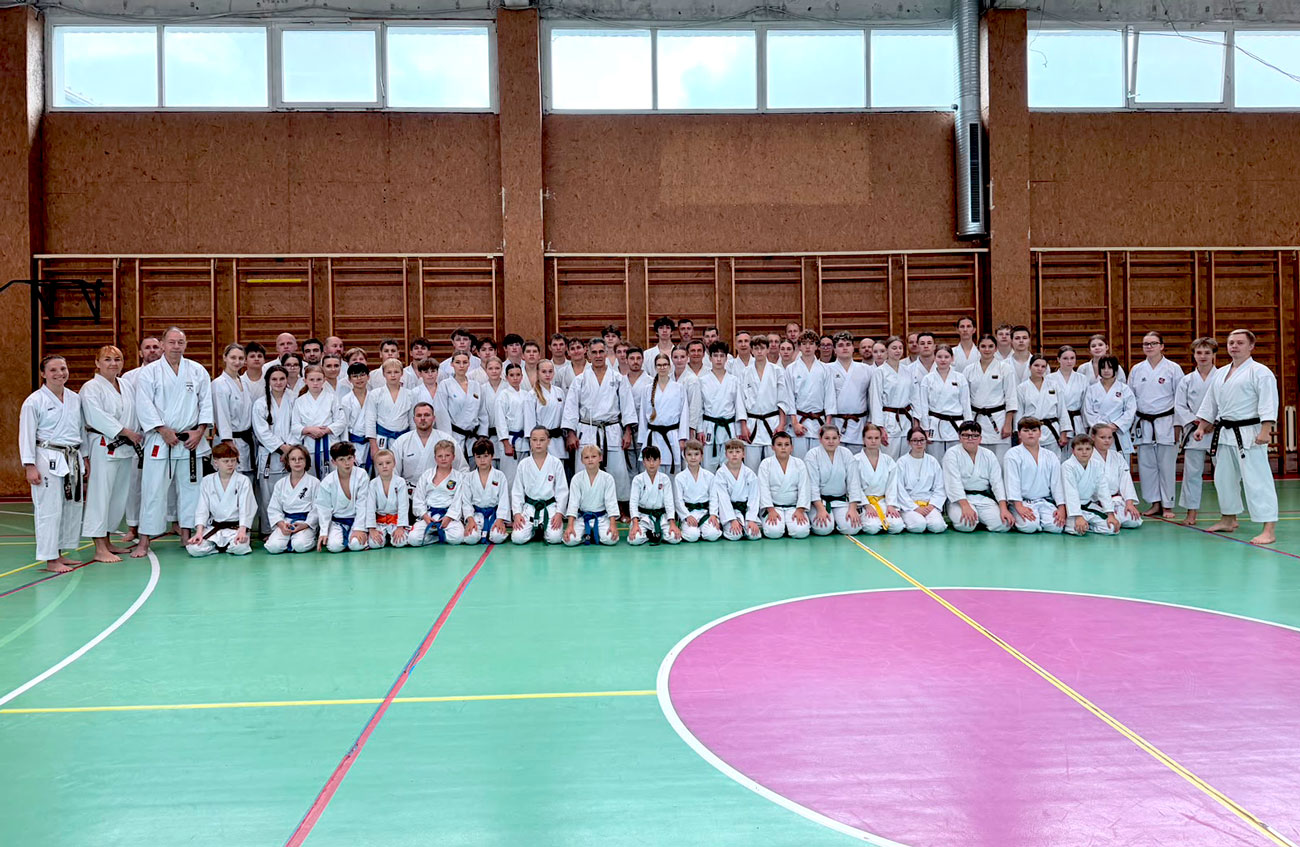
International Technical Course 2026 in Lithuania © Archive
During recent visits to France, Poland and Lithuania, he encountered training environments focused on studying the fundamentals. These meetings provide a concrete illustration of the progress he hopes to see at the World Championship.
“I was able to observe a renewed interest in returning to the fundamentals and understanding their application more fully. Coaches and athletes are recognising the value of working from the principles to improve their effectiveness.”
“In Cairo, I would like to see competitors capable of upholding the technical and educational principles of traditional karate under the pressure of competition: effectiveness, control, timing and respect for the opponent.”
The championship will add the particular demands of facing an opponent and being assessed to this process. It is at this point that Gómez identifies one of the central difficulties of preparation.
“The challenge is to ensure that this understanding holds up under pressure. Knowing a principle and being able to explain it is one step; internalising it until it becomes part of the competitor’s response requires much broader and deeper work.”
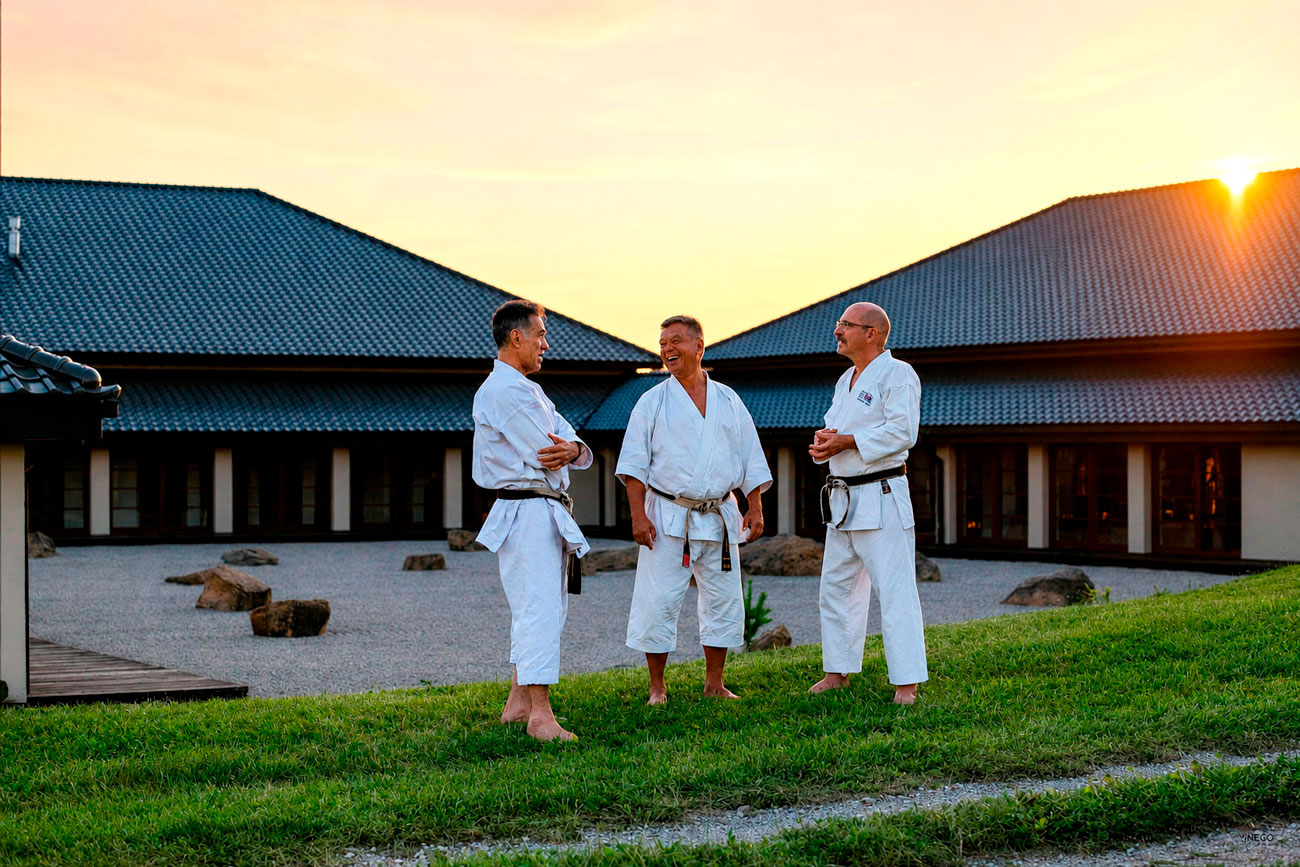
Justo Gómez, Włodzimierz Kwieciński and Gilberto Gaertner at the European Budo Centre – Dojo Stara Wieś, Poland © Joanna Musial / PUTK
His outlook for overall performance in Cairo brings together aspects that need to function simultaneously during competition.
“I believe the difference will lie in the ability to integrate physical preparation with technical and emotional mastery, recognise the opportunity and act without unnecessary movements. It will also be important for coaches and athletes to understand the assessment criteria, so that preparation is consistent with what competition demands.”
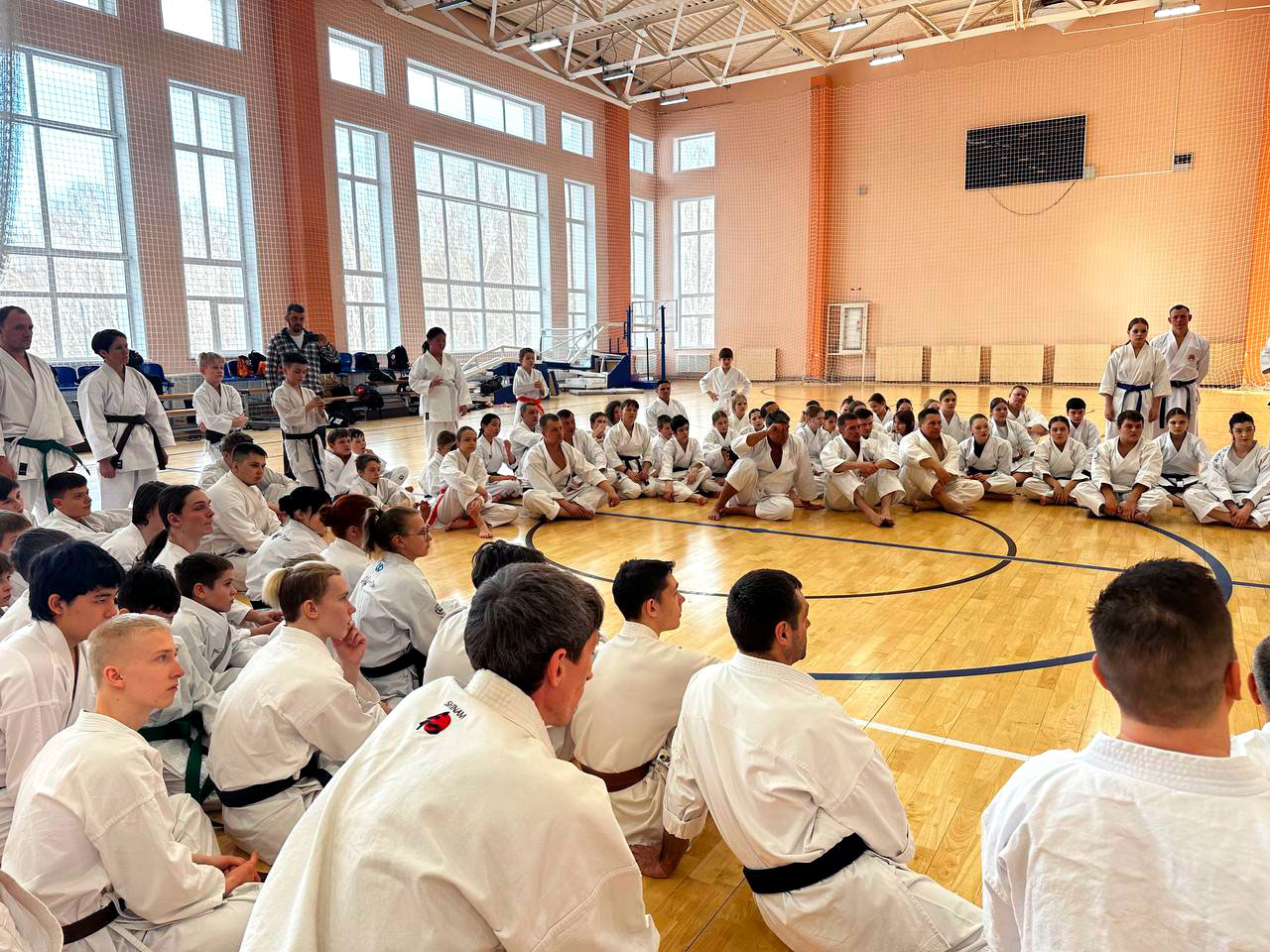
International Technical Course 2026 in Lithuania © Archive
In discussing what he would like to see from participants, the ITKF Global Senior Technical Committee member adds an educational dimension to his analysis of performance.
“In Cairo, I would like to see competitors capable of upholding the technical and educational principles of traditional karate under the pressure of competition: effectiveness, control, timing and respect for the opponent. Progress is evident when an athlete understands what they are doing and can apply it in a demanding situation. It is also expressed in their conduct, their relationship with the opponent and their ability to learn from the result.”
Gómez’s expectations for international participation stem from conversations held during his work as an instructor. He reports a willingness to make the journey among organisations and practitioners with whom he has recently been in contact.
“My expectations are very positive. In the countries I have visited, and among those who took part in the latest training activities, I sense great enthusiasm about attending. There is interest in competing, but also in meeting one another, exchanging experiences and continuing to learn. That dimension is fundamental to the international growth of traditional karate.”
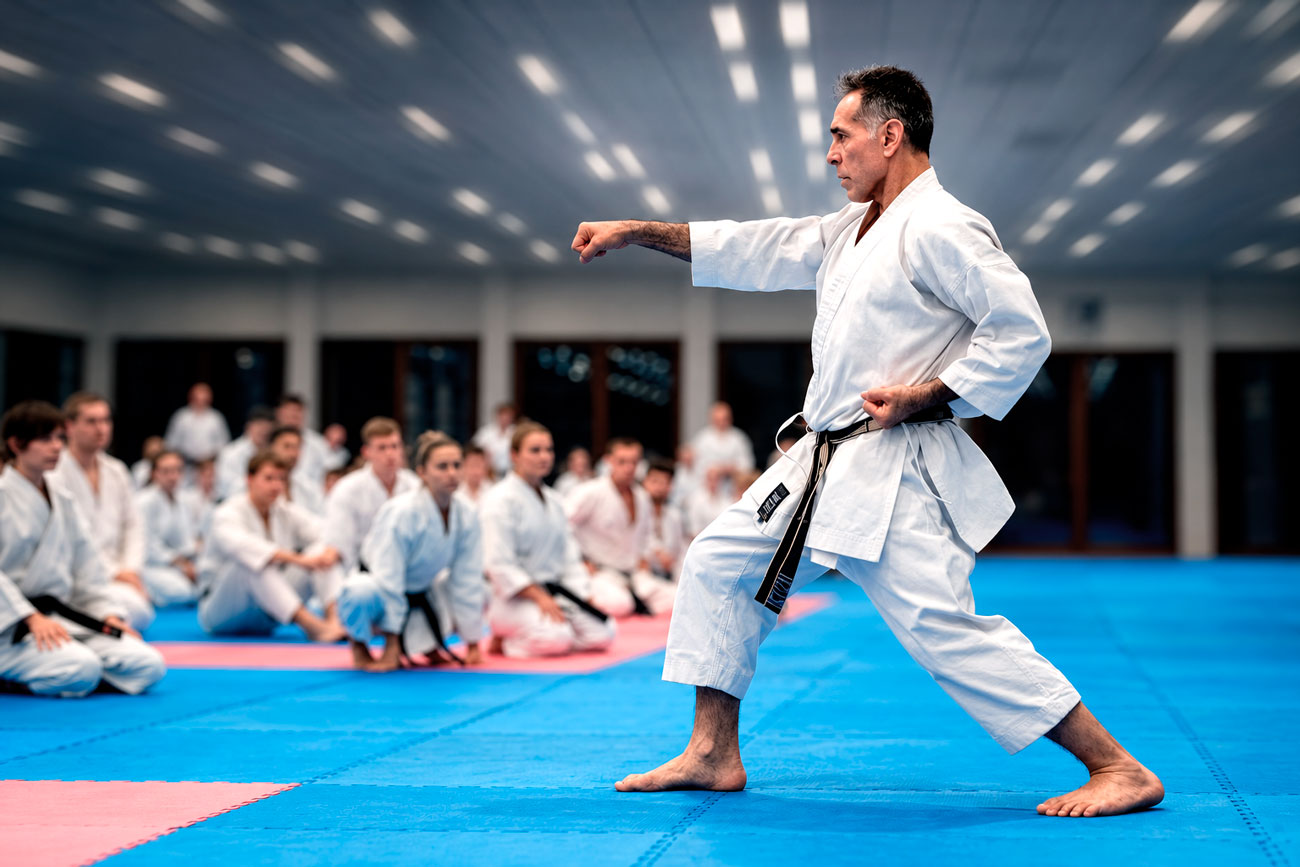
In kihon, Justo Gómez impresses with the power and precision through which he expresses perfection in the execution of traditional karate’s fundamentals © Archive
His estimate of the number of delegations is personal and does not constitute official registration information.
“My estimate is that more than 30 countries could be represented. I base that on my contact with instructors and organisations and on the interest expressed during the international activities I have attended. Confirmation rests with the championship organisers.”
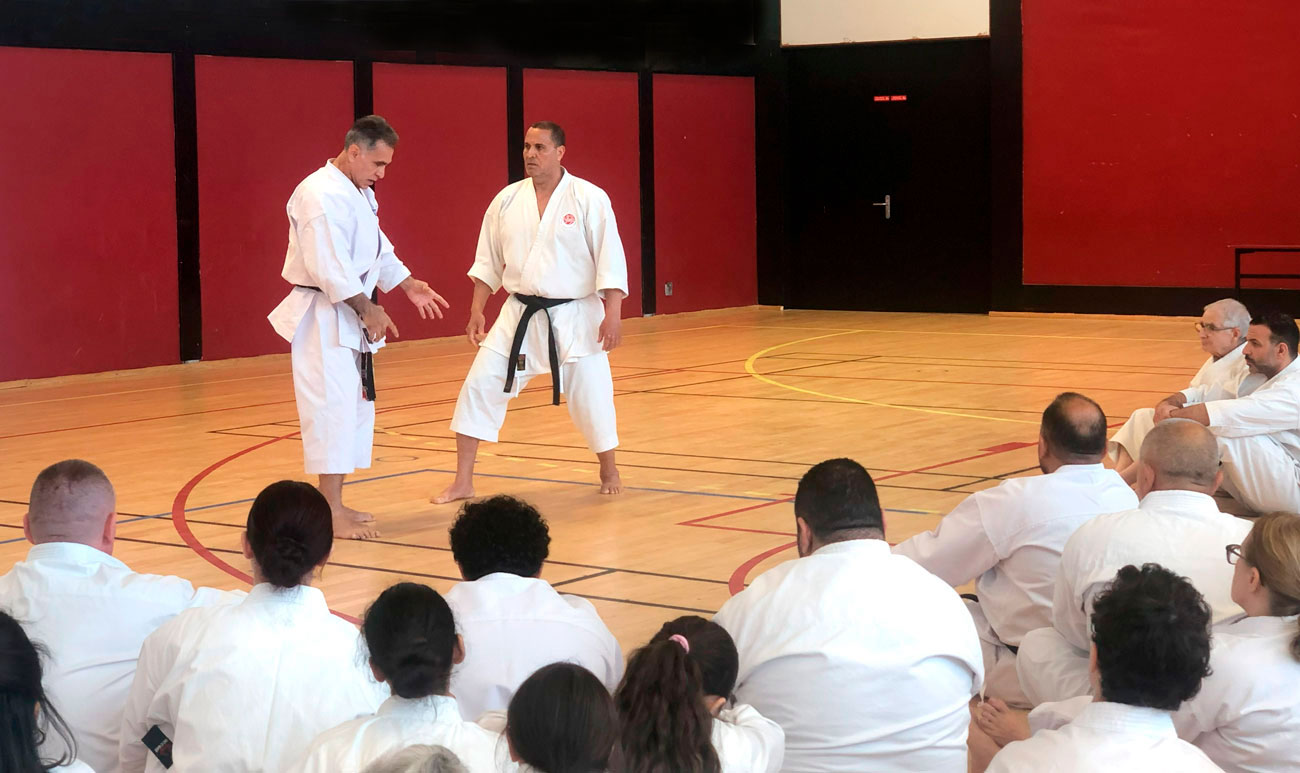
Justo Gómez teaches the fundamentals of traditional karate during the 2026 Master Course in Paris © Angélique Lambert / FKT Budo France
Beyond attendance at the event, the instructor follows how results are distributed among the delegations. This perspective helps him observe competitive development over time.
“We are seeing more and more countries capable of reaching finals and competing for the top places in disciplines where they previously had less of a presence. It is an encouraging sign that knowledge and preparation are reaching more places. Our challenge is to make that growth sustainable and ensure it rests on a solid foundation of training for athletes, instructors and referees.”
“We must preserve the technical principles and the values that give meaning to our practice. That is where I find continuity with the teaching I received from sensei Nishiyama.”
The breadth of the gathering also creates opportunities for participants who will return to very different teaching environments. Gómez sees an important part of this edition’s value in that journey to the World Championship and back to local work.
“I expect a World Championship of a high technical standard and, above all, a gathering that strengthens the work shared between countries. The enthusiasm I sense among practitioners and organisations gives us reason to expect strong participation. Egypt will be an opportunity to demonstrate the results of that work and renew our commitment to education.”
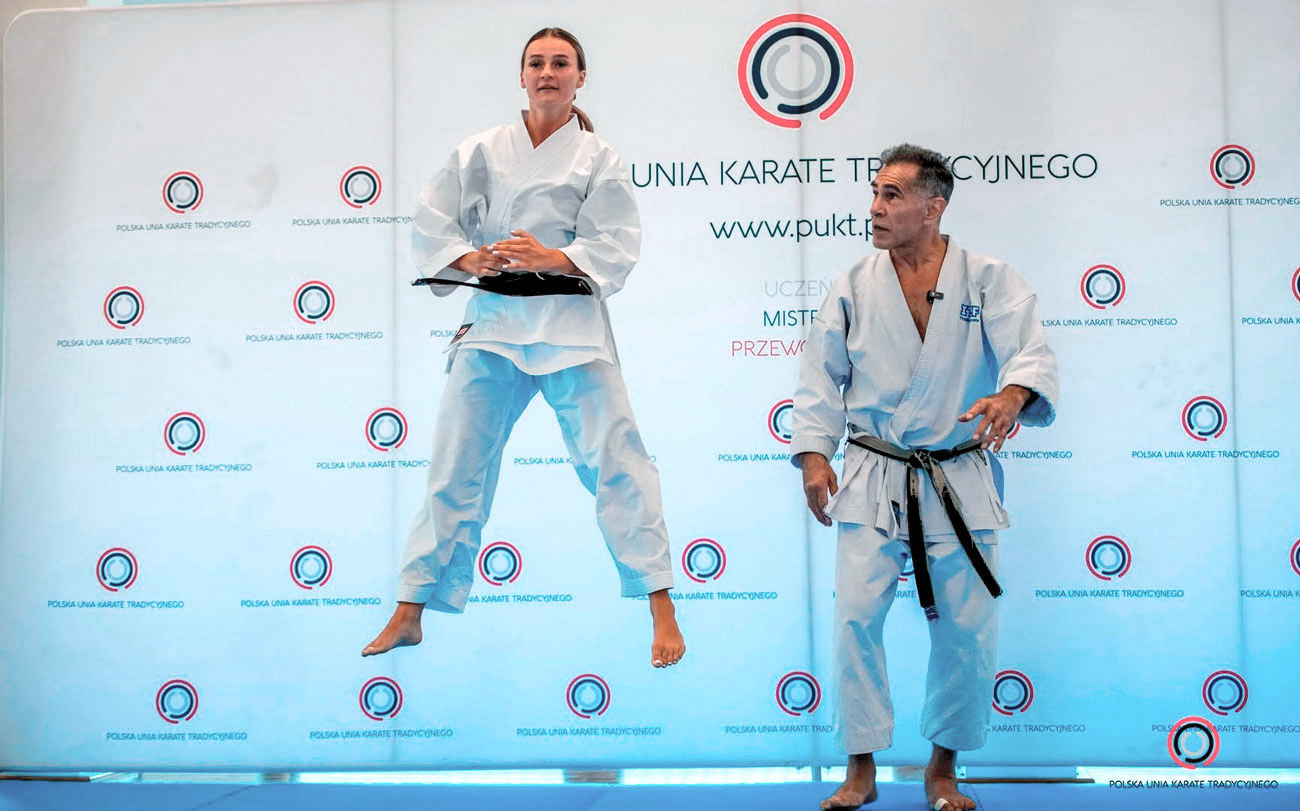
During the 2026 Gasshuku at the Budo Center, Justo Gómez teaches how to coordinate explosive breathing and body mechanics to increase the propulsive power of the legs © Joanna Musial / PUTK
In his assessment, the event’s reach may become clearer after delegations resume their activities.
“What could make this edition special is for its impact to continue beyond the competition: for it to help improve teaching, strengthen ties between delegations and bring a new generation closer to the knowledge Nishiyama passed on to us. This edition will leave an important mark if each delegation returns to its country with knowledge and experiences that enrich everyday work in its dojos.”
Contact with practitioners of different ages and cultures creates specific needs in the transmission of knowledge. For those who teach, each context requires choices about how to explain, demonstrate and support learning.
“We must preserve the technical principles and the values that give meaning to our practice. That is where I find continuity with the teaching I received from sensei Nishiyama. Teaching methods can evolve. We can improve how we teach, incorporate knowledge from pedagogy and physical conditioning, and use resources that facilitate learning, provided we respect the fundamentals of karate.”
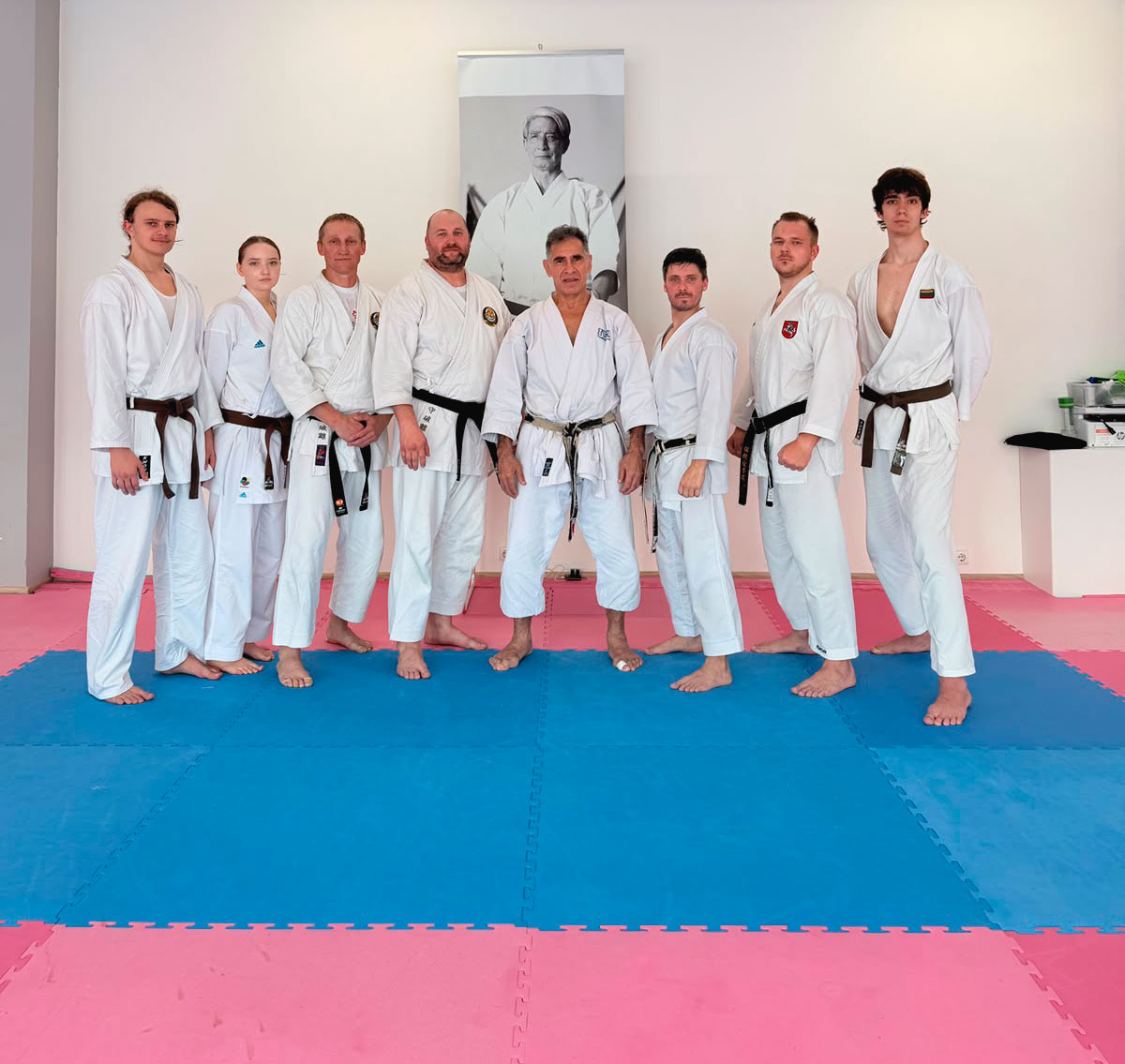
International Technical Course 2026 in Lithuania © Archive
This perspective runs through his international experience and also extends to differences between generations.
“Working with different cultures and generations requires us to find explanations and methods suited to each context. Remaining faithful to a teaching also requires us to understand it well enough to make it accessible to those who come after us.”
Young instructors hold a particular place in this reflection. Many need to deepen their education in environments where access to certain knowledge and experiences is limited. Attending international courses can broaden that access.
“Courses allow them to ask questions, receive corrections and share practice with instructors whose backgrounds differ. They can bring these young instructors closer to knowledge and experiences that are not always available in their everyday environment.”
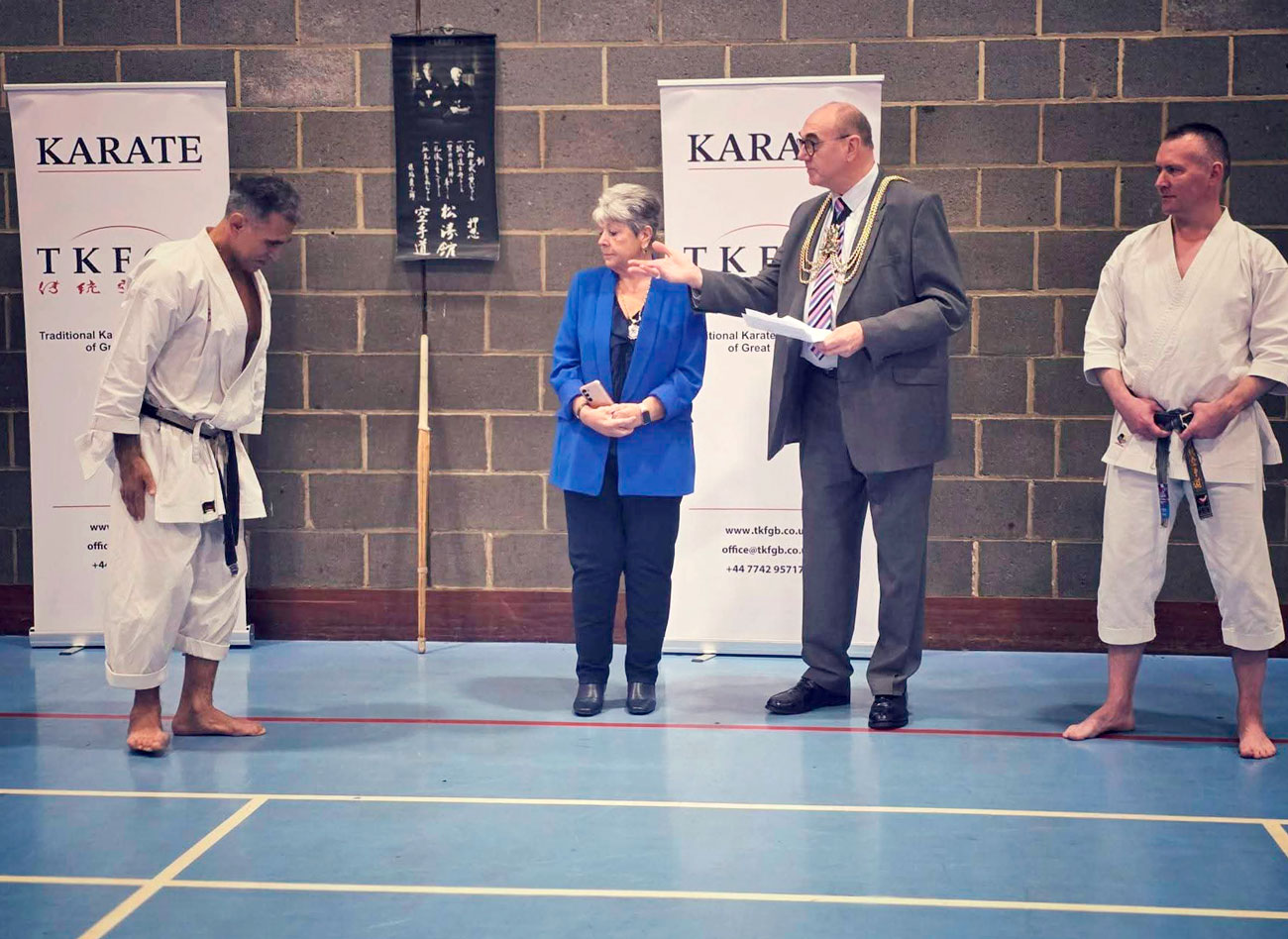
Justo Gómez receives an honorary distinction from government authorities in England © Archive
For Gómez, having learned directly from Nishiyama creates a commitment to these professionals. His account places the memory of their time together within the present-day task of teaching.
“Those of us who had the opportunity to learn directly from Nishiyama have a special responsibility towards these young people. We must pass on the substance of his teachings, explain the meaning of his corrections and help them understand the principles through their own practice.”
The duration of these gatherings is a constraint that needs to be considered when planning such support. Among the possibilities he identifies are resources and working relationships capable of sustaining study after the journey home.
“I believe it is valuable to support these gatherings with teaching materials and continuity in education between countries. That way, what was learned during the World Championship can continue to develop back in the dojo. The best outcome would be for young instructors to return with a deeper understanding and practical tools to teach more effectively.”
An institutional dimension runs through Gómez’s reflections because instructors’ work also depends on the conditions in which it is carried out. In assessing ITKF Global, he connects the organisation’s current structure with the challenges faced after Nishiyama’s death.
“I believe ITKF Global is going through a very positive phase of its institutional reorganisation. Since sensei Hidetaka Nishiyama’s passing, one of our greatest challenges has been to carry his work forward and maintain a shared technical point of reference.”
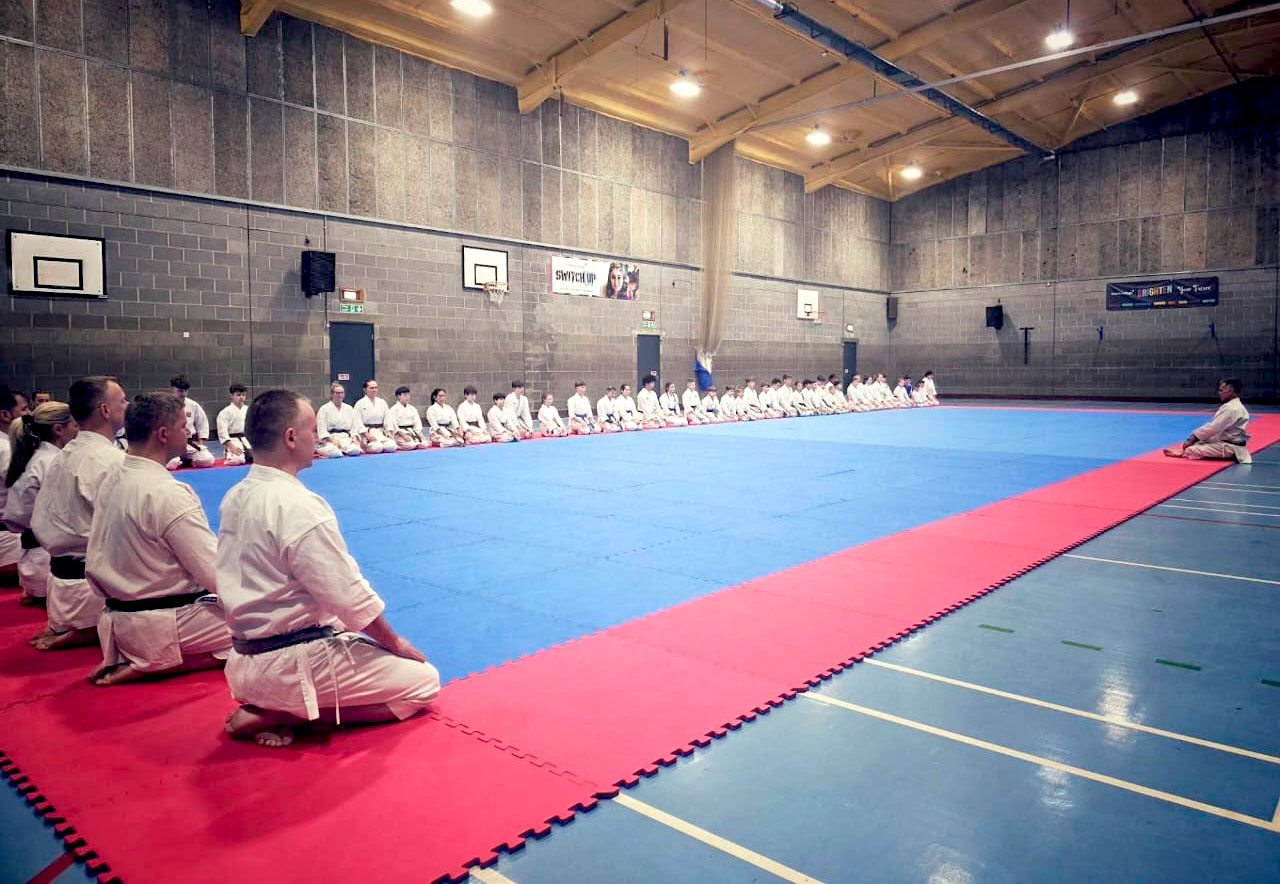
Technical course held in India in May 2024 © Archive
His assessment of the present is accompanied by concern for the education of those who will assume responsibilities in the coming years.
“I see a positive phase of consolidation and an important responsibility ahead: to carry Nishiyama’s legacy forward through an organisation capable of sustaining its transmission. The World Championship in Cairo can contribute to that purpose if it strengthens trust between countries, improves technical coordination and creates opportunities to develop new leaders.”
Throughout his account, time spent in Los Angeles, experience in championships and international work offer different perspectives on that task. His reflection ultimately turns to the environment that will be left for the next generation of instructors.
“The continuity of this legacy requires people who are prepared to teach and structures that support their work. That is why we must think both about the quality of the present and about those who will take on this responsibility in the coming years.”