
11 de novembro de 2026


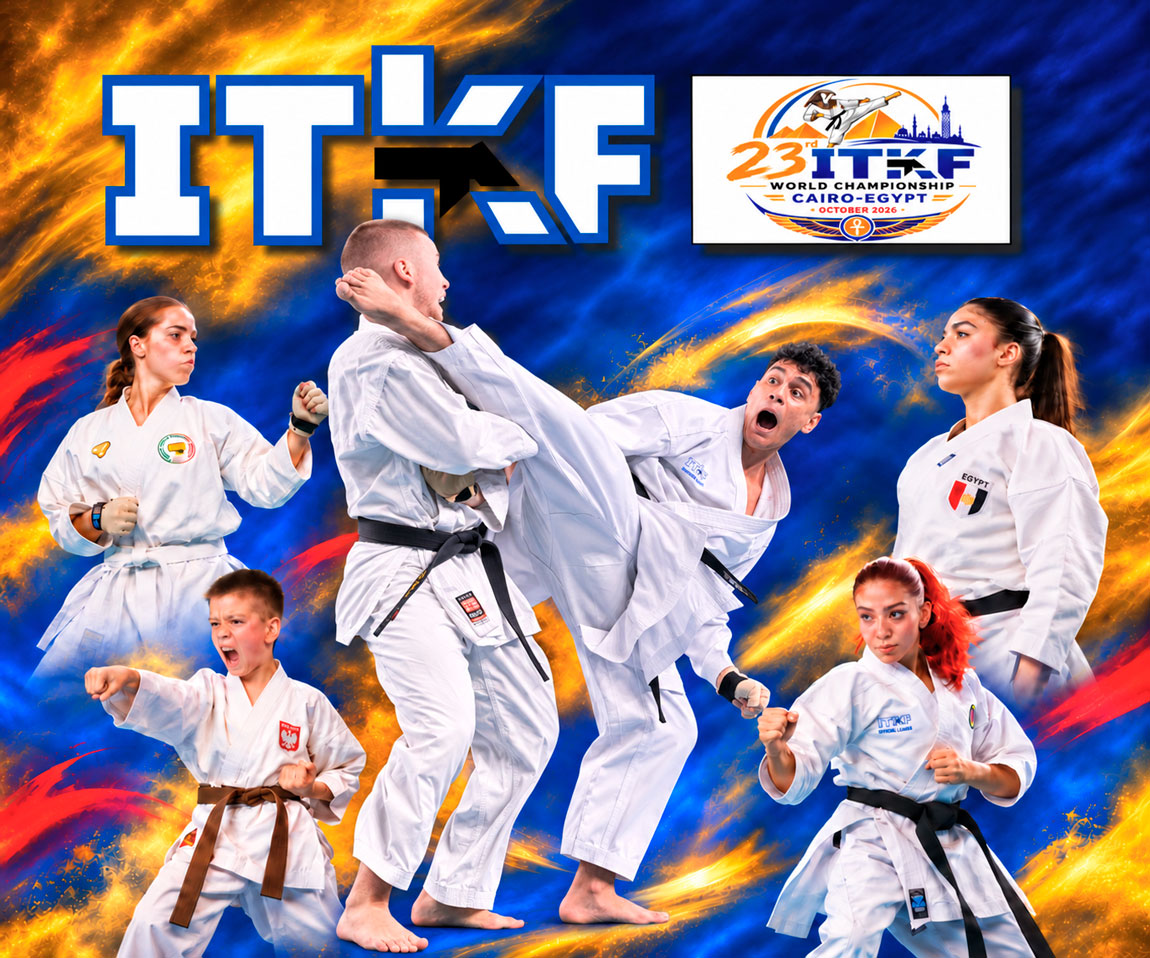 Cairo brings traditional karate together at the 2026 ITKF Global World Championship © Global Sports Photomontage
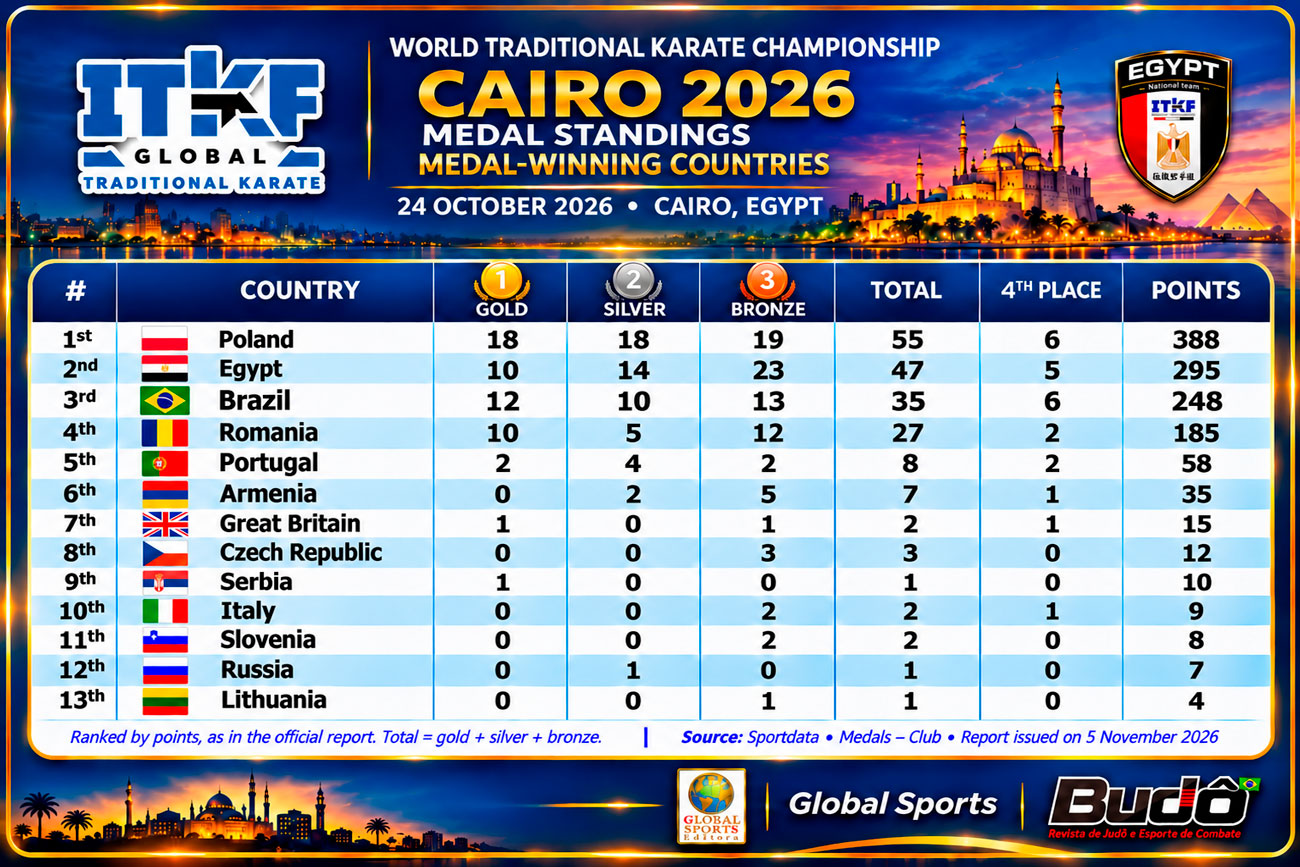
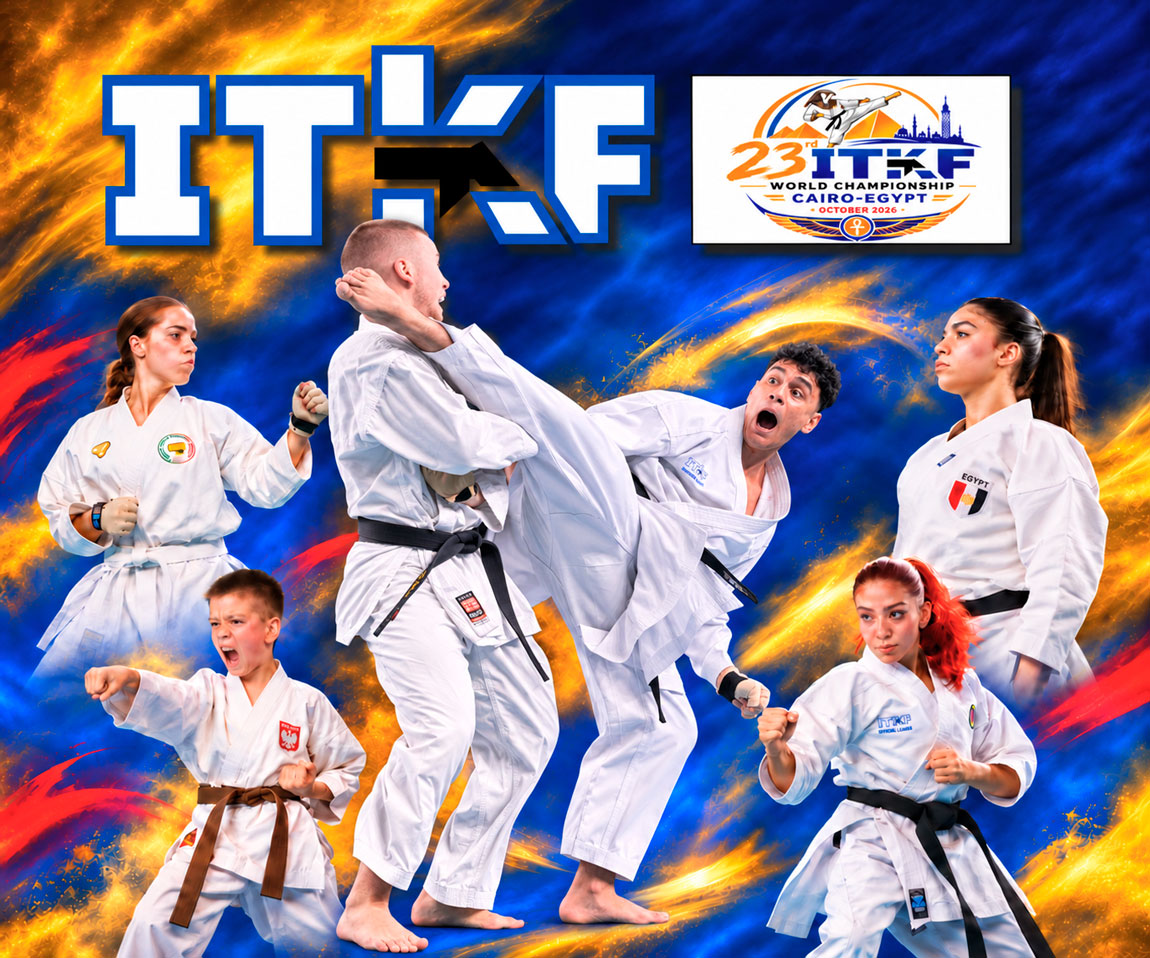
Poland claimed first place overall at the 23rd ITKF Global World Traditional Karate Championship in Cairo, reshaping a contest in which the same five national teams have occupied the leading positions since the 2024 edition in Vila do Conde, Portugal. Egypt finished as runner-up, followed by Brazil, Romania and Portugal. Held at the Cairo International Stadium complex, the championship brought together representatives from four continents and recorded an increase in event entries.
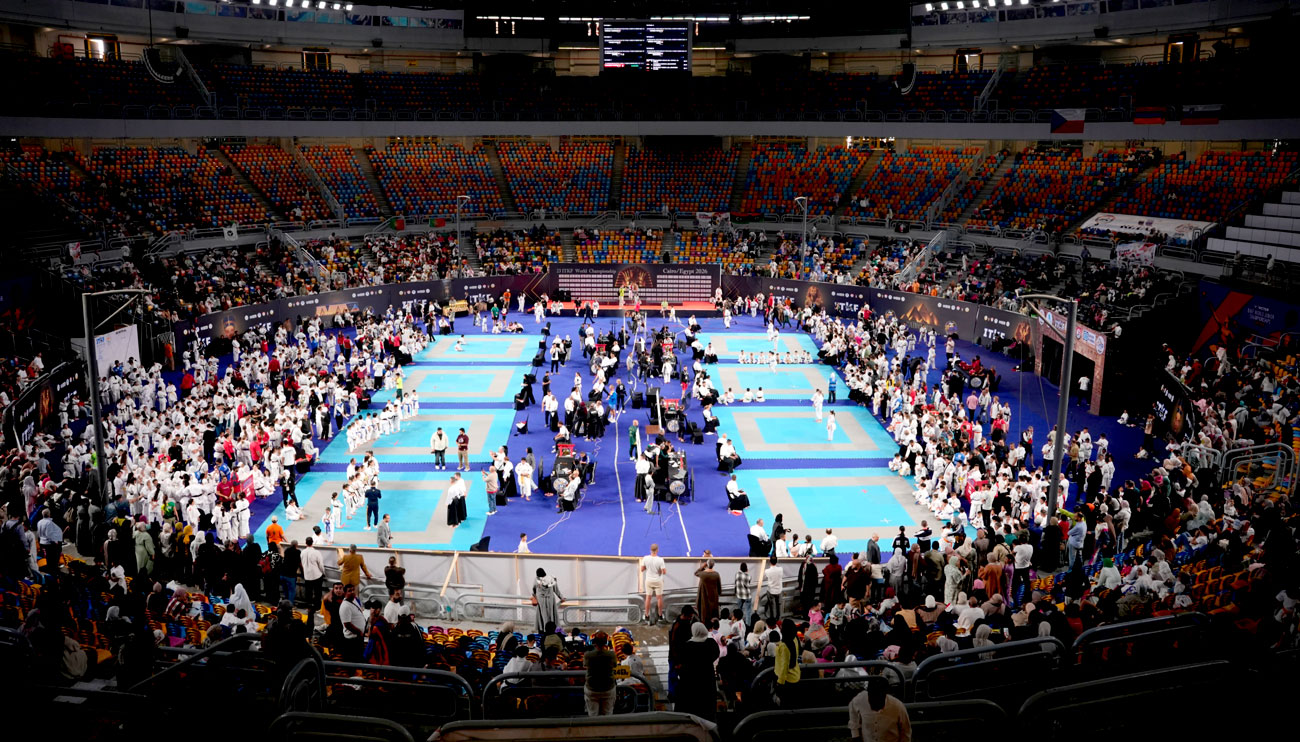
Aerial view of the eight competition areas at the 2026 ITKF Global World Championship in Cairo © ETKF
Third at the World Championship in Portugal, Poland arrived in Egypt with the stated ambition of challenging for the lead and ended its campaign with 18 gold, 18 silver and 19 bronze medals. Its 55 podium finishes and 388 points in the official report placed the country ahead of the hosts, who collected 47 medals and 295 points. Brazil completed the top three with 35 medals and 248 points.
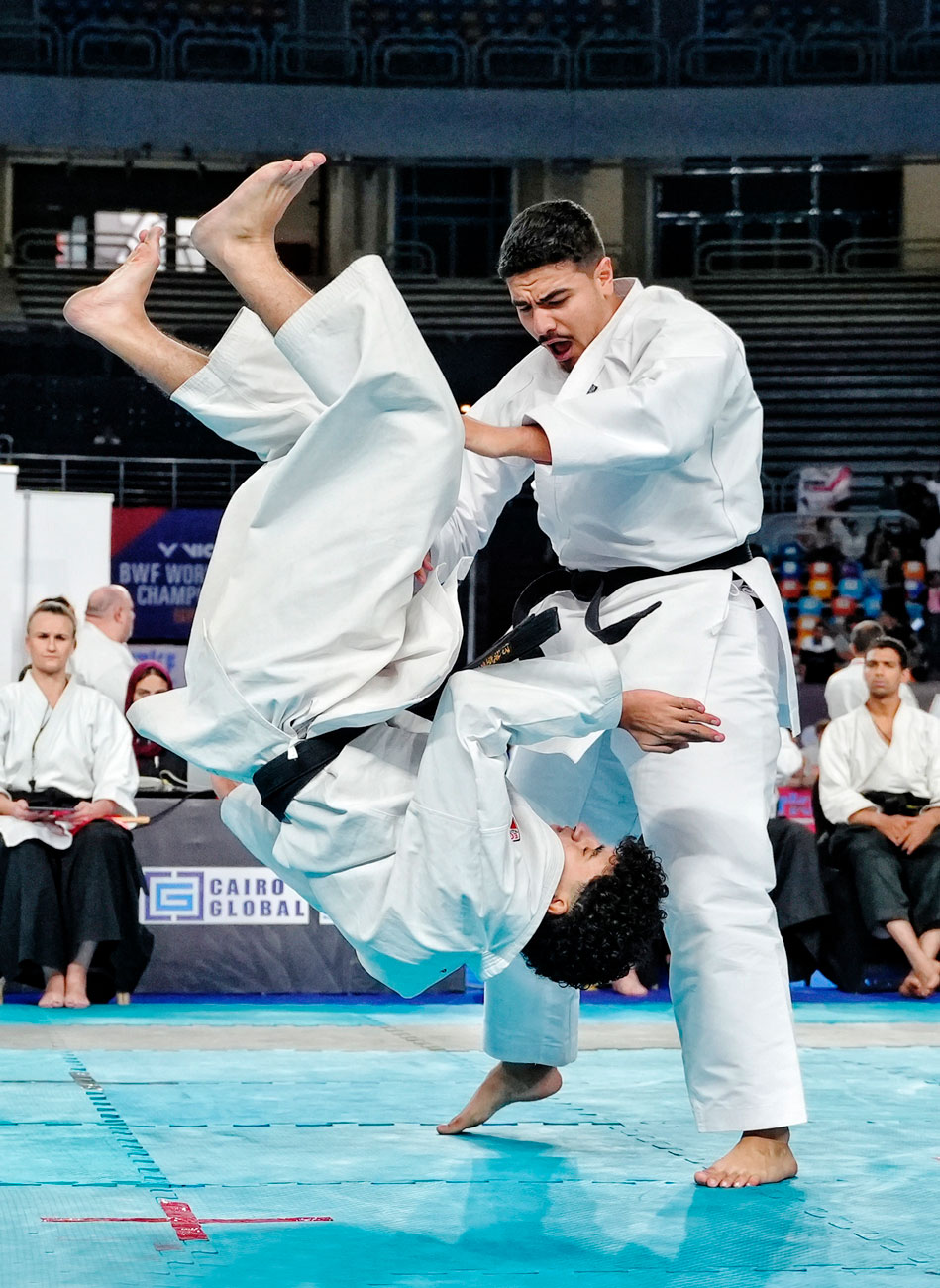
The World Championship in Cairo showcases the strength of traditional karate’s new generation © ETKF
The result continues a story Budo Magazine followed in the months leading up to the championship. Between July and October, a series of interviews with representatives of the five national teams explored their preparations, expectations and challenges for Cairo. With the competition over, the final standings reveal what changed in the rankings and how this group maintained its international prominence.
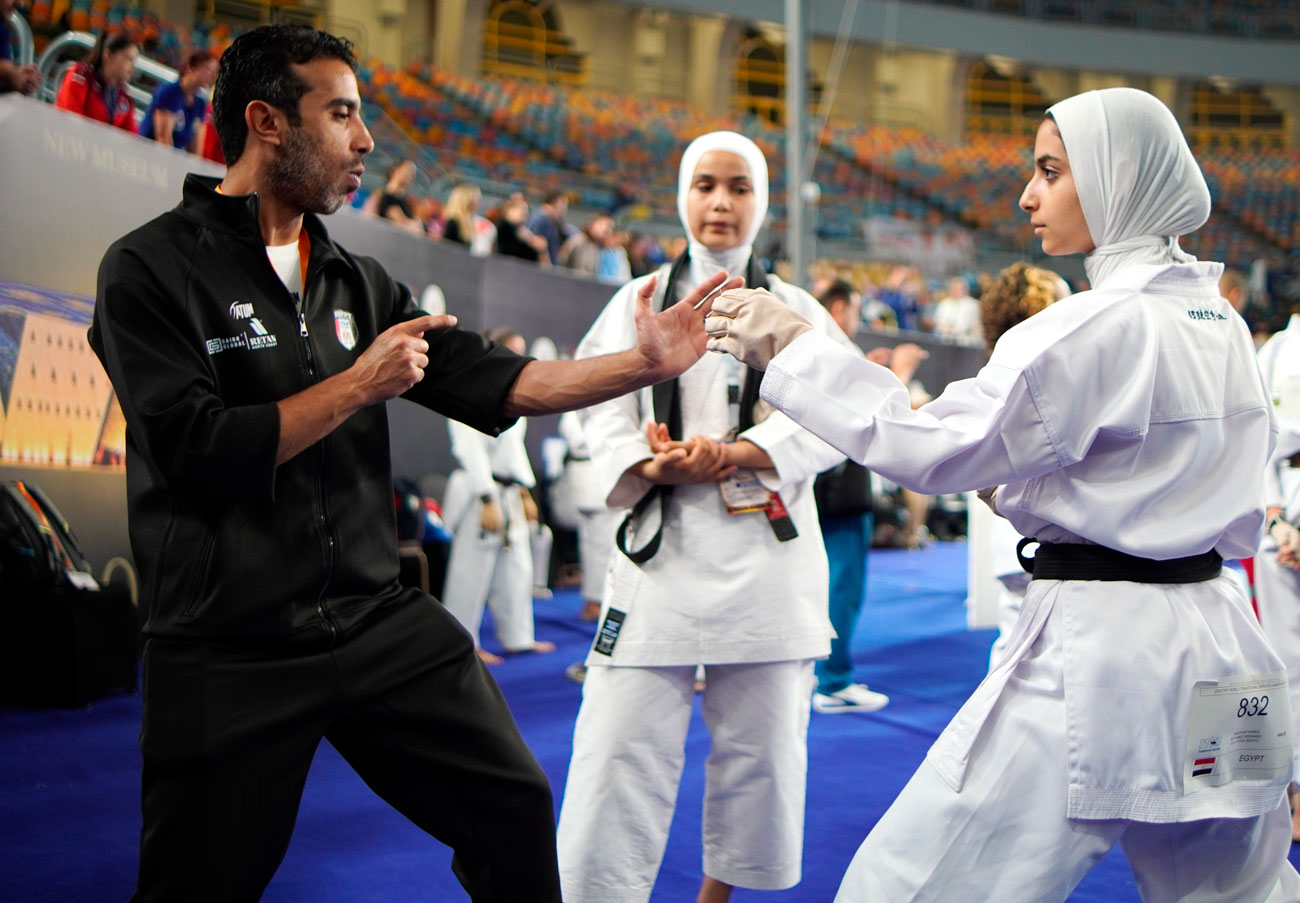
Coach Mohamed Abd El Nabi guides athletes Alaa Kareem and Kawthar El Ghameri © ETKF
The change at the top becomes clearer when viewed across the last three World Championships. In Kranjska Gora, Slovenia, in 2022, Brazil finished first overall, followed by Egypt, Romania, Italy and Poland, with Portugal sixth. In 2024, Egypt took the lead in Vila do Conde. Now, in Cairo, it was Poland’s turn. Three consecutive editions, held in countries on two continents, produced three different champions, showing that a leading position must be earned anew at every championship.
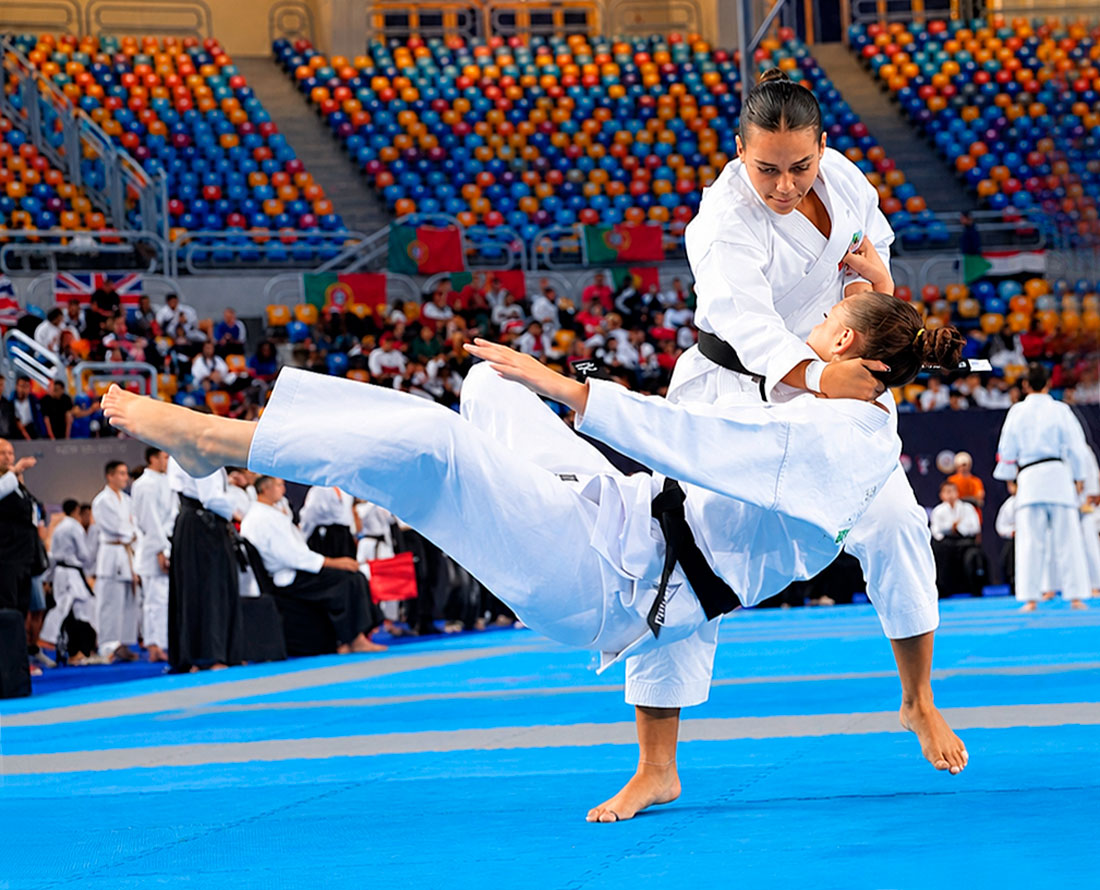
Young athletes demonstrate traditional karate’s renewal at the World Championship in Cairo © ETKF
Poland’s trajectory deserves particular attention: from fifth in Slovenia, the team advanced to third in Portugal and then first in Egypt. That progression provides a broader perspective on the 2026 title and the ambition expressed by its leaders during the preparations. Brazil and Egypt, meanwhile, remained in the top three at all three editions, demonstrating the consistency of two national teams that continue to set a benchmark in the contest for world leadership.
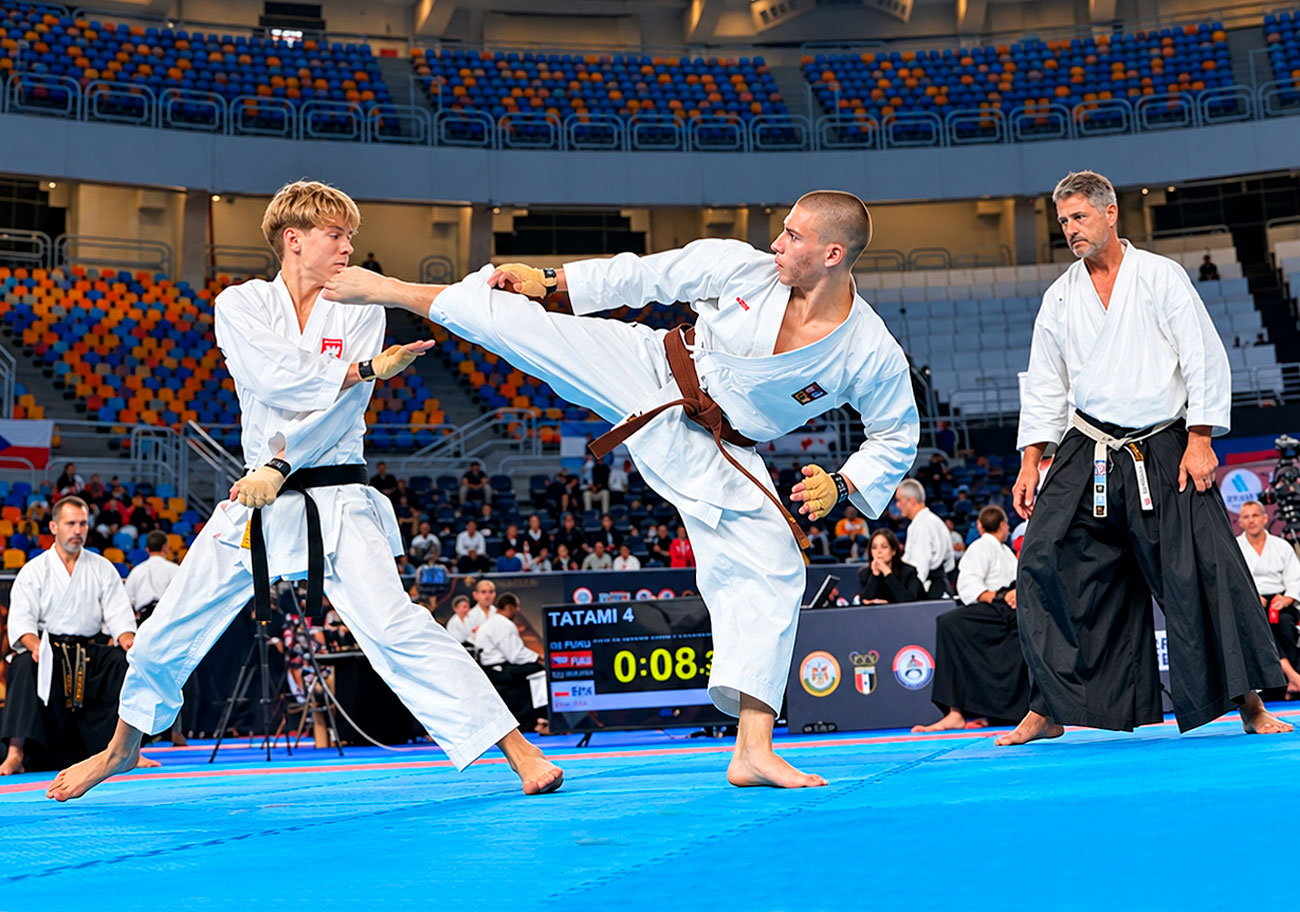
Contests highlight the high technical standard of the World Championship in Cairo © PUKT
In Portugal, the 2024 standings placed Egypt first, Brazil second, Poland third, Romania fourth and Portugal fifth. Two years later, Poland climbed two positions, while Egypt and Brazil each dropped one. Romania and Portugal remained fourth and fifth respectively.
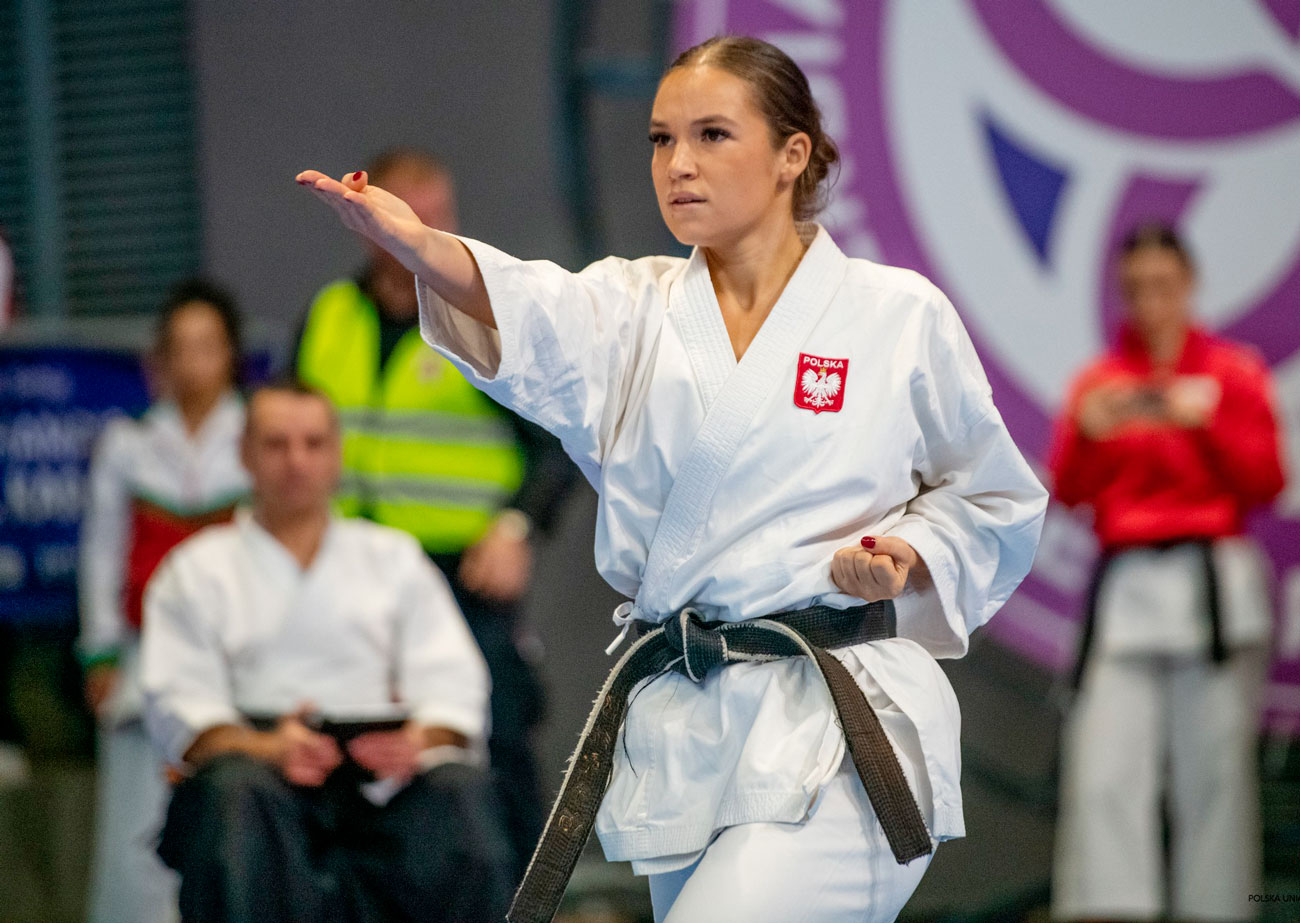
The same five countries therefore remain at the top, alongside a significant change in leadership. The group of contenders is unchanged, but the distribution of results shows that a position secured at one edition must be earned again at the next. For athletes and coaching teams, international experience provides a reference for their work without guaranteeing that a result will be repeated.
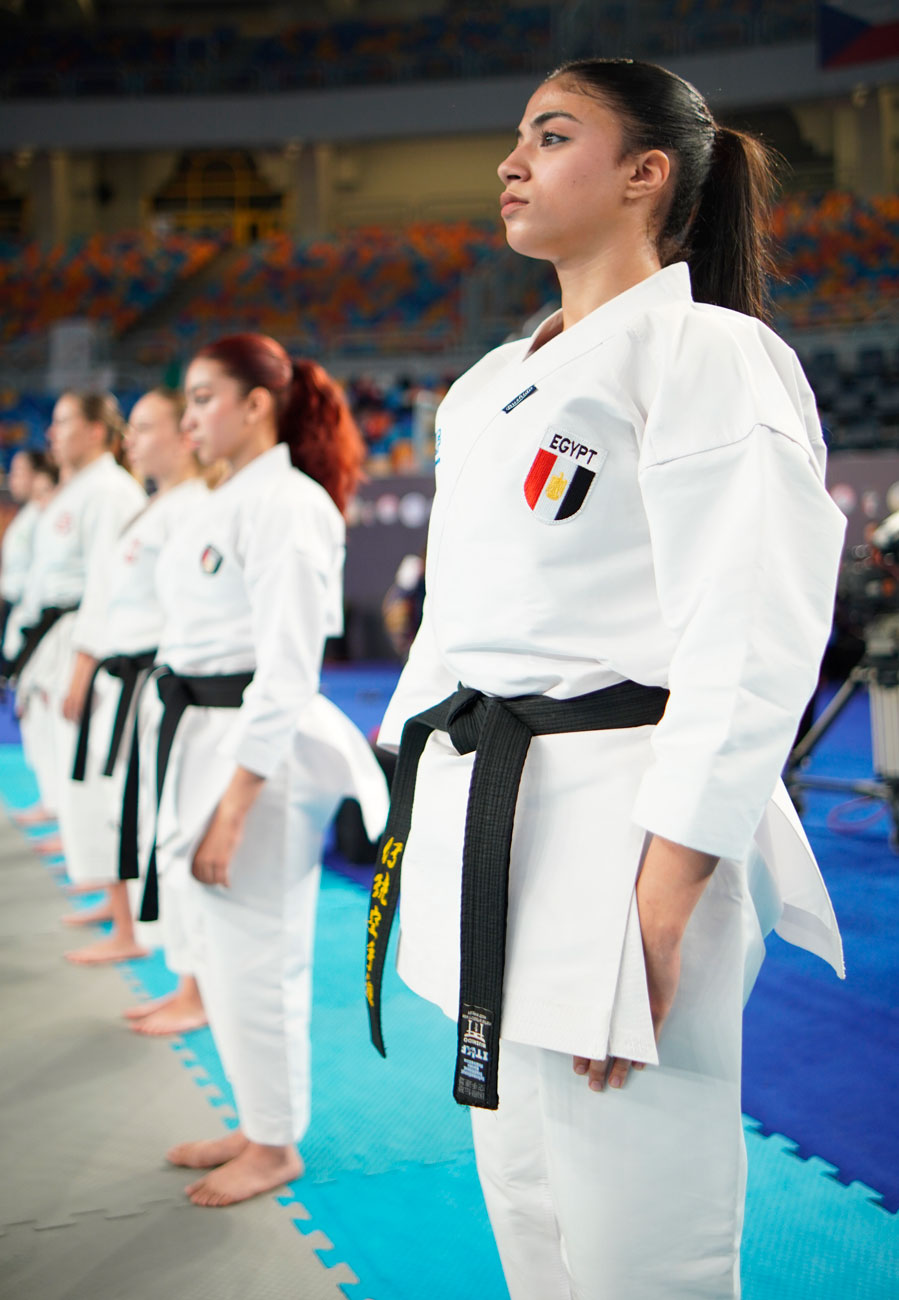
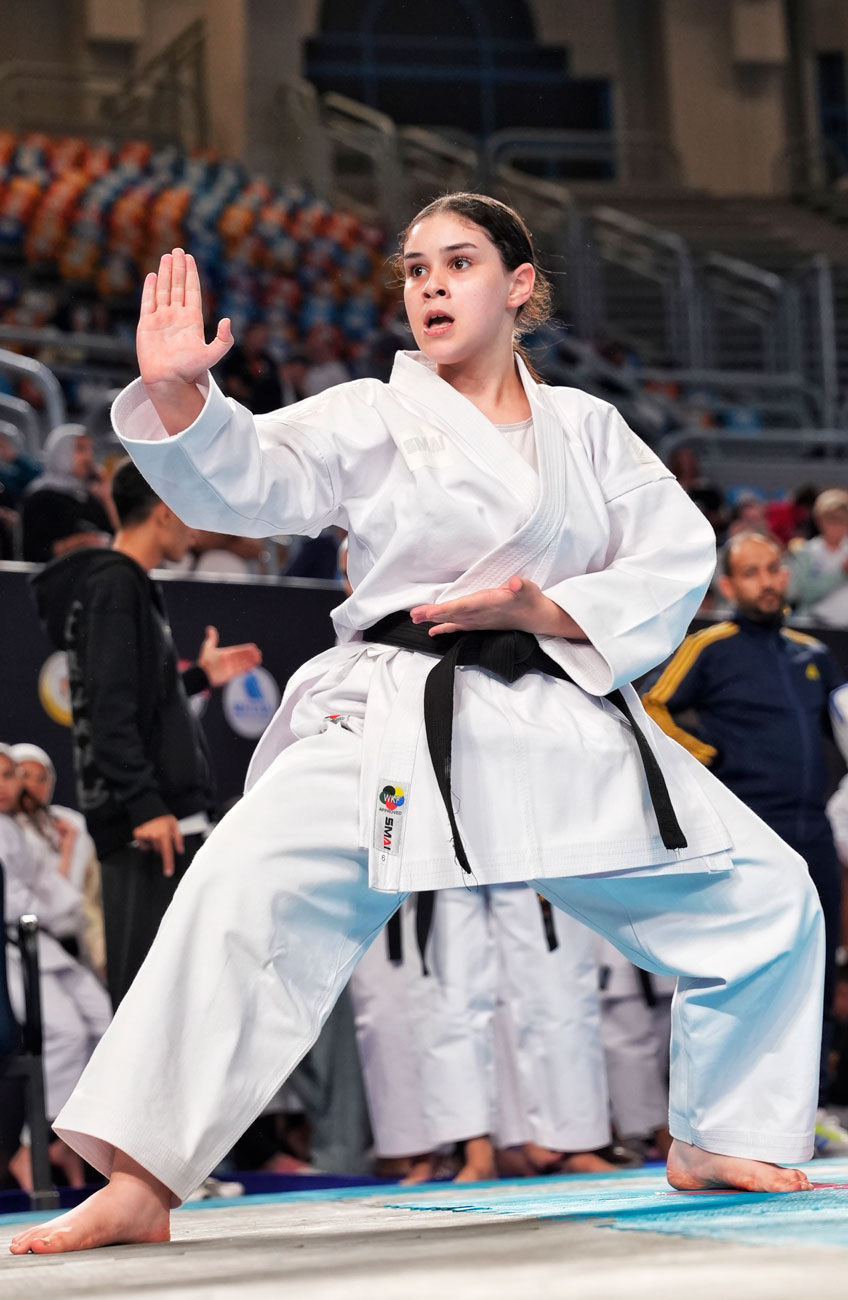
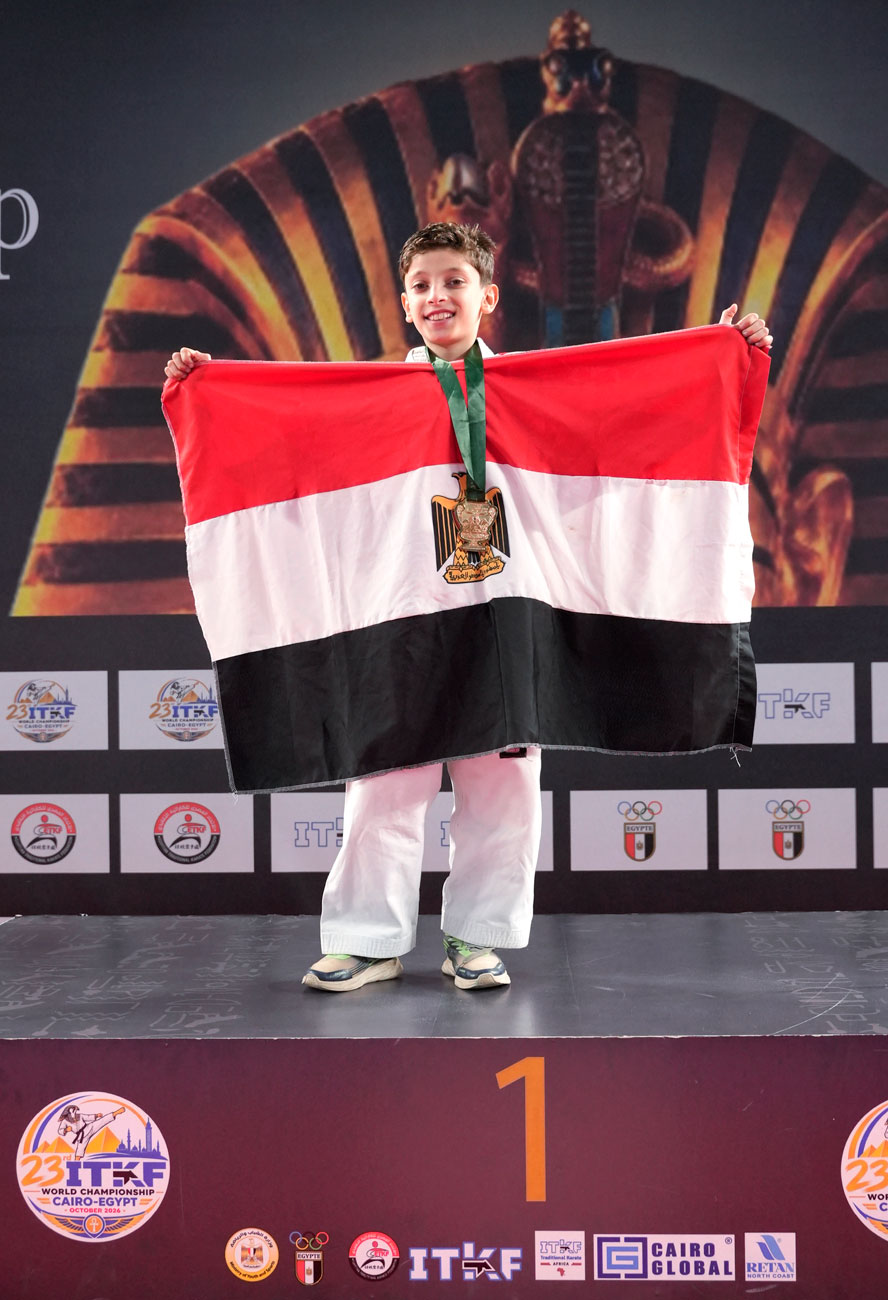
In the youth division, Jana Ayman won gold in individual kata, silver in team kata, bronze in women’s en-bu and fourth place in mixed en-bu; Radwa Ashraf took silver in team kata, reached the top eight in individual kata and finished ninth in fuku-go © ETKF
That perspective was already evident in the assessment of Paweł Janusz, president of the Polish Traditional Karate Union, when he spoke to Budo Magazine before departure. He described the 2024 campaign as the starting point for the next cycle, built around club training, assessments, competitions and periods of joint preparation.
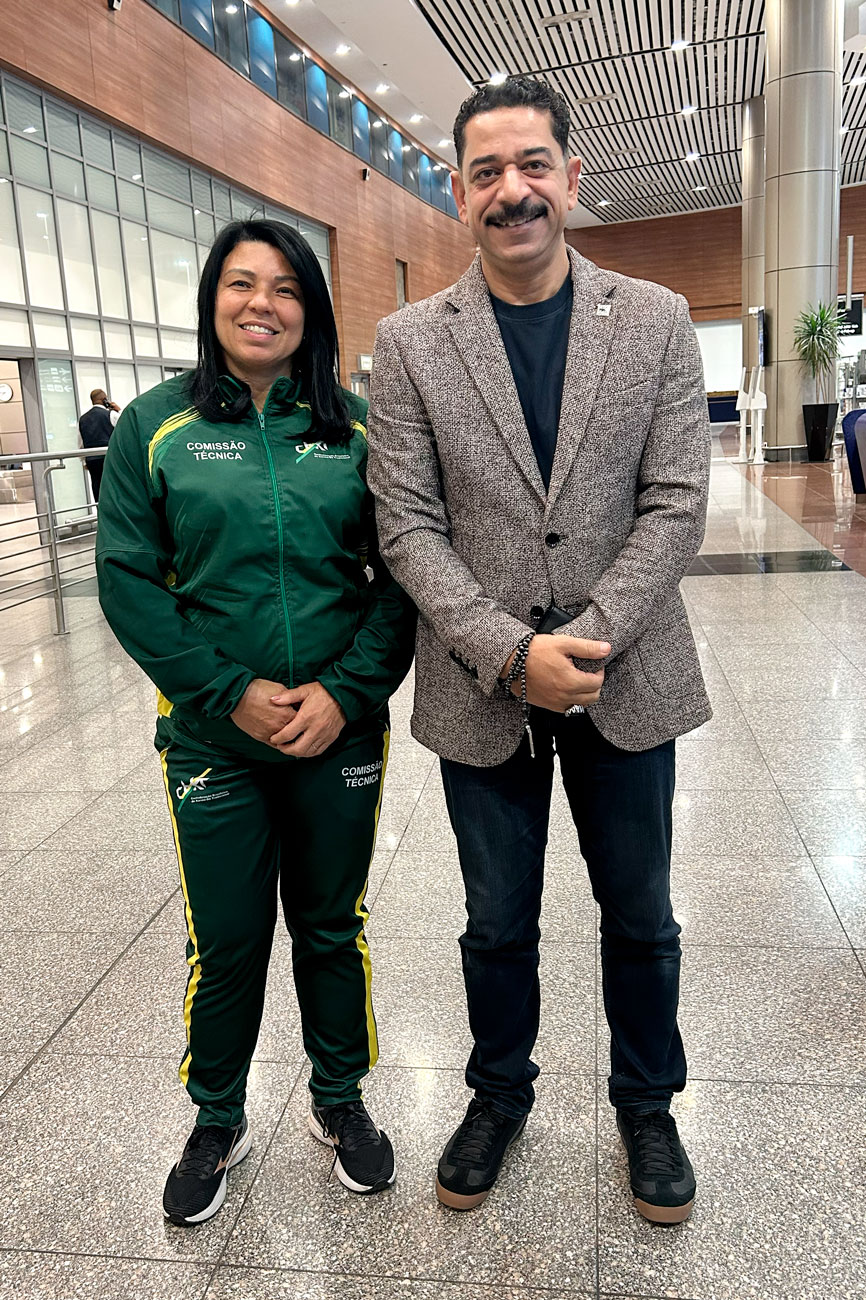
Ramy El-Mekawy, president of the Egyptian and African traditional karate federations, welcomes CBKT president Sônia Coutinho at Cairo International Airport © ETKF
“For me, third place was not the end of the process. It was the beginning of the next stage,” Paweł Janusz, president of the Polish Traditional Karate Union, told Budo Magazine in an interview before the World Championship in Cairo.
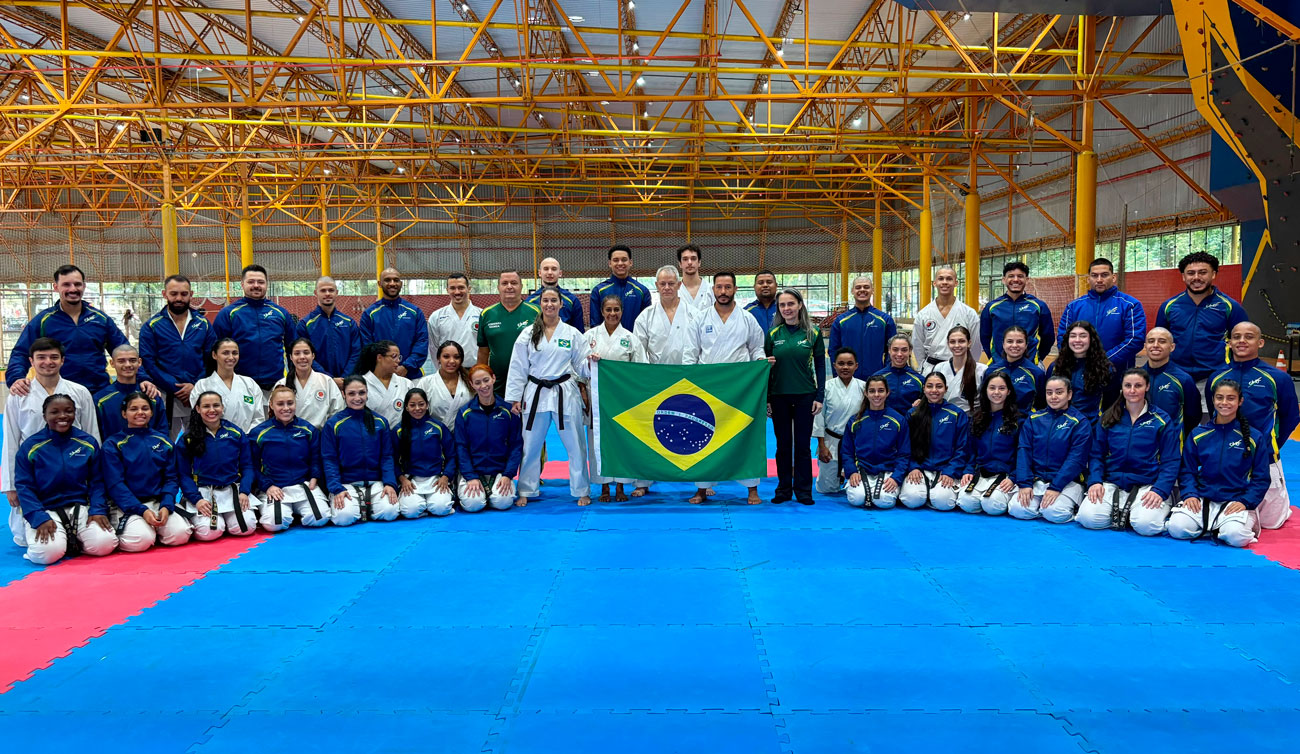
CBKT officials and members of the Brazilian national team at the World Championship in Cairo © CBKT
Made during the preparations, the statement gained further weight when Poland secured first place overall in Egypt. Janusz saw the bronze in Portugal as a foundation for progress and outlined a programme driven by that ambition. The 2026 campaign gave tangible expression to his vision: Poland pursued its stated objective and turned third place in 2024 into a world title.
“The 2026 overall medal standings record the achievements; understanding how they were built requires listening to those involved in the competition.”
In Cairo, Poland achieved its objective of moving up the rankings and took the world lead. Its campaign produced the highest number of gold medals and total medals among the top five teams, translating its pre-competition ambition into results.
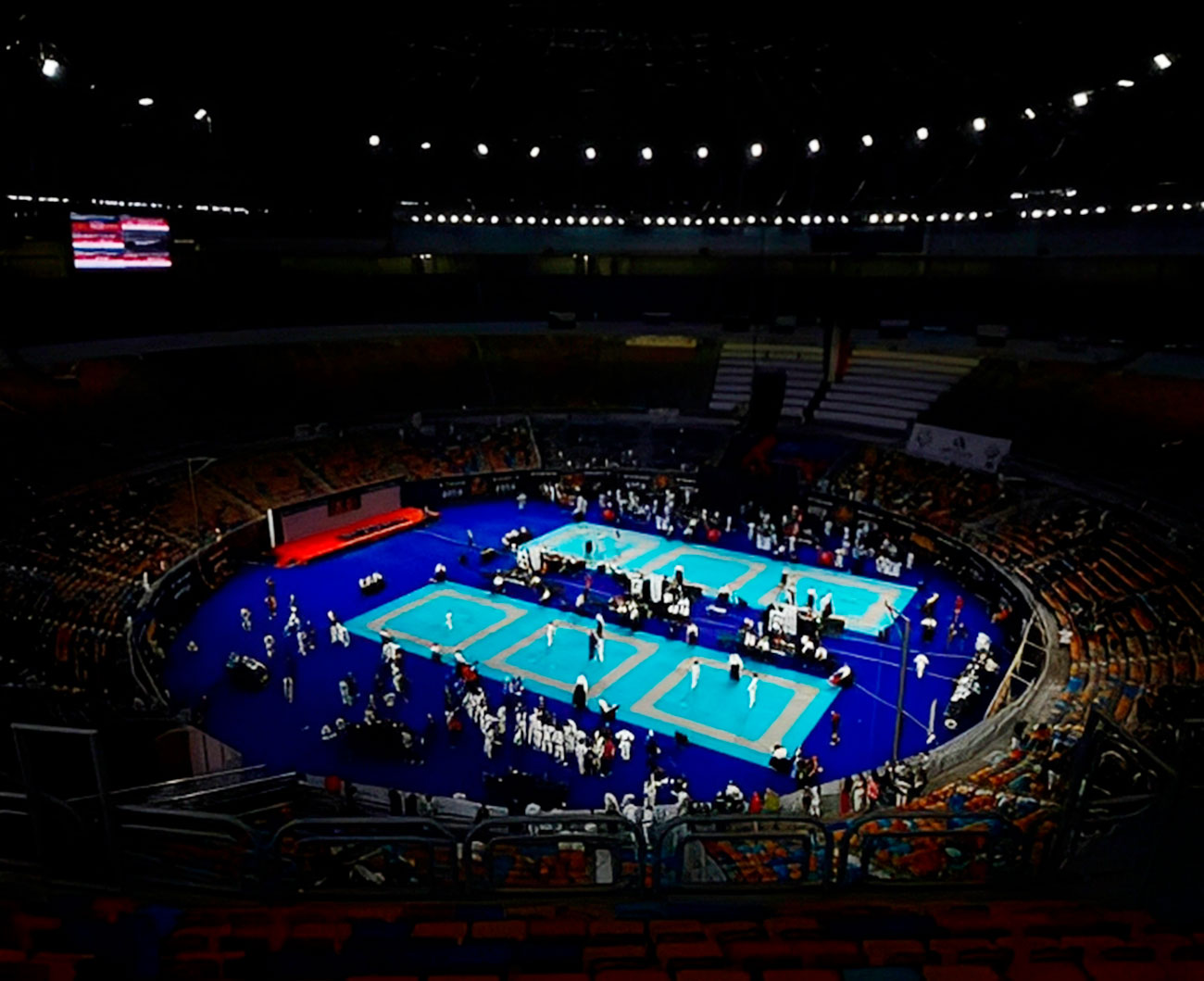
Aerial view of the six competition areas at the World Championship in Cairo © ETKF
Champion in Vila do Conde, Egypt hosted the World Championship and ended its campaign with ten gold, 14 silver and 23 bronze medals. Although it finished one place below its 2024 position, the country increased its medal total from 36 to 47 across the two editions. The runner-up finish kept the host nation among ITKF Global’s leading competitive forces.
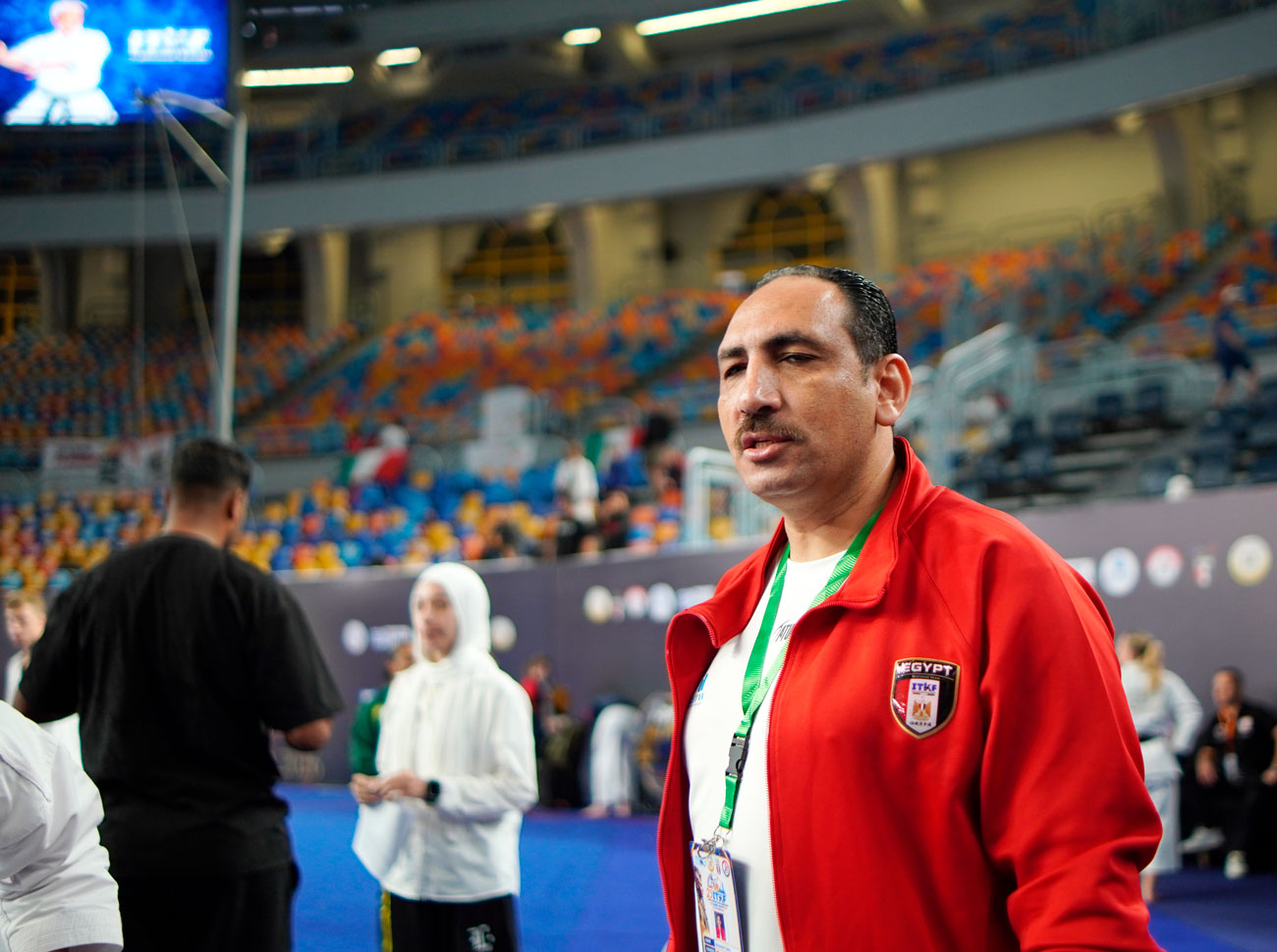
Mohamed Fawzy, technical director of the Egyptian national team © ETKF
Brazil won 12 gold, ten silver and 13 bronze medals. Its 35 podium finishes exceeded the 27 achieved in Portugal but yielded third place overall. Champion in 2022 and runner-up in 2024, Brazil remained in the top three for a third consecutive World Championship.
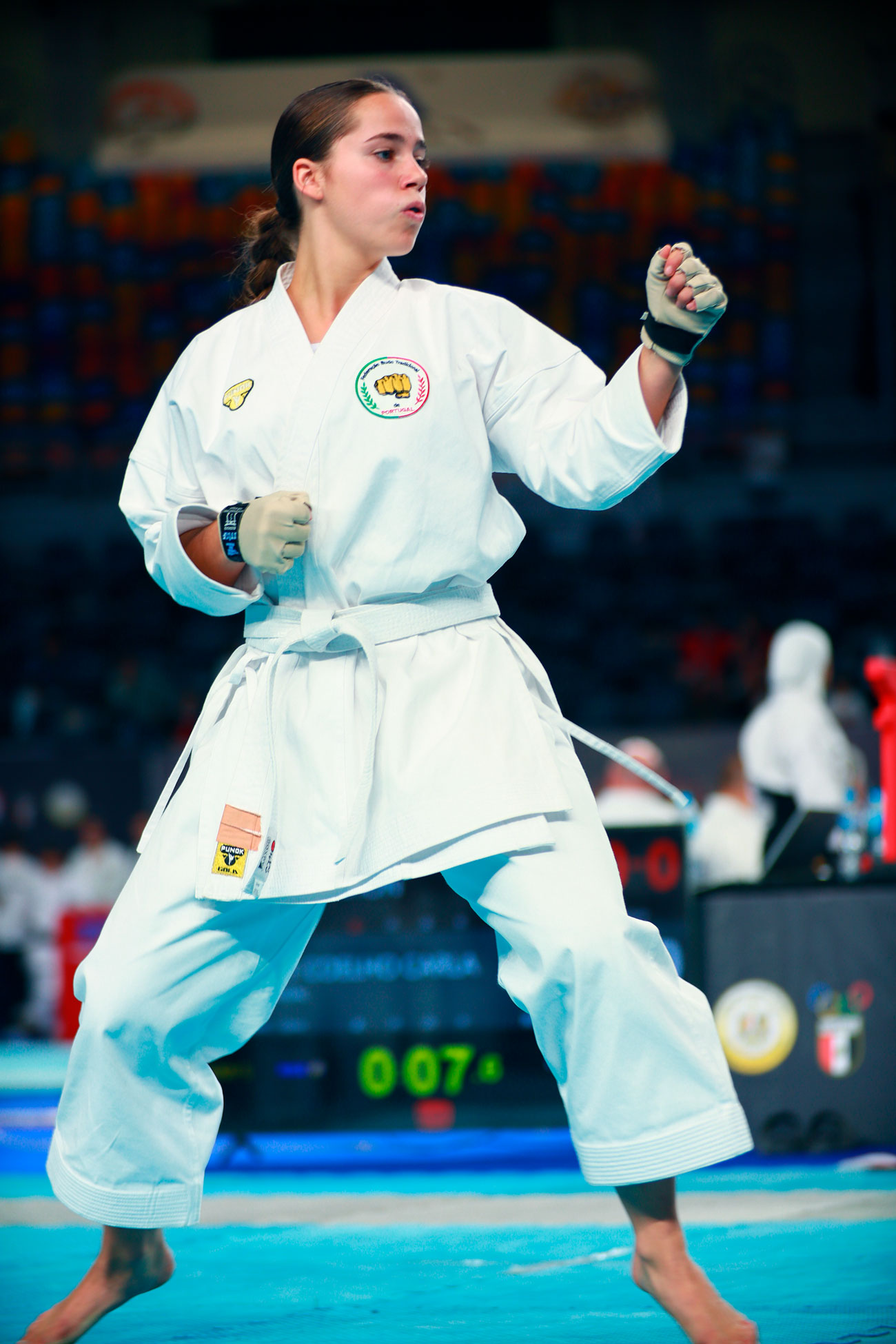
Portuguese athletes shine once again at the World Championship in Cairo © ETKF
The classification criteria require careful attention. The official order follows the points shown in the competition report, rather than gold medals alone. Brazil’s 12 first-place finishes therefore did not put it ahead of Egypt, which accumulated 295 points to Brazil’s 248. Medals and the other recorded placings contribute to the collective performance presented in that document.
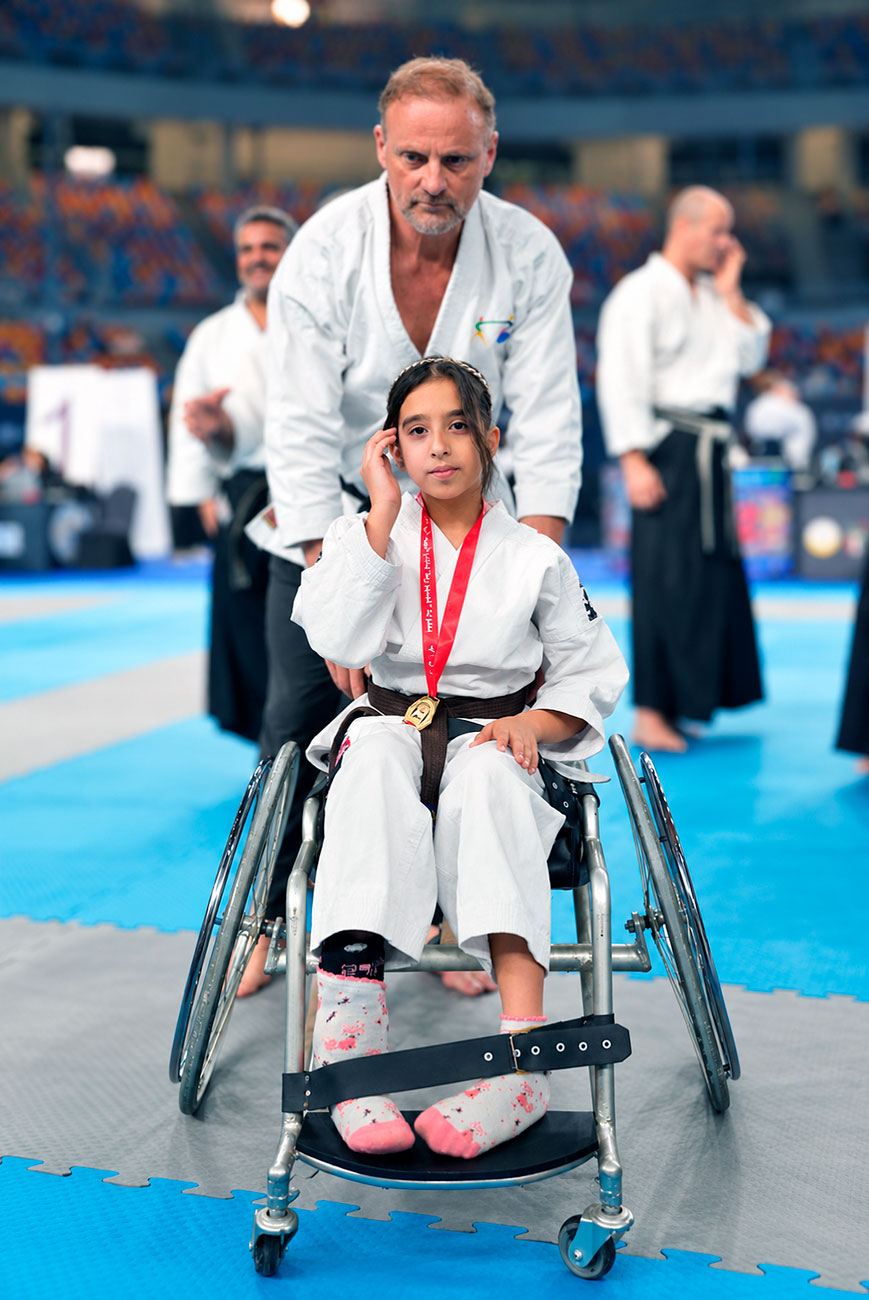
Coordinated by Eric Bortels, with the support of Roman Pavlovic, chairman of ITKF Europe, inclusive karate was a highlight of the World Championship in Cairo, opening further pathways to participation and personal development through Budo © ETKF
During the preparations covered by Budo Magazine, Brazil and Egypt had highlighted the combination of experience, renewal and responsibility towards their opponents. In the final standings, both remained on the overall podium, now behind Poland.
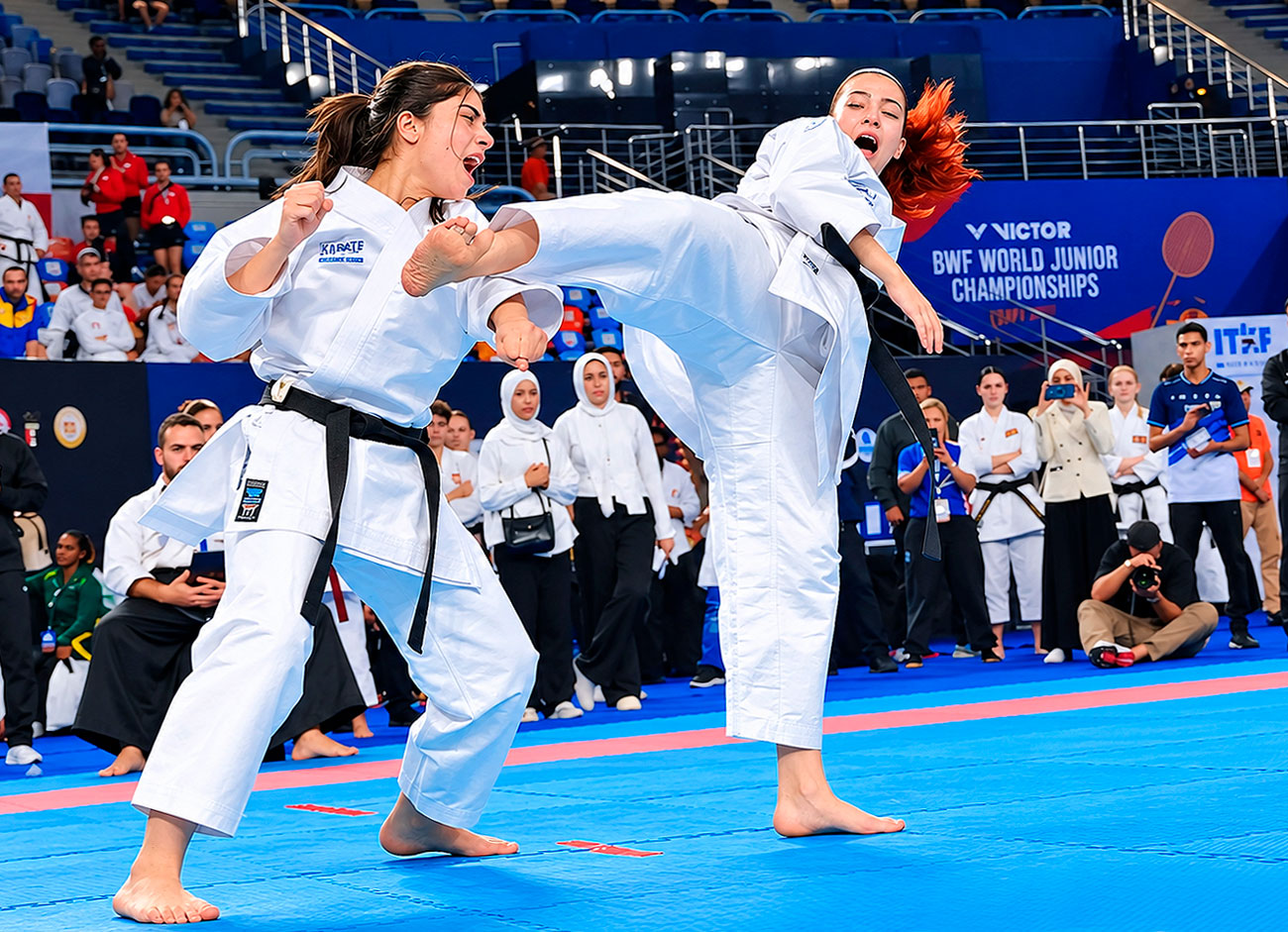
Romania finished fourth with ten gold, five silver and 12 bronze medals, a total of 27 medals and 185 points. It occupied the same position as in 2024, when it won four gold, eight silver and 14 bronze medals. The team thus retained its ranking with a different distribution of results and a higher number of first-place finishes.
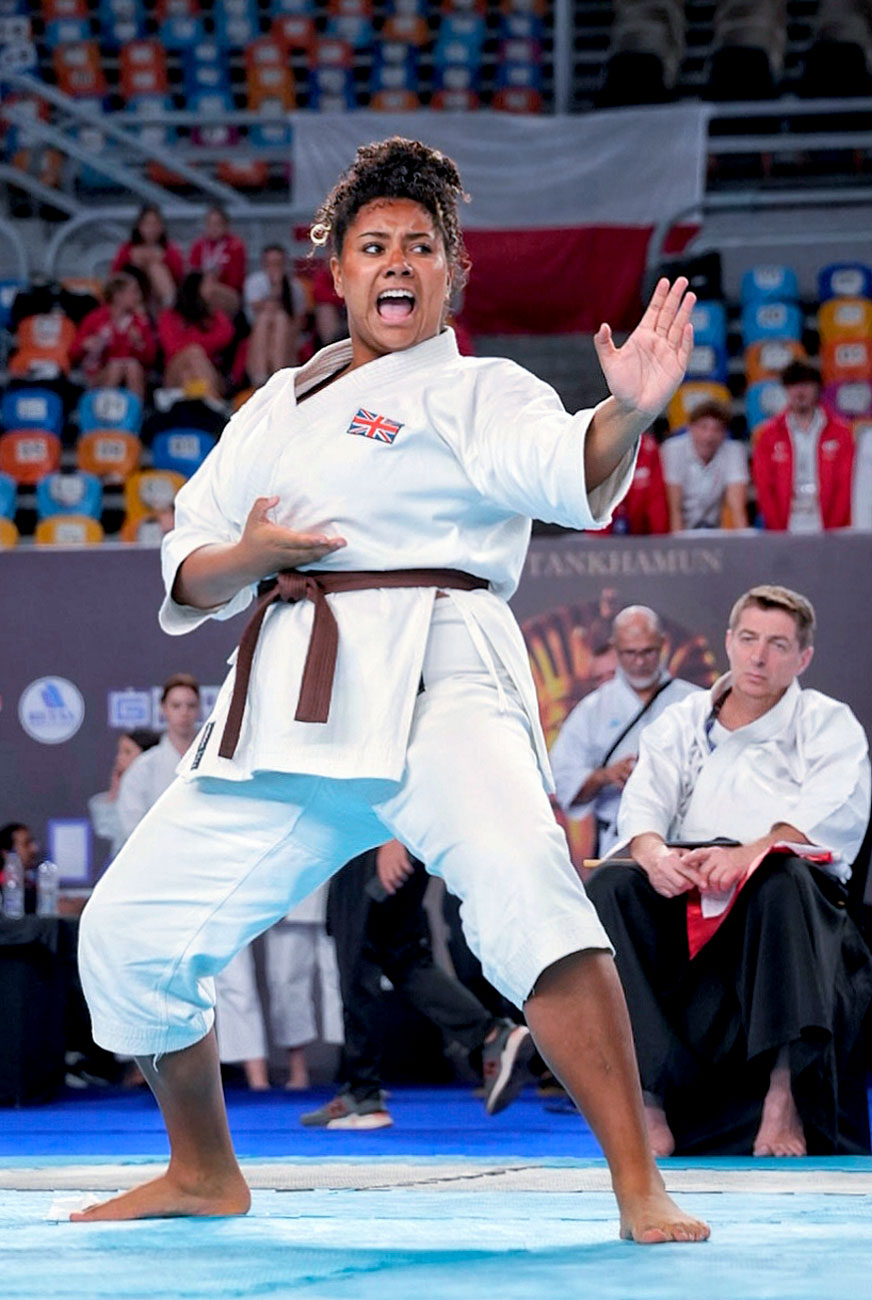
Discussing Romania’s preparations in Budo Magazine’s series, Cornel Mușat had emphasised the shared work of the coaches and the need to rebuild performance at every championship. Fourth place in Cairo kept the national team among the contenders for the sport’s leading positions.
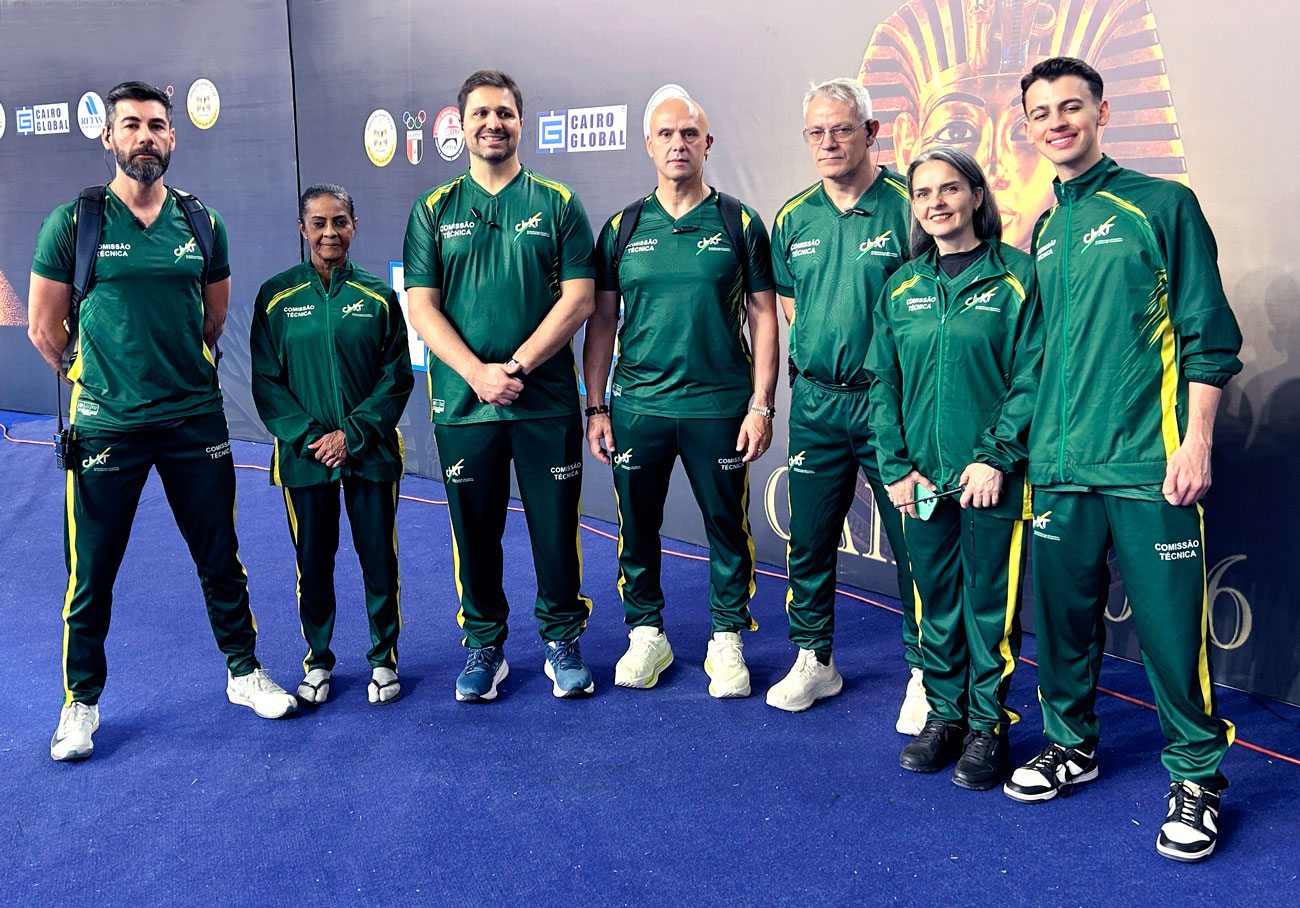
Brazilian officials and coaching staff in Cairo © CBKT
Portugal completed the top five with two gold, four silver and two bronze medals, along with 58 points. The team retained the fifth place it achieved at home in 2024, although its medal tally fell from 15 to eight. Remaining among the top five represents continuity in the rankings; the difference in podium finishes will be one factor in the technical assessment of its campaign.
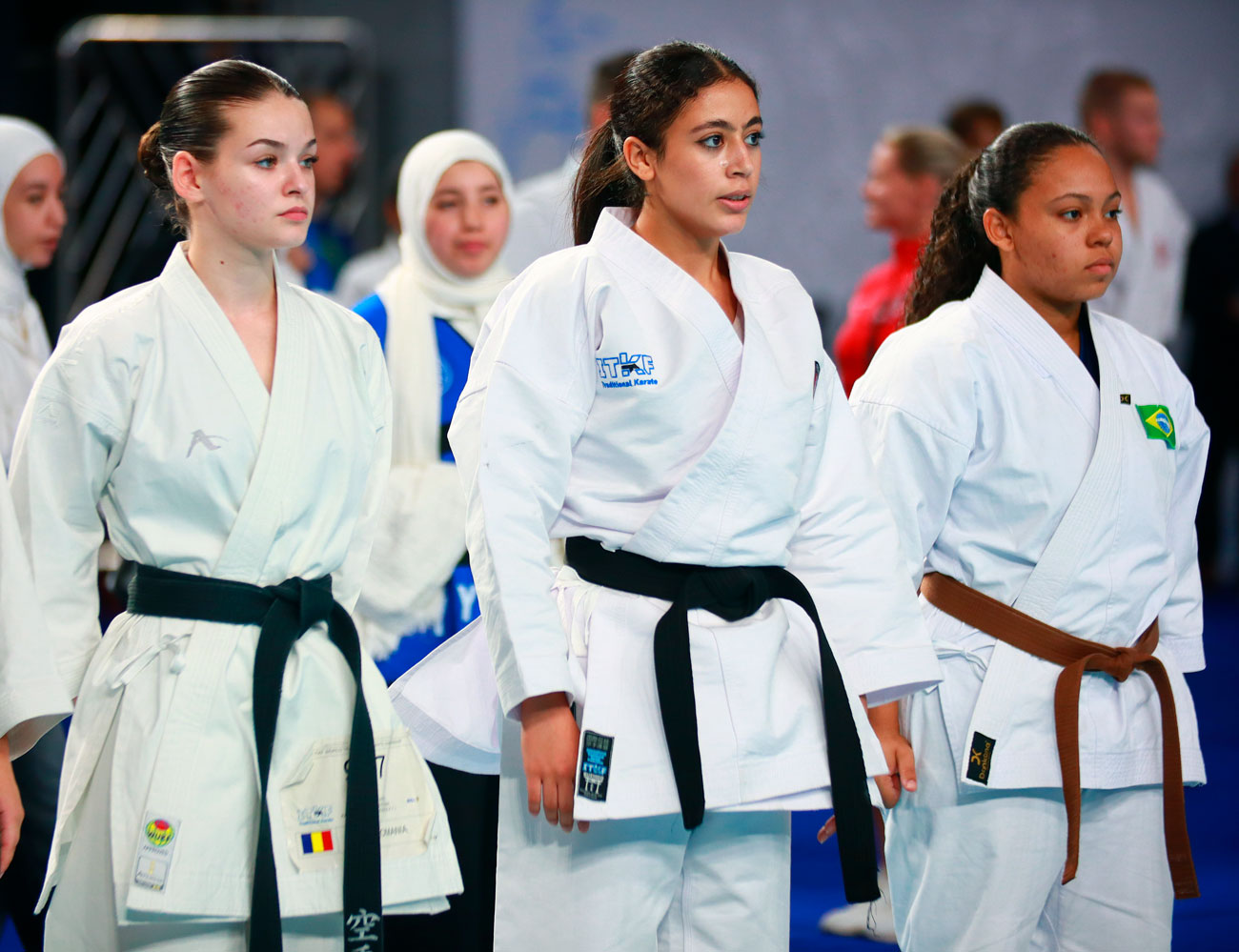
The World Championship in Cairo brings together different schools of traditional karate and promotes technical exchange between continents © ETKF
Before the World Championship, national coach Marco Silva had described the trip as “Mission Pharaoh”, linking preparation to strengthening the group and building on the athletes’ experience. The result places Portugal alongside Poland, Egypt, Brazil and Romania in the assessment of the five highest-ranked national teams.
The official results books record 1,236 event entries in Cairo, compared with 892 in Vila do Conde. The difference of 344 entries represents growth of 38.6%. In the field recording athlete numbers, the documents list 476 entrants in 2026 and 355 in 2024, an increase of 34.1%.
These are distinct indicators: an athlete may compete in more than one event. The increase in entries reflects growth in the recorded volume of competition, while athlete numbers indicate the size of the registered field at each edition. Any comparison of sporting results must also take the respective event programmes into account.
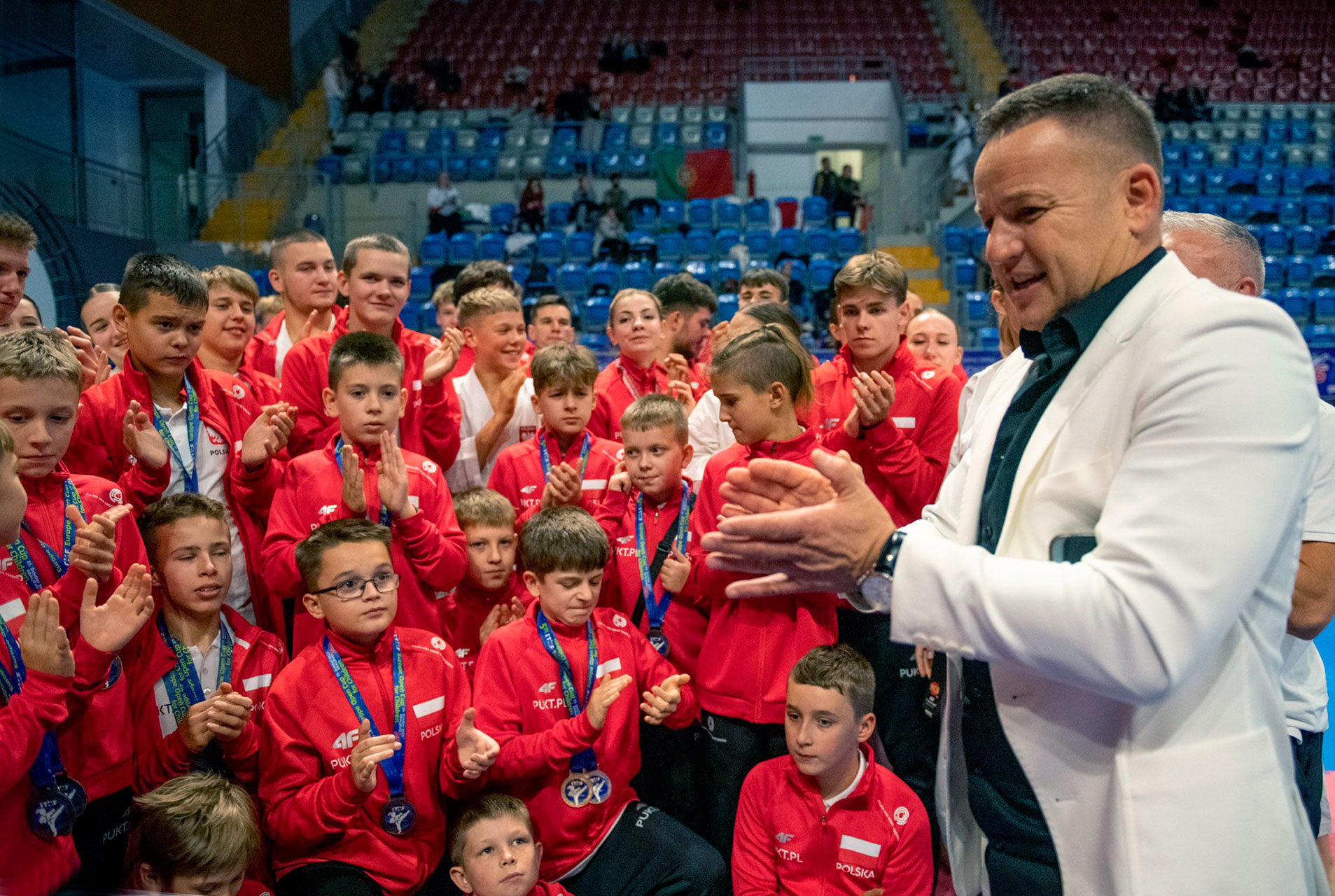
Applauded by young athletes, PUKT president Paweł Janusz shows his charisma and leadership with the generation that represents the future of Polish traditional karate © PUKT
The presence of representatives from Africa, the Americas, Asia and Europe brought together different schools and backgrounds in training. On the tatami in Cairo, that exchange found expression in individual performances, team events and the work of the staff supporting the competitors.
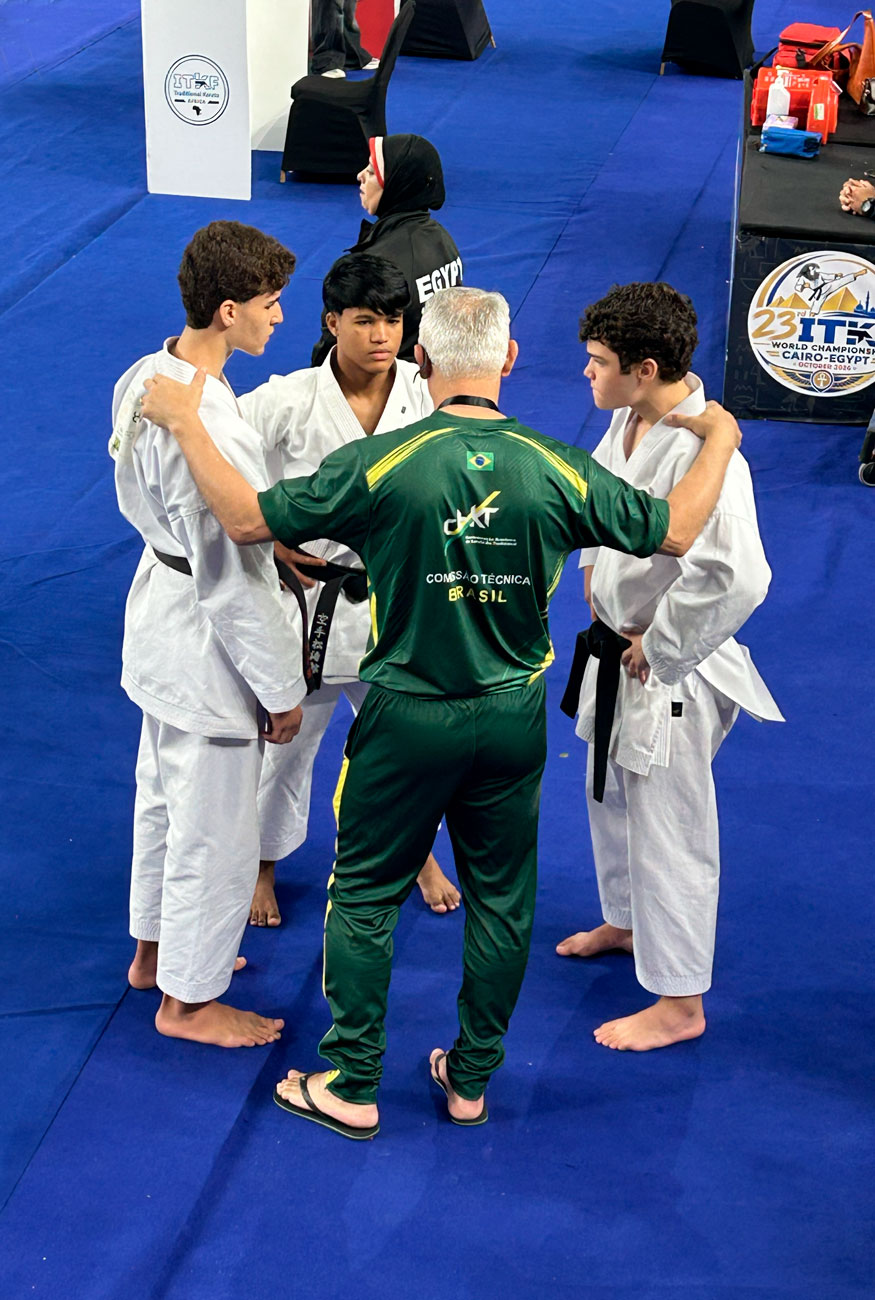
Nelson Santi, coach of the Brazilian national team’s adult and master divisions, makes final adjustments with the athletes © CBKT
Competition between national teams that know one another and meet again at each World Championship can encourage technical improvement without turning an opponent into an enemy. In traditional karate, that rivalry finds its meaning in the spirit of Budo: competing with determination, respecting the opponent and taking responsibility for one’s behaviour on and off the tatami.
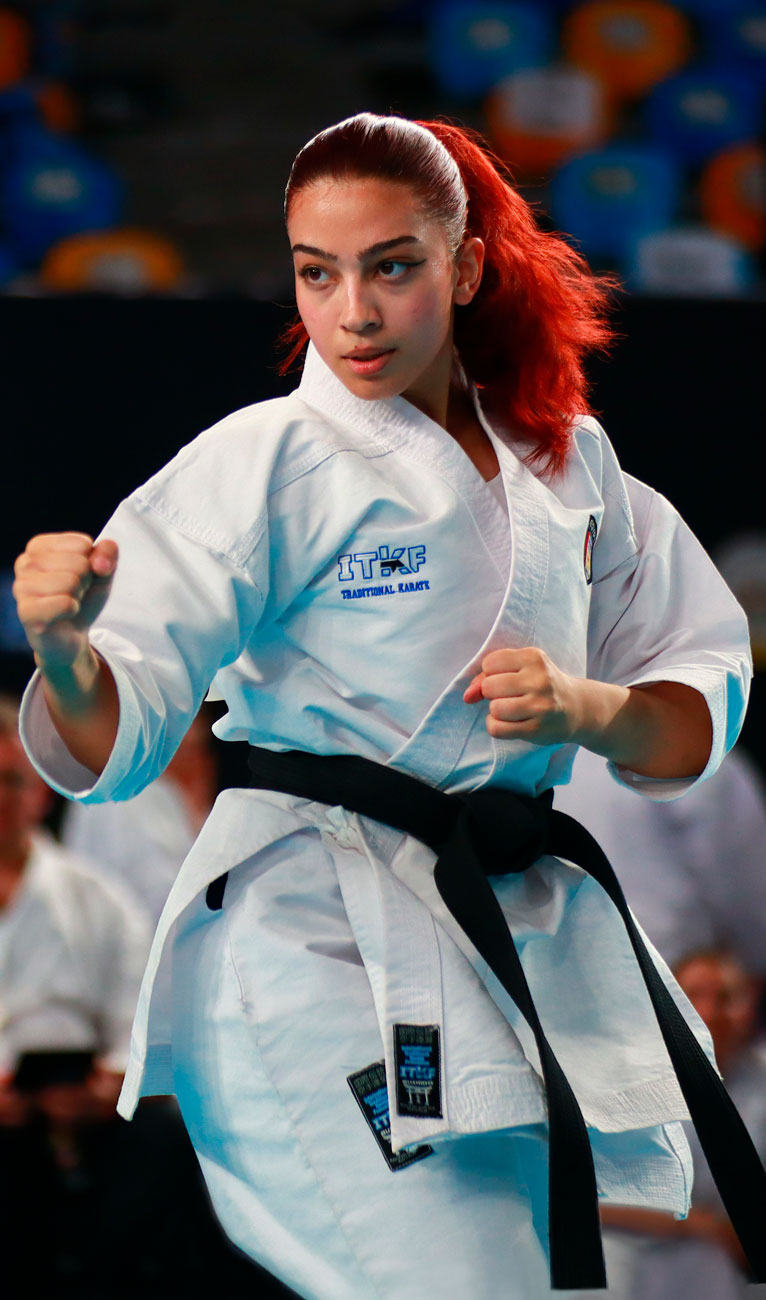
Youth athlete Jana Ayman won bronze in women’s en-bu, finished fourth in mixed en-bu and took gold in individual kata and silver in team kata at the World Championship in Cairo © ETKF
Fair play is expressed through respect for the rules, discipline and recognition of sporting merit. In the organisation of an event, the same values demand clear criteria, consistent procedures, transparency and accountability in the application of regulations. Integrity and compliance are part of that commitment to athlete protection and the credibility of competition.
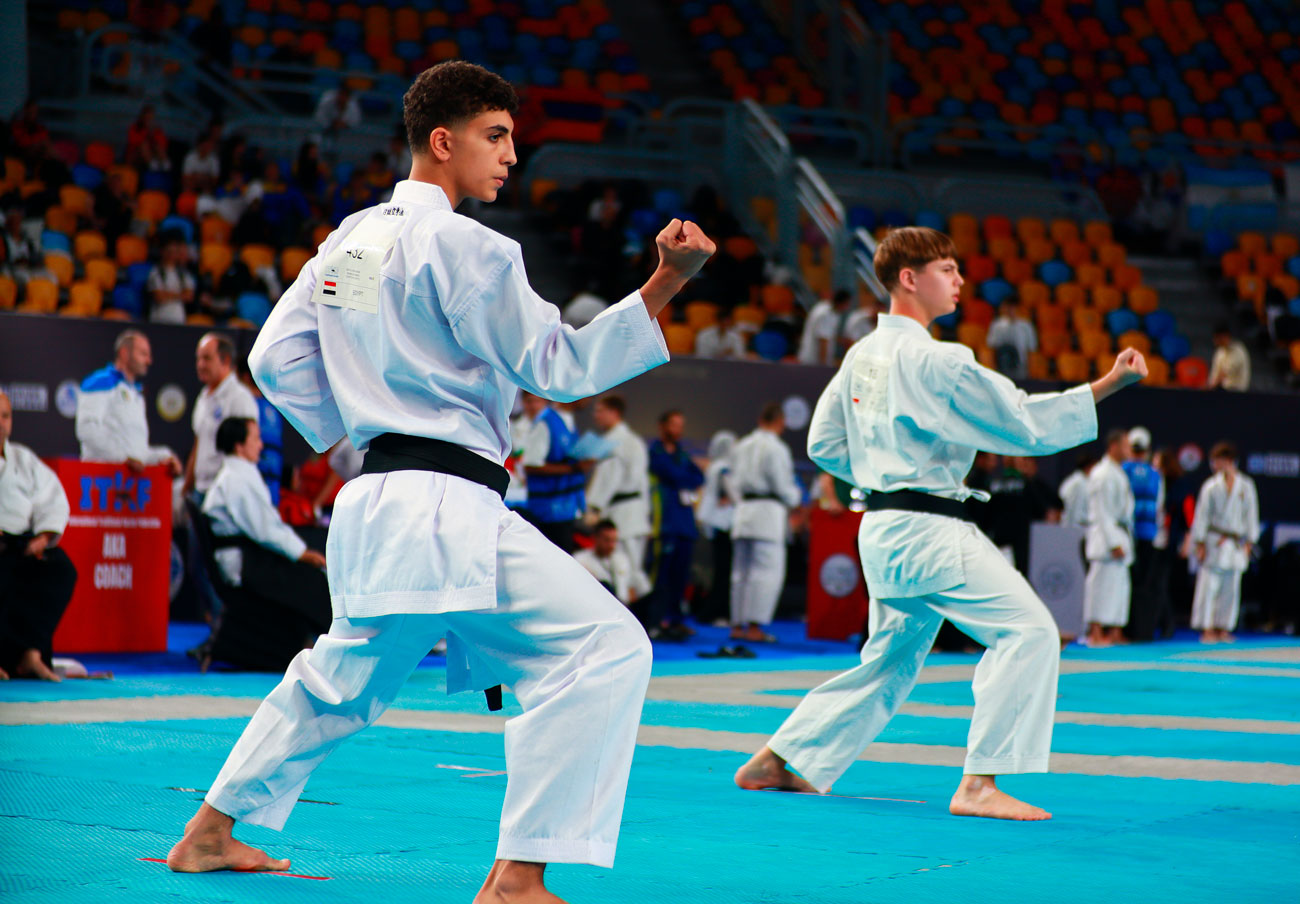
The relationship between performance and personal development ran through the interviews Budo Magazine conducted before the World Championship. Reflecting on the legacy passed to new generations, Cornel Mușat placed a practitioner’s conduct at the heart of that journey.
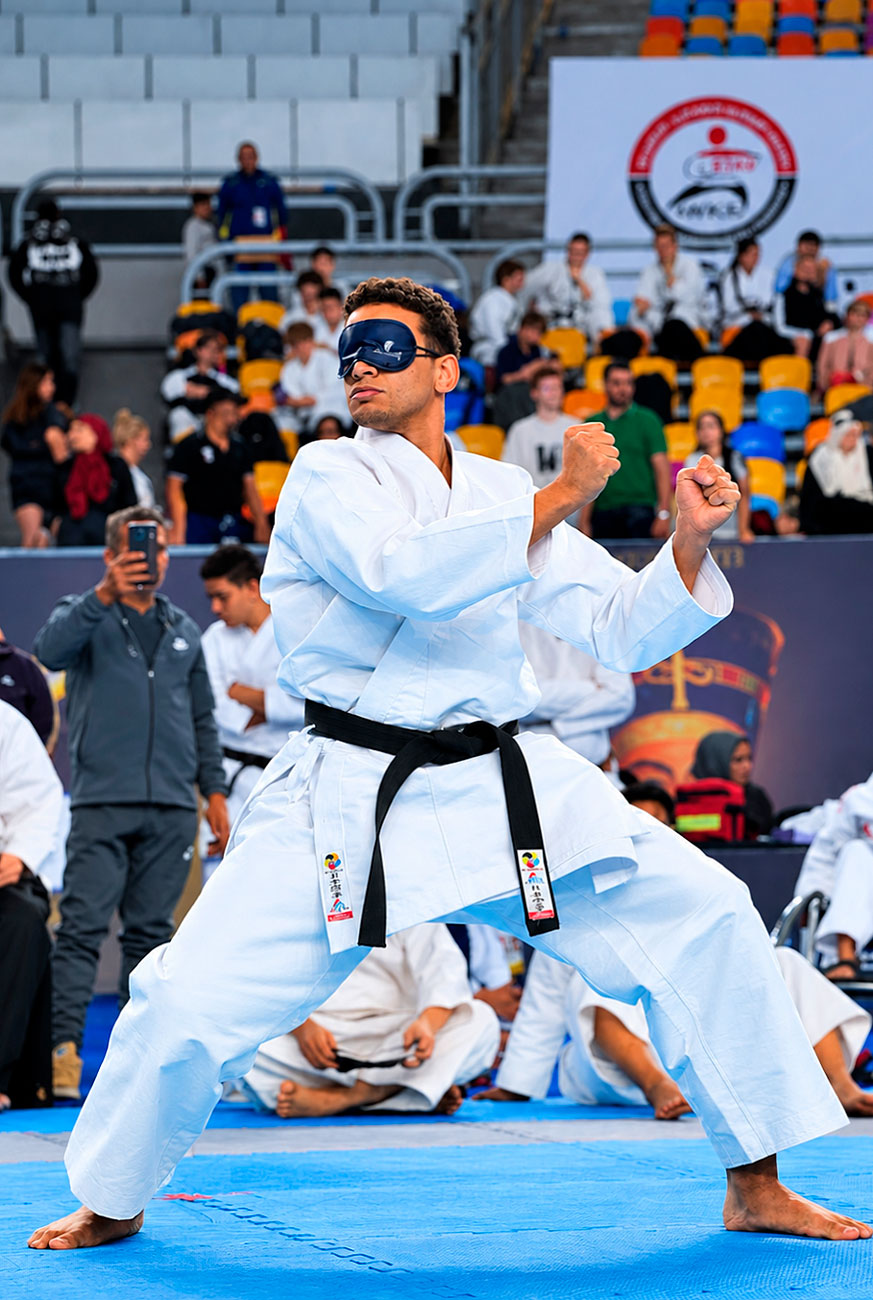
An athlete with visual impairment performs kata in the para-karate events at the World Championship in Cairo © ETKF
“Medals are important and deserve to be valued, but they do not define a practitioner’s worth. What truly sets a practitioner apart is how they behave on and off the tatami,” said eight-time world champion Cornel Mușat in an interview with Budo Magazine during the preparations for the World Championship in Cairo.
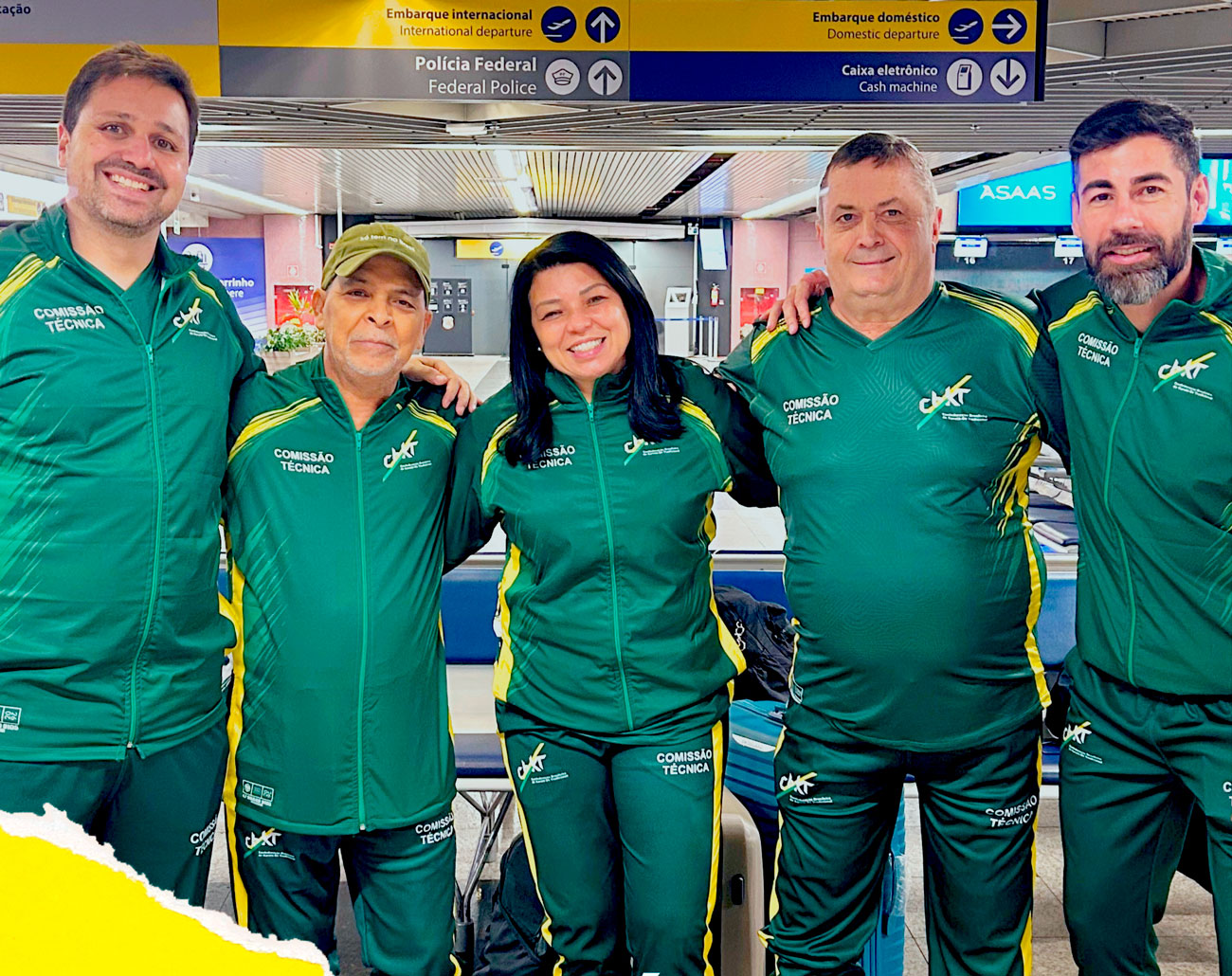
CBKT officials depart for Cairo: Vinícius Sant’Ana Pinto, technical coordinator; Sérgio Bastos, technical director; Sônia Coutinho, president; Paulo Uchoa, finance director; and Rafael Alves, executive director © CBKT
Poland returns from Cairo as world champion. Egypt, Brazil, Romania and Portugal retain their places among the top five national teams, with results that provide new reference points for the next cycle. The final standings record the achievements; understanding how they were built requires listening to those involved in the competition.
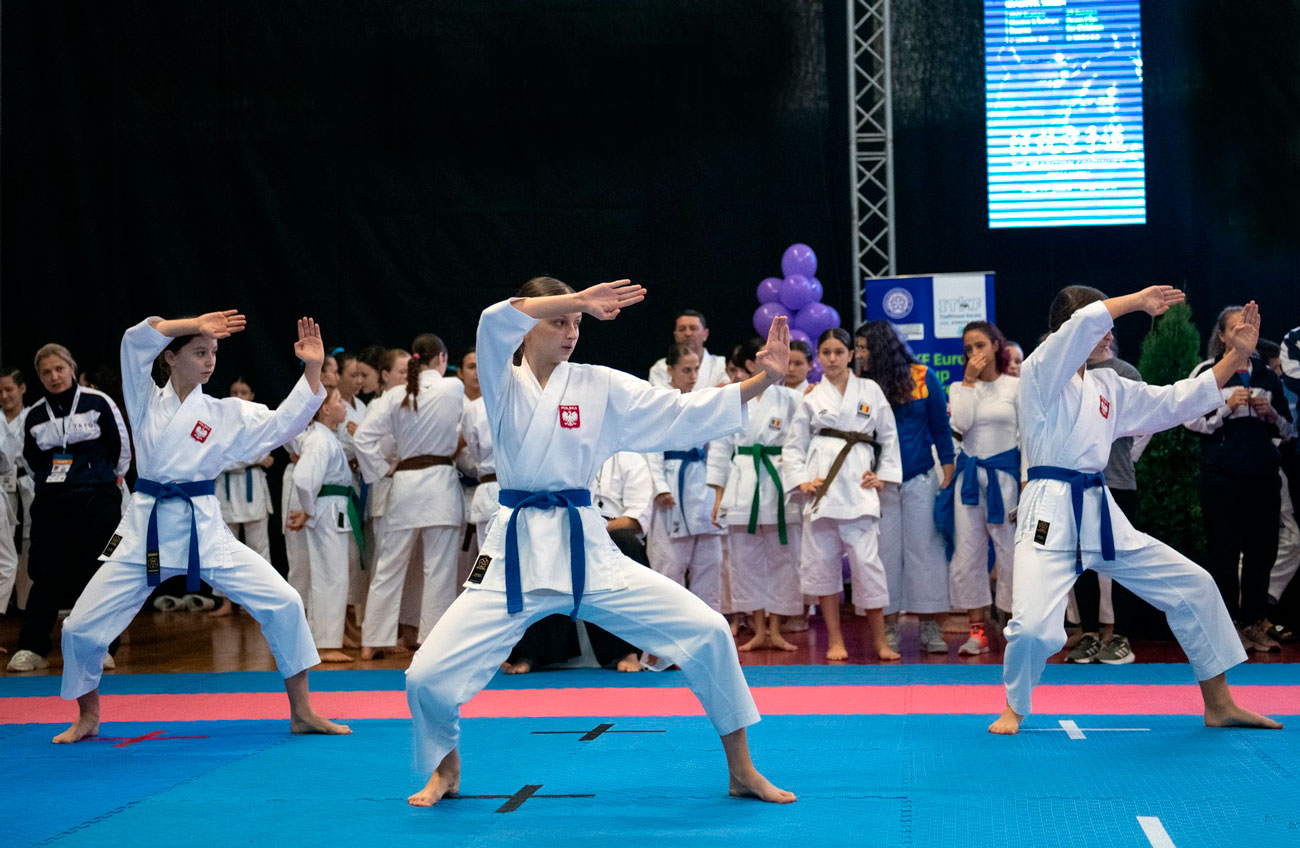
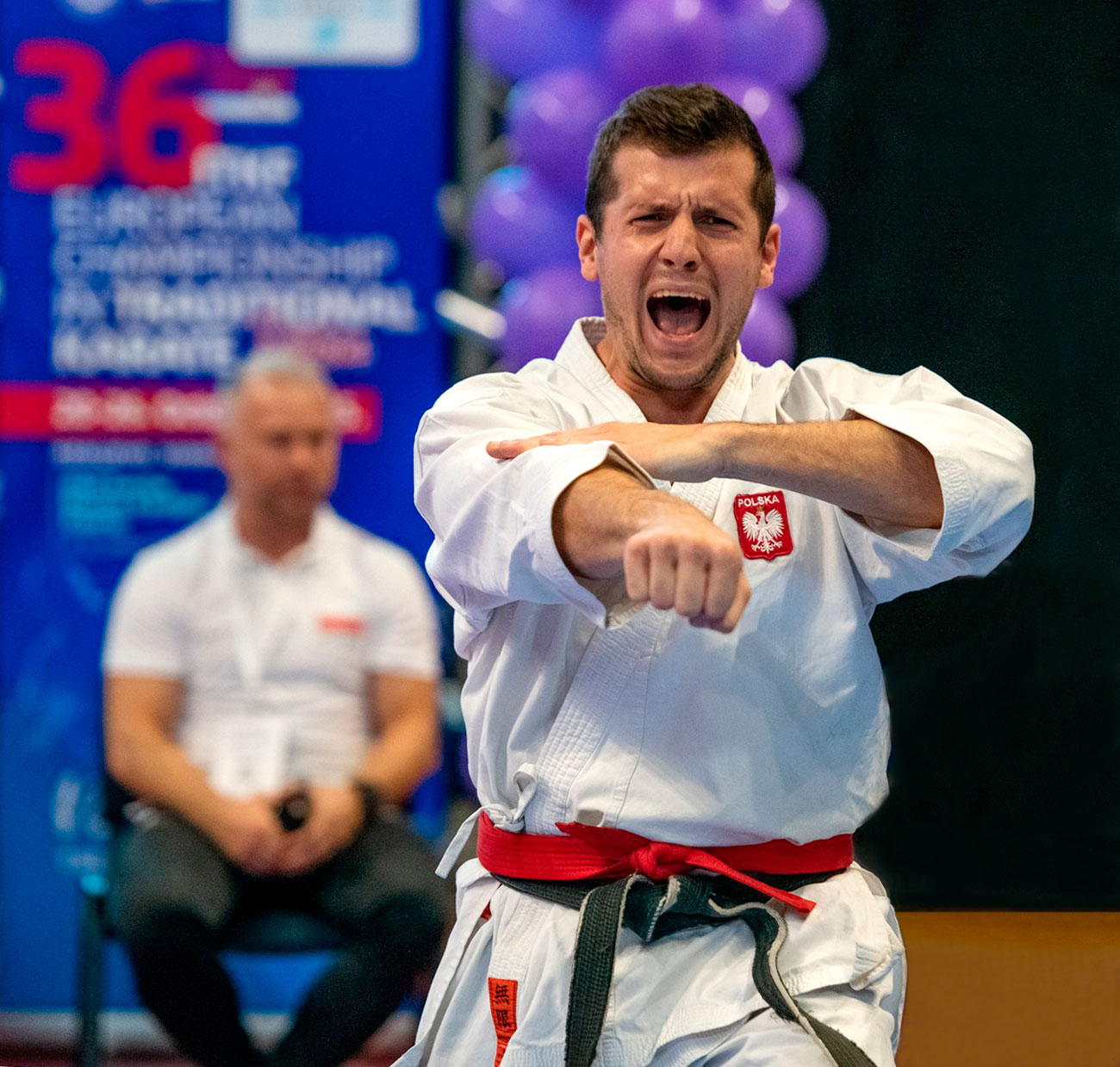
Women’s team kata contributed to Poland’s first place overall at the World Championship in Cairo © PUKT
Next week, Budo Magazine will continue its coverage of the 2026 ITKF Global World Championship with a report dedicated to the accounts of delegation leaders and coaches from the five national teams, the athletes’ experiences and the work of the referees. It will explore the championship in greater sporting depth and show how preparation, performance and refereeing relate to the spirit of Budo.
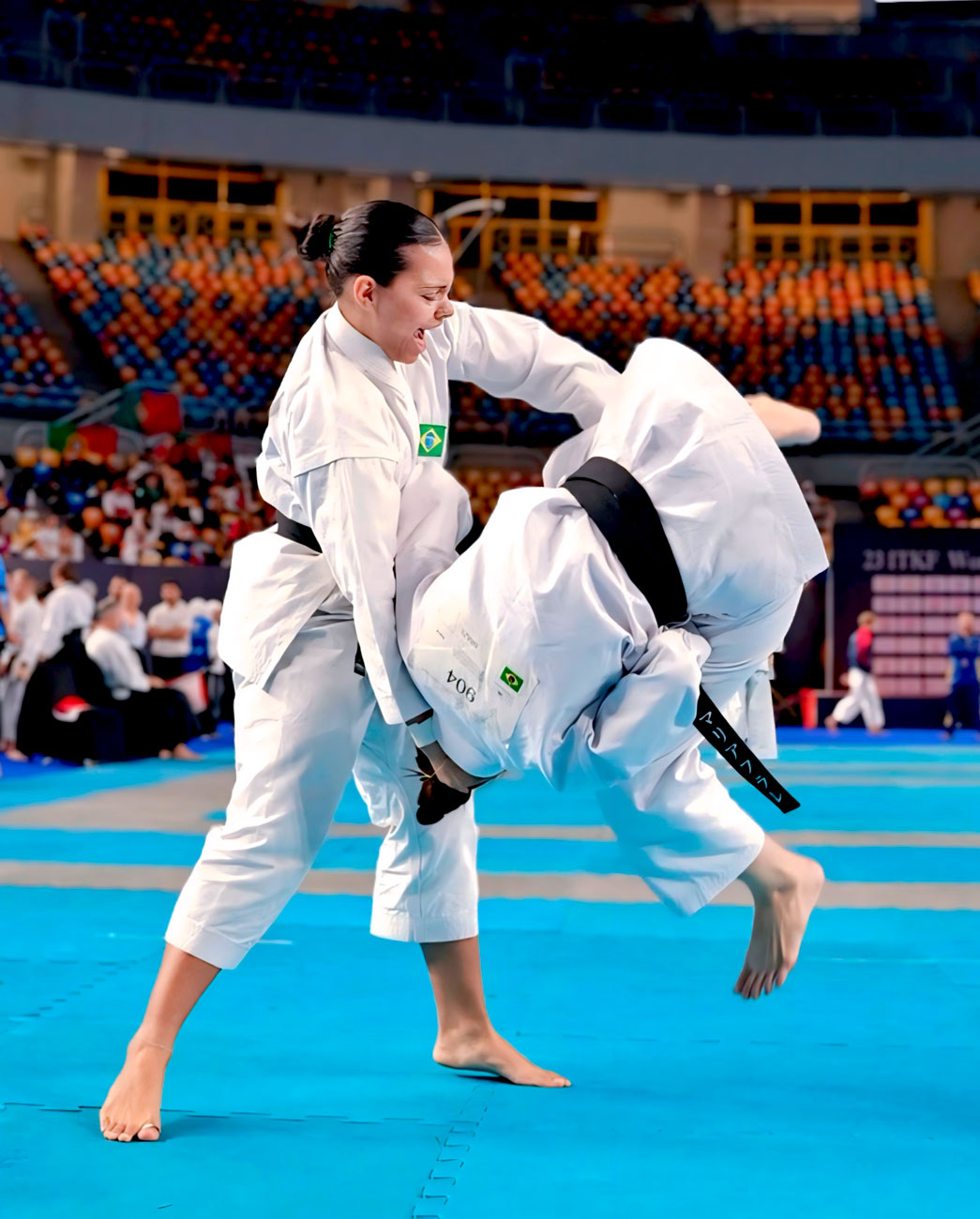
Long before welcoming athletes, coaches and referees from different countries, Egypt was already a place of encounter, the exchange of knowledge and the creation of a cultural memory that would endure for millennia. The ancient Egyptians called their land Kemet, the Black Land, a reference to the fertile soil of the Nile Valley. In Cairo in 2026, that heritage provided the ITKF Global World Championship with a setting whose significance extended beyond the competition venue.
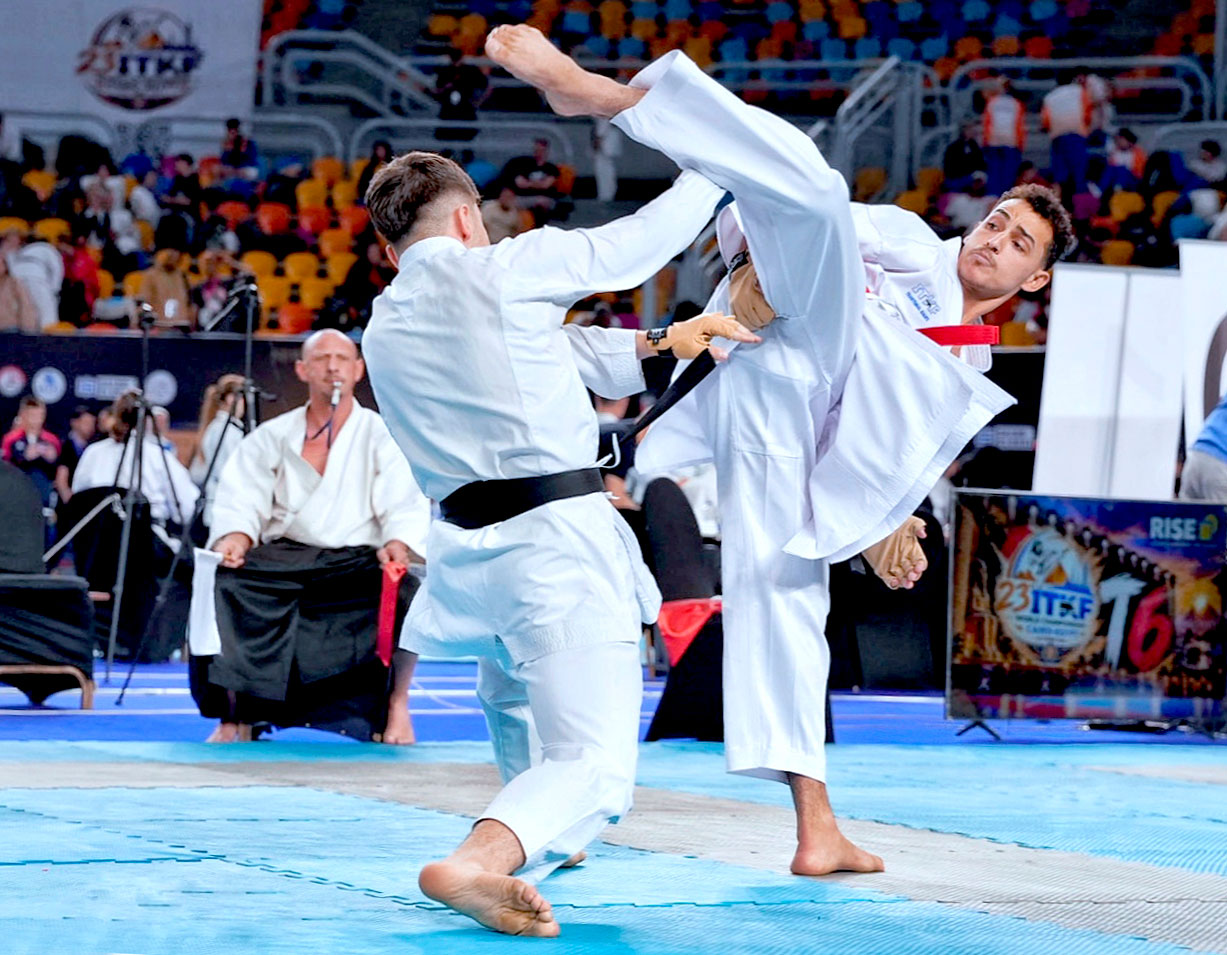
The connection with Budo emerges here from a reflection on continuity and transmission. A tradition remains alive when people are willing to study it, practise it and pass it on to the next generations. In karate, that commitment takes shape in the daily work of the dojo, the guidance of teachers and the students’ willingness to repeat, understand and refine each fundamental.
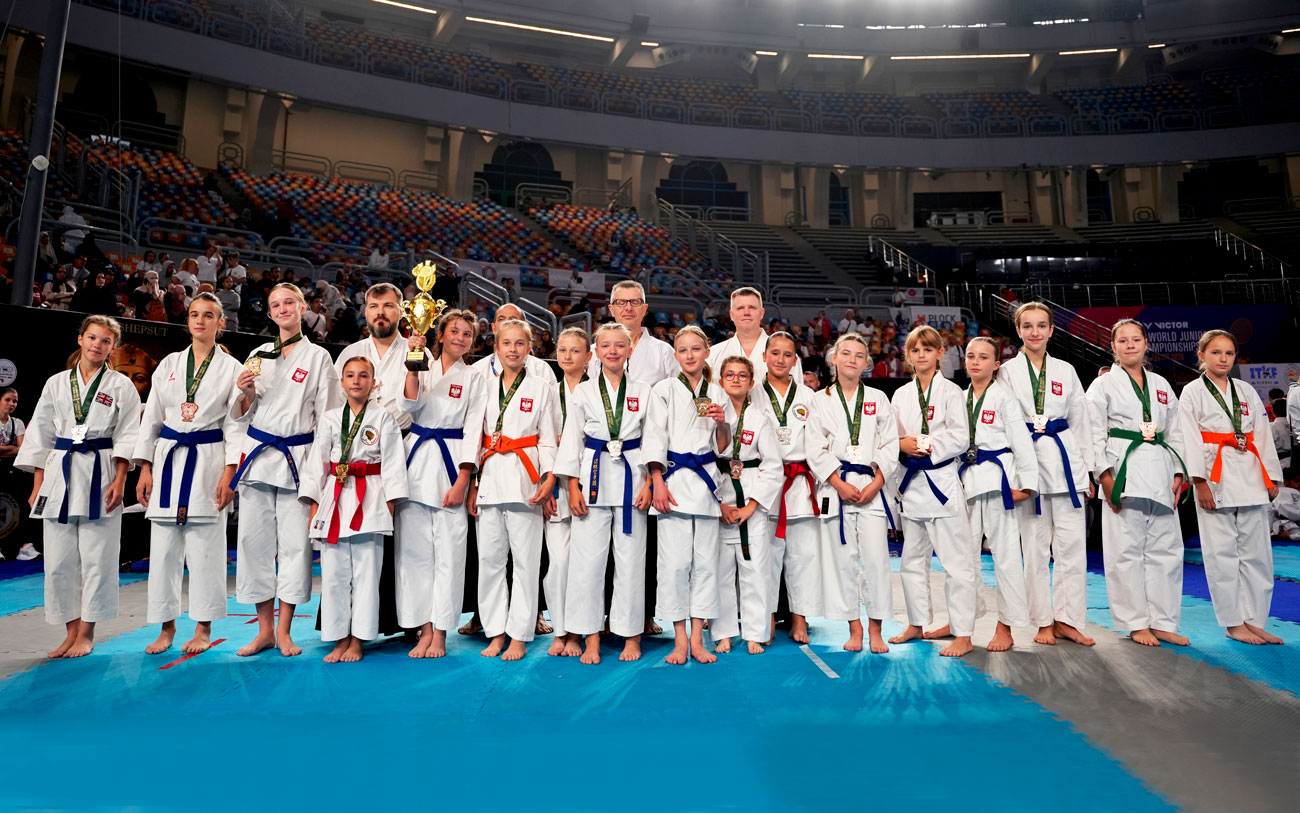
The achievements of Poland’s young athletes in Cairo reflect the coaches’ work in developing new generations of traditional karate practitioners © PUKT
Ankō Itosu holds a place in that history. By helping introduce karate into Okinawan schools in the early 20th century, he broadened the reach of a practice previously passed down within more limited circles. Among his students was Gichin Funakoshi, who would later play a central role in spreading the art throughout Japan and, subsequently, around the world. The continuity of that knowledge depended on teachers and disciples, but also on the ability to teach in new settings and engage with other generations.
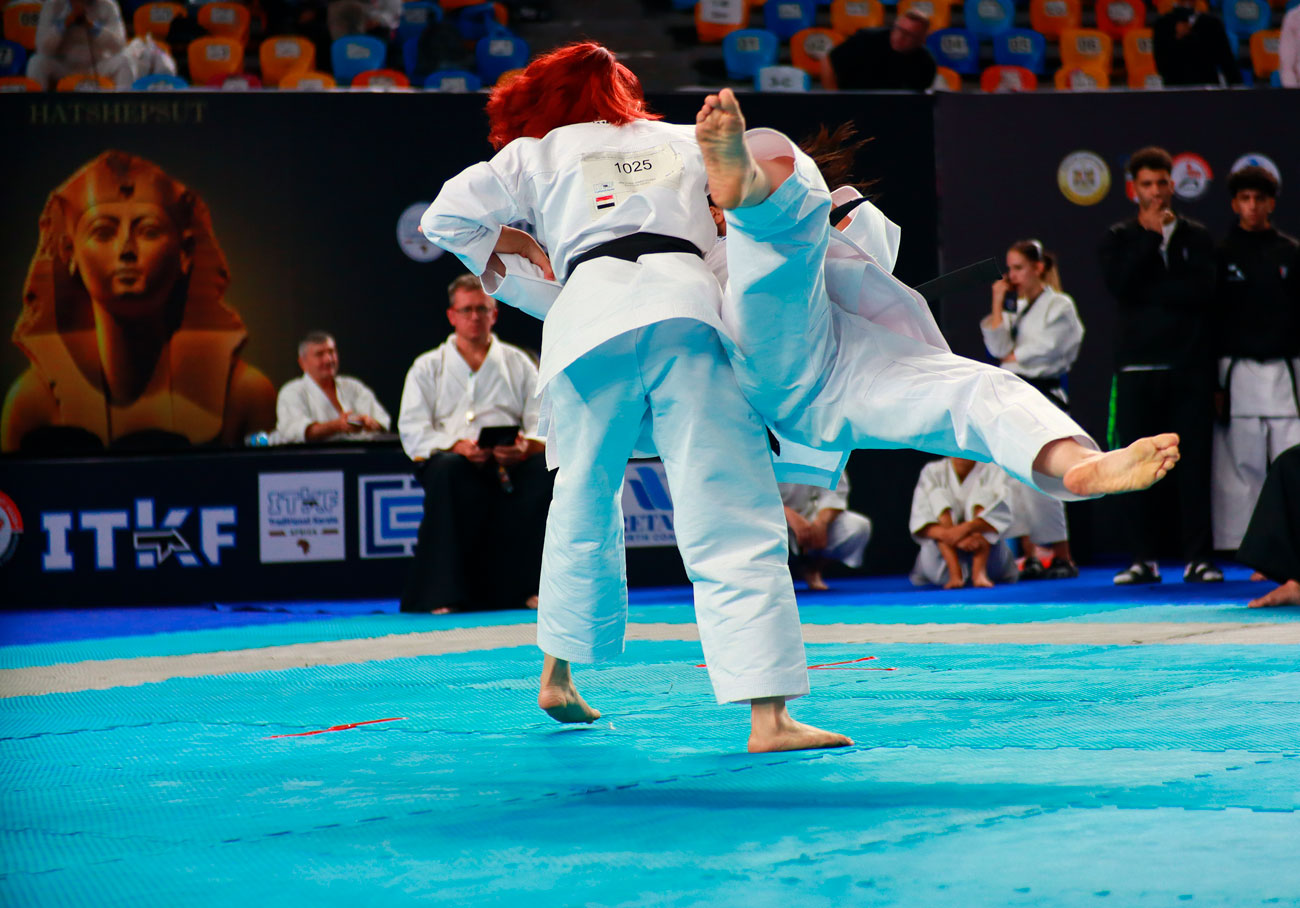
Jana Ayman and Basmala Hany Kamal won bronze in women’s youth en-bu © ETKF
The World Championship offers a view of a contemporary stage in that journey. Athletes from different countries arrive in the same space with their own experiences of learning, preparation and competition. They share rules and technical reference points, while bringing with them the history of the places where they learned. Each participation adds an experience to the international story of traditional karate.
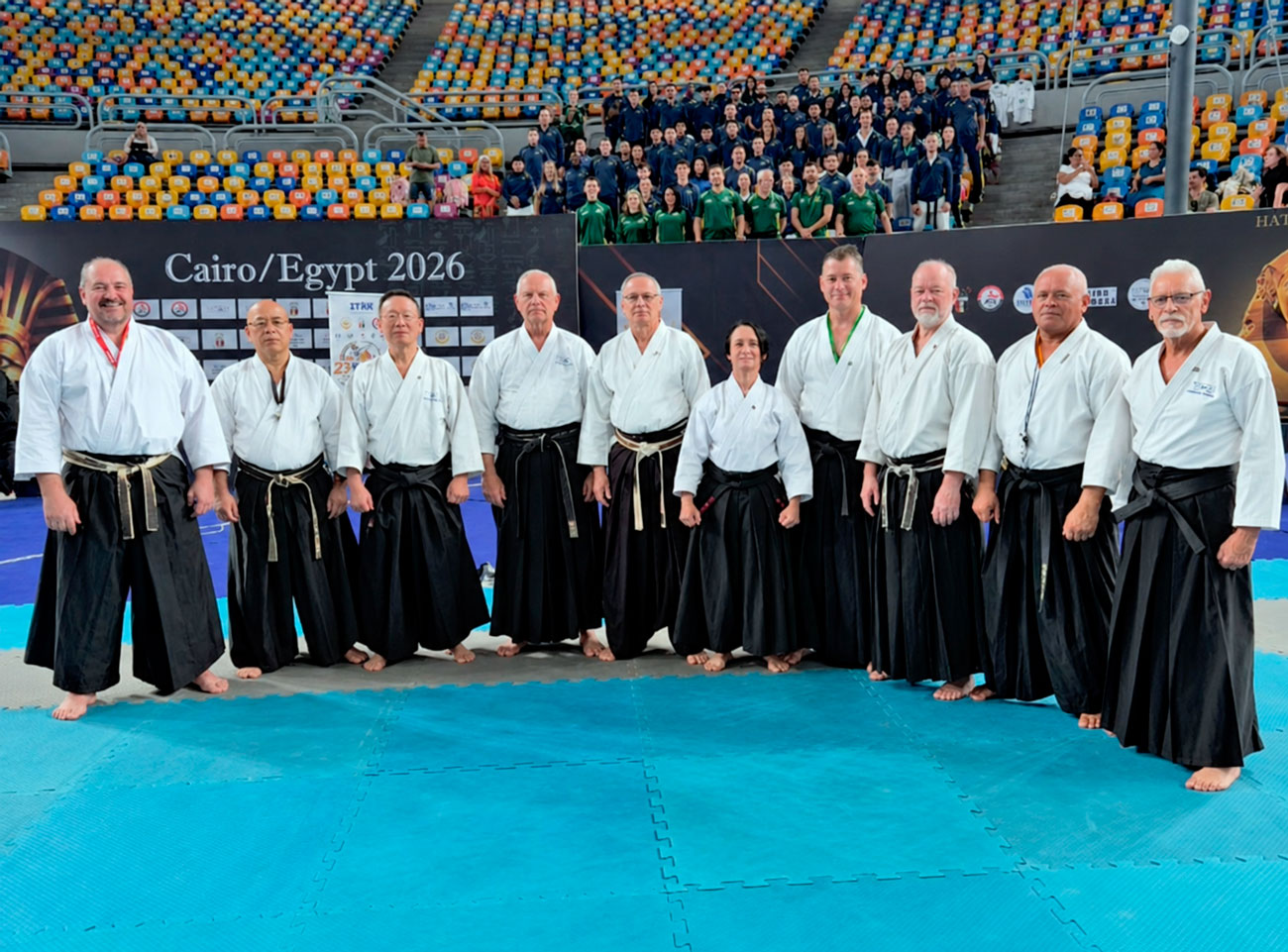
Brazilian referees who officiated in Cairo © CBKT
At that meeting, sporting performance has consequences that remain after the medals have been awarded. A difficulty identified in kata may guide months of training; a decision made in kumite can be reviewed with a coach; a refereeing situation can inform further study and the refinement of criteria. The championship continues in the dojo when those experiences return with the delegations.
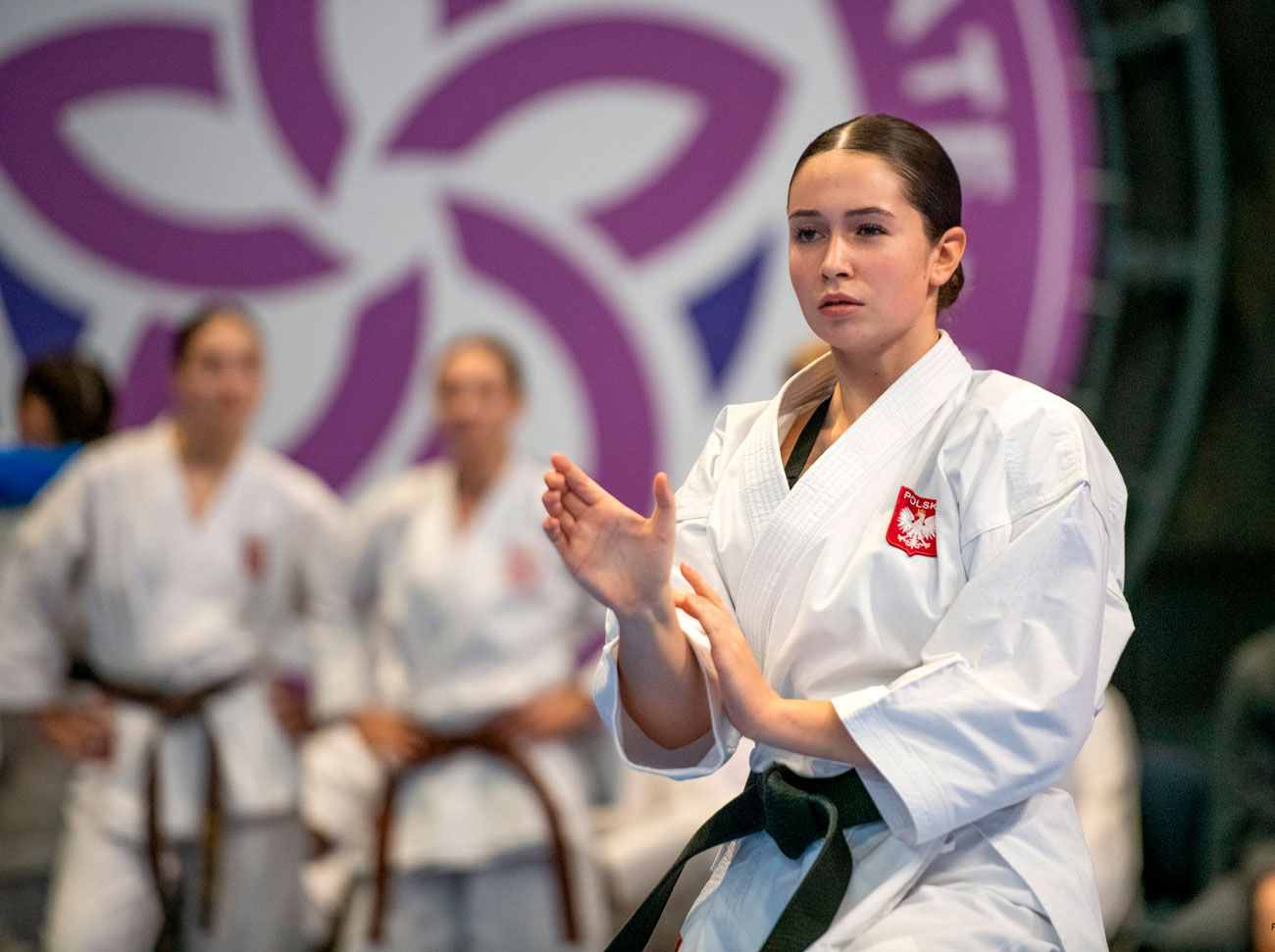
It is also on that return that the principles of Budo find practical application. Respect for opponents, control over one’s actions and responsibility for the knowledge acquired must accompany practitioners beyond the result. Victory adds an achievement to a sporting record; the way people compete, learn and pass on their knowledge helps define the legacy of their participation.
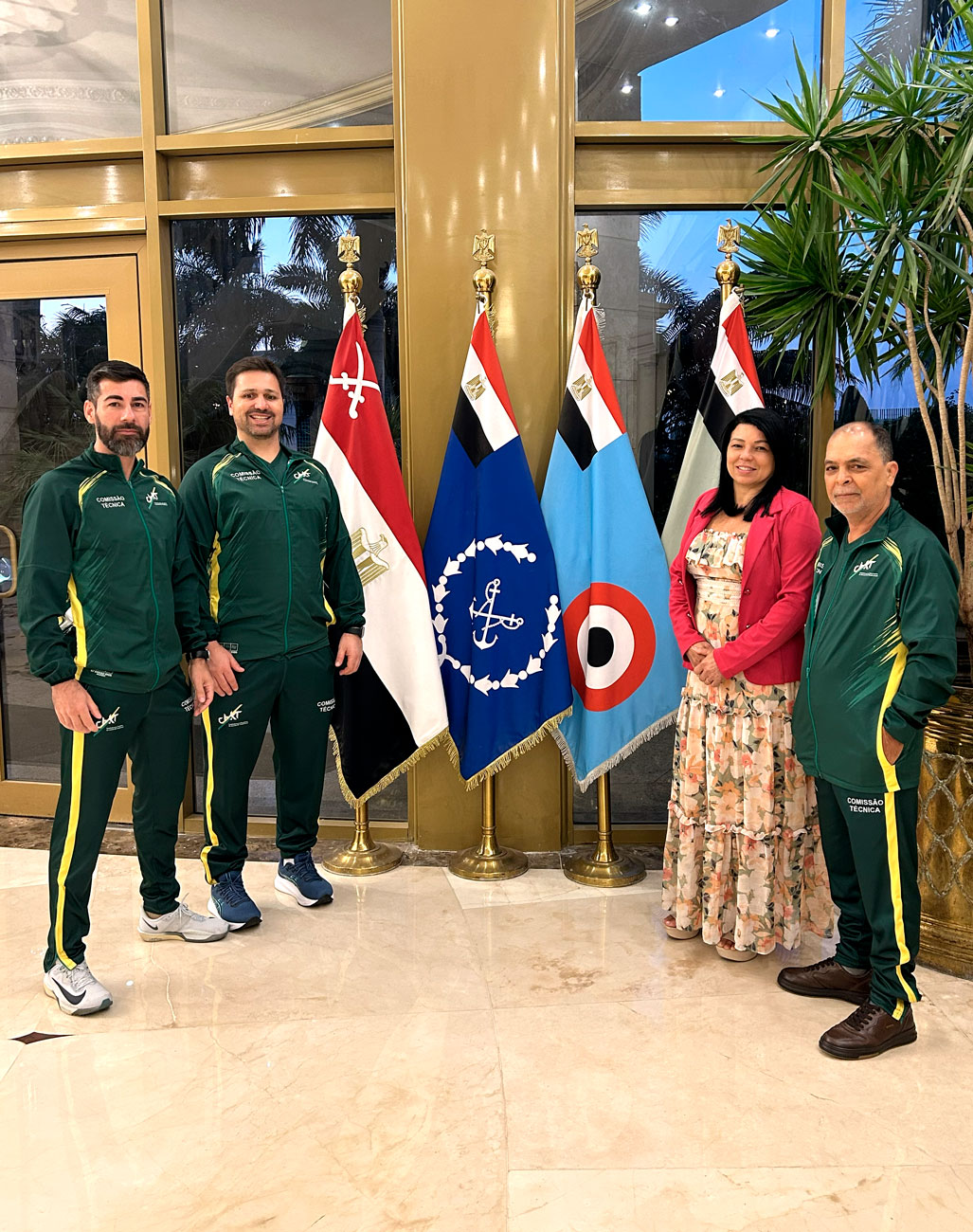
Brazilian officials at the Sports City Arena in Cairo: Rafael Alves, executive director; Vinícius Sant’ana Pinto, technical coordinator; Sônia Coutinho, president; and Sérgio Bastos, technical director of the Brazilian confederation © CBKT
With the next edition planned for Romania in 2028, the World Championship will return to Europe. Its movement between countries and continents continues a history shaped by the communities that host the competition and the delegations that carry their experiences forward. Egypt now becomes part of that journey as host of an edition that brought different expressions of traditional karate together on African soil.
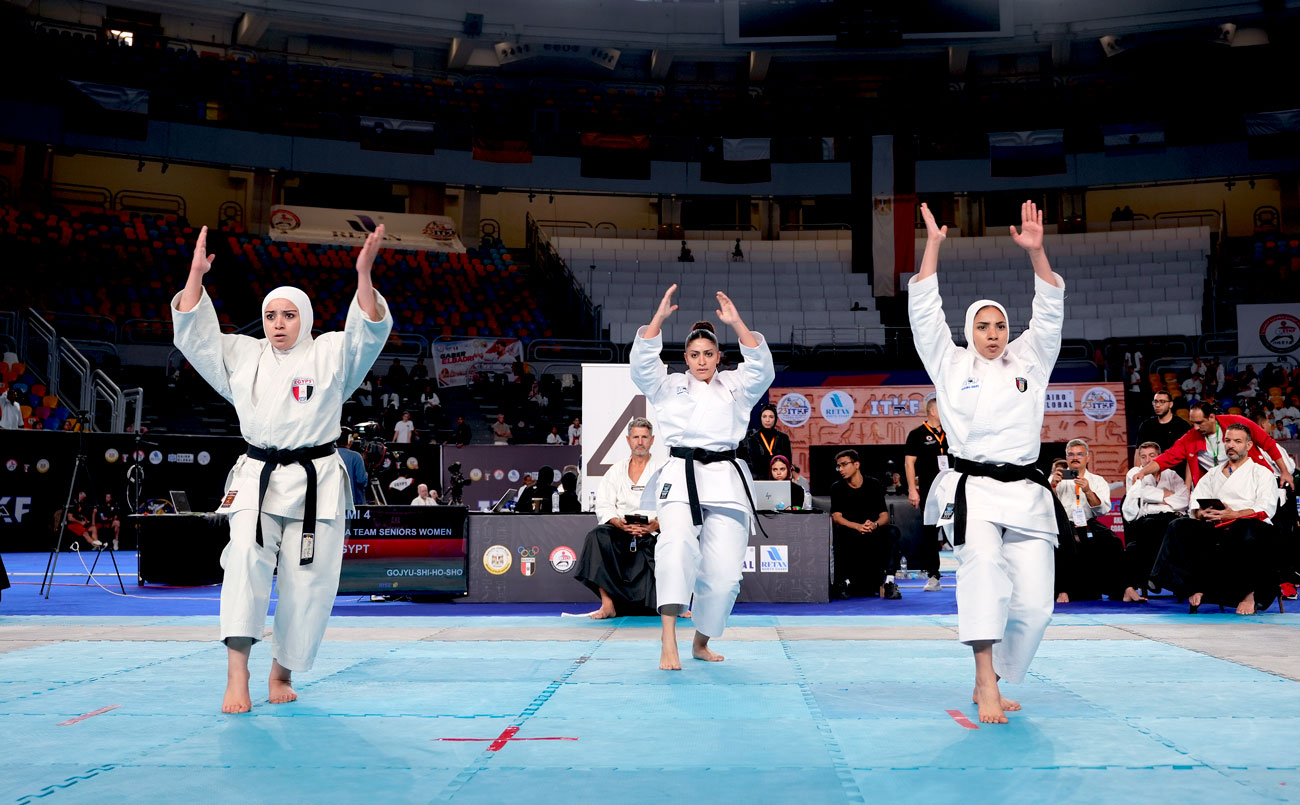
Egypt’s women’s kata team performs at the World Championship in Cairo © Egito
The enduring image of Cairo brings sporting endeavour and human encounter together: the athlete preparing, the teacher offering guidance, the referee making a decision and the opponent making the contest possible. In the ancient land of Kemet, they gave Budo a living presence. The tatami have been packed away, and the delegations have returned to their countries. What they experienced in Cairo remains as knowledge to be shared—an experience that can now reach, in the dojo of each country, those who were not at the World Championship.
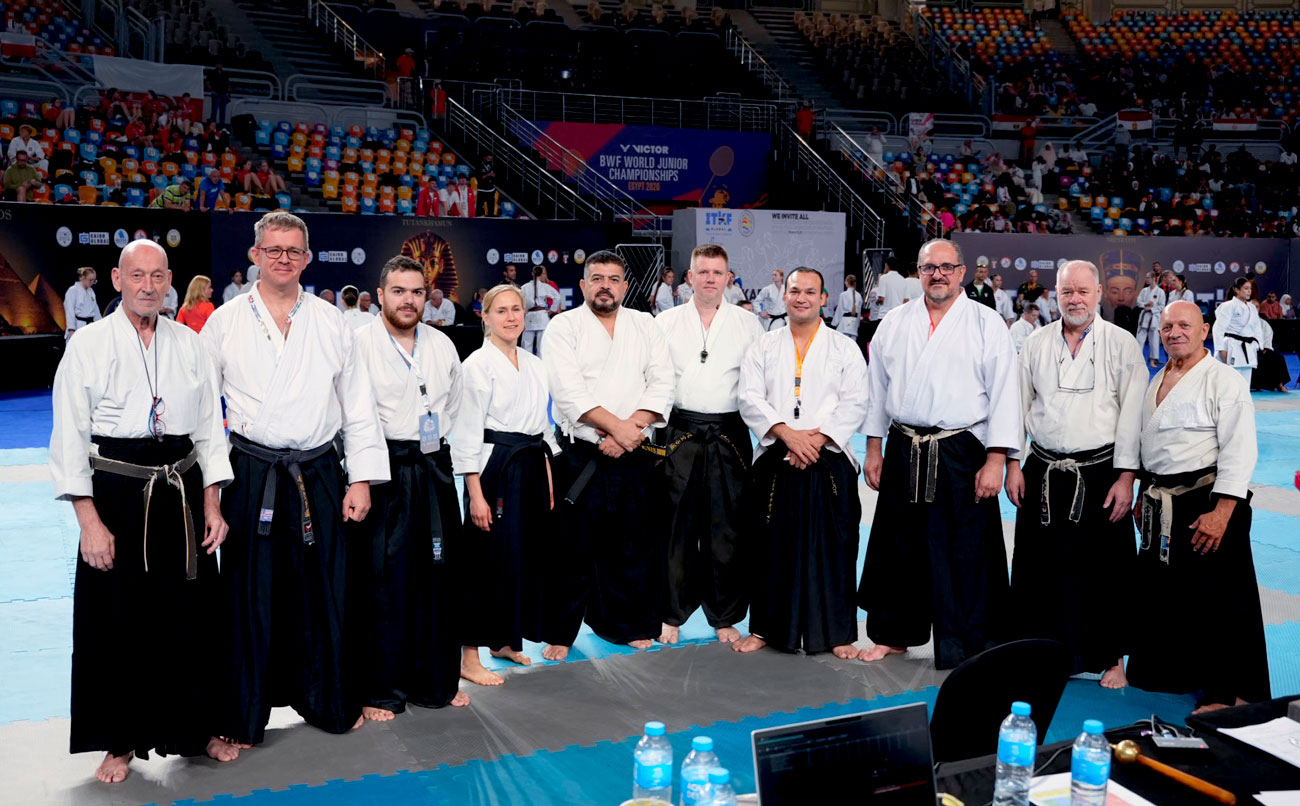
Referees who officiated at the World Championship in Cairo © ETKF
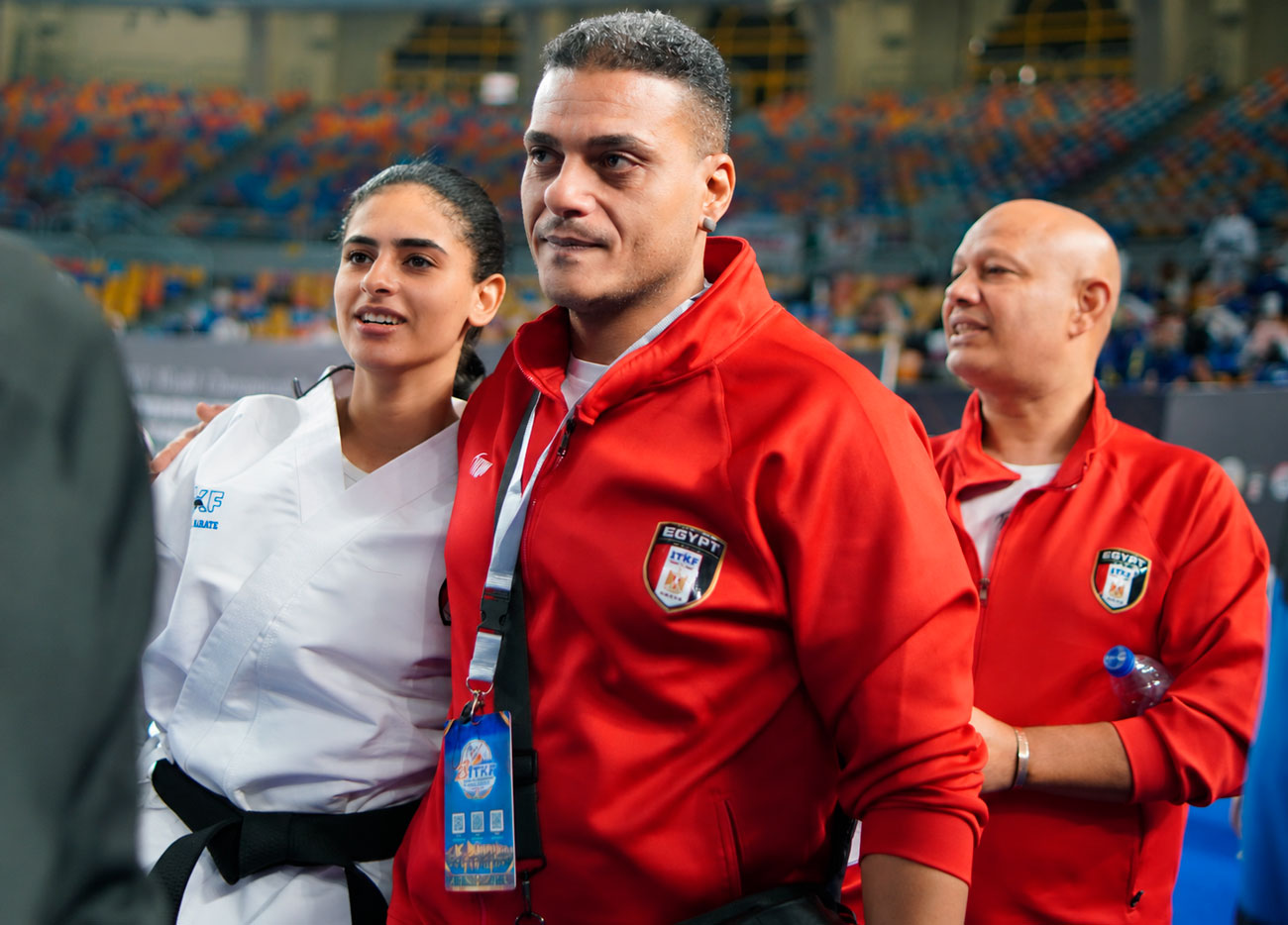
Mayar Ali and coach Abd Elfatah Hassan © ETKF
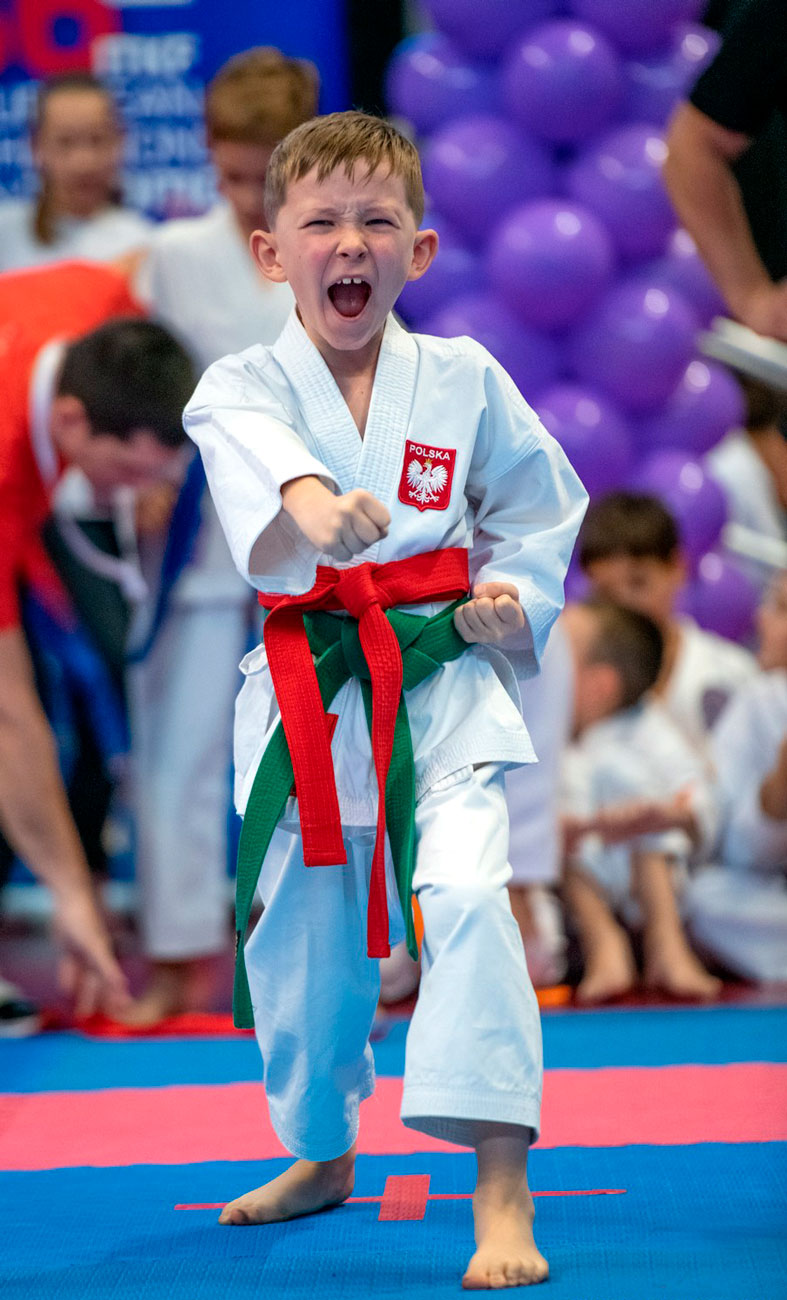
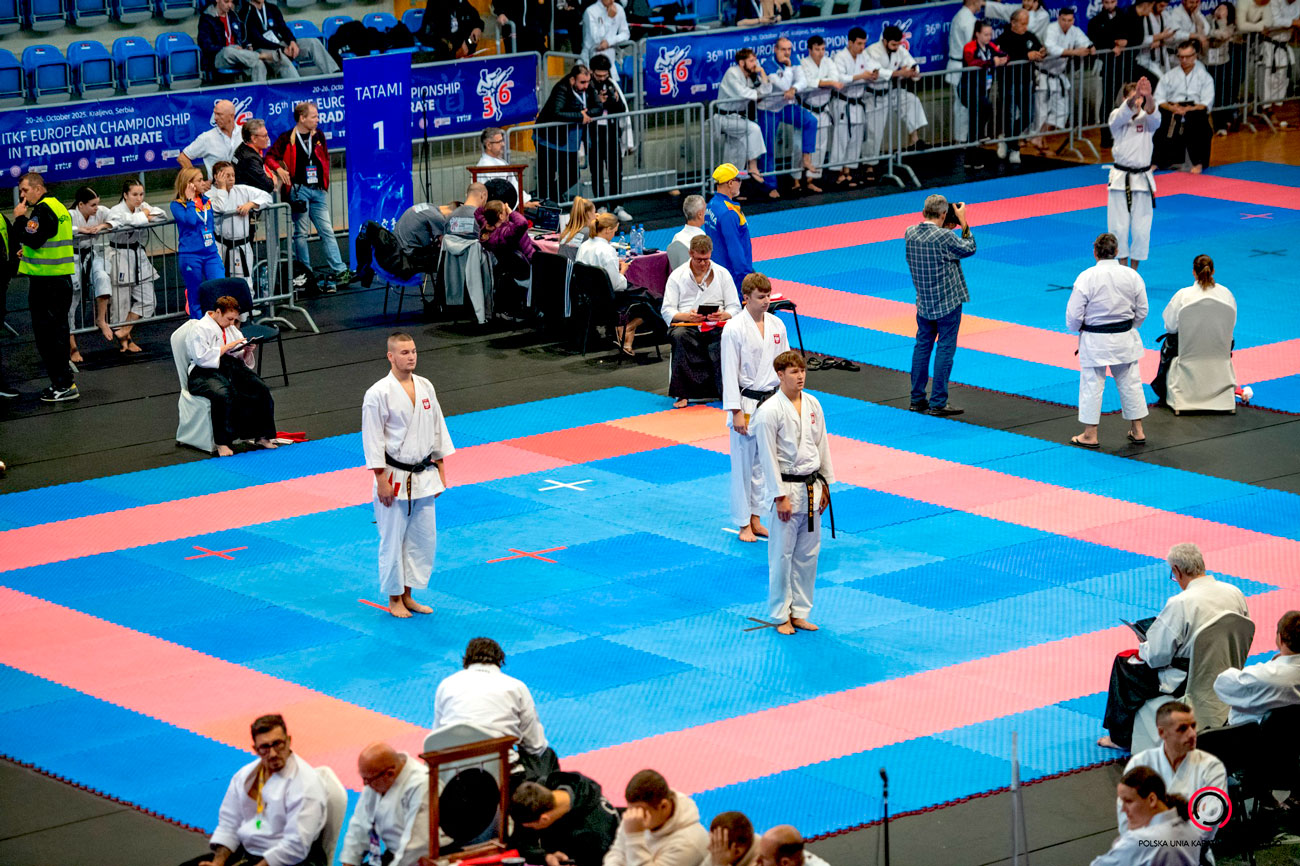
The Polish team begins its kata performance © PTKU
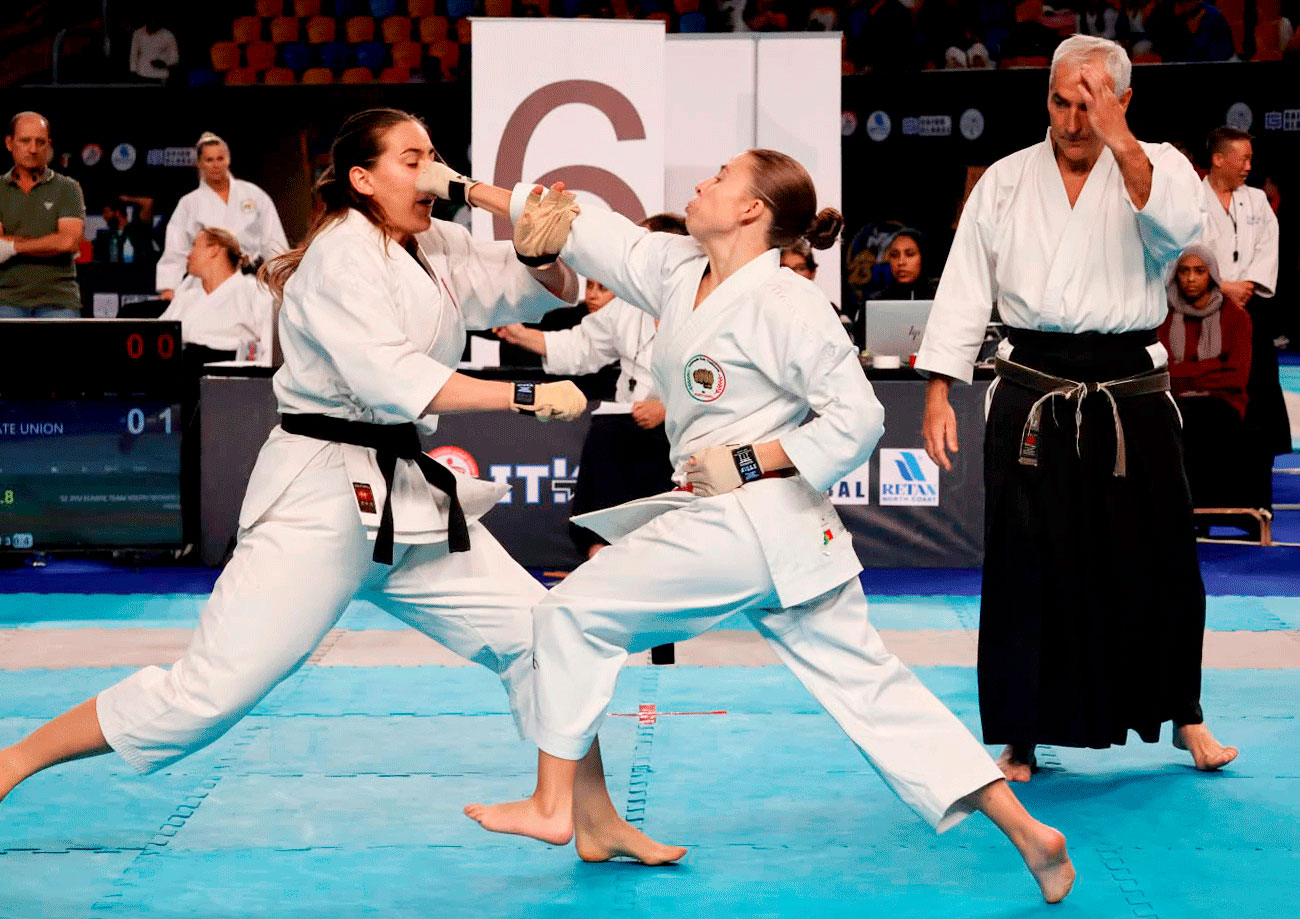
Portugal’s Clara Monteiro delivers a jodan-zuki in women’s youth fuku-go © FBMP
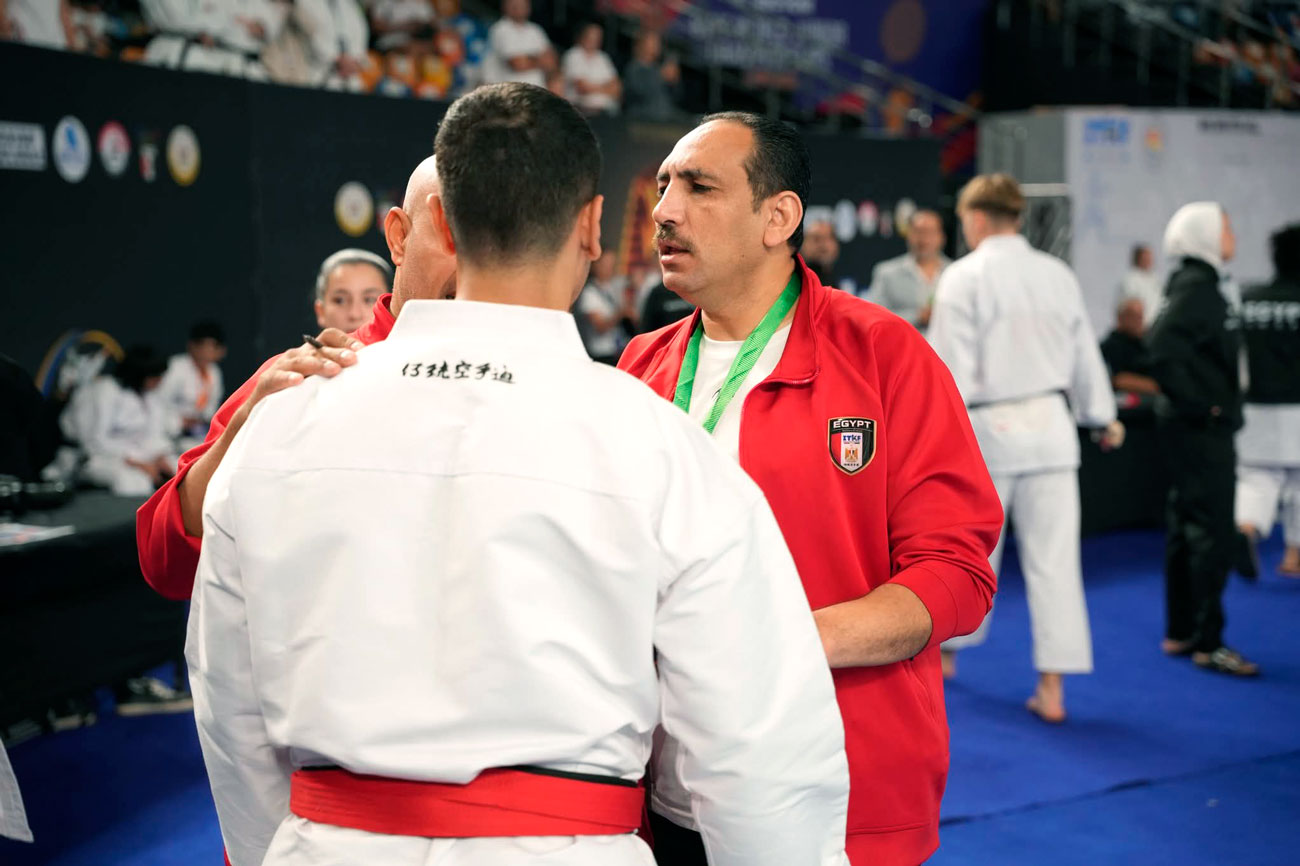
Mohamed Fawzy, technical director of the Egyptian national team, and sensei Abd Elfatah accompany Omar Sherif before the final © ETKF
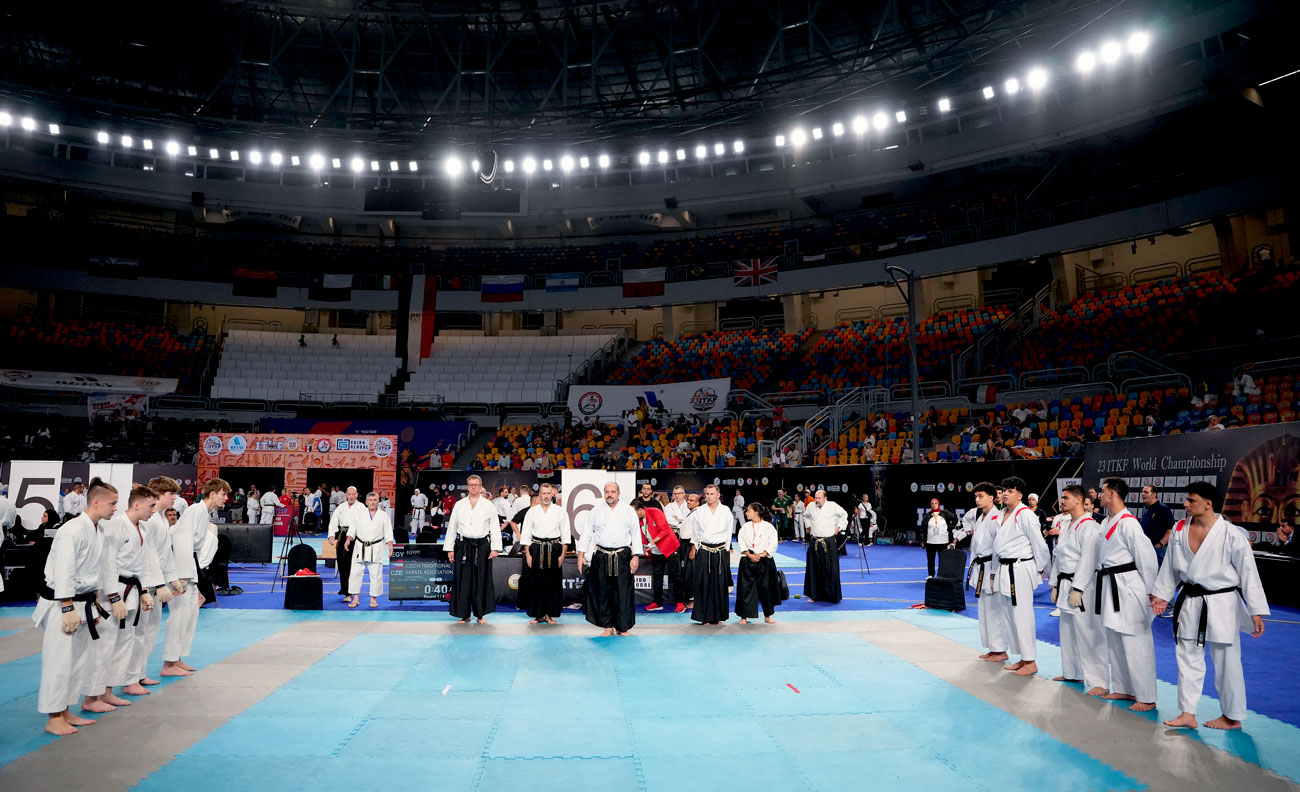
Men’s team kumite © ETKF
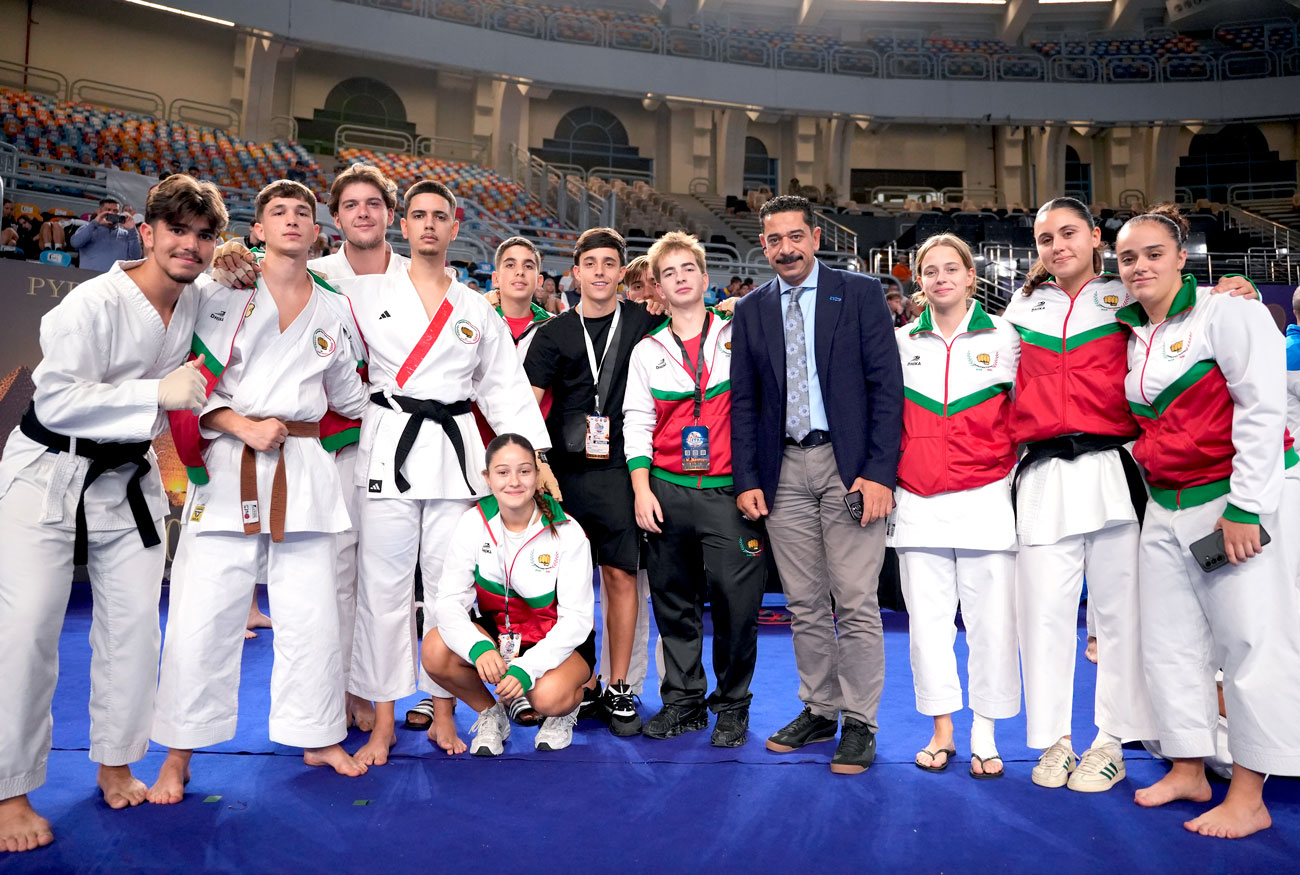
Ramy El-Mekawy, president of the Egyptian Traditional Karate Federation, shares a relaxed moment with Portuguese athletes © ETKF
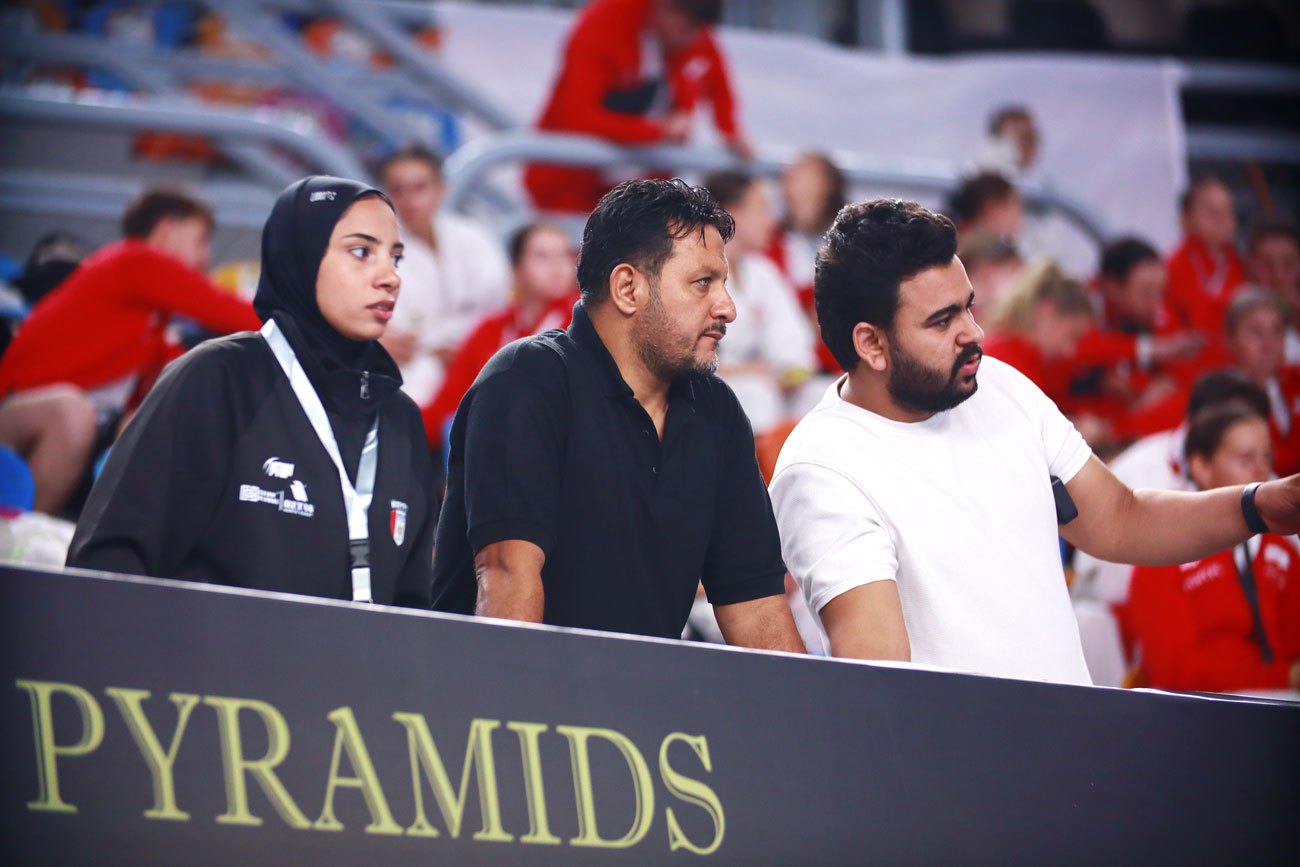
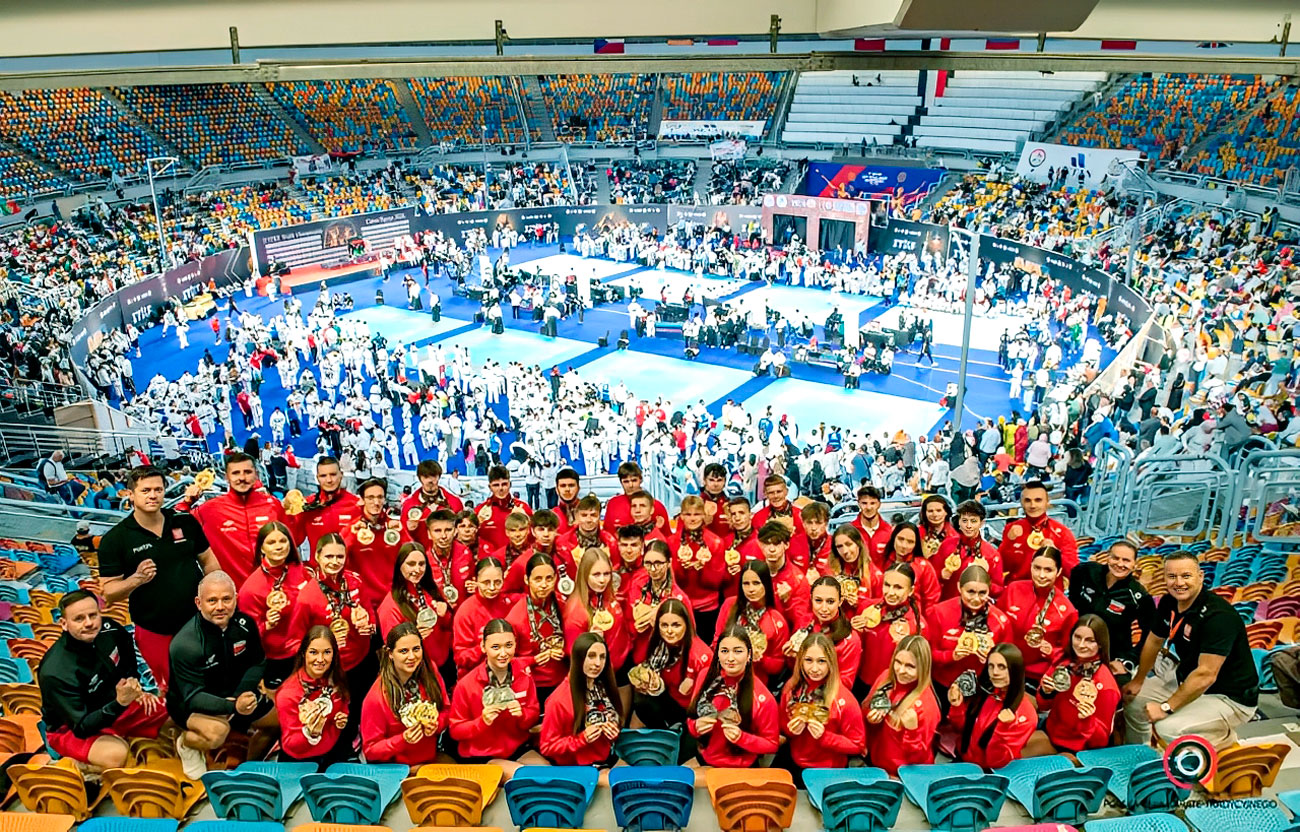
Paweł Janusz, president, and Anna Kulczyńska, vice-president of the Polish Traditional Karate Union, celebrate a collective achievement with coaching staff and Polish medallists © PTKU
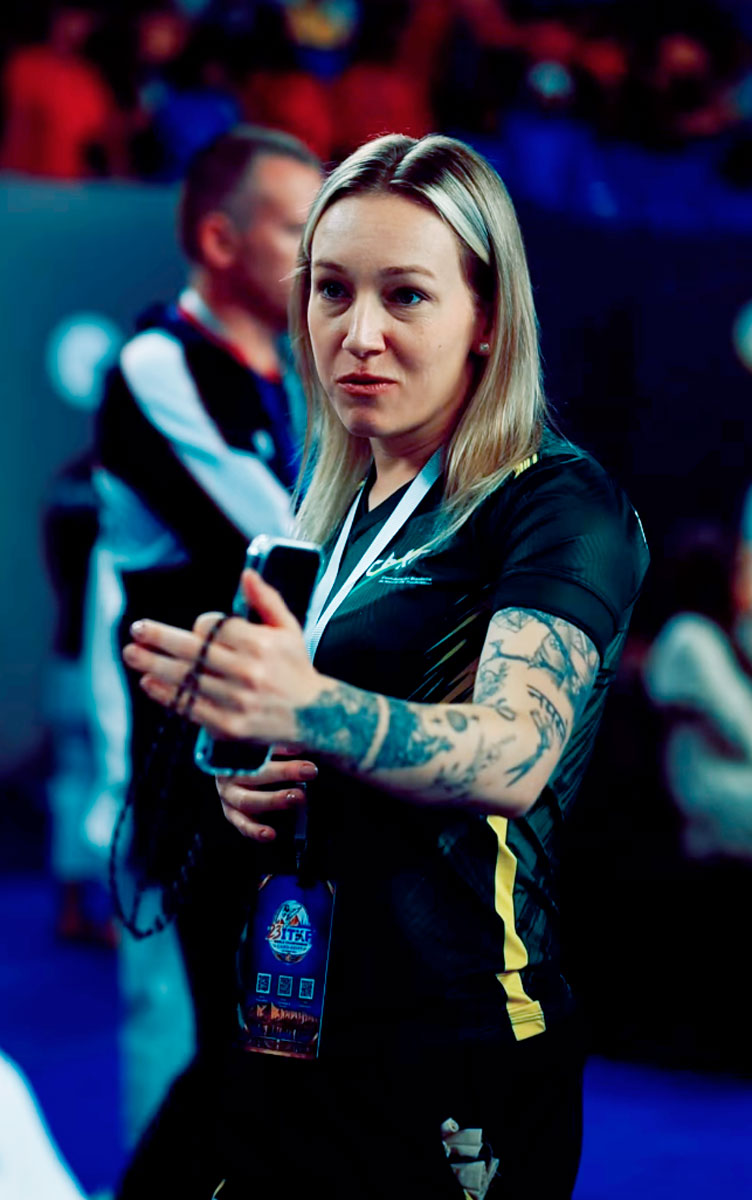
Cristiane Babinski, assistant coach of the Brazilian national team’s Under 18 division © CBKT
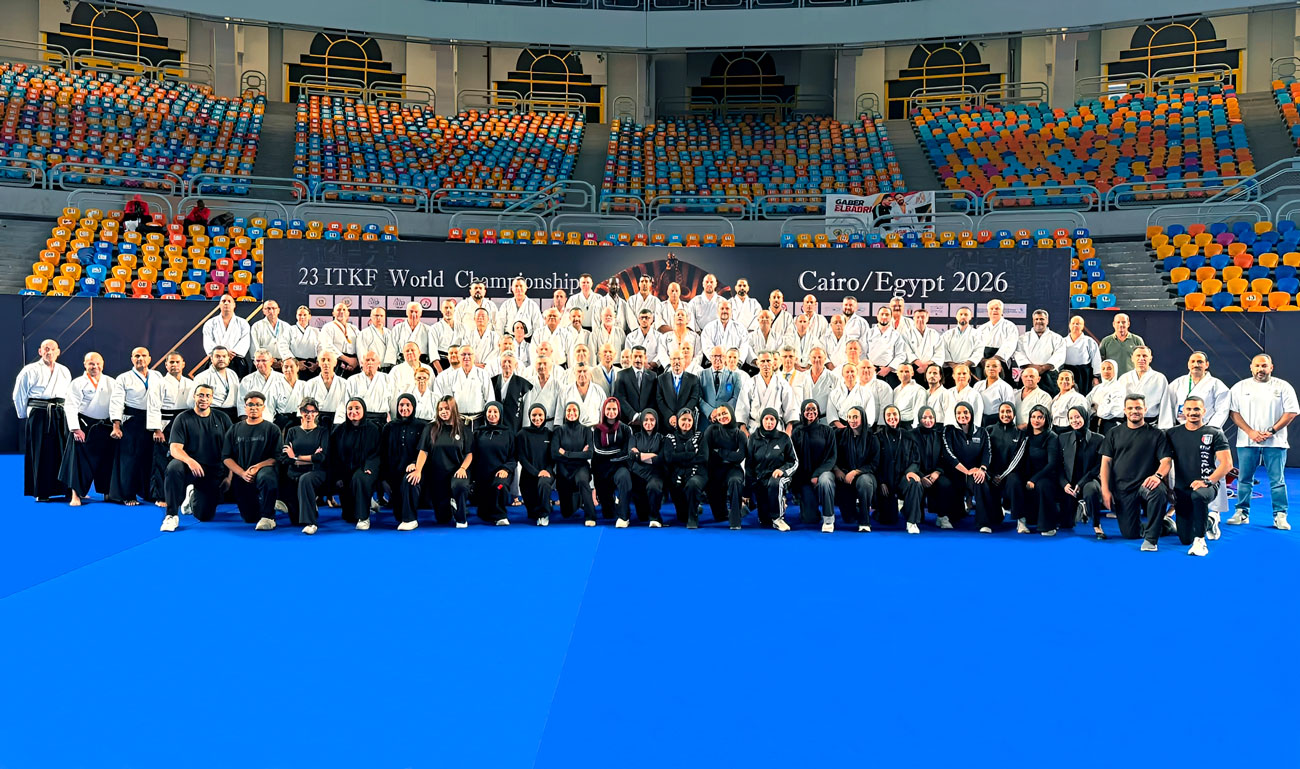
Gilberto Gaertner, chairman of ITKF Global; Ramy El-Mekawy, president of ETKF and the African federation and a member of the ITKF Global Board of Directors; and Portugal’s Fernando da Silva, chairman-elect for the next four-year term, with officials, referees and members of the Cairo 2026 Local Organising Committee © ETKF
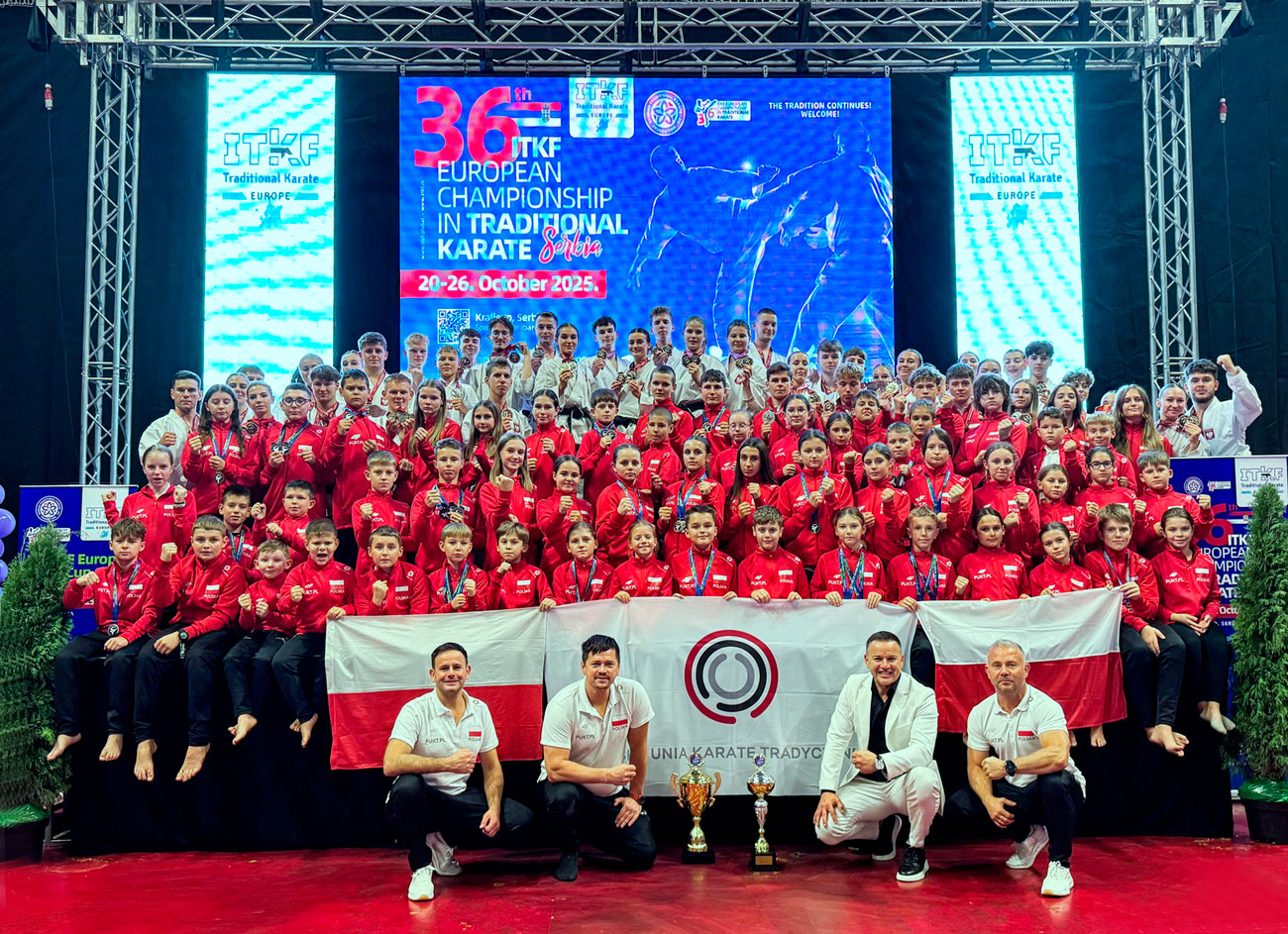
Official photograph of the Polish team, champions at Cairo 2026 © PTKU
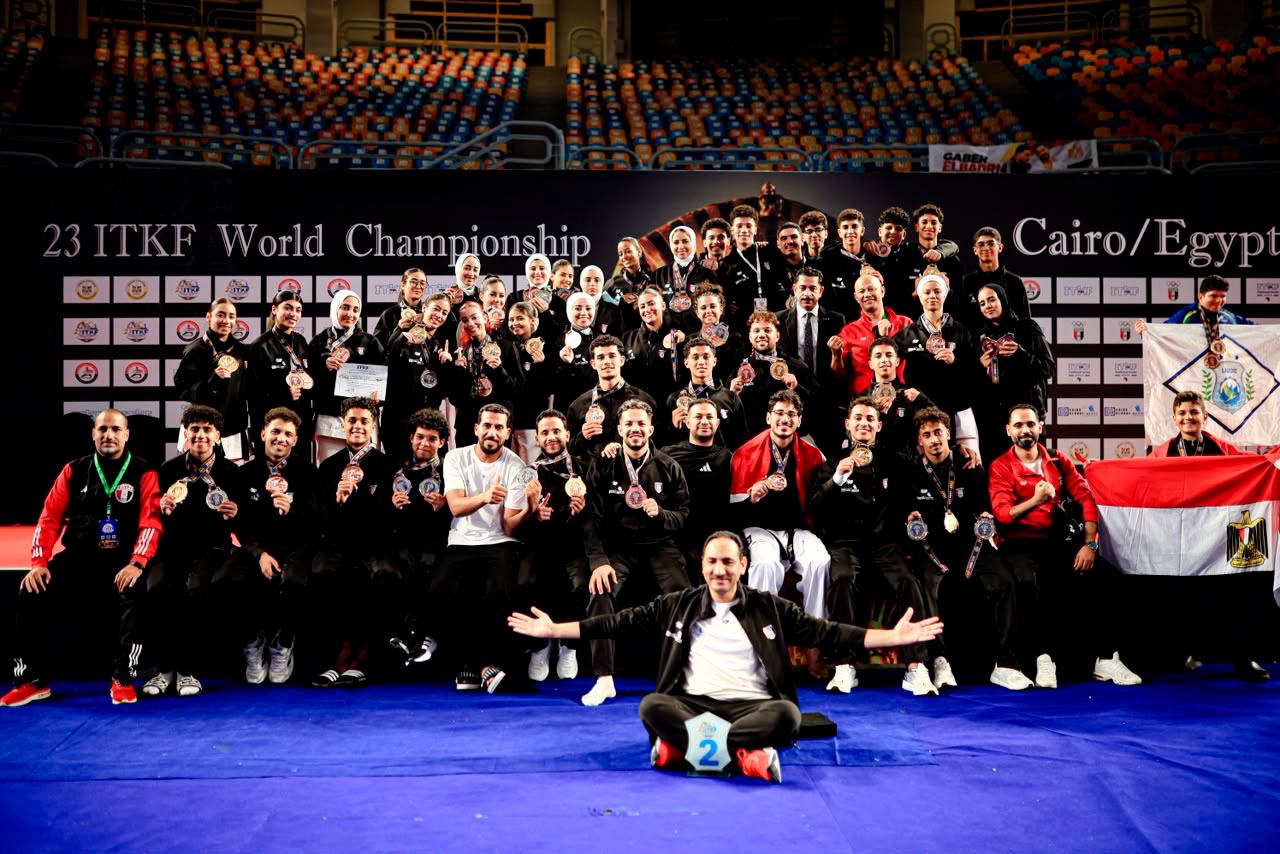
Official photograph of the Egyptian team, runners-up at Cairo 2026 © ETKF
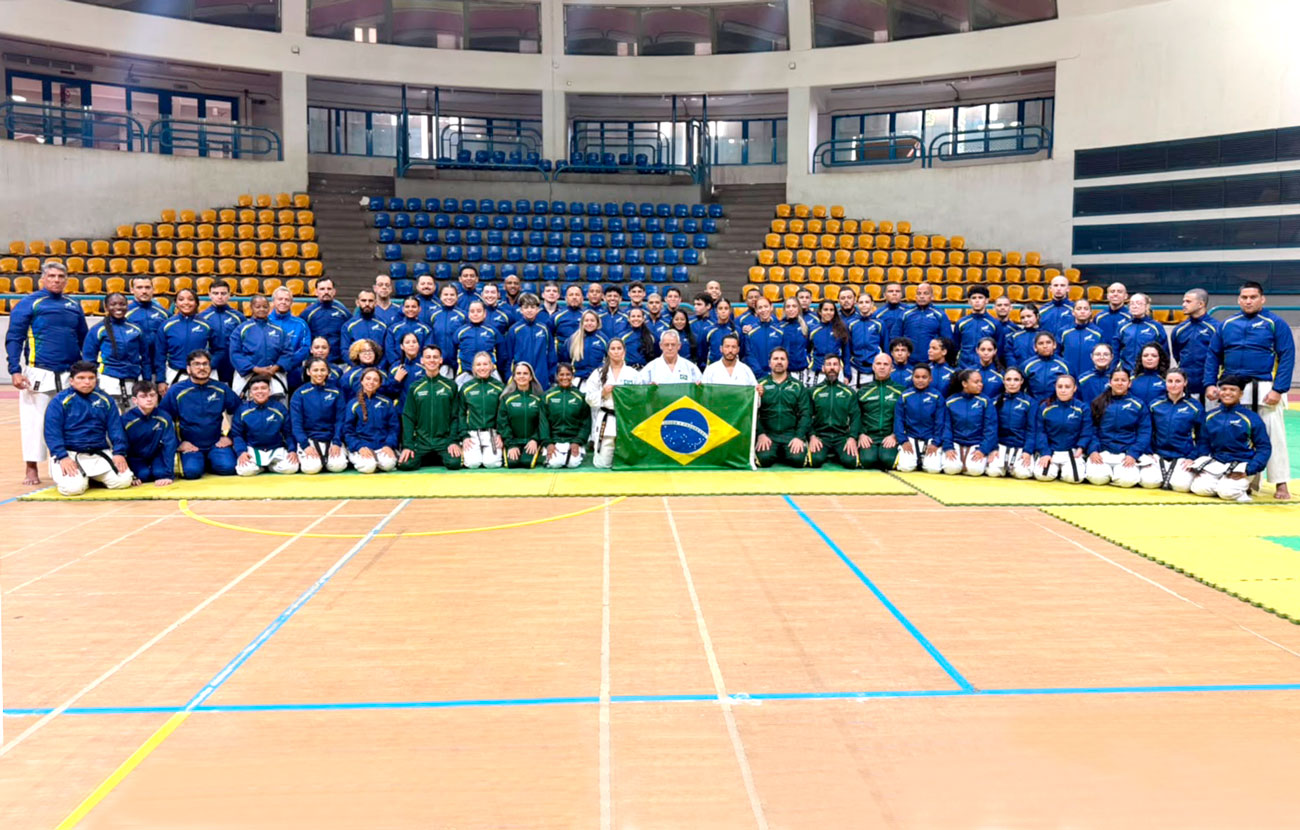
The Brazilian national team, third at Cairo 2026 © CBKT
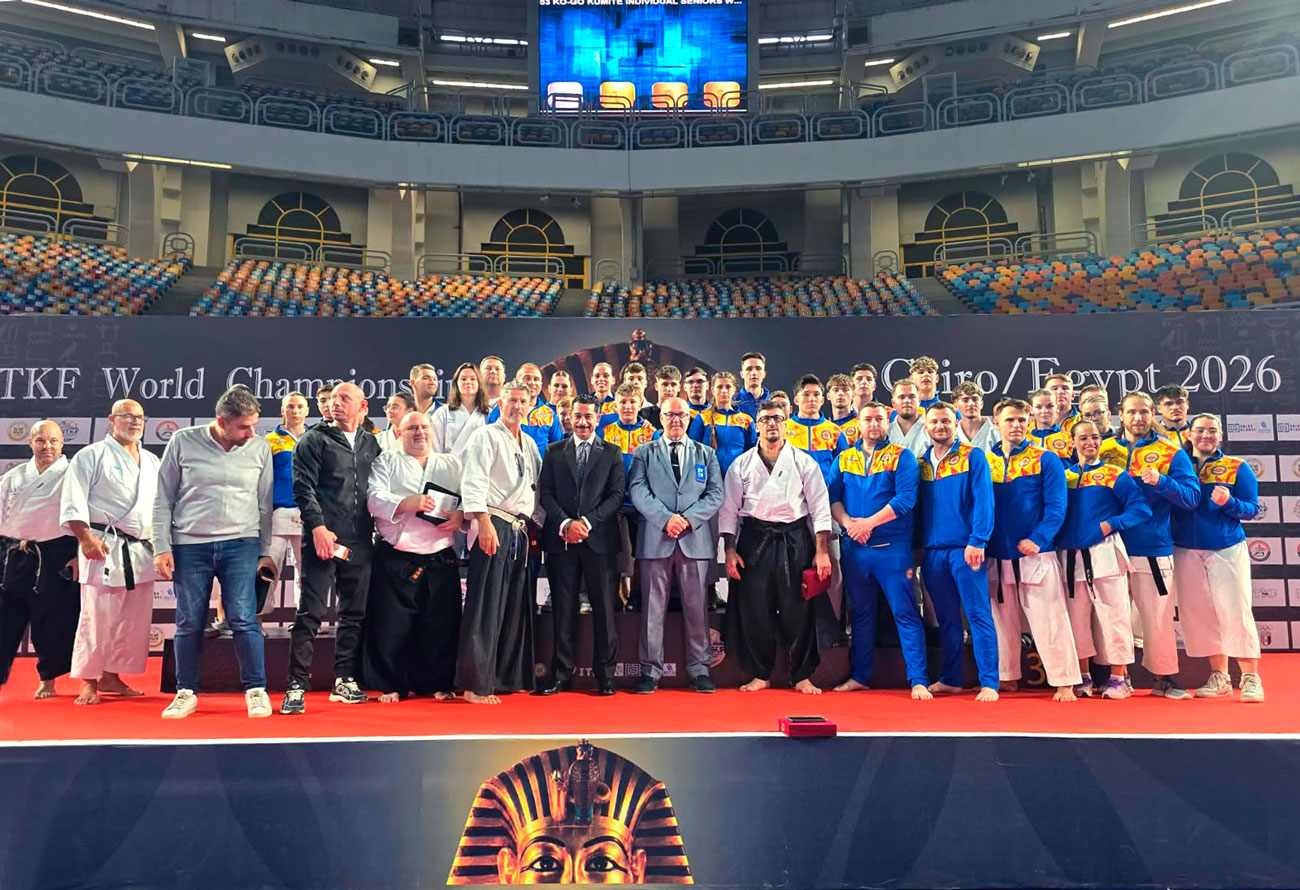
The Romanian national team, fourth at Cairo 2026 © FRTK
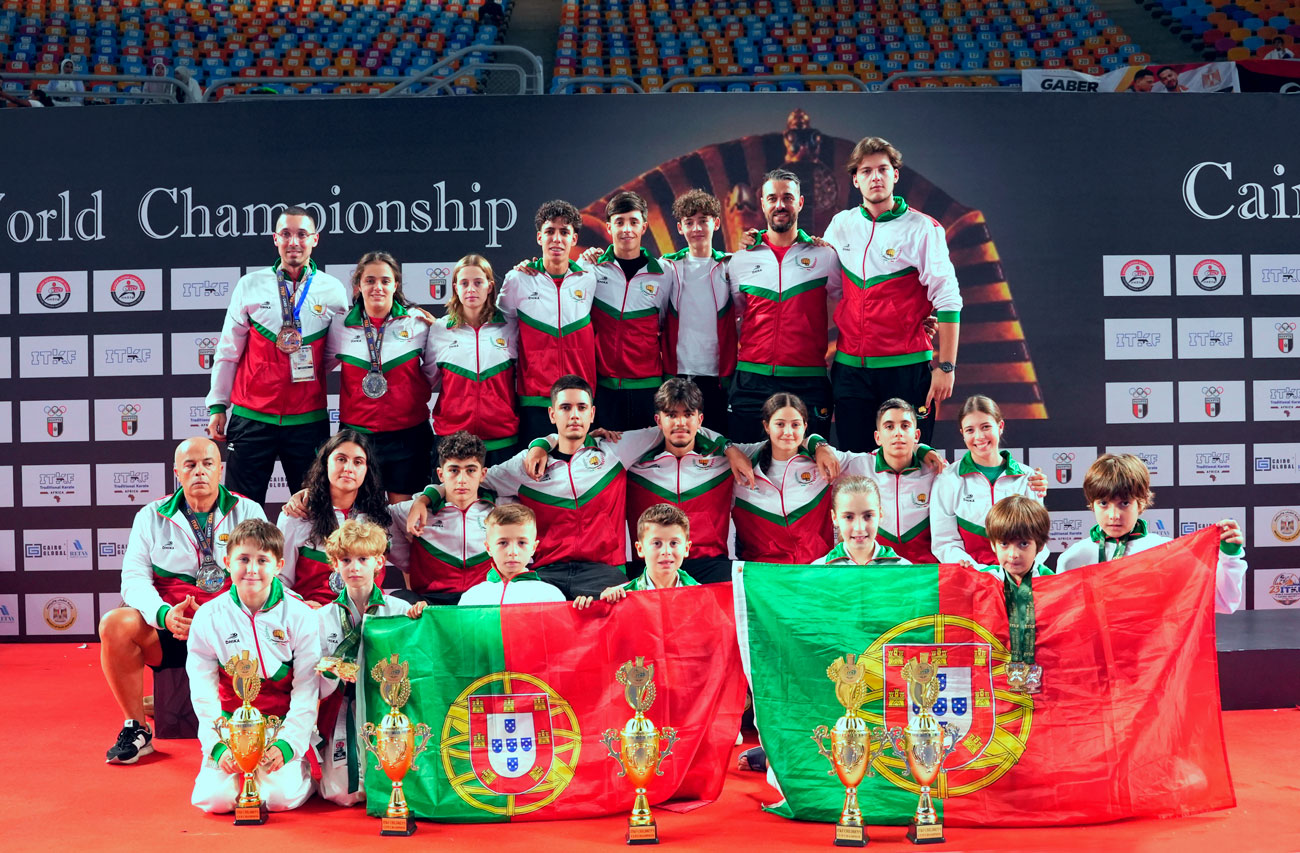
The Portuguese national team, fifth at Cairo 2026 © FBMP
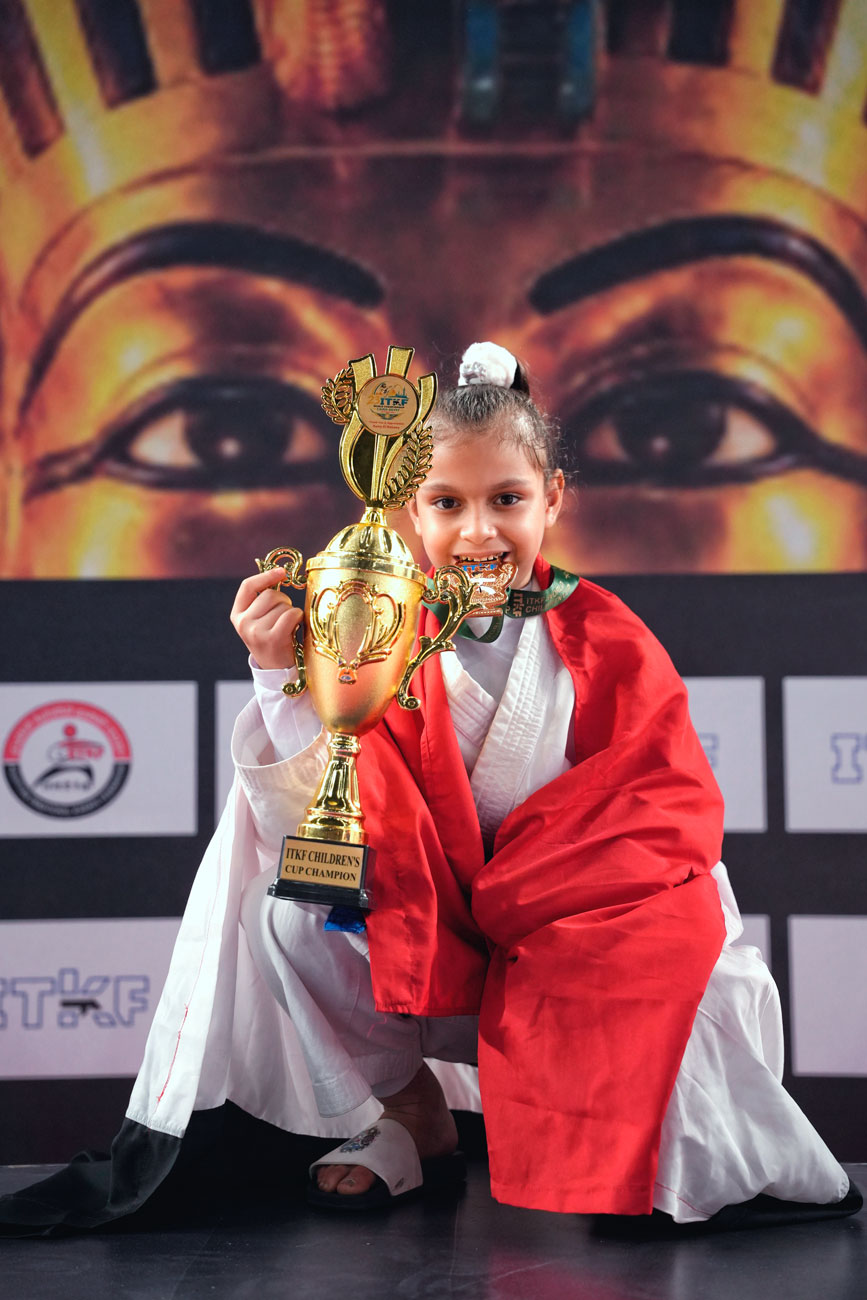
Poland’s gold crowns years of preparation, a board with the vision to look ahead and a coaching team that attended to every detail on the way to the top © PTKU
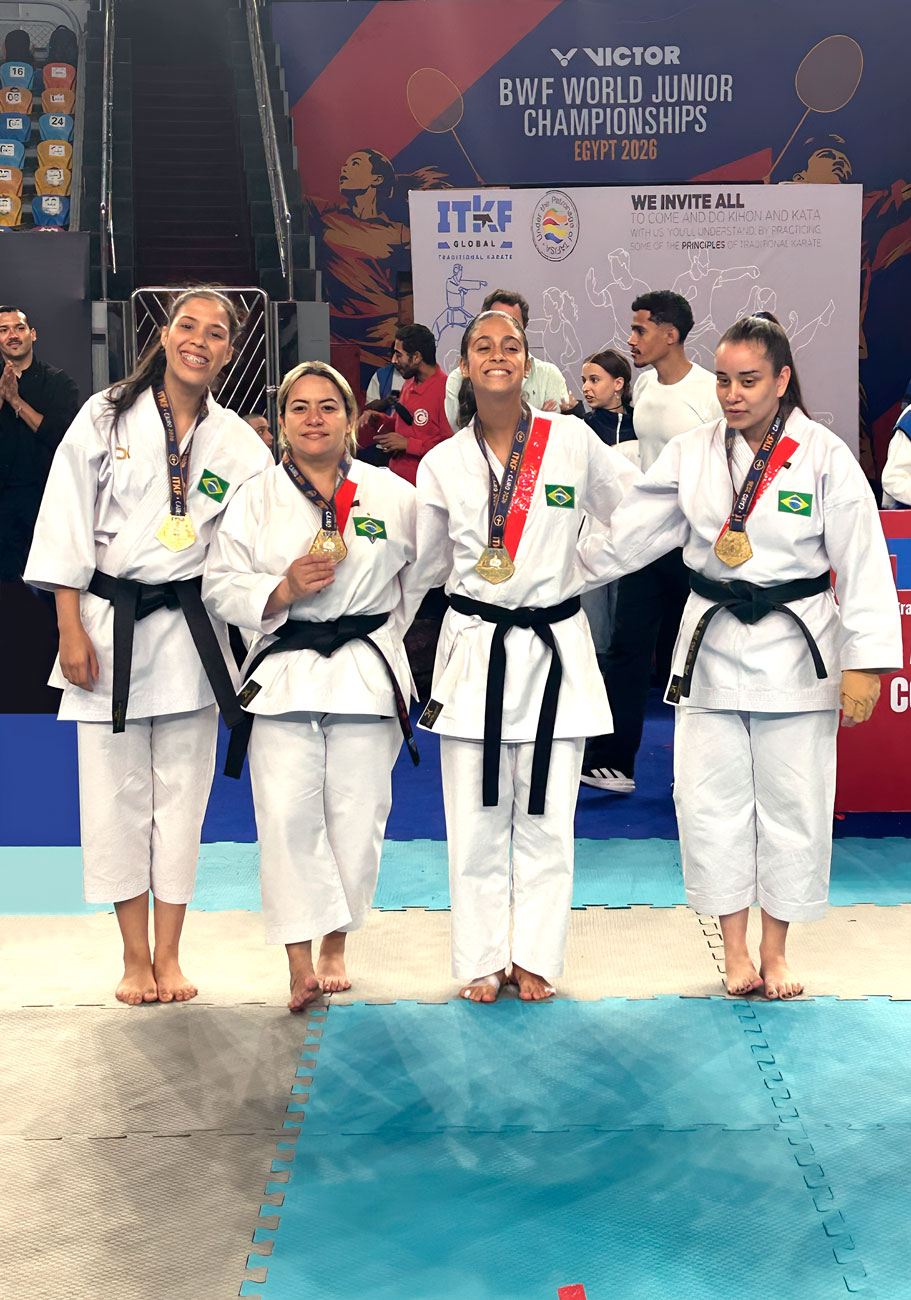
Brazilian karate athletes celebrate their gold medals © CBKT
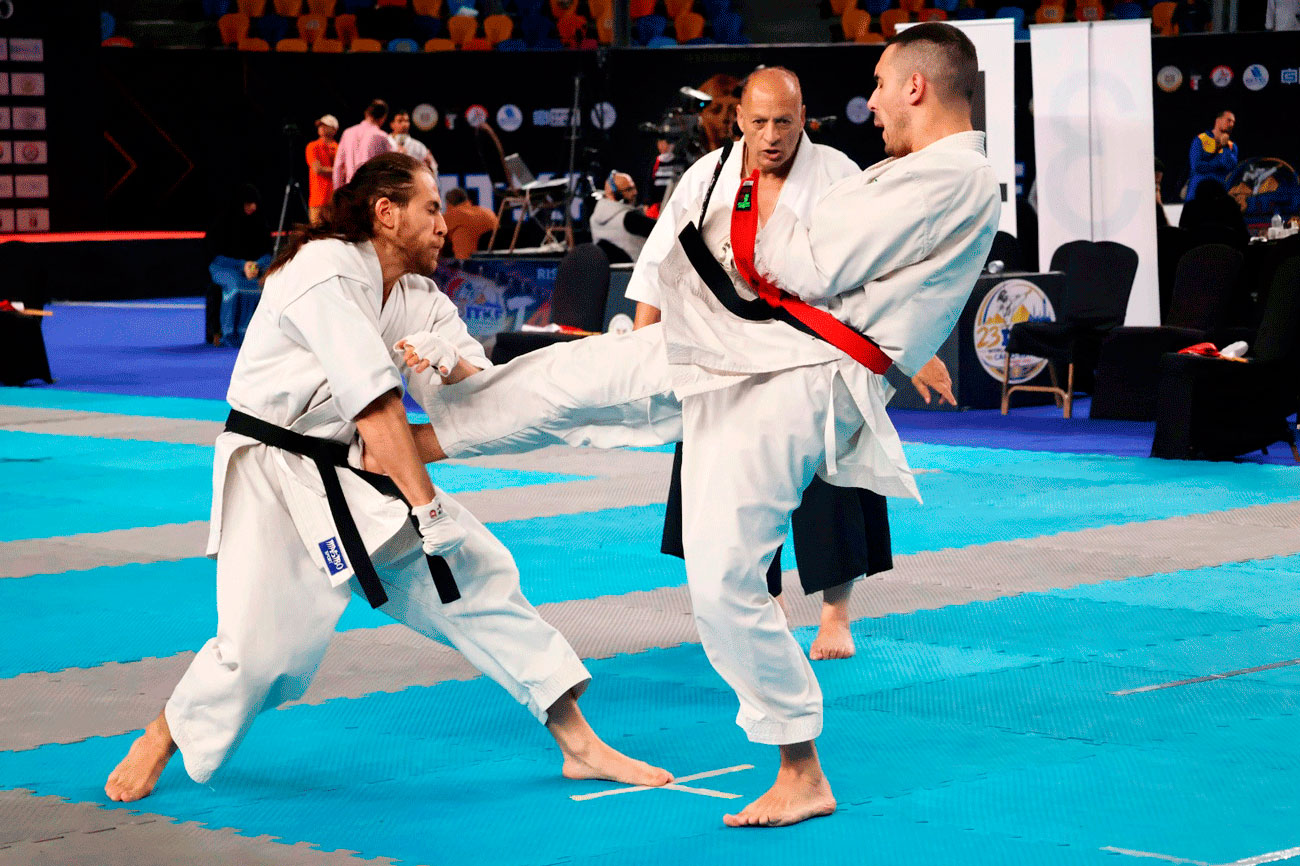
Hugo Fins takes the Portuguese attack into men’s senior ko-go kumite © FBMP
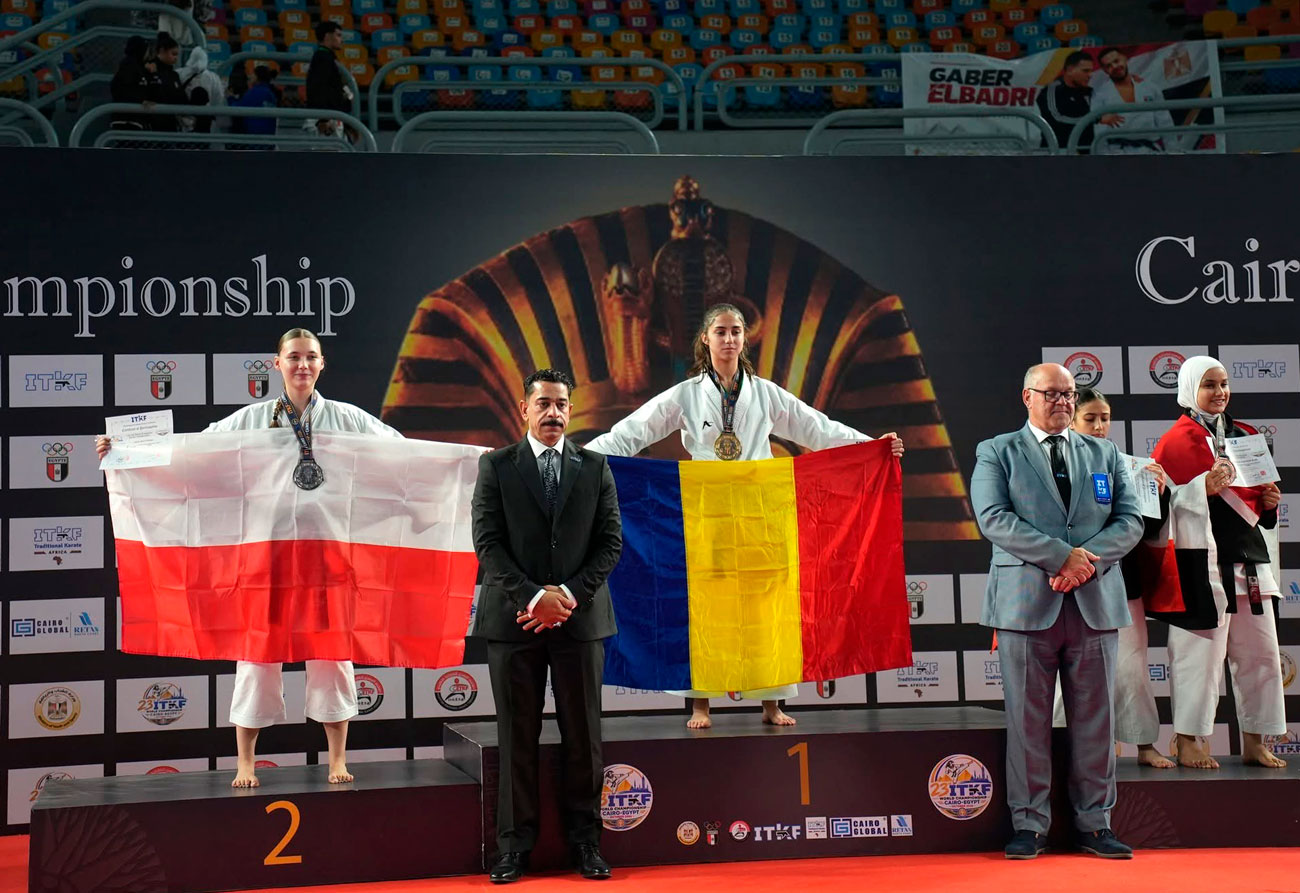
Women’s cadet ko-go kumite podium: 1st Maria Teodora Dumitrachi (Romania), 2nd Julia Grotowska (Poland), 3rd Retal Mohamed El-Sayed and 3rd Alaa Karem Mabrouk Hadhoud (Egypt) © FRTK
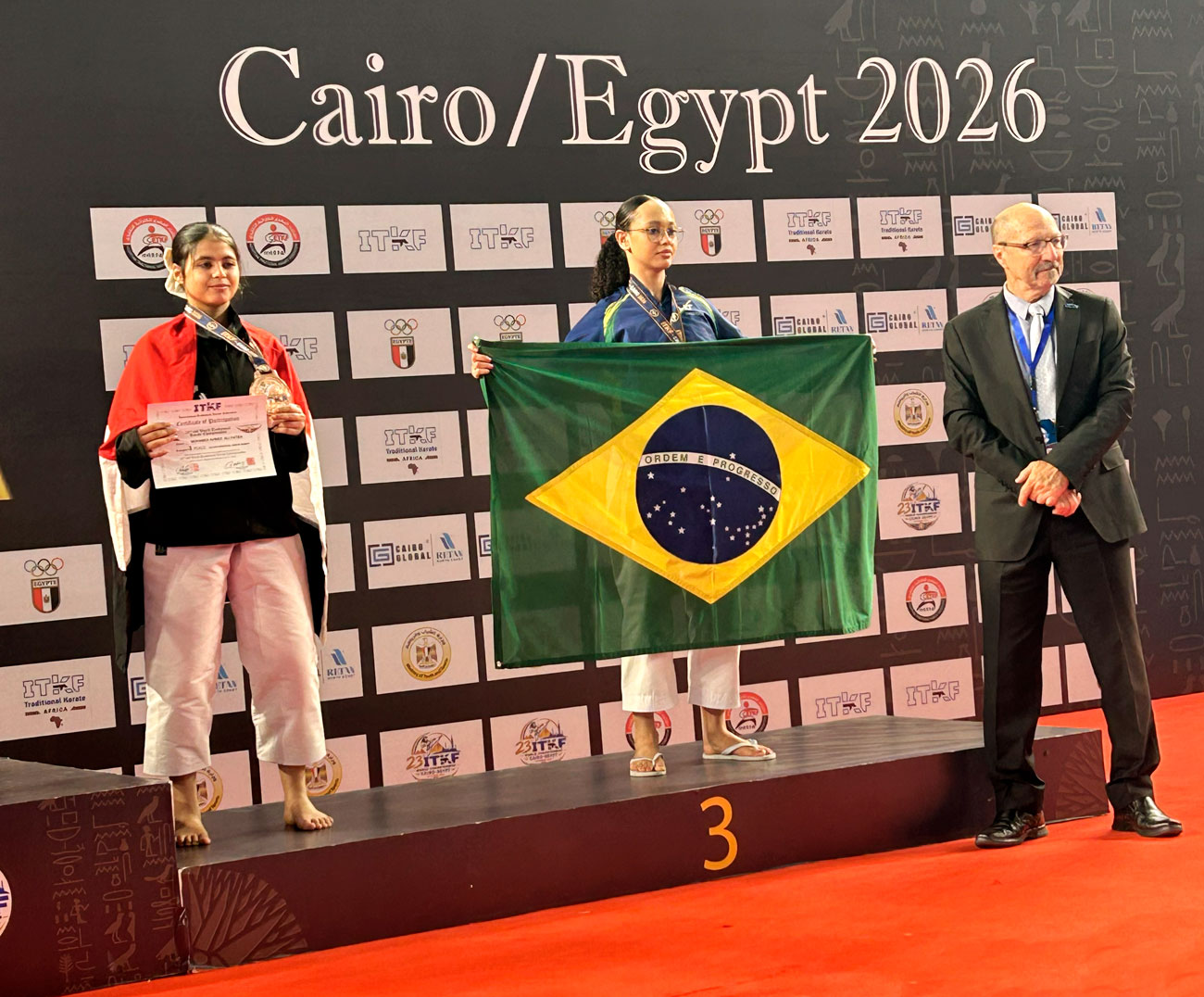
Gilberto Gaertner presents an award to a Brazilian athlete © CBKT
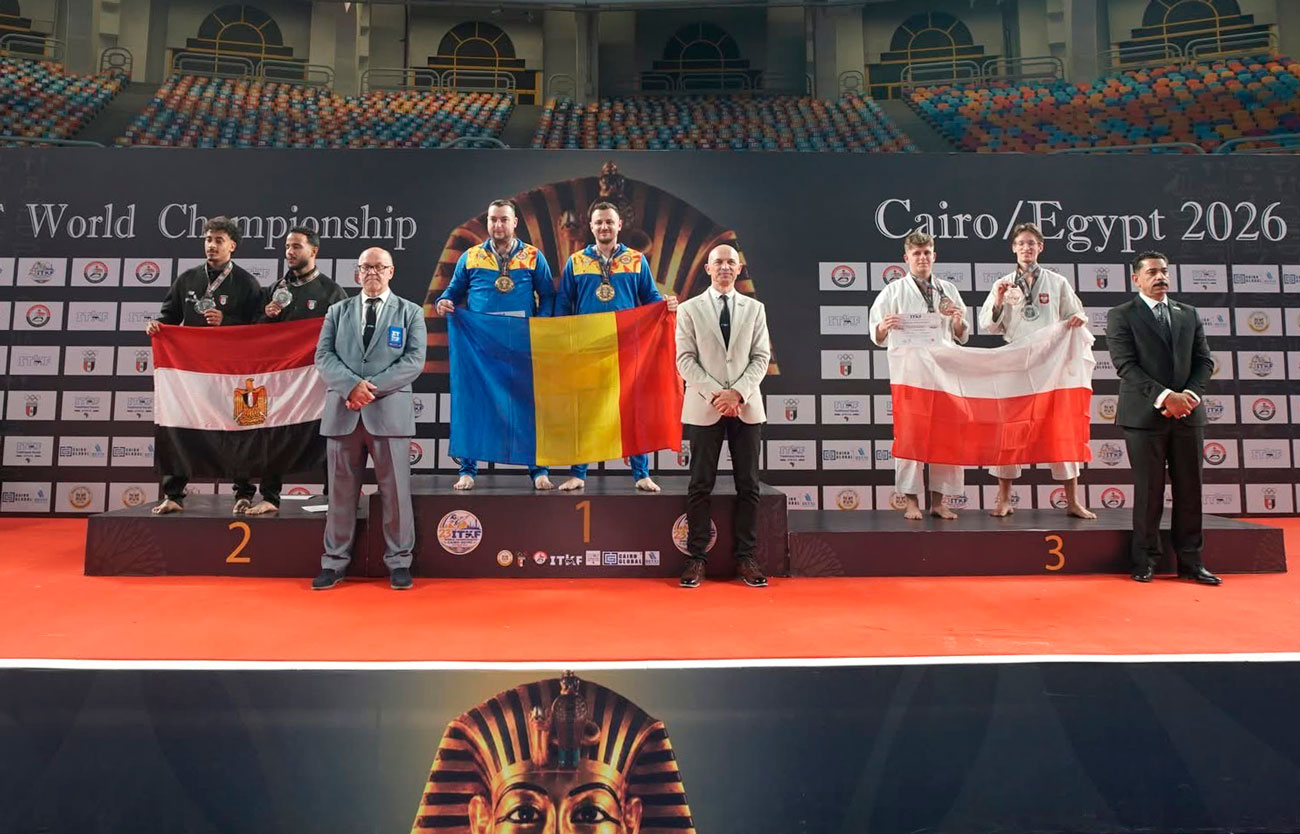
Men’s senior enbu podium: 1st Adrian Cristian Duță and Vlad Adrian Popescu (Romania), 2nd Ali Mohamed El-Shawh and Islam Zainhom Abdel Aal El-Shazly (Egypt) and 3rd Jan Bednarz and Dawid Nowak (Poland) © FKTR
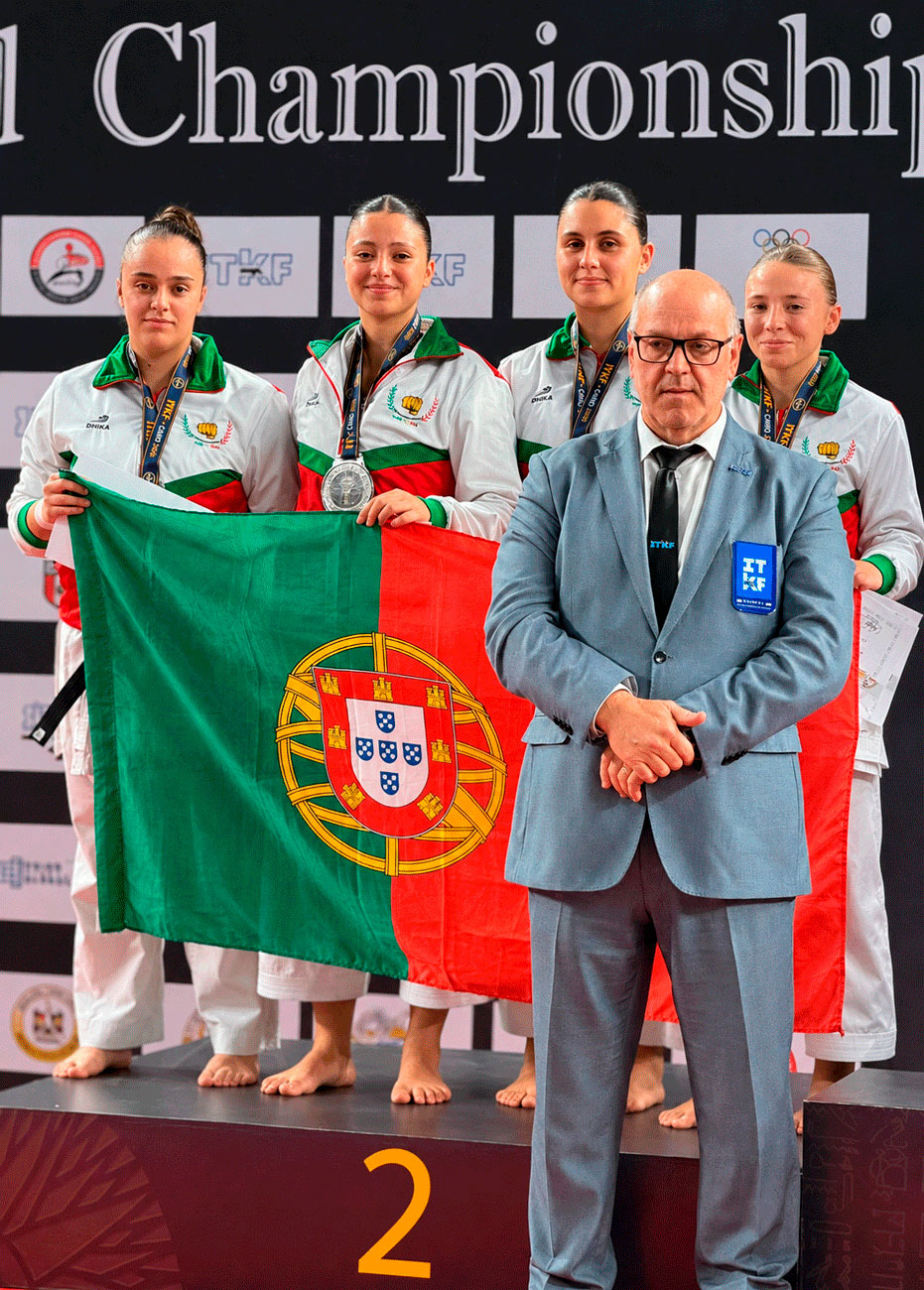
Fernando da Silva presents awards to Iris Silva, Clara Monteiro, Margarida Silva, Leonor Correia and Sofia Ferreira, runners-up in women’s youth team kumite © FBMP
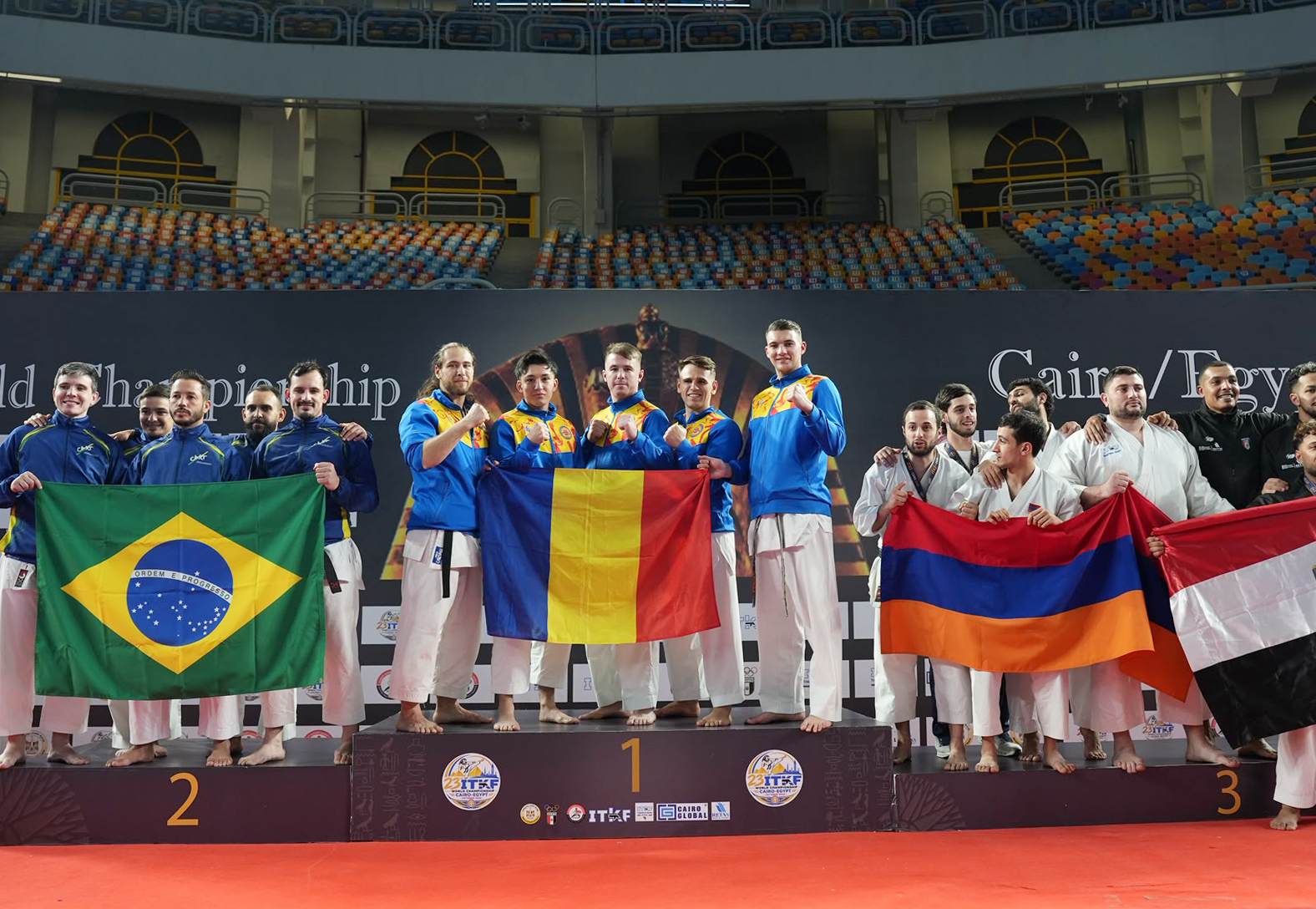
Men’s senior team kumite podium: 1st Romania (Dragos Balaiasa, Aurel Ciubotariu, Damian Cobirlau, Ren Hamakawa and Octavian Postolache); 2nd Brazil (Thiago de Lima Antonio, Victor Braga Marinho da Rocha, Luiz Carlos Fernandes Neto, Frank Willian Manera and Luan Caio Oliveira Severino); 3rd Egypt (Gaber Badry Gaber Sayed, Mohamed Ashry Kornei Abu El-Kheir, Mohamed Nabil Yehia El-Deeb, Mostafa Mohamed El-Nabawy and Ramy Abdel Fattah Hassan); and 3rd Armenia (Marat Harutyunyan, Erik Hovsepyan, Arman Karakhanyan, Narek Movsisyan and Artur Voskanyan) © FKTR
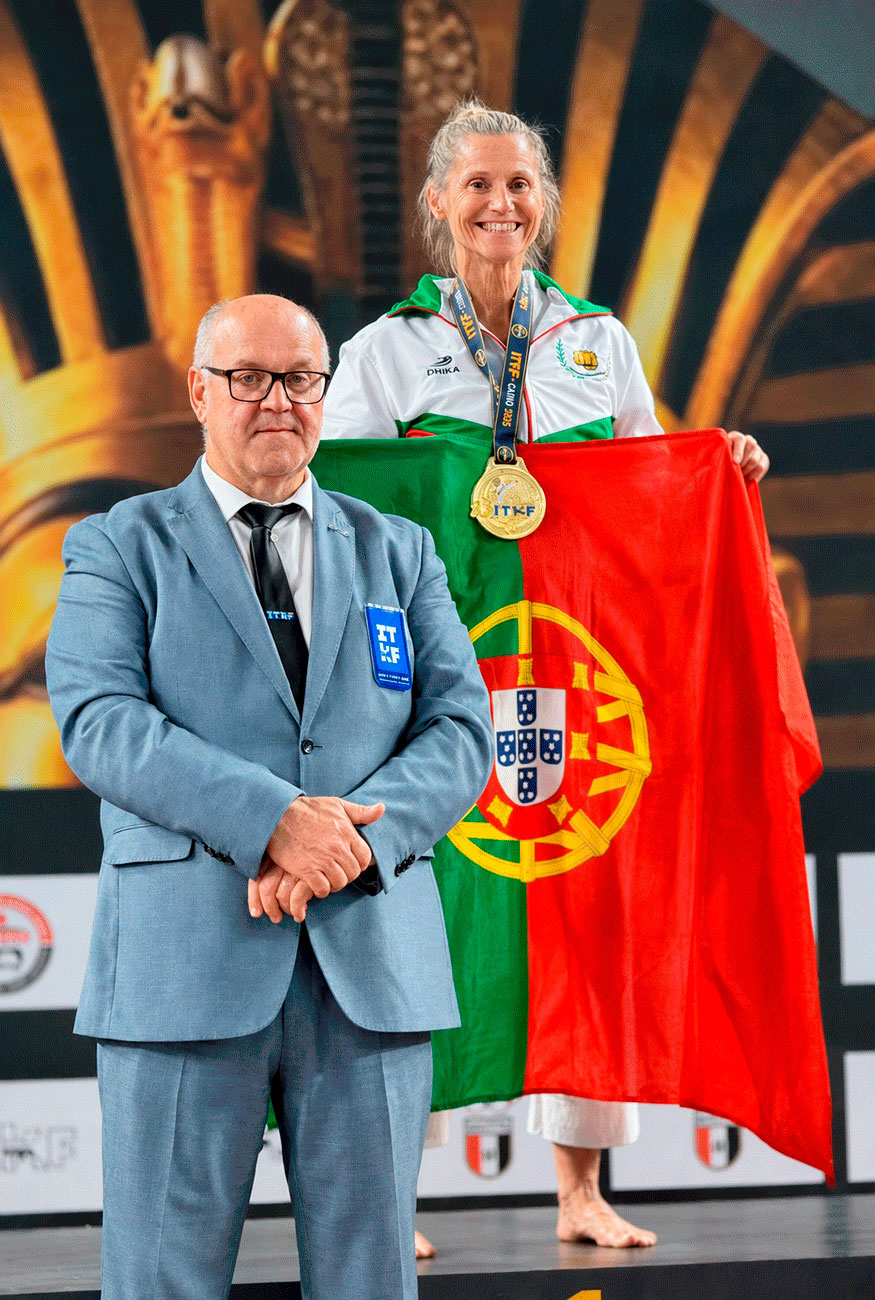
Fernando da Silva presents an award to Portugal’s Sandra Vieira, champion in women’s veterans kumite © FBMP
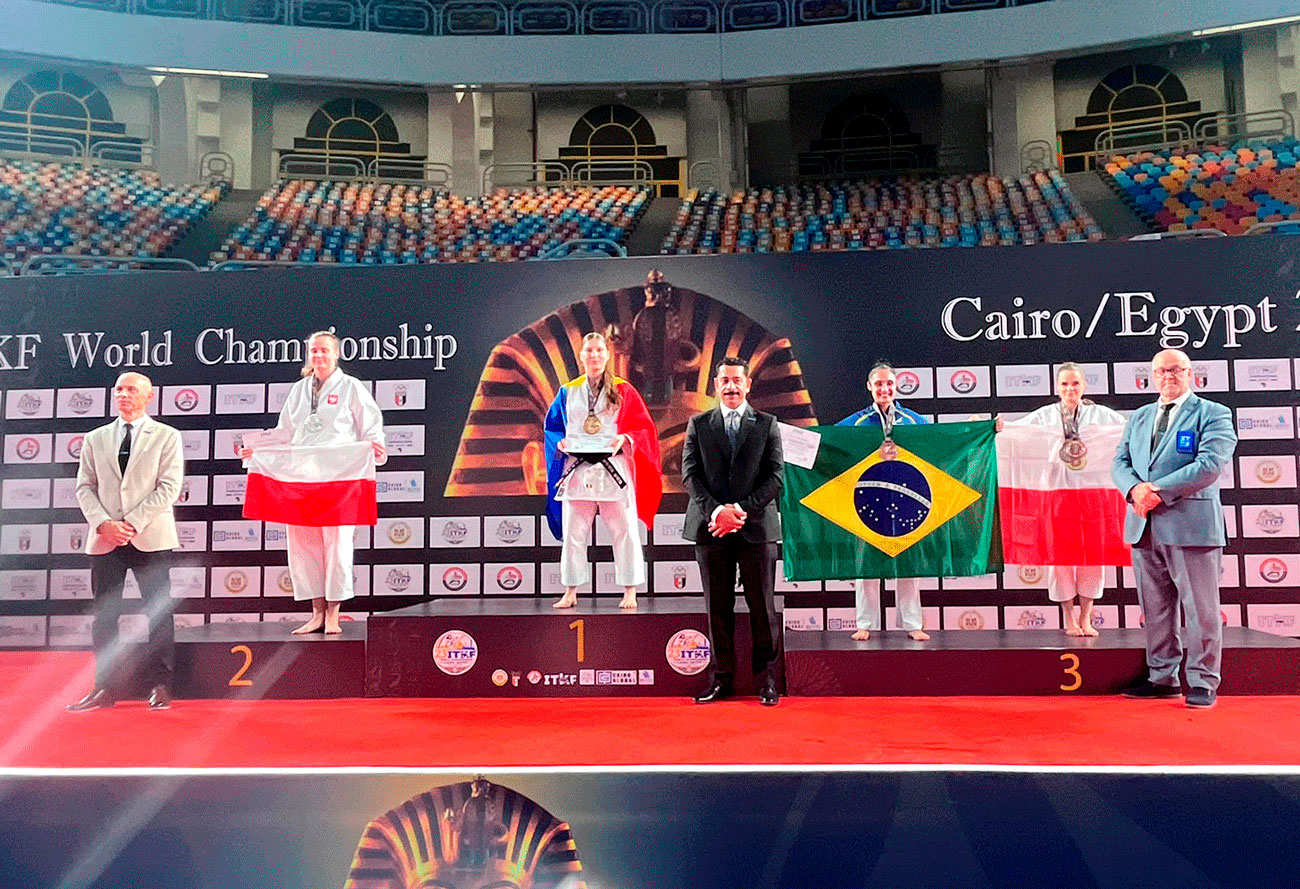
Women’s senior individual kumite podium: 1st Andreea Teodora Podărică (Romania), 2nd Anna Fall (Poland), 3rd Daria Bak (Poland) and 3rd Marjorie Barragan Rebello (Brazil) © FKTR
11 de novembro de 2026
11 de novembro de 2026
04 de novembro de 2026