
14 de outubro de 2026


 “Budo for Life” invites readers to explore the principles of Budo as a lifelong path toward personal growth and human development © Courtesy
Over more than four decades devoted to Traditional Karate, Israeli master Eyal Nir has built a career distinguished by some of the discipline’s highest credentials. A seventh-degree black belt (Shichi-dan), he trained directly under Sensei Hidetaka Nishiyama from 1982 to 2008, became an ITKF World Champion, founded the Israel Traditional Karate Federation, and currently serves as Secretary General of ITKF Europe.
His work, however, has never been confined to the tatami. Alongside his martial arts journey, he earned a master’s degree in Electrical Engineering, built a successful executive career in the high-tech industry, and taught at universities. These diverse experiences broadened his understanding of human behavior and the challenges faced by contemporary society.
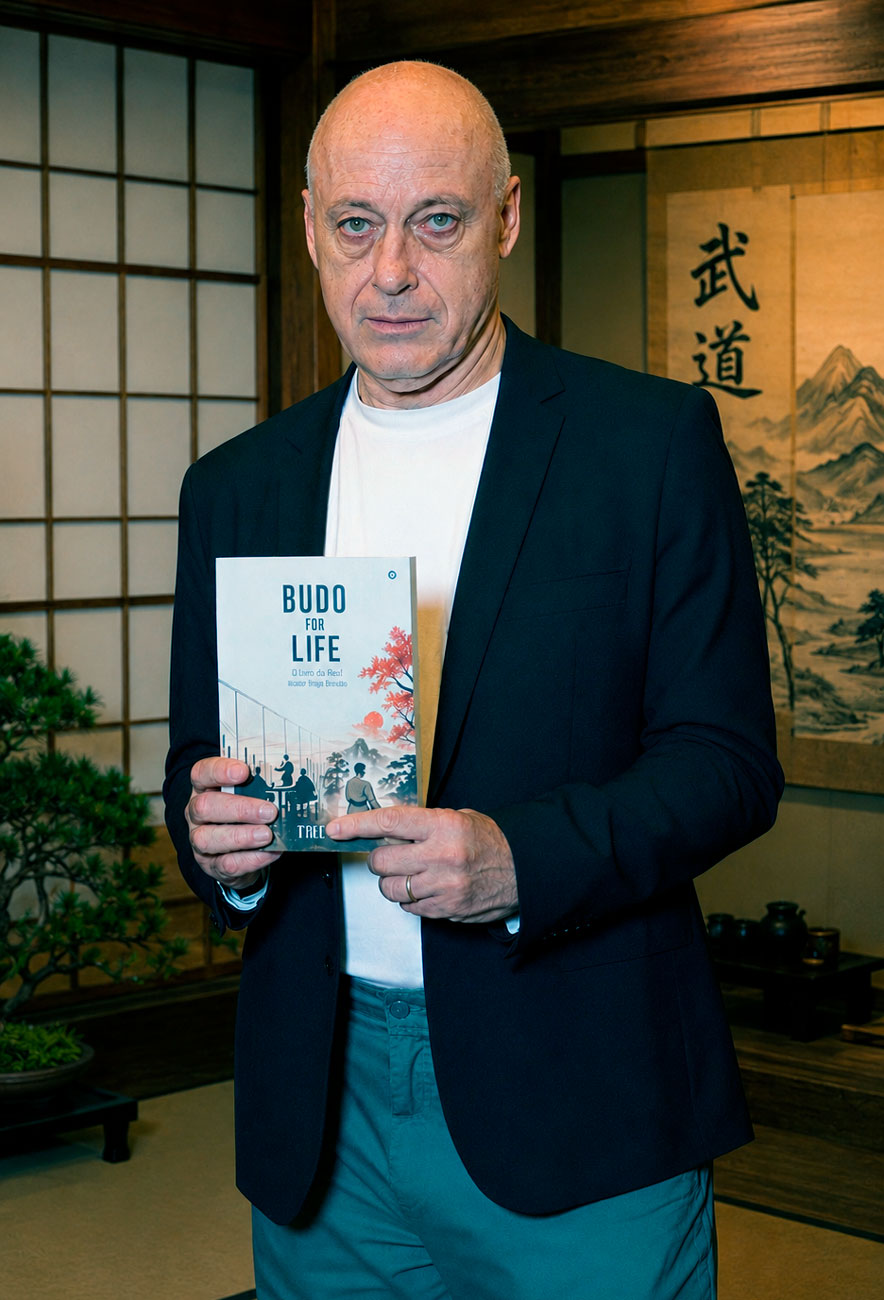
Eyal Nir presents Budo for Life, a work that brings together decades of study, practice, and reflection on the philosophy and values of Budo © Courtesy
It was precisely at the intersection of these two worlds—the tradition of Budo and the demands of modern life—that the philosophy guiding his work around the world took shape. Rather than limiting the teachings of martial arts to the dojo, Eyal Nir believes their principles can be applied to every aspect of daily life, from the workplace and leadership to family relationships and the countless situations that require composure under pressure.
This philosophy was consolidated through BuDo-Way, a program developed by the author himself and presented to thousands of participants worldwide through courses, lectures, and workshops. The program became the conceptual foundation of Budo for Life, a book that brings together decades of study, personal experience, and the teachings passed on by Sensei Hidetaka Nishiyama.
“Life is your dojo”
More than simply publishing another book on martial arts, Eyal Nir invites readers to rethink one of the most common assumptions shared by practitioners and non-practitioners alike: that the learning of Budo takes place exclusively inside the dojo. In his view, the true meaning of this legacy emerges when its principles are tested beyond the training hall, in the decisions that shape everyday life.
This philosophy is captured in a single sentence that runs throughout the book: “Life is your dojo.”
It reflects a perspective built through decades of practice, teaching, and research. Rather than adapting Budo to the modern world, Eyal Nir argues that its principles have never lost their relevance. What has changed is the environment in which they are applied. Where practitioners once faced an opponent on the tatami, today they may confront challenges in business meetings, strategic decisions, family conflicts, or any situation that demands emotional balance, clarity of thought, discipline, and the ability to act under pressure.
It is from this premise that Budo for Life was born. By combining traditional concepts, personal experiences, scientific foundations, and practical applications, Eyal Nir demonstrates that the teachings of Budo continue to offer meaningful answers to the complexities of contemporary life, reaffirming one simple yet profoundly transformative idea: True training begins the moment we leave the dojo.
When introducing the central concept of Budo for Life, Eyal Nir begins with a question that has accompanied him since his earliest years of training under Sensei Hidetaka Nishiyama: how can the principles developed through centuries of traditional martial arts continue to produce meaningful results once practitioners leave the tatami and return to the demands of modern life?
His answer has been shaped by decades of study, practice, and observation. Rather than viewing Budo as a collection of techniques limited to combat or sport, he presents it as a comprehensive method of human development—one capable of cultivating qualities that remain valuable wherever there is pressure, responsibility, conflict, or the need to make sound decisions.

From this understanding emerges the concept that defines the entire book: “Life is your dojo.”
According to Eyal Nir, the very same principles that enable a karate practitioner to remain calm in front of an opponent can also help an executive navigate a complex negotiation, a teacher lead a classroom, a student face a decisive examination, or anyone confronted with situations requiring emotional balance, discipline, and clarity of mind.
Rather than drawing simple parallels between martial arts and everyday life, the author demonstrates that a practitioner’s true training ground begins precisely when class is over. It is through everyday choices, human relationships, and the way each challenge is faced that the deepest value of Budo is revealed.
This philosophy is organized into a practical framework built around ten tools distributed across five progressive stages, inspired by Budo’s natural cycle of conduct. Instead of presenting isolated concepts, Eyal Nir offers a logical path of personal development that begins with physical and mental preparation, progresses through the ability to assess situations accurately, recognize opportunities, act with determination, and ultimately maintain a constant state of awareness even after each action has been completed.
The objective is not to provide ready-made solutions for everyday problems, but to help readers develop the skills needed to build their own answers with composure, awareness, and responsibility.
“The dojo remains the place where everything begins. Life, however, is where that learning finds its true meaning.”
Each chapter bridges traditional teachings with the realities of contemporary life. Alongside classical Budo concepts, the author presents real-life professional and personal situations, practical exercises designed to strengthen specific skills, episodes drawn from his own journey, teachings received directly from Sensei Hidetaka Nishiyama, and references to neuroscience that explain—through a scientific perspective—the impact these principles have on human behavior.
This combination is one of the book’s most distinctive strengths. Rather than relying on motivational rhetoric or simplistic self-improvement formulas, Eyal Nir demonstrates that self-control, concentration, emotional stability, and sound decision-making are skills that can be systematically developed—just as they are through the disciplined practice of Traditional Karate.
Throughout the book, Eyal Nir deliberately avoids presenting Budo as a philosophy detached from today’s world. On the contrary, his approach is rooted in the conviction that the principles passed down through generations of masters remain fully relevant because they address enduring aspects of the human condition.
Times change. Professions evolve. Technology advances. Human relationships take new forms. Yet the essential challenges remain the same: fear, anxiety, impulsiveness, information overload, the need for effective leadership, and the ability to make sound decisions under pressure.
From this perspective, Budo for Life is not simply about learning how to face an opponent. It is about developing a mindset capable of guiding conscious decisions in every circumstance of life.
It is precisely this shift in perspective that distinguishes the book from much of today’s personal development literature. While many publications focus primarily on motivation, Eyal Nir proposes a path grounded in discipline, repetition, mindful practice, and the gradual development of character and competence—principles that have been at the heart of Budo since its very origins.
Ultimately, the author’s central message may also be its simplest. The true legacy of martial arts lies not merely in the precise execution of techniques, but in the ability to transform that learning into a way of living.
The dojo remains the place where everything begins. Life, however, is where that learning finds its true meaning.
The English edition of Budo for Life – From the Dojo to the Boardroom is now available on Amazon. Get your copy on Amazon – Budo for Life

14 de outubro de 2026
14 de outubro de 2026
13 de outubro de 2026