
27 de outubro de 2026


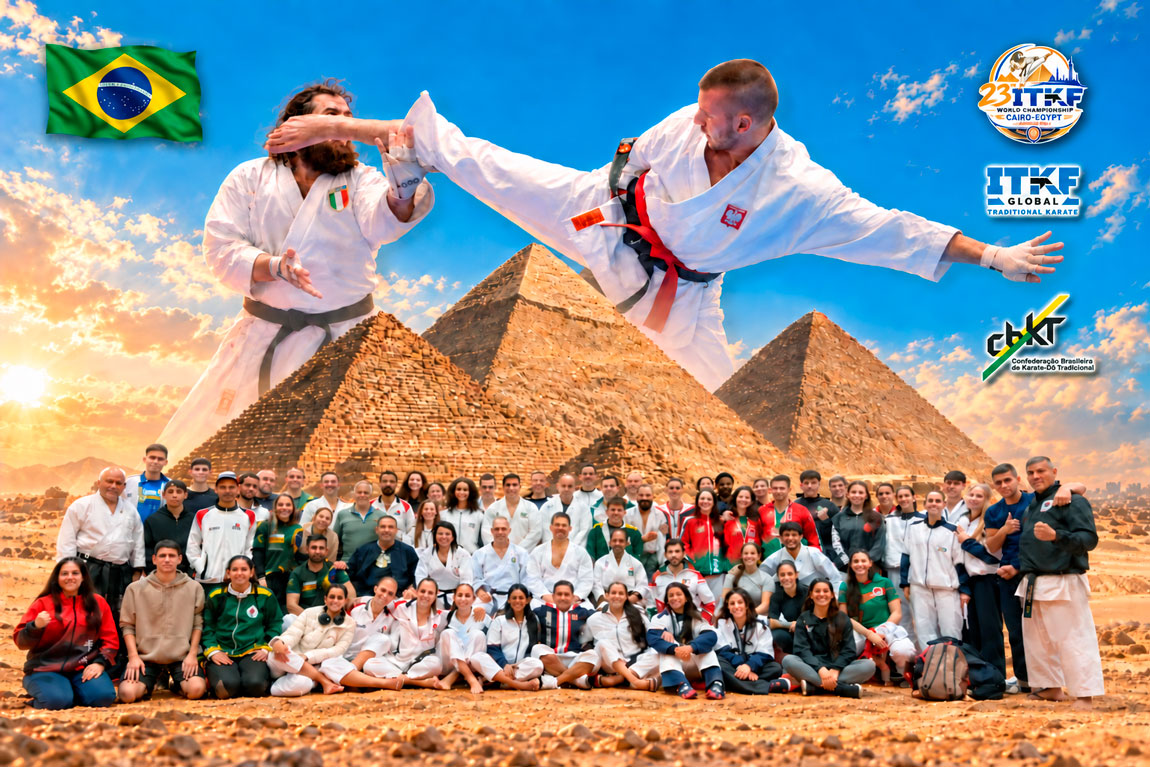 Drawing on their proud history and team unity, Brazil aim for the top of the world in Cairo © Imagem gerada por IA / Global Comunicação
Brazil will travel to Cairo with the aim of reclaiming top spot at the Traditional Karate World Championships. Champions in Slovenia in 2022 and runners-up in Portugal in 2024, the team are preparing a delegation of approximately 120 people for the 2026 edition. Athletes, referees, officials and coaching staff are expected to come together in a campaign that combines the international experience of established team members with the arrival of a new generation.
As technical coordinator of the Brazilian Traditional Karate Confederation (CBKT), Vinicius Sant’ana Pinto, known as Vina, sees the pursuit of the title as the result of work encompassing sporting preparation, organisation and wider participation in national competitions. According to him, the number of athletes taking part in these events has grown by approximately 30% this year.
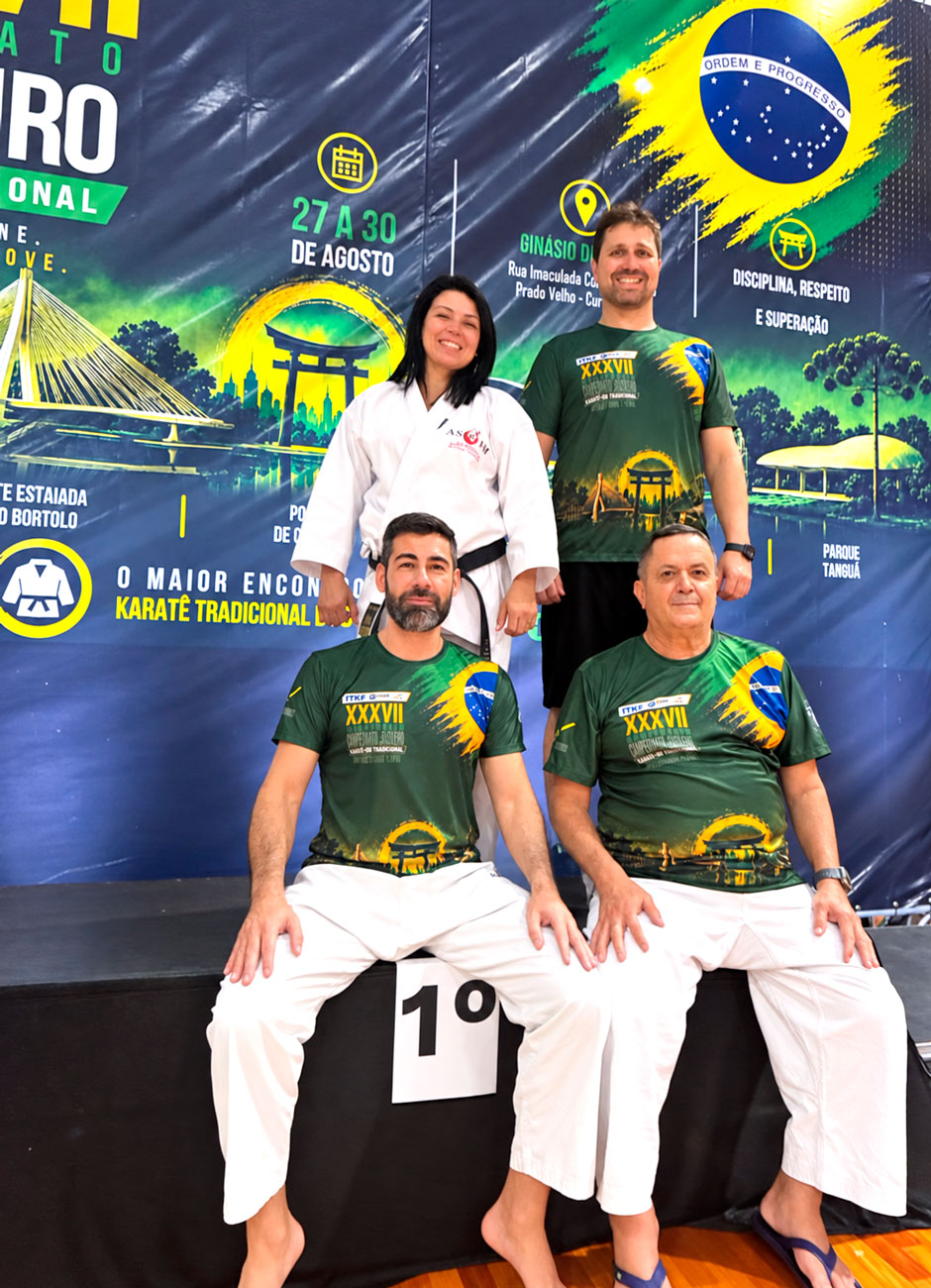
Sônia Coutinho, president; Vinicius Sant’ana Pinto, technical coordinator; Rafael Alves, executive director; and Paulo Uchoa, CBKT finance director: members of the new leadership overseeing planning, technical preparation and organisation for the Cairo World Championships © CBKT
The interview is part of a Revista Budô and Global Sports series on the preparations of the five highest-placed national teams at the World Championships in Portugal. Following their 2022 and 2024 campaigns, Brazil face the challenge of returning to the top against opponents who are also heading to Egypt with title ambitions.
“We respect all our opponents, but we are working with a very clear conviction: we want to challenge for the 2026 overall title,” says Vina.
Led by karate instructor Sônia Coutinho, the CBKT’s new administration, elected this year, has made preparations for Cairo one of its main responsibilities. Organising a delegation of this size requires technical work to progress alongside administrative, financial and logistical planning.
Explaining how the confederation is managing this process, Vina highlights the involvement of its different departments. The aim is to provide the conditions for the national team to compete at a high level at the World Championships, supported by a structure that meets the needs of the athletes and professionals involved.
“From the start of our term, we made the World Championships a strategic priority, bringing together athletes, coaches, referees, officials and all the support needed to ensure that Brazil arrive in Egypt ready to compete at a high level.”
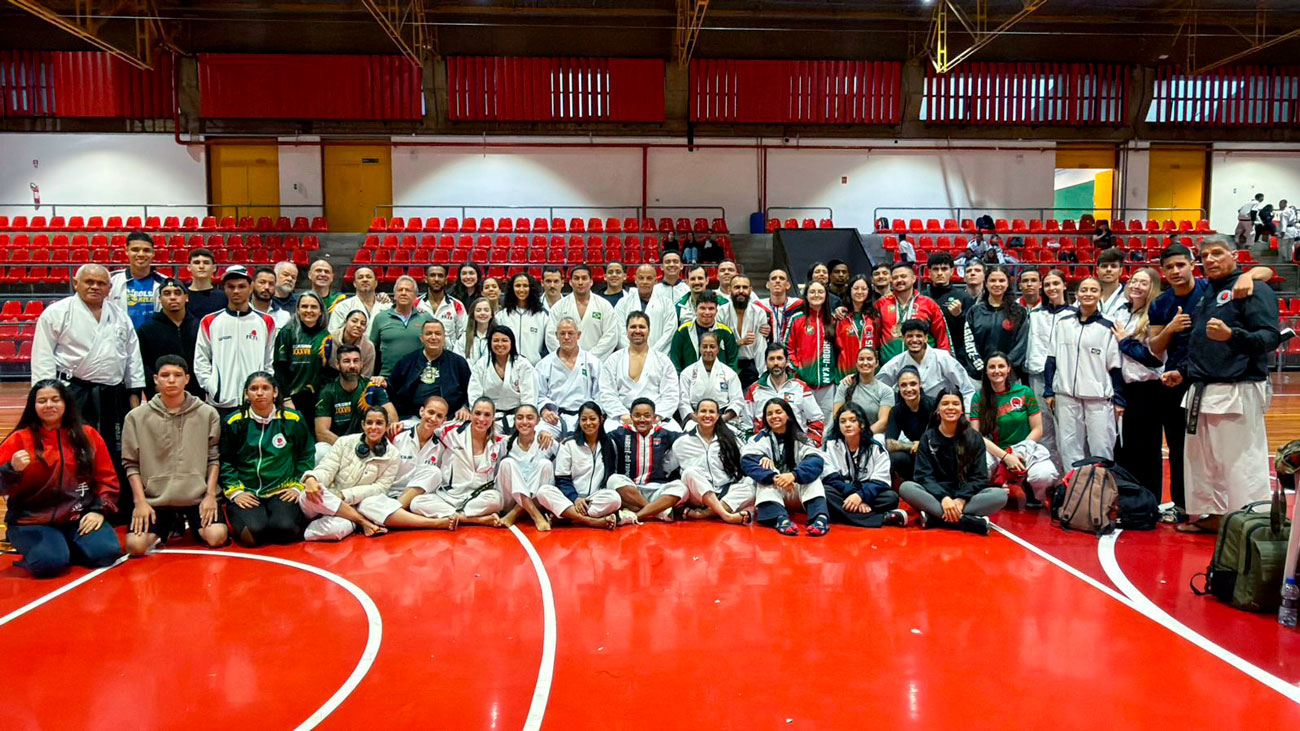
Officials, coaches and athletes form part of the Brazilian delegation preparing for the Cairo World Championships © CBKT
Alongside President Sônia Coutinho, the board composition provided by the CBKT includes Antônio Carlos Tanner as second vice-president; Marcelo Alessandro Pereira as secretary; José Marcos as legal director; Rafael Alves as executive director; Paulo Uchoa as finance director; and Sérgio Bastos as technical director.
As technical coordinator, Vina oversees preparations that, according to his account, seek to combine the development of the talent base with the demands of high-performance sport. The World Championships are the immediate commitment, but expanding participation at national level is also part of the longer-term outlook he describes.
“We want an increasingly well-organised, modern and competitive CBKT, capable of developing athletes for the present and the future.”
The first woman elected president of the Brazilian Traditional Karate Confederation, Sônia Coutinho will face one of the first major international challenges of her tenure at the Cairo World Championships. Before departure, the Brazilian team will gather at the PUC-PR facilities in Curitiba from 17 to 23 October for their final preparations. The training camp will also offer an opportunity to strengthen cohesion within the delegation and consolidate the work led by the coaching staff.
“We have brought together a united delegation, and we want to strengthen that commitment during our final preparations in Curitiba. Having the whole team working together will allow the coaching staff to make the final adjustments and each member to understand their responsibility for the collective result. We want our athletes to depart with confidence in the work they have done and knowing that they will have the support of the entire team.”

For Sônia, the new board intends to demonstrate in Cairo the importance it places on preparation and on everyone’s contribution to achieving results. The pursuit of the overall title reflects that purpose, with respect for the other national teams and the demands of a world championship.
“We want these World Championships to mark the start of our administration through organisation, unity and care for our athletes. Brazil have a track record that gives us confidence to pursue the title, but we know that success has to be built with every performance. Our responsibility is to provide the best conditions within our means so that the team can show what they are capable of in Cairo.”
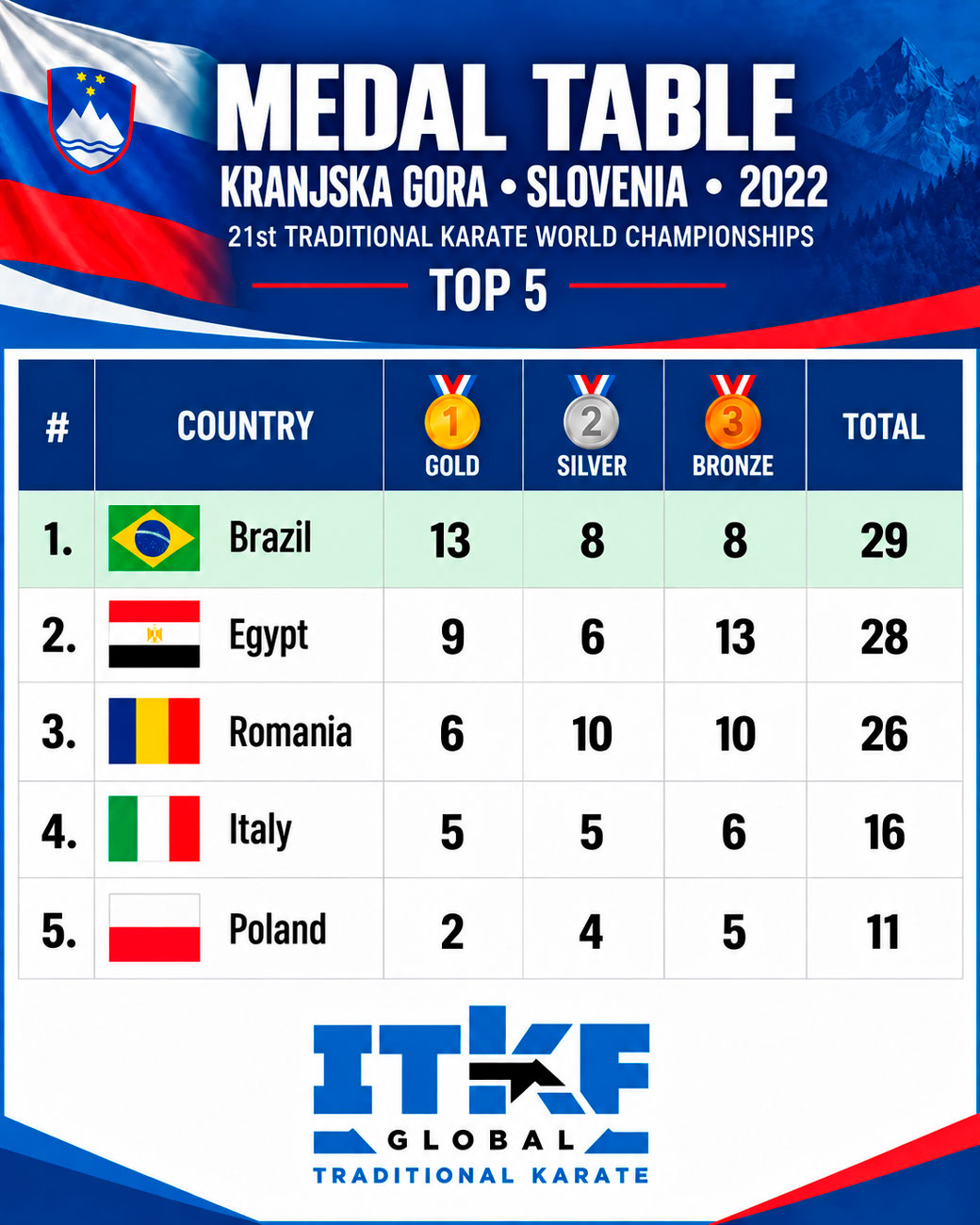
Recent history helps put Brazil’s ambition into perspective. At the 2022 World Championships in Slovenia, Brazil topped the medal table with 13 golds, eight silvers and eight bronzes, a total of 29 medals. Egypt, Romania, Italy and Poland completed the top five.
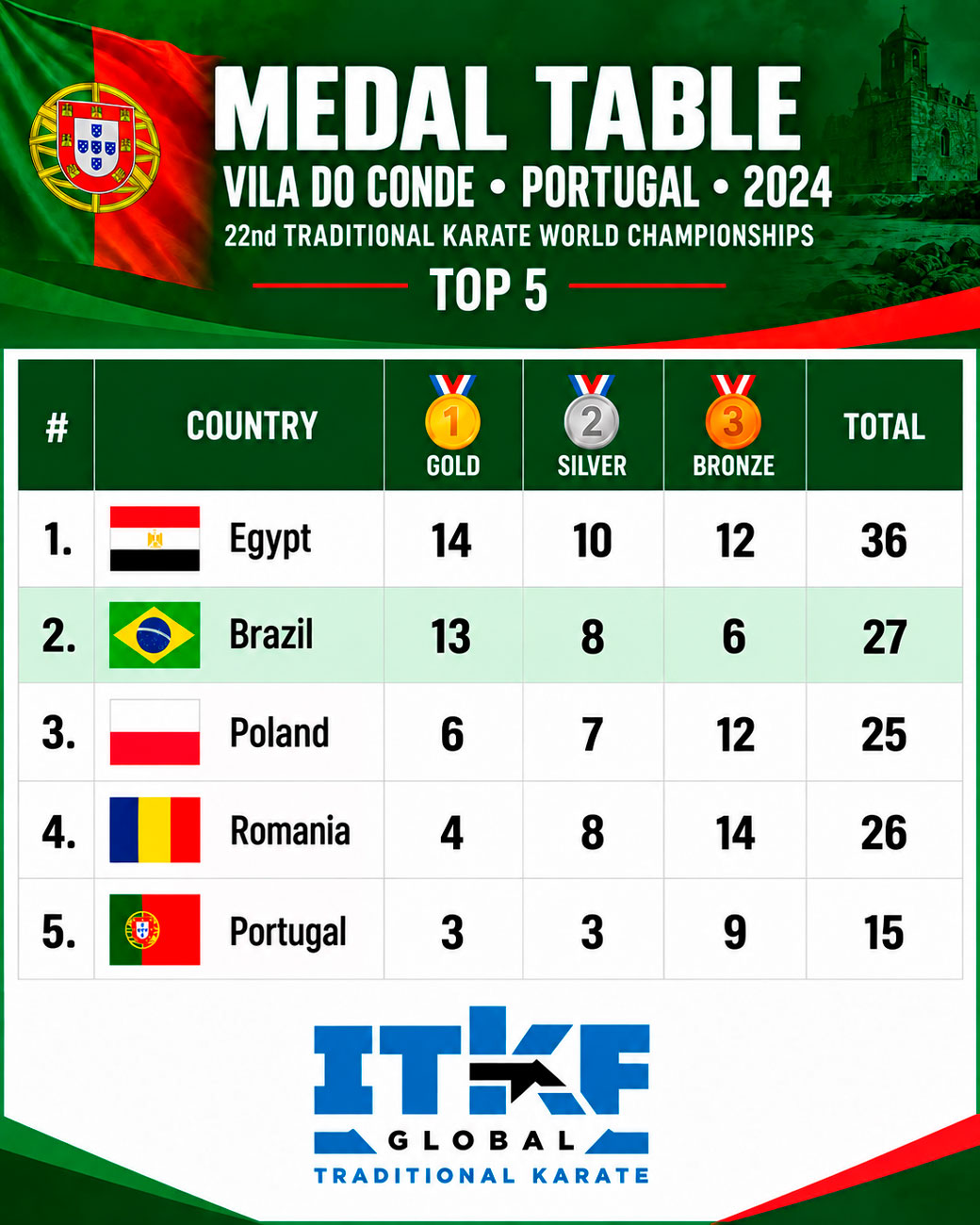
In Portugal in 2024, Brazil again won 13 gold and eight silver medals, along with six bronzes. Their 27 medals secured second place overall, behind Egypt. The country therefore remained among the leading nations, but will arrive in Cairo to face the reigning champions on home soil.
For Vina, the result in Portugal should serve as a benchmark for improving the team. The responsibility of representing a national side coming off a title and a runners-up finish is viewed as motivation during preparations.
“Now the aim is to take another step forward. We are working to turn the experience gained in Portugal into performance, organisation and results in Cairo.”
According to the coordinator, Brazil’s preparations continued after the World Championships in Portugal ended. National competitions, assessments, training and athlete monitoring form part of the work carried out throughout the cycle.
Within this process, Vina presents the approximately 30% increase in participation at national level as an indication of a growing competitive base. These events provide opportunities to assess performances, identify talent and track the progress of athletes who may go on to join the national team.
“It is at these competitions that we can identify talent, follow athletes’ progress, develop new generations and prepare those who will be ready to represent Brazil.”
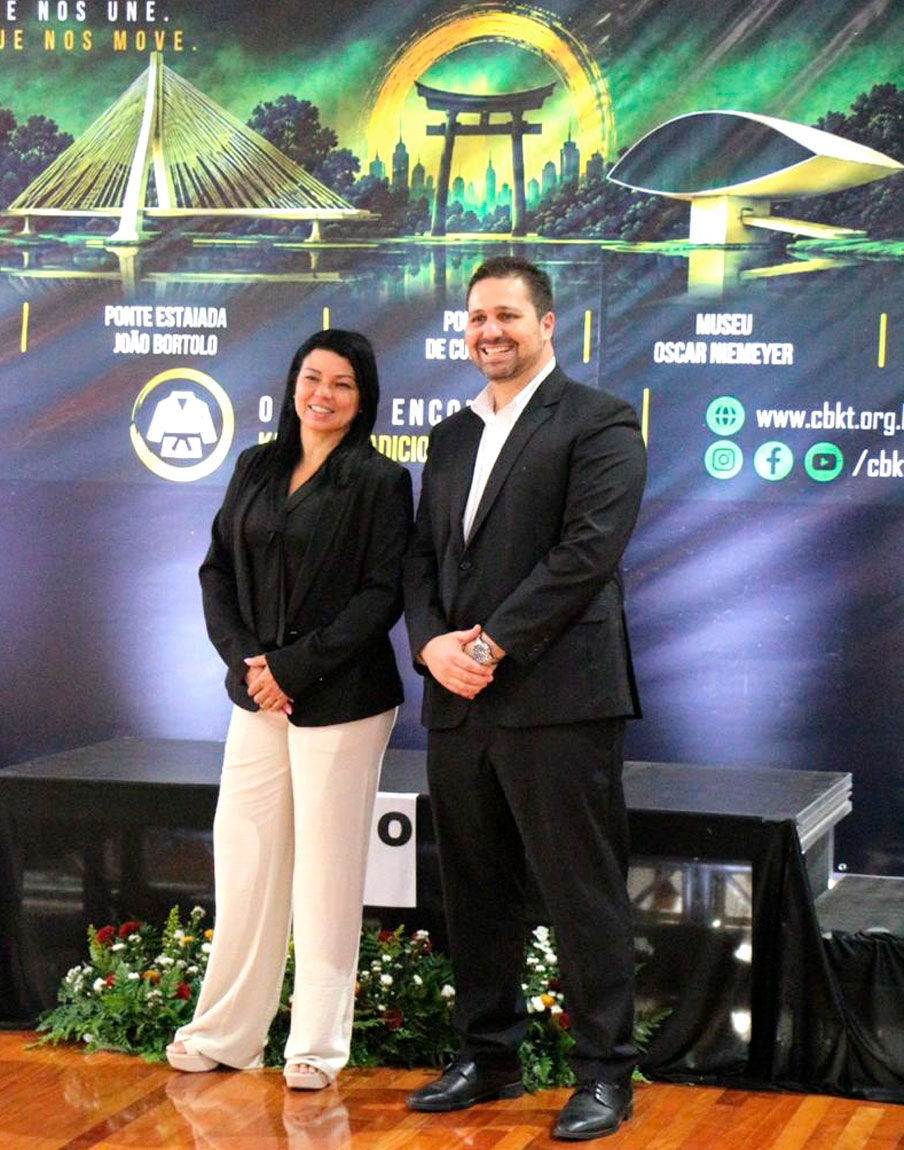
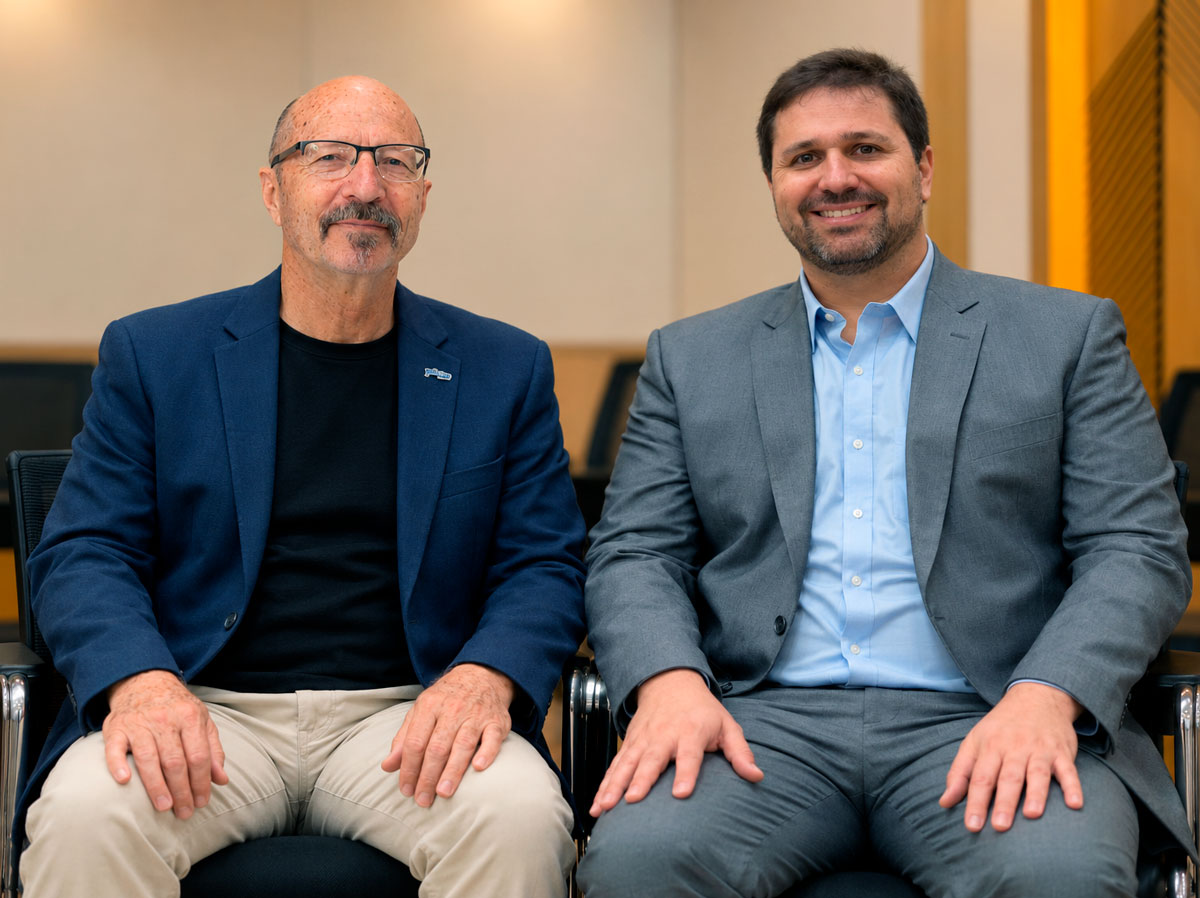
Sônia Coutinho and Vinicius Sant’ana Pinto, known as Vina: the CBKT’s new leadership is relying on a carefully selected team to broaden the horizons of Brazilian traditional karate © CBKT
In the final stage, the focus shifts to technical, physical and emotional preparation. The challenge is to translate training into performance under the demands of a world championship, while continuing to make room for new athletes in the team.
The senior national team will be coached by Paraná instructor Nelson Santi, with Thiago Lima as assistant coach. The under-18 team will be led by Sensei Arlene Amarante, from Mato Grosso, assisted by Cristiane Babinski, from Paraná. Vinicius Sant’ana Pinto, also from Paraná, is responsible for technical coordination, while Sérgio Bastos, from Bahia, serves as the CBKT’s technical director.
This staff will support a group combining athletes already familiar with international competition and new representatives. According to Vina, the arrival of new athletes is linked to the growth seen in Brazilian competitions.
“Alongside the experience of athletes who are already familiar with major international competitions, we are making room for a new generation that has been growing as our national competitions become stronger.”
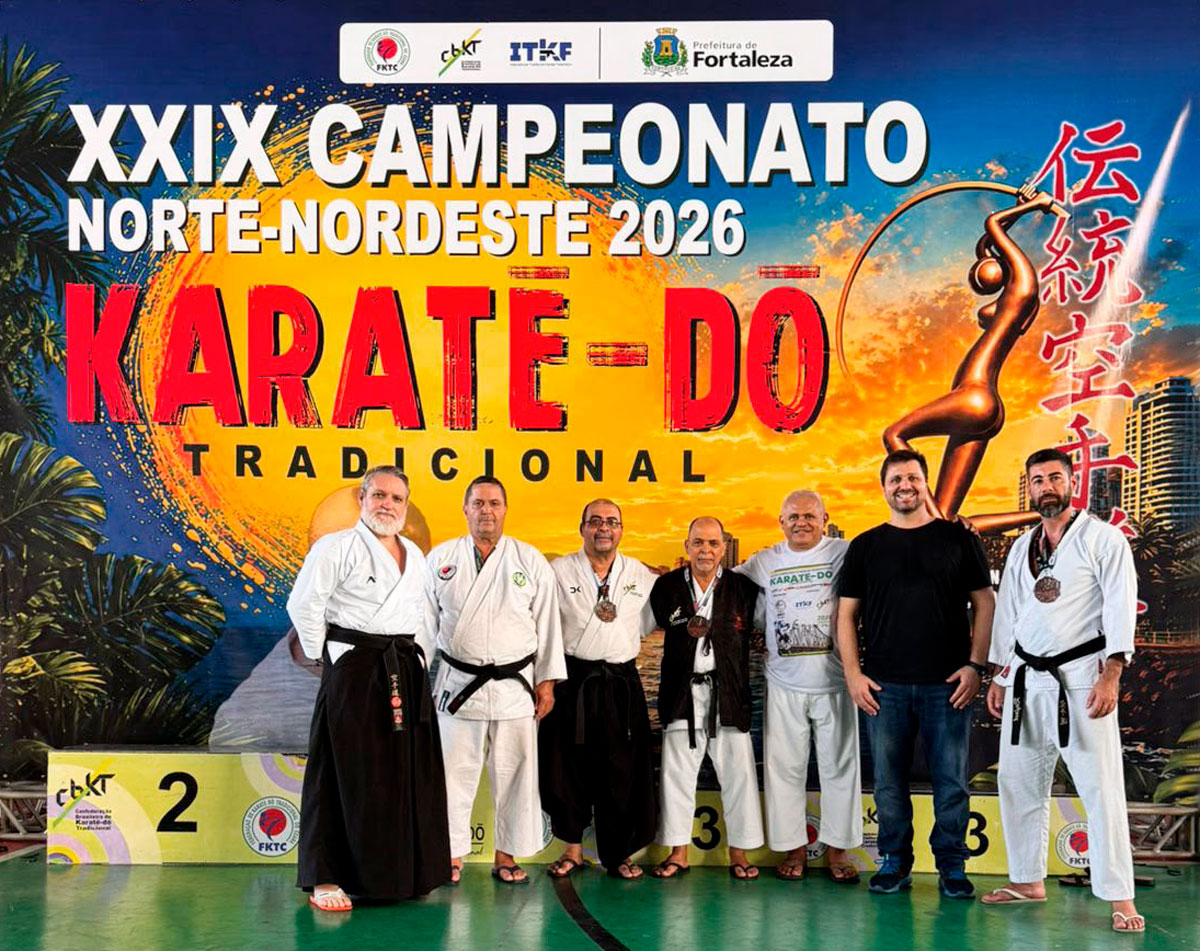
Marcelo Alessandro Pereira, secretary; Paulo Uchoa, finance director; Carlos Bastos, legal director; Sérgio Bastos, technical director; instructor Wellington [surname], president of the Ceará Federation; Vinicius Sant’ana Pinto, technical coordinator; and Rafael Alves, executive director: officials contributing their experience to the administration and development of Brazilian traditional karate © CBKT
The prospect of a delegation of approximately 120 people brings demands that extend beyond sporting preparation. Transport, accommodation, meals and arrangements for participation must all be coordinated for a journey to another continent.
Vina identifies financial, logistical and administrative matters among the main challenges. The size of the delegation requires planning and the development of partnerships, and the figure given remains an estimate of Brazil’s participation.
“That is why the administration’s work also involves planning, bringing people together and building partnerships to ensure that our delegation has the best possible conditions to represent Brazil.”
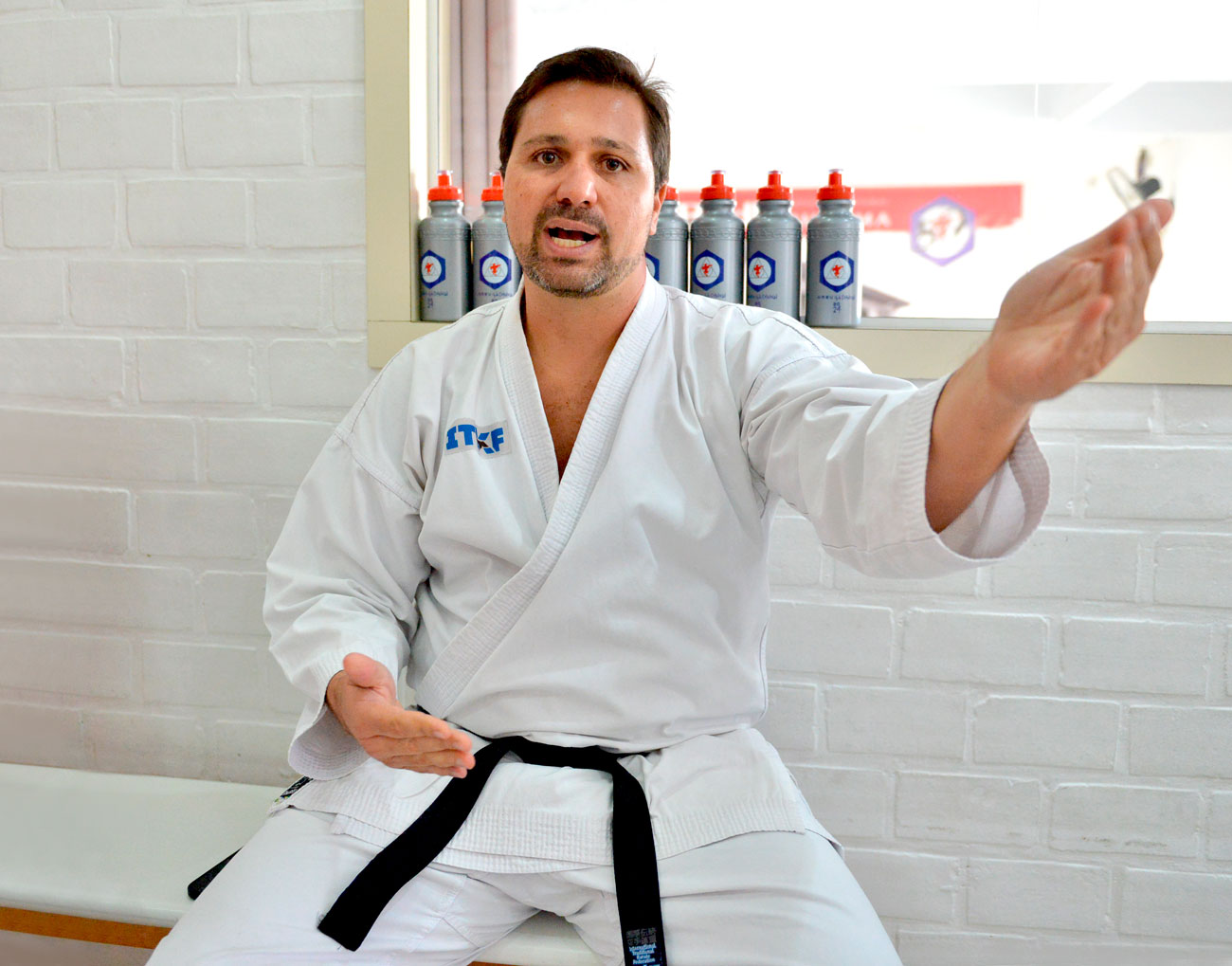
Vinícius Santana, technical coordinator of the Brazilian Confederation, discusses the Brazilian team’s preparations and unity in their pursuit of the world title in Cairo © CBKT
The coordinator sees athletes, coaches, referees, officials, families and supporters as part of this campaign. In his message to the group, he links competitive ambition to recognition of the history built by the sport and the responsibility of representing the country.
“We are going to Cairo with respect for our opponents, an awareness of our responsibility and, above all, the conviction that we can be overall champions at the 2026 World Championships.”
27 de outubro de 2026
26 de outubro de 2026
26 de outubro de 2026