
14 de fevereiro de 2026



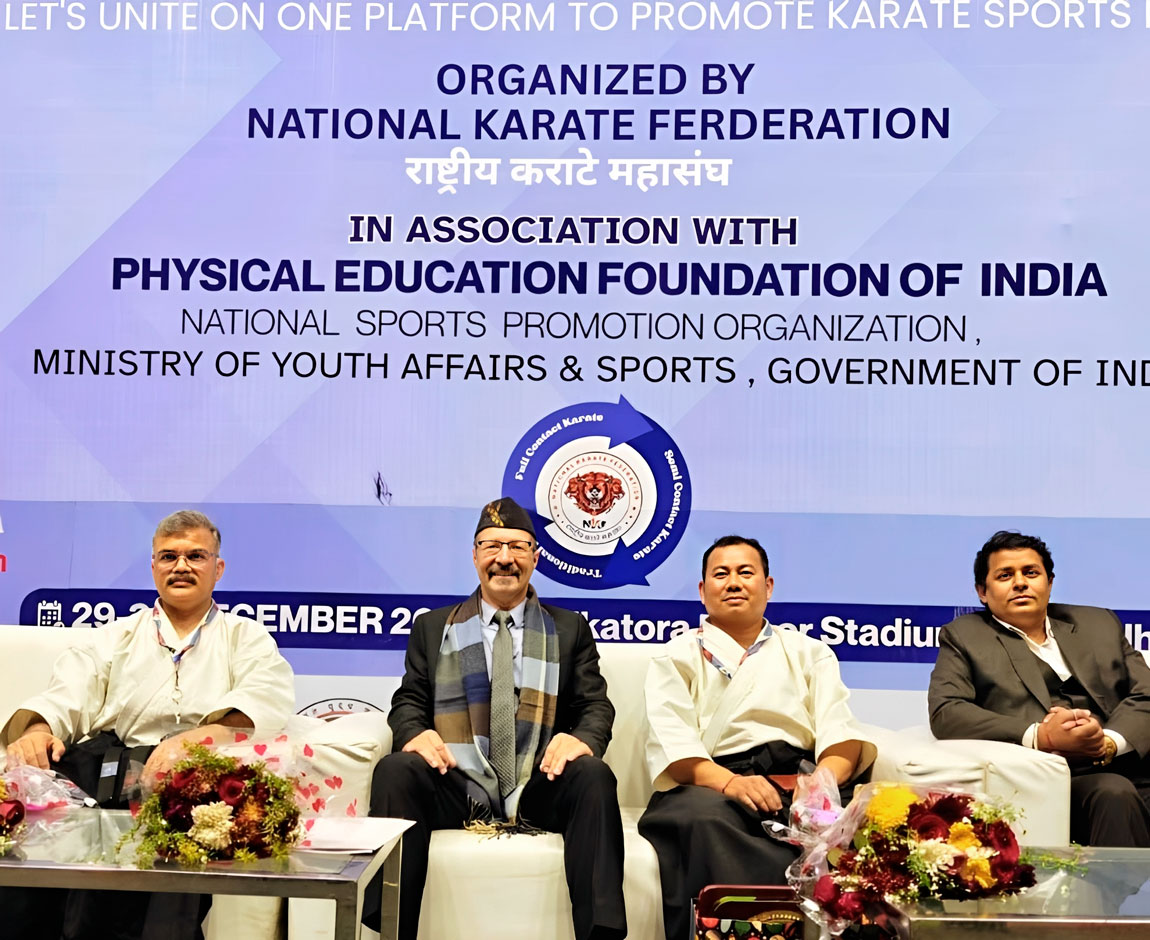 Gilberto Gaertner, President of ITKF, alongside Jitesh Kumar, Technical Director of NKF Bharat, Ishwar Thapa, President of the Indian federation, and Manoj Kumar Mishra, Secretary-General of NKF Bharat, during the ITKF Asia–Oceania Tour 2025, in New Delhi © ITKF
India reaffirmed its position as one of the most relevant emerging hubs of Traditional Karate on the international stage by hosting, from December 27 to 30, 2025, the second stage of the ITKF AsiaTour 2025.
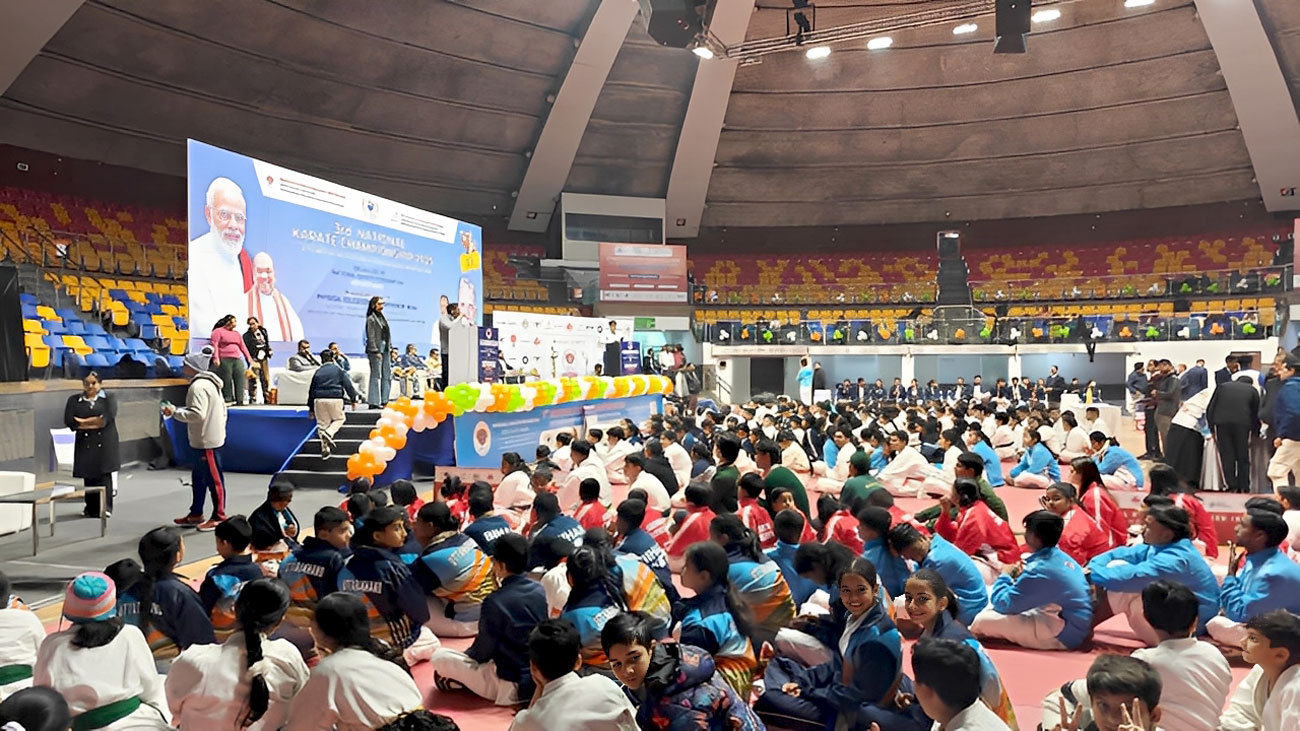
Opening ceremony of the Indian National Karate Championship © ITKF
Held at the Talkatora Indoor Stadium in New Delhi, the event brought together more than 3,000 participants, including athletes, instructors, federation leaders, sports authorities and government representatives, highlighting a significant organizational, technical and political leap achieved by the National Karate Federation – NKF Bharat.
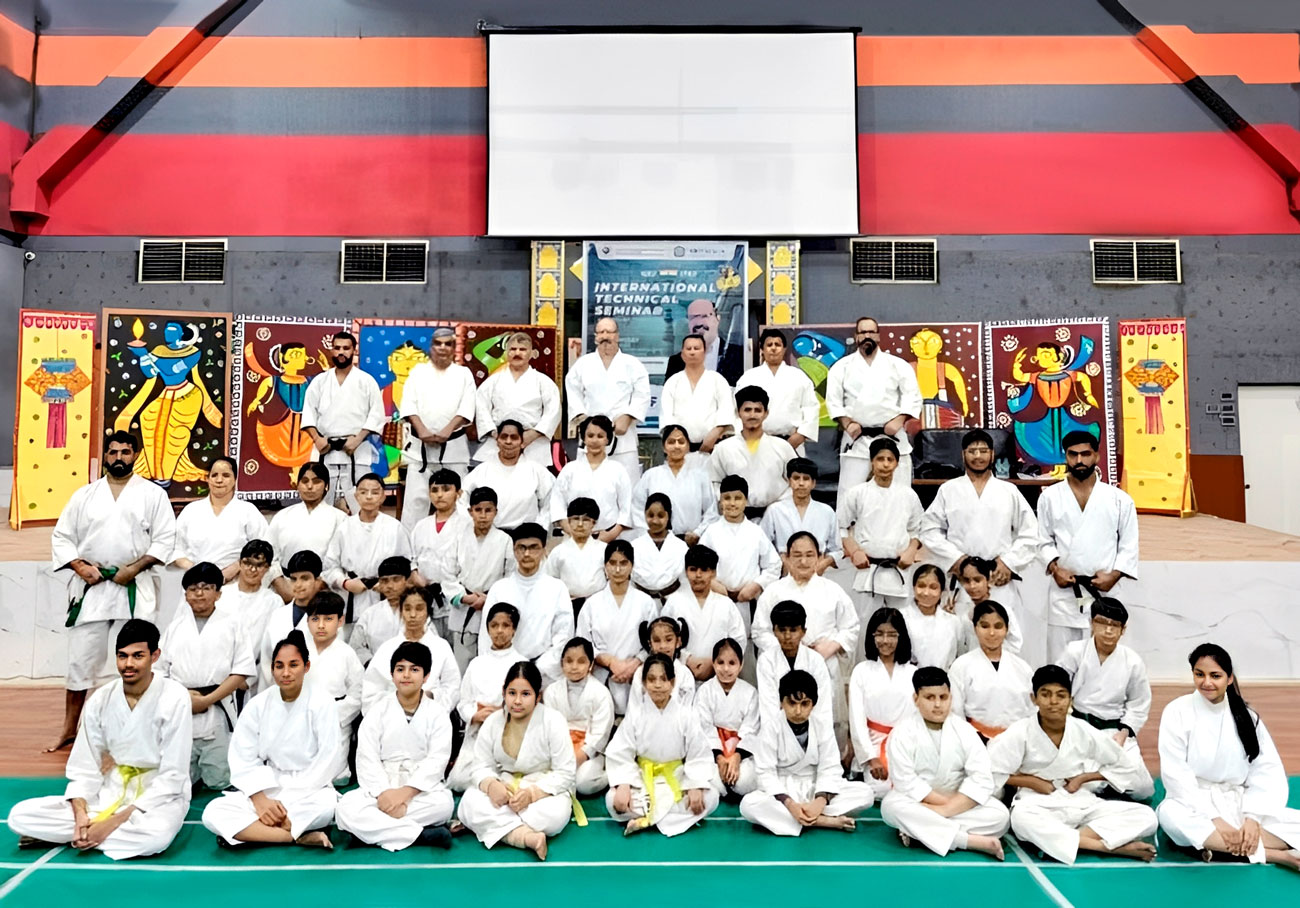
Part of the participants of the International Traditional Karate Technical Seminar held in New Delhi © ITKF
The Indian stage consolidated the country as a strategic platform for ITKF Global in Asia, not only due to the scale of the event, but also because of its demonstrated ability to integrate technical education, national competition, institutional articulation and government support within a single, well-structured project.
The event was organized by NKF Bharat in partnership with the Physical Education Foundation of India (PEFI) and received direct institutional support from the Ministry of Youth Affairs and Sports of the Government of India, a factor that added political strength and public legitimacy to the initiative.
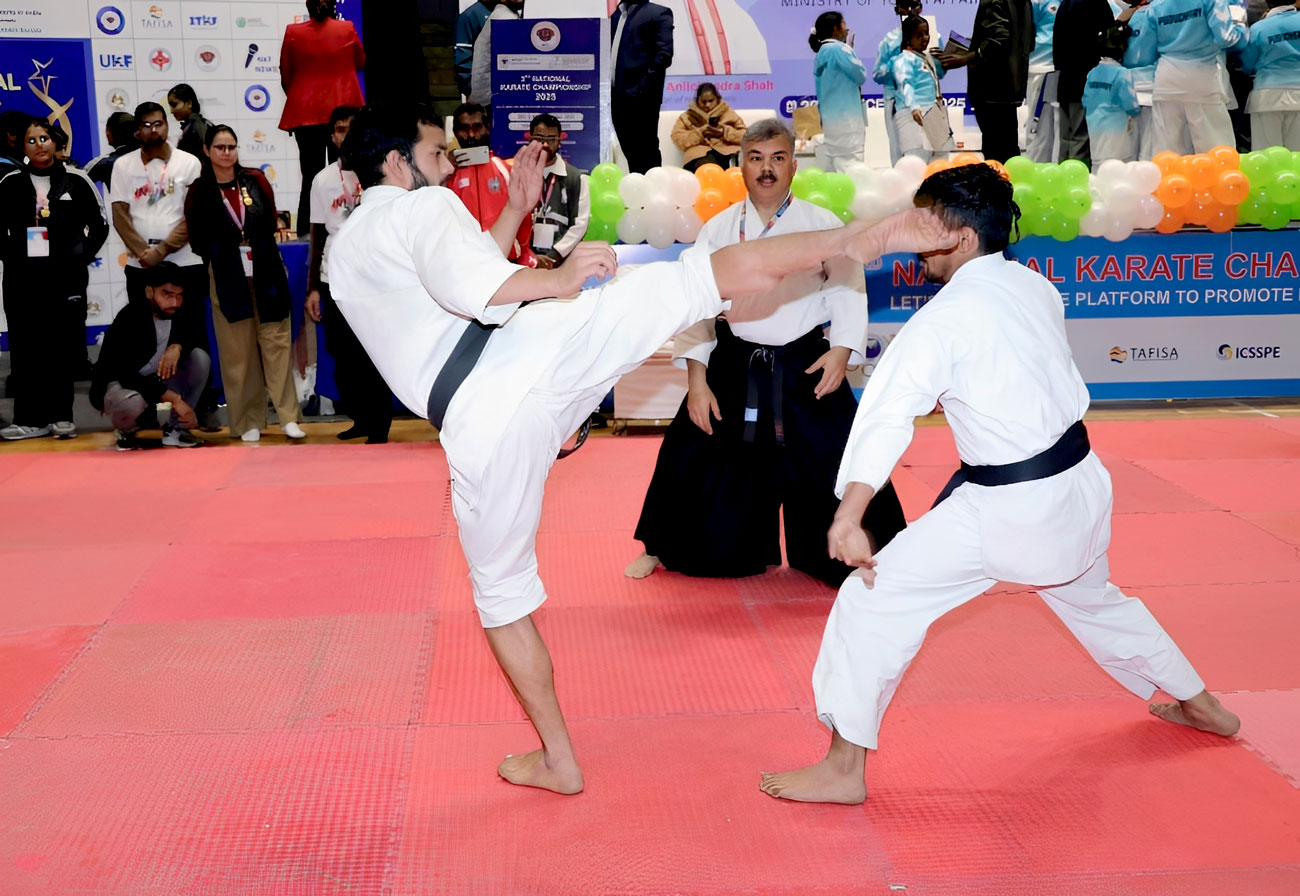
The competition brought together more than 3,000 athletes from different regions of India during the National Karate Championship © ITKF
The presence of government authorities and members of parliament throughout the program, as well as the formal recognition granted to senior representatives of the Indian State, reinforced the alignment between sport, education and public policy — one of the pillars historically advocated by the ITKF in its international projects.
On December 27 and 28, preceding the national championship, the International Technical Seminar in Traditional Karate was conducted by Gilberto Gaertner, Chairman of the International Traditional Karate Federation (ITKF), at the modern facilities of Arwachin International School.
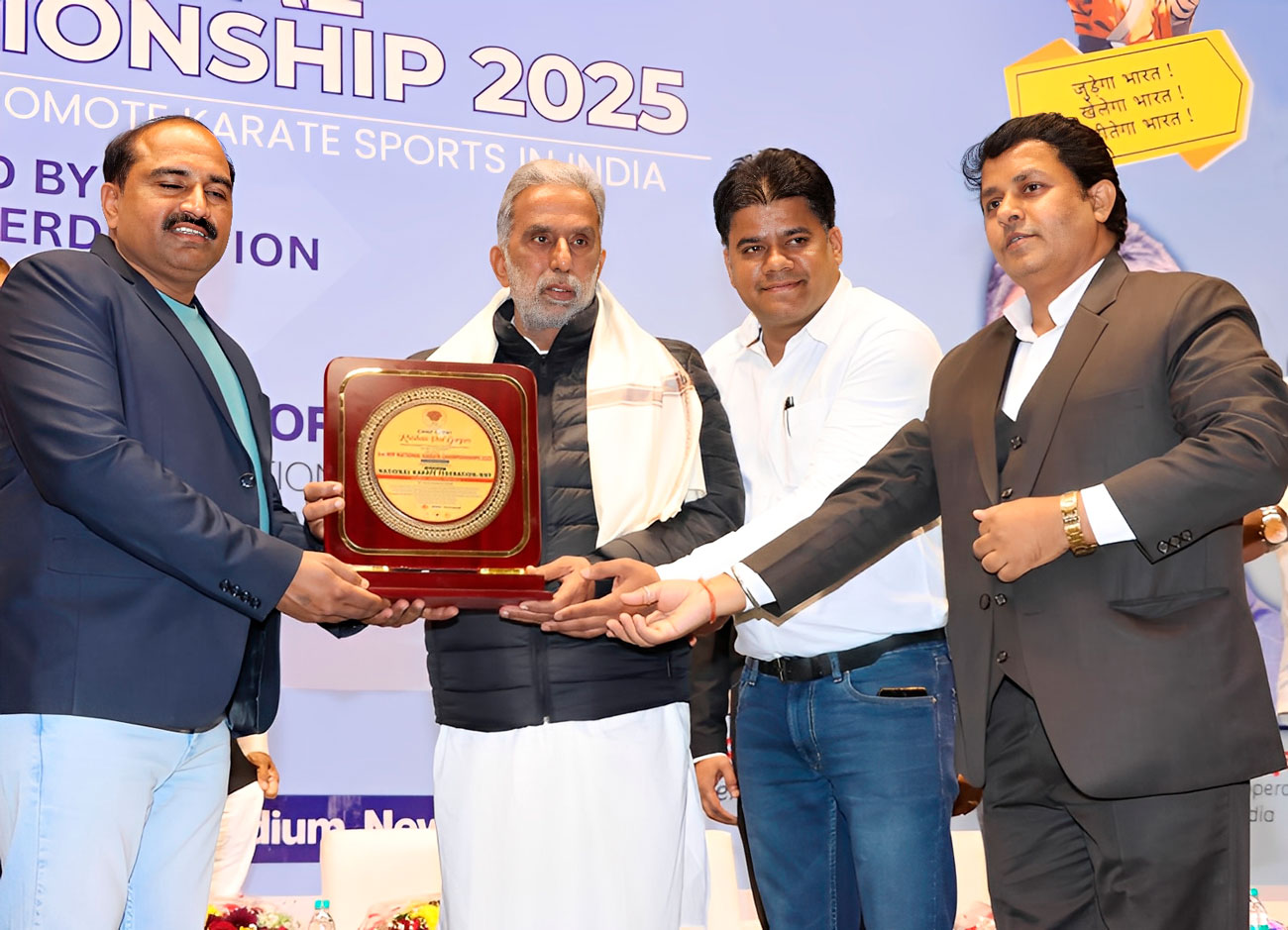
NKF Bharat officials honor Shri Krishan Pal Gurjar, Minister of State for Cooperation and Member of the Indian Parliament, during the National Karate Championship © ITKF
The seminar strictly followed the official ITKF examination program, covering waza, self-defense, kumite and advanced technical applications, with a structured pedagogical approach fully aligned with the principles of budō.
The program was strategically organized:
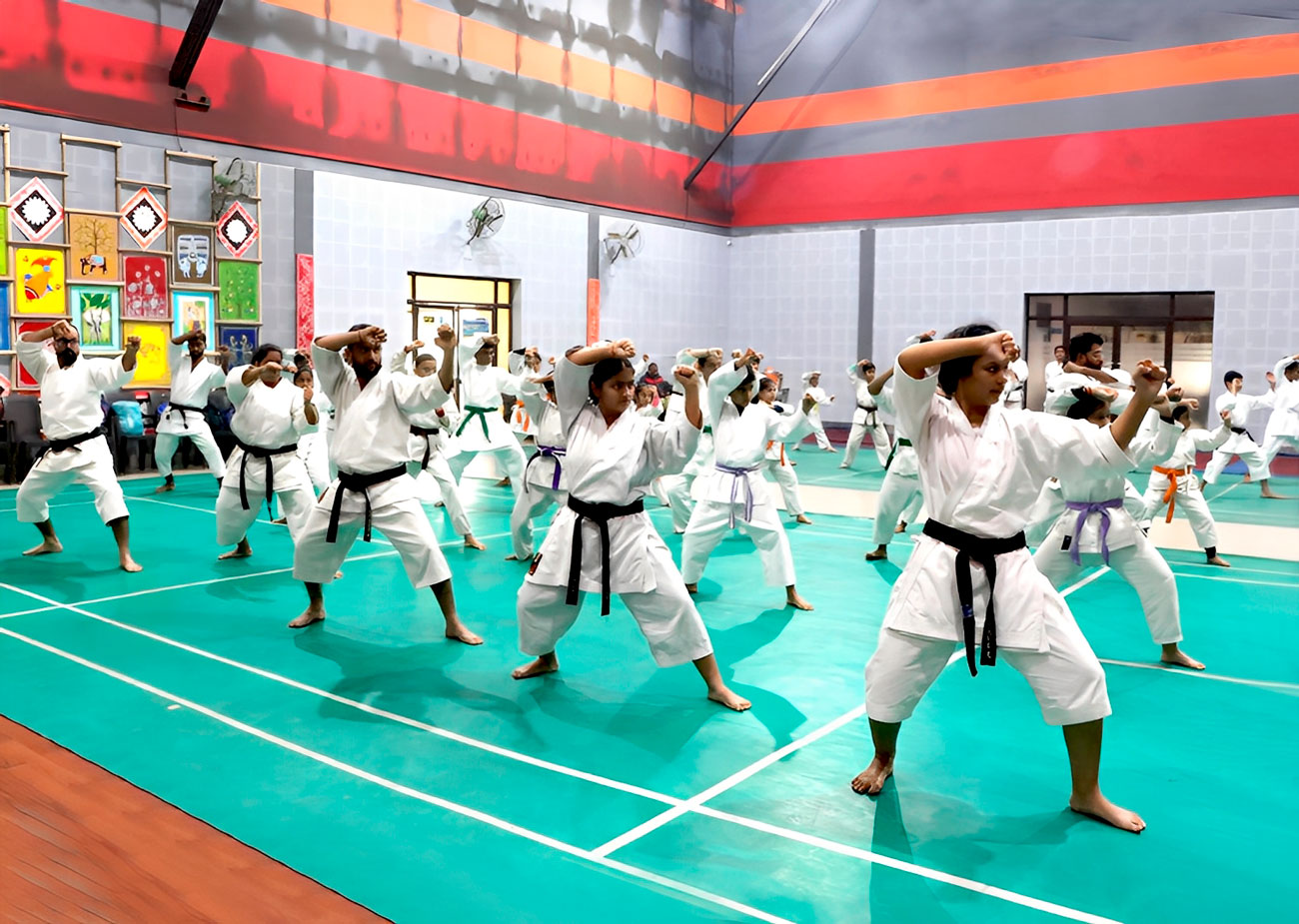
Participants follow technical guidance from the official ITKF program during the seminar held in India © ITKF
According to ITKF Chaiman Gilberto Gaertner, the seminar fully achieved its objectives. “These were two very productive days, with around 100 participants, including instructors and athletes. The organization was exemplary, the facilities were excellent, and we were able to deliver the entire program with quality and depth,” Gaertner assessed.
On December 29 and 30, attention turned to the 3rd National Karate Championship of India, which presented an innovative organizational format by integrating, within the same venue, Traditional Karate, Sport Karate and Full-Contact Karate, while fully respecting the technical specificities and regulatory frameworks of each discipline.
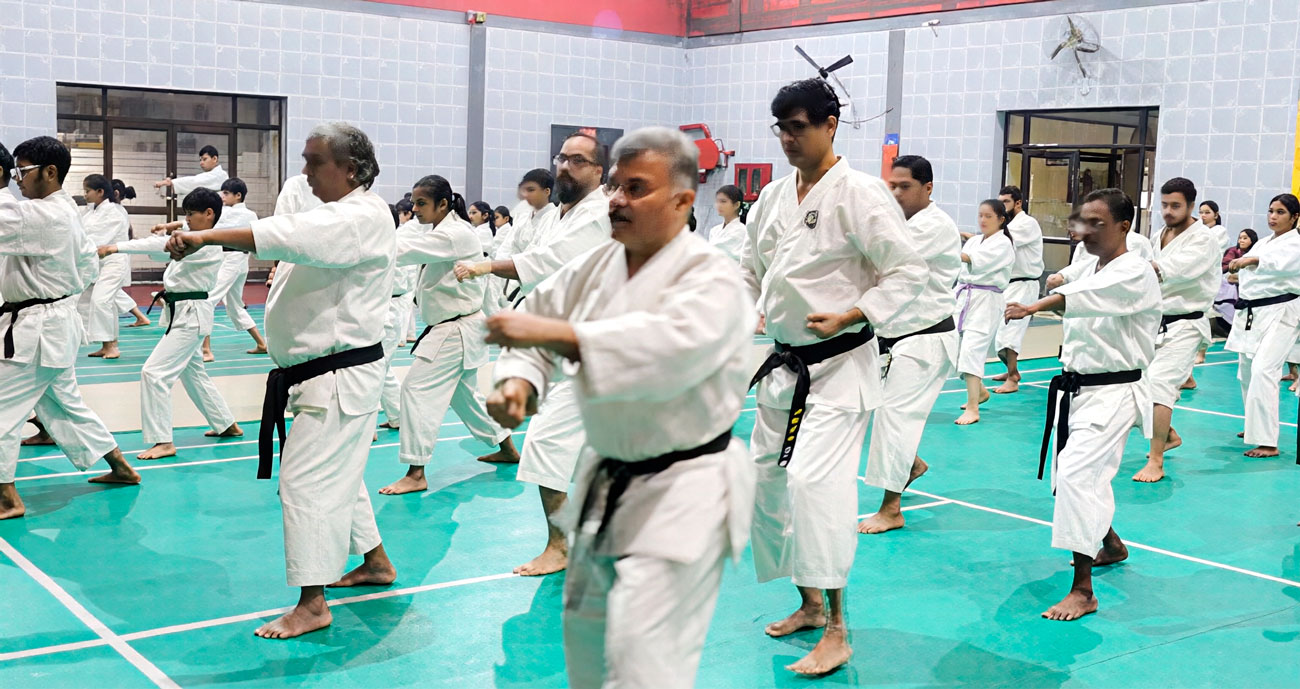
Instructors and black belts take part in an advanced session of the International Traditional Karate Technical Seminar © ITKF
Each organization operated independently, on its own competition areas and under its respective rules, following a model inspired by international experiences such as those promoted by the UWK. The peaceful coexistence between styles, without overlap or conflict, was highlighted as one of the event’s key differentiators.
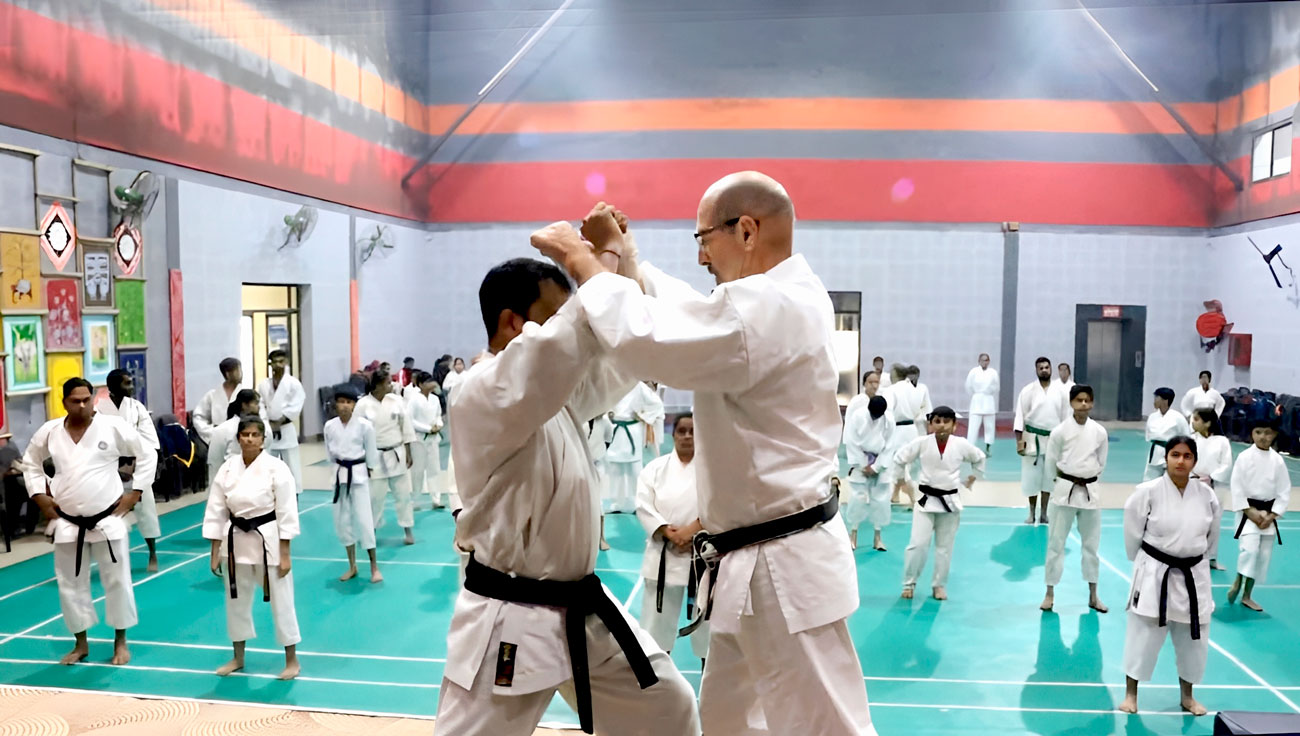
Gilberto Gaertner conducts technical activities during the International Traditional Karate Technical Seminar in New Delhi © ITKF
Technical coordination was led by Ishwar Tapa and Jitesh Kumar, while political and administrative articulation was overseen by Manoj Kumar, who was responsible for the overall management of the event and for institutional relations with the sports, educational and governmental sectors.
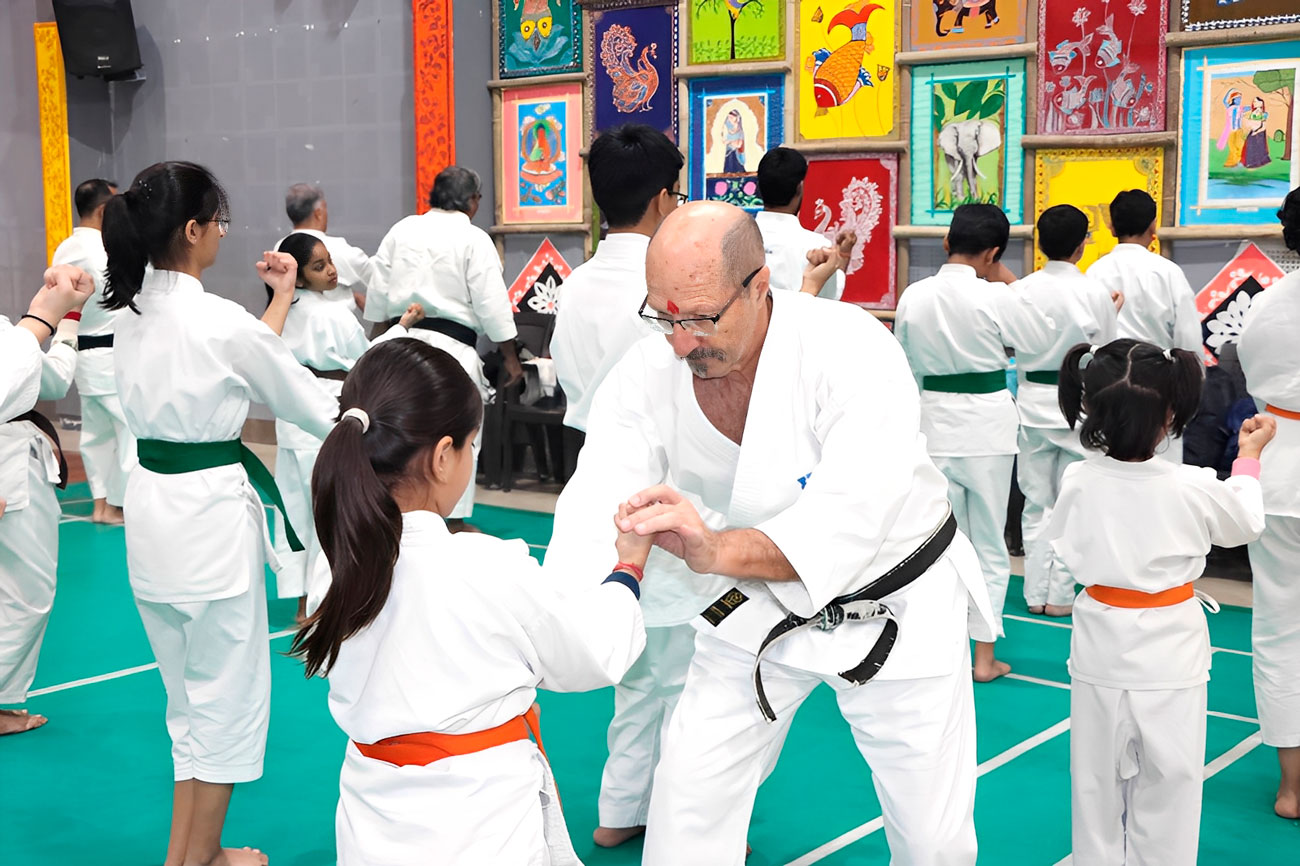
Practical and applied technical session during the International Technical Seminar conducted by ITKF in India © ITKF
For Gaertner, the structure reflected a high level of organizational maturity. “The organization demonstrated experience and command in delivering large-scale events. The multi-style structure strengthens the political and technical positioning of the local federation,” he emphasized.
Another major highlight was the strategic partnership between NKF Bharat and the Physical Education Foundation of India (PEFI), which enabled the organization of a preparatory scientific seminar. This initiative significantly raised the qualification level of instructors and enhanced the project’s academic credibility.
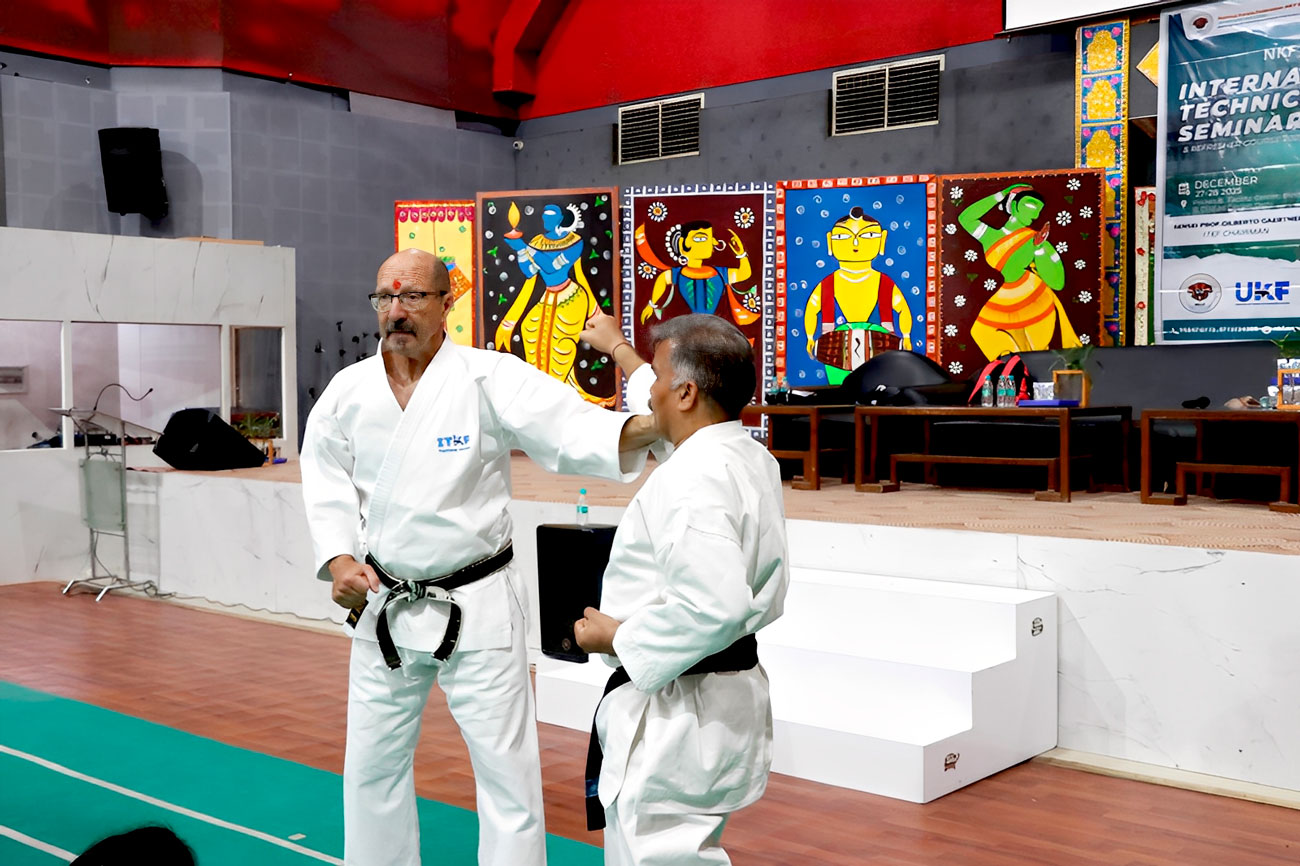
Gilberto Gaertner provides technical guidance to Jitesh Kumar during an activity of the International Traditional Karate Technical Seminar in New Delhi © ITKF
At the conclusion of the event, the ITKF Chairman took part in an official meeting at PEFI headquarters alongside representatives of the Indian government. During the meeting, a formal commitment of partnership between ITKF and PEFI was established, reinforcing the integration of Traditional Karate with physical education and public policies in sport and education.
Throughout the championship, more than 50 honors were awarded to institutional partners, sponsors, sports leaders and government representatives, in recognition of their support for the development of karate in India.
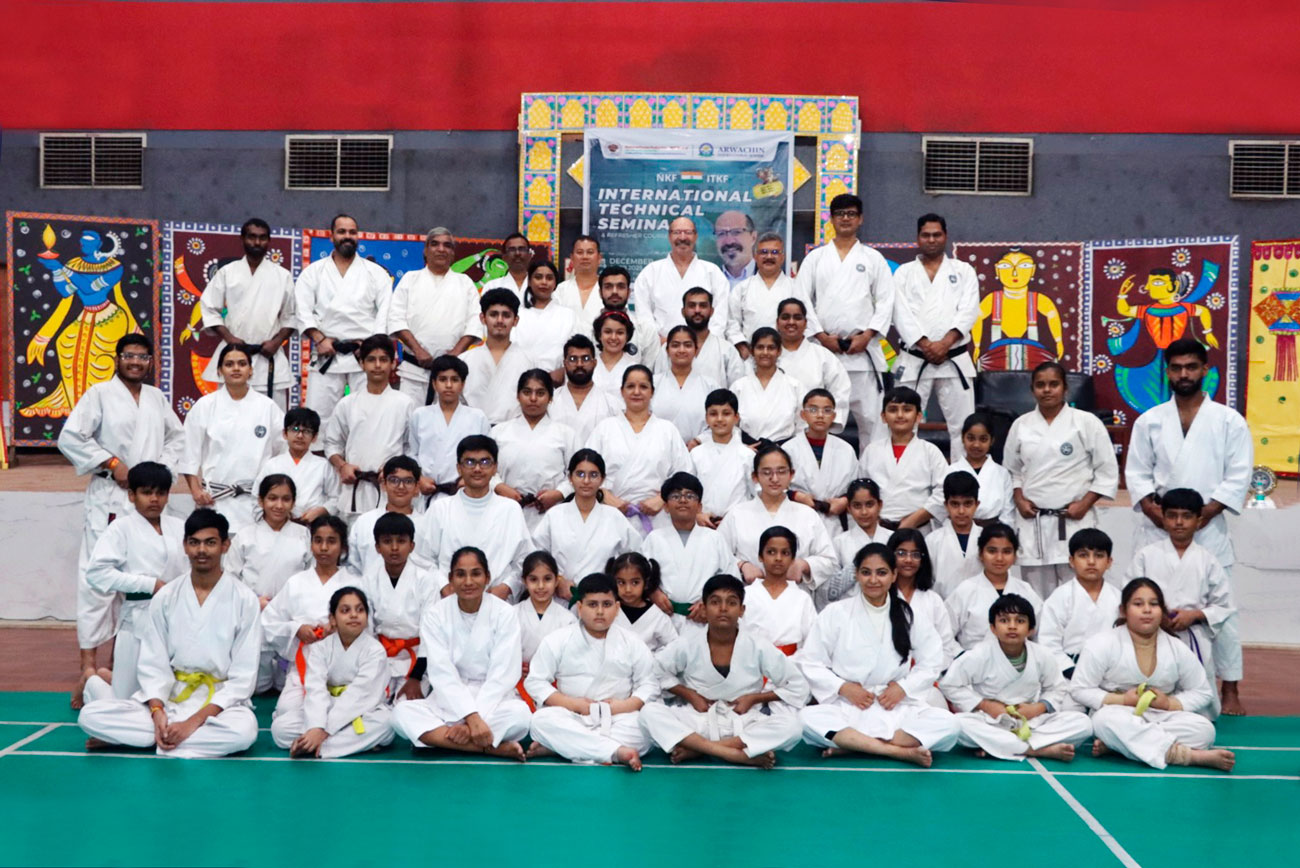
Group of participants gathered at the conclusion of the International Traditional Karate Technical Seminar activities in New Delhi © ITKF
Among those honored were key figures of Indian politics, including Prime Minister Shri Narendra Modi, Minister of Home Affairs Shri Amit Anilchandra Shah, Member of Parliament Shri Kanwar Singh Tanwar, and Minister of State for Cooperation Krishan Pal Gurjar, all acknowledged for their contributions to strengthening the discipline.
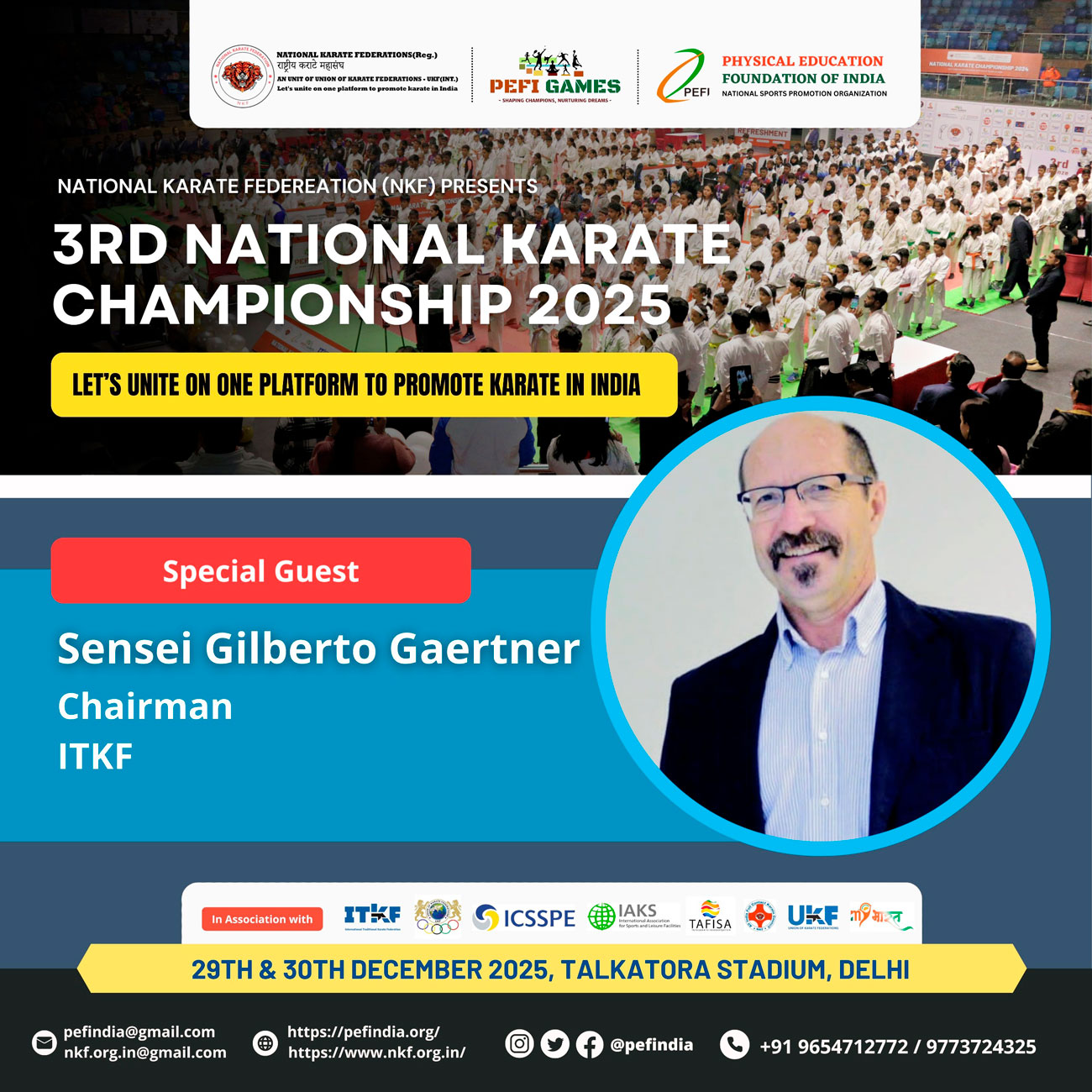
Official poster of the International Traditional Karate Technical Seminar held in New Delhi © ITKF
The organizational success, strong institutional backing and demonstrated logistical capacity place NKF Bharat in a privileged position for higher ambitions. The Indian federation has already positioned itself as a candidate to host the ITKF Asian Championship in 2027, a proposal viewed positively by the international leadership.
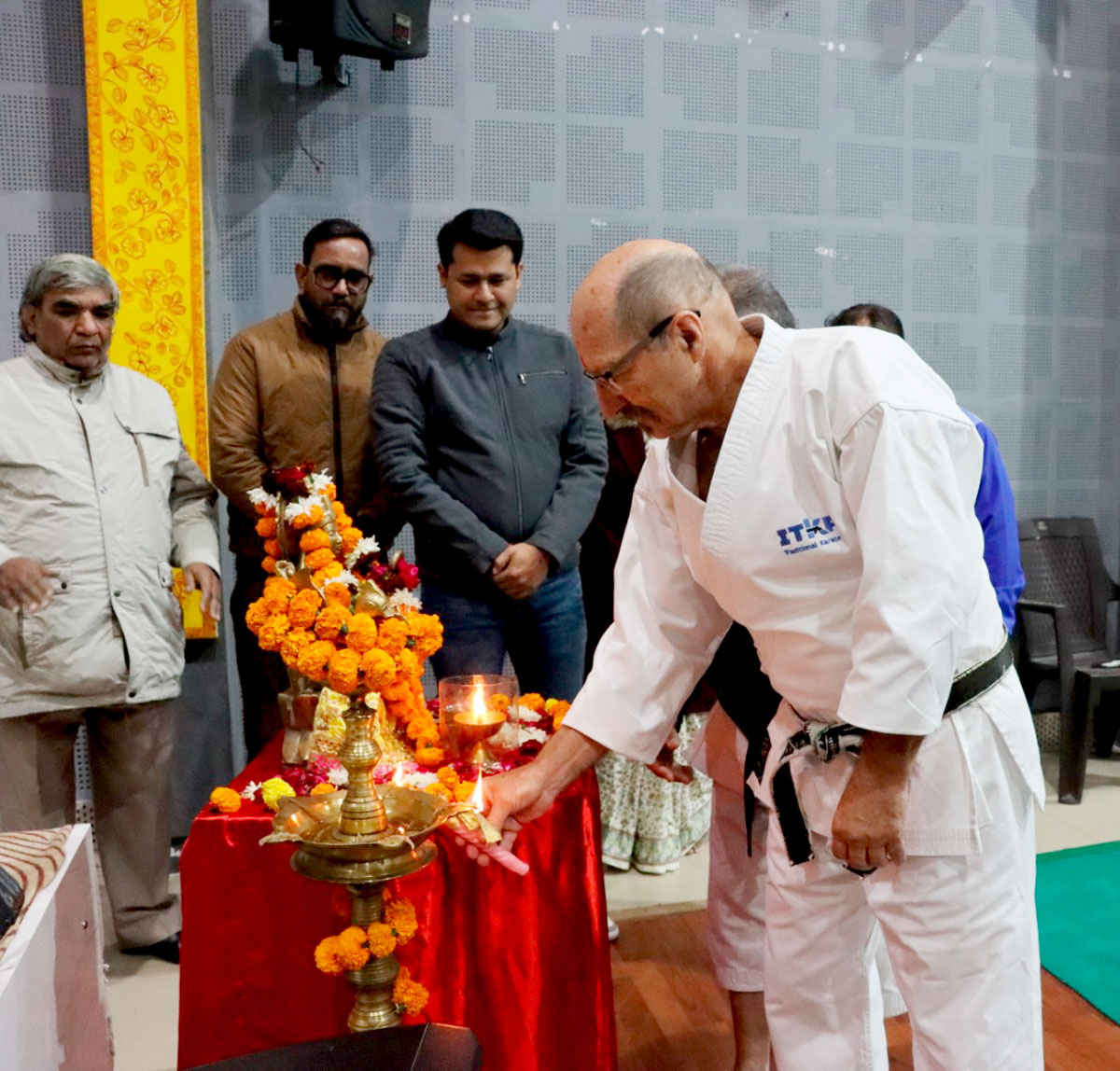
Traditional ritual marks the opening of the International Traditional Karate Technical Course in New Delhi © ITKF
For Gilberto Gaertner, Chaiman of the International Traditional Karate Federation (ITKF), the Indian stage of the ITKF Asia Tour 2025 represented far more than the successful delivery of a technical event. In his assessment, India is experiencing a unique moment of sporting, institutional and political maturity within Traditional Karate.
“What we witnessed in India was the consolidation of a serious, well-structured project with a clear vision for the future. It is not merely about the number of practitioners or the size of the event, but about how karate is being organized, integrated into public policies and connected to education and science,” Gaertner stated.
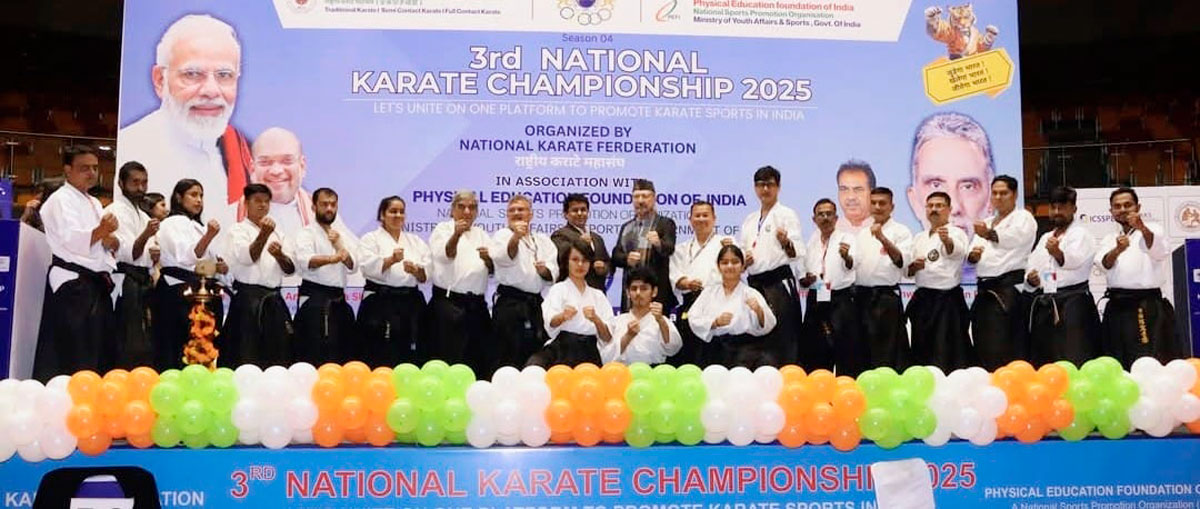
ITKF Chairman Gilberto Gaertner alongside Traditional Karate referees during the ITKF Asia–Oceania Tour 2025 in New Delhi © ITKF
According to the ITKF Chairman, NKF Bharat demonstrated a rare ability to articulate different dimensions of sport within a single, coherent project.
“There is clear leadership, a committed team and a deep understanding that Traditional Karate cannot move forward in isolation. It must engage with the educational system, teacher training and public authorities,” he emphasized.
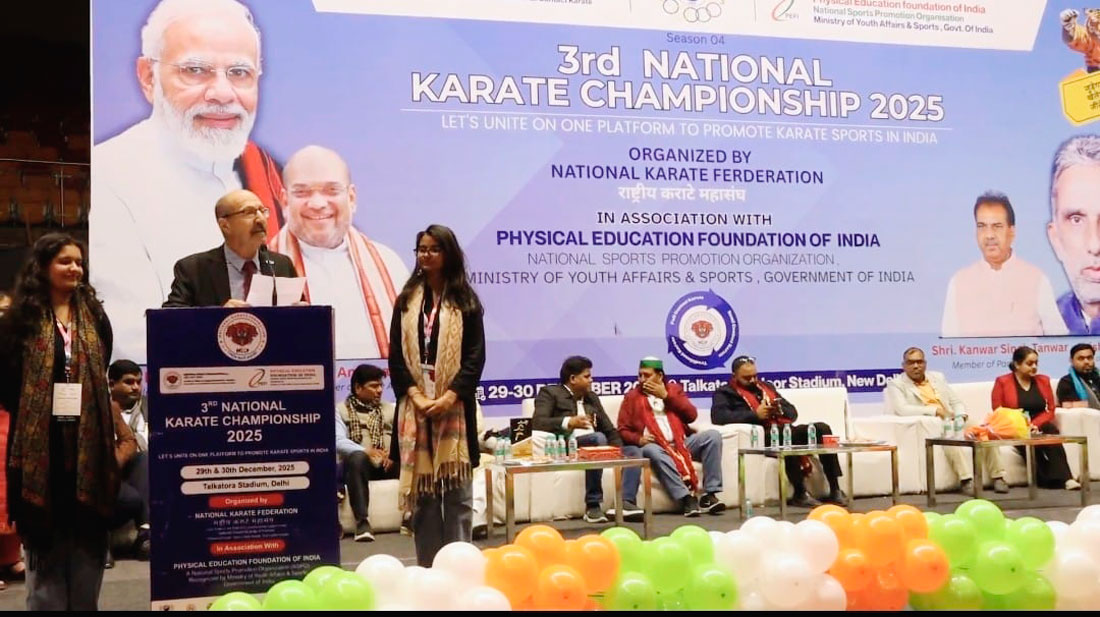
Gilberto Gaertner delivers his address at the official opening of the event © ITKF
Gaertner also highlighted the importance of the International Technical Seminar as a foundational pillar of the event. For him, the transmission of the ITKF method goes far beyond technical execution.
“Our focus is on forming individuals capable of understanding karate as a path. Technique without method cannot be sustained. That is why we work on fundamentals, applications, self-defense and kumite, always connected to pedagogy, emotional control and the instructor’s responsibility,” he explained.
Another aspect emphasized by the ITKF Chairman was the organized coexistence between different styles and approaches to karate during the national championship.
“The multi-style structure, with clear rules and mutual respect, strengthens the sporting environment. It prevents unnecessary conflicts and expands dialogue. This is institutional maturity,” he assessed.
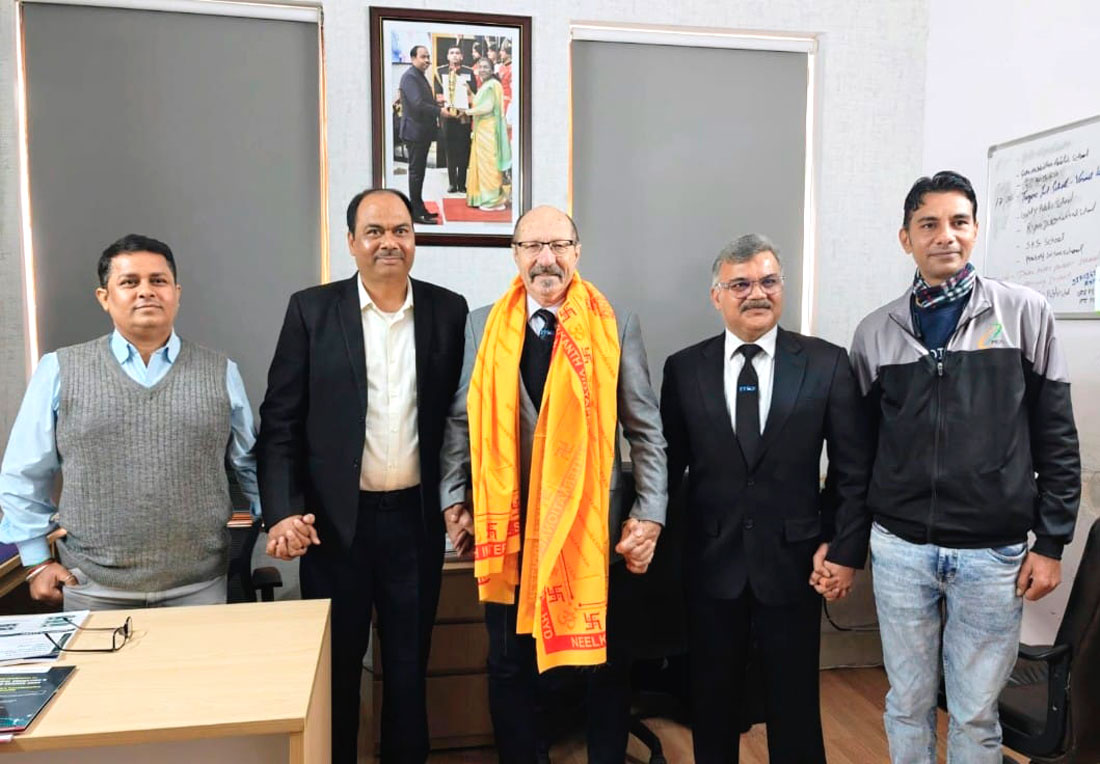
Gilberto Gaertner in a meeting with NKF Bharat officials and representatives of the Physical Education Foundation of India © ITKF
When analyzing the governmental support received, Gaertner was emphatic in pointing out the political impact of the event. “When public authorities recognize the value of karate and actively participate, it generates credibility, expands opportunities and creates real conditions for growth. The institutional presence of the Indian State was a clear sign that karate is seen as an educational and social tool,” he stated.
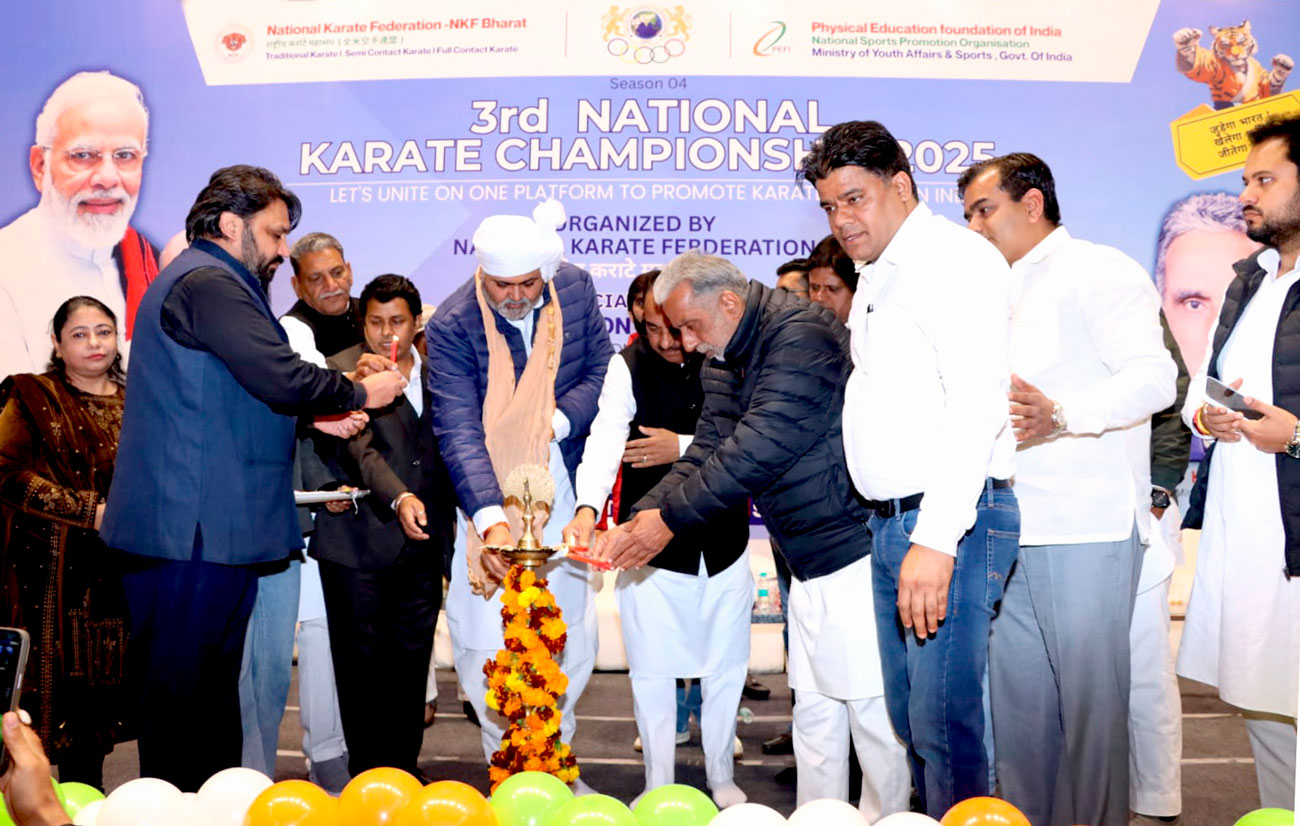
Authorities and officials take part in the ceremonial opening of the Indian National Karate Championship © ITKF
Finally, the ITKF Chairman projected India as a key protagonist on the continental stage. “India has shown that it is ready for greater challenges. The infrastructure is modern, logistics operated with precision and the local team demonstrated competence and a strong willingness to grow. I see India as a key player in the development of Traditional Karate in Asia in the coming years,” he concluded.
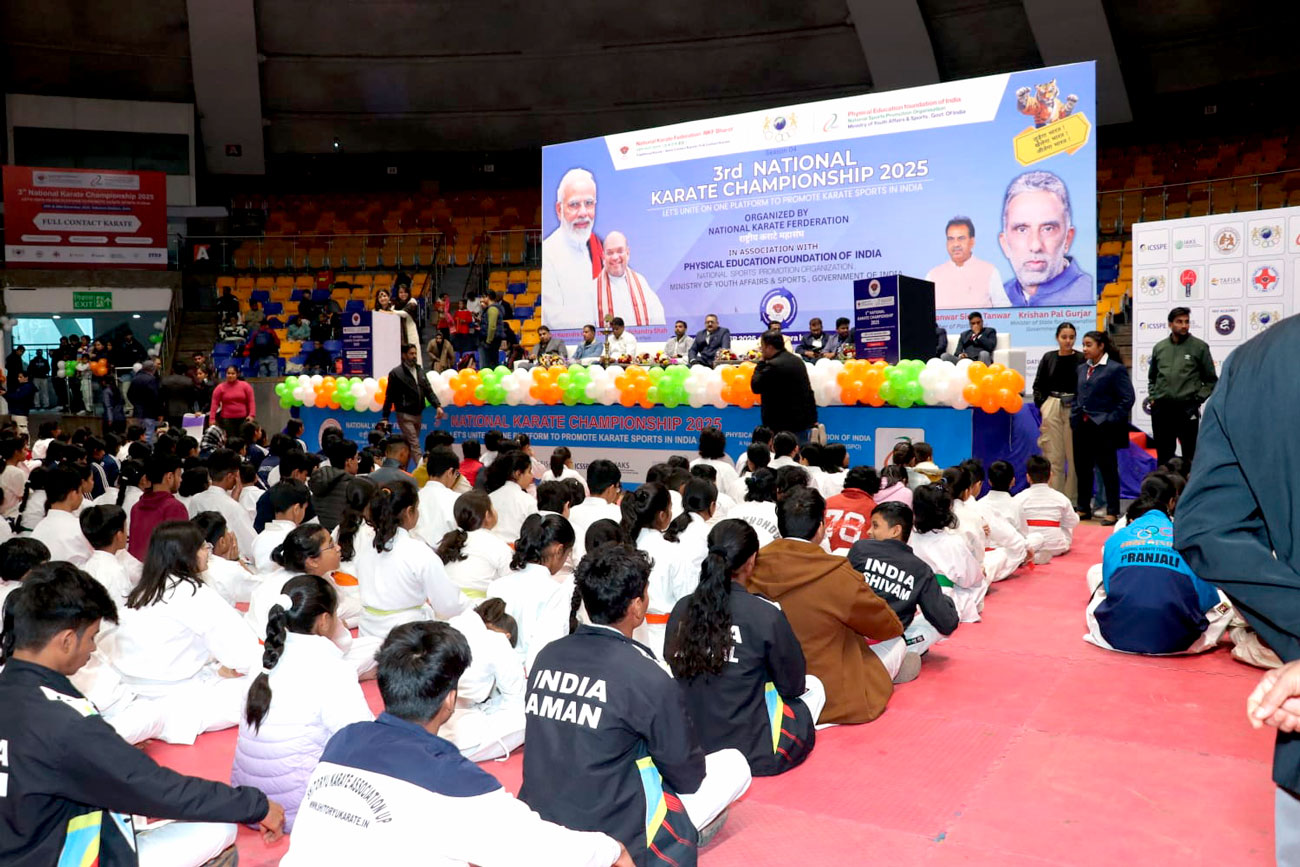
Another moment from the opening ceremony of the Indian National Karate Championship © ITKF
In the assessment of Jitesh Kumar, Technical Director of NKF Bharat (National Karate Federation of India), the International Technical Seminar of Traditional Karate, conducted by Gilberto Gaertner, Chairman of ITKF Global, represented a milestone in the technical and organizational qualification process of Traditional Karate in the country.
“The seminar was a great success, both from a technical and an educational standpoint. We brought together practitioners from different regions of India around solid, structured content aligned with ITKF’s international standards,” stated Jitesh Kumar, highlighting the relevance of the event held on December 27 and 28, 2025, at Arwachin International School in New Delhi.
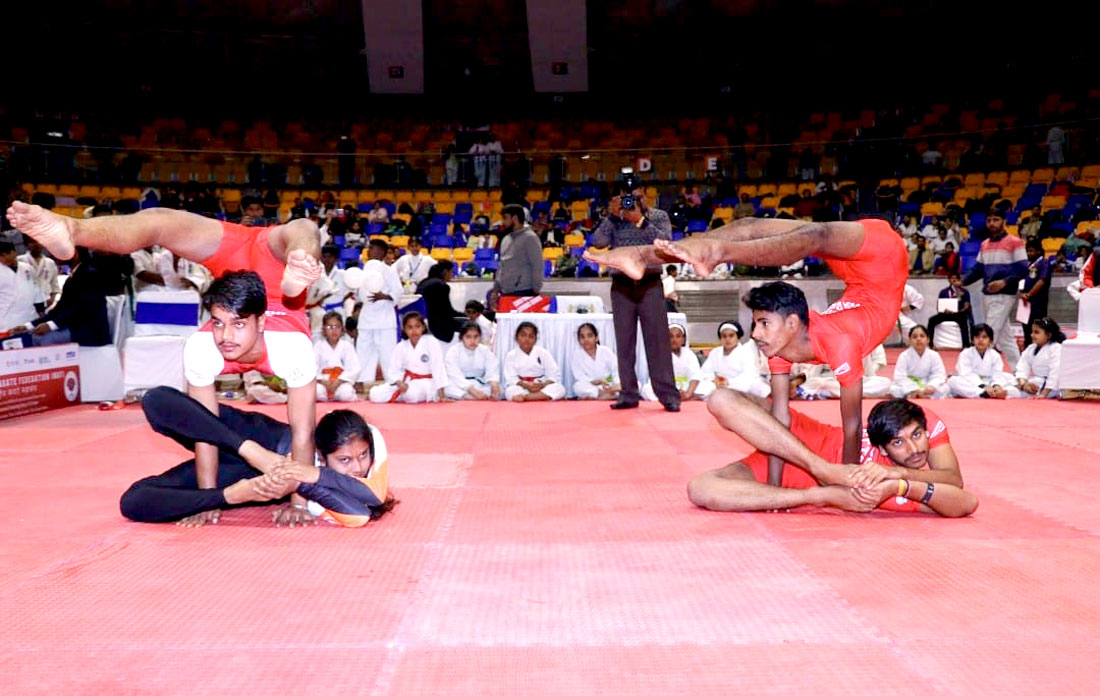
Before the competition, India reaffirms its roots: the yoga presentation at the opening of the event highlights the central role of culture, spirituality and self-control in a country where combat is never detached from inner balance © ITKF
According to the official, the course brought together approximately 100 karate practitioners from various Indian states, reinforcing NKF Bharat’s national reach and the growing interest in Traditional Karate rooted in budō.
“The diversity of participants showed that there is a broad base interested in deepening technical and pedagogical knowledge, especially when content is delivered with method and clarity,” he observed.
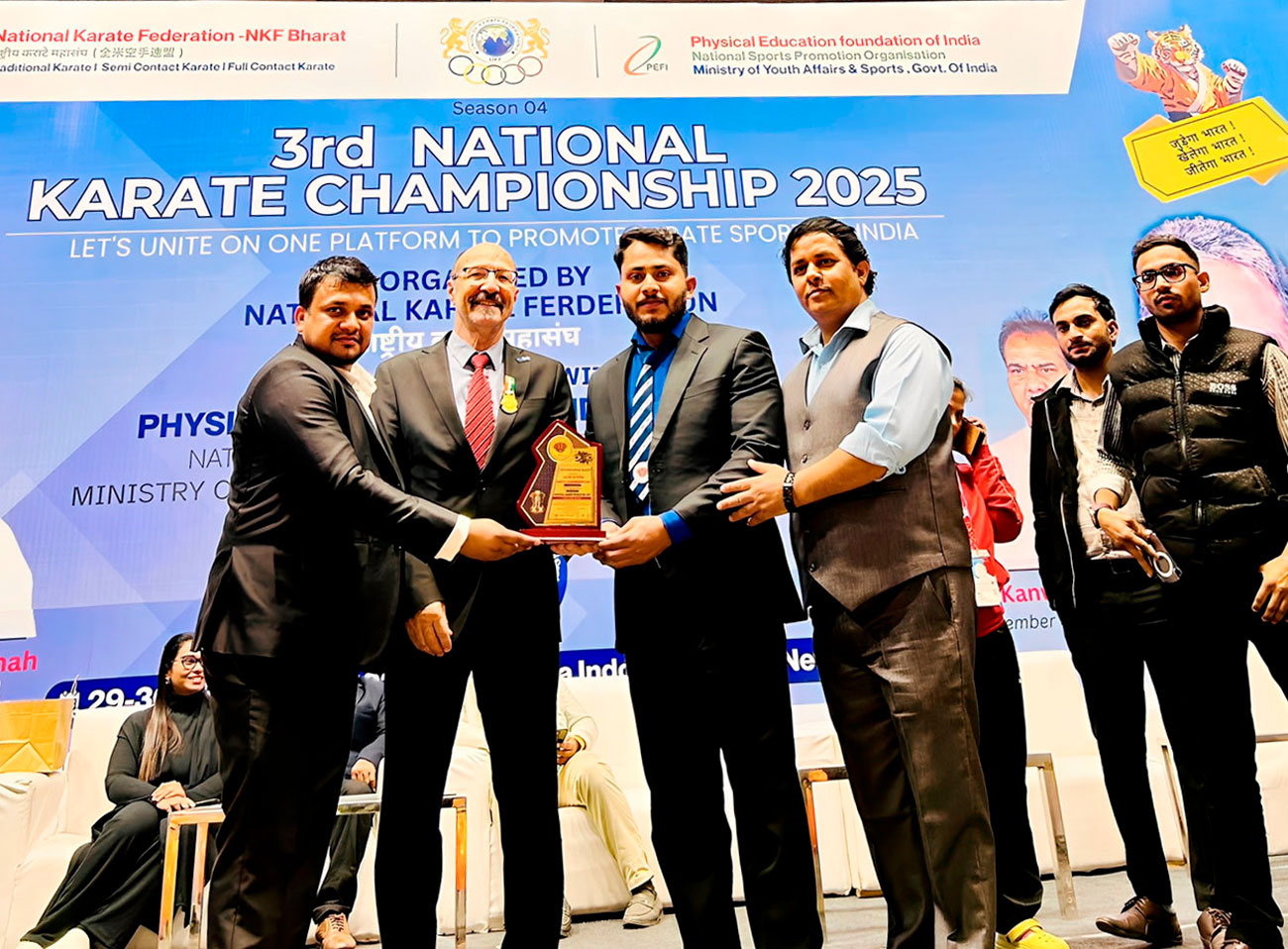
ITKF and NKF Bharat officials take part in an award presentation during the event’s prize-giving ceremony © ITKF
Jitesh Kumar also emphasized the quality and depth of the technical content delivered by Gilberto Gaertner, focusing on the official ITKF examination program. During the seminar, techniques related to self-defense were addressed, including Heian Waza, Shuto Waza, Uchi Waza and Keri Waza, in addition to Kihon and Kumite fundamentals, developed in a progressive and didactic manner.
“Gaertner shared his extensive experience with great technical precision and pedagogical vision. It was not merely a demonstration of techniques, but a true transmission of method, connecting execution, application and understanding of the principles of Traditional Karate,” highlighted the NKF Bharat Technical Director.
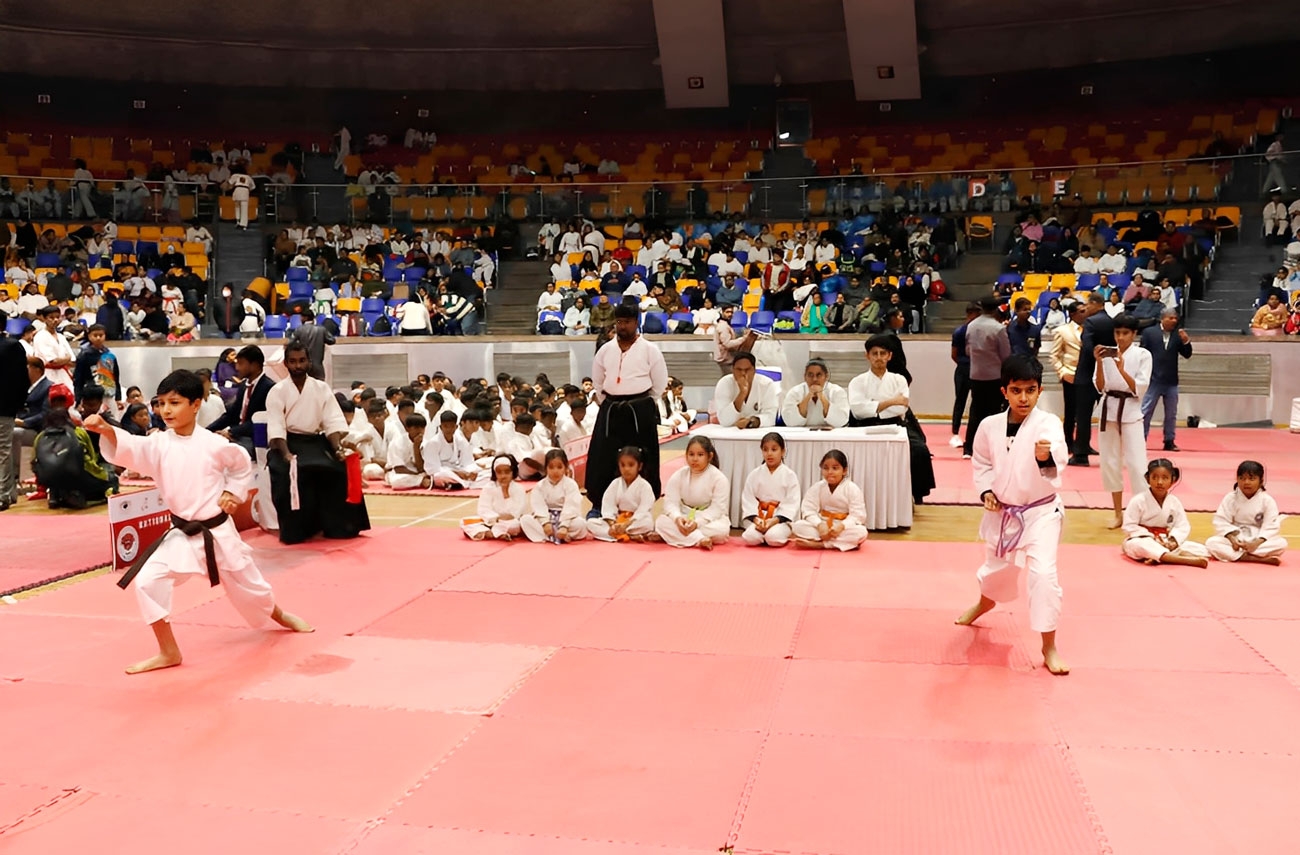
Individual children’s kata competition during the Indian National Karate Championship © ITKF
From an organizational standpoint, Jitesh Kumar was keen to value the collective work of the Indian federation. According to him, the event was coordinated directly by Manoj Kumar, Secretary-General of NKF Bharat, in partnership with his own role as Technical Director, under the overall supervision of Ishwar Thapa, President of the federation.
“This integration between the technical, administrative and institutional areas was decisive for the success of the seminar,” he stated.
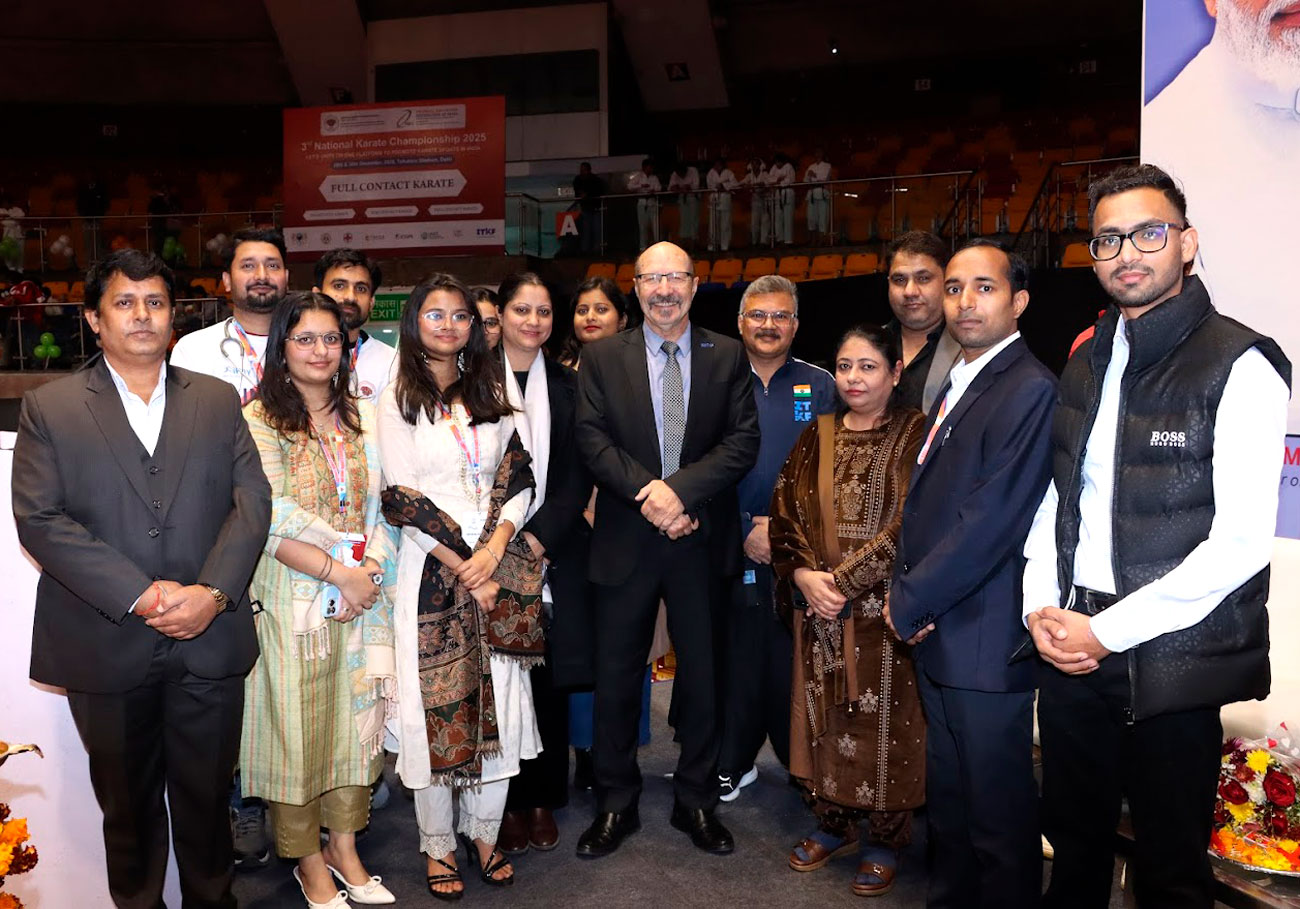
ITKF Chairman alongside members of the Local Organizing Committee of the Indian National Karate Championship © ITKF
The official also highlighted the symbolism of the opening ceremony, which followed Indian cultural tradition with the lighting of lamps, a moment that officially marked the beginning of the seminar and reinforced its solemn and respectful character. The ceremony was attended by renowned instructors and by Arun Sharma, President of Arwachin International School, accompanied by the school’s director, who paid tribute to Gilberto Gaertner and to the senior Traditional Karate instructors of NKF Bharat.
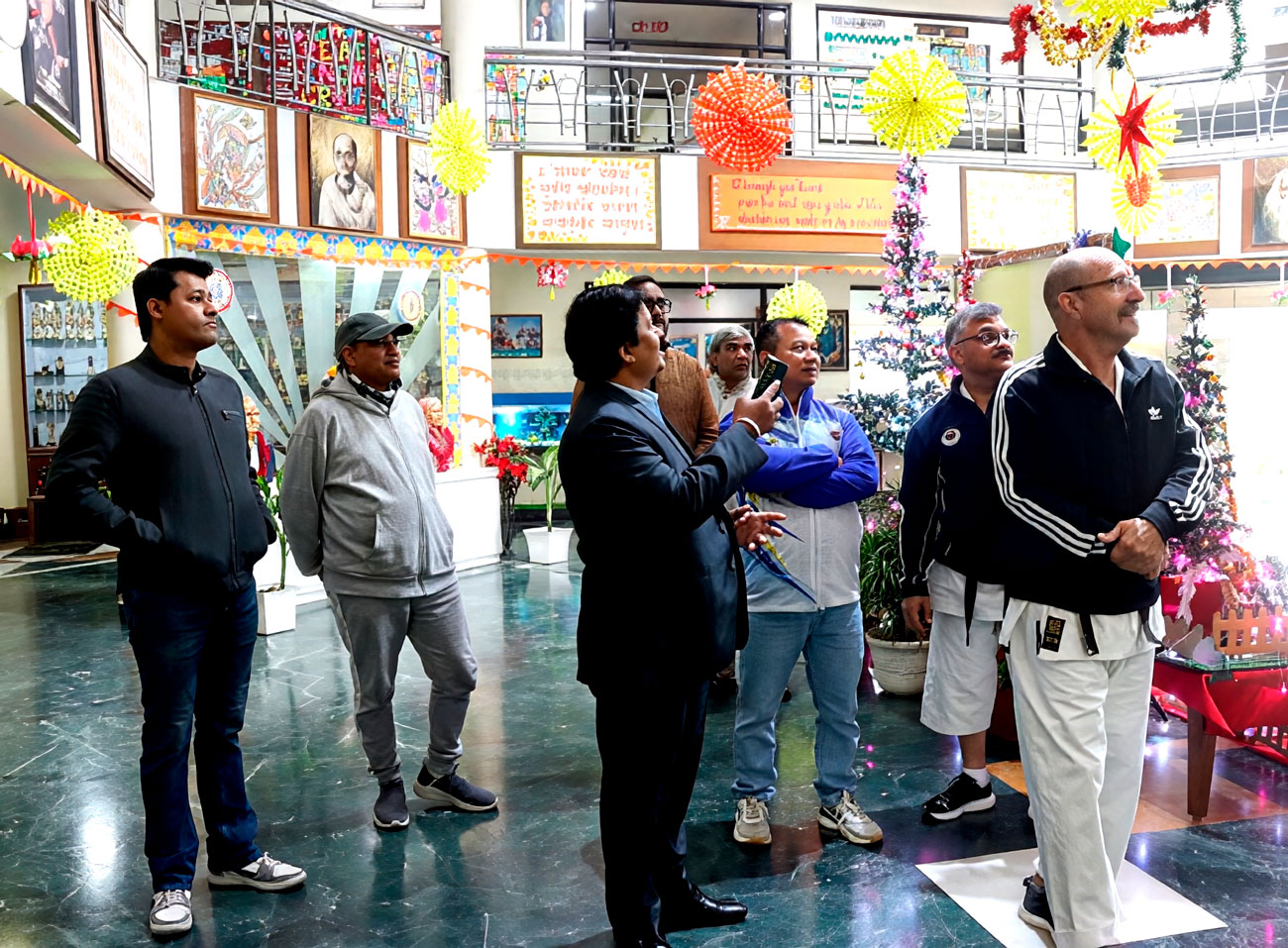
NKF Bharat officials and representatives of Arwachin International School present the facilities to the ITKF Chairman © ITKF
For Jitesh Kumar, this set of factors reflects the growing maturity of Traditional Karate in India. “Events like this strengthen not only the technical level of practitioners, but also the institutional identity of the federation. The partnership with ITKF and the presence of its Chairman give us confidence that we are following a solid, consistent path aligned with the values of Traditional Karate,” he concluded.
For Manoj Kumar Mishra, Secretary-General of NKF Bharat (National Karate Federation of India), the realization of the International Technical Seminar and the National Karate Championship represented a historic milestone in the development of the discipline in the country, both in terms of scale and institutional organization.
“NKF Bharat successfully organized the International Technical Seminar and the National Karate Championship, a historic event that brought together thousands of karate enthusiasts, coaches and masters from across India,” stated Mishra, referring to the program held from December 27 to 30, 2025, at the Talkatora Indoor Stadium, in New Delhi.
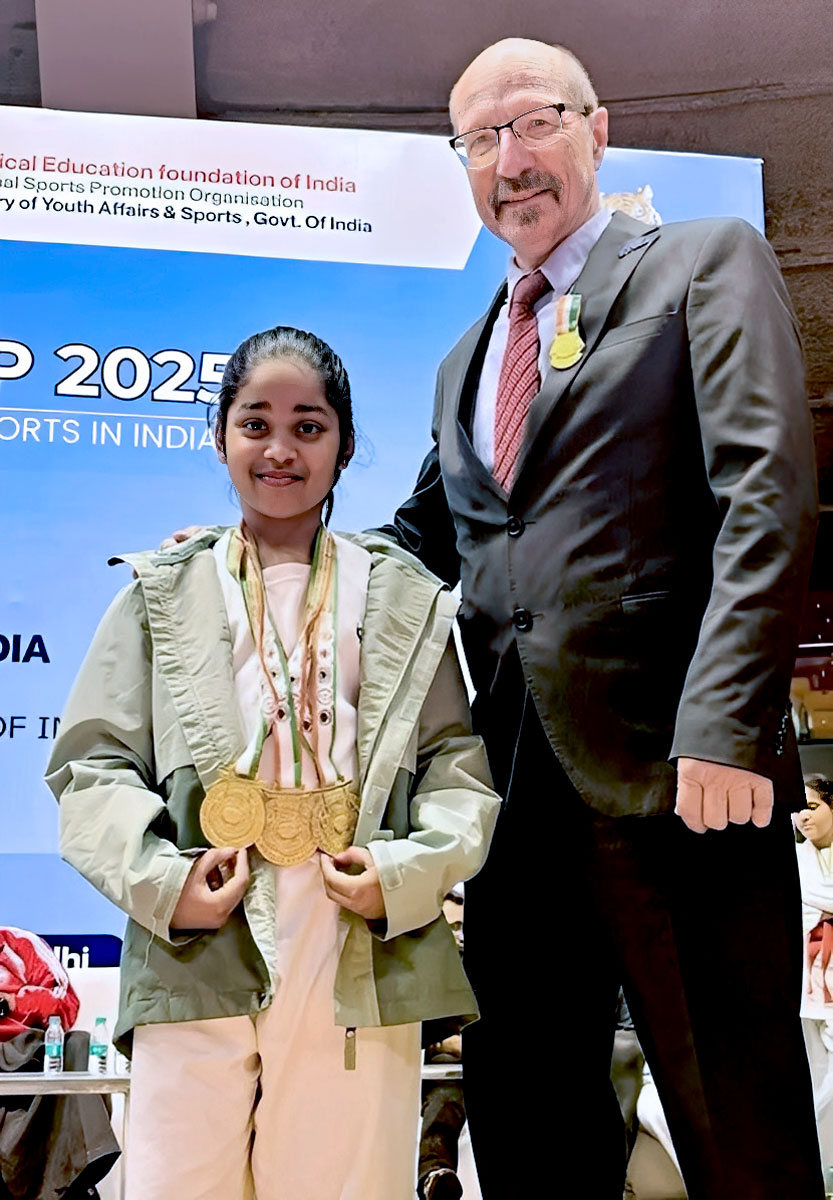
Gilberto Gaertner alongside a young Indian athlete, standout of the competition after winning three gold medals © ITKF
According to the official, the event demonstrated India’s capacity to organize large-scale initiatives while aligning technical education, national competition and institutional articulation.
“The initiative highlighted India’s excellence in karate and offered a unique platform for growth, unity and the promotion of the discipline, bringing together different generations and styles in an environment of respect and cooperation,” he emphasized.
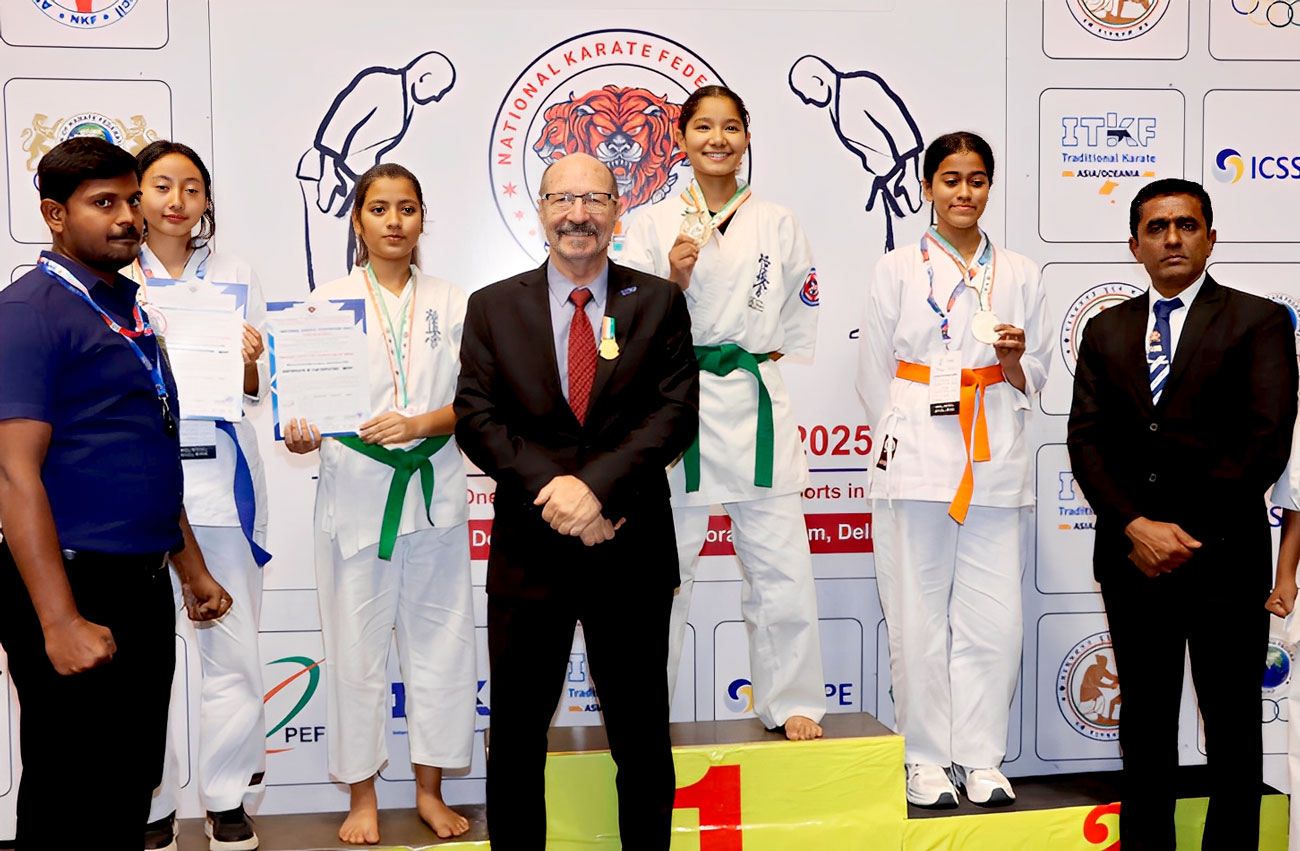
Award ceremony of the Indian National Karate Championship © ITKF
Under the guidance of Gilberto Gaertner, Chairman of the International Traditional Karate Federation (ITKF), the championship reached expressive numbers. According to Manoj Kumar Mishra, more than 3,000 practitioners took part throughout the days of competition, representing 32 Indian states and territories, in addition to hundreds of coaches, referees and officials, consolidating the event as one of the largest ever organized by the federation.
“The presence of the ITKF Chairman was decisive in elevating both the technical and institutional level of the event. Gaertner’s leadership brought not only technical excellence, but also a strategic vision of the role of Traditional Karate in human, educational and social development,” assessed the Secretary-General.
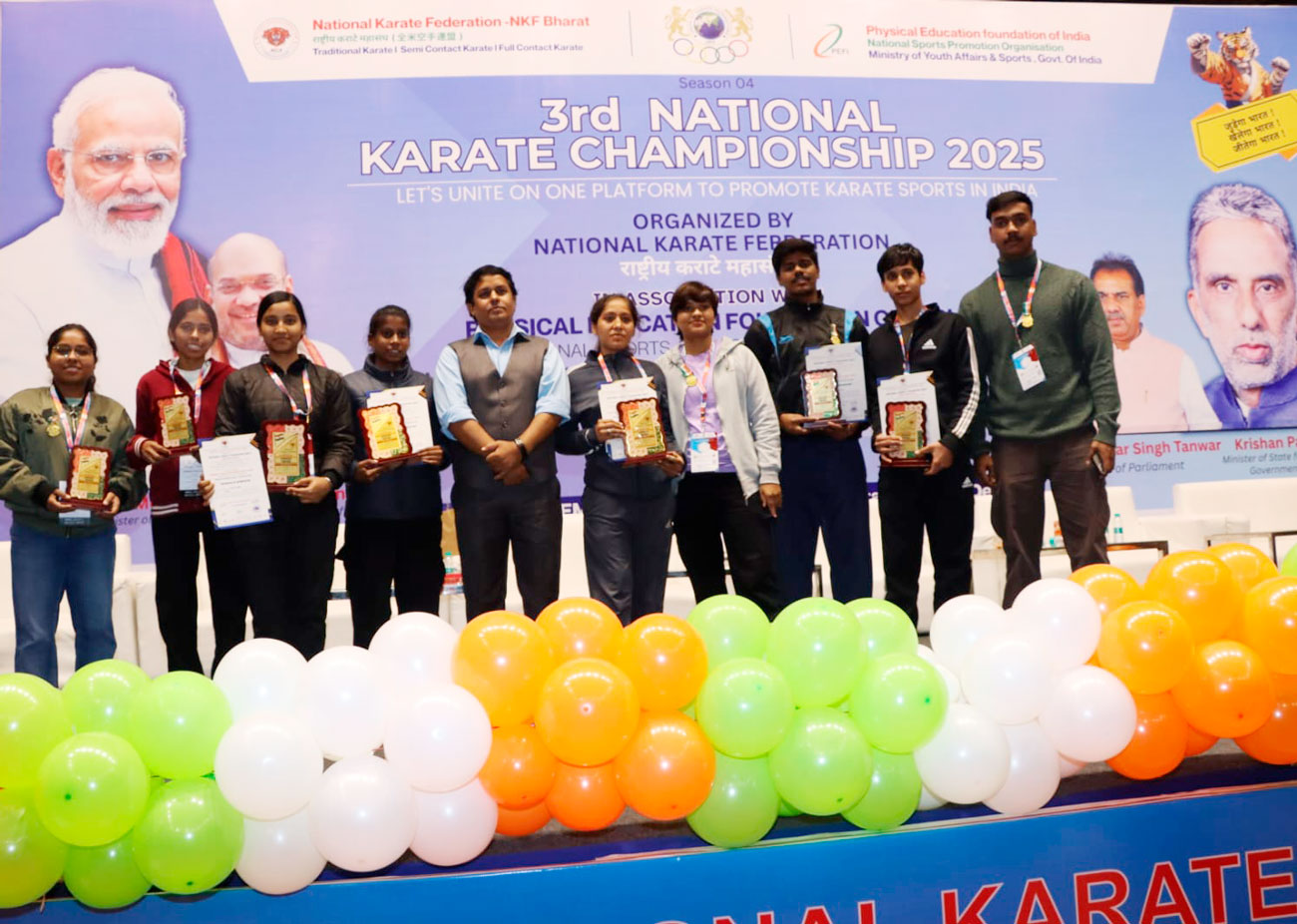
Award ceremony of the Indian National Karate Championship © ITKF
Mishra also highlighted the impact of integrating the technical seminar with the national championship, a model that, in his view, strengthens the foundation of the discipline.
“By combining education, technical assessment and competition, we were able to create a complete development environment. This format encourages continuous learning, values instructors and establishes solid references for athletes,” he explained.
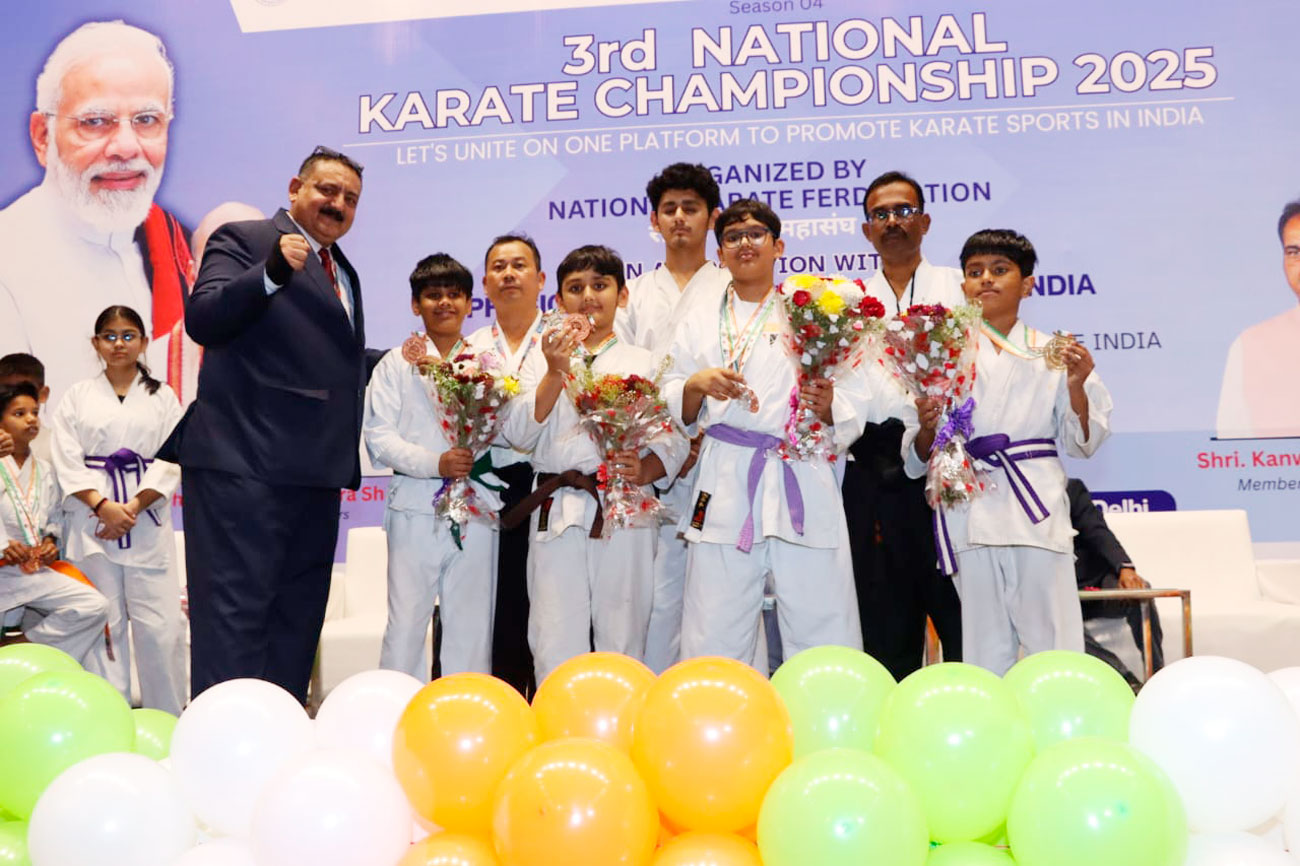
Award ceremony of the Indian National Karate Championship © ITKF
From an organizational perspective, the Secretary-General emphasized the collective effort of NKF Bharat and the institutional support received.
“The success of the event is the result of the joint work of our team, the support of educational partners and the recognition of public authorities. This structure gives us confidence to move forward with even more ambitious projects at the continental and international levels,” he stated.
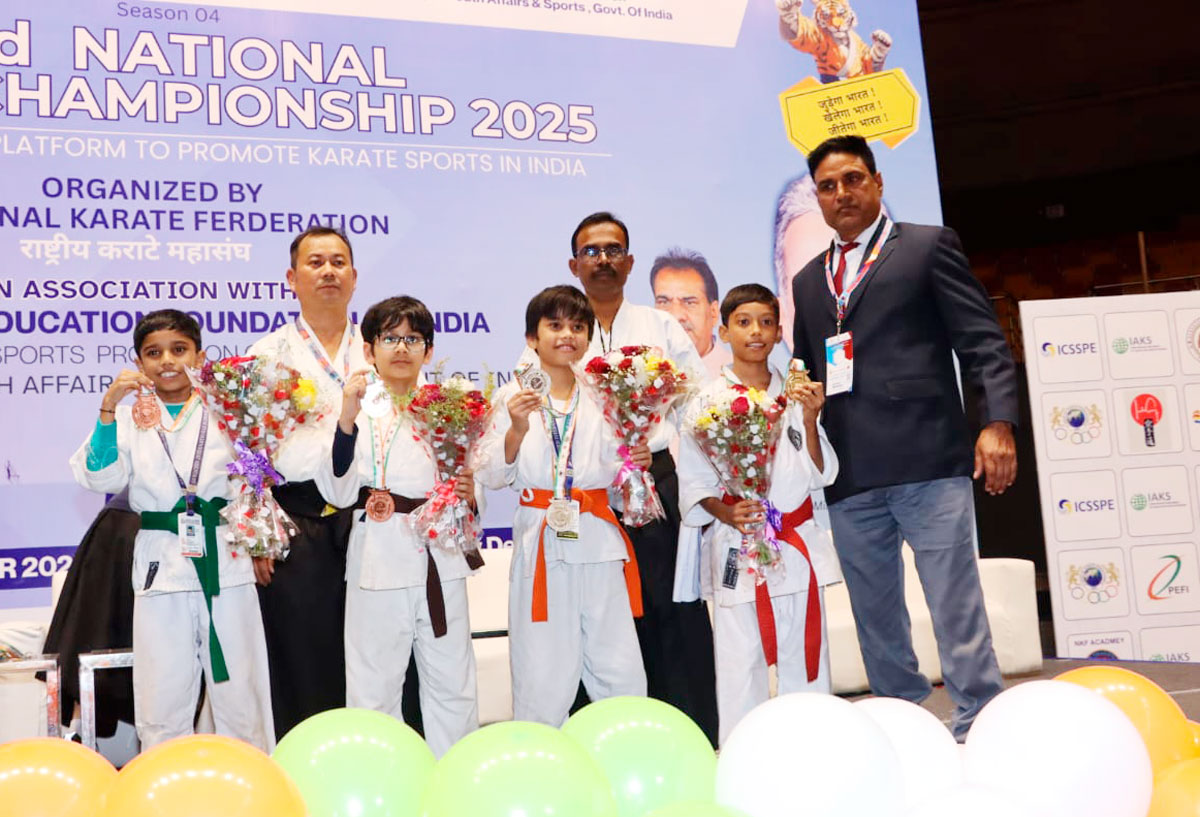
Award ceremony of the Indian National Karate Championship © ITKF
For Manoj Kumar Mishra, the stage held in New Delhi projects India to a new level within ITKF Global.
“This event reinforces NKF Bharat’s commitment to the sustainable growth of Traditional Karate. We are prepared to assume greater responsibilities and to contribute actively to strengthening ITKF in Asia,” he concluded.
For Ishwar Thapa, President of NKF Bharat (National Karate Federation of India), the realization of the International Technical Seminar and the National Karate Championship represented an important step in the process of institutional consolidation of the discipline in the country, as well as in strengthening the federation’s international relations.
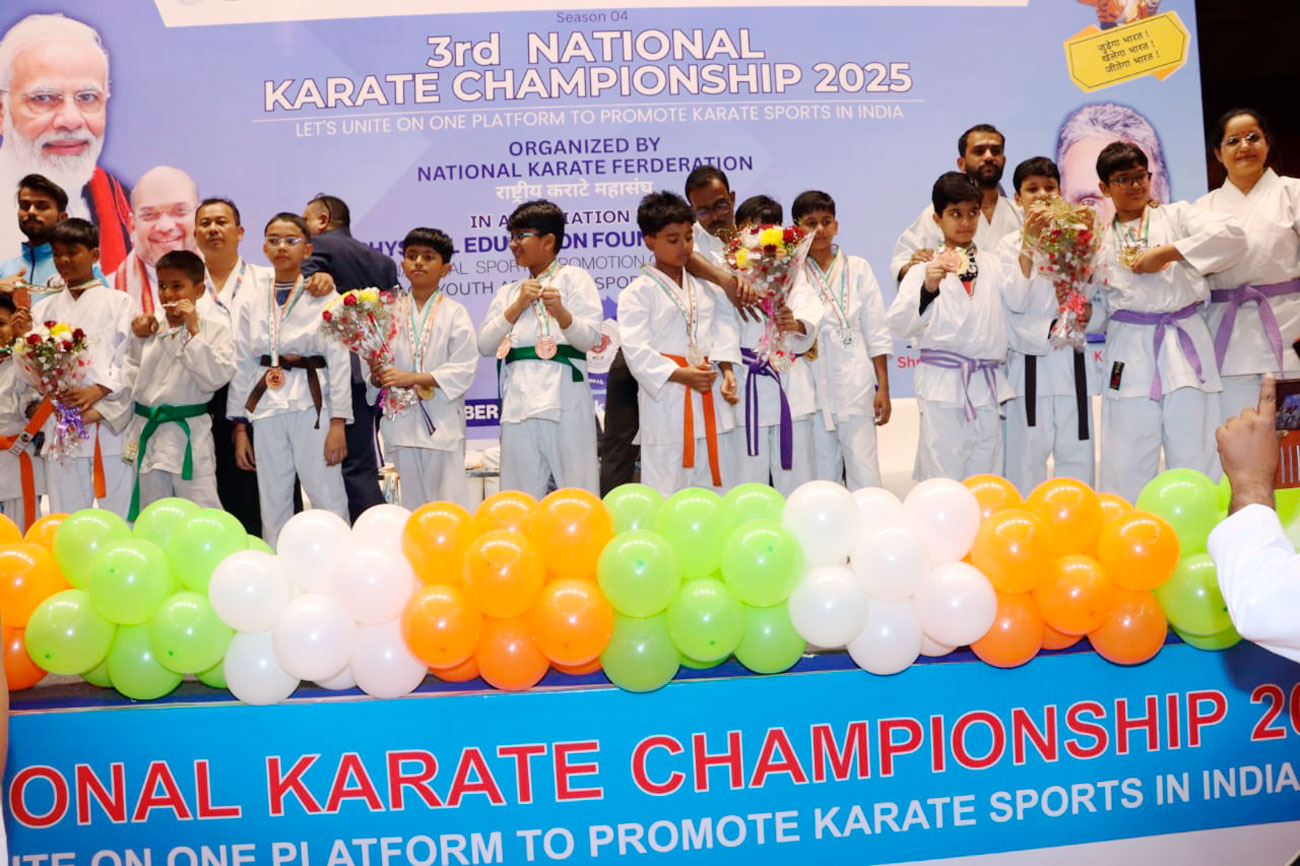
Award ceremony of the Indian National Karate Championship © ITKF
According to the leader, the event demonstrated NKF Bharat’s capacity to organize large-scale initiatives by integrating technical education, competition and institutional articulation within a single, structured project.
“It was a significant moment for Indian karate, bringing together practitioners, instructors and officials from different regions of the country around a common objective: the solid and responsible development of the discipline,” he stated.
Ishwar Thapa also emphasized the importance of the partnership with the International Traditional Karate Federation (ITKF) and the presence of its Chairman, Gilberto Gaertner, as elements that add credibility and strategic vision to the work being carried out in India.
“International cooperation is fundamental to raising technical standards, strengthening sports governance and expanding horizons for our practitioners and instructors,” he highlighted.
In the assessment of the NKF Bharat President, the alignment between Traditional Karate, education and the values of budō was one of the central pillars of the event.
“We remain committed to a model that values not only sporting performance, but also human development, respect and discipline — principles that guide the sustainable growth of karate,” he affirmed.
Finally, Ishwar Thapa stressed that the experience in New Delhi reinforces NKF Bharat’s commitment to the future of the discipline.
“This event strengthens our confidence to continue moving forward, expanding partnerships and contributing actively to the development of Traditional Karate in India and on the international stage,” he concluded.
14 de fevereiro de 2026
08 de fevereiro de 2026
07 de fevereiro de 2026