
14 de outubro de 2026



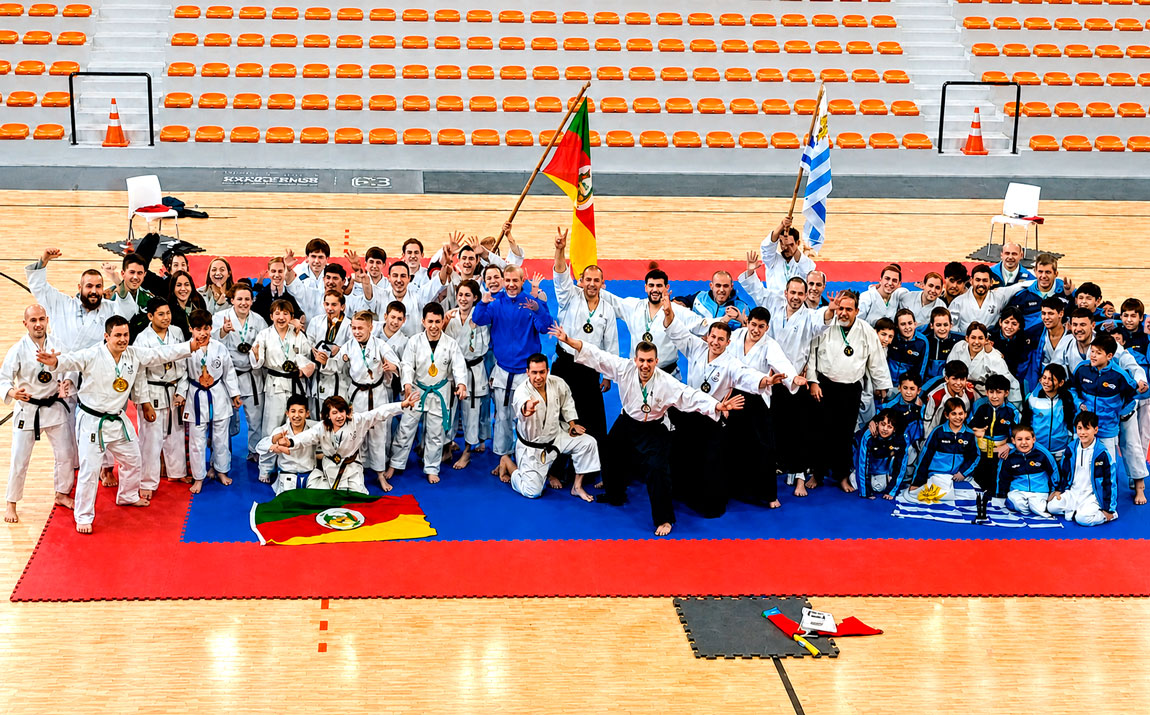 Uruguayans and people from Rio Grande do Sul celebrate another edition of Copa de La Frontera © Diego Castro
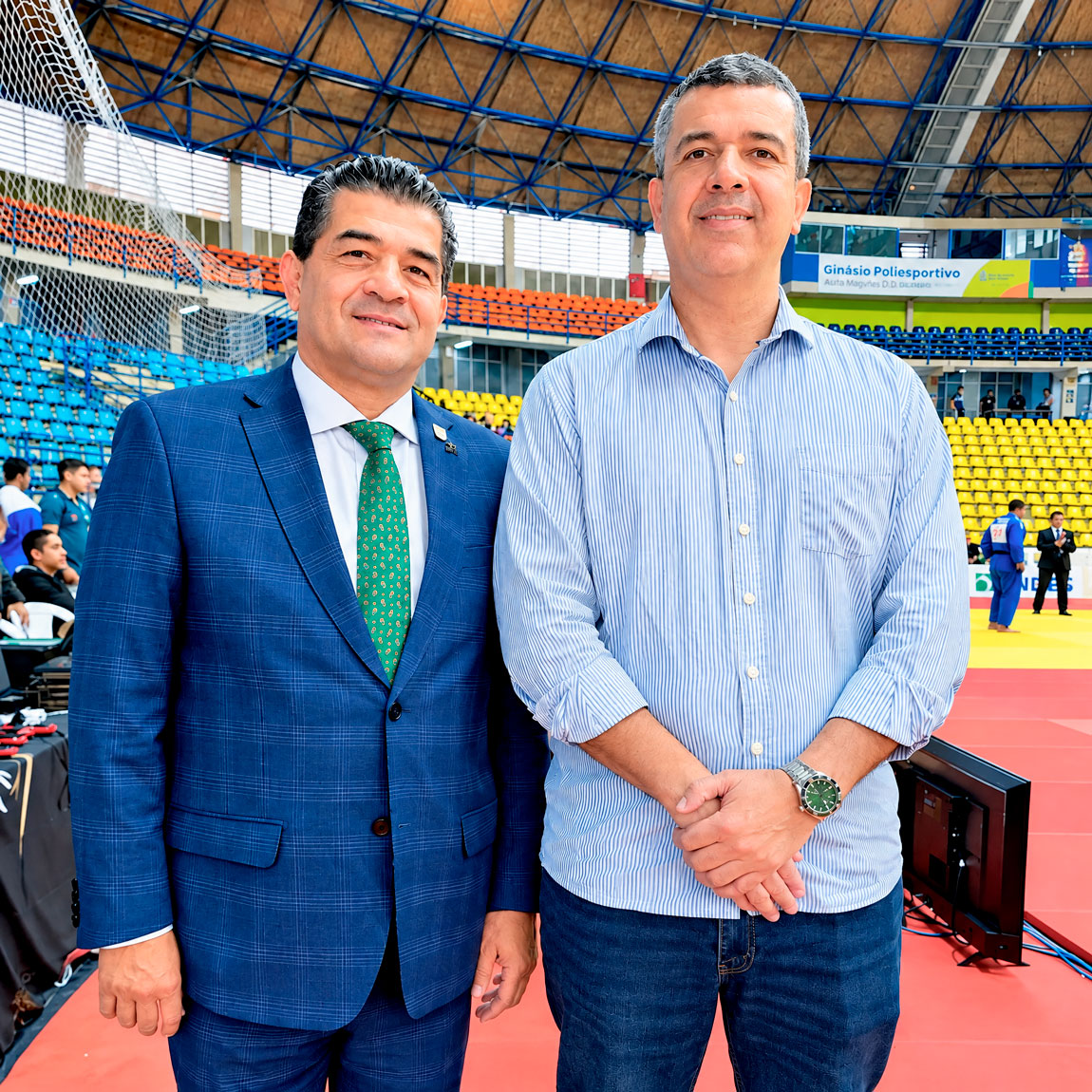
Copa de La Frontera once again brought Uruguayans and Brazilians together around traditional karate. Held on 15 August at the renovated Ernesto de León Indoor Gymnasium in Durazno, the 2026 edition pitted the Combinado Celeste against the Rio Grande do Sul team in 17 kata, embu and kumite events.
With a 150-point advantage in each of the programme’s two stages, the team from Rio Grande do Sul won the contest 1,350 to 1,050. In the combined kata and embu segment, Rio Grande do Sul scored 650 points to Uruguay’s 500. In kumite, the score was 700 to 550.
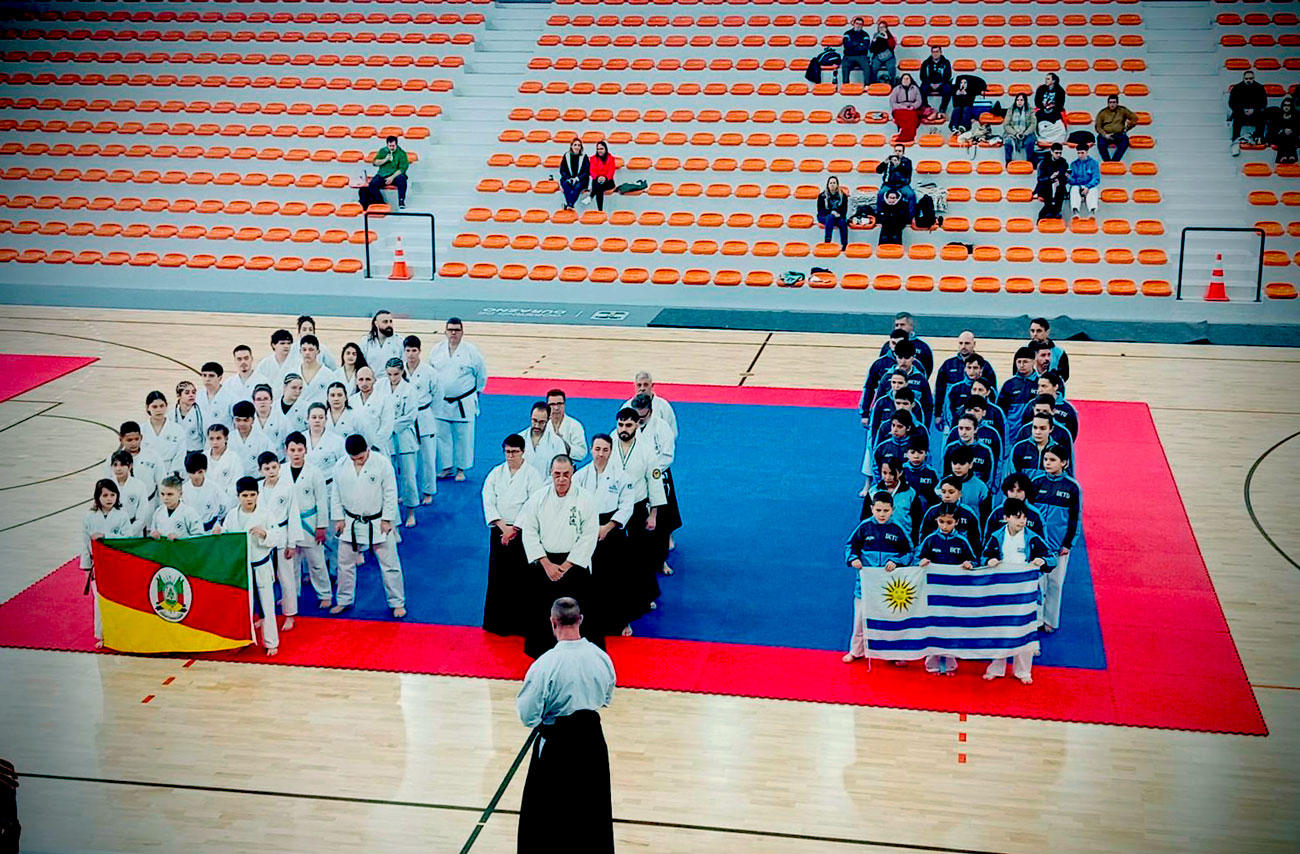
Teams line up on the koto © Diego Castro
The Rio Grande do Sul team won 11 of the 17 categories, while the Uruguayans claimed six victories. Beyond determining the final result, the team format enabled karateka of different ages and technical levels to take part, bringing together children in their first competitive experiences and adult athletes with longer careers.
This report was produced on the basis of the statement, official results and accounts provided by the Uruguayan organisers of Copa de La Frontera.
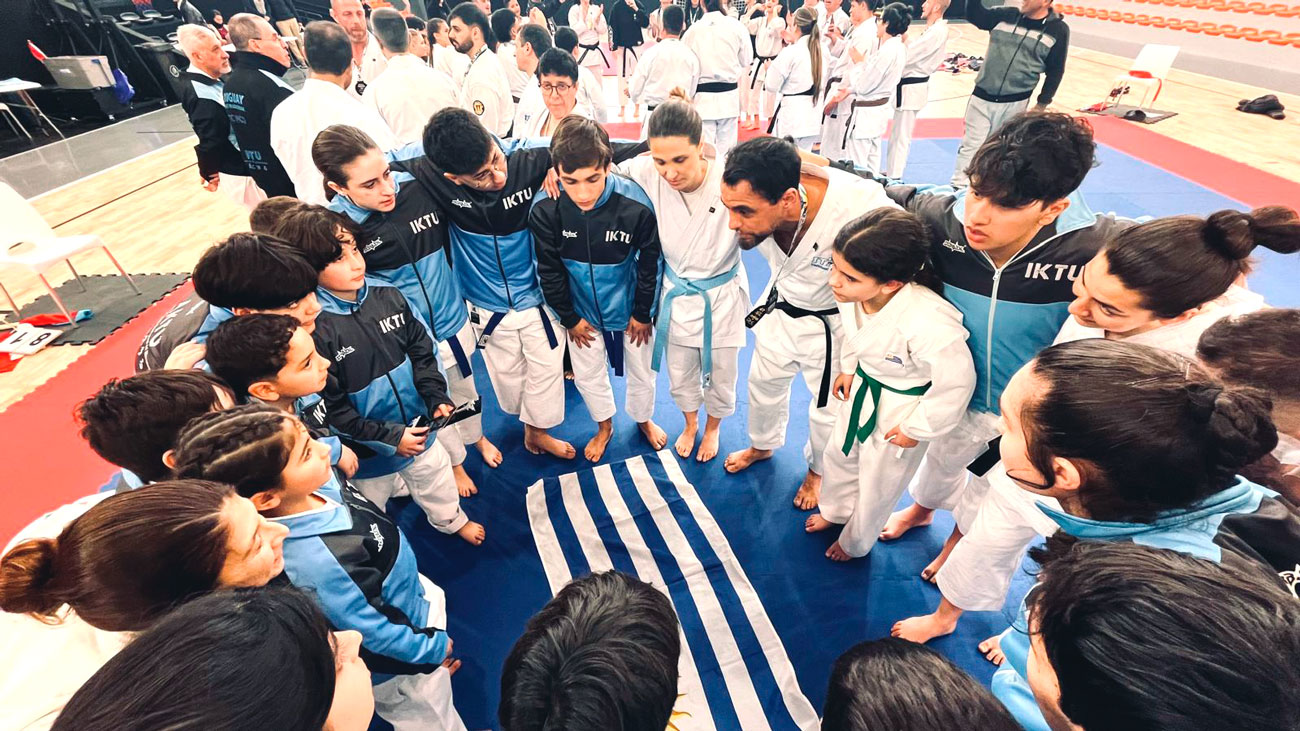
Uruguayan coach briefs the team before the team competition © Diego Castro
Officially sanctioned by the International Traditional Karate Federation, ITKF Global, the competition formed part of the 2026 international calendar and was attended by the Intendant of Durazno, Felipe Algorta, as well as departmental and national authorities.
The history of the encounter, however, began more than a decade earlier. The initiative was launched in 2015, initially centred on kumite, and subsequently added new disciplines, categories and opportunities for participation through cooperation between Sensei Alfredo Aires of Brazil and Jorge A. Crosa of Uruguay.
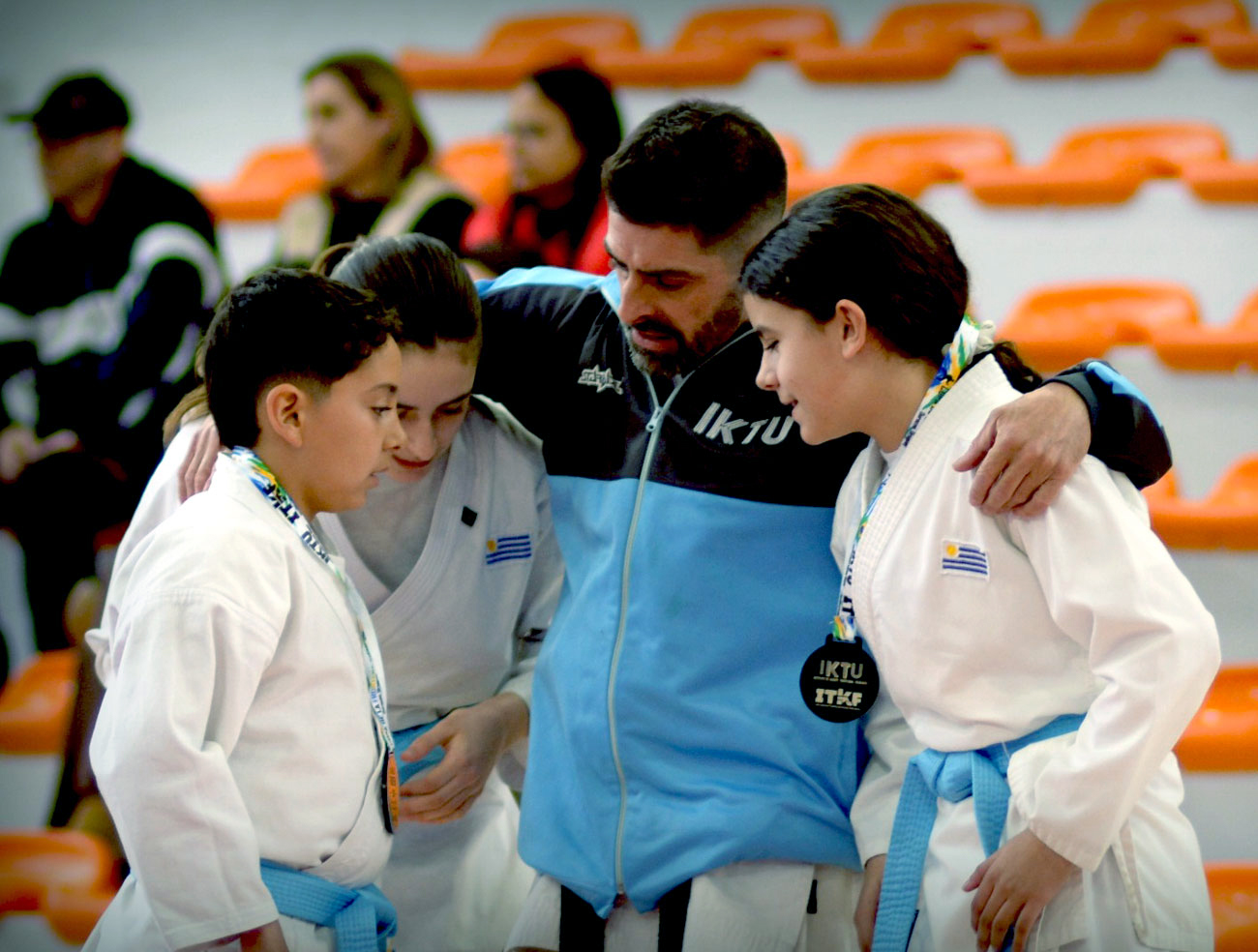
Pablo González guides the youth mixed kata team, comprising Mateo Palle, Martina González and Julieta Mato © Diego Castro
Crosa, president of ITKF Uruguay and secretary general of the Pan American Traditional Karate Federation, believes that the competition helps replace the idea of geographical separation with a relationship built on knowledge and coexistence.
“Rather than thinking of a border between Uruguay and our brothers and sisters in Rio Grande do Sul, we must conceive of it as a bridge. A bridge to knowledge, technical development, friendship and, fundamentally, the brotherhood of our peoples,” he said.
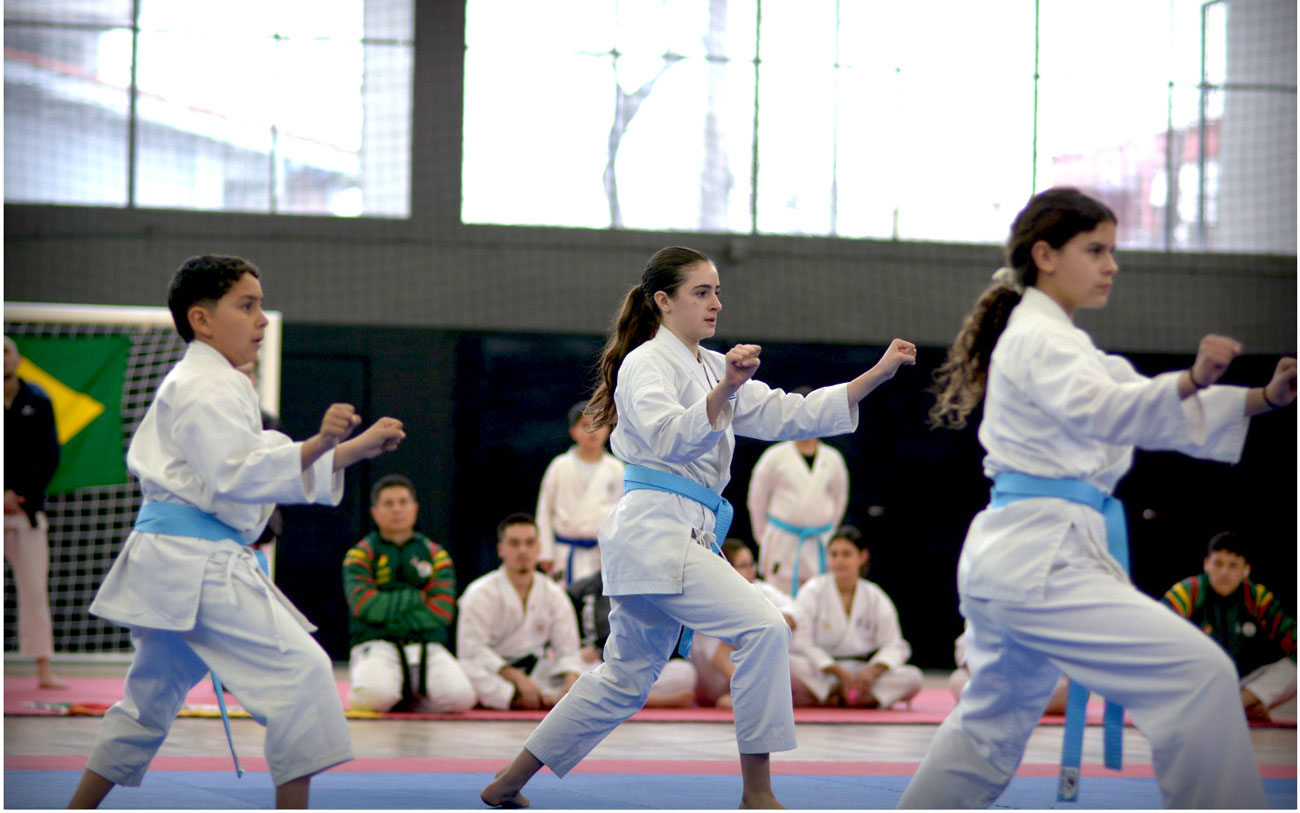
Presentation of Uruguay’s youth mixed kata team © Diego Castro
According to Crosa, this relationship did not begin recently. It is the result of a path continuously travelled by the two institutions since 2015, sustained by respect, trust and the understanding that neither side can truly grow by trying to move forward alone.
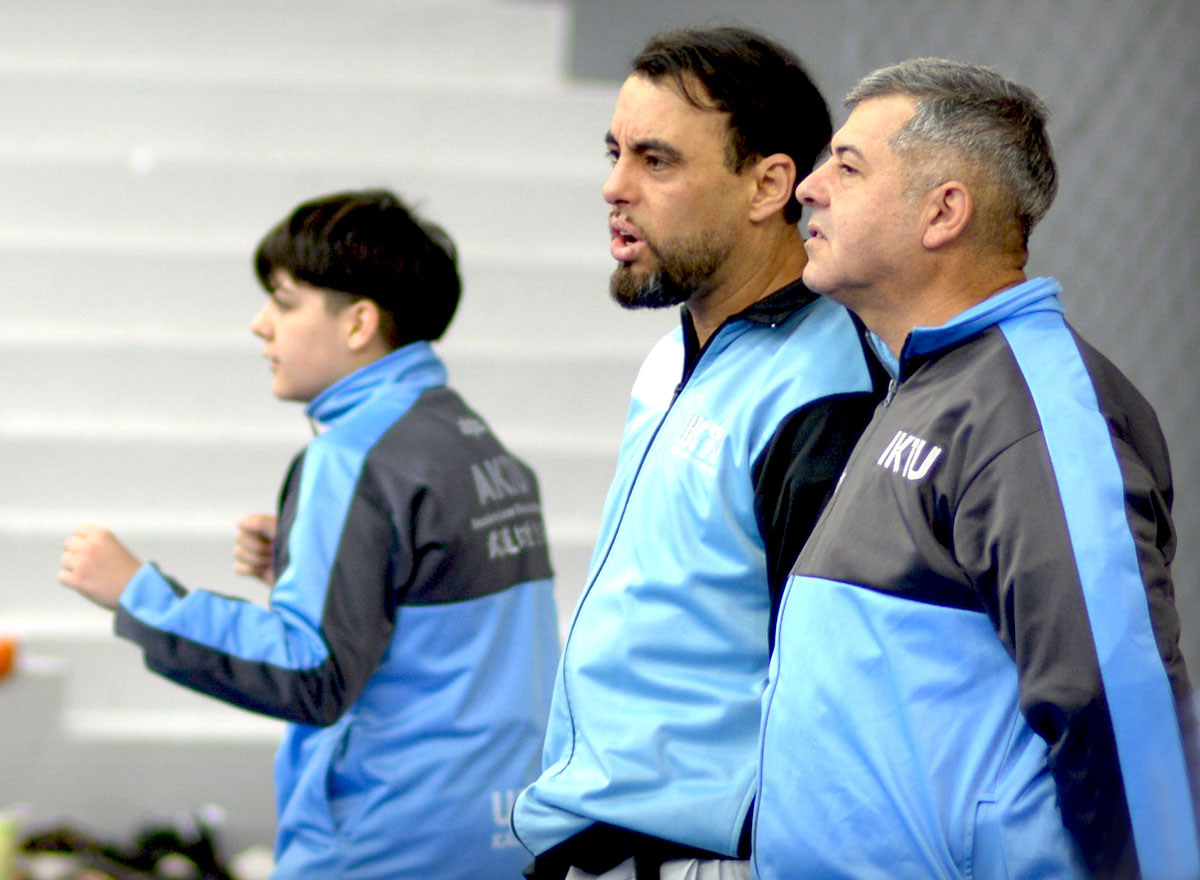
Uruguay national team captain Carlos Olivera watches the competition alongside athlete Néstor Velázquez. In the background, Gael Pajares of the youth team © Diego Castro
Crosa also paid special tribute to Sensei Alfredo Aires, shichi-dan (7th dan) and president of the Technical Commission of the Rio Grande do Sul Traditional Karate-do Federation (FSRKT), whom he described as a great leader and friend. One of the founders of Copa de La Frontera, Aires helped create the initiative and enabled the project to evolve into something broader, more inclusive and more diverse.
“He was one of the original driving forces behind this idea and was also generous enough to allow that project to grow, accepting proposals and contributions that came from this humble country in the south of the Americas. Together, we transformed it into something far more comprehensive, inclusive and diverse,” he emphasised.

The expansion of the competitive programme helped shape one of the central characteristics of Copa de La Frontera. Rather than restricting the encounter to the most experienced athletes, the model seeks to integrate different generations and stages of development.
For Jorge Crosa, the same competition can welcome a family beginning to discover traditional karate and a high-level athlete stepping onto the tatami to represent their homeland.
“For me, that is where much of the essence of this encounter lies: here, every karateka has value,” he summarised.
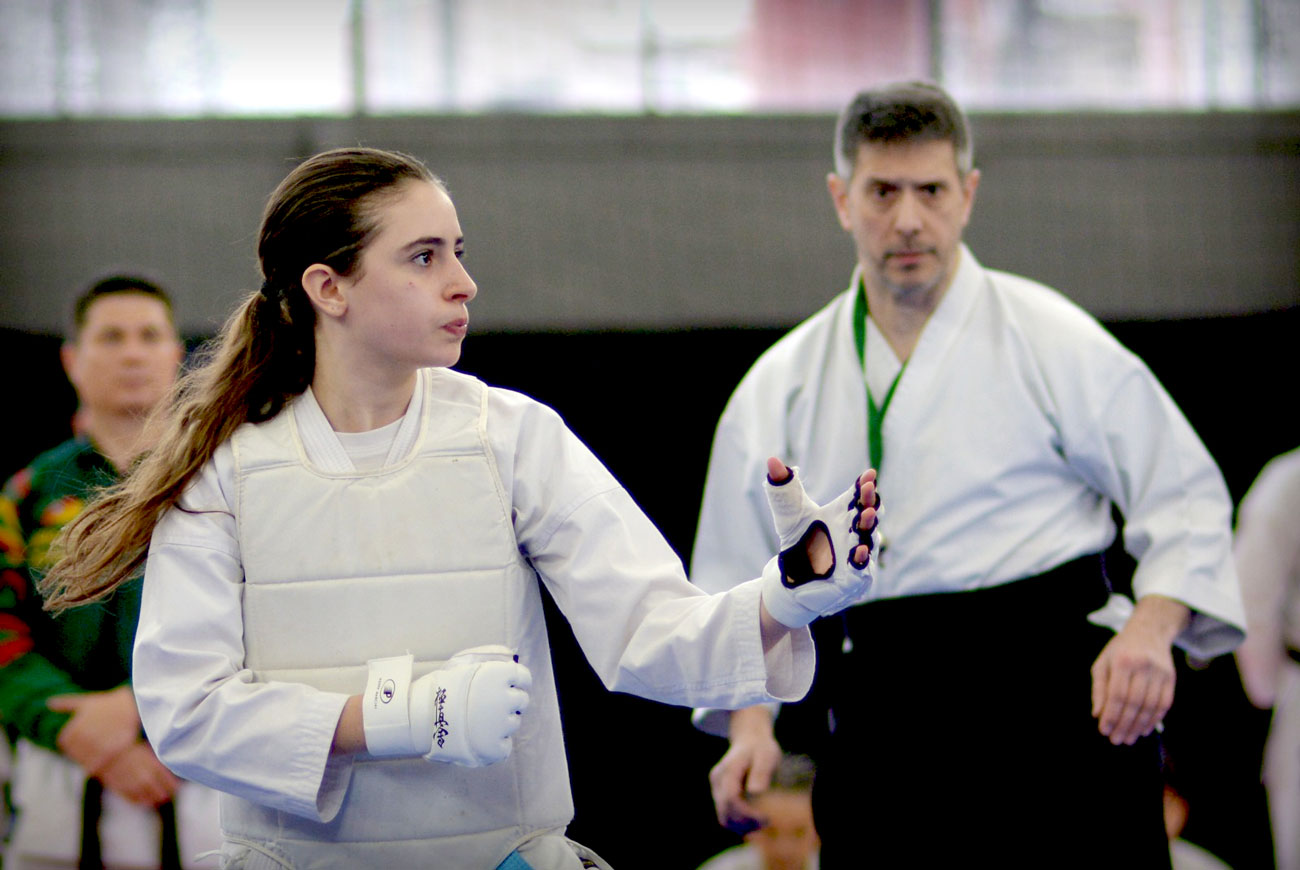
Martina González competes in kumite © Diego Castro
The involvement of spectators in the stands was also highlighted in the Uruguayan assessment. Supporters from both countries followed the events and helped create an atmosphere of closeness between the delegations.
“What we experienced in Durazno once again demonstrated something that seems simple but can sometimes be difficult to put into practice: when we set personal interests aside, roll up our sleeves and work as a team, we always go further. That, too, is budo,” Crosa said.
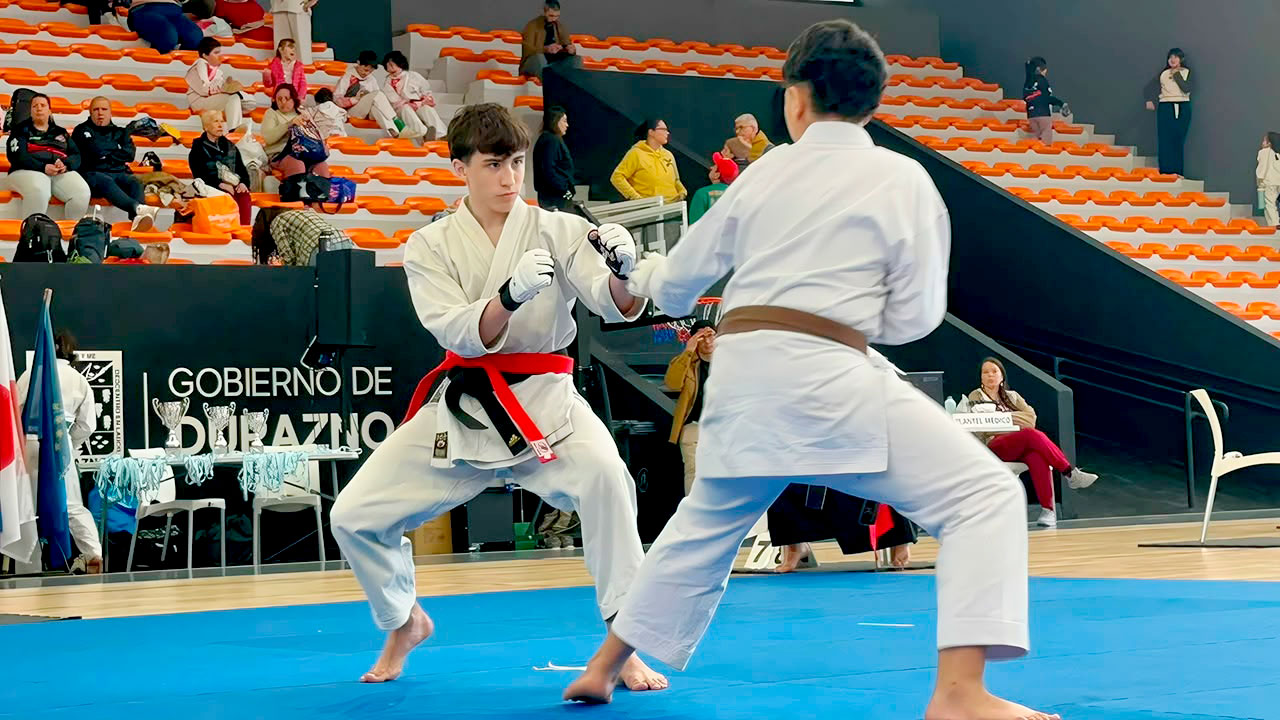
Men’s kumite © Diego Castro
Enrique Alonzo, secretary general of the Uruguayan Traditional Karate Institute, noted that the Copa took place at an important point in the organisation’s calendar. The encounter precedes the conclusion of ITKF Uruguay’s national activities, marked by the 11th edition of the Bushido Cup.
For Alonzo, however, the main outcome could be seen in the conduct of the karateka both on and off the tatami.
“Beyond the competition and any result, I believe the most important thing was what we saw inside and outside the competition area: Uruguayan and Rio Grande do Sul athletes sharing the experience with enormous respect, commitment and fellowship. These are values that reflect the budo we seek to pass on every day in our dojo,” he observed.
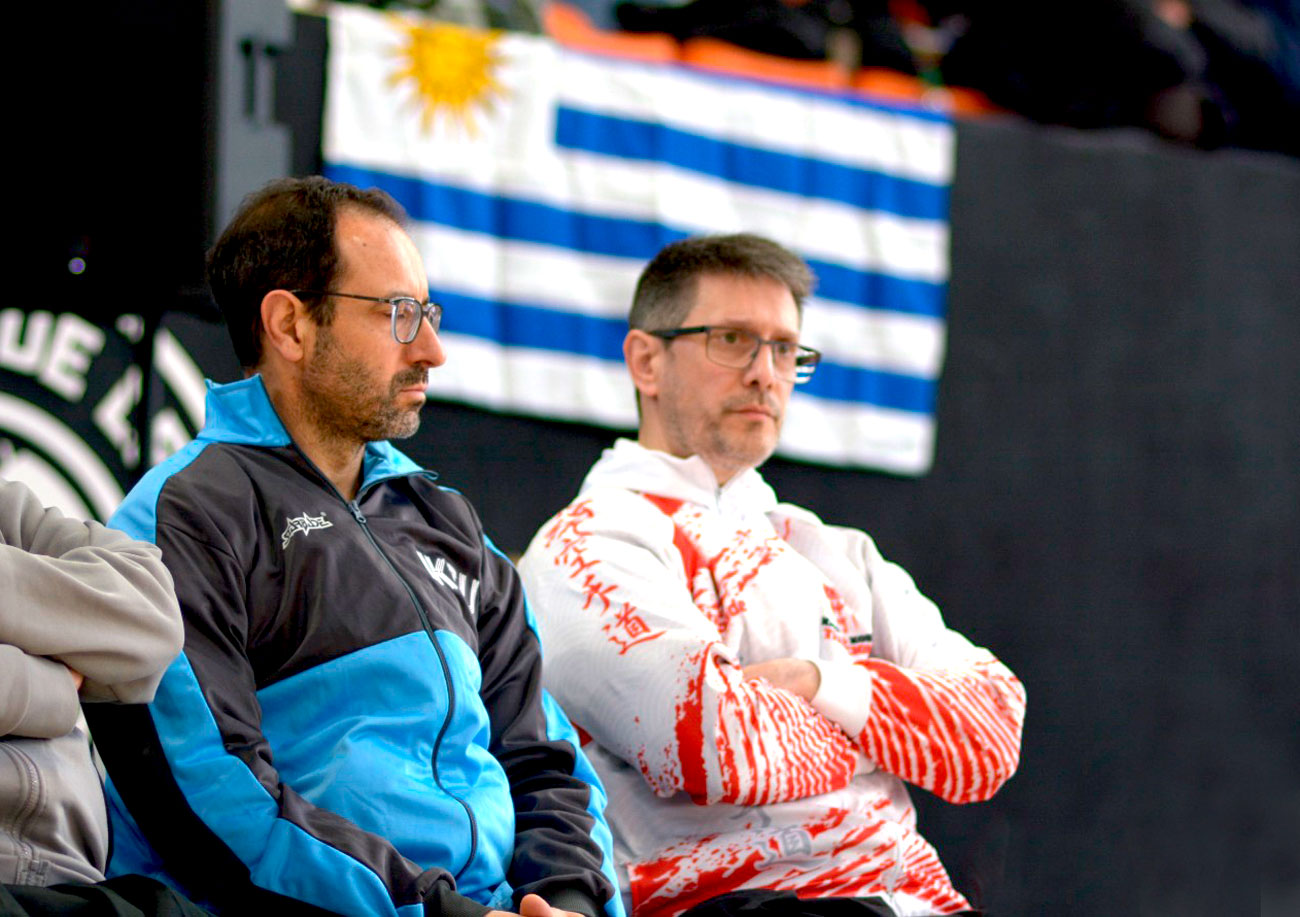
Adrián Allallón, an ITKF Uruguay judge, and Jorge Alejandro Crosa closely follow the progress of the competition © Diego Castro
The interaction among children, young people and adults reinforced the developmental nature of the encounter. For the official, seeing different generations share the same journey demonstrates that the project remains on a path consistent with the values it seeks to preserve.
“We compete, yes, but we also learn from one another, make friends and continue to grow together,” he added.
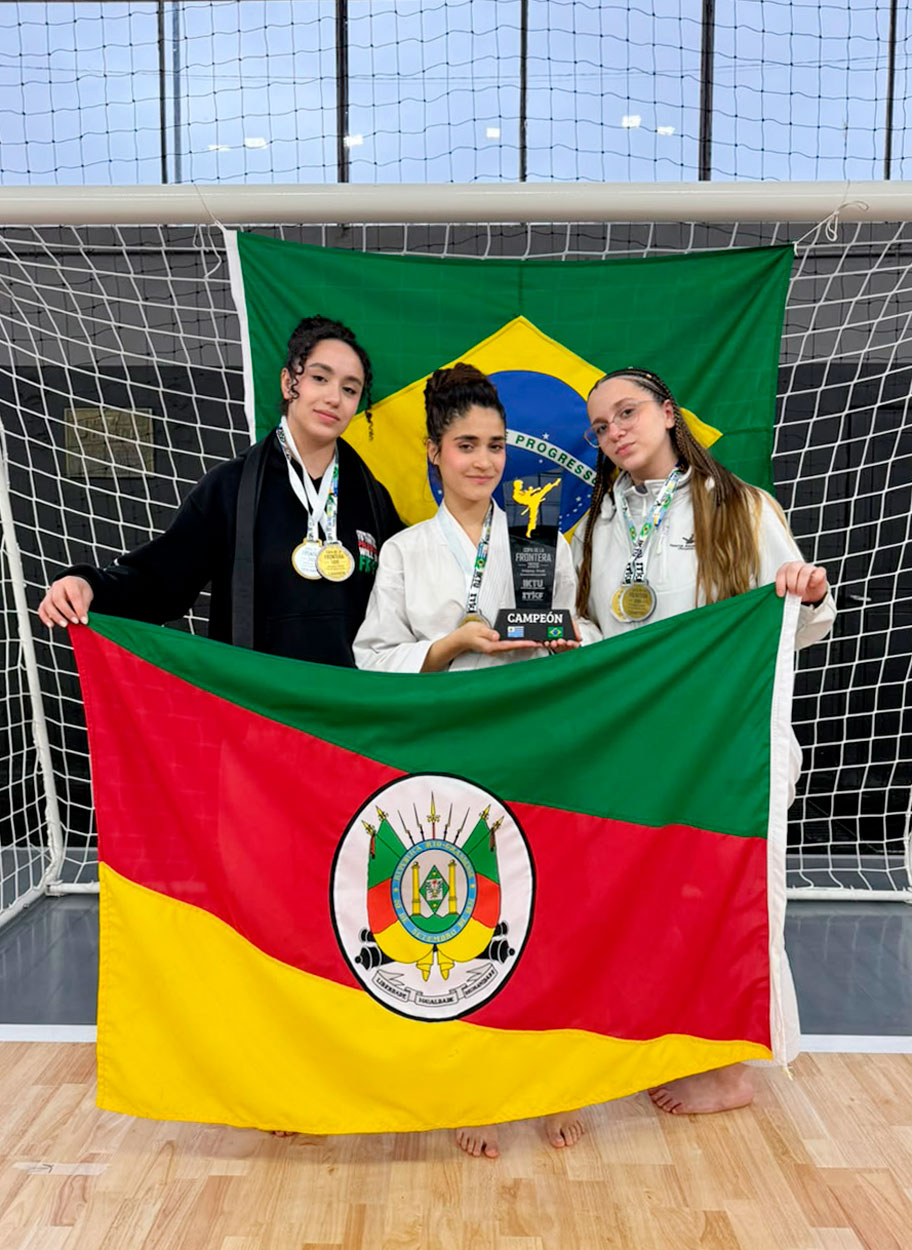
Female medallists from Rio Grande do Sul © Diego Castro
Rio Grande do Sul completed the kata and embu stage with five victories in eight categories. Uruguay won the other three. In kumite, the Brazilians prevailed in six of the nine events, while the Combinado Celeste won three.
KATA AND EMBU
Uruguay: 500 points
Rio Grande do Sul: 650 points
KUMITE
Uruguay: 550 points
Rio Grande do Sul: 700 points
FINAL RESULT
Uruguay: 1,050 points
Rio Grande do Sul: 1,350 points
CHAMPIONS: Rio Grande do Sul team
The story of Copa de La Frontera is already set to continue. In 2028, the encounter will cross the border once again and be held in Santana do Livramento, Rio Grande do Sul.
Alternating between the two sides reinforces the concept of a competition built jointly and dedicated to exchange between peoples who share a tradition.
“After more than ten years, Uruguayans and people from Rio Grande do Sul continue to meet on both sides of a border that, to us, increasingly resembles a bridge,” concluded Sensei Jorge Crosa.
14 de outubro de 2026
14 de outubro de 2026
13 de outubro de 2026