10 de outubro de 2026


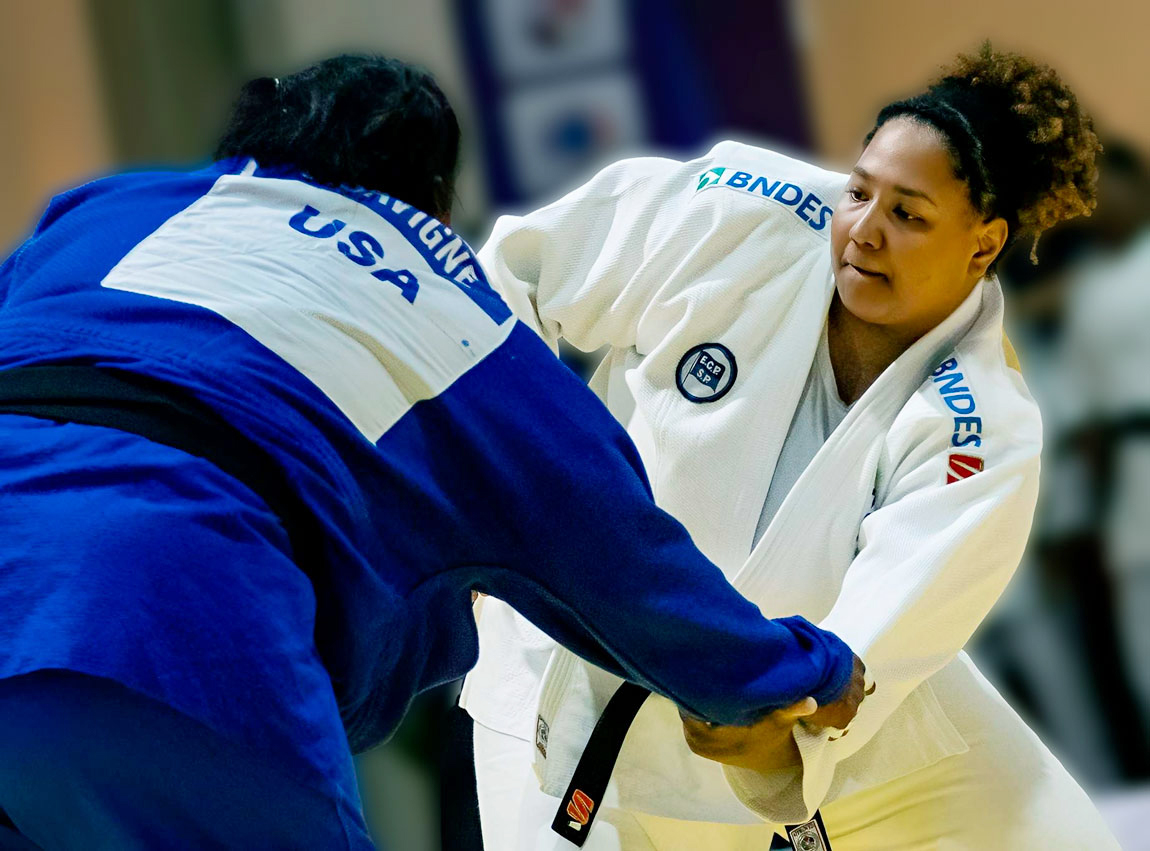 Beatriz Souza returns to competition and joins the Brazilian team during the Pan American Championships © CBJ
April 2026 consolidated one of the most remarkable periods in the recent history of Brazilian judo on the American continent. Within just a few weeks, Brazil won every major continental competition promoted by the Pan American Judo Confederation (PJC) in the cadet, junior and senior divisions, both in individual events and mixed-team competitions, in addition to claiming the South American Games title.
More than the numerical dimension of the results, the sequence highlighted the consistency of a development system that continues to produce competitive athletes across different generations, weight categories and international contexts.
Throughout the month, Brazilian national teams collected 52 medals in continental events — 27 gold, 11 silver and 14 bronze — during campaigns held in Panama and Ecuador.
In the senior division, Brazil claimed its eighth consecutive Pan American title and maintained an unbeaten continental supremacy that now approaches an entire decade. The Senior Pan American Championships took place from April 18 to 20 at the Centro de Convenciones Vasco Núñez, inside Hotel Panamá, in Panama City, bringing together 219 judoka from 25 countries.
The Brazilian delegation concluded the competition with 14 medals — six gold, two silver and six bronze — in addition to the mixed-team title.
In practical terms, the dominance was absolute. Brazil secured the overall title in both the individual tournament and the mixed-team event, winning the two most important fronts of the premier senior competition in the Americas.
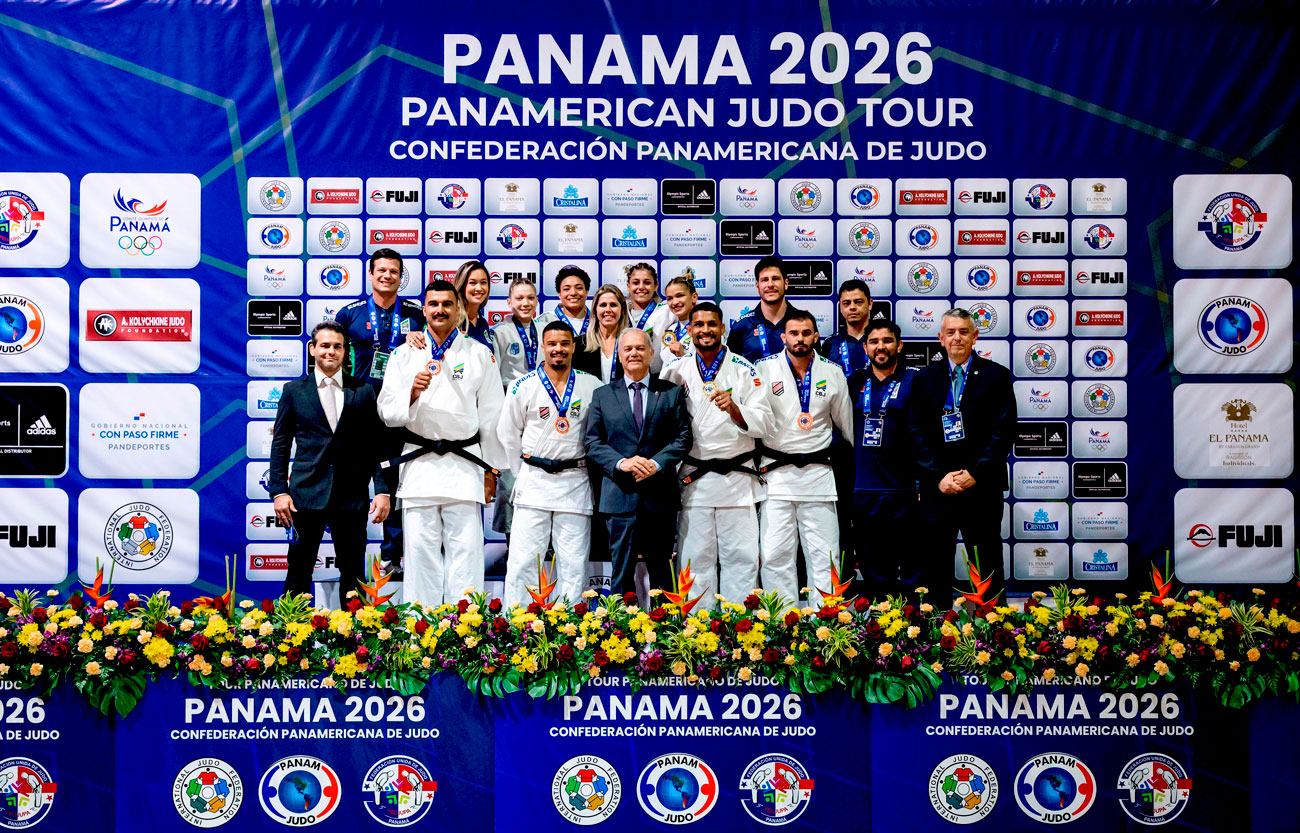
Part of the Brazilian delegation in Panama, featuring athletes, multidisciplinary staff, head of delegation Marcelo Theotonio and CBJ President Paulo Wanderley © CBJ
While it may not be historically possible to state with absolute precision whether this was the greatest result ever achieved by a nation in Pan American judo, it is fair to say that the mark established by Brazil will be extremely difficult to surpass in the near future.
GOLD MEDALS
Nauana Silva (-70kg)
Daniel Cargnin (-73kg)
Clarice Ribeiro (-48kg)
Larissa Pimenta (-52kg)
Shirlen Nascimento (-57kg)
Leonardo Gonçalves (-100kg)
SILVER MEDALS
Rafaela Silva (-63kg)
Sarah Souza (-57kg)
BRONZE MEDALS
Luana Carvalho (-70kg)
Guilherme de Oliveira (-73kg)
Beatriz Freitas (-78kg)
David Lima (-81kg)
Rafael Macedo (-90kg)
Lucas Lima (+100kg)
Brazil’s mixed team closed the Senior Pan American Championships with another gold medal after defeating Cuba 4-1 in the final and capturing the seventh title in the history of the competition. In earlier rounds, Brazil displayed the same consistency, defeating Venezuela 4-0 and Peru 4-0.
Since the introduction of the mixed-team format in 2018, Brazil has reached every continental final, collecting seven titles (2019, 2020, 2022, 2023, 2024, 2025 and 2026) in addition to a silver medal in 2018.
The athletes who represented Brazil throughout the mixed-team competition were Sarah Souza (-57kg), Nauana Silva (-70kg), Luana Carvalho (-70kg), Beatriz Freitas (+70kg), Daniel Cargnin (-73kg), Guilherme de Oliveira (-73kg), Rafael Macedo (-90kg), Lucas Lima (+90kg) and Andrey Coelho (+90kg).
Beyond the sporting achievements themselves, Brazil’s campaign in Panama also highlighted the strength of the technical structure supporting the national teams at major international competitions.
The delegation was led by head of delegation Marcelo Theotonio da Silva and featured a technical staff composed of Andrea Berti Rodrigues Guedes, Antonio Carlos de Oliveira Pereira and Olympic medalist Leandro Guilheiro, one of the leading figures of his generation and currently involved in the technical development process of Brazil’s new generation of athletes.
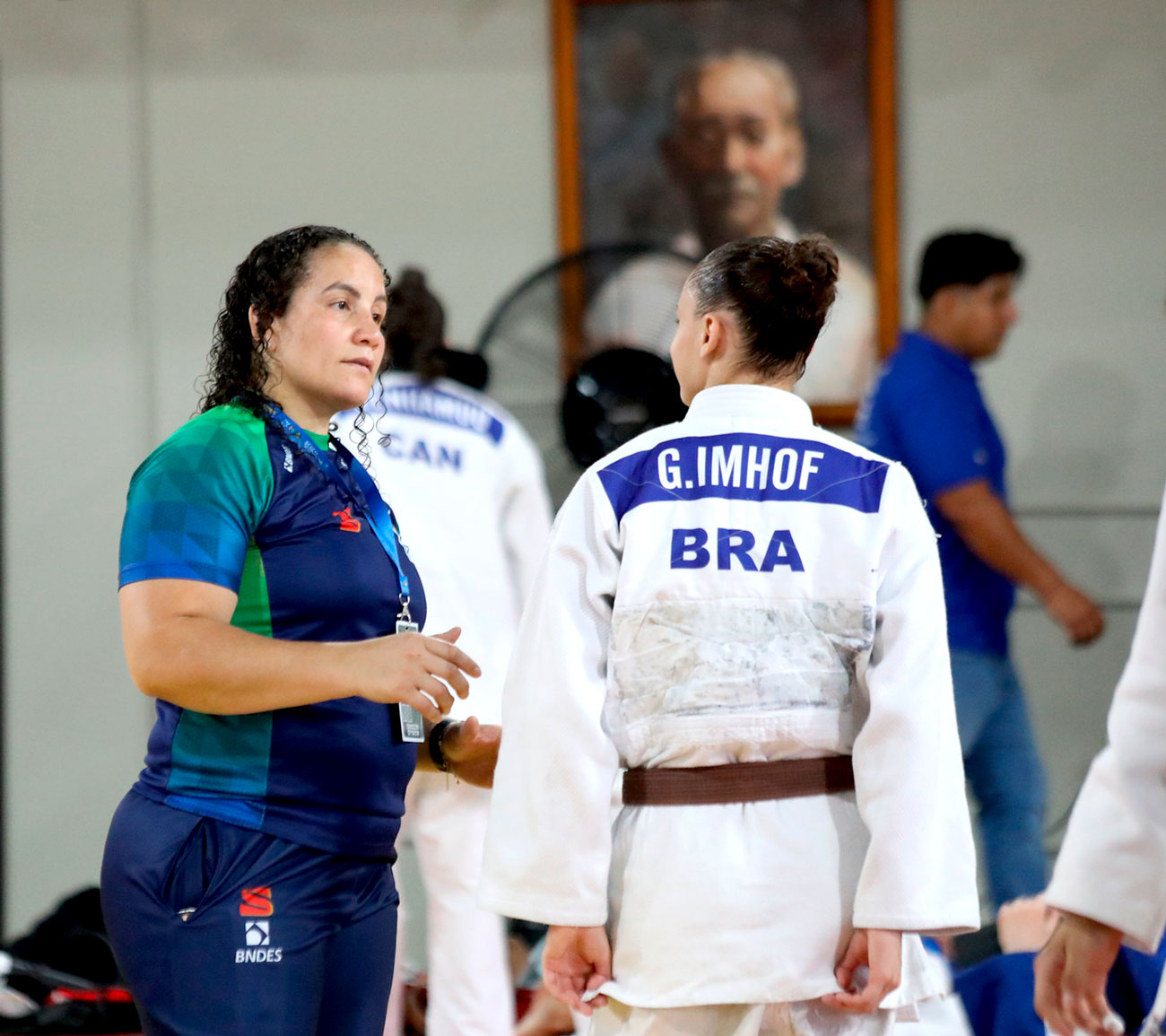
Maria Portela coaches lightweight champion Giovanna Imhof during the Cadet Pan American Championships © CBJ
The team also benefited from multidisciplinary support in the medical and physiotherapy areas, represented respectively by Rubio Arruda Rodrigues and Ricardo Guimarães Amadei.
More than operational support, the composition of the technical commission reflects a working model that combines international experience, professional renewal and integration between different areas of high-performance sport.
Held at Arena José Desimavilla in Guayaquil, Ecuador, from April 29 to 30, the Junior Pan American Judo Championships brought together 131 athletes from 15 countries in the individual competition.
Brazil’s Junior National Team captured 14 medals and secured the overall team title in the continental event for athletes under 20 years old.
The Brazilian squad collected six gold medals, three silver and five bronze, finishing atop the overall medal standings with a comfortable margin over the other participating nations.
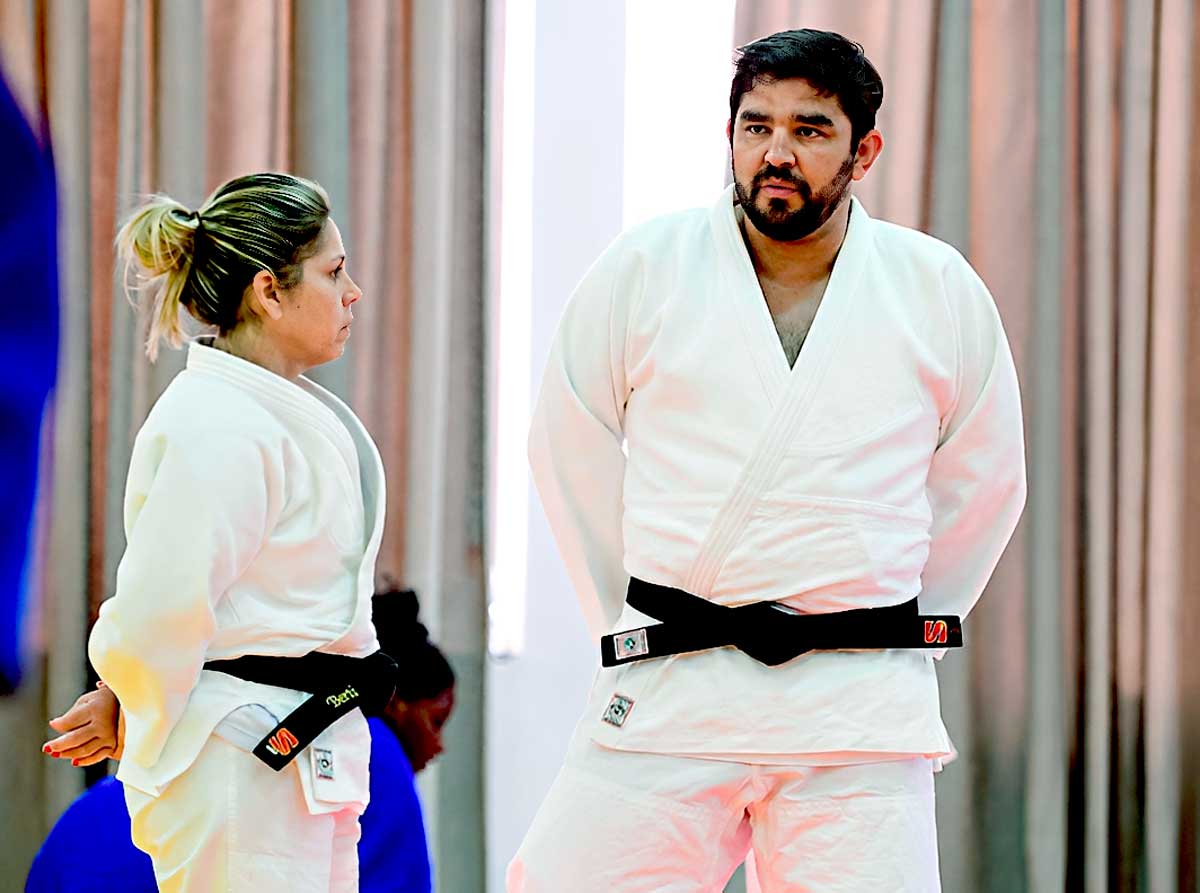
Professor Marcelo Theotonio da Silva, CBJ high performance manager, alongside Andrea Berti Rodrigues Guedes, coach of Brazil’s women’s national team © CBJ
In the women’s division, Brazil reached the podium in every weight category, demonstrating technical depth and competitive consistency throughout the tournament. The main highlight came in the half-lightweight division (-52kg), where Brazilian athletes secured two podium finishes.
Rafaela Rodrigues (-57kg), Manuela Maia (-63kg), Dandara Camillo (-78kg) and Ana Soares (+78kg) won gold medals. Sarah Mendes (-48kg), Larissa Menezes (-57kg) and Clarisse Vallim (-70kg) earned silver medals, while Nicole Marques (-52kg) captured bronze. Sophia Câmara (-70kg) concluded the competition in fifth place.
In the men’s division, Brazil secured six additional medals. Silas Costa (-81kg) and João Pedro Canello (-90kg) claimed continental titles, while Vinicius Oliveira (-60kg), Cauã Schramm (-66kg), Matheus Silva (-100kg) and Luis Oliveira (+100kg) finished with bronze medals. José Tiago Filho (-73kg) also reached the final block of the competition, finishing in fifth place.
GOLD MEDALS
Rafaela Rodrigues (-57kg)
Manuela Maia (-63kg)
Dandara Camillo (-78kg)
Ana Soares (+78kg)
Silas Costa (-81kg)
João Pedro Canello (-90kg)
SILVER MEDALS
Sarah Mendes (-48kg)
Larissa Menezes (-57kg)
Clarisse Vallim (-70kg)
BRONZE MEDALS
Nicole Marques (-52kg)
Vinicius Oliveira (-60kg)
Cauã Schramm (-66kg)
Matheus Silva (-100kg)
Luis Oliveira (+100kg)
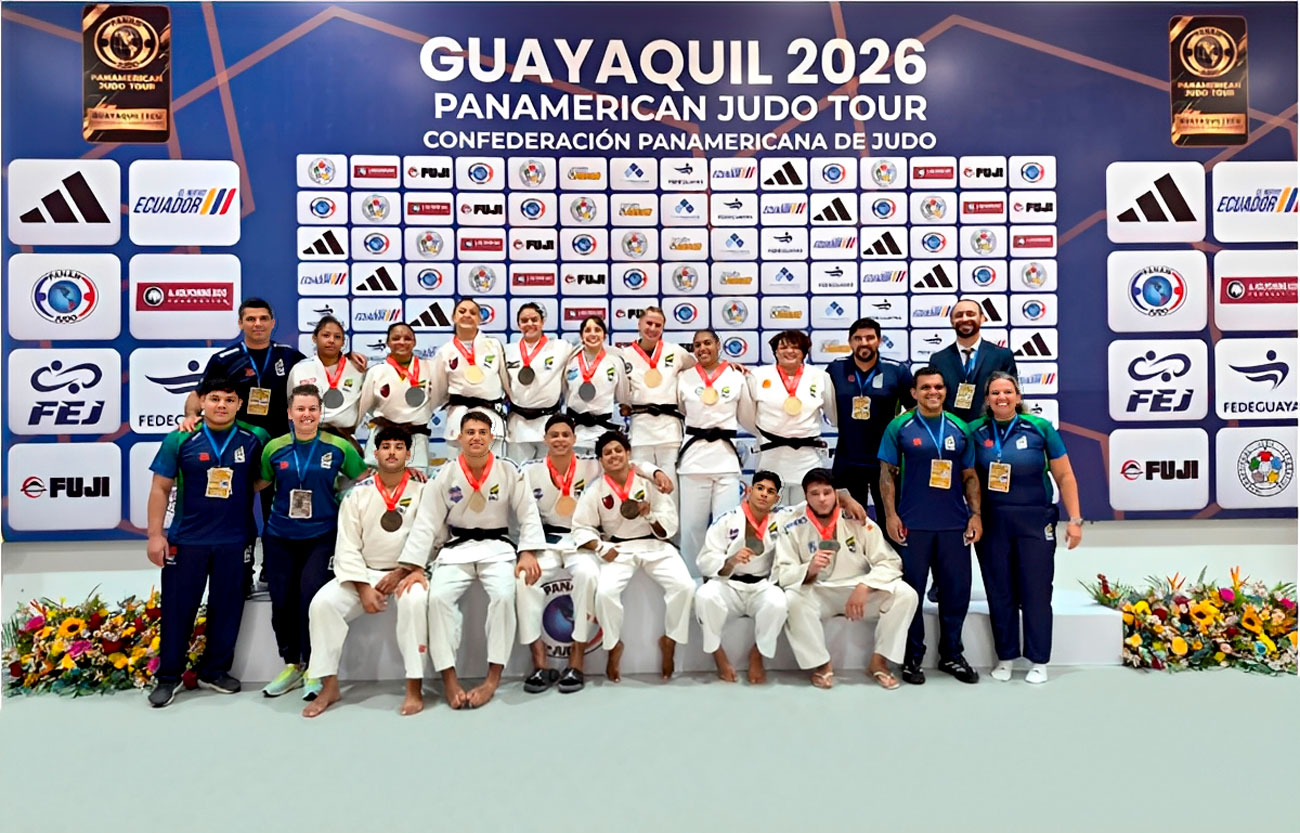
Technical staff and medal-winning athletes of Brazil’s junior national team © CBJ
Brazil’s junior mixed team confirmed the country’s consistency in the competition by capturing another gold medal after solid performances in both the semifinal and final rounds.
In the semifinal, Brazil defeated Argentina 4-0. In the final, the Brazilian team overcame Canada 4-2 to secure the continental title.
Brazil’s mixed team lineup featured Larissa Menezes (-57kg), Sophia Câmara (-70kg), Ana Soares (+70kg), José Tiago Filho (-73kg), João Pedro Canello (-90kg) and Luis Oliveira (+90kg).
Brazil’s campaign at the Junior Pan American Championships also reflected the organizational strength of the technical staff responsible for supporting the athletes throughout the continental competition.
The delegation was led by head of delegation Bruna Muassab Fernandes and featured technical coordination by coaches Marcus Fábio Agostinho and Douglas Herculino Potrich.
The multidisciplinary support staff was completed by physiotherapist Thiago Vinicius Ferreira, reinforcing the integrated development model applied to Brazil’s younger judo divisions.
Brazil’s Under-18 National Team delivered one of the most impressive campaigns of the continental season at the Cadet Pan American Championships, held at Arena José Desimavilla in Guayaquil, Ecuador, from April 29 to 30, capturing the overall team title with eight gold medals, four silver and two bronze.
One of the most remarkable statistics of Brazil’s campaign was its extraordinary podium efficiency: 14 of the 16 selected athletes finished the competition on the podium, representing an 87.5% medal rate and extending the country’s continental supremacy in the cadet division for another season.
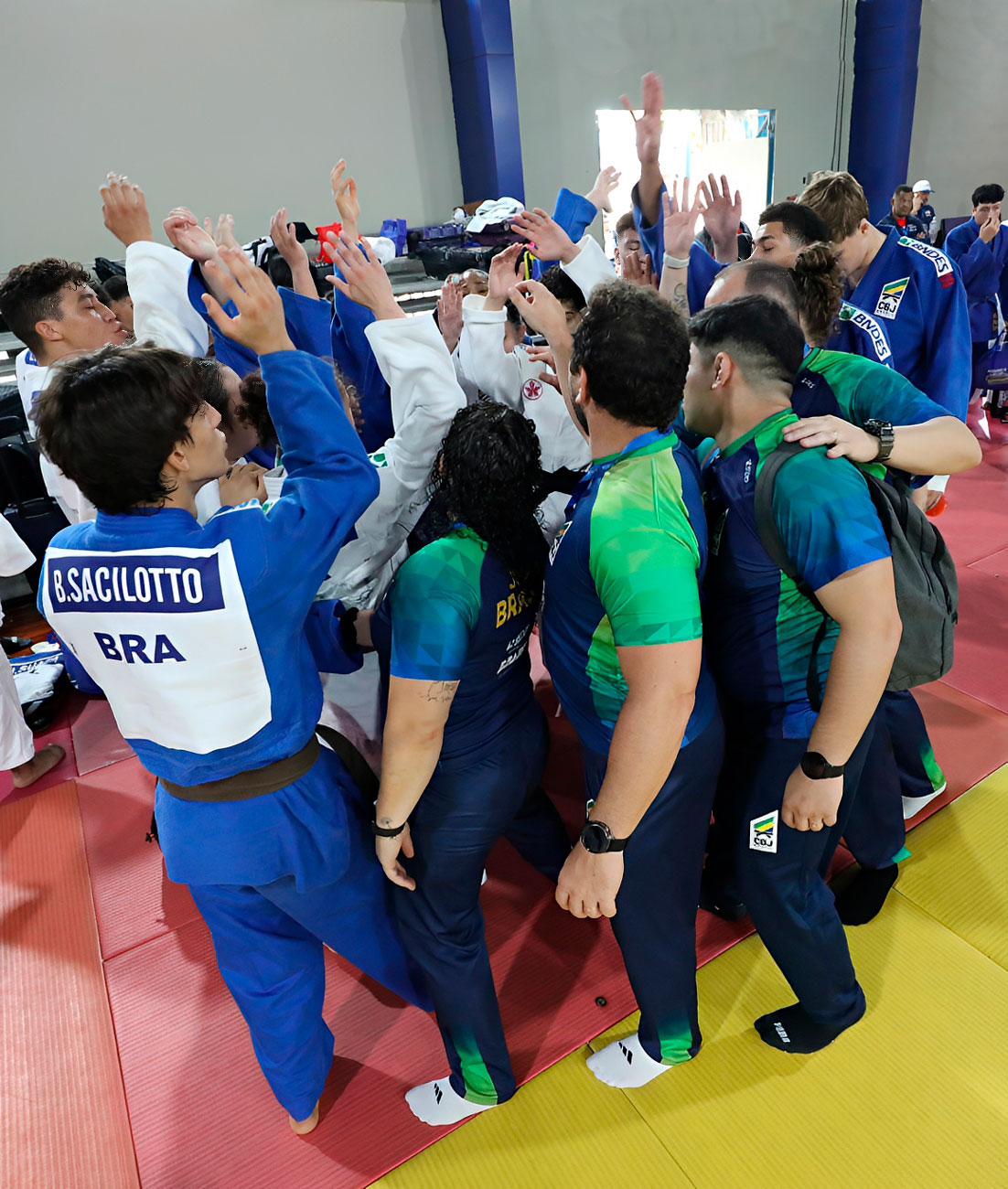
Lincoln Kanemoto Neves, Maria Portela, José Olivio Junior, Thiago Valladão Fernandes and Deborah Adéli Matias join the cadet national team in the traditional pre-competition team chant © CBJ
In addition, 12 Brazilian judoka advanced to the finals of their respective weight categories, while two others reached bronze-medal contests, highlighting the technical consistency and competitive depth of the team across virtually every division of the tournament.
Brazil’s continental titles came through Giovanna Imhof (-48kg), Manuela Maia (-63kg), Clarisse Vallim (-70kg) and Caroline Ohonishi (+70kg) in the women’s divisions, alongside Arthur Bonato (-50kg), Nicolas Almeida (-73kg), Yago Mello (-81kg) and Heitor Sousa (-90kg) in the men’s competition.
Silver medals were earned by Gabrielli Casola (-40kg), Ana Mendes (-44kg), Gabriela Pereira (-57kg) and José Pereira (+90kg).
Brazil’s medal tally was completed by bronze medalists Rafael Falcão (-60kg) and Bruno Sacilotto (-66kg), both of whom advanced to the semifinals before securing podium finishes in their bronze-medal matches.
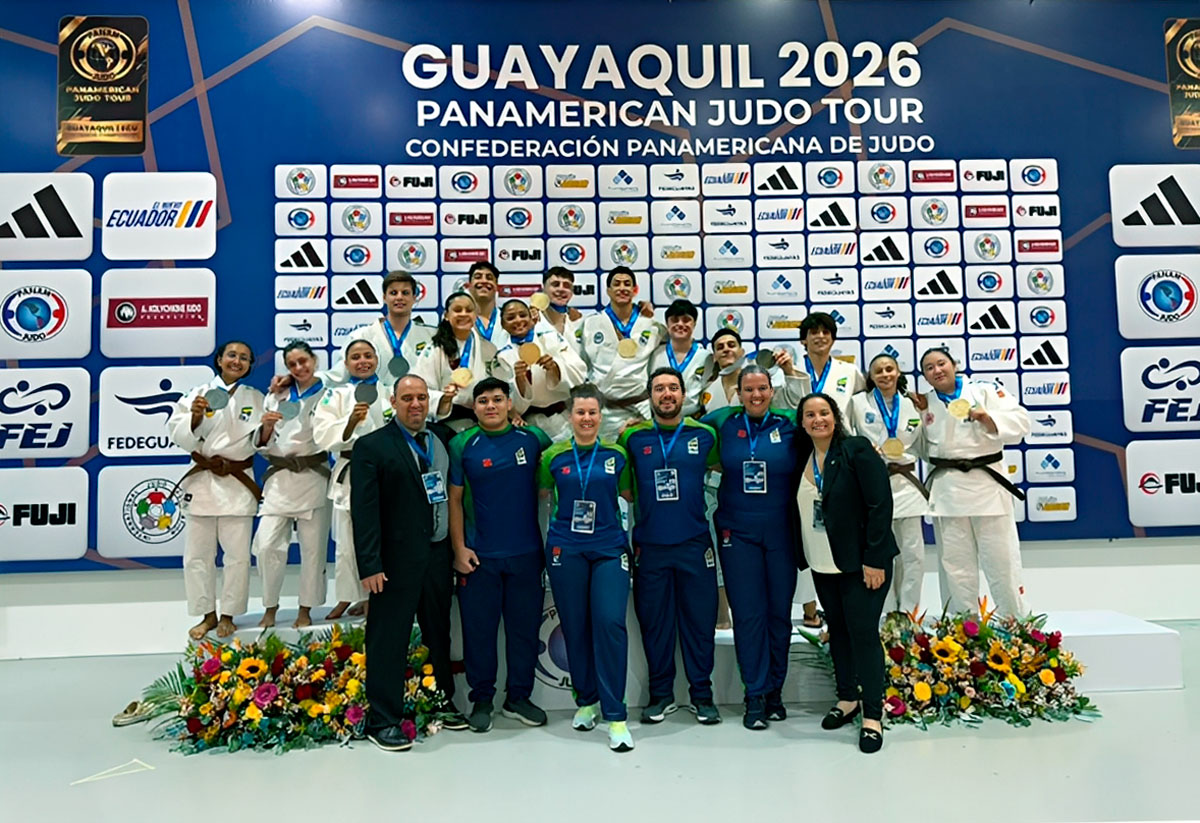
Technical staff alongside medal-winning athletes of Brazil’s cadet national team © CBJ
GOLD MEDALS
Giovanna Imhof (-48kg)
Manuela Maia (-63kg)
Clarisse Vallim (-70kg)
Caroline Ohonishi (+70kg)
Arthur Bonato (-50kg)
Nicolas Almeida (-73kg)
Yago Mello (-81kg)
Heitor Sousa (-90kg)
SILVER MEDALS
Gabrielli Casola (-40kg)
Ana Mendes (-44kg)
Gabriela Pereira (-57kg)
José Pereira (+90kg)
BRONZE MEDALS
Rafael Falcão (-60kg)
Bruno Sacilotto (-66kg)
Brazil’s cadet mixed team once again demonstrated the country’s continental strength by securing the gold medal with two commanding 4-0 victories.
In the semifinal, Brazil defeated host nation Ecuador. In the final, the Brazilian team faced Canada and, repeating the same lineup, claimed another 4-0 victory to secure the continental title.
Brazil’s mixed-team roster featured Giovanna Imhof (-48kg), Manuela Maia (-63kg), Caroline Ohonishi (+63kg), Rafael Falcão (-60kg), Yago Mello (-81kg) and Heitor Sousa (+81kg).
Brazil’s campaign in Ecuador also reflected the strength and organizational consistency of the technical structure responsible for guiding the country’s new generation of judoka in international competition.
The delegation was led by head of delegation Lincoln Keiiti Kanemoto das Neves and featured a technical staff composed of Maria de Lourdes Mazzoleni Portela, José Alfredo Olivio Junior and Thiago Valladão Fernandes.

The Brazilian team also benefited from multidisciplinary physiotherapy support provided by Deborah Adéli de Morais Matias, reinforcing the integrated approach applied to athlete development, physical preparation and recovery throughout the continental event.
More than operational support, the composition of the technical staff reflects the continuity of a development model sustained by professional integration, specialized monitoring and the progressive advancement of Brazil’s youth divisions.
Brazil achieved a perfect performance rate at the South American Games, with all seven athletes entered in the competition reaching the podium: four gold medals, two silver and one bronze.
Gold medals were won by Lavínia Igaki (-52kg), Manuela Maia (-63kg), Yago Mello (-81kg) and Clarisse Vallim (-78kg).
Silver medals went to Laiane Timbira (-44kg) and Bruno Sacilotto (-66kg), while Mohammad Hauache (-55kg) completed Brazil’s campaign with a bronze medal.
GOLD MEDALS
Lavínia Igaki (-52kg)
Manuela Maia (-63kg)
Yago Mello (-81kg)
Clarisse Vallim (-78kg)
SILVER MEDALS
Laiane Timbira (-44kg)
Bruno Sacilotto (-66kg)
BRONZE MEDAL
Mohammad Hauache (-55kg)
The Brazilian delegation at the South American Games was led by Bruna Muassab Fernandes and featured technical coordination by José Alfredo Olivio Júnior and Maria de Lourdes Mazzoleni Portela.
The composition of the technical staff reinforced the continuity of the development work carried out within Brazil’s youth divisions, sustained by specialized monitoring, methodological integration and the progressive strengthening of young judo talents throughout the country.
Following the campaigns held in Panama City and Guayaquil, Brazil totaled 52 medals — 27 gold, 11 silver and 14 bronze — consolidating one of the most expressive campaigns in the recent history of judo on the American continent.
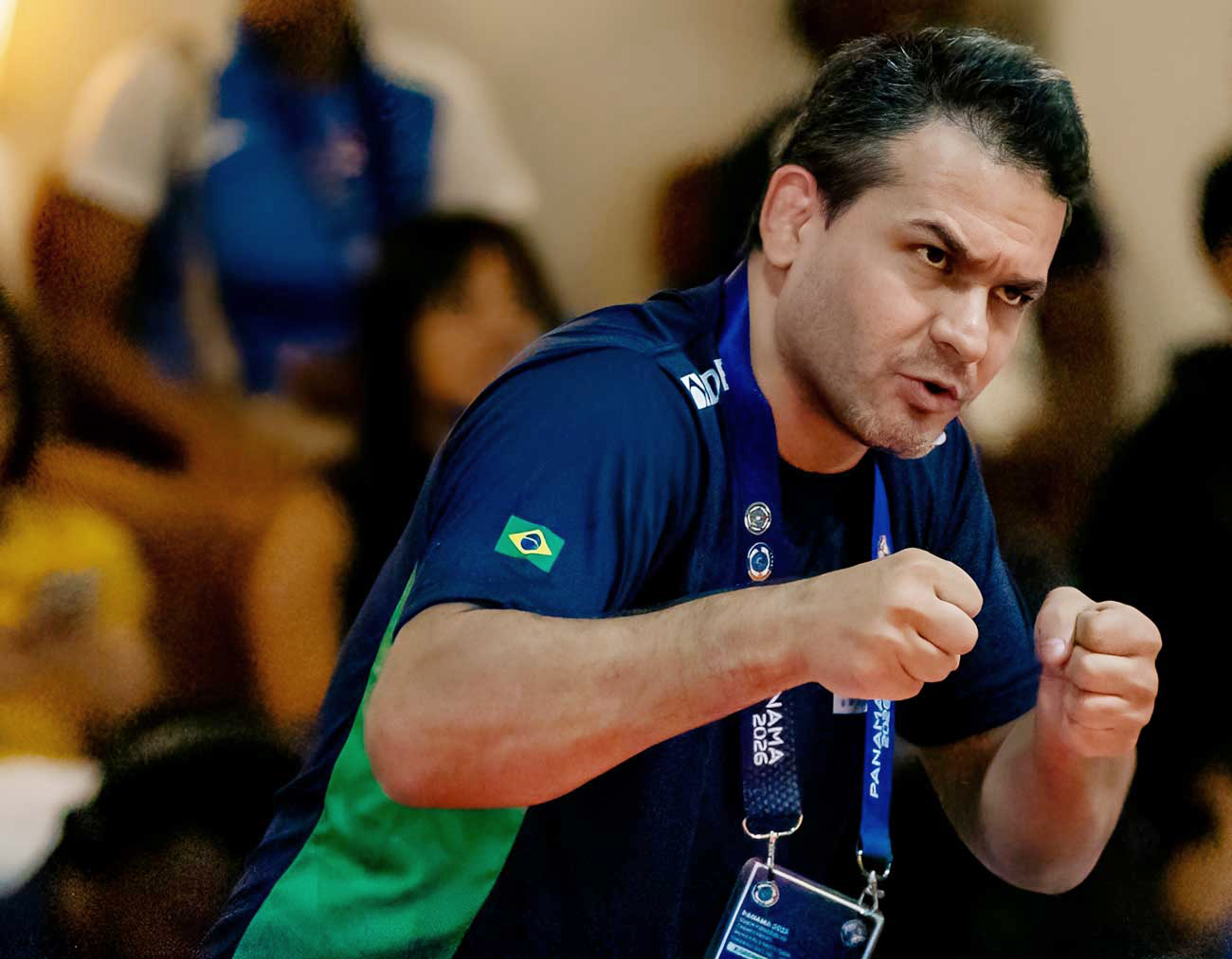
Olympic medalist and one of the icons of his generation, Leandro Guilheiro continues his technical development work with Esporte Clube Pinheiros and the Brazilian National Team © CBJ
According to data from the Brazilian Judo Confederation, the national teams that competed throughout April were composed of athletes representing different states across the country, including Maranhão, São Paulo, Rio de Janeiro, Rio Grande do Norte, Rio Grande do Sul, Minas Gerais, the Federal District and Mato Grosso do Sul.
The federation-based registration system considers the athletes’ current state affiliation, but the technical development of Brazilian judoka extends far beyond those administrative borders. Among the selected athletes are several cases of competitors developed in different training centers throughout their careers, such as Clarice Ribeiro from the state of Amazonas, a standout lightweight athlete who, at just 17 years old, already owns three world titles in youth divisions and a senior Pan American title, among other high-level international credentials.
“It is within this silent, daily and often invisible foundation that the strength of a system leading the continental judo scene continues to be built.”
This reflects a system that, although still strongly connected to traditional centers such as São Paulo and Rio de Janeiro, already presents clear signs of national expansion. States such as Minas Gerais and Rio Grande do Sul continue to play leading roles, whether through consistent athlete development or their capacity to absorb talent from different regions of the country.
More than regional concentration, what can currently be observed is a process of qualified decentralization and increasing technical permeability, reflecting a judo system that continues to expand, adapt and strengthen itself throughout the national territory.
Today, judo is deeply rooted in Brazilian sporting culture. Present in clubs, schools, social projects and a wide variety of training environments, the sport has established itself as one of the most widely practiced disciplines in the country.
It is precisely within this silent, daily and often invisible foundation that the strength of a system sustaining Brazil’s continental prominence continues to be built.
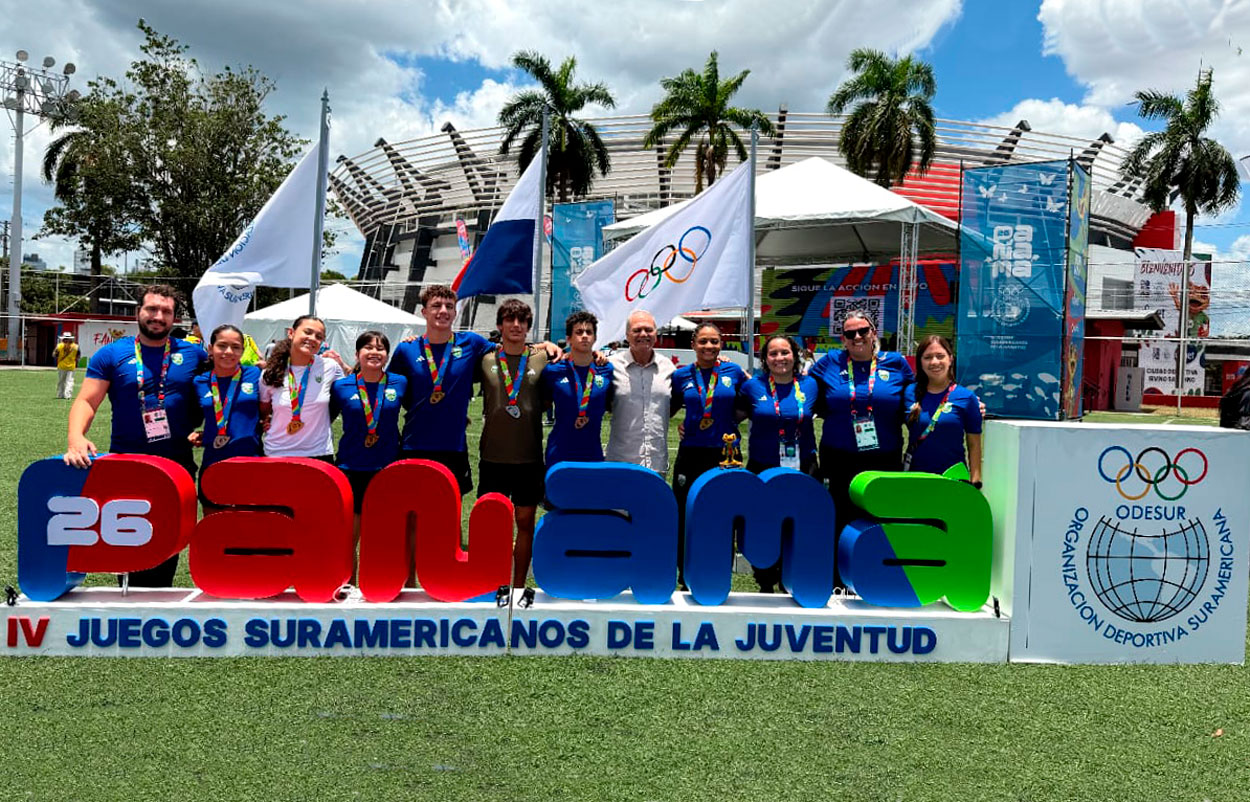
Paulo Wanderley Teixeira, Bruna Muassab Fernandes, José Alfredo Olivio and Maria Portela alongside the Brazilian athletes who competed at the South American Games © CBJ
The numbers deserve to be recorded. But above all, recognition must be given to the true protagonists behind this construction: coaches, clubs, academies, schools and social projects — from major institutions to small dojo that continue operating with limited resources but enormous educational vocation.
They are the ones who, every day, help shape not only high-performance athletes, but entire generations through the social and educational principles of judo.
Throughout the competitions held across South and Central America during April, Brazil did more than simply win titles: the country demonstrated competitive depth, technical renewal and structural continuity across virtually every division and competition format.
More than a final destination, the results achieved throughout the month highlighted a continuous development process already producing athletes capable of competing for international prominence at the Los Angeles 2028 Olympic Games, Brisbane 2032 and future Olympic cycles still to come.
In Brazilian judo, the future has already begun — sustained by a structure that combines tradition, renewal, technical knowledge, humility and respect, principles historically associated with the spirit of the sport.