23 de setembro de 2026
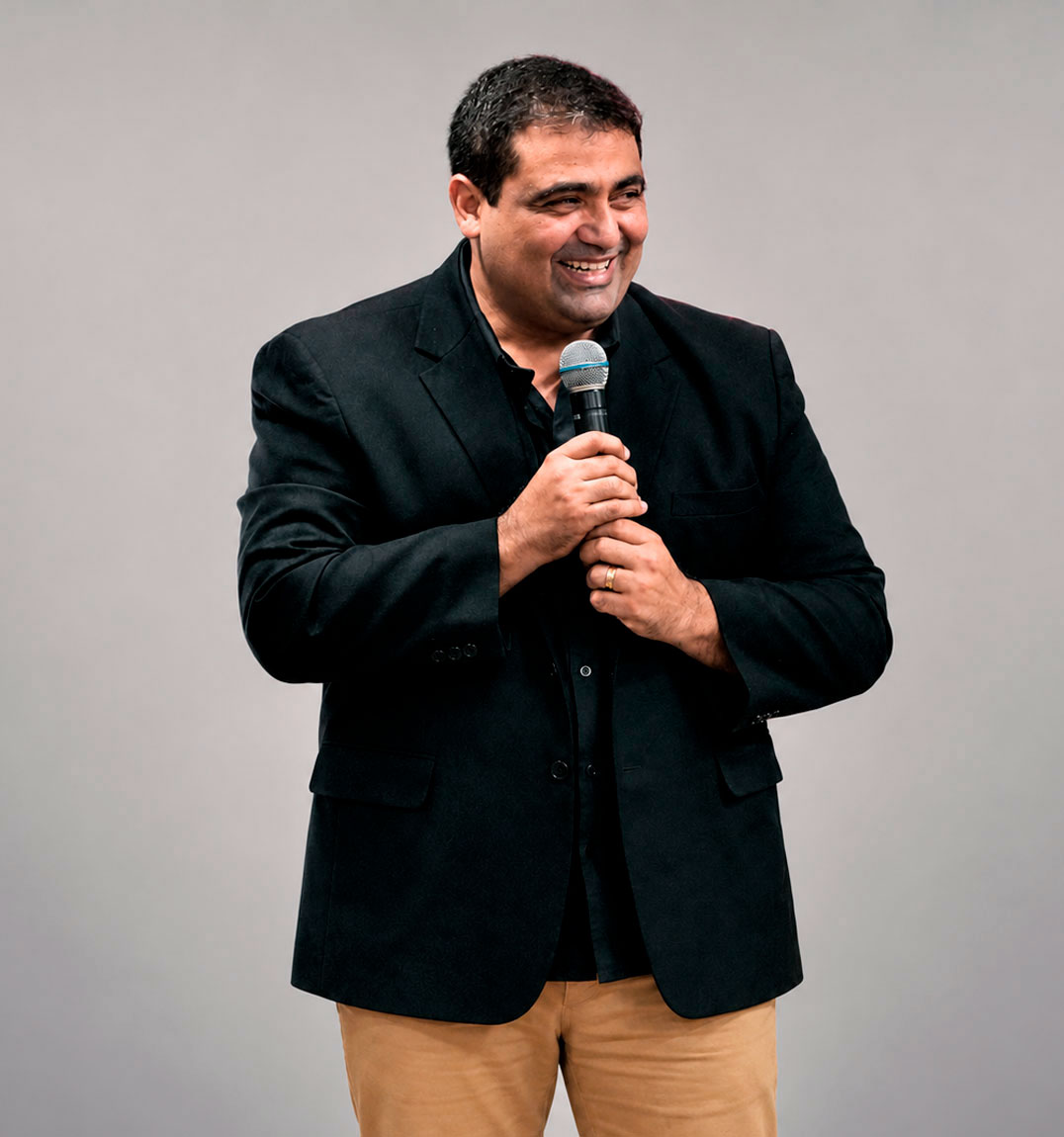



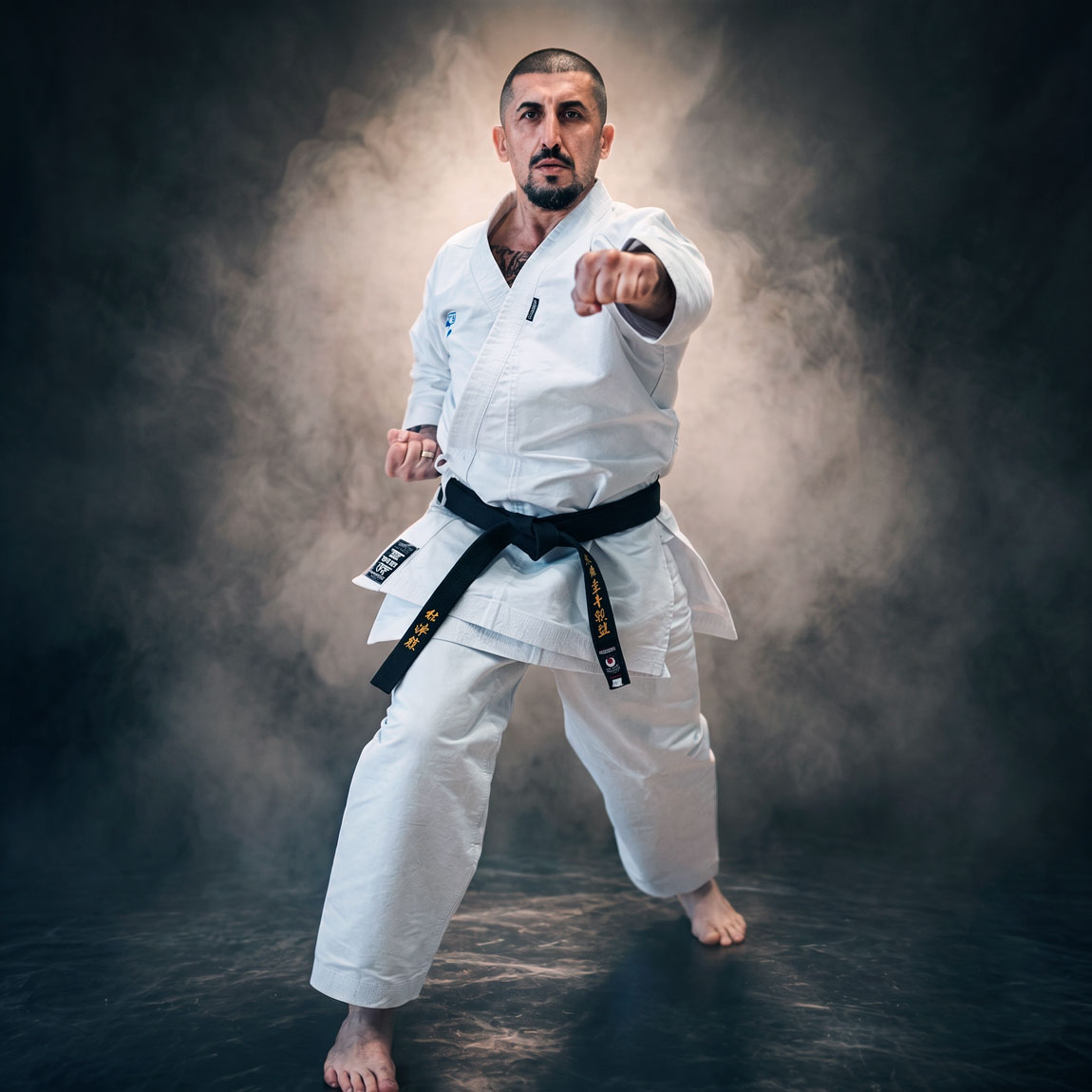 Cornel Mușat: a champion on the tatami and a leading figure in educating generations of Traditional Karate practitioners © AI-generated image / Global Comunicação
The ITKF Traditional Karate World Championship is about far more than the pursuit of medals. With every edition, the event brings together different schools, cultures, and philosophies that help shape both the present and the future of Traditional Karate. With this purpose in mind, Budô Magazine and Global Sports launch an international series of exclusive interviews featuring representatives of the five highest-ranked nations from the 22nd ITKF World Championship, held in Portugal: Egypt, Brazil, Poland, Romania, and Portugal.
The series begins with Romania, represented by Cornel Mușat, one of the most respected figures in contemporary Traditional Karate. An eight-time world champion during the era of Sensei Hidetaka Nishiyama, Mușat belonged to the generation that helped establish Romania as one of the world’s leading Traditional Karate nations. Today, he serves as head coach of the Romanian National Team while also contributing as a member of the ITKF Global Technical Committee.
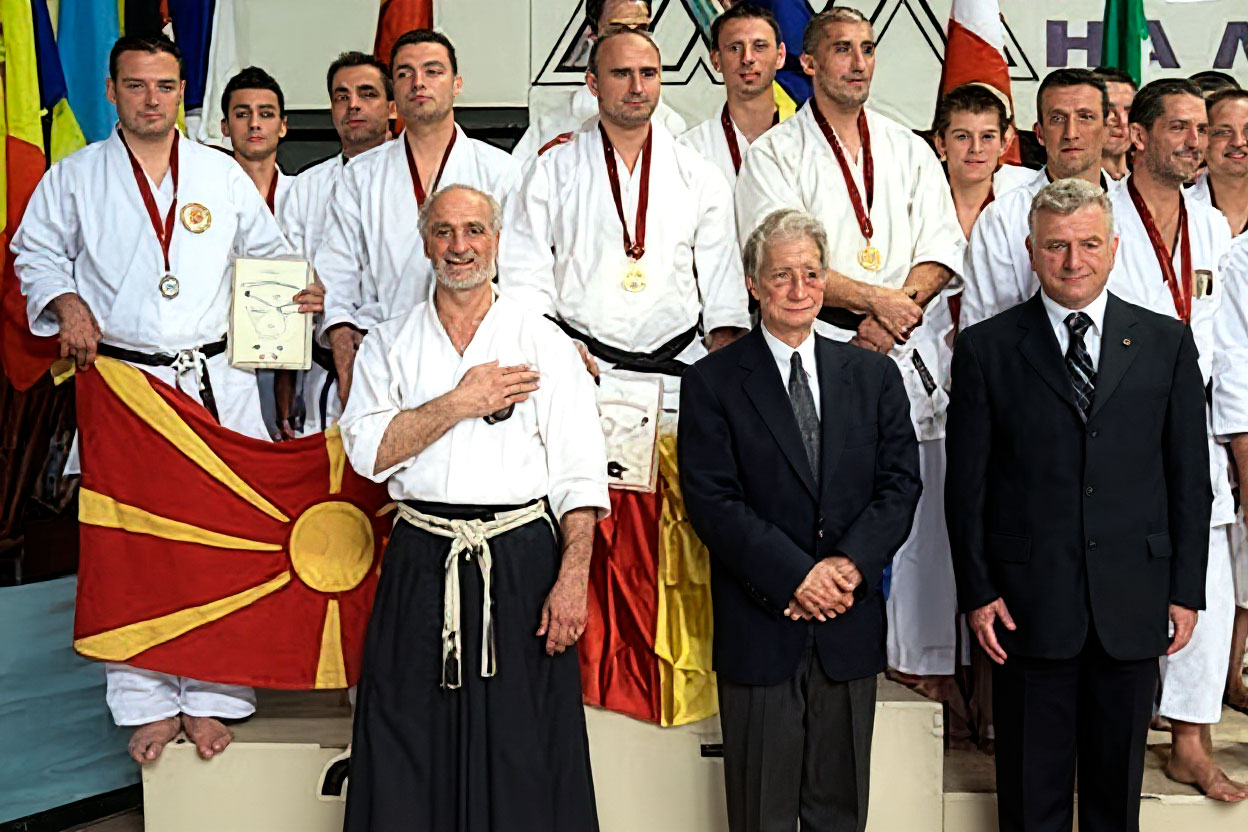
The Romanian team celebrates the Team Kumite title at the 1997 European Traditional Karate Championship in Skopje, North Macedonia, under the watchful eye of Master Hidetaka Nishiyama, the world’s foremost authority and the driving force behind the worldwide development of modern Traditional Karate © Archive
Throughout the interview, Mușat shares his perspective on athlete development, Romania’s preparation for the World Championship in Cairo, the legacy of Sensei Nishiyama, the governance challenges facing ITKF Global, and the future of Traditional Karate. More than recalling past achievements, he offers a thoughtful reflection on leadership, responsibility, and the mission of passing on to future generations the values that shaped his journey both on and off the tatami.
An eight-time world champion during the era of Sensei Hidetaka Nishiyama, Cornel Mușat explains that his transition from athlete to coach was not a change of direction, but rather the natural continuation of a lifelong journey in Traditional Karate. Reflecting on his own development, he speaks about the legacy inherited from his teachers, the importance of collective work, the evolution of the Romanian National Team, and the values he strives to pass on to new generations.
Looking back, I believe my transition from athlete to coach was not a break, but the natural continuation of my journey in Traditional Karate. I began training in 1990, shortly after the Romanian Revolution, under the guidance of Senseis Floricica Pricob and Vasile Pricob. From the very beginning, I understood that Traditional Karate goes far beyond athletic performance. It is a school of character, where we learn discipline, respect, and the constant pursuit of self-improvement.
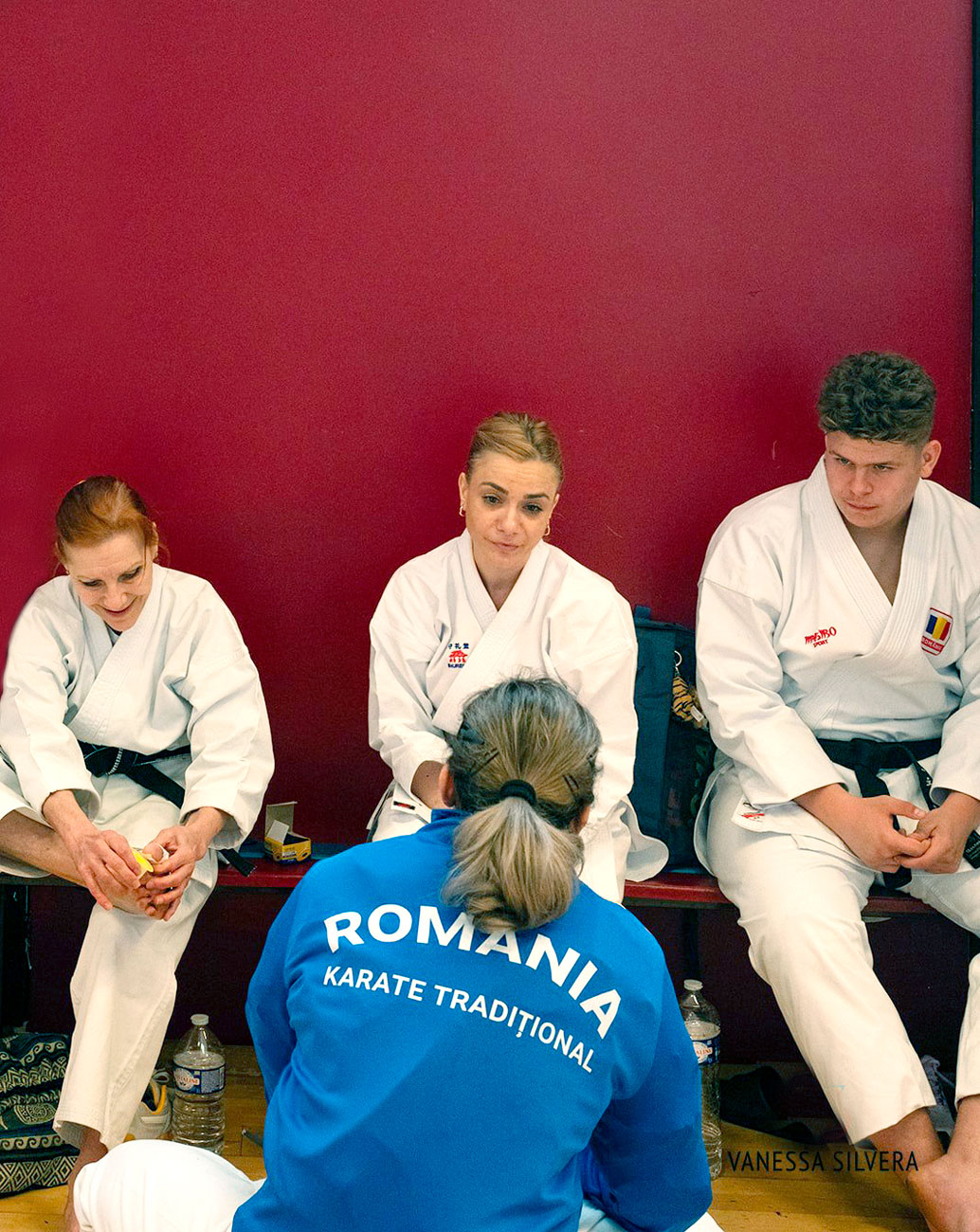
Romanian instructors take part in the Paris Master Course, one of the most important international educational events in Traditional Karate: Roxana Cruher, Shichi-dan (7th Dan); Oana Garlesteanu, Ni-dan (2nd Dan); and Dragu Andrei, Sho-dan (1st Dan). With her back to the camera is Dana Alexandra Ionesco, Yon-dan (4th Dan) © Vanessa Silvera
While I was still competing at the highest level as a member of the Romanian National Team, I devoted more and more time to developing young practitioners. That was when I realized that watching an athlete grow can be just as rewarding as standing on the podium yourself. Early in our careers, we seek victory for ourselves, for our club, and for our country. Over time, however, we come to understand that our true legacy lies in the people we help shape. That was the moment I realized I could contribute to the development of Traditional Karate not only through my own achievements, but also by preparing future generations.
I had the privilege of representing Romania from 1993 to 2012, a period during which Traditional Karate experienced an extraordinary era under the leadership of Sensei Hidetaka Nishiyama, our greatest technical and moral reference. During those years, I won eight world titles in individual kumite, fuku-go, and team kumite. Even so, I remain convinced that no champion is built alone. Behind every medal stands an entire team: coaches, training partners, administrators, and a federation capable of creating, year after year, the conditions necessary for excellence. Every one of my achievements also belongs to all those people.
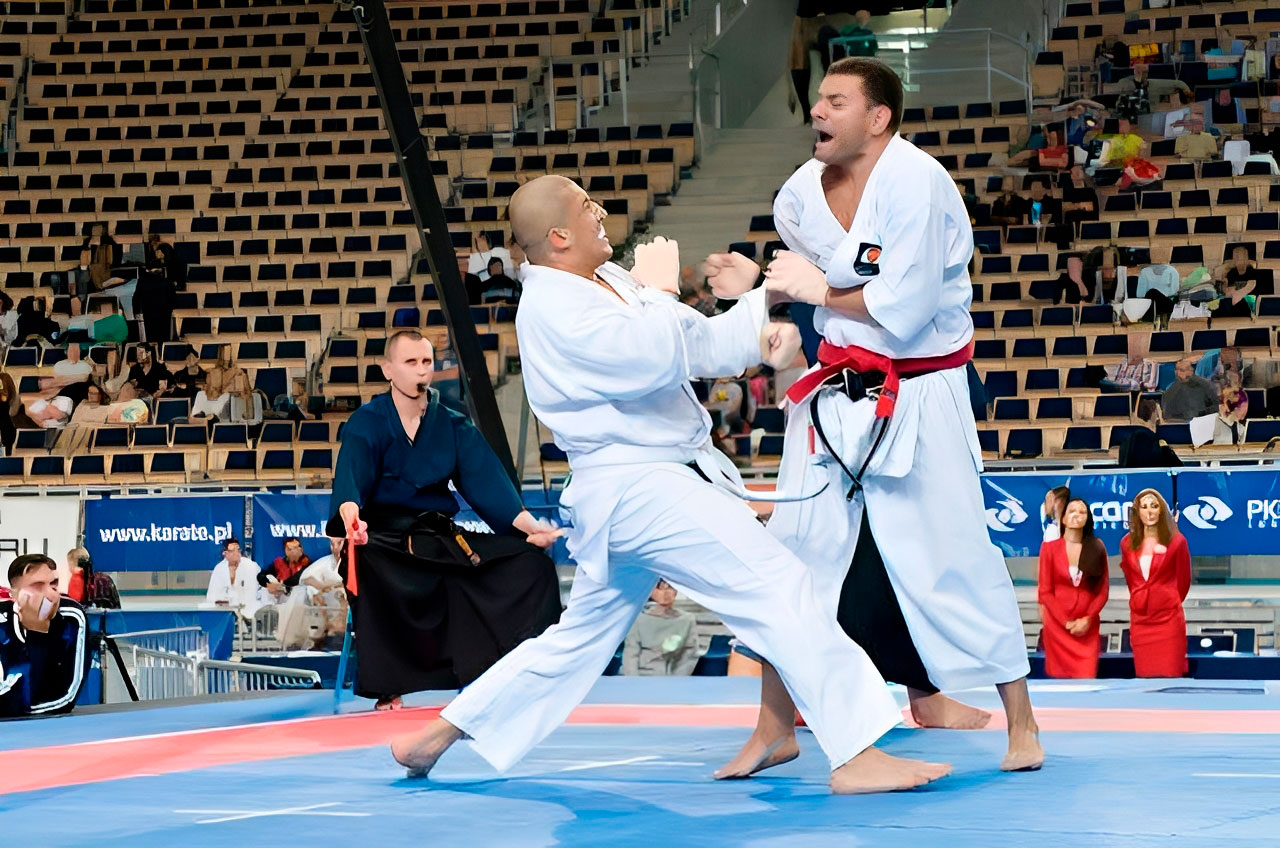
Cornel Mușat faces Dejan Nedev of North Macedonia during the 2012 ITKF Traditional Karate World Championship held in Łódź, Poland © Archive
As an athlete, my focus was entirely on my individual preparation and each match. Once I became a coach, however, my perspective changed completely. I began to see every athlete as a long-term project, understanding that performance is never built overnight and that true success cannot be measured solely by medals, but by shaping people of character through Karate. Today, my greatest satisfaction no longer comes from personal victories, but from seeing the experience of our generation being passed on to those who follow us.
Since 2015, I have been a member of the Romanian National Team’s Technical Commission. I deliberately use the word commission because it accurately reflects the way we work. Success is never the result of a single individual, but of cooperation among coaches who share the same philosophy and the same objectives. We plan together, analyze together, and jointly make the most important decisions regarding the preparation of the national team.
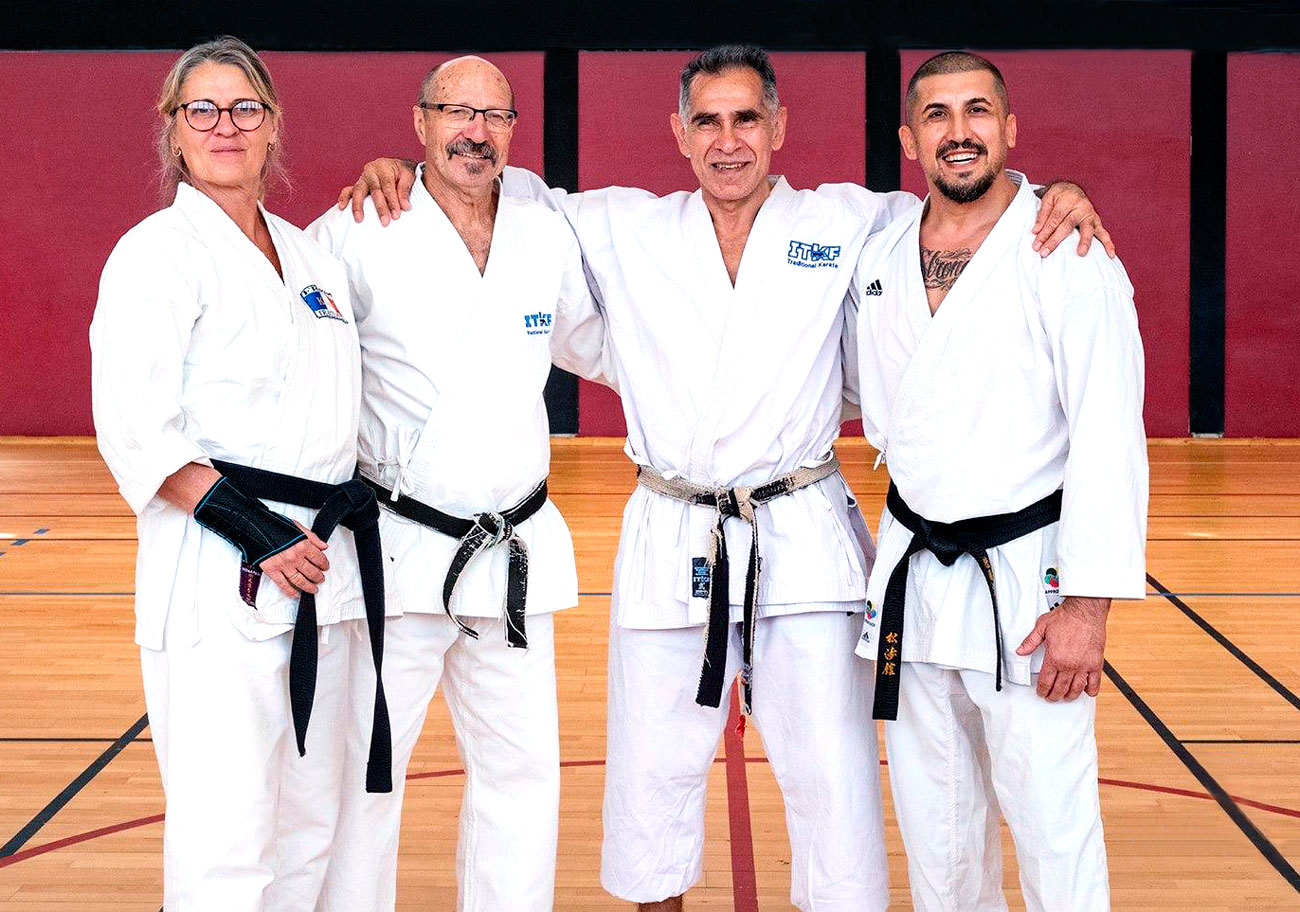
Sandrine El Marhomy, Gilberto Gaertner, Cornel Mușat, and Justo Gómez during the 2026 Paris Master Course © Vanessa Silvera
That same philosophy guides the Romanian Traditional Karate Federation (FRKT). Romania has become one of the most respected nations within ITKF Global not because of the work of a single athlete or coach, but because of the strength of an organization built over many years by clubs, instructors, referees, specialized commissions, and everyone committed to the development of Traditional Karate.
This work began with Sensei Dan Stuparu, founder and first president of the FRKT, who introduced this martial art to Romania. Today, it continues under the leadership of Sensei Nicolae Marandici. Romania’s international results reflect this collective effort.
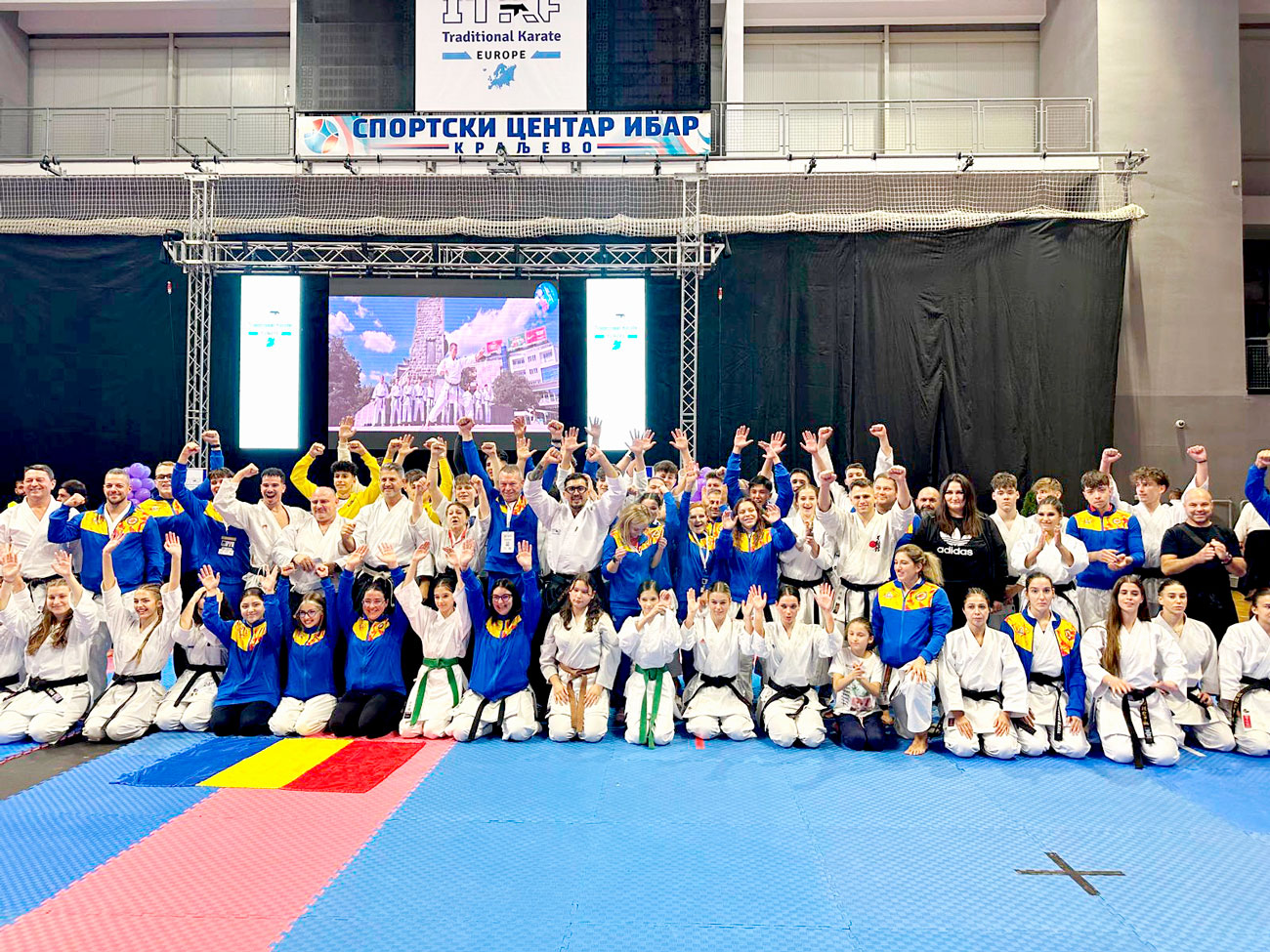
The Romanian National Team gathered during the 2025 European Traditional Karate Championship held in Serbia © Vanessa Silvera
In my daily work, I strive to pass on to athletes the same values that shaped my own development: humility, perseverance, and adaptability. Technique is refined through training, physical condition is built through hard work, but character is what sustains an athlete during life’s most difficult moments.
Today, I believe my greatest achievement is not simply the world titles I have won, but the opportunity to help shape the generations that will represent Romania in the future. To me, this is the true meaning of Traditional Karate: every generation receives a legacy, develops it, and bears the responsibility of passing it on—stronger and richer—to the next generation.
Romania’s preparation for the 23rd ITKF World Championship, to be held in Cairo, is the result of a continuous process carried out throughout the entire year. Cornel Mușat explains how the Romanian Federation structures this preparation, details the scope of the national team’s program, analyzes the challenges involved in preparing for a World Championship, and makes it clear that Romania will travel to Egypt determined to once again compete for the top positions in world Traditional Karate.
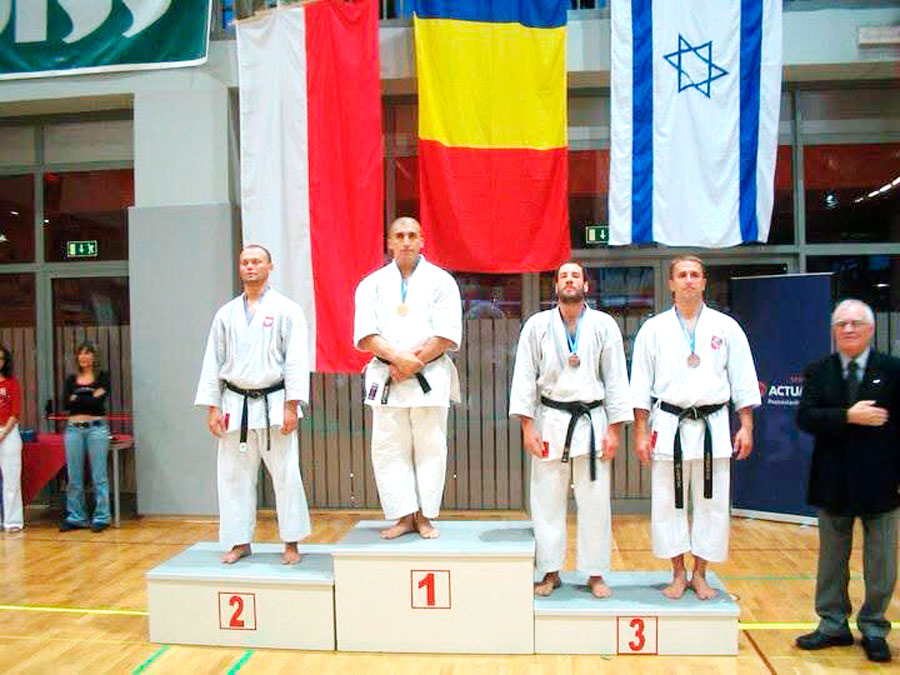
Cornel Mușat celebrates the European Fukugo title at the ETKF European Championship held in Kyiv, Ukraine, in 2000 © Archive
Preparation for a World Championship never begins just a few months before the event. At the FRKT, building the national teams is a continuous process that takes place throughout the year through the work carried out by our affiliated clubs and technical staff across the country. Every national competition, every training camp, and every practice session represents another step in developing athletes who may one day earn the privilege of wearing the Romanian National Team uniform.
Naturally, there are key moments throughout this process. One of the most important is the National Summer Training Camp, held in Olimp, which brings together athletes, coaches, and the entire technical staff for a period of intensive, unified preparation. Afterwards, the National Championship, held in September, determines the final composition of the delegation that will represent Romania in Cairo.

Currently, approximately 350 athletes from across the country are involved in the national team development program. This number reflects not only the growing interest in Traditional Karate, but also the strength of the system built by the FRKT together with its affiliated clubs. Behind every athlete stands a coach, a dojo, and a community investing time, knowledge, and dedication in their development. Romania’s international achievements are the result of this collective effort.
Historically, Romania has participated in ITKF World Championships with complete delegations representing every age division. Athletes, coaches, referees, officials, and members of the technical staff travel together because we believe that high performance is the product of teamwork rather than individual effort. The final number of participants will be determined after the National Championship, but the selection process is rigorous and based on merit, competitive results, and each athlete’s actual level of preparation.
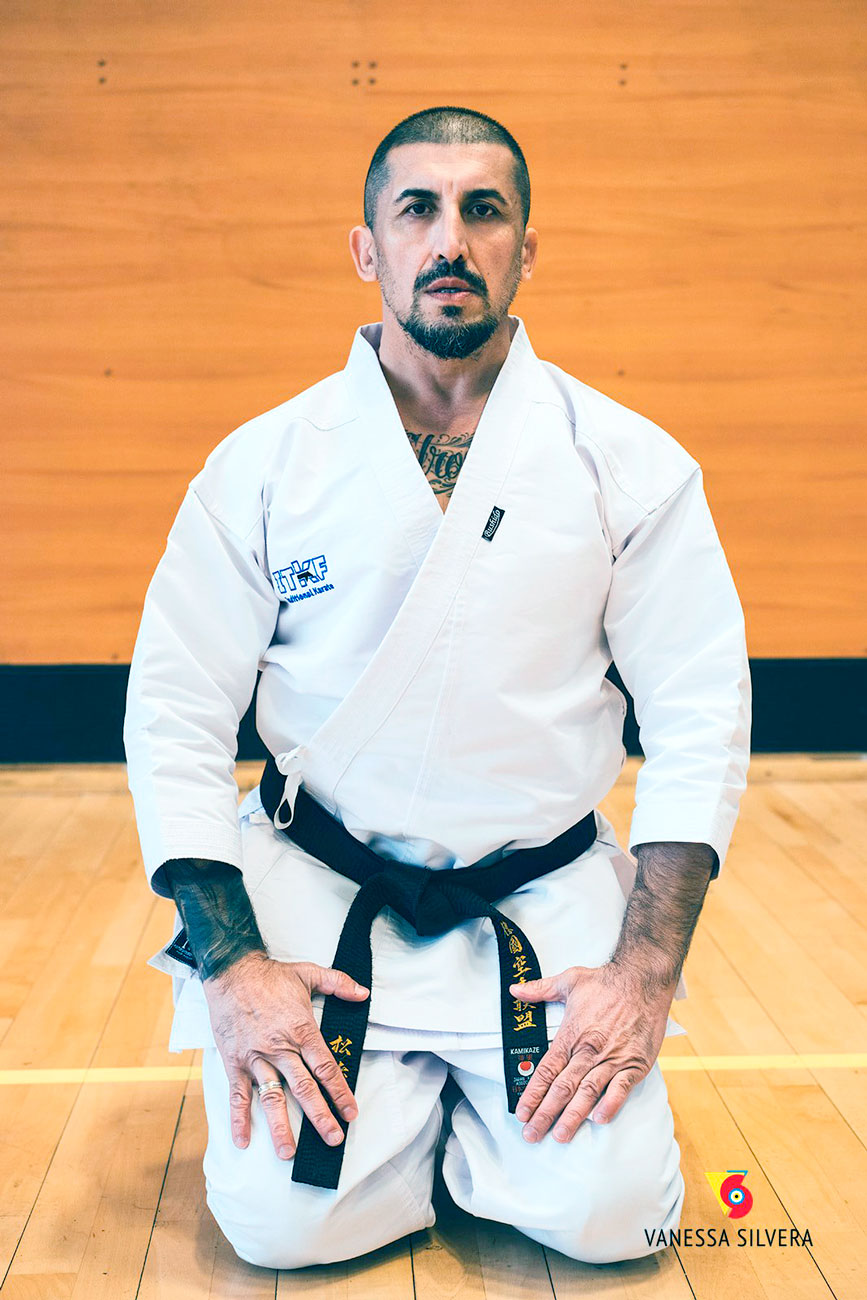
Seated in seiza, Cornel Mușat embodies the discipline, respect, and relentless pursuit of continuous improvement that define Traditional Karate © Vanessa Silvera
The ITKF World Championship represents the highest stage in Traditional Karate. For every athlete, it is an opportunity to measure their abilities against the best practitioners in the world. For the Romanian Federation, however, the event carries an even broader meaning: it demonstrates that the work carried out every day in every club and every dojo is capable of producing results at the highest international level.
At the World Championship in Portugal, Romania finished fourth overall, winning four gold medals, eight silver medals, and fourteen bronze medals. It was an outstanding result that confirmed the strength of Romanian Traditional Karate. Even so, experience has taught us that every World Championship starts from zero. Previous achievements strengthen our confidence, but they do not guarantee future success. Every result must be rebuilt through hard work, seriousness, and unity.
Our objective is clear: we want to fight for first place in the overall medal standings. It is an ambitious goal, one we embrace with complete responsibility. We will not travel to Cairo relying on past achievements, but on the work we carry out every single day. We have confidence in our athletes, our Technical Commission, and the entire FRKT structure to keep Romania among the leading forces of ITKF Global.
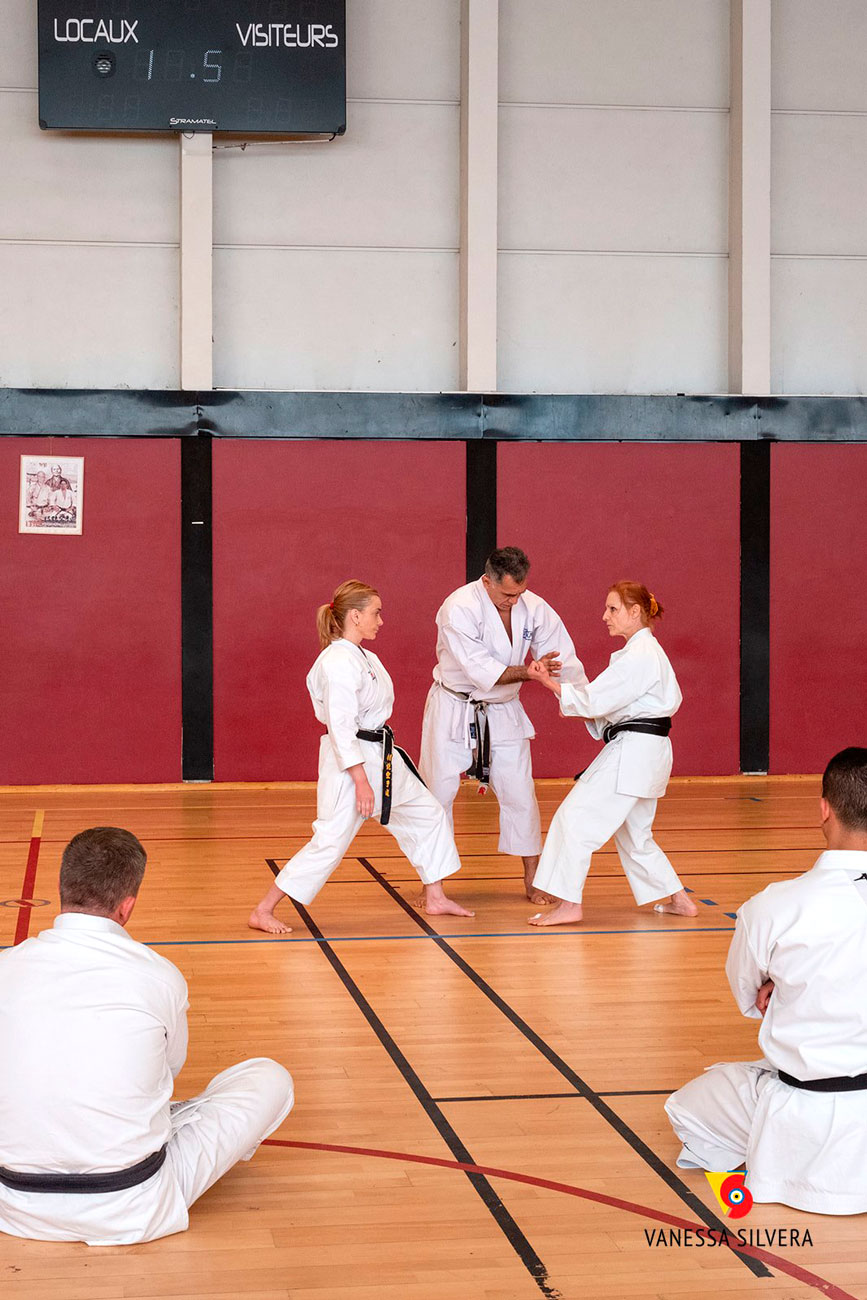
Romanian karate practitioners during a technical evaluation conducted by Justo Gómez at the Paris Master Course © Vanessa Silvera
The challenges are many. Preparing a national team requires tremendous organizational and financial effort. In addition, we live in a society where young people are constantly exposed to technology and to a pace of life very different from the one we experienced. Precisely because of this, I believe our mission extends far beyond producing champions. We must show new generations that Traditional Karate offers values that no technology can replace: discipline, respect, self-control, perseverance, and the sense of belonging to a community united by shared principles.
I also believe it is essential to preserve, in its entirety, the technical standards and philosophy passed down by Sensei Hidetaka Nishiyama. Tradition and high performance are not opposing concepts; on the contrary, they complement one another. I am convinced that this very fidelity to our principles is what has made Romania a reference in international Traditional Karate. In Cairo, we will step onto the tatami determined to achieve the very best results, while carrying the responsibility of representing, with dignity, the entire Romanian Traditional Karate community and the values it has preserved for more than three decades.
More than an eight-time world champion, Cornel Mușat belongs to the generation of athletes privileged to have trained and competed during the leadership of Sensei Hidetaka Nishiyama. Reflecting on that remarkable period, he explains how the teachings of the founder of ITKF shaped his understanding of Traditional Karate, continue to influence his work with the Romanian National Team, and guide his role as a member of the ITKF Global Technical Committee.
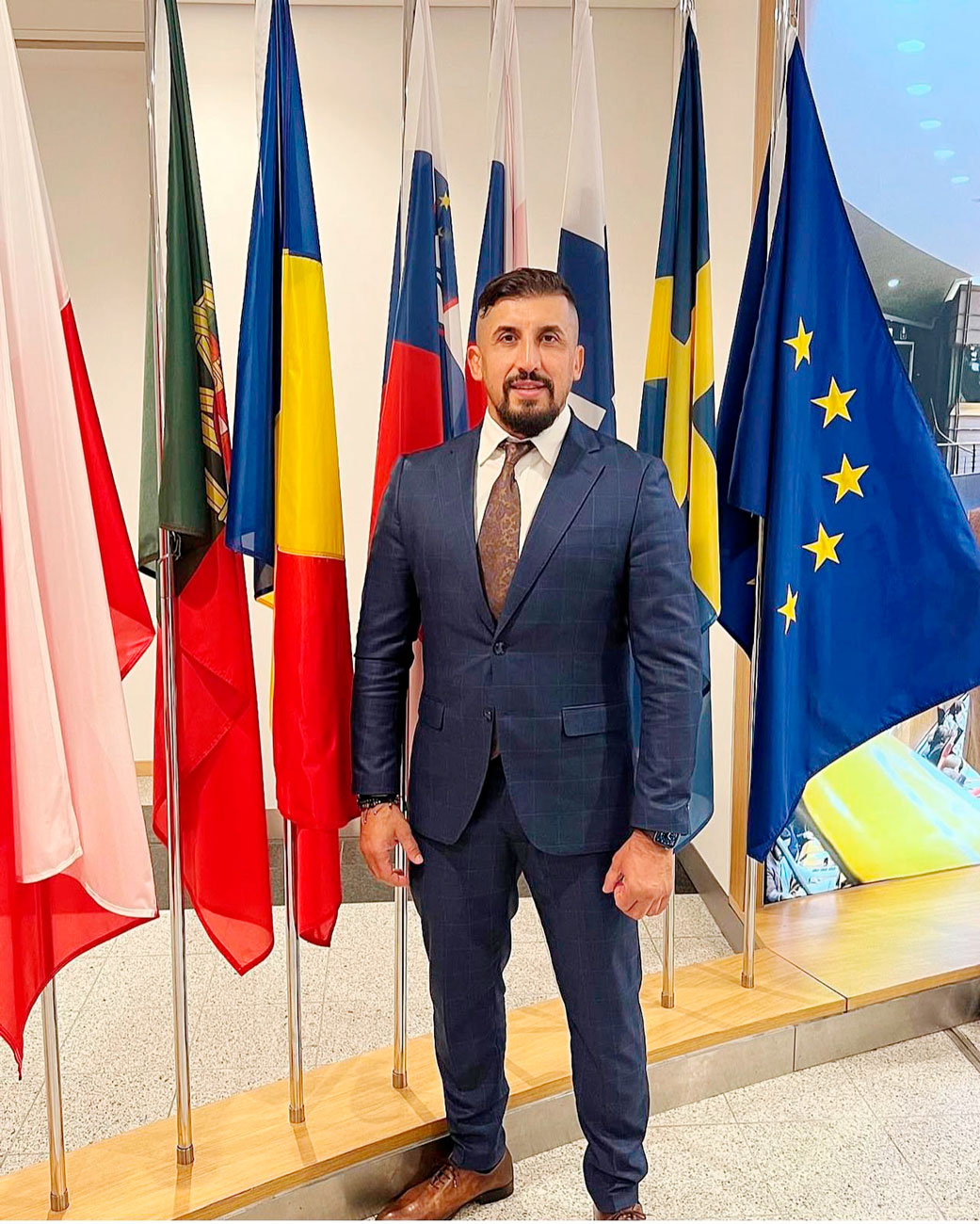
Cornel Mușat during an official invitation to the European Parliament in Brussels, Belgium, in 2022 © Vanessa Silvera
I belong to a privileged generation. I had the opportunity to develop and compete during a period when Traditional Karate was led by Sensei Hidetaka Nishiyama. That experience profoundly shaped both my career and my understanding of this martial art, and it continues to influence me to this day. For my generation, Sensei Nishiyama was not merely a great master, but a permanent example of technical excellence, character, commitment, and responsibility.
Many people are familiar with his extraordinary contribution to the worldwide development of Traditional Karate. For those of us fortunate enough to learn directly from his philosophy, however, his influence extends far beyond the technical dimension. He taught us that technique is indispensable, but that the true value of Karate is ultimately reflected in a person’s character. Powerful technique without self-control, respect, and responsibility can never represent the true spirit of Traditional Karate.
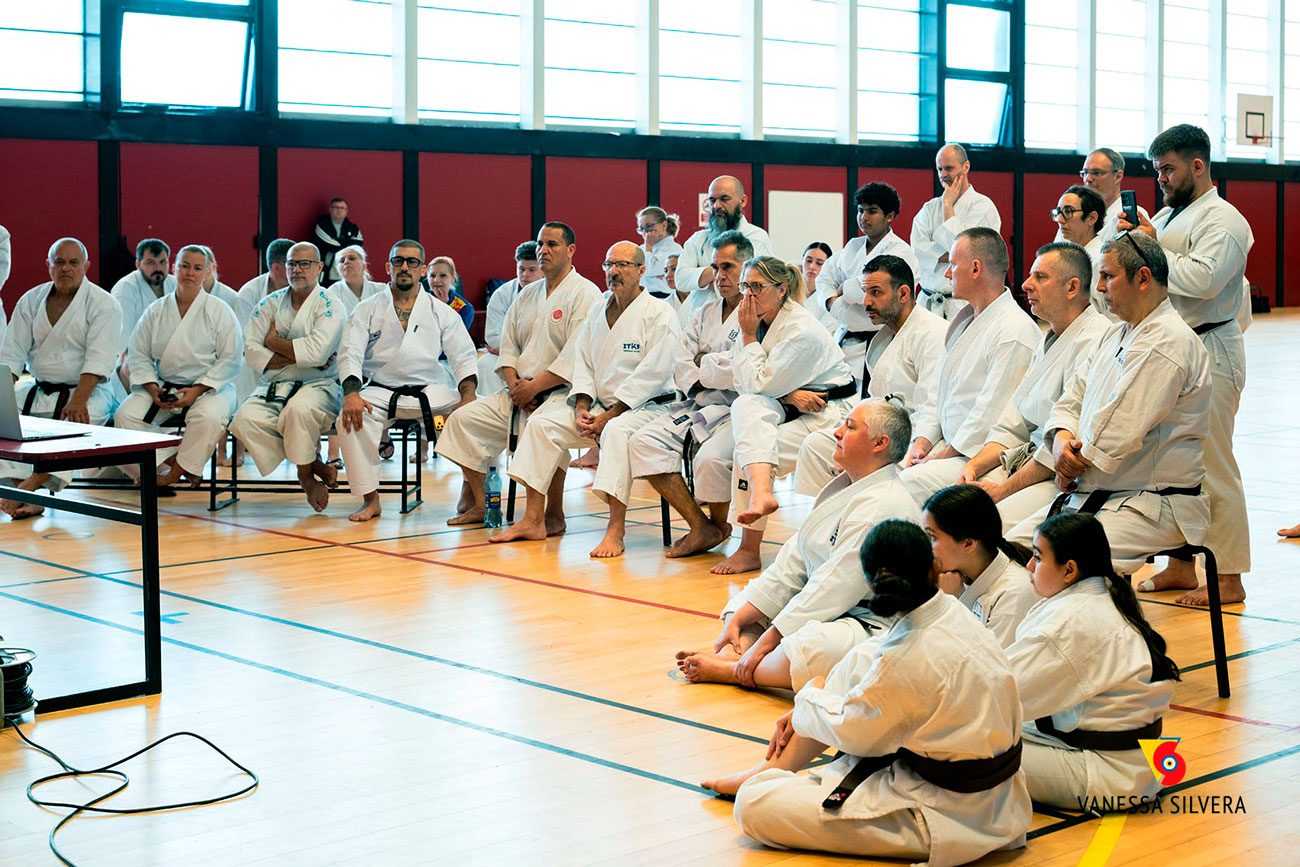
Cornel Mușat follows a technical session during the 33rd ITKF Global Master Course in Paris, conducted by Professor Gilberto Gaertner, PhD, Chairman of ITKF © Vanessa Silvera
One teaching has accompanied me throughout every stage of my life: “Today a little better than yesterday; tomorrow a little better than today.” These words of Sensei Nishiyama have become a guiding principle not only for the Romanian Federation, but also for the way I approach life itself. They are not about perfection, but about continuous improvement—the commitment to becoming a slightly better person every single day. I consider this one of the most valuable lessons any practitioner can receive.
Within the Romanian National Team, we strive to preserve this legacy throughout every stage of our preparation. We pursue the highest sporting achievements, but never at the expense of the principles that define Traditional Karate. This spirit must be reflected in the way we train, the way we compete, and, above all, the way we conduct ourselves beyond the tatami.
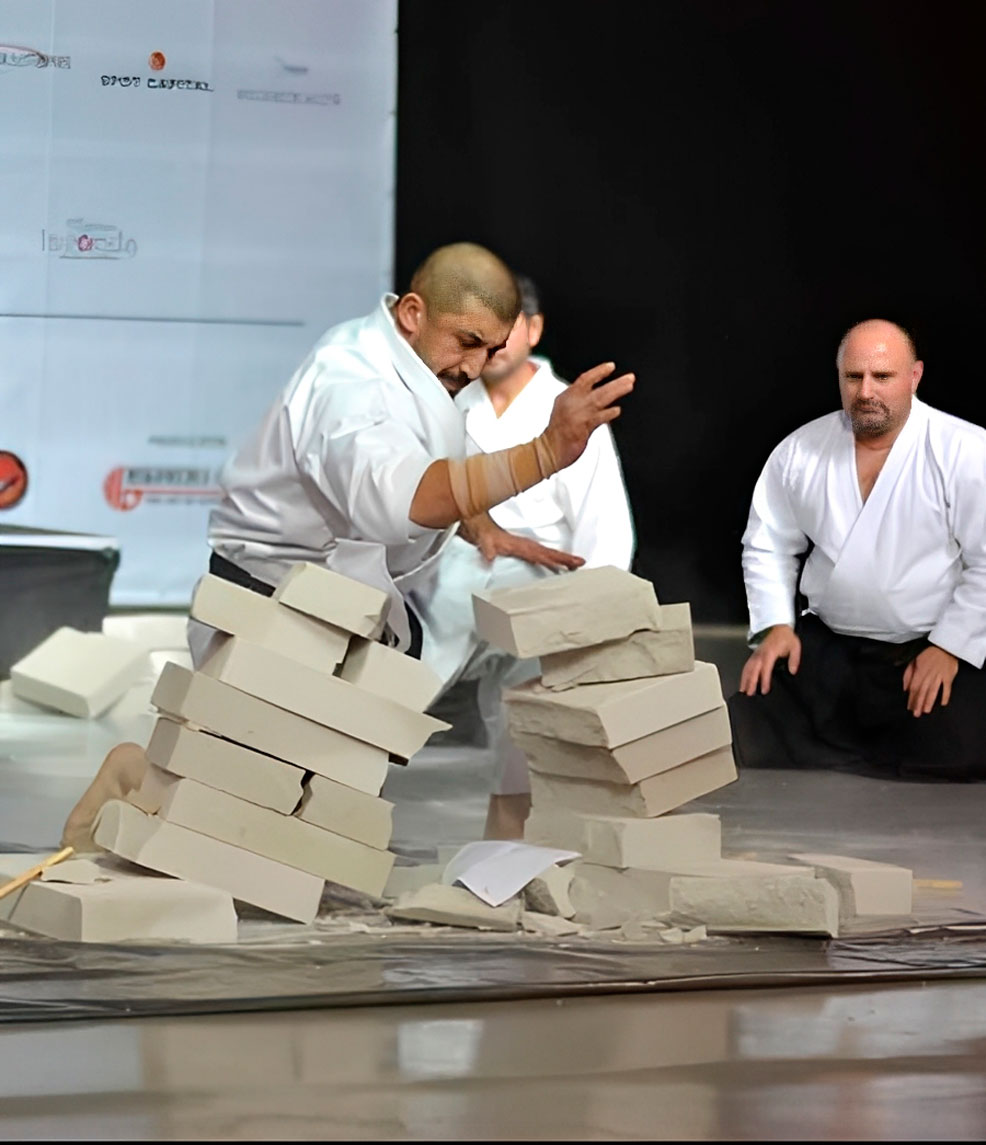
Cornel Mușat during a tameshiwari demonstration held in Cluj-Napoca, Romania, in 2017 © Archive
Since 2025, as a member of the ITKF Global Technical Committee, I have felt an even greater responsibility. It extends far beyond establishing technical standards, regulations, or organizing competitions. Our mission is to keep alive a philosophy that has shaped generations of practitioners and has made Traditional Karate an internationally respected discipline. At the same time, this responsibility does not belong to a single individual. It must be shared by everyone who believes in the values of Traditional Karate and in continuing the path opened by Sensei Nishiyama.
If I had to summarize Sensei Nishiyama’s greatest legacy in a single word, I would choose the Way. ITKF Karate is not merely a collection of techniques, nor is it simply a sport. It is a way of life, a lifelong process of learning, discipline, self-control, and personal growth.
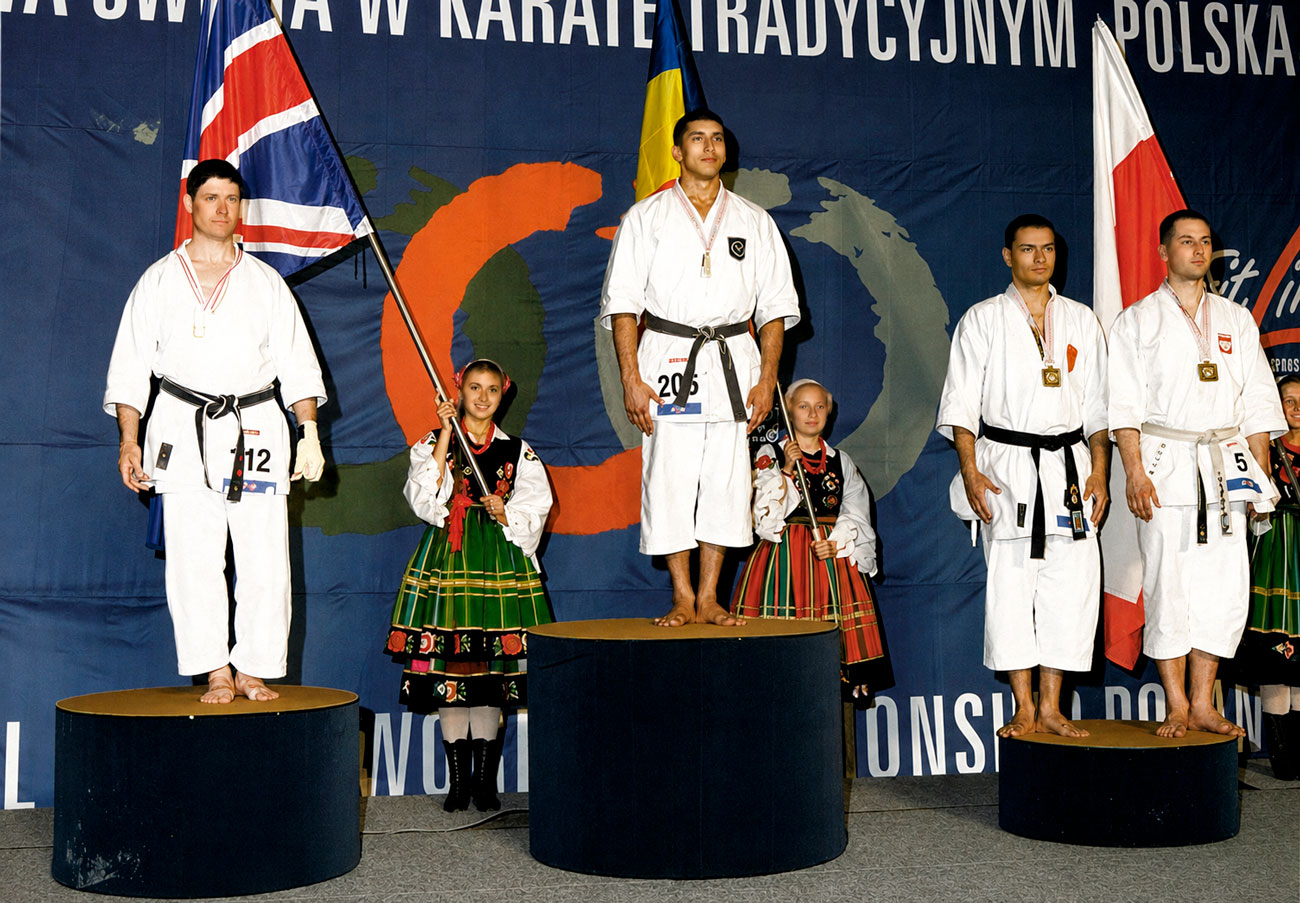
Cornel Mușat celebrates the Fukugo World Championship title at the 1998 ITKF World Championship held in Warsaw, Poland © Archive
If we can preserve this understanding and pass it on to future generations, Sensei Nishiyama’s legacy will continue to live within every practitioner, regardless of their country of origin. That is why I believe we all have the responsibility to transmit what we have received—not mechanically or as a mere formality, but with the same commitment through which these teachings reached us: “Today a little better than yesterday; tomorrow a little better than today.”
Reflecting on the future of Traditional Karate, Cornel Mușat believes the discipline must not live solely on memories of the era of Sensei Hidetaka Nishiyama. In his view, the greatest challenge facing ITKF is to preserve its philosophical and technical identity while finding new ways to engage younger generations. The solution, he argues, is not to change the essence of Traditional Karate, but to make its message more understandable and meaningful in today’s world.
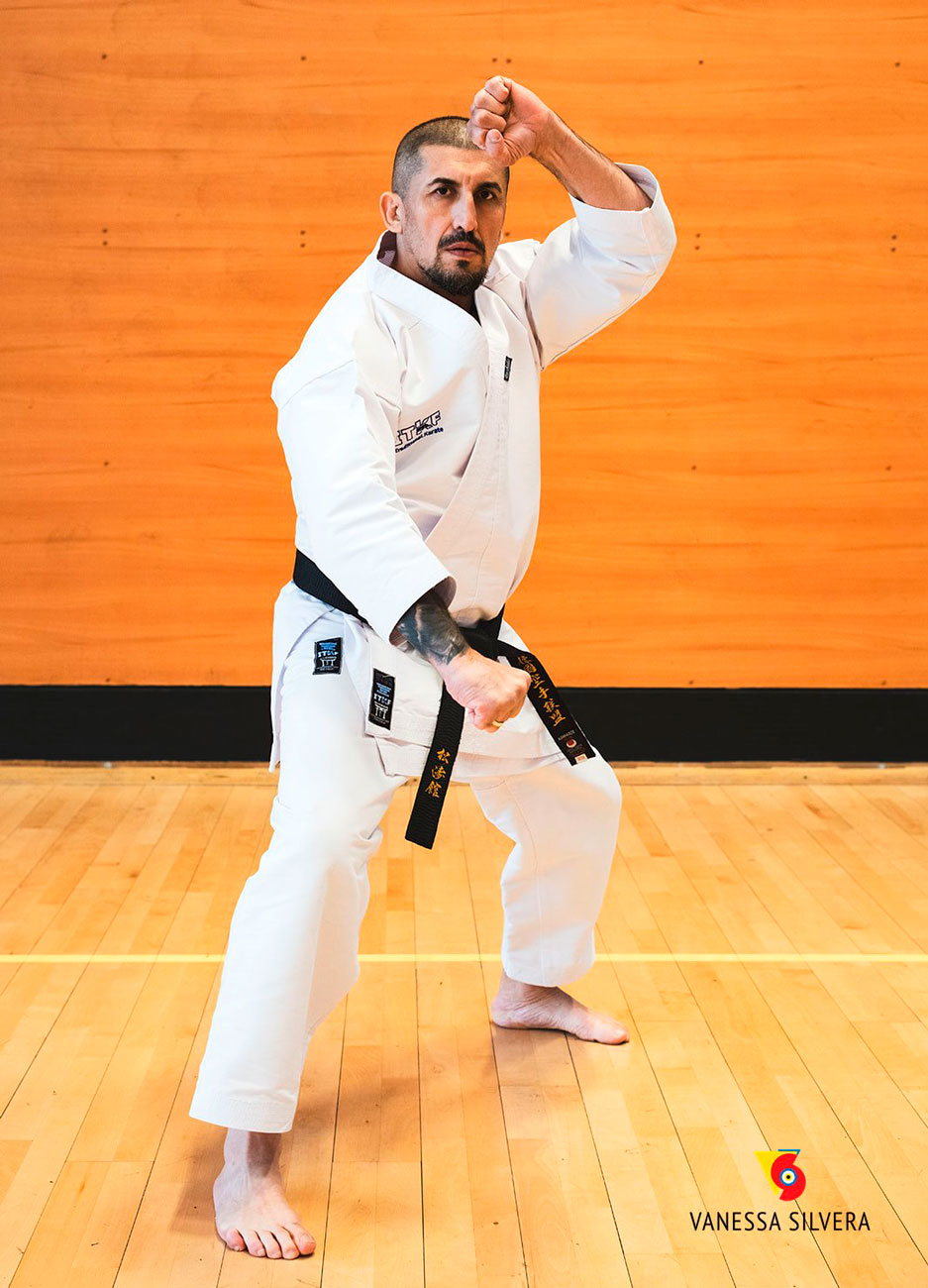
Kihon has always been one of Cornel Mușat’s defining characteristics, reflecting the technical precision and power that marked his career on the tatami © Vanessa Silvera
It is true that many practitioners regard the period when Sensei Hidetaka Nishiyama led Traditional Karate as a golden era. It was a time characterized by exceptional technical clarity, unity, and worldwide expansion. Nevertheless, I believe it would be a mistake to look back on that period with nostalgia alone. A genuine legacy is not a museum piece; it is a responsibility that must be carried forward.
Traditional Karate has a future precisely because its principles remain timeless. Discipline, respect, self-control, continuous self-improvement, and the ability to overcome one’s own limitations do not belong to the past. On the contrary, they are values that contemporary society may need now more than ever. In an increasingly fast-paced, noisy, and superficial world, Traditional Karate offers young people a place of balance, concentration, and human development.
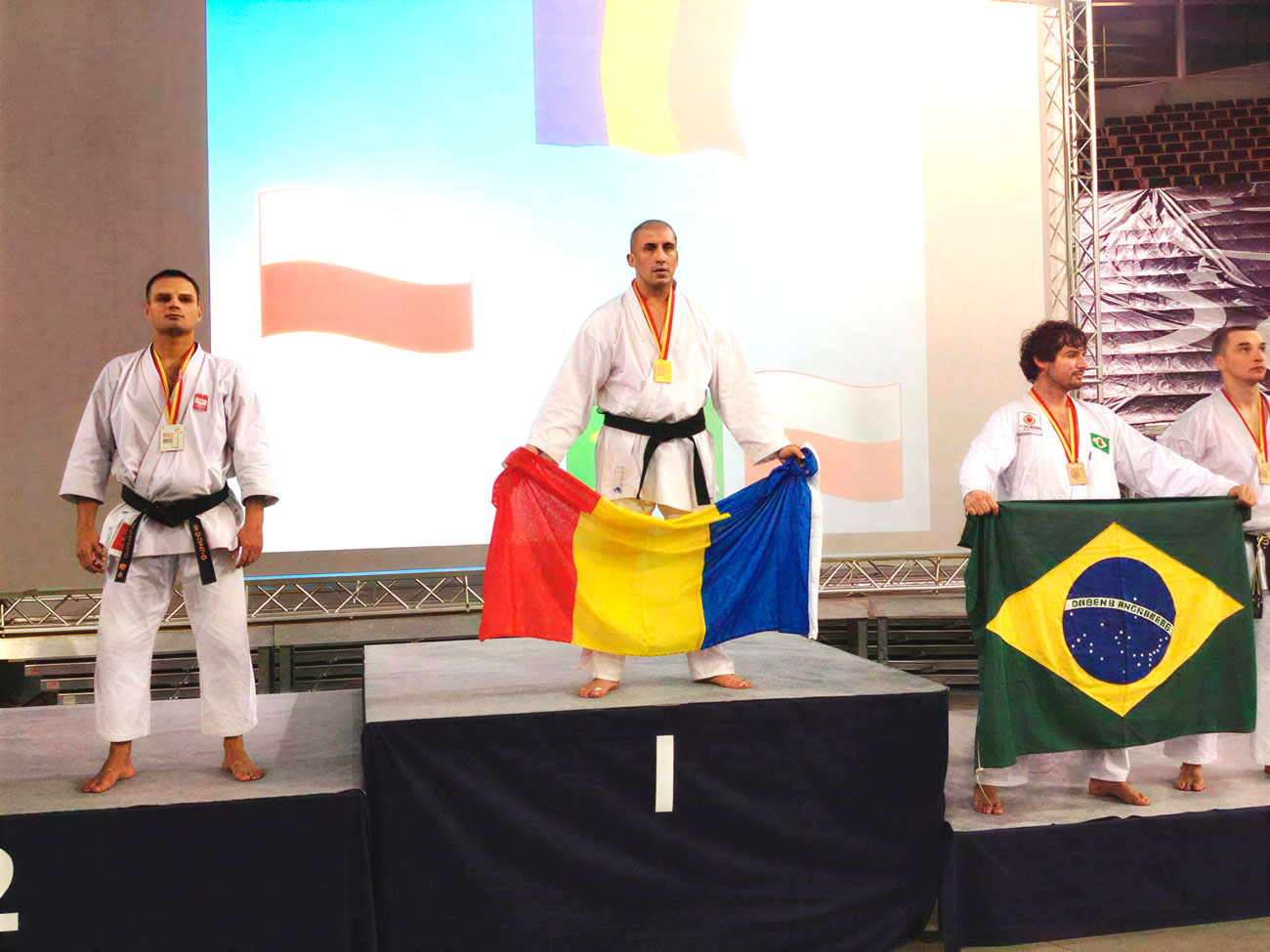
Cornel Mușat wins the Individual Kumite World Championship title at the 2012 ITKF World Championship in Łódź, Poland © Archive
For this reason, I do not believe Traditional Karate needs to change in order to become more attractive. The values, philosophy, and technical standards passed down by Sensei Nishiyama are timeless and must be preserved. What must evolve is the way we present them to younger generations. Children and young people need to understand that Karate is not limited to techniques, belt ranks, or competitions. It is a lifelong path of personal development built upon discipline, respect, and self-control.
I believe young people are still searching for purpose, even if they do not always express it openly. They seek role models, a sense of belonging, and authentic examples to follow. Traditional Karate can provide all of these, provided it is taught by instructors who understand that their mission goes far beyond preparing athletes. Our true role is to shape people. If we can communicate this message more effectively, I am convinced we will continue attracting new generations.
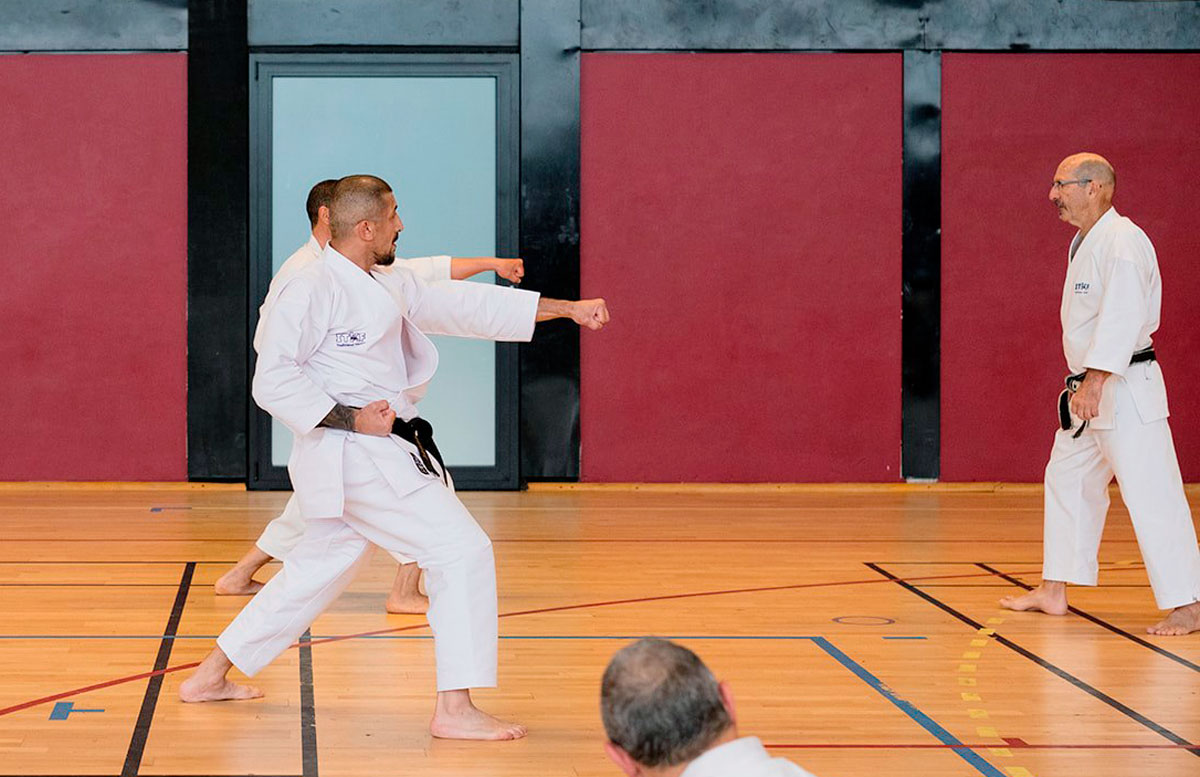
Cornel Mușat performs a kata during the 33rd ITKF Global Master Course in Paris under the observation of Professor Gilberto Gaertner, PhD, Chairman of ITKF © Vanessa Silvera
Naturally, we must also remain present in today’s world. We should make better use of communication tools, increase the visibility of competitions, and explain more clearly to society the true meaning of Traditional Karate. Modernizing the way we communicate, however, does not mean changing the essence of our art. We can embrace contemporary resources without abandoning the principles that define our identity.
The greatest challenge lies precisely in maintaining this balance. On one hand, we have the duty to remain faithful to the technical and philosophical foundations of Traditional Karate. On the other, we must understand the reality in which today’s children and young people live. If we abandon our principles, we risk losing our identity. The correct path lies between these two extremes.
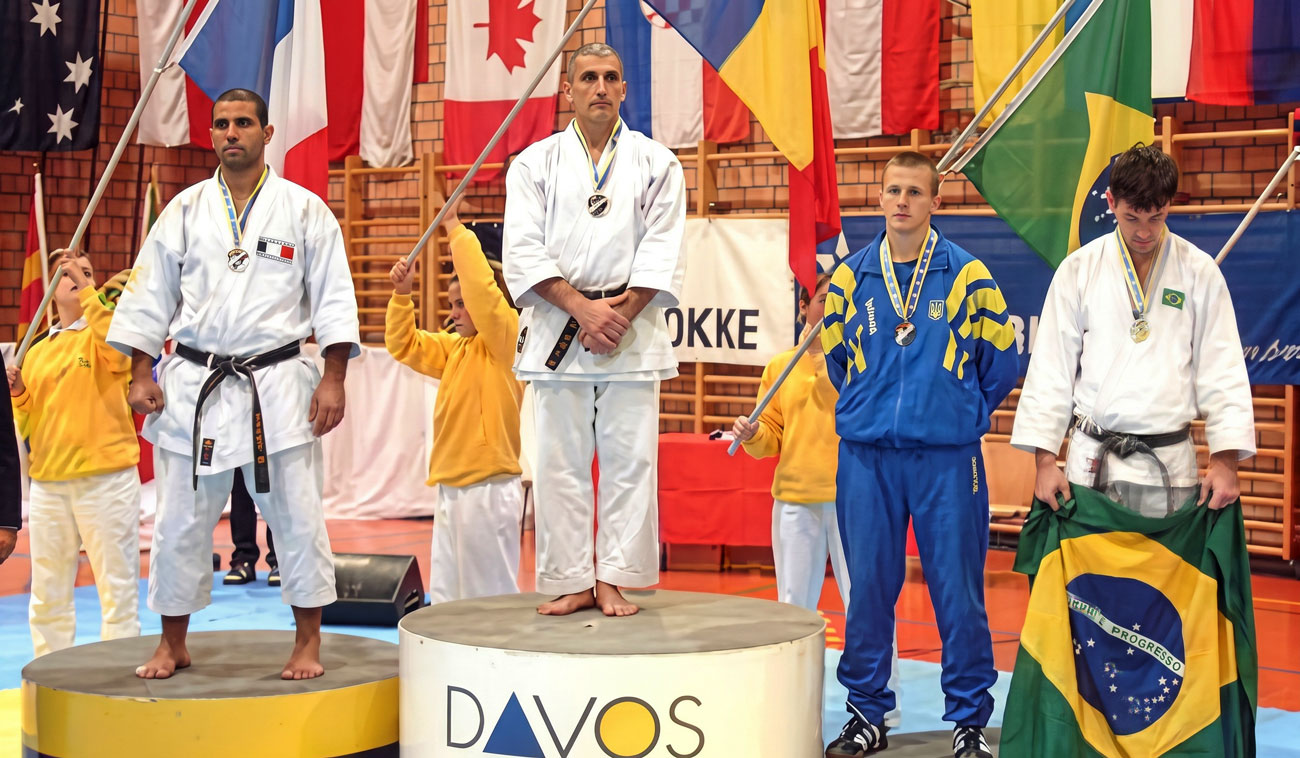
Cornel Mușat wins the Fukugo World Championship title at the 2004 ITKF World Championship held in Davos, Switzerland © Archive
The experience of the FRKT demonstrates that this balance is indeed possible. We have strong clubs, dedicated coaches, talented young athletes, and an organizational structure capable of producing outstanding results without compromising our fundamental values. I believe this should also be the direction of ITKF: continuity, unity, intelligent openness to the future, and unwavering fidelity to the Way that was entrusted to us by those who came before.